Not Enough Light on Syngonium Pink: Causes, Checks & Fixes
Quick answer
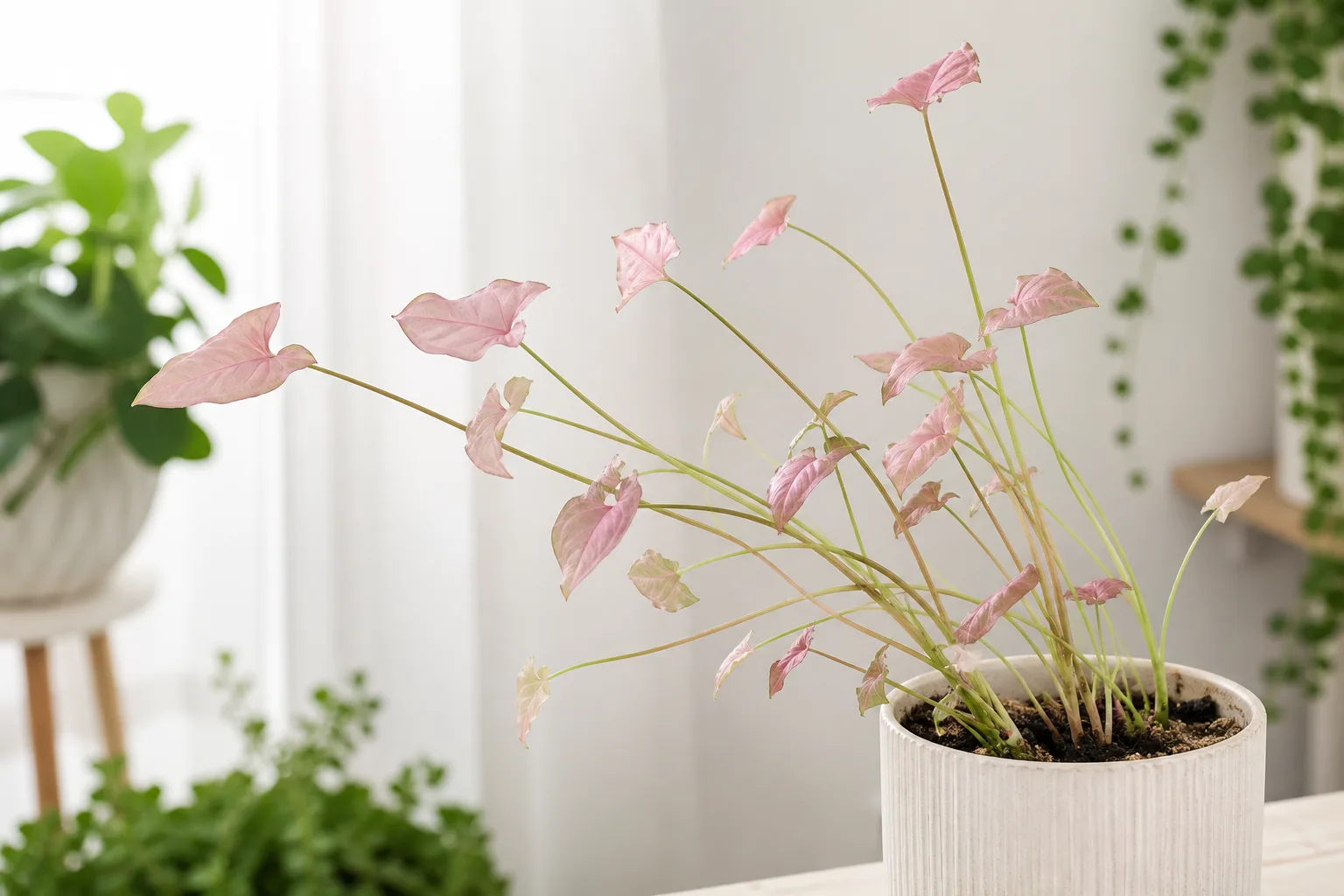
Not enough light makes Syngonium Pink stretch, lose its pink wash, and grow slowly. Move it to bright filtered light within one to two metres of an east or sheer-filtered south window-the pink color needs real photons, not a dim shelf that keeps the plant alive.
Not Enough Light on Syngonium Pink: Causes, Checks & Fixes
This guide covers not enough light on Syngonium Pink. See also the general Not Enough Light guide, watering, and light pages for this plant.
Not Enough Light on Syngonium Pink: Causes, Checks & Fixes
Quick answer
Syngonium Pink (Syngonium podophyllum ‘Pink’) is sold for bold pink arrowhead foliage. That color is not decorative frosting-it depends on enough light for photosynthesis in tissue that already carries less chlorophyll than green leaves. Missouri Botanical Garden recommends bright indirect light for arrowhead vine, and pink cultivars need the middle of the practical range, not survival-level shade.
When light is too low, the plant stretches toward brighter zones, new leaves open smaller and greener, and the pink wash fades to pale green or salmon. Soil also dries slowly because the plant is not using water-raising overwatering and root rot risk even when your Syngonium Pink watering guide has not changed.
First step: move the pot to brighter filtered light within one to two metres of an east window or a south window filtered by sheer curtain. Do not fertilize, repot, or prune heavily on day one. Give the plant one to two weeks in better light, then judge the next flush of leaves before taking secondary steps.
What not enough light looks like on Syngonium Pink
Low light on Pink Syngonium shows up as a pattern, not a single blemish. Watch for these signs together:
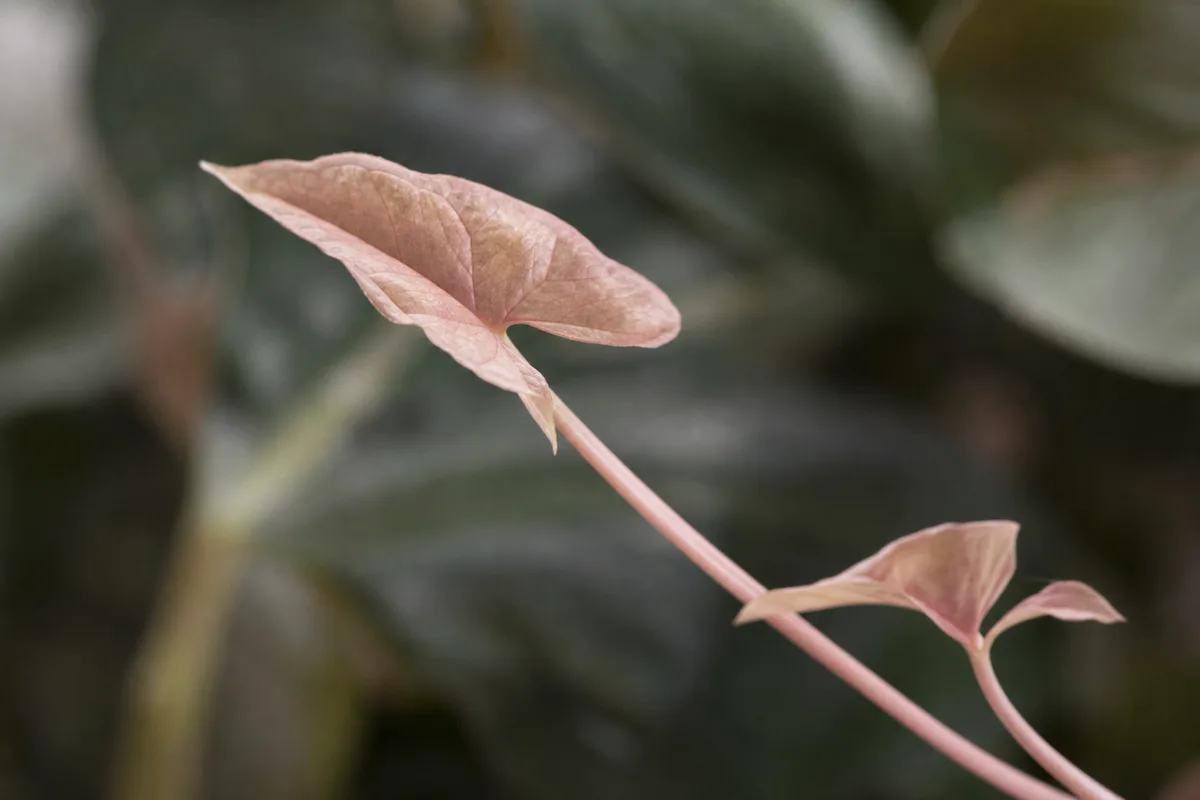
Not Enough Light symptoms on Syngonium Pink - compare with healthy tissue on the same plant.
Color and leaf quality
- Newest leaves opening mostly green, pale salmon, or washed-out pink instead of the bold blush you bought the plant for
- Older pink leaves looking dull or flat, with less contrast between pink zones and green veins
- Smaller leaf size on each new flush compared with leaves formed under nursery or greenhouse light
- Juvenile arrowhead shape still present, but thin and pale rather than firm
Growth habit
- Long bare gaps between leaves on stems-etiolation as the plant reaches for photons
- Stems leaning hard toward the brightest window or lamp
- Slow or stalled growth, especially through winter when daylight hours drop
- Vine-like silhouette with fewer leaves per stem section than a compact nursery pot
Secondary stress signals
- Potting mix staying wet for days after you would normally water again
- Lower leaves yellowing while the crown still pushes pale new growth-often low light plus overwatering overlap
- Fewer roots visible at drainage holes despite months in the same pot
Pink Syngonium color varies by leaf age and cultivar batch, so compare new growth to new growth, not the oldest leaf in the pot. A single pale leaf after shipping stress is less telling than three consecutive pale, stretched leaves in a stable spot.
Why Syngonium Pink needs brighter light than green arrowhead forms
Pink Syngonium is selected for anthocyanin pigment in young leaves. Those pink zones carry less chlorophyll than solid green tissue. When light drops, the plant compensates by pushing more chlorophyll into pale areas so it can photosynthesize-which reads as greening or dull salmon rather than bold pink. Ohio State Extension notes that all-green portions of variegated plants are often more vigorous because green tissue harvests light more efficiently; dim conditions favor chlorophyll-heavy growth over pink pigment.
Syngonium is a tropical aroid from forest understories, but “understory” does not mean a dark hallway. University of Maryland Extension explains that too little light makes houseplants spindly as they stretch toward brighter zones, with fading leaf color and poor growth. Pink cultivars sit closer to the medium-bright end of that scale than snake plants or ZZ plants.
Commercial interiorscape guidelines place Syngonium at 250 to 1,000 foot-candles for best appearance. Many dim corners, interior shelves, and north-facing rooms far from glass deliver far less. Human eyes adapt to low rooms; the plant does not.
Low light also slows transpiration. Your Syngonium Pink may still look fine for weeks while the mix stays wet longer than it should. That hidden water stress pairs with weak growth and is why low light often precedes yellow leaves or root problems-not because light directly rots roots, but because the watering rhythm no longer matches plant use.
How to confirm the cause
Work through these checks before you change multiple care variables at once:
- New-leaf color trend - Are the last two or three leaves progressively greener, smaller, or more spaced out? A stable pink on new growth argues against low light as the main issue.
- Light at leaf level - Stand where the pot sits and look toward the window. If glass is more than two metres away, blocked by a bookcase, or filtered through heavy tint, assume light is marginal for a color cultivar.
- Direction and season - North windows alone are often insufficient for pink color year-round. Winter short days reduce intensity even in good east or south placements. University of Maryland Extension notes that plants can fail after a healthy start because of inadequate light, especially after a move from a bright nursery.
- Dry-down speed - Push a finger into the top inch of mix. If it stays damp five to seven days after watering while the plant is not in a humid cabinet, growth is probably slow from low light.
- Lean test - Rotate the pot 180 degrees. If new growth turns back toward the window within a week, the plant is actively seeking light.
- Pest check - Spider mites in hot dry air cause stippling and webbing, not typically long bare stems. Inspect undersides before assuming light alone is the problem.
- Watering cross-check - Confirm you are not watering on a calendar while the mix is still wet. Low light plus overwatering mimics root stress; fixing light first makes dry-down reliable again.
If three or more checks point to insufficient light and pests are absent, you have a confirmed diagnosis. You do not need a light meter, though one helps in borderline spots.
First fix for Syngonium Pink
Move the pot to brighter filtered indirect light within one to two metres of an east window or a south window with sheer curtain.
This single step gives the plant more usable photons without the scorch risk of unfiltered midday sun on pale pink tissue. North Carolina Extension notes that direct sunlight tends to burn or bleach Syngonium foliage; filtered bright light is the target, not a hot windowsill.
If your brightest window is still weak-common in winter-add a full-spectrum LED grow lamp 30 to 45 cm above the canopy for 10 to 12 hours daily. University of Maryland Extension recommends no more than 16 hours total light per day when combining artificial and natural light.
Acclimate over seven to ten days if the plant came from deep shade. Move it closer to the light source in stages so pale leaves do not scorch. Do not fertilize on day one. Do not repot unless the mix is actively failing. Do not prune heavily until you see how the next leaves respond.
Step-by-step recovery
After the initial move:
- Wait for one flush of new growth - Judge recovery by node spacing and pink intensity on the next two or three leaves, not by old stretched stems greening up.
- Adjust watering to match new dry-down - Plants in stronger light use water faster. Check the top inch of mix before every watering rather than keeping a dim-corner schedule.
- Rotate the pot weekly - Even bright light from one direction causes lean. A quarter turn prevents permanent one-sided growth.
- Prune stretched stems - Once new growth opens tighter and pinker, cut leggy tips above a node to encourage bushier side shoots. Wear gloves; Syngonium contains calcium oxalate crystals toxic to cats and dogs.
- Add support if you want larger mature leaves - Pink Syngonium can climb as it ages. A moss pole in bright light produces bigger, more dramatic foliage than a stretched shelf vine in shade.
- Remove fully green reverted shoots if color is the goal - All-green stems grow faster in marginal light and can dominate the pot over time, similar to variegation reversion in other cultivars.
If soil has stayed wet for weeks, let the mix dry to your normal checkpoint before the next watering-even after improving light. Do not pour on fertilizer hoping to restore pink.
Recovery timeline
Expect visible direction change within one to two weeks after a meaningful light increase-the plant should stop leaning as aggressively and push new buds. Improved pink color and tighter node spacing usually show on leaves that open two to four weeks after the move, depending on temperature and season.
Old stretched internodes and greened leaves do not revert. They can stay on the plant until you prune them or they age off naturally. Judge success by new tissue, not by repairing every old leaf.
Full recovery to a compact, colorful pot may take one to two pruning cycles over two to three months if the plant was heavily etiolated. Winter recovery is slower than spring and summer growth.
Lookalike symptoms to rule out
Leggy growth from low light vs. natural vining - Mature Syngonium develops longer spaces between leaves as it climbs. Low light stretch comes with pale, small new leaves and wet slow dry-down. Healthy vining in bright light keeps firmer color and shorter nodes on active tips.
Overwatering - Yellow lower leaves, sour soil smell, and soft stems can follow low light because the mix stays wet. If light is adequate but the pot never dries, inspect roots before assuming light alone is wrong.
Underwatering - Crisp brown tips and dramatic wilt happen when mix is bone dry. Low-light plants more often stay wet too long than dry out fast.
Nutrient deficiency - Uniform yellowing on older leaves with good spacing can suggest nitrogen shortage, but pink Syngonium in dim light usually stretches first. Fix light before fertilizing a stressed plant.
Spider mites - Fine stippling, webbing, and dusty leaf undersides in hot dry air. Mites do not cause long bare stem sections with pale new leaves at the tip.
Cold draft or chilled window glass - Winter contact with cold pane can spot or yellow leaves without the stretch pattern of low light. Pull the pot back if leaves touch freezing glass.
Mistakes to avoid
Do not keep Pink Syngonium in a north-facing room long term if bold color is the reason you bought it. It may survive, but pink will fade and stems will stretch.
Do not jump a shaded plant into harsh unfiltered south sun in one day. Pale pink tissue scorches faster than mature green leaves.
Do not compensate for dim light with extra fertilizer. UF/IFAS production data links stretched weak growth to low light level, not nutrient shortage in typical potting mix.
Do not assume Neon Robusta or other pink-leaning cultivars need less light because their pink looks softer. Color-selected Syngonium cultivars all want real brightness.
Do not ignore wet soil while troubleshooting light. Slow dry-down is both a symptom and a risk multiplier.
Syngonium Pink care cross-check
Once light is corrected, keep the rest of care boring so the plant can recover:
- Water when the top inch of soil dries-the same checkpoint as your main care guide, but recheck frequency after the move because dry-down speed changes with light.
- Humidity around 50 to 60 percent supports steady leaf quality without trapping damp foliage in stagnant corners.
- Temperature between 16°C and 27°C (60–80°F); UF/IFAS recommends 65°F to 80°F to maintain leaf colorings indoors.
- Soil in a well-draining potting mix with a drainage hole-low light makes heavy wet mix more dangerous, not less.
- Placement safety - Keep bright spots out of reach of pets. Syngonium is toxic if chewed.
Change one variable at a time. Better light plus immediate repot, heavy pruning, and fertilizer stacks stress.
How to prevent low light problems next time
Plan placement before purchase. If the only open spot is more than two metres from a window or relies on a north exposure alone, a green Syngonium will stay prettier with less effort.
For pink color long term:
- Site within one to two metres of east or filtered south glass
- Supplement with a grow lamp from autumn through early spring when daylight drops
- Rotate the pot weekly once lean starts
- Prune early if you want a compact shelf plant rather than a bare vine
- Clean windows and remove obstructions that cut intensity more than you realize
Judge health by newest leaves every month. Pink Syngonium tells you quickly when photons are missing-color fades before the plant collapses.
When to worry
Low light alone rarely kills Syngonium Pink quickly, but combined stress does. Escalate when:
- Yellowing spreads up the plant while soil stays wet and smells sour
- New growth stops entirely for more than four to six weeks after a light increase
- Stems collapse or feel soft at the base-possible root rot from chronic overwatering in dim conditions
- Pale leaves develop crisp brown patches after a sudden move into direct sun-that is scorch, not recovery
If root rot is suspected, inspect roots before Syngonium Pink repotting guide into fresh mix. Trim soft brown roots, reduce watering, and keep the plant in bright filtered light-not deeper shade while it recovers.
Conclusion
Not enough light on Syngonium Pink is a placement problem before it is a mystery disease. The plant stretches, greens, and slows because pink arrowhead foliage needs bright filtered light to hold pigment and compact growth. Move to better light first, acclimate gradually, adjust watering to match new dry-down, and judge recovery on the next flush of leaves-not on old stretched stems. Once new growth looks tighter and pinker, prune back bare sections and keep the pot where light stays realistic through every season.
When to use this page vs other Syngonium Pink guides
- Syngonium Pink watering guide - Use for routine moisture checks before assuming not enough light is the main issue.
- Syngonium Pink problems hub - Browse all 2 common issues on this species.
- Leggy Growth on Syngonium Pink - Different entry point when symptoms overlap with not enough light.
- Yellow Leaves on Syngonium Pink - Different entry point when symptoms overlap with not enough light.