Drooping Leaves on Syngonium Pink: Causes, Checks & Fixes
Quick answer
Drooping leaves on Syngonium Pink mean soft arrowhead petioles have lost turgor-usually from dry mix or from soggy mix damaging aroid roots. First step: lift the pot and check moisture an inch deep before you water or pause.
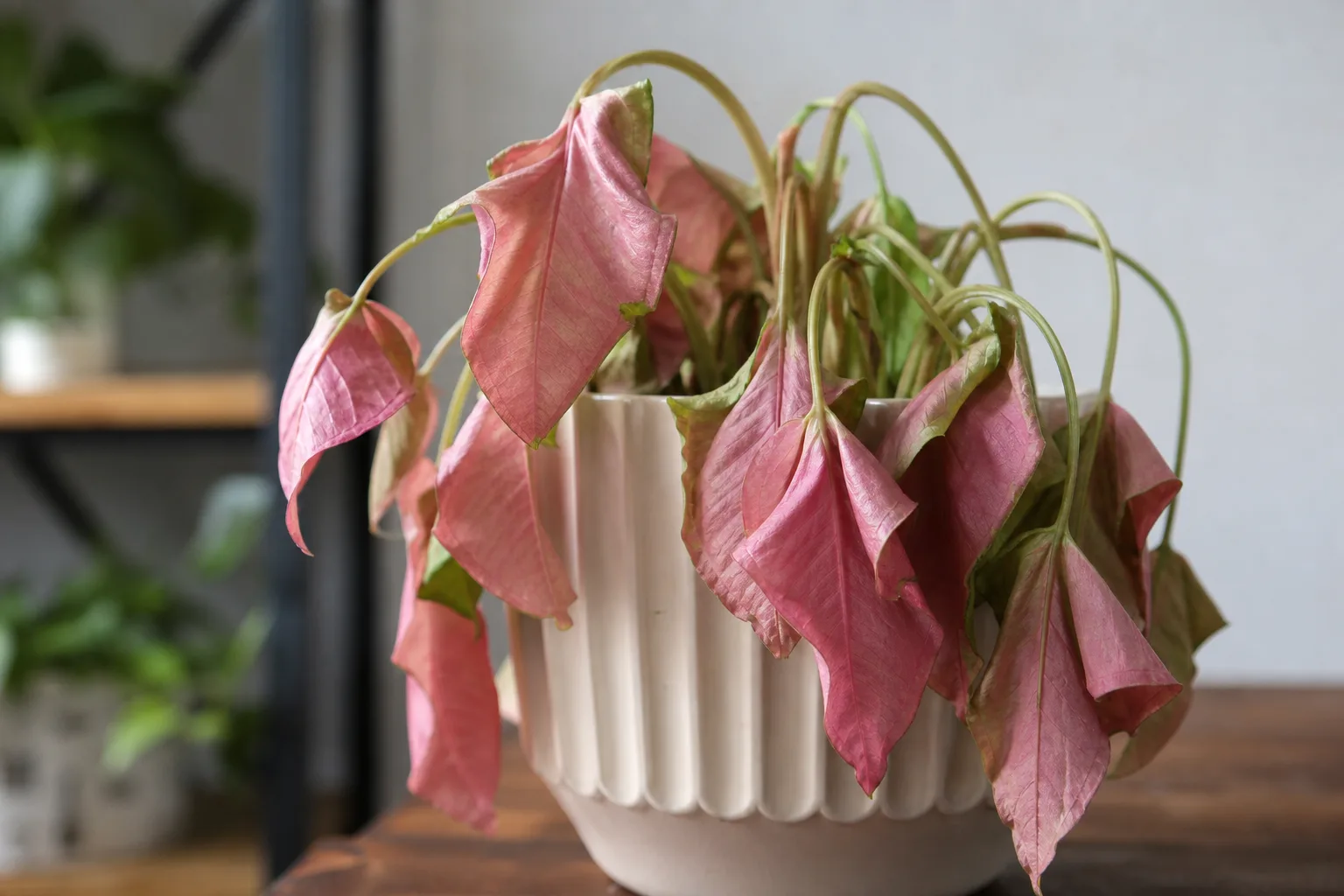
Drooping Leaves on Syngonium Pink: Causes, Checks & Fixes
This guide covers drooping leaves on Syngonium Pink. See also the general Drooping Leaves guide, watering, and light pages for this plant.
Drooping Leaves on Syngonium Pink: Causes, Checks & Fixes
Quick answer
On Pink Syngonium, drooping shows up first in the long petioles that hold juvenile arrowhead leaves-the pink blush on new growth can still look healthy while those stems hang straight down, which tricks growers into guessing wrong about water. Syngonium podophyllum ‘Pink’ loses leaf rigidity when cells lack internal water pressure (turgor), either because the mix is too dry or because damaged roots cannot absorb water from wet soil.
First step: lift the pot and check moisture an inch deep before you change anything. A light, dry pot means thirst. A heavy, wet pot means pause watering and inspect roots-not another soak. Getting this wrong is the most common reason drooping Pink Syngonium gets worse instead of better.
Drooping vs. wilting on this cultivar: This page covers gradual petiole sag-Syngonium’s common thirst warning and slow slump from heat or low humidity. For sharp collapse with wet soil (limp leaves above damp mix, sour smell, rapid yellowing), start with wilting on Syngonium Pink for the wet-soil decision tree and root-failure escalation.
How drooping differs from wilting on Syngonium Pink
The terms overlap in casual conversation, but they point to different patterns on this plant:
| Pattern | What you see | Soil clue | Best guide |
|---|---|---|---|
| Drooping | Petioles hang gradually; plant may look tired but not collapsed | Often dry at 1 in., light pot-or slow dry-down in dim rooms | This page |
| Wilting | Sharper loss of firmness; whole plant may slump fast | Wet heavy pot with limp leaves, or sudden dry spell | Wilting guide |
| Leggy sag | Stretched stems cannot support soft leaves; wide internodes | Moist but slow dry-down in low light | Not enough light |
Unlike a peace lily, Syngonium Pink does not reliably bounce back from every droop episode. Allowing the plant to droop for too long or too many times leads to yellowing or browning of the oldest lower leaves-occasional thirst signals are normal; chronic collapse damages tissue permanently.
What drooping leaves look like on Syngonium Pink
On Pink Syngonium, droop is easy to spot because juvenile leaves sit on noticeably long petioles. When turgor drops, those petioles hang straight down and arrowhead blades fold slightly rather than holding their usual angle. The pink blush on new growth may still look normal at first, which tricks growers into assuming the plant only needs water-or into missing thirst when pink color masks stress.
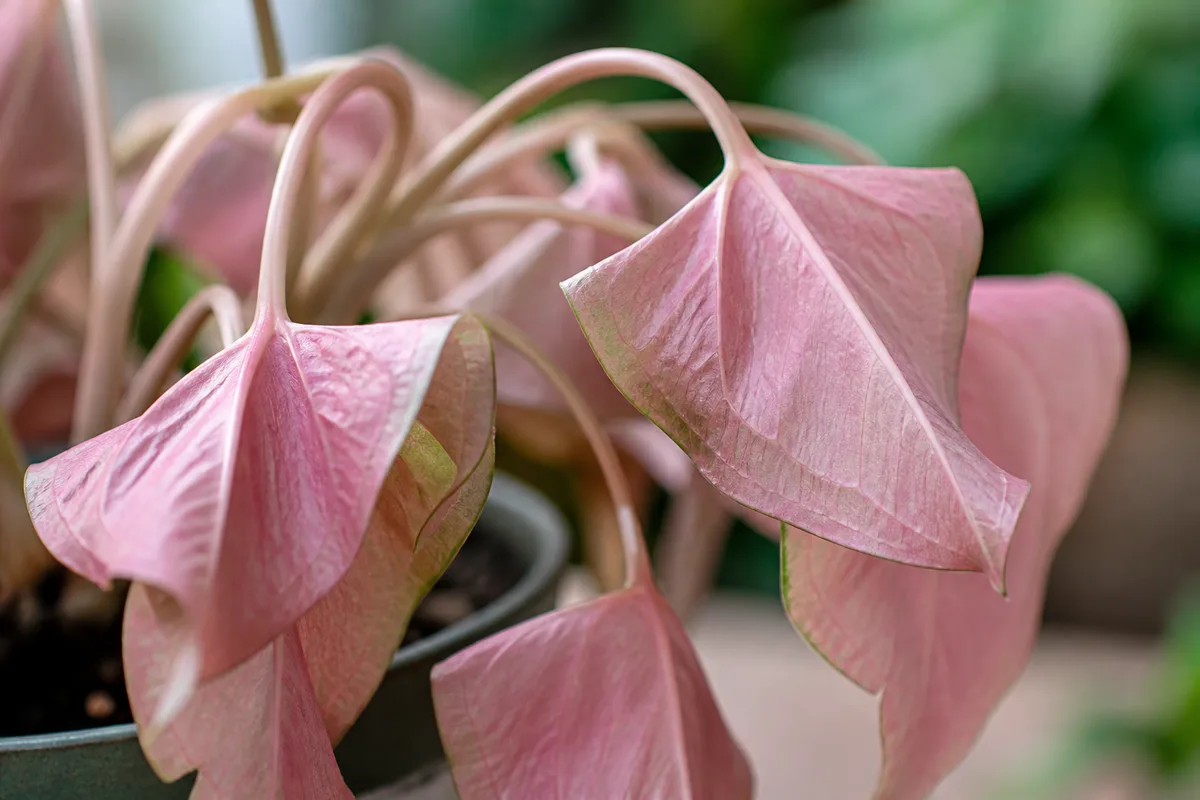
Drooping Leaves symptoms on Syngonium Pink - compare with healthy tissue on the same plant.
Typical droop patterns:
- Whole plant slumps evenly - common with underwatering or recent heat stress
- Only the side facing a hot window droops - light or heat overload on one exposure
- Newest leaves droop while lower leaves stay firmer - often thirst in active growth
- Leaves droop despite visibly damp soil - root uptake failure; see overwatering or root rot if mushy roots appear
- Temporary perk-up within hours after watering - classic dehydration response
Photo callouts to match at home: A thirsty Pink Syngonium in a lightweight 6-inch plastic pot shows limp petioles with dusty-dry mix an inch down. A wet-soil droop pair shows a heavy cool pot, limp blades, and often yellow lowest leaves while the surface still feels damp.
A real recovery vignette
In a July heat wave, a 6-inch nursery Pink Syngonium on a bright west shelf was watered on its usual five-day rhythm-but afternoon sun raised transpiration faster than roots could supply water. By evening every long petiole hung straight down; the top inch of mix was bone dry and the pot felt noticeably light. After a thorough soak with full saucer drainage, petioles firmed within eight hours and the plant held its angle normally by the next morning. The lesson: bright windows speed dry-down; droop on Pink Syngonium often means check weight, not calendar memory.
Why Syngonium Pink gets drooping leaves
Pink Syngonium is an aroid in the Araceae family with succulent stems and oxygen-hungry roots. It stores little water in its thin leaves compared with succulents, so moisture imbalance shows up fast as limp foliage. Several causes fit this plant’s normal care profile.
Underwatering - the most common cause
Syngonium is one of the few houseplants that visibly warns you it is thirsty. Extension Master Gardener guidance notes that Syngoniums will visibly droop when they need water, then stand tall again after a good drink. Pink cultivars in bright indirect light dry the top inch of mix quickly, especially in small pots on sunny shelves. Growers who wait for bone-dry soil throughout the pot often see petioles collapse before they notice dryness at the surface.
Overwatering and root stress
The same limp look appears when soil stays wet too long. Wilted or drooping leaves may indicate the soil is too dry or too wet-rotting roots cannot take up water. Aroid roots suffocate in saturated mix, especially in low light or oversized pots. Pink Syngonium in a dim corner with a heavy watering schedule is a common setup for wet-soil droop-start with overwatering on Syngonium Pink before roots turn mushy.
Light and heat stress
Pink and white variegated Syngonium varieties burn in too much direct sun, but bright windows also increase transpiration. A plant pushed against hot glass may droop on the sun-facing side even when soil moisture is adequate. Heat from radiators, AC vents, or sudden relocation can produce the same one-sided slump. Variegated cultivars need bright filtered light, not hot afternoon sun on pink leaves.
Low humidity and dry air
UF/IFAS recommends maintaining relative humidity between 40% and 60% for interiorscape Syngonium. Pink Syngonium targets the upper half of that range. In heated winter air below 40%, leaf margins may crisp while whole blades soften and droop from combined moisture loss and reduced root activity in cool soil. See low humidity on Syngonium Pink when crisp edges accompany sag.
Recent repotting or relocation
Transplant shock disturbs fine adventitious roots along Syngonium stems. Temporary droop for a few days after repotting is normal if stems stay firm and soil is evenly moist-not soggy. Moving from a stable shelf to a brighter or draftier spot can trigger the same short slump without root rot. Follow our repotting guide for timing and aftercare.
Leggy growth in low light
Weak, stretched stems from insufficient light cannot support soft arrowhead leaves well. This looks like droop but the underlying issue is etiolation, not turgor loss from watering. New growth opens pale green with less pink, and internodes stretch between leaves-see not enough light when stretch precedes sag.
Pest-related droop (less common)
Heavy spider mite or mealybug feeding can weaken turgor when infestations are advanced. You would usually see stippling, webbing, or cottony axil clusters alongside sag-not droop alone on an otherwise clean plant.
How to confirm the cause
Work through these checks in order. Each step narrows the diagnosis before you treat.
- Pot weight - Compare how heavy the pot feels now versus right after your last thorough watering. Light and dry strongly suggests thirst. Heavy and cool at the base suggests excess moisture.
- Moisture at depth - Push a finger or wooden skewer one inch into the mix. Dry at that depth with a light pot confirms underwatering. Damp or wet with a heavy pot points to overwatering or poor drainage.
- Stem firmness - Pinch the base of a drooping petiole and the main stem. Firm tissue with dry soil means rehydrate. Soft, mushy stems with wet soil mean root inspection.
- Soil smell and drainage - Sour odor, fungus gnats, or water sitting in the saucer for days confirm chronic wetness. Water running straight through dry, hydrophobic mix suggests drought stress masked by surface sprinkles.
- Light and placement - Note window direction, heat sources, and whether only one side droops. Check whether new leaves are opening with less pink than older ones-a stress flag alongside limp foliage.
- Recent changes - Repotting, fertilizer, or moving within the past week explains temporary droop when moisture and stems check out otherwise.
Wet-vs-dry droop decision table
| Soil at 1 in. | Pot weight | Stem base | Most likely cause | First action |
|---|---|---|---|---|
| Dusty dry | Light | Firm | Underwatering | Thorough soak; empty saucer |
| Damp–wet | Heavy | Firm to slightly soft | Overwatering / early root stress | Pause water; brighter indirect light; see overwatering |
| Wet | Heavy | Soft, mushy | Root rot | Unpot, trim, repot-root rot guide |
| Dry surface, dry at depth | Very light | Firm | Severe drought | Bottom-soak 20–30 min; see underwatering |
| Evenly moist | Moderate | Firm, stretched internodes | Leggy low-light sag | Brighter filtered light; not more water |
| Normal moisture | Normal | Firm, one-sided | Heat or draft | Move off hot glass or vent |
If dry soil and a light pot align with limp leaves, underwatering is confirmed. If wet soil, firm-to-soft stems, and yellowing lower leaves align, prioritize root health over another watering.
First fix for Syngonium Pink
Lift the pot. If the top inch is dry and the pot feels light, water thoroughly until runoff drains from the bottom. If the mix is wet and the pot is heavy, stop watering and move the plant to brighter indirect light with airflow so the root zone can dry.
This single decision prevents the two biggest mistakes: drowning an already wet plant or letting a dry one collapse further. For thirst, soak until water exits drainage holes, then empty the saucer. For wet roots, skip the soak and let the top inch approach dryness before any future water.
Do not fertilize, repot, or prune heavily until turgor stabilizes and you know which path you are on.
Step-by-step recovery
If underwatering caused the droop
Water until the mix is evenly saturated and excess drains away. For severely dry soil that repels water, bottom-soak the pot in a basin for twenty to thirty minutes, then let it drain fully. Syngoniums typically stand tall again after a good drink, often within hours.
Recheck the next morning. Leaves that remain limp after a confirmed deep soak may have tissue damage from repeated drought-focus on preventing the next dry spell rather than watering again immediately.
If overwatering caused the droop
Pause all watering. Move Pink Syngonium to bright indirect light so the plant uses moisture faster without scorching pink foliage. If drooping persists beyond forty-eight hours with wet soil, gently unpot and inspect roots. Trim mushy, brown sections with clean scissors, repot into fresh chunky aroid mix per our soil guide, and resume watering only when the top inch dries.
If heat, light, or draft stress caused the droop
Move the plant out of direct sun and away from AC blasts or heater vents. Filter harsh midday light with a sheer curtain. Keep soil moisture steady-do not compensate for heat stress by overwatering.
If low humidity contributed
Group plants, use a pebble tray, or run a humidifier to keep room humidity nearer 50–60%. Misting alone does not fix root-zone water balance, but stable ambient humidity reduces edge crisping that often accompanies droop in dry winters.
Lookalike symptoms
Wilting vs drooping: On this plant the terms overlap in conversation but differ in pattern. Drooping describes gradual petiole sag-often thirst on Pink Syngonium. Wilting describes sharper collapse, especially with wet soil and root failure. Use wilting on Syngonium Pink when the wet-soil paradox is your main clue.
Leggy growth: Stretched stems with wide internodes and faded pink on new leaves signal low light, not dehydration. Brighter indirect light firms growth over weeks; watering more will not fix stretched petioles.
Yellow leaves: Yellow lower leaves with wet soil point to overwatering. Yellow oldest leaves after repeated drought follow chronic underwatering. Drooping alone without yellowing often means you caught the problem early-see yellow leaves on Syngonium Pink when color change leads.
Recovery timeline
| Cause | First sign of improvement | Full firmness |
|---|---|---|
| Mild underwatering | Perk-up within 6–24 hours after soak | 1–3 days |
| Severe drought | Some leaves firm; others may yellow | Lower damaged leaves may not recover |
| Overwatering (early) | Droop stops spreading after dry-down | 1–2 weeks with stable new growth |
| Root rot (moderate) | Firm new leaves after trim and repot | Several weeks; judge by roots and new shoots |
| Heat or relocation shock | Stabilizes within 24–48 hours after move | 3–7 days |
Judge success by new growth opening firm and pink-stable, not by whether every old drooped leaf re-stiffens. Damaged lower foliage may yellow and drop even after the plant recovers.
Mistakes to avoid
- Watering automatically when leaves droop - Wet-soil droop worsens with more water. Clemson Extension notes that wilting does not always mean thirst-root injury from overwatering can cause wilt that extra water worsens. Always check moisture first.
- Letting Pink Syngonium droop repeatedly - Occasional thirst signals are normal; chronic collapse damages oldest leaves permanently.
- Misting instead of correcting root-zone moisture - Surface mist does not replace a proper soak or a needed dry-down period.
- Repotting on day one - Only unpot when wet soil, sour smell, or mushy roots confirm failure. Simple thirst does not need repotting.
- Fertilizing stressed plants - Feed only after leaves firm and new growth resumes in spring or summer.
- Ignoring pot size and drainage - Oversized pots stay wet too long; cachepots without drainage trap runoff and mimic overwatering droop.
Syngonium Pink care cross-check
Drooping often traces back to a mismatch between this plant’s actual conditions and its baseline needs. Confirm these align:
- Light: Bright indirect or bright filtered light-not dark corners or hot afternoon sun on pink leaves. Full details in our Syngonium Pink light guide.
- Watering: Allow the potting surface to dry slightly before irrigating; for home pots, the top inch dry is a practical checkpoint. Season rhythm in our watering guide.
- Soil: Well-draining potting mix with bark or perlite so roots get airflow between waterings-see soil guide.
- Humidity: Moderate, around 50–60%, especially in heated winter rooms.
- Temperature: Roughly 16–27°C (60–80°F); UF/IFAS recommends 65–80°F to maintain leaf colorings. Avoid cold drafts below 13°C (55°F) near windows.
When light is too low, the pot dries slowly and stays wet at the root zone even if the surface looks acceptable-setting up wet-soil droop on a plant that appears properly watered.
How to prevent drooping next time
Learn your pot’s dry-down rhythm instead of watering on a calendar. In bright active growth, Pink Syngonium may need water every five to seven days; in cool dim winter, ten to fourteen days or longer is common. Lift the pot when you pass it-weight change is faster than guessing.
Keep bright indirect light stable year-round so water use stays predictable. Use pots with drainage holes and empty saucers after every soak. Avoid full sun that burns variegated pink foliage and increases water demand unevenly.
When bringing a new Pink Syngonium home, quarantine it and observe how fast the nursery mix dries in your room before changing pot, fertilizer, and placement all at once. Overview care context lives on the Syngonium Pink overview page.
When to worry
Escalate beyond basic fixes when:
- Drooping persists more than forty-eight hours after a confirmed correct soak for dry soil
- Soil stays wet and heavy for a week despite reduced watering and better light
- Stems soften at the base, soil smells sour, or yellowing climbs rapidly up the plant
- New growth stops entirely while older leaves collapse in sequence
- Drooping returns within days of every watering cycle-likely chronic root stress or oversized pot
At that stage, unpot, inspect roots, trim rot, and repot into appropriately sized, airy mix per root rot on Syngonium Pink. If most of the root system is mushy and stems are hollow, recovery is unlikely-propagate firm stem cuttings above healthy nodes per our propagation guide if any tissue remains viable.
Wear gloves when handling sap during inspection-arrowhead plant is harmful if eaten and irritates skin. Keep wilted leaves away from pets.
Related Pink Syngonium guides
- Syngonium Pink overview - Baseline care and growth habit
- Syngonium Pink watering - Top-inch checks and season rhythm
- Syngonium Pink light - Bright filtered light for pink cultivars
- Wilting on Syngonium Pink - Wet-soil collapse and sharp wilt decision tree
- Underwatering on Syngonium Pink - Light pot and deep-soak recovery
- Overwatering on Syngonium Pink - Early wet-soil rescue before mushy roots
- Root rot on Syngonium Pink - Trim-and-repot when roots fail
- All Syngonium Pink problems
Conclusion - action checklist
Before you water a drooping Pink Syngonium:
- Lift the pot - light means soak; heavy means pause.
- Probe one inch deep - dry confirms thirst; wet confirms dry-down or root check.
- Pinch the stem base - firm with dry soil = water; soft with wet soil = inspect roots.
- Route by pattern - gradual sag here; sharp wet-soil collapse on wilting.
- Judge recovery by new firm pink growth, not old drooped leaves.
Most Pink Syngoniums recover quickly from a single missed watering, but repeated droop or wet-soil collapse needs a care correction-not more of the same habit.