Low Humidity on Syngonium Pink: Causes, Checks & Fixes
Quick answer
Dry heated air below 40% humidity can crisp pink arrowhead edges on Syngonium Pink even when watering is correct. First step: place a hygrometer near the foliage and run a humidifier until readings hold around 50–60% at the canopy.
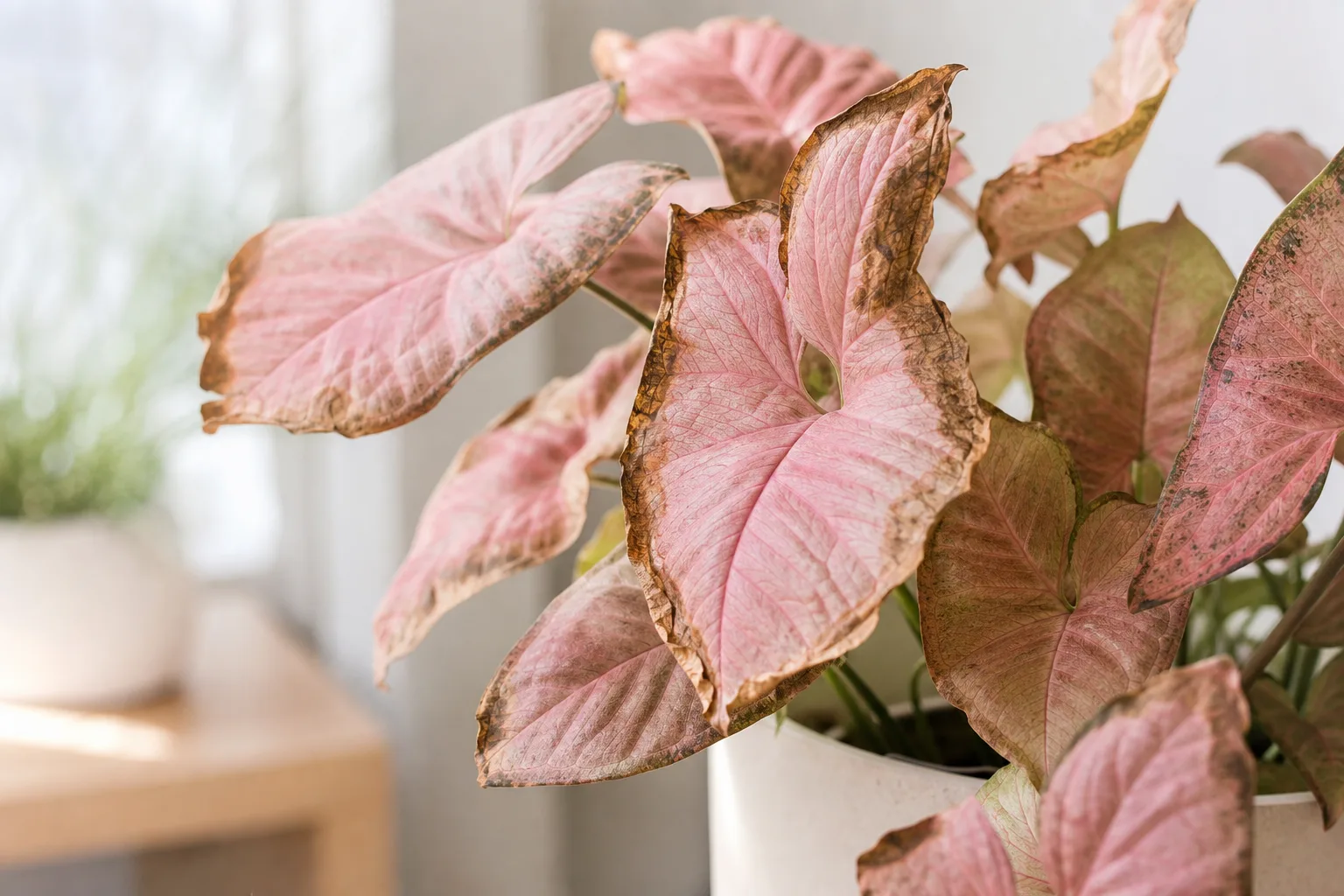
Low Humidity on Syngonium Pink: Causes, Checks & Fixes
This guide covers low humidity on Syngonium Pink. See also the general Low Humidity guide, watering, and light pages for this plant.
Low Humidity on Syngonium Pink: Causes, Checks & Fixes
Quick answer
Syngonium Pink is a tropical understory aroid sold for its blush-pink arrowhead foliage. It tolerates average home conditions better than true humidity divas like maidenhair ferns, but forced-air heating can drop relative humidity below 30% in winter. At that level, thin pink leaf margins lose water faster than roots replace it, and edges crisp even when you water on schedule.
First step: place a hygrometer at canopy height and run a humidifier until readings hold around 50–60% near the leaves. Do not increase watering to fix dry air-that invites root problems on a plant that already prefers drying slightly between drinks.
Why low humidity hits Syngonium Pink harder than all-green arrowheads
Syngonium podophyllum evolved in moist, elevated forests where humidity stays high through the day. NC State notes the ideal interior location includes a warm setting with high humidity-not steam-room levels, but well above desert-dry winter living rooms.
Pink Syngonium cultivars add a second vulnerability. Pale pink and cream segments on the arrowhead blades carry less chlorophyll and thinner tissue than solid green zones. Master Gardener guidance from Virginia notes that mottled pink and white segments often brown first when humidity drops or the plant dries out between waterings. On Syngonium Pink, that pattern shows up as tan or brown patches on the blush zones while the green base of the leaf may still look fine for a while.
Placement near heat vents, wood stoves, or south-facing glass in winter compounds the problem. Hot dry air pulls moisture from leaf tips-the last part of the blade the vascular system reaches-while the pot may still hold adequate moisture. Owners often misread this as underwatering and add water to already-appropriate soil, which Syngonium tolerates poorly over time.
As Pink Syngonium matures, it may start vining and produce larger lobed leaves. Juvenile arrowheads are what most pots show at purchase, and those thin pink edges are the first tissue to crisp in dry air. Color intensity also shifts with light-judge the newest unfurling leaves, not older faded ones at the base, when deciding whether humidity is the real issue.
What low humidity looks like on Syngonium Pink
Typical dry-air pattern:
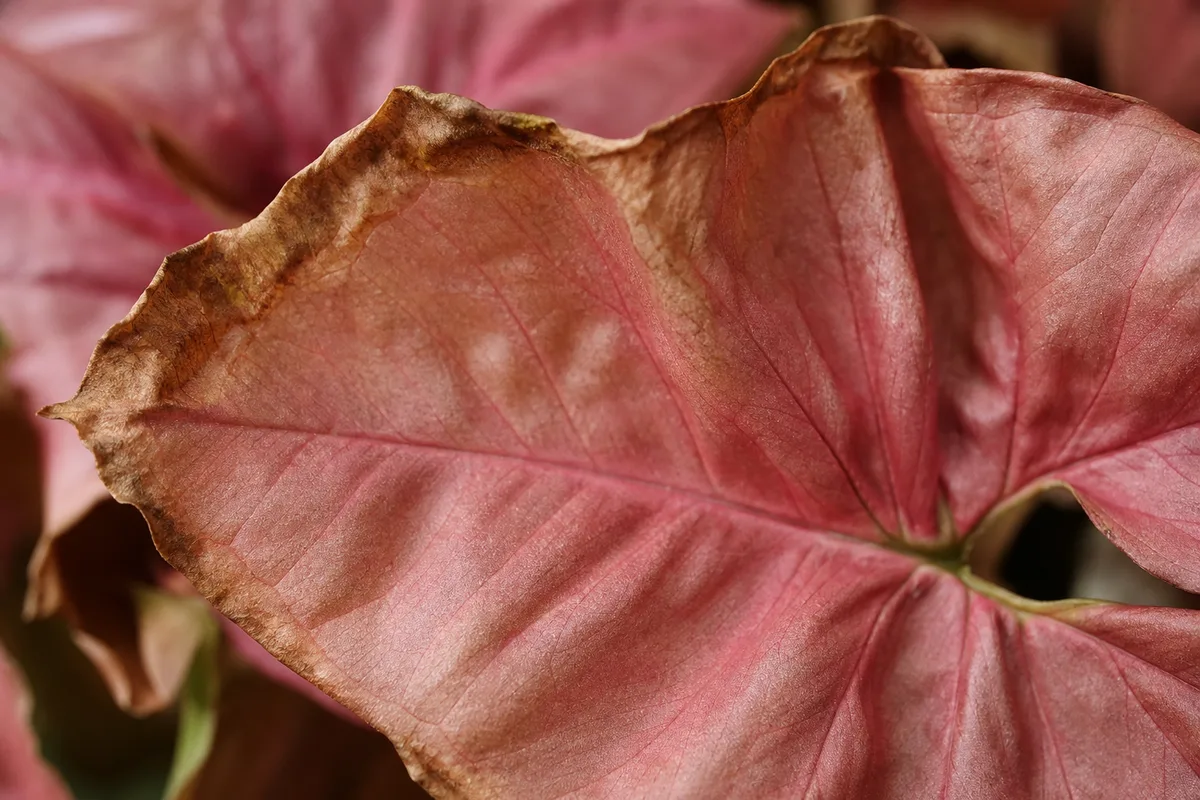
Low Humidity symptoms on Syngonium Pink - compare with healthy tissue on the same plant.
- Crisp brown or tan edges on pink or salmon arrowhead leaves, often starting at the pointed tip
- Pink zones turning papery before green tissue shows damage
- Several leaves affected similarly without round spots, mushy patches, or webbing
- Symptoms worsening after heating season starts or after moving the pot near a vent
- New leaves opening slightly smaller or with tighter curl at margins in very dry rooms
- Soil moisture normal for your routine-the top inch dries on schedule and stems feel firm
What low humidity usually does not look like:
- Yellowing starting from the oldest leaf at the soil line with constantly wet mix (overwatering)
- Soft, collapsed stems with sour-smelling soil (root rot)
- Fine stippling with silk webbing on undersides (spider mites in hot dry conditions)
- Crisp patches only on leaves touching a cold window pane (cold glass injury, not whole-plant humidity)
Unlike underwatering, low-humidity damage rarely makes the whole plant wilt dramatically at once. The plant can look perky at the stem while margins cook-a confusing picture if you only glance at soil moisture.
How to confirm the cause
Work through these checks in order before committing to a humidity setup:
- Measure air moisture - Place a hygrometer within 30 cm (12 in) of the foliage, not across the room. Readings below 40% in winter strongly support dry-air edge burn. UF/IFAS recommends maintaining 40% to 60% relative humidity for interior Syngonium to preserve leaf quality.
- Review Syngonium Pink watering guide - Stick a finger into the top inch of mix. If it stays wet for days and lower leaves yellow, pause humidity work and address drainage and watering first.
- Check heat and airflow paths - Note whether a register, radiator, or space heater blows directly on leaves. Move the pot temporarily and watch whether new damage stops on leaves that open after the move.
- Inspect for spider mites - Tap an affected leaf over white paper and look for moving specks, or check undersides for webbing. Spider mites are listed pests on Syngonium and surge in hot, dry, dusty conditions. Mite stippling is pin-prick pale dots, not a continuous brown rim.
- Rule out salt and fertilizer burn - Brown tips from accumulated salts often follow heavy fertilizing or hard tap water and may appear on one side of the pot. Flush the mix if a white crust rings the pot lip.
- Compare seasonal timing - Edge crisping that appears when furnaces start, then stabilizes in spring, fits low humidity better than a sudden root failure.
If humidity reads low, watering is stable, pests are absent, and edges still crisp on new growth, dry air is the working diagnosis.
First fix for Syngonium Pink
Run a cool-mist or evaporative humidifier near the plant until a hygrometer at canopy height reads 50–60% for most of the day.
This one action addresses the actual stressor-ambient air moisture-without changing watering, Syngonium Pink repotting guide, or fertilizer. Point the output so mist drifts toward the foliage but does not soak leaves continuously in a dim corner. Syngonium Pink wants bright indirect light; wet leaves sitting in low light overnight raise fungal risk more than dry air alone.
Do not compensate for dry air by watering more often. Missouri Botanical Garden guidance is to water regularly but allow the surface to dry slightly-extra moisture in the pot does not humidify the leaf edges.
Step-by-step recovery
After the humidifier is running:
- Move the pot off the heat path - Shift it at least 60 cm (2 ft) from blowing vents or radiators while keeping bright indirect light.
- Trim only fully dead margins if they snag or spread rot - Partial crisp tips can stay until new growth arrives; they will not re-green.
- Add secondary humidity if needed - A pebble tray (pot above water, not sitting in it) or grouping with other tropicals raises local moisture modestly. Pebble trays help near the plant but humidifiers change room air more reliably in dry winters.
- Maintain normal watering - Water when the top inch of soil dries. Letting the plant wilt repeatedly to test thirst stresses pink tissue further.
- Rinse foliage lightly if mites are suspected - A morning shower or wipe removes dust and discourages mites in dry rooms. Treat confirmed mite colonies separately; humidity alone will not clear an active infestation.
- Hold fertilizer until edges stabilize - Resume light feeding only when new leaves open clean for two to three weeks.
Keep the humidifier running through the heating season rather than for a single weekend. Air moisture drops again within hours once the unit stops in a dry room.
Recovery timeline
You should see the damage pattern stop spreading within one to two weeks once humidity holds in the target range. Existing brown edges remain permanently crisp-tropical aroids do not repair dead margin tissue.
Judge success on new growth: the next one or two arrowheads should open with fuller pink color and intact edges. That typically takes two to four weeks in active spring or summer growth, and somewhat longer in cool winter light when the plant grows slowly.
If new leaves still crisp after three weeks above 50% humidity, re-check light intensity, watering, and mites before assuming the humidifier is too small.
Lookalike symptoms to rule out
Underwatering wilts the whole leaf and stem, not just margins. Soil pulls away from the pot sides and feels bone dry top to bottom. Recovery after a thorough soak is faster than humidity correction-leaves perk within hours.
Overwatering yellows older leaves first, often with soft petioles and musty soil. Humidity fixes will not help if roots are suffocating.
Spider mites leave stippled pale dots and fine webbing, especially on undersides. Dry air favors mites, so both problems can coexist-raise humidity and rinse or treat if webbing is present.
Direct sun burn bleaches or scorches patches on leaves facing the window, often with a sharp line between damaged and healthy tissue. Pink Syngonium burns easily in too much direct sun; move it back from harsh rays before chasing humidity.
Fluoride or salt tip burn affects leaf tips symmetrically after months of hard water or heavy fertilizer. Humidity will not fix it until salts are flushed from the mix.
Mistakes to avoid
Do not mist heavily into a dim corner as your only humidity strategy. Brief misting evaporates in minutes and wets leaves without raising room air meaningfully. In low light, wet foliage overnight invites bacterial spotting.
Do not place the pot bottom in a pebble tray full of water. Roots need oxygen; standing in waterlogged saucers causes rot on a plant already sensitive to soggy mix.
Do not crank watering because edges look dry. The edges are losing water to air, not signaling thirst in the root zone.
Do not repot or fertilize a stressed Pink Syngonium on day one. Stable humidity and watering come first.
Do not expect old damaged pink zones to pink up again. Trim for aesthetics only after new clean leaves confirm conditions are right.
Syngonium Pink care cross-check
Low humidity rarely exists in isolation. Confirm these baseline needs while correcting air moisture:
- Light - Bright to medium indirect light keeps growth compact and color steady. Too little light produces pale, weak leaves that crisp faster at edges.
- Water - Top inch dry before the next drink; reduce frequency slightly in winter but do not let the root ball go brick-hard for weeks.
- Temperature - Comfortable room range roughly 16–27°C (60–80°F). Cold drafts on wet leaves cause different damage than dry heat.
- Pet safety - Syngonium Pink is toxic to cats and dogs. Keep humidifiers and trailing vines out of pet reach when repositioning for humidity.
How to prevent low humidity damage next time
Run a humidifier from October through March in heated rooms, or place the plant in a bright bathroom where shower steam naturally raises moisture. Monitor with a hygrometer rather than guessing from skin dryness.
Group Syngonium Pink with other tropicals to share transpired moisture, but leave air space between pots so airflow does not stagnate.
Keep the plant away from the direct path of HVAC vents. A shelf above a radiator looks decorative but creates a dry microclimate.
Maintain consistent watering through winter-allow the top inch to dry, not the entire root mass. Repeated wilt cycles weaken pink tissue before humidity even becomes the limiting factor.
When buying new Pink Syngonium, quarantine and observe for two weeks. Edge crisping that appears immediately after transport may combine relocation shock with dry shop air; stabilize humidity before stacking other changes.
When to worry
Low humidity alone seldom kills a healthy Syngonium Pink with firm roots. Treat as more urgent when:
- Most of the canopy shows advancing tan patches week after week despite corrected humidity
- Spider mite webbing covers multiple leaves and stippling spreads faster than humidity corrections
- Stems soften at the soil line or smell sour-root rot, not humidity, is the primary threat
- New leaves fail to open for more than a month in warm bright conditions after humidity improvement
Cosmetic edge crisp on a few older leaves in winter while new growth stays clean is normal stress, not a crisis.
Conclusion
Brown crisp edges on Syngonium Pink usually mean the air is too dry for pink arrowhead tissue-not that the plant needs more water. Measure humidity at the leaves, run a humidifier toward 50–60%, and keep the pot away from heating blasts while maintaining your normal dry-down watering. Old damage stays brown; clean new pink leaves tell you the fix worked. That diagnostic path saves healthy roots from unnecessary soaking and keeps the blush color on the leaves you are still waiting to unfurl.
When to use this page vs other Syngonium Pink guides
- Syngonium Pink watering guide - Use for routine moisture checks before assuming low humidity is the main issue.
- Syngonium Pink problems hub - Browse all 2 common issues on this species.