Aphids on Syngonium Pink: Causes, Checks & Fixes
Quick answer
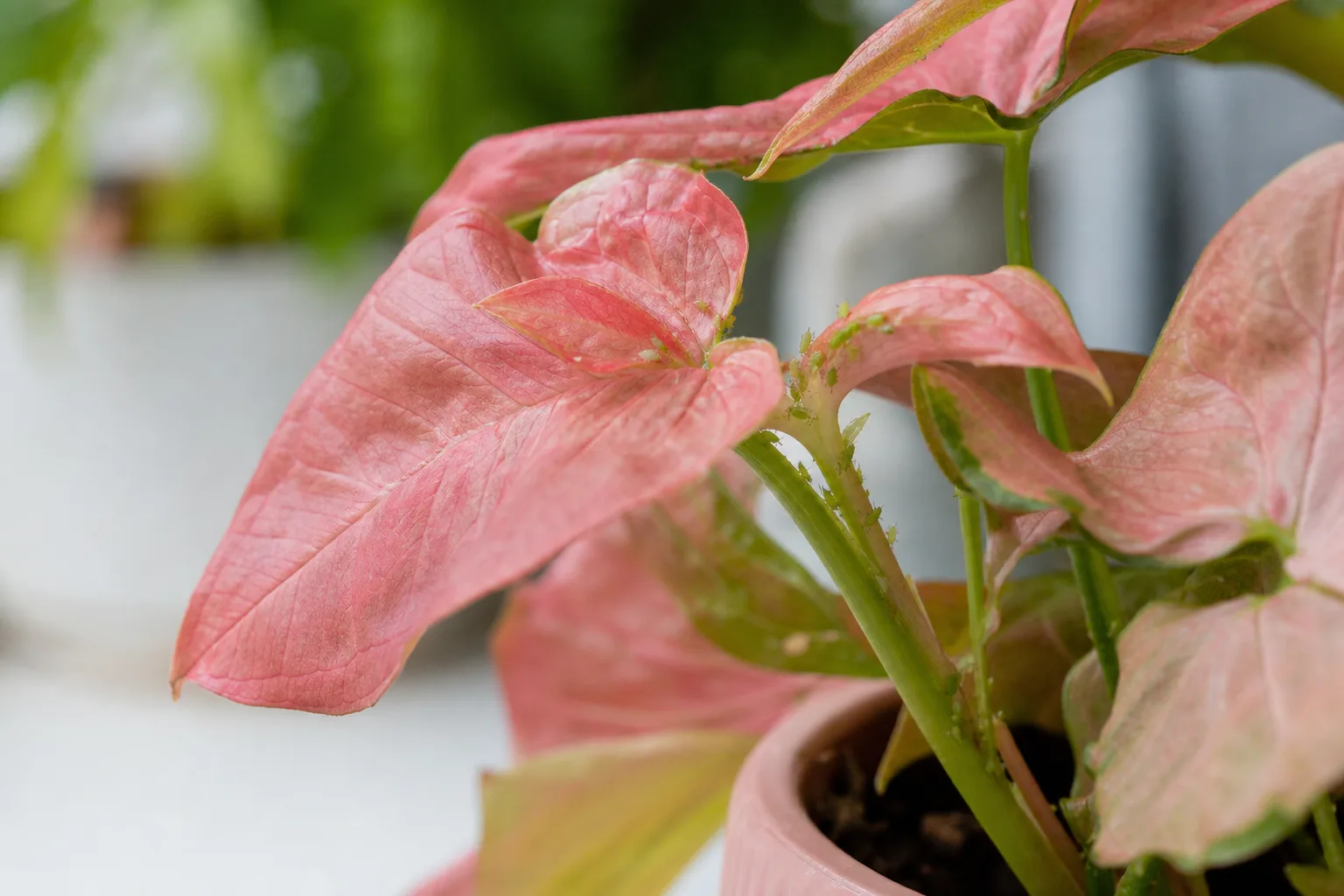
Aphids on Syngonium Pink gather on unfolding arrowhead leaves and soft stem tips, leaving sticky honeydew that can dull pale pink foliage. First step: isolate the plant and rinse leaf undersides and growing tips with a firm stream of water before applying any spray.
Aphids on Syngonium Pink: Causes, Checks & Fixes
This guide covers aphids on Syngonium Pink. See also the general Aphids guide, watering, and light pages for this plant.
Aphids on Syngonium Pink: Causes, Checks & Fixes
Quick answer
Aphids on Syngonium Pink (Syngonium podophyllum ‘Pink’) show up where the plant is softest: unfolding arrowhead leaves, pink-tipped stem nodes, and the undersides of new vine segments. These sap-feeding insects pierce tender tissue, drain fluids, and excrete sticky honeydew that can attract ants and sooty mold on pale pink foliage.
First step: move the plant away from neighbors and rinse growing tips and leaf undersides with a firm stream of water. That single action dislodges many aphids, washes fresh honeydew, and lets you confirm live insects before you reach for soap or oil. Do not fertilize or repot on day one-a stressed Syngonium with a pest colony needs isolation and mechanical removal first.
What aphids look like on Syngonium Pink
Healthy Syngonium Pink puts most of its color on new growth. Aphids exploit that same zone. You will usually find them first on:
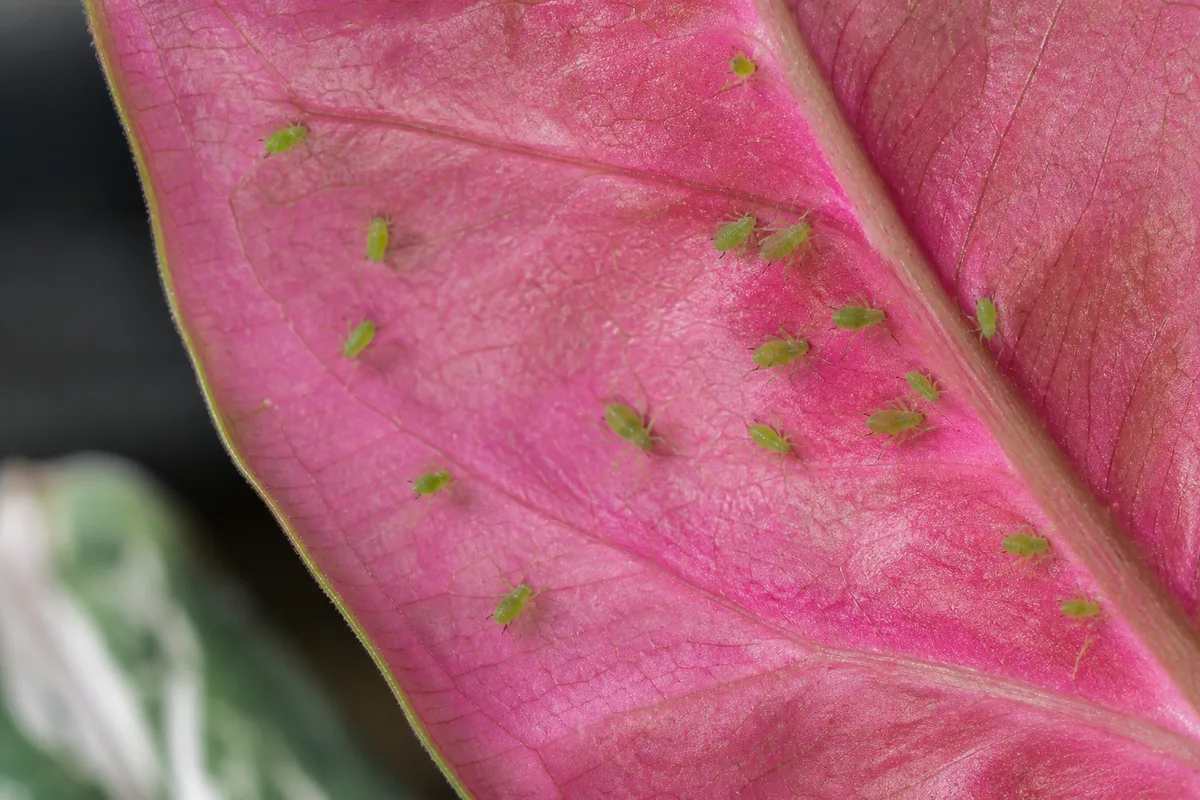
Aphids symptoms on Syngonium Pink - compare with healthy tissue on the same plant.
- Soft stem tips where the next arrowhead leaf is opening
- Leaf undersides along midribs on the newest segments
- Petiole joints where sap is most accessible
- Occasionally on older leaves if the infestation has spread
Individual aphids are tiny-roughly pinhead size-with pear-shaped soft bodies and visible legs. Colors vary: green, black, brown, or pinkish forms all occur on houseplants. Wingless adults cluster densely; winged forms may appear when a colony outgrows its spot and needs to disperse.
Damage on this cultivar shows up quickly because new leaves are thin and pale. Expect:
- Shiny, tacky honeydew on upper leaf surfaces where drips land
- Slightly curled or twisted young arrowhead leaves
- Pale or washed-out pink on tips where sap loss is heavy
- Whitish cast skins left behind after molting
- Ant activity on pot rims, shelves, or nearby plants
Black sooty mold can follow honeydew. It wipes off and does not infect Syngonium tissue directly, but a thick coating on pale leaves blocks light and makes the plant look worse than the underlying pest problem.
Why Syngonium Pink gets aphids
Syngonium podophyllum is a tropical aroid sold mainly for colorful juvenile foliage. It pushes new leaves steadily in Syngonium Pink light guide and slows in dim or cool conditions. When light and warmth return-especially in spring-vining Syngonium types produce a flush of tender shoots. Aphids feed on that soft new growth across many houseplants, not on one cultivar alone.
Several Syngonium-specific habits make infestations easier to spot and sometimes worse if ignored:
Constant new tips. Whether you keep Syngonium Pink bushy on a shelf or let it trail from a hanger, the plant keeps producing soft tissue at growing points. Aphids colonize those tips before you notice damage on mature leaves.
Indoor conditions without predators. Outdoors, lady beetles, lacewings, and parasitic wasps knock aphid numbers down. Indoor collections lack that backup unless you deliberately preserve beneficial insects.
Hitchhikers on new plants. Nursery stock, open windows in warm weather, and mixed plant displays are common entry routes. Pink cultivars offer no special resistance-if a neighboring plant carries aphids, your Syngonium is a suitable host.
Soft growth from excess nitrogen. Heavy feeding during active growth produces lush, tender shoots that aphids prefer. This is not the primary cause, but it can accelerate colony buildup after aphids arrive.
Crowded placement. Syngonium Pink often sits among other foliage plants on shelves or in terrarium-style groupings. Poor airflow and shared honeydew let colonies spread before weekly care catches them.
Low light alone does not create aphids, but a weak plant in dim conditions recovers more slowly after feeding damage. Bright indirect light helps the plant outgrow minor injury once pests are controlled.
How to confirm the cause
Work through these checks in order before you spray:
- Location on the plant - Aphids cluster on growing tips and young leaf undersides. If stickiness appears only on old lower leaves with no insects, look for scale or mealybugs instead.
- Hand lens inspection - Confirm soft pear-shaped bodies with legs and antennae. Mealybugs look white and cottony. Scale stays flat and does not walk when disturbed.
- Honeydew test - Rub a sticky upper leaf. Honeydew feels tacky and may smear; normal leaf texture does not leave a shiny film unless pests are present.
- Ant check - Ants farming honeydew on the saucer or pot exterior strongly suggest aphids or other sap feeders on the plant above.
- Shake test - Gently flick a stem tip over white paper. Aphids fall as tiny moving specks. Whiteflies fly in a cloud-different pest, different treatment emphasis.
- Neighbor scan - Inspect plants within a metre of the affected Syngonium. Aphids move to nearby soft growth; treating one pot while ignoring others leads to reinfestation.
- Care cross-check - Confirm the pot is not waterlogged and light is adequate. Chronic overwatering causes yellow leaves, not insect clusters-but stressed plants recover slower after you treat pests.
If you find insects matching aphids on new growth with honeydew, the diagnosis is confirmed. Sticky leaves with no visible insects may point to scale, mealybugs, or a recent rinse that removed bugs but left residue-inspect again in two days.
First fix for Syngonium Pink
Isolate the plant and rinse leaf undersides and stem tips with a firm stream of water.
Move Syngonium Pink away from other houseplants to a sink, shower, or outdoor shade if weather allows. Tilt the pot and spray from below with a forceful stream of water so water hits the backs of new arrowhead leaves and node joints where aphids hide. Use enough force to knock insects off without shredding soft tissue. Let foliage dry in bright indirect light the same day.
This one step achieves three things: it removes a large share of the colony, washes honeydew before ants and sooty mold arrive, and confirms you are treating live aphids rather than an old sticky residue.
Do not apply insecticidal soap before this rinse unless you cannot move the plant-soap on dusty honeydew-covered leaves works poorly. Do not prune heavily on day one unless a single tip is the only infestation site.
Step-by-step recovery
After the initial rinse, continue in this order based on severity:
- Repeat water sprays every two to three days until hand-lens checks show no live aphids on new tips for at least one week.
- Apply insecticidal soap if colonies persist after several rinses. Cover undersides and stem joints thoroughly; the product must contact insects directly. Repeat at label intervals-typically every four to seven days-through at least two to three applications to catch newly hatched nymphs.
- Test sensitivity first on one leaf if you have not used soap on Syngonium Pink overview before. Syngonium leaves are generally sturdy, but variegated and pink-tipped tissue can show phytotoxicity if product is applied in hot, direct sun or on drought-stressed plants.
- Wipe sooty mold from upper leaves with a damp cloth once honeydew production stops. Trim leaves that stay heavily coated and no longer photosynthesize well.
- Manage ants if they protect colonies. Ant barriers on pot feet or saucers help natural enemies reach aphids; controlling ants alone does not replace rinsing the plant.
- Inspect neighbors and treat any secondary infestations before returning Syngonium Pink to a shared display.
Hold fertilizer until new growth looks clean for two weeks. Feeding during an active infestation pushes more tender tissue aphids prefer.
Recovery timeline
Moderate colonies often decline within three to five days after the first thorough rinse. A full soap course may take one to two weeks with label-interval repeats. New arrowhead leaves should emerge without curling or stickiness within two to three weeks once insects stay gone.
Older leaves that yellowed or lost pink intensity from heavy feeding rarely revert fully. Judge success by clean new tips and steady vine extension, not by cosmetic recovery on damaged foliage you could prune away anyway.
Lookalike symptoms to rule out
Mealybugs appear as white cottony clusters in leaf axils and along veins-not loose groups of walking pear-shaped insects. Alcohol on a swab removes them individually; aphid colonies rinse off in sheets.
Scale insects look like flat brown or tan bumps glued to stems and leaf undersides. They do not move when poked. Honeydew can still occur, but the insects themselves look nothing like aphids.
Spider mites cause fine stippling and webbing, usually in hot dry air-not dense clusters on stem tips. Confirm with a white-paper tap test under suspected leaves.
Powdery mildew puts a dry white powder on leaf surfaces without honeydew or insects.
Normal sap or water spots dry clear and do not return daily. Honeydew feels tacky again within hours if aphids remain active.
Mistakes to avoid
Do not ignore honeydew on pale pink leaves-it attracts sooty mold and ants that protect aphids from predators.
Do not return an isolated plant to a shelf display after one rinse. Wait until you see clean new growth for at least seven to ten days.
Do not use dish detergent in place of labeled insecticidal soap. Homemade mixes burn leaves unpredictably on indoor aroids.
Do not over-fertilize hoping to push past damage. Soft nitrogen-rich shoots feed the next aphid generation.
Do not compost heavily infested clippings near other houseplants.
Wash hands after handling sticky leaves if pets share the room-Syngonium Pink contains calcium oxalate crystals and is toxic to cats and dogs if chewed.
How to prevent aphids next time
Scout new growth weekly during warm months when Syngonium Pink vines actively. The newest pink-tipped leaves take seconds to inspect and catch colonies early.
Quarantine new purchases for at least one to two weeks before placing them near existing plants. Check stem tips and undersides at purchase-cosmetic old-leaf marks matter less than insects on new flush.
Keep bright indirect light and water when the top inch of mix dries so growth is steady, not a sudden burst of overly soft tissue after a feed or repot.
Avoid excess nitrogen during peak indoor growth. Balanced, half-strength feeding on an already healthy plant is enough; lush flushes attract aphids faster.
Preserve beneficial insects when possible. Broad-spectrum indoor sprays can remove lady beetles and lacewings that would otherwise help control aphids on nearby plants.
Improve airflow between crowded shelf plants. Stagnant warm pockets let aphid numbers build unnoticed.
When to worry
Treat as urgent when colonies cover most new growth, honeydew and sooty mold spread across multiple leaves within days, or the plant stops producing clean tips despite adequate light and watering. Syngonium Pink is ornamental foliage-prolonged sap loss on soft arrowhead leaves shows quickly as stunted, pale vines.
A handful of aphids on one stem tip after a single rinse is manageable. Winged adults appearing on several plants in the same room means a collection-wide issue, not a isolated spot treatment.
Replace or heavily cut back a severely declining plant only if repeated controlled treatments fail and new growth keeps emerging already infested. Most healthy Syngonium recover with isolation, rinsing, and labeled soap when caught before the canopy is coated in mold.
Conclusion
Aphids on Syngonium Pink concentrate on the same new arrowhead leaves you grow the plant for. Isolate early, rinse undersides and tips before you spray, and repeat until new pink growth comes in clean. That path protects the display value of this cultivar without unnecessary chemicals-and stops honeydew problems before they dull your whole shelf of foliage plants.
When to use this page vs other Syngonium Pink guides
- Syngonium Pink watering guide - Use for routine moisture checks before assuming aphids is the main issue.
- Syngonium Pink problems hub - Browse all 2 common issues on this species.
- Yellow Leaves on Syngonium Pink - Different entry point when symptoms overlap with aphids.