Brown Tips on Syngonium Pink: Causes, Checks & Fixes
Quick answer
Brown tips on Syngonium Pink are almost always moisture or water-quality stress, not fungal disease. First step: stick a finger into the top inch of mix-if it is wet, wait; if dry, water thoroughly with filtered or rested tap water and check humidity near the plant.
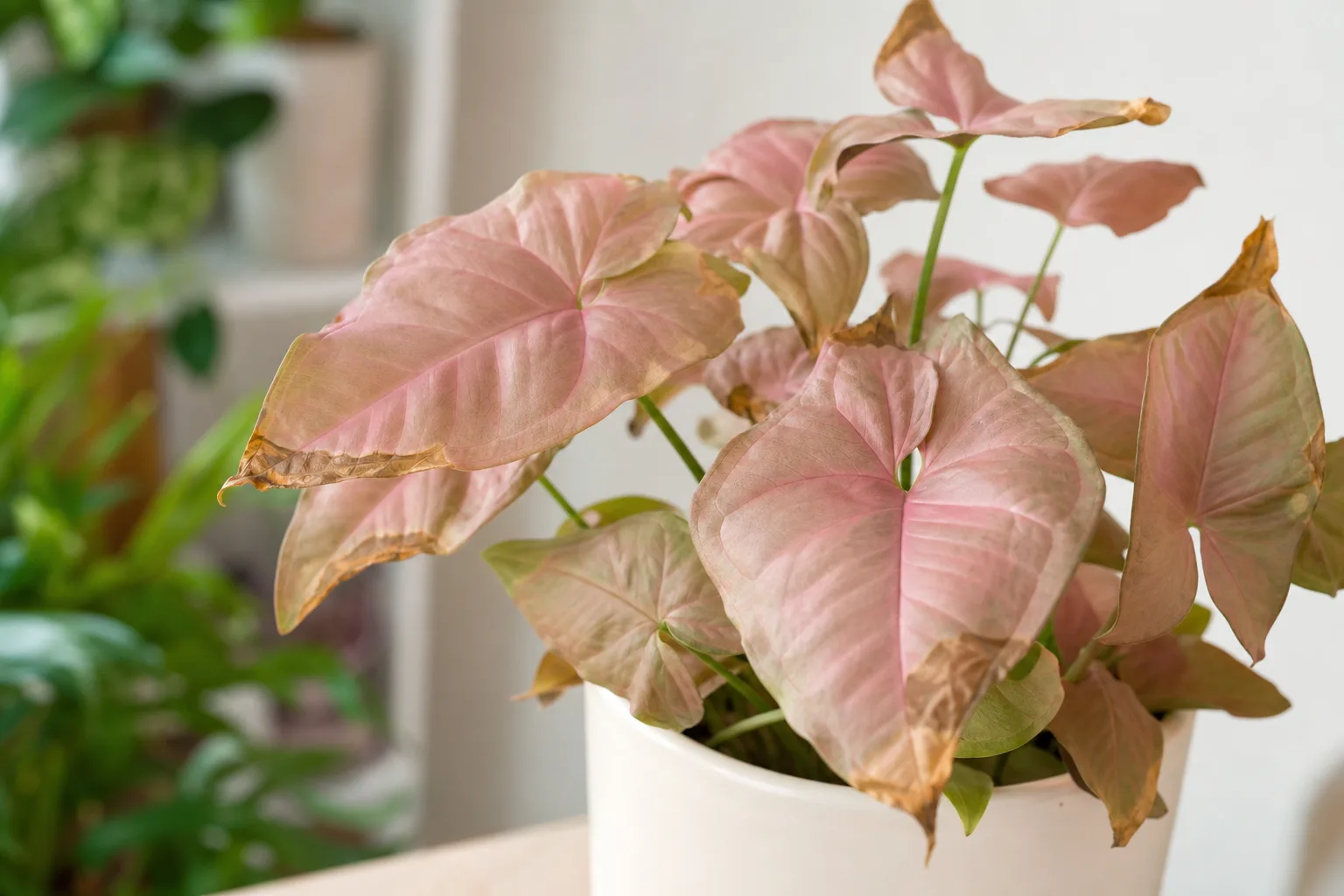
Brown Tips on Syngonium Pink: Causes, Checks & Fixes
This guide covers brown tips on Syngonium Pink. See also the general Brown Tips guide, watering, and light pages for this plant.
Brown Tips on Syngonium Pink: Causes, Checks & Fixes
Quick answer
Brown tips on Syngonium Pink (Syngonium podophyllum ‘Pink’) are a stress signal at the leaf margin, not a fungus on healthy tissue. The tip is the farthest point from the roots, so it dries first when humidity drops, watering swings, or dissolved salts in tap water and fertilizer concentrate at the leaf edge.
First step: check whether the top inch of potting mix is dry before you water again. If it is still damp, hold off-overwatering damages roots and can also show up as tip browning when the plant cannot hydrate evenly. If it is dry, water thoroughly until a little runs from the drainage hole, discard saucer water, and note whether winter air near the plant feels noticeably dry.
Pink cultivars often show edge burn sooner than solid-green arrowheads because pale pink tissue has less chlorophyll buffer before damage becomes visible. Fix the care rhythm before you trim tips or add fertilizer.
What brown tips look like on Syngonium Pink
On Pink Syngonium, damage usually starts at the point or outer margin of the juvenile arrowhead leaf-the classic sagittate shape Syngonium Pink overview is sold in. The rest of the blade often stays firm, with pink blush or green veining still intact.
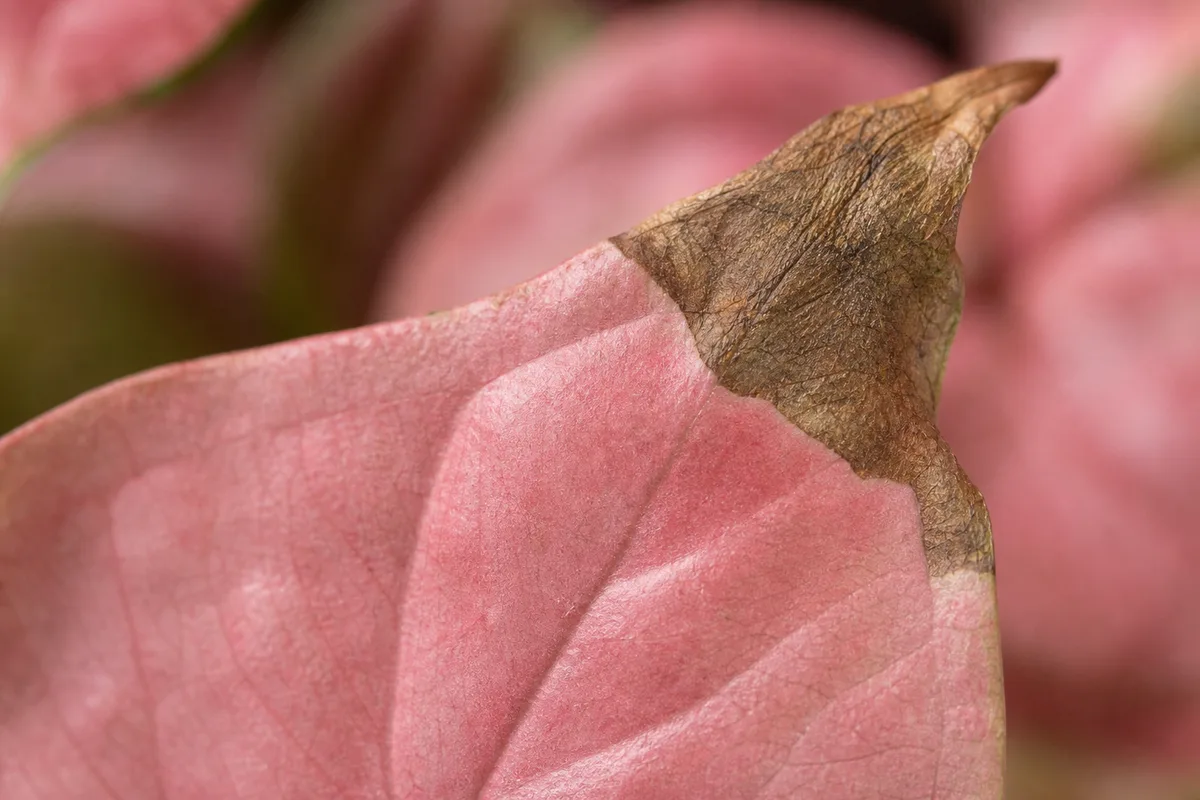
Brown Tips symptoms on Syngonium Pink - compare with healthy tissue on the same plant.
Typical patterns include:
- Dry, papery tan-to-brown at the very tip only, sometimes on the oldest leaves while new growth looks clean
- Crispy margins creeping a few millimeters inward on several leaves after a dry spell or heating season
- Symmetrical tip burn on multiple leaves after months of hard tap water or heavy feeding
- Bleached or scorched patches on leaves facing a hot window, sometimes with yellow halos nearby on pale tissue
What brown tips are not on Syngonium Pink: soft brown bases where stems meet constantly wet soil (early rot), water-soaked translucent patches from cold drafts, dark spots with yellow rings (bacterial leaf spot), or stippling with fine webbing (spider mites). Simple tip necrosis stays dry and localized when the cause is air moisture, Syngonium Pink watering guide, or water chemistry.
Because Pink Syngonium color varies by light and leaf age, compare newest fully opened leaves to older ones. A few brown tips on bottom leaves while fresh arrowheads emerge clean often means past stress, not an active crisis.
Why Syngonium Pink gets brown tips
Syngonium is a tropical aroid that wants warm, humid conditions and Syngonium Pink light guide indoors. When any part of that balance slips, leaf margins suffer before the whole plant collapses.
Low humidity in heated or air-conditioned rooms
Syngonium likes high humidity and performs best when relative humidity stays in a moderate range. Winter heating and summer AC can drop local humidity well below what arrowhead foliage prefers. Dry air increases transpiration from thin leaf edges faster than roots replace moisture-especially on trailing stems farthest from the pot.
Inconsistent dry-down watering
Pink Syngonium should be watered when the top inch of mix dries, not on a fixed calendar. Long dry intervals followed by heavy soaking stress the fibrous root system. Roots that alternate between drought and saturation deliver water unevenly, and tip tissue desiccates first. The same pattern appears when a pot stays wet in the center while the surface looks dry in an oversized container.
Tap-water salts, fluoride, and fertilizer buildup
Brown leaf tips commonly follow low humidity, inconsistent watering, excess fertilizer salts, or chemicals such as fluoride in tap water. Salts concentrate at leaf margins as water evaporates. Pink Syngonium in small pots fed heavily through winter can show white crust on the soil surface plus crisp tips even when watering frequency seems reasonable.
Root stress from overwatering (indirect tip burn)
Soggy mix excludes oxygen from roots. When roots fail, leaves may look thirsty at the edges while soil stays damp-a pattern that mimics underwatering at the tip. Brown leaf tips can result from excessively wet soil as well as from drought, which is why checking moisture depth matters before you add more water.
Too much direct sun on pale leaves
Syngonium wants bright indirect light protected from direct sun. Hot afternoon sun through glass bleaches and scorches pink-blushed tissue. Scorched damage can look like tip burn but often hits the sunward face or whole margin rather than the point alone.
Drafts and cold exposure
The species prefers warm interiors. Temperatures below about 55°F can cause chilling injury, and cold drafts from windows or AC vents stress leaf tissue at the margins. Pink Syngonium near a winter windowpane often shows tip crisping on leaves touching cold glass.
How to confirm the cause
Work through these checks in order. Two or three usually identify the main trigger.
- Soil moisture at depth - Push a finger into the top inch. Is it wet for days after watering, or bone dry before every soak? Wet chronic mix points to overwatering; extreme swings point to uneven rhythm.
- Pot weight and drainage - Lift the pot after watering and again when you think it is dry. Does water sit in the saucer? Is the plant in a cache pot with no drainage hole?
- Water source history - Have you used straight municipal tap water for months? Did tips worsen after a move to different city water? Gradual spread across many leaves fits mineral or fluoride buildup.
- Local humidity - Is the plant within a few feet of a heat vent, radiator, or AC register? Does the room feel dry in winter? Dry air fits crisp tips on multiple leaves at once.
- Light exposure - Did brown appear after shifting closer to a south- or west-facing window? Bleaching plus crisp edges on sun-facing leaves points to scorch.
- New growth check - Inspect the newest arrowhead leaf. Clean fresh growth while only older leaves have tips confirms you are on the right track after a fix. Browning on brand-new leaves means the stressor is still active.
- Salt signs - White or gray crust on the soil surface or pot rim suggests fertilizer or mineral accumulation worth flushing.
If tips are dry and localized with firm stems and new leaves opening clean, you are dealing with environmental edge burn-not an infectious disease.
First fix for Syngonium Pink
Stabilize watering on the top-inch dry-down rule, using room-temperature filtered or rested tap water.
Before you repot, mist heavily, or fertilize:
- If the top inch is wet, skip watering and move the plant slightly farther from cold drafts or dim corners so the mix dries at a healthy pace.
- If the top inch is dry, water until a little runs from the drainage hole, then empty the saucer.
- Switch to filtered, distilled, or rainwater for four to six weeks if you suspect hard tap water or heavy past feeding.
- If winter air feels dry, place the pot on a pebble tray or run a small humidifier within a few feet-grouping plants also raises local humidity.
Do not trim every brown tip on day one. Confirm the care rhythm is stable first, then snip cosmetic damage once new growth stays clean.
Step-by-step recovery
After the initial watering and water-quality correction:
- Track one week of moisture - Note when the top inch dries and how heavy the pot feels. Pink Syngonium in bright light may need water more often than one in medium indirect light.
- Flush salts if crust is visible - Run plain water through the pot at two to three times the pot volume, letting it drain fully. Resume normal dry-down watering afterward and pause fertilizer for a month.
- Adjust placement - Move back from hot direct sun and away from heating or AC vents. Aim for roughly 250 to 1,000 foot-candles of bright indirect light without leaf scorch.
- Raise humidity steadily - Target moderate humidity around 50–60% rather than brief misting alone. Syngonium maintains appearance better between 40% and 60% relative humidity indoors.
- Trim only dead tissue - Cut fully crisp tips with clean scissors, following the leaf shape and leaving a thin brown edge so you do not cut into living tissue. Wear gloves; Syngonium sap contains calcium oxalate crystals that irritate skin.
- Resume light feeding only after new clean leaves - Use half-strength balanced fertilizer monthly in spring and summer if growth is active. Do not feed a stressed plant hoping to heal tips.
Repot only if roots circle densely, water runs straight through, or mix smells sour-root congestion and poor drainage both worsen uneven hydration.
Recovery timeline
Environmental tip burn is slow to look better because existing brown tissue does not re-green. Expect to judge progress by new leaves, not old ones.
- Within one to two weeks - Soil rhythm stabilizes; no new tips should appear on the newest leaf if the fix matched the cause.
- Two to four weeks - Fresh arrowhead leaves open with clean margins when humidity and water quality improve.
- Four to eight weeks - Older damaged leaves remain trimmed or cosmetic; the canopy looks healthier overall as clean growth accumulates.
If every new leaf still emerges with brown edges after four weeks of corrected care, revisit salt flush, water source, and whether the pot is staying wet too long.
Lookalike symptoms to rule out
Bacterial leaf spot shows water-soaked spots with yellow halos, not dry crisp tips alone. Bacterial leaf spot occurs on greenhouse Syngonium and spreads in wet, stagnant conditions.
Root rot pairs yellowing lower leaves with mushy stems and sour soil while tips may brown secondarily. Soft brown at the crown beats dry tip necrosis.
Spider mites cause stippling, dull gray leaves, and fine webbing-usually in very dry air-not clean isolated tip burn.
Natural old-leaf senescence yellows or browns the lowest leaf while the rest of the plant stays vigorous. Remove the old leaf if it bothers you; no treatment needed.
Leggy pale growth from low light stretches stems and fades pink color without necessarily crisping tips first. Brighten indirect light if internodes elongate.
Mistakes to avoid
Do not increase watering just because tips look dry-that worsens root stress when soil is already wet.
Do not mist heavily onto leaves in low light and stagnant air; wet foliage overnight can invite fungal spots on aroids.
Do not fertilize heavily to “heal” brown tips. Salt buildup causes brown leaf margins rather than fixing them.
Do not cut deep into green tissue when trimming; leave a thin brown margin.
Do not repot on day one unless roots or mix are clearly failing-transplant shock can add another stress layer.
Do not assume every brown tip means the Pink cultivar is “delicate.” Most cases trace to fixable humidity, water rhythm, or tap-water chemistry.
How to prevent brown tips next time
Water when the top inch of mix dries, and empty saucers after every drink. Match frequency to how fast the pot dries in your light, not a generic schedule.
Use filtered or rested water if municipal tap is hard or heavily chlorinated. Flush the pot with plain water every few months during active growth if you feed regularly.
Keep moderate humidity in heated winter rooms with a humidifier, pebble tray, or grouped plants-most houseplants prefer humidity of 50% or more.
Place Pink Syngonium in bright indirect light without hot direct sun on pale leaves. Rotate the pot occasionally so one side does not scorch.
Feed lightly only in spring and summer when new arrowheads are opening. Skip fertilizer on stressed or dormant plants.
Prune leggy vines or provide a moss pole if you want larger mature leaves-steady structure helps the plant use water more predictably than a tangled dry basket.
When to worry
Cosmetic dry tips on a few older leaves while new growth stays clean are not urgent. Adjust care and monitor.
Treat as more serious when:
- Brown spreads quickly on newest leaves despite corrected watering
- Lower leaves yellow while soil stays wet and stems feel soft
- Growth stalls for weeks and tips worsen on every new arrowhead
- White crust, sour smell, and tip burn combine-possible salt injury plus root decline
Replace or propagate from healthy stems only if the crown is mushy and new growth has stopped entirely. Pink Syngonium roots readily from stem cuttings when the parent plant is otherwise worth saving.
Conclusion
Brown tips on Syngonium Pink usually mean the leaf margin lost the moisture battle-not that your plant has an incurable disease. Check the top inch of soil, stabilize filtered or rested watering, and raise humidity where winter air is dry. Judge recovery by clean new arrowhead leaves over the next few weeks, trim old cosmetic damage if you wish, and leave fertilizer until the plant is growing steadily again.
When to use this page vs other Syngonium Pink guides
- Syngonium Pink watering guide - Use for routine moisture checks before assuming brown tips is the main issue.
- Syngonium Pink problems hub - Browse all 2 common issues on this species.
- Yellow Leaves on Syngonium Pink - Different entry point when symptoms overlap with brown tips.