Mold on Soil on Syngonium Pink: Causes, Checks & Fixes
Quick answer
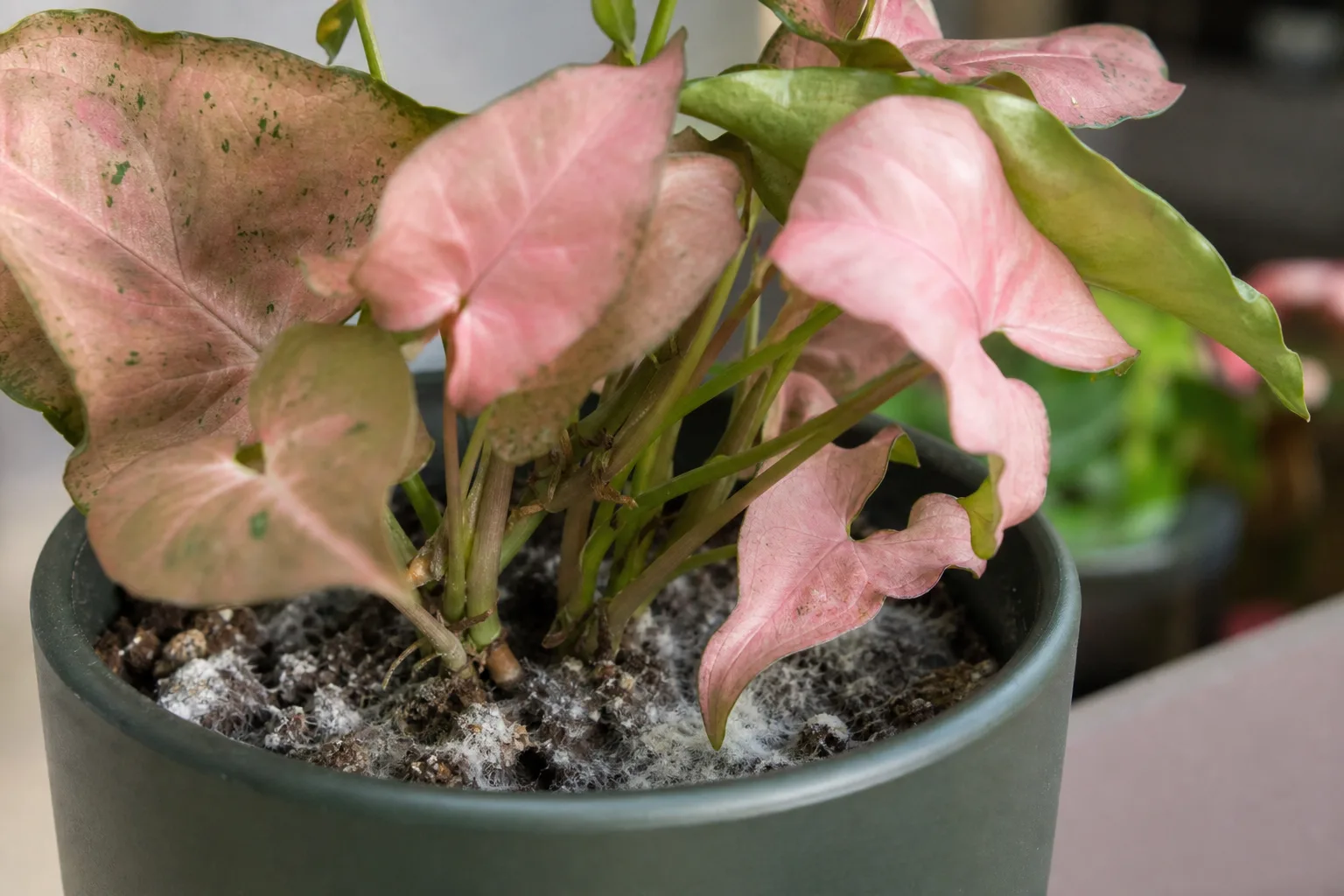
Fluffy white or gray mold on Syngonium Pink potting mix almost always means the surface stays wet too long-usually from overwatering, peaty mix, or low light-not a dangerous infection on healthy roots. First step: scrape off the moldy top layer and let the upper inch of mix dry before you water again.
Mold on Soil on Syngonium Pink: Causes, Checks & Fixes
This guide covers mold on soil on Syngonium Pink. See also the general Mold on Soil guide, watering, and light pages for this plant.
Mold on Soil on Syngonium Pink: Causes, Checks & Fixes
Quick answer
White or gray fuzz on Syngonium Pink potting mix is usually saprophytic mold feeding on organic matter in a surface that stays damp-not a sign that your arrowhead is doomed. Pink Syngonium (Syngonium podophyllum 'Pink') wants the top inch of mix to dry between waterings per our watering guide, but peaty indoor mixes, dim winter light, and saucers that hold water keep that surface wet long enough for mold to appear.
First step: scrape off the moldy top layer and pause watering until the upper inch of mix feels dry. That single action removes active spores and breaks the wet cycle. If stems stay firm and new leaves still open cleanly, you are likely looking at a cosmetic moisture issue-not root rot.
Mold vs. overwatering vs. root rot: Surface fuzz with firm stems and no sour smell usually means fix the moisture cycle here. Heavy wet pots with dull pink new growth but firm roots point to overwatering on Syngonium Pink. Sour mix, mushy roots, and soft stems at the soil line mean escalate to the root-rot guide-mold is optional in that picture.
What mold on soil looks like on Syngonium Pink
Surface mold on this plant usually shows up as a fluffy white, gray, or occasionally yellowish layer on top of the mix-not on leaf blades or petioles. It often appears after you have watered on schedule while the pot still felt heavy, or during winter when shorter days slow evaporation even though you have not changed your routine.
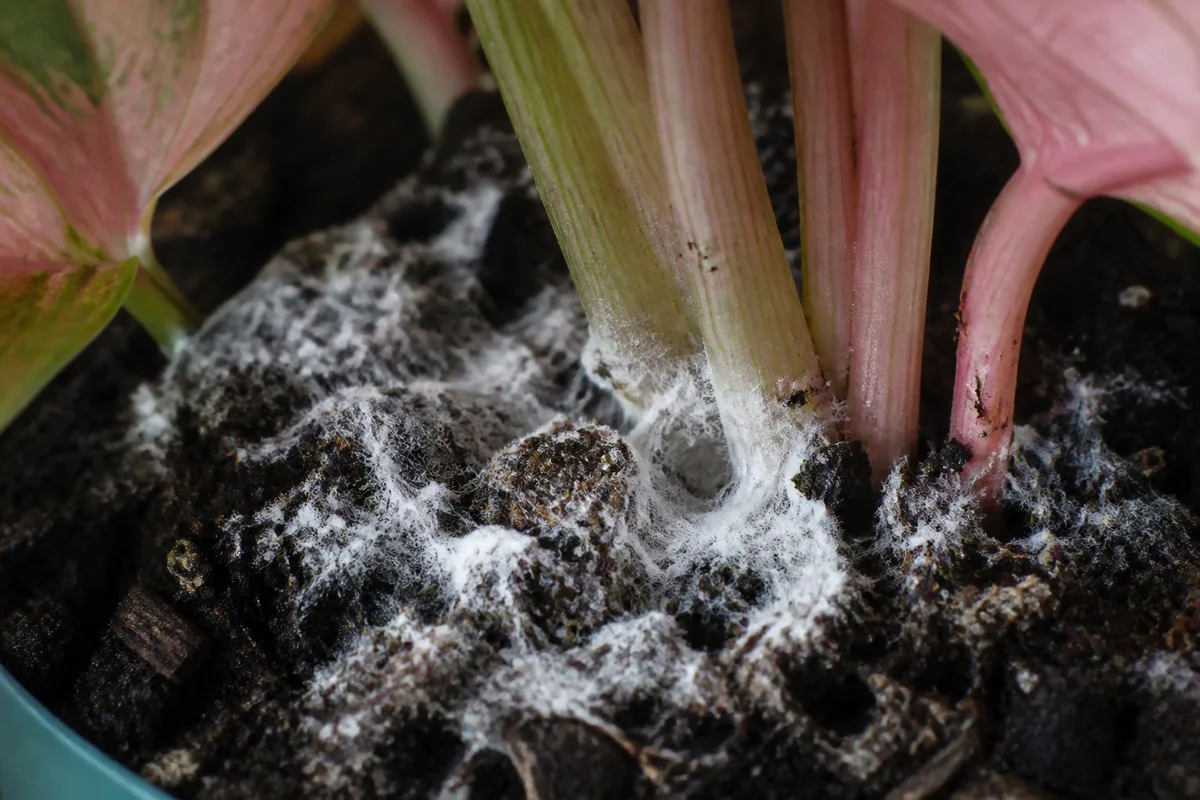
Mold on Soil symptoms on Syngonium Pink - compare with healthy tissue on the same plant.
Typical patterns on a Pink Syngonium pot:
- Fuzzy film on wet topsoil - cotton-like growth across the surface, sometimes in patches near the stem base
- Surface stays dark and cool for days - the top layer does not lighten or crumble when you touch it
- Musty smell near the rim - faint earthy odor when you lift a trailing stem or scrape the surface
- Fungus gnats nearby - tiny flies hovering at the pot edge, especially after watering; see fungus gnats on Syngonium Pink if adults persist after drying
- Plant still looks upright early on - arrow-shaped leaves hold their shape while only the soil looks wrong; pink new growth may still look healthy even as the surface molds
Mold on mix is different from problems on the foliage itself. Powdery patches on leaf surfaces suggest a foliar issue. Black mushy stems at the soil line point to rot below the surface. Green slime on the rim is often algae, which shares the same wet-soil cause but needs slightly different light and airflow fixes.
Why Syngonium Pink gets mold on soil
Pink Syngonium is an aroid vine with arrowhead juvenile leaves that prefers evenly moist-but not soggy-mix with good drainage. Most retail pots arrive in peat-heavy soil that holds water at the surface. When you water before that top inch dries, organic particles stay wet and become food for harmless fungi that colonize the surface.
Tabletop specimens dry down slower than you expect
Most Pink Syngoniums are sold as compact 4-to-6-inch tabletop plants with a small leaf canopy and limited transpiration surface. A 6-inch plastic nursery pot in a north-facing winter room can hold surface moisture five to ten days after one thorough soak-while a large vining syngonium on a moss pole in the same room may dry its top inch in three to five days because more leaf area pulls water upward. Owners often keep the same weekly watering calendar for the small pink pot because new growth still looks perky; that mismatch is one of the most common mold triggers on this cultivar.
Several Syngonium-specific habits make mold more likely:
Overwatering on a still-wet surface. Syngonium Pink yellows from chronic wet roots, and mold often appears first-before leaves tell the story. If you water on a calendar instead of checking the top inch per our watering guide, the surface rarely dries.
Low light slowing dry-down. Arrowhead vines in dim corners or north-facing rooms use less water. Winter light drops further, but many growers keep the same watering frequency. Less evaporation plus the same water input equals a mold-friendly surface. See not enough light when pale pink new leaves pair with slow dry-down.
Dense, water-retentive mix. Standard bagged potting soil compacts over time, especially in plastic pots that do not breathe. Aroids need structure-perlite, bark, or similar amendments per our soil guide-so oxygen reaches roots and the surface can dry.
Oversized pots. A pot much wider than the root ball holds excess wet mix around the edges. The center may feel acceptable while the surface and outer ring stay damp for days.
Organic debris on the surface. Fallen pink-tinged leaves, old petiole stubs, and top-dressing mulch give fungi extra food. Trailing vines that rest on wet mix can leave crushed tissue at the rim.
Poor airflow around grouped plants. Shelves crowded with syngoniums, pothos, and philodendrons trap humid air. Stagnant conditions slow surface drying even when ambient humidity is moderate.
Decorative cachepots without drainage. A Pink Syngonium sitting in a sealed outer pot holds runoff at the bottom; capillary wicking keeps the surface damp even when you pour carefully.
The mold itself is usually not attacking living Syngonium tissue. It is a symptom that the surface environment favors fungi over the dry cycle this plant needs.
How to confirm the cause
Work through these checks before you repot or reach for sprays:
- Surface moisture - Insert a finger to the first knuckle. If it feels cool and clings to your skin days after watering, the surface is too wet. Cross-check against the watering guide dry-down rule.
- Stem firmness - Pinch the lowest inch of stem at the soil line. Firm and green means roots are likely intact; soft, hollow, or blackened tissue suggests root rot beneath the mold-escalate immediately.
- Leaf pattern - Yellowing that starts at the oldest bottom leaves with limp petioles fits overwatering. Crisp brown tips alone usually point elsewhere.
- New growth color - Pale or green new leaves on a Pink cultivar can follow stress from wet roots and low light. Judge the newest unfurling leaf, not faded older ones.
- Drainage check - Water until runoff appears, then confirm the saucer empties within 30 minutes and the pot is not sitting in leftover water.
- Gnat test - Tap the pot rim. A cloud of tiny flies confirms the same damp habitat mold uses-follow fungus-gnat control if adults persist after two weeks of surface drying.
- Return rate - Scrape the surface and note whether fuzz reappears within three to five days. Fast return means the moisture habit-not the scrape-needs fixing.
If mold sits on a dry, dusty surface with firm stems and no gnats, you may be seeing mineral crust or old potting fines rather than active fungus. A quick scrape and sniff test clarifies: mold feels soft and earthy; crust feels hard and chalky.
Symptom lookalike comparison
| What you see | Texture / location | Plant tissue | Likely cause | First action |
|---|---|---|---|---|
| White or gray fuzz on damp topsoil | Soft, fluffy, on mix surface | Firm stems; leaves unaffected | Saprophytic mold from wet surface | Scrape, dry top inch, fix watering |
| Green slimy film on pot rim | Slimy, green | Leaves OK | Algae in constant moisture + low light | Scrape, brighten indirect light, dry surface |
| White hard deposits | Hard, chalky, not fuzzy | Possible brown leaf tips | Mineral/salt crust from tap water or fertilizer | Flush pot; adjust watering technique |
| White powder on leaf blades | Dry powder on foliage | Patches on leaves, not soil | Powdery mildew (foliar) | Improve airflow; treat foliage issue |
| Sour smell, black mushy stem base | Wet throughout pot | Soft stems, rapid yellowing | Root rot | Root-rot guide-unpot and trim |
First fix for Syngonium Pink
Scrape off the top half-inch to inch of moldy mix and discard it, then stop watering until the upper inch of soil feels dry to the touch per our watering guide.
Use a spoon or fork to remove the fuzzy layer and any loose organic debris. Work gently so you do not blow spores toward neighboring pots on a crowded shelf. Do not dump fresh wet mix on top immediately-that just resets a damp surface. Leave the scraped area exposed so air can reach it. Move the pot to brighter indirect light if it has been sitting in a dim spot, but avoid sudden direct sun on stressed leaves.
This one step addresses both the visible mold and the condition that grew it. Wait to water again until your finger confirms dryness at the top inch-the same checkpoint Syngonium Pink care relies on year-round.
Step-by-step recovery
After the first scrape and dry-down, follow this order if mold persists or plant stress shows up:
Adjust watering rhythm
Water thoroughly only when the top inch is dry, letting excess drain fully. In winter or low-light rooms, that may mean longer gaps between sessions than in summer. Lift the pot: light weight confirms dryness better than memory alone.
Refresh the top layer
Once the surface has dried for several days, add a thin layer of dry, chunky aroid mix-not straight peat-from the recipe in our soil guide to replace what you removed. This improves surface hygiene without a full repot.
Improve light and airflow
Move the plant to a brighter indirect spot where leaves do not scorch. A small fan set on low across the room-not blasting the foliage-speeds evaporation. Avoid enclosing the pot in a tight decorative cover that traps humidity.
Address fungus gnats together
If gnats appear with mold, dry the surface and add yellow sticky traps near the pot base. Treating mold alone while soil stays wet will not break the gnat cycle-see the dedicated fungus-gnat page if adults outlast two weeks of corrected drying.
Repot only when needed
Repot if mold returns weekly after care changes, the mix smells sour throughout, or roots feel mushy when you slip the plant out. Choose a pot only one size up with drainage holes and a well-aerated aroid blend per our soil guide. Do not repot on day one for surface mold alone.
Trim damaged leaves after stability
Remove yellow or collapsed leaves once new growth looks firm again. Old pink leaves will not regain color; watch the next unfurling leaf for improvement.
Recovery timeline and a documented case
Cosmetic surface mold often clears within a few days of scraping and drying, with no further leaf symptoms. If overwatering stressed the plant, expect one to three weeks before new Syngonium leaves open cleanly and pink color on fresh growth looks steadier.
Documented tabletop recovery (6-inch Pink Syngonium, peat nursery mix, north window, January): White fuzz appeared across the surface five days after a sympathy winter watering while the top inch was still cool-damp. Stems stayed firm; the newest leaf had opened pale salmon. Scrape on day one, no water for eight days until the top inch felt dry and the pot lightened noticeably. Moved 18 inches closer to the window for brighter indirect light. No mold return by day ten. The next unfurling arrowhead (day 14) showed stronger blush pink than the pale leaf above it; second new leaf (day 28) held steady pink wash. That timeline assumes firm roots-sour smell or soft stems would have required root-rot intervention instead.
Signs you are on track:
- Surface stays lighter and crumbly between waterings
- No new fuzz within a week of scraping
- Lowest stems remain firm at the soil line
- New arrowhead leaves unfurl without yellowing; pink wash strengthens on successive unfurlings
Signs the problem is deepening:
- Mold returns within three days despite dry surface checks
- Multiple bottom leaves yellow and drop in one week
- Stems soften or smell at the base
- Gnats increase after each watering
Lookalike symptoms
Green algae on the rim - Slimy green film in constant moisture and low light. Fix with less surface wetness and slightly brighter indirect exposure; scrape algae the same way as mold.
Mineral or salt crust - White hard deposits from tap water or fertilizer, usually not fuzzy. Flush the pot and adjust watering technique rather than treating as fungus.
Powdery mildew on leaves - White powder on leaf surfaces, not soil. That is a foliar issue with different management.
Root rot without visible mold - Sour smell, black mushy roots, and collapsing stems can occur with no surface fuzz. Mold is not required for rot; wet mix alone is enough-see root rot on Syngonium Pink.
Mistakes to avoid
- Scraping repeatedly without drying the surface - You remove spores but leave the habitat intact.
- Misting the soil or leaves onto wet mix - Extra surface moisture feeds mold on aroids that already prefer moderate humidity on foliage, not soggy pots.
- Watering on a fixed weekly schedule - Syngonium Pink needs pot-based checks per our watering guide, especially in winter.
- Adding cinnamon or fungicide as the first response - Surface products do not fix chronic wetness or poor drainage.
- Syngonium Pink repotting guide immediately into an oversized container - More wet mix around small root systems prolongs the problem.
- Ignoring gnats - They signal the same damp organic surface mold uses.
- Letting the whole pot go bone-dry to kill mold - Pink Syngonium wilts when desiccated; balance surface dry-down with firm stems, not repeated collapse cycles.
How to prevent mold next time
Match watering to how fast your specific pot dries in its spot. Use a chunky, well-draining aroid mix and a container with drainage holes sized close to the root ball-see our soil guide for ratios. Empty saucers after every watering. Remove fallen leaves from the surface promptly. Keep Syngonium Pink where it gets bright to medium indirect light so the mix cycles between moist and slightly dry at the top.
During winter, stretch watering intervals when growth slows on compact tabletop specimens. When you bring a new Pink Syngonium home, learn its dry-down speed for two weeks before changing pots or fertilizer.
Pet note: Syngonium podophyllum is toxic to cats and dogs if chewed because of calcium oxalate crystals-the mold itself is not the pet hazard, but keep pots out of reach on shelves curious animals cannot access.
When to worry
Treat mold as urgent when it comes with soft stems, a sour rotting smell, rapid yellowing from the base up, or roots that turn black and mushy when inspected. Those signs mean root health is failing-follow the root-rot guide-not that surface mold suddenly became aggressive.
Also escalate if you have scraped and dried the surface twice in two weeks and fuzz returns each time. That pattern usually means the mix is too dense, the pot too large, or drainage is blocked-conditions a full repot with airy mix from our soil guide and a watering reset must address. Pair with overwatering recovery if roots are still firm but the pot chronically stays heavy.
Surface mold alone on a firm, green Syngonium Pink with normal new growth is low urgency. Fix the moisture cycle and monitor.
Conclusion
Mold on Syngonium Pink soil is almost always a moisture and airflow message, not a reason to panic. Scrape the surface, let the top inch dry, and align watering with how your pot actually behaves in its light. Firm stems and clean new leaves with strengthening pink wash mean you caught it early. Soft stems, sour mix, or returning fuzz mean dig deeper into drainage and root health before the pink arrowhead loses its footing.
When to use this page vs other Syngonium Pink guides
- Syngonium Pink watering guide - Use for routine moisture checks before assuming mold on soil is the main issue.
- Syngonium Pink problems hub - Browse all 2 common issues on this species.