Spider Mites on Water Lettuce: Causes, Checks & Fixes
Quick answer
Spider mites on water lettuce show as fine yellow stippling and silky webbing on velvety rosette leaves, usually in warm protected setups-not because floating aquarium plants suffer dry room air. First step: skim infested rosettes from the tank and rinse every leaf at the sink under lukewarm water before returning clean plants to quarantine water.
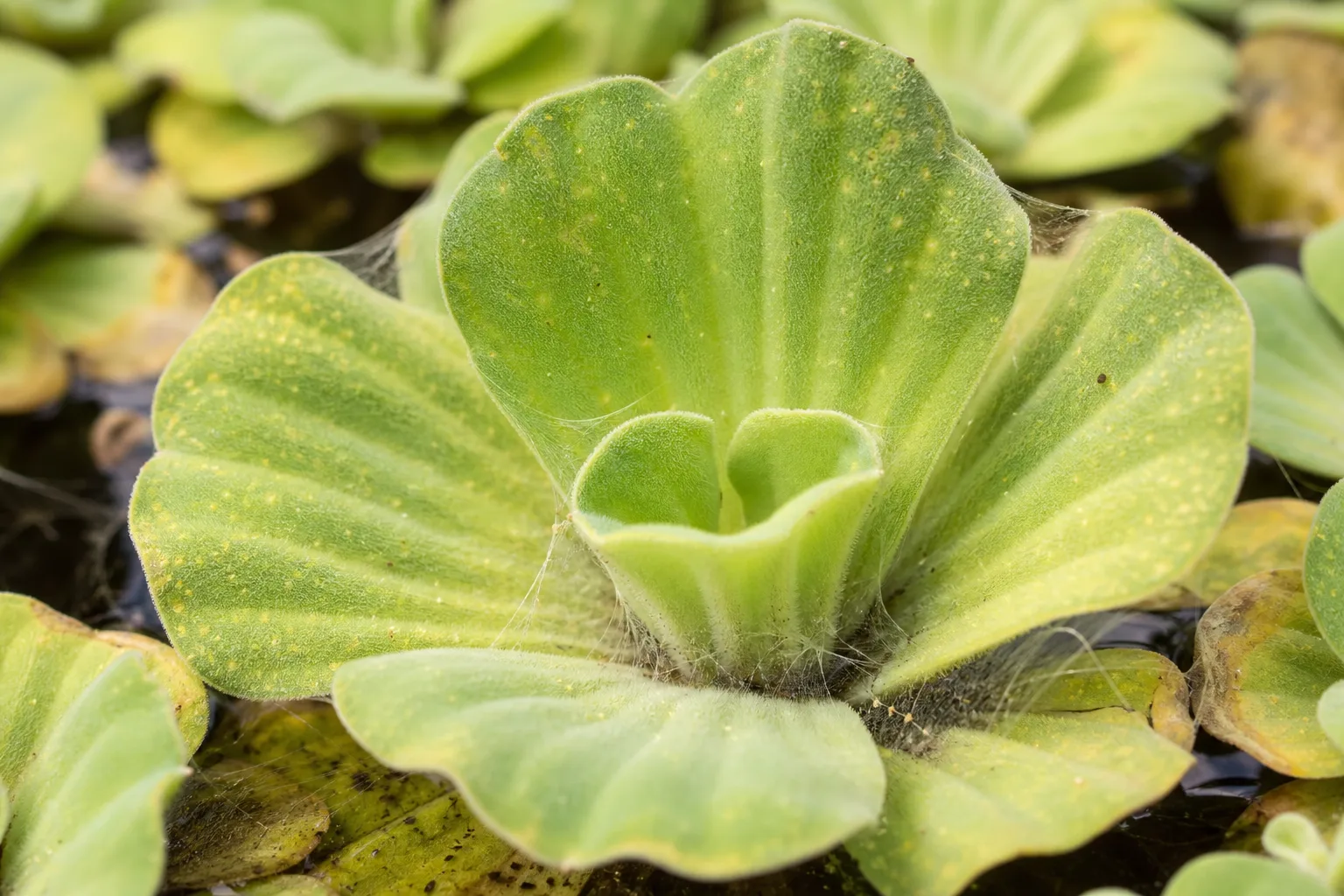
Spider Mites on Water Lettuce: Causes, Checks & Fixes
This guide covers spider mites on Water Lettuce. See also the general Spider Mites guide, watering, and light pages for this plant.
Spider Mites on Water Lettuce: Causes, Checks & Fixes
Quick answer
Spider mites on water lettuce (Pistia stratiotes) appear as fine yellow or pale stippling on velvety rosette leaves, often with silky webbing at the crown where new leaves emerge. They are not insects-they are tiny arachnids that pierce leaf cells and suck sap, and they multiply fast in warm, still conditions common above sun-heated pond tubs, greenhouse benches, and open-top aquariums under bright lights.
This is not the classic “dry winter room air” houseplant mite story. Floating Pistia sits on open water with humid air at the surface. Mites show up when emergent leaf tissue sits in a warm, protected microclimate-indoor pond edges, splash-damaged crowns, or mats pinned under filter spray-not because your aquarium failed a humidity target. For species context, see the water lettuce overview.
First step: skim infested rosettes from the tank and rinse every leaf under lukewarm running water at the sink. That single action knocks down live mites and breaks webbing before you decide whether to quarantine, discard, or escalate. Do not spray insecticidal soap, neem, or alcohol into a stocked aquarium on day one.
Why water lettuce gets spider mites
Water lettuce is a free-floating aquatic plant whose rosettes live at the air-water interface with feathery roots trailing below. That habitat protects leaves from the bone-dry air that triggers mite explosions on potted pothos beside a heating vent. Yet two-spotted spider mite (Tetranychus urticae) still attacks floating and marginal aquatic plants-reported on water lilies and many pondside species, and listed among significant pests in ornamental aquatic plant IPM research alongside aphids and beetles.
Several Pistia-specific factors raise risk:
Protected warm setups. Extension guidance notes two-spotted spider mite is mainly a problem on protected plants-greenhouse tunnels, polythene-covered pond tubs, and indoor open-top tanks where temperatures stay high and air movement is limited. Hot outdoor summers can also drive damage on patio ponds.
Velvety rosette crowns as feeding sites. Mites feed on undersides of leaves and move to growing points in severe infestations. On water lettuce, the compact rosette crown and wavy leaf margins concentrate new tissue where mites spin protective webbing.
Fast mat growth hides early damage. A dense surface mat can carry dozens of rosettes. Stippling on outer leaves may spread across the whole tank before you notice one pale patch-especially when floating plants share a shelf with infested houseplants that crawl mites from pot to pot at high population density.
Recent pond stock or outdoor season. Mites often arrive on newly purchased plants or tubs moved from a hot greenhouse. A single infested water hyacinth or marginal iris beside Pistia can seed the whole surface within days when temperatures exceed 75°F (24°C).
Filter outflow and surface spray. Constant micro-spray from return lines can stress velvety leaf hairs and create hot, dry pockets at the air-water line where mites reproduce faster-similar to the dusty, water-stressed conditions UC IPM links to mite outbreaks.
What spider mites look like on water lettuce
Early feeding:
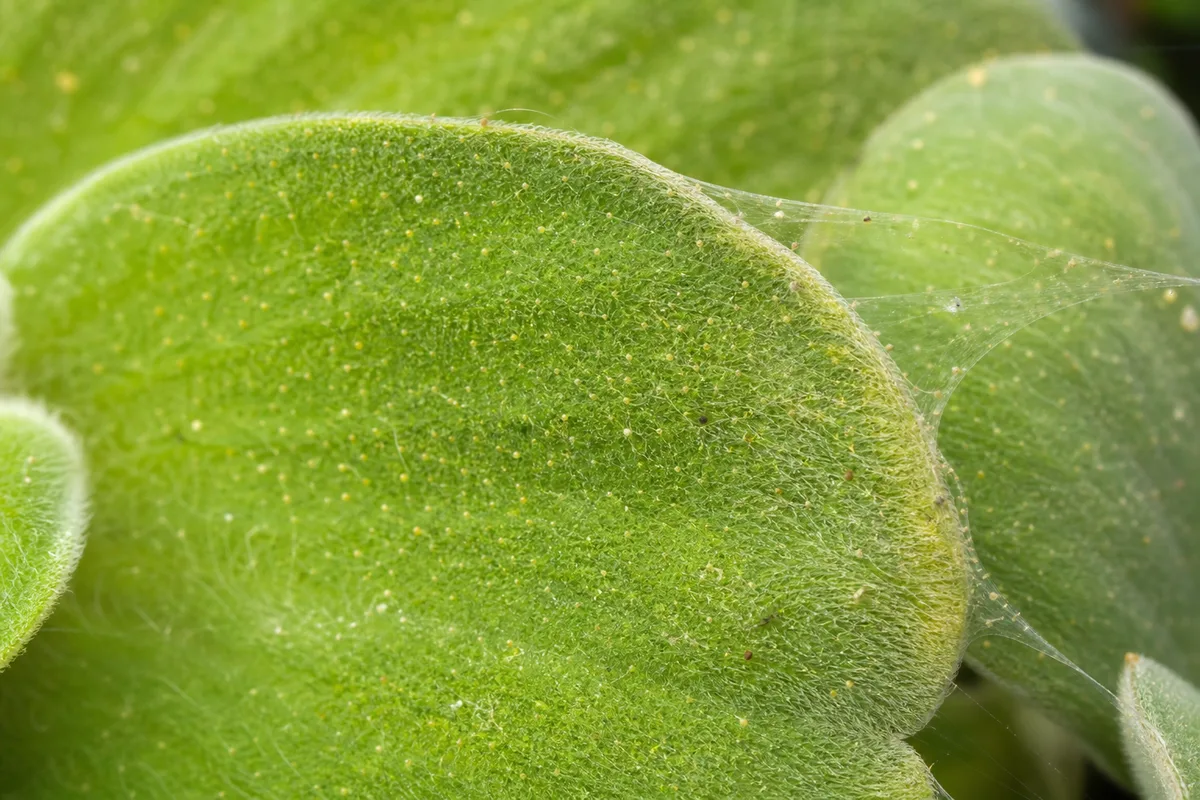
Spider Mites symptoms on Water Lettuce - compare with healthy tissue on the same plant.
- Pinpoint yellow or pale dots on velvety upper leaf surfaces-the classic stippled look
- Slight dullness or bronzing on heavily fed leaves while rosettes still float normally
- Daughter plants on stolons may show stippling before parent crowns develop obvious webbing
Established colonies:
- Fine silk webbing at the rosette crown and between overlapping leaves
- Leaf backs feel gritty; black fecal specks or amber eggs visible with a 10× hand lens
- Yellowing that follows the stipple pattern rather than uniform chlorosis from cold water
- Outer rosettes in the mat may bronze while interior plants stay green longer
Advanced infestation:
- Leaves turn bronze or bleach pale, then collapse flat on the water
- Webbing spans multiple rosettes in a cluster; mites visible as tiny moving dots when disturbed-about 1/50 inch (0.5 mm) long
- New daughter rosettes emerge small, curled, or fail to unfurl
- Reduced photosynthetic area slows mat spread even in warm water
To the naked eye, individual mites look like moving specks. A hand lens makes the two dark spots on the mite’s back easier to confirm as two-spotted spider mite rather than dust or algae debris.
How to confirm the cause
Work through these checks in order:
-
Tap test - Hold white paper under a suspect rosette and tap the leaf firmly. Watch for tiny moving specks on the paper. Static debris does not crawl; mites do.
-
Crown and margin inspection - Peel back overlapping leaves at the rosette center. Mites live in colonies mostly on leaf undersides and growing points. Webbing at the crown where new leaves emerge is a strong mite signal.
-
Pattern check - Stippling scattered across individual velvety leaves points to mites. Uniform yellow melt through wet crowns on stagnant water fits cold shock or rot-not pinprick dots on firm tissue.
-
Webbing vs. no webbing - Silk webbing confirms spider mites. Thrips leave silvery streaks but not silk. Aphids show green or dark soft-bodied clusters, not stipple dots-see related pest pages after confirming mites.
-
Environment check - Is the mat in a greenhouse tub, sun-heated patio pond, open-top tank under intense LED, or beside newly purchased pond stock? That context fits mites better than “aquarium humidity too low.”
-
Neighbor plants - Scan houseplants on the same room shelf and marginals in shared pond tubs. Mites disperse when populations are high.
If the tap test shows no movement, webbing is absent, and leaves show uniform yellow wet melt with foul-smelling water, investigate water temperature and quality before committing to a mite treatment cycle.
First fix for water lettuce
Skim affected rosettes from the tank and rinse every leaf surface under lukewarm running water at the sink.
Hold each rosette so water hits both upper velvety surfaces and leaf backs directly. Forceful washing reduces mite numbers and breaks up protective webbing. Let foliage air-dry briefly on a clean towel, then float rinsed plants in a separate quarantine tub of dechlorinated, temperature-matched water-not back into the main stocked aquarium until you confirm mites are gone.
Do not pour insecticidal soap, neem oil, horticultural oil, or rubbing alcohol into a tank with fish, turtles, shrimp, or snails. Those products are contact treatments meant for foliage you can rinse away from livestock; in-tank dosing risks gill damage and kills beneficial bacteria. Do not repot-Pistia has no substrate. Do not fertilize a stressed mat hoping to push clean growth.
Discard heavily webbed rosettes that are mostly bronze or collapsing. Water lettuce produces daughter plants on stolons within days to weeks in warm water; sacrificing a few parent rosettes is lower cost than nursing a webbed mat that reinfects the whole surface. Bag discarded plants for household trash-never release Pistia into outdoor waterways.
Step-by-step recovery
After the initial skim-and-rinse:
-
Repeat sink rinses every five to seven days for three to four weeks. Mite eggs hatch on a short cycle in warm conditions; one rinse rarely finishes the job.
-
Quarantine clean rosettes in a dedicated tub with matching temperature (70–85°F / 21–29°C per water lettuce care guidance). Inspect crowns with a lens after each rinse session.
-
Apply insecticidal soap or horticultural oil only on quarantined foliage if rinsing alone fails-and only on plants removed from livestock water, with label directions followed and full sink rinse before any return to a stocked tank. Soaps and plant oils smother mites on contact but must reach leaf backs without contaminating aquarium water.
-
Thin crowded mats so spray and rinse water reaches inner rosettes. Dense cover slows drying and hides new webbing.
-
Inspect adjacent floating plants-water hyacinth, frogbit, duckweed, and marginals in the same tub. Treat any with early stippling even if webbing is not visible yet.
-
Wash hands, nets, and tub edges after handling infested mats so mites do not hitchhike back on equipment.
For severe infestations where most rosettes are webbed and the mat is declining, discarding the entire batch in a sealed bag and restarting from clean daughter plants may be faster than saving one tub at the cost of reinfestation.
Recovery timeline
Light infestations often show fewer new stipples within five to seven days of repeated rinsing. A full rinse-and-quarantine course typically takes two to three weeks with weekly repeats through several mite generations. Old stippled leaves remain scarred-judge recovery by clean daughter rosettes on stolons and no fresh webbing at crowns, not by parent leaves returning to solid green.
If new growth stays clean for two weeks after your last rinse, consider the outbreak controlled. Return plants to the main display only after a final tap test on multiple rosettes shows no movement.
Lookalike symptoms to rule out
Mineral or fertilizer spray residue leaves whitish or crusty patches that wipe off with a finger and do not move on a tap test. Mite stippling is ingrained in the leaf tissue and accompanied by crawling specks or webbing.
Algae on velvety leaf hairs forms a slimy green film, often in tanks with excess nutrients and strong light-not pinprick yellow dots with silk at the crown.
Thrips leave silvery streaks or scuffed patches and black specks of excrement. They do not spin silk webbing. Shake a stem-adult thrips fly; mites crawl.
Cold water melt yellows and softens whole rosettes uniformly with wet, dissolving tissue-not scattered stippling on firm leaves in warm water.
Aphids appear as soft green, brown, or black clusters on leaf backs and stolons, often with sticky honeydew. Water lily aphid also attacks Pistia and related floaters-look for plump oval bodies, not moving dust specks.
For a terrestrial houseplant mite walkthrough with photos and tap-test detail, see the spider mites on pothos guide-the identification steps transfer; the treatment container does not.
Mistakes to avoid
Do not spray soap, neem, or alcohol into a stocked aquarium or pond. Treat foliage at the sink or in quarantine water only.
Do not stop after one rinse because leaves look better for a day-eggs hatch within days in warm weather and populations rebound.
Do not assume floating on water prevents mites. They feed on emergent leaf tissue above the waterline.
Do not return outdoor-seasoned Pistia to indoor tanks without rinse and quarantine-protected greenhouse and patio setups are primary mite risk contexts.
Do not use broad-spectrum insecticides aimed at other pests in pond tubs. Pyrethroids can kill mite predators and trigger outbreaks.
Do not release discarded infested plants into lakes, rivers, or storm drains. Pistia stratiotes is an invasive aquatic weed in many regions-bag for trash per the overview disposal guidance.
Do not fertilize during active infestation hoping to push new growth-that produces tender tissue mites prefer.
Water lettuce care cross-check
While treating mites, keep baseline floating culture steady:
- Water temperature at 70–85°F (21–29°C)-cold water slows recovery and mimics unrelated melt symptoms. See the watering guide.
- Surface calm - deflect filter outflow so mats are not pinned under hot spray.
- Light - moderate to bright at the water surface; do not blast recovering rosettes with unacclimated Water Lettuce light guide.
- Partial coverage - keep roughly one-third to one-half of the surface open for gas exchange while quarantine tubs stay uncrowded.
How to prevent spider mites next time
Quarantine new pond and aquarium floaters for one to two weeks in a separate tub before mixing with established mats. Monitor for stippling during isolation.
Inspect rosette crowns weekly during warm months-one quick lift of overlapping leaves takes less time than treating a whole tank.
In greenhouse and patio tubs, mist foliage during hot dry spells to slow mite reproduction on protected plants-this is one context where surface moisture helps, unlike room humidifiers for potted ferns.
Thin excess growth regularly so inner rosettes stay visible and rinses reach all tissue.
Avoid placing open-top tanks directly beside infested houseplant shelves. Mites crawl across shared surfaces at high density.
Rinse and isolate Pistia returning from outdoor summer culture before it re-enters indoor aquariums.
When to worry
Treat as urgent when webbing spans multiple rosette clusters, new daughters fail to open, or mites appear on several plant types in the same tub within days. At that stage, skim-and-rinse may need to extend to every floating species in the setup.
Consider discarding a severely webbed mat and restarting from clean daughters rather than risking months of reinfestation in a shared betta tank or shrimp aquarium.
Early stippling on one rosette with no webbing yet is manageable-confirm with a tap test and start rinsing before silk spans the crown. That window closes quickly in warm protected setups.
Conclusion
Spider mites on water lettuce are a warm protected-environment pest on emergent rosette tissue-not proof your floating plants need a room humidifier. Skim, rinse at the sink, confirm with a tap test, quarantine clean daughters, and repeat weekly through several generations while keeping soap and oils out of stocked tank water. Stippled old leaves may stay marked, but clean offsets on stolons tell you the mat is winning-act on the first pinprick dots before webbing spans the whole surface.
When to use this page vs other Water Lettuce guides
- Water Lettuce watering guide - Use for routine moisture checks before assuming spider mites is the main issue.
- Water Lettuce problems hub - Browse all 3 common issues on this species.
- Slow Growth on Water Lettuce - Different entry point when symptoms overlap with spider mites.