Whale Fin Snake Plant Light Needs: Windows & Warning Signs
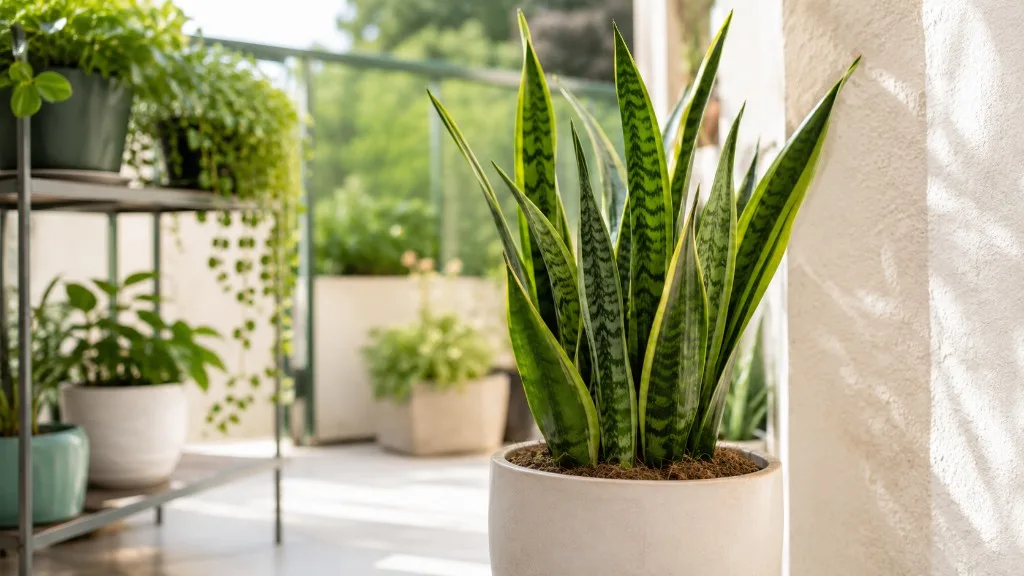
Whale Fin Snake Plant Light Needs: Windows & Warning Signs
Whale Fin Snake Plant Light Needs: Windows & Warning Signs
About this guide: Dracaena masoniana — the whale fin or Mason’s Congo snake plant — is grown for enormous paddle-shaped leaves that can span 3–4 ft (90–120 cm) in mature specimens. Each leaf is a water reservoir, so the plant needs even less frequent watering than standard trifasciata and more light per square inch of leaf to stay firm. Expect slow growth; one perfect paddle leaf is the goal, not rapid clumping.
Whale fin snake plants get sold as unkillable snake plants, and that label sends owners toward the same dim hallway where a standard Dracaena trifasciata might coast for years. Dracaena masoniana plays by similar rules — CAM photosynthesis, drought-stored leaves, partial-shade tolerance — but the scale is different. One paddle leaf can measure 3 to 4 feet long and 8 to 10 inches wide, stiff and waxy, holding a large water reserve in a single blade. That leaf needs more usable light per square inch to stay firm than a cluster of narrow sword leaves does. NC State Extension lists whale fin cultural conditions as partial shade — direct sunlight only part of the day, 2 to 6 hours — while noting the plant prefers bright, indirect light and tolerates low light. Direct sun, it adds plainly, can scorch the leaves.
The practical goal is not the darkest corner where the paddle refuses to die. The goal is placement where new growth — when it comes — emerges thick and correctly colored, the existing paddle stays firm without puckering, and soil dries on a predictable rhythm linked to photosynthesis. This guide covers windows, direct sun, honest low-light limits, grow lights, and the warning signs that tell you to move the pot before a single display leaf is permanently damaged.
How Much Light Whale Fin Snake Plants Actually Need
Indoors, whale fin snake plants grow best in bright indirect light: strong ambient brightness at the leaf surface without prolonged harsh direct beams through glass. Think two to four feet from an unobstructed east window, or several feet back from a filtered south exposure with sheer fabric or a light-colored wall reflecting brightness behind the pot. That range supports the slow, steady metabolism masoniana is built for — not the rapid push of a pothos, but enough energy to keep a massive paddle turgid.
NC State Extension lists masoniana for bright indirect light indoors, with partial shade outdoors — direct sun only part of the day — and notes that direct sunlight can scorch the thick paddle leaves. In dim corners the plant tolerates low light but often produces little new growth and may show puckering or softening as stored water is not replaced fast enough. Unfiltered south or west glass in summer is the main scorch risk unless you acclimate gradually.
The honest summary: give whale fin as much bright indirect light as your room allows, pull back only when you see heat or scorch on the leaf face, and treat dim corners as short-term holding zones, not long-term homes for a plant you want to keep firm and sculptural.
Why Giant Paddle Leaves Change the Light Math
Standard snake plant advice assumes many upright leaves sharing the photosynthetic load. Whale fin often arrives as one monolithic paddle — sometimes a single leaf in a small pot — so the entire light budget lands on one surface. Less leaf area per plant means each square inch works harder. When light is marginal, the first symptom is often subtle puckering or a loss of waxy stiffness across the broad blade, not the slow fade you might miss on narrow leaves.
NC State Extension describes masoniana leaves as thick, stiff, waxy, and dark green mottled with light green spots, measuring up to 3 to 4 feet long. That tissue stores water efficiently — a drought adaptation from tropical Central Africa, native to the Democratic Republic of the Congo — but storage is not infinite. Light drives the replacement cycle. A dim room lets the paddle draw down reserves for months while still looking green, which is why whale fin light problems hide longer than sunburn and surprise owners who swear they barely water.
Surviving vs Growing on One Massive Leaf
Survival means the existing paddle stays upright and green with no new leaves for a year or more, possible puckering along the midrib, and soil that stays wet for weeks. Growing means occasional new blades or pups, firm waxy tissue, and a pot that dries on a rhythm you can predict — often aligning with the Whale Fin Snake Plant watering guide intervals in bright light versus dim light.
Judge light by tissue firmness and new growth after any move, not by whether the old paddle still looks impressive. A whale fin can be a beautiful statue in insufficient light right up until overwatering meets a root zone that never dries. Light is the throttle; water is what exposes the mistake.
Best Window Placement for Whale Fin Snake Plants
Window direction is a starting point. Overhangs, tree shade outside, glass tint, and pot distance all change what reaches a top-heavy paddle that can act like a sail near glass. Place whale fin where the leaf surface receives strong brightness for most of the day, not where the room looks lit to human eyes.
Because masoniana is erect and top-heavy, set the pot on a stable, wide base — heavy ceramic or terracotta — especially within a few feet of glass where leaning toward the window is common. Rotate a quarter turn every two to three weeks if growth tilts toward the light source.
East, South, West, and North Windows Compared
An east-facing window is the safest default. Morning sun tends to be bright but cooler than late-day sun; two to three feet from an unobstructed east pane often delivers the bright indirect range whale fin prefers. Clemson Extension notes that ideal snake plant lighting is bright, indirect light, with low light tolerated but slower growth — apply that baseline, then bias masoniana slightly brighter because of paddle mass.
A south-facing window delivers the highest total daily light. Use four to six feet of setback or a sheer curtain to soften direct beams. Whale fin can use south exposure in winter at mid and high latitudes when sun angle drops; watch for bleached or crisp patches on the face nearest the glass in midsummer.
A west-facing window works in spring and fall and becomes risky in midsummer when afternoon heat loads through the pane. Treat west like south with extra caution — monitor leaf temperature on hot afternoons.
A north-facing window provides gentle indirect light that often lands in the low to moderate range. Whale fin survives north light more reliably than many tropicals, but firmness and new growth suffer. Pair north placement with a grow light or accept maintenance-mode care and longer dry intervals.
Distance From the Glass on a Top-Heavy Plant
Direction labels fail when distance is wrong. A south window six feet away on an open floor may deliver less usable light at the paddle than an east window two feet away.
Use distance as a dimmer switch. Closer increases intensity and heat on a broad leaf face; farther softens direct sun but may drop below the growth threshold. Practical starting points: 2 to 3 feet from east or filtered west panes; 4 to 6 feet from unobstructed south panes; as close as practical to north panes if that is your only option, with expectations adjusted for slow growth and possible puckering.
Seasonal adjustment beats permanent guessing. Move closer in winter when sun angle drops; slightly back in midsummer if the paddle feels hot to touch within an hour of sun contact.
Can Whale Fin Snake Plants Take Direct Sun?
Yes — with conditions. Whale fin handles some direct sun, especially gentle morning exposure on an east sill or filtered direct light through sheer fabric. NC State’s partial shade guidance — 2 to 6 hours of direct sun — aligns with bright indoor placements where real sunbeams hit the paddle part of the day without baking all afternoon. The same source warns that direct sunlight can scorch the leaves — a serious issue when one leaf is the whole show.
Problems start when intensity jumps faster than the plant adjusts. A whale fin grown under store fluorescents and then placed against south glass in July can develop permanent bleached or sunken patches within days. Glass concentrates heat on a broad, flat surface more than on narrow cylindrical leaves. UF/IFAS Extension advises protecting snake plants from hot afternoon sun — guidance that applies equally to masoniana’s paddle foliage.
Morning Sun on a Single Paddle vs Afternoon Heat
Morning direct sun differs from afternoon direct sun in heat load and duration of stress. East exposure gives a manageable direct period followed by bright indirect day length. Afternoon sun through west or south glass can exceed what a single paddle tolerates, especially when outdoor temperatures are high and the pot sits on a heat-radiating sill.
If you want direct sun benefits — slightly faster growth when the plant is actively pushing new tissue — east morning sun is the safest entry point. Never assume toughness means immunity to burn. Sunburn on whale fin is permanent; damaged paddle tissue does not green up again.
Acclimating a Store-Bought Whale Fin
Acclimation is non-negotiable when upgrading light. Move a low-light plant toward brighter exposure in stages over two to three weeks. Week one: same room, several feet back from the target window. Week two: halfway to the final distance. Week three: settle at the intended spot unless the paddle shows stress.
Watch newest tissue and the sun-facing third of the blade. Mild temporary curling during peak hours can occur during acclimation; bleaching, large brown patches, or softening mean you moved too fast. Store-bought whale fins often come from low-light retail displays — quarantine in moderate indirect light for a week before pushing toward your brightest window. Change light before stacking repotting and fertilizer interventions.
Low-Light Limits for Whale Fin Snake Plants
Whale fin tolerates low light longer than many houseplants because of CAM photosynthesis and thick leaf storage — stomata open at night to reduce water loss in dry native habitats. CAM is an adaptation to drought and heat, not perpetual shade. The paddle still needs light to stay firm; it simply uses water differently than a typical foliage plant.
The common failure mode is slow decline masked by drought tolerance. Soil stays wet. Roots lose oxygen. The paddle puckers or softens slightly while staying green. Owners blame water alone and miss the light root cause.
Signs Your Whale Fin Is in Survival Mode
Survival mode on masoniana shows as firm-enough green paddle with puckering or slight flex when pressed, no new leaves for 12 or more months, and soil that takes more than three weeks to dry in a normal indoor temperature range. The leaf may look darker green than when purchased — darker can mean less light, not more health.
Short-term dim placement — three to six months during a room renovation — is reasonable for a mature plant with a healthy rhizome. Multi-year dark-corner storage is not, unless you add artificial light.
Why Dim Light Keeps Soil Wet Too Long
Without enough light to drive transpiration, water use drops sharply on a plant that already needs infrequent watering. The top inch may look dry while the center of the pot stays moist for weeks. That pattern increases root stress in any mix, even a good soil blend. Fixing water alone without improving light treats the symptom, not the throttle.
If policy or layout forces a low-light office, commit to a grow light rather than hoping tolerance equals preference.
Grow Lights When Natural Light Falls Short
When windows cannot deliver enough daily brightness — windowless rooms, deep interior offices, north-only winter exposures — full-spectrum LED grow lights are the most reliable fix. Whale fin responds well to supplementation because it does not need extreme PAR compared with flowering crops. Moderate, consistent artificial light often beats a mediocre natural placement.
Choose a fixture labeled for houseplants or seedlings, not a standard room bulb optimized for human lumens. Full-spectrum white LEDs in the roughly 4000K to 6500K range work for foliage maintenance.
Fixture Choice for Wide Paddle Leaves
Position the light 12 to 18 inches (30 to 45 cm) above the tallest point of the paddle as a starting point. Coverage matters: a single narrow bulb leaves the outer margins in shadow on a 10-inch-wide blade. Use a bar or panel that spans the pot width, or rotate the plant every few days under a clip-on lamp.
Run lights 8 to 12 hours daily on a timer to mimic natural day length. If leaf edges crisp only under the lamp, raise the fixture or reduce hours. Integrate grow lights with seasonal window light rather than treating them as winter-only tools.
Timer Hours and Seasonal Adjustment
When you add a lamp, observe soil dry-down for two weeks and adjust the watering rhythm if needed. Brighter total daily light increases dry-down rate even if the window did not change. Pause fertilizer until new growth confirms the plant is active after a major light upgrade.
Warning Signs of the Wrong Light
Whale fin communicates light stress quietly through paddle texture, color, and growth pace. Use a two-week observation window after any placement change. Old scorch is historical; new puckering, softening, or clean new blades tell you whether today’s placement works.
Too Little Light vs Too Much Sun on Paddle Foliage
Too little light typically shows as puckering or loss of waxy stiffness, no new leaves for many months, darker overall green, and soil that stays moist too long. On a single-leaf specimen, the entire aesthetic depends on firmness — softness is the whale fin equivalent of leggy growth on other plants.
Too much light or heat shows as bleached white or yellow patches, crisp brown edges on the sun-facing side, sunken scorched areas that feel thin or papery, and sudden damage after an unacclimated move to strong south or west glass. Unlike low-light darkening, sunburn creates permanent cosmetic damage on affected tissue.
When both seem possible — hot glass in a dim winter room — prioritize heat and direct beam removal first. Scorch can happen in a week; low-light stasis takes months.
How Light Affects Watering and Leaf Firmness
Light is the throttle on whale fin metabolism even though watering gets blamed first. Brighter light increases photosynthesis and transpiration; dim light slows both. A watering routine that worked on a bright windowsill will overwater the same plant in a dim corner because the root zone stays saturated longer — the same interaction Clemson Extension describes for snake plants: more light means more frequent watering need, still only when soil is fully dry.
After any light increase, check soil moisture more often for the first month, but still wait until the mix is bone dry deep in the pot before watering. After a light decrease, extend dry intervals and skip fertilizer until new growth confirms activity.
Growth pace expectations should match light level. In bright indirect light, one new paddle every year or two or occasional pups is normal. In low light, zero visible growth for years may still mean the plant is alive — match expectations and watering to that reality.
Light also influences propagation success. Divisions and leaf sections root more predictably when parent plants and rooting stations receive moderate to bright indirect light.
Whale Fin vs Standard Snake Plant Light Needs
Both are Dracaena species with CAM physiology and drought-stored leaves. The care overlap is real — but swapping them into identical placements ignores masoniana’s single massive paddle and slower growth habit.
Masoniana vs Trifasciata: What Changes Indoors
Dracaena trifasciata spreads photosynthetic work across many narrow leaves and tolerates very low light for extended periods with less visible stress per leaf. NC State Extension notes trifasciata tolerates very low light with partial shade outdoors — the benchmark most generic snake plant articles use.
Dracaena masoniana shares partial-shade tolerance but prefers brighter indirect placement to keep a 3-to-4-foot paddle firm. Think of whale fin as needing one step brighter than the trifasciata on the same windowsill: if your standard snake plant thrives three feet from a south window, start the whale fin four to six feet back or behind sheer fabric, then move closer only if the paddle stays firm without scorch. If trifasciata looks fine in a north room, whale fin there is maintenance mode unless supplemented.
Whale fin is not harder because it is finicky — it is harder because one scarred paddle is the whole plant.
Conclusion
Whale fin snake plant light needs come down to a distinction collectors learn fast: tolerance is not preference, and one paddle leaf is not a whole rosette. Dracaena masoniana will endure low light longer than many houseplants, but it keeps its sculptural firmness, grows new blades, and tolerates watering safely best in bright indirect light — roughly the brightness of an unobstructed east window at moderate distance, or a filtered south exposure with enough setback to avoid hot direct glass.
Place the pot where paddle firmness and occasional new growth prove the light works, not where the room looks nice. Use morning direct sun cautiously after acclimation; avoid unfiltered afternoon beams through west and south panes in heat. Treat north windows and interior desks as survival or grow-light placements. When natural light falls short, a simple full-spectrum LED on an 8–12 hour timer closes the gap more reliably than treating whale fin like a generic low-light snake plant.
If something looks wrong, read paddle texture before color and adjust one variable at a time. Step light changes gradually, link watering to dry-down speed, and remember that old scorch scars never heal — but the right placement today still produces clean new tissue tomorrow.
When to use this page vs other Whale Fin Snake Plant guides
- Whale Fin Snake Plant overview — Start here for whole-plant context, toxicity, and how masoniana differs from standard snake plants before deep-diving light placement.
- Whale Fin Snake Plant watering — Use when soil moisture and dry-down rhythm are the issue; light and watering interact constantly on a whale fin.
- Whale Fin Snake Plant soil — Escalate here when drainage is suspect and wet soil persists even after you improve light.
- Whale Fin Snake Plant propagation — Relevant after light is stable and you want to divide pups or root leaf sections with enough energy input.
- Whale Fin Snake Plant fertilizer — Only after light and watering are correct; feeding cannot fix a puckering paddle in a dim corner.