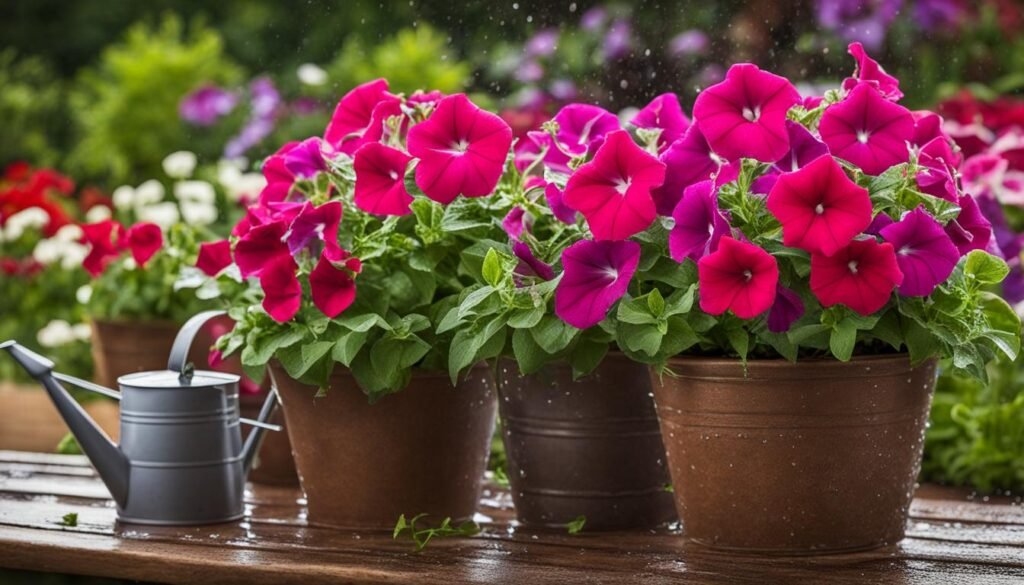
Growing petunias is a fun experience. The right fertilizers make a big difference. Eco-friendly fertilizers, made from natural stuff like plants and microbes, are great for healthy growth.
These natural petunia plant food choices feed your petunias and help the soil. They boost good microbes in the soil. By picking eco-friendly options, you get beautiful petunias and help the planet.
Key Takeaways
- Eco-friendly fertilizers are made from natural sources.
- They promote healthy plant growth and improve soil health.
- Organic Petunia Fertilizer is a great option for petunia care.
- Using natural petunia plant food benefits both plants and the environment.
- Eco-friendly fertilization is a sustainable approach to gardening.
Table of Contents
Understanding the Nutritional Needs of Petunias
To grow healthy and vibrant petunias, knowing their nutritional needs is key. Petunias need a balanced diet of nutrients to thrive. This balance is essential for their growth and health.
Essential Nutrients for Healthy Petunia Growth
Petunias require various nutrients for healthy growth. These nutrients are divided into macronutrients, secondary nutrients, and micronutrients. Each plays a unique role in plant development.
Macronutrients: Nitrogen, Phosphorus, and Potassium
Macronutrients are vital for petunia growth. The three main macronutrients are:
- Nitrogen (N): Promotes leaf growth and green color.
- Phosphorus (P): Essential for root development, flower and fruit formation.
- Potassium (K): Helps with overall plant health, resistance to disease, and water balance.
A balanced fertilizer with these macronutrients is crucial for healthy petunia growth.
Secondary Nutrients and Micronutrients
Petunias also need secondary nutrients and micronutrients. Secondary nutrients include calcium, magnesium, and sulfur, supporting various plant functions. Micronutrients like iron, zinc, and boron are needed in smaller amounts but are crucial for plant health.
Using an eco-friendly petunia fertilizer that includes these nutrients promotes healthy growth and blooming. It’s also important to choose non-toxic petunia nourishment options. This ensures the safety of pets and beneficial insects.
The Benefits of Organic Petunia Fertilizer
Organic petunia fertilizers are gaining popularity for good reasons. They improve soil health and cut down on chemical runoff. This makes them a better choice than synthetic fertilizers for a greener garden.
Environmental Advantages of Going Organic
Using organic petunia fertilizer is great for the planet. It helps gardeners leave a smaller mark on the environment.
Reduced Chemical Runoff
Organic fertilizers lower the chance of chemicals getting into our water. This is good for fish and keeps our water clean.
Soil Health Improvement
These fertilizers make soil better by adding good microbes. They help the soil hold water and nutrients better. This makes the soil perfect for petunias to grow well.
Key Benefits of Organic Petunia Fertilizer
| Benefit | Description | Impact |
|---|---|---|
| Reduced Chemical Runoff | Minimizes pollution in waterways | Protects aquatic life |
| Soil Health Improvement | Promotes beneficial microbes | Enhances soil fertility and structure |
| Petunia Growth Booster | Provides essential nutrients | Promotes healthy and vibrant petunia growth |
Choosing organic flower feed for petunias helps your plants and the planet. It’s a smart move for any gardener who wants to care for the earth.
Types of Organic Fertilizers Suitable for Petunias
Organic fertilizers are a safe and green way to help petunias grow well. These plants need a mix of nutrients to bloom brightly. Organic fertilizers are pet-safe and good for the environment.
Animal-Based Organic Fertilizers
Animal-based organic fertilizers are packed with nutrients. They help petunias grow and bloom better. These fertilizers come from animal products and are full of nutrients.
Fish Emulsion and Fish Meal
Fish emulsion and fish meal are well-known fertilizers. Fish emulsion is a liquid made from fish, giving plants a quick nutrient boost. Fish meal is a slow-release fertilizer that feeds plants over time.
- Rich in nitrogen, phosphorus, and other micronutrients
- Promotes healthy root development and foliage growth
- Can be used as a foliar spray or soil drench
Bone Meal and Blood Meal
Bone meal and blood meal are also great for petunias. Bone meal is full of phosphorus, helping roots and flowers grow. Blood meal is high in nitrogen, making leaves green and plants healthy.
- Bone meal encourages robust root growth and abundant blooms
- Blood meal provides a boost of nitrogen for healthy foliage
- Both are slow-release, providing long-term nutrition
For more info on fertilizing petunias, check out https://leafypixels.com/indoor-plants/fertilizing-petunias/. It has a detailed guide on the topic.
Commercial Organic Petunia Fertilizer Products
The market now offers a variety of commercial organic fertilizers for petunias. These products are designed for eco-friendly gardening. They come in liquid and granular forms, making it easy to find the right one for your petunias.
Liquid Organic Fertilizers for Petunias
Liquid organic fertilizers are popular for their ease of use and effectiveness. They can be applied directly to the soil or as a foliar spray. This provides a quick boost to the plants.
Concentrated Formulas
Concentrated liquid fertilizers are very potent and need to be diluted with water before use. They are a cost-effective option because a little goes a long way. For example, Espoma Organic Bloom! is a concentrated liquid fertilizer that promotes blooming and is suitable for petunias.
Ready-to-Use Options
Ready-to-use liquid fertilizers are convenient and easy to apply. They come pre-diluted and are ready for use right away. Brands like Neem Bliss offer ready-to-use organic fertilizers that are perfect for petunias, providing a hassle-free feeding solution.
When choosing a commercial organic fertilizer for petunias, it’s important to look at the ingredients and formulation. Choose products that are certified organic and contain natural ingredients like fish bone meal, alfalfa meal, or feather meal. These ingredients provide a slow release of nutrients.
| Fertilizer Type | Concentration | Application |
|---|---|---|
| Concentrated Liquid | High | Dilute with water before use |
| Ready-to-Use Liquid | Pre-diluted | Apply directly |
| Granular | Varies | Mix into soil or sprinkle on surface |
By choosing the right commercial organic fertilizer, gardeners can promote healthy growth and vibrant blooms in their petunias. This is all while following eco-friendly practices.
DIY Organic Fertilizer Recipes for Vibrant Petunias
One of the simplest and most beneficial DIY organic fertilizers for petunias is compost tea. It provides a nutrient-rich liquid solution that acts as a petunia growth booster.
Compost Tea for Petunia Nourishment
Compost tea is made by steeping compost in water. This extracts the beneficial microbes and nutrients. It’s a great way to give your petunias non-toxic petunia nourishment, promoting healthy growth and vibrant blooms.
Brewing Methods
To brew compost tea, you need a container, water, and compost. Use a ratio of 1 part compost to 5 parts water. Let it steep for 24-48 hours, stirring occasionally. Make sure it’s aerated to help beneficial microbes grow.
Application Techniques
After brewing, you can apply compost tea directly to the soil or as a foliar spray. For soil, dilute it with water at a 1:10 ratio. For foliar spraying, use a 1:20 ratio to avoid leaf burn.
| Application Method | Dilution Ratio | Frequency |
|---|---|---|
| Soil Application | 1:10 | Every 2 weeks |
| Foliar Spray | 1:20 | Weekly |
By adding compost tea to your petunia care, you’ll have healthier, more vibrant plants. Plus, you’ll be supporting eco-friendly gardening practices.
How to Apply Organic Fertilizers to Petunias
Using organic fertilizers on petunias is all about knowing when and how often. These fertilizers give petunias the nutrients they need to grow well and bloom. The timing and how often you apply it depends on the fertilizer type and the petunias’ growth stage.
Application Timing and Frequency
For the best results with pet-safe organic fertilizer for petunias, apply it at the right moment. The type of fertilizer and the petunias’ growth stage are key to figuring out when to apply.
Seasonal Schedule
Creating a seasonal schedule helps gardeners fertilize at the best times. In spring, petunias need a nutrient boost for new growth. During the growing season, a balanced natural petunia plant food keeps plants healthy.
Growth Stage Considerations
The growth stage of petunias affects how often to fertilize. Young petunias need a gentle, balanced fertilizer. As they grow and bloom, adjust the fertilizer to support their flowers.
By knowing what petunias need and applying pet-safe organic fertilizer correctly, gardeners can have vibrant, healthy plants all season.
Pet-Safe Organic Fertilizer for Petunias
It’s important to use pet-safe organic fertilizers if you have pets that like to explore the garden. Petunias are a favorite among gardeners. They need food that is both good for them and safe for pets.
Non-Toxic Fertilizer Ingredients
When picking out a fertilizer for your petunias, it’s key to choose the right ingredients. Non-toxic and eco-friendly options are out there. They make sure your garden is a safe place for your pets.
Safe Commercial Options
There are many commercial organic fertilizers made with pet safety in mind. For instance, Miracle-Gro Organic Choice Plant Food is safe for pets once it’s absorbed into the soil.
| Product | Pet Safety | Eco-Friendliness |
|---|---|---|
| Miracle-Gro Organic Choice | Safe once absorbed | Yes |
| Espoma Organic Bloom! | Pet-safe | Yes |
Homemade Pet-Safe Formulas
You can also make your own pet-safe fertilizer. Using compost tea or fish emulsion is both effective and safe for pets. Here’s a simple recipe:
- 1 bucket of water
- 1/2 cup of compost
- 1 tablespoon of fish emulsion
Mix the ingredients and let it steep for 24 hours. This homemade fertilizer is not only eco-friendly but also non-toxic to pets.
Seasonal Considerations for Organic Petunia Fertilization
Petunias bloom in spring, and the right organic flower feed helps them grow best. As we move into the new growing season, knowing how to fertilize petunias organically is key.
Spring Fertilization Strategies
Spring is vital for fertilizing petunias to ensure they grow well and bloom. Good spring fertilization includes two main steps: adding soil amendments at planting and supporting early growth.
Initial Planting Amendments
When planting petunias in spring, adding organic matter to the soil helps a lot. Mix compost or well-rotted manure into the soil for a nutrient boost.
Early Growth Support
As petunias start growing, they need a petunia growth booster for strong growth. A balanced, organic fertilizer meets their nutritional needs during this important time.
Feeding your petunias with the right organic fertilizer at the right time is key to a vibrant display of blooms.
By using these spring fertilization tips, gardeners can have healthier, more vibrant petunias. These will bloom well all season long.
Troubleshooting Common Issues with Organic Fertilizers
Slow growth in petunias can be a problem with organic fertilizers. Knowing how organic nutrients are released and using extra food can help. This makes gardening easier.
Addressing Slow Growth Response
Slow growth in petunias, even with organic fertilizers, needs a closer look. Organic fertilizers release nutrients slowly. This might seem like they’re not working, but they are.
Understanding Organic Nutrient Release
Natural petunia plant food breaks down into nutrients plants can use. Soil temperature, microbes, and moisture affect this process. Keeping these conditions right helps petunias get the nutrients they need.
Supplemental Feeding Options
If petunias still grow slowly, try supplemental feeding. Use pet-safe organic fertilizer for petunias that’s high in nitrogen, phosphorus, or potassium. Compost tea or liquid fish fertilizers can also give a quick nutrient boost.
By using these strategies, gardeners can help petunias grow better with organic fertilizers. Watch how they respond and adjust as needed. This way, you’ll see better results.
For the best results, mix different organic fertilizers. This keeps nutrients flowing and keeps petunias healthy and strong.
Organic Petunia Growth Boosters for Enhanced Blooming
To get your petunias to bloom more, try using organic growth boosters. These natural helpers can make your petunias healthier and more colorful. This leads to more flowers.
Natural Bloom Enhancers
Natural bloom enhancers are key for petunia health. They give the plants the nutrients they need to grow flowers.
Phosphorus-Rich Organic Sources
Phosphorus is vital for plants that bloom a lot, like petunias. Phosphorus-rich organic sources like bone meal and rock phosphate help. They give phosphorus slowly, so plants get it when they need it.
Bloom-Boosting Teas and Extracts
Besides phosphorus, bloom-boosting teas and extracts can also help. Compost tea, for example, is a homemade liquid full of nutrients for your petunias.
| Bloom Enhancer | Nutrient Content | Application Method |
|---|---|---|
| Bone Meal | High in Phosphorus | Soil Incorporation |
| Compost Tea | Rich in Micro-Nutrients | Foliar Spray or Soil Drench |
| Rock Phosphate | High in Phosphorus | Soil Incorporation |
Using these organic petunia growth boosters can make your petunias bloom more. They will be more vibrant and colorful.
Container vs. Garden Bed: Adjusting Organic Fertilization
Organic fertilization for petunias changes between containers and garden beds. This is because of soil differences. Container-grown petunias need special care for healthy growth and blooms.
Special Needs of Container Petunias
Container petunias need more fertilizer because of small soil and nutrient loss. Preventing nutrient leaching is key to their health.
Nutrient Leaching Prevention
To stop nutrient leaching, use organic fertilizers that release slowly. Compost or well-rotted manure works well. Also, make sure containers have good drainage holes to keep nutrients in.
Container-Specific Organic Mixes
Use container-specific organic mixes for petunia growth. These mixes hold moisture but drain excess water. This reduces nutrient loss. Using non-toxic petunia nourishment methods, like organic flower feed, also helps plant health.
Knowing container petunias’ special needs helps gardeners. Adjusting fertilization methods promotes vibrant blooms and healthy growth. This approach benefits plants and supports sustainable gardening.
Eco-Friendly Petunia Fertilizer Practices for Sustainable Gardening
Using eco-friendly fertilizers is key for sustainable gardening. The right choices help petunias grow well and protect the environment.
Water Conservation with Organic Methods
Organic fertilizers make soil better at holding water. This means you don’t have to water petunias as often. They need steady moisture to bloom well.
Adding organic mulch around petunias helps save water too. It stops soil from drying out and prevents water from running off.
Reducing Carbon Footprint Through Local Sourcing
Buying fertilizers locally cuts down on carbon emissions from transport. You can use compost or manure made nearby for your petunias.
Local products also help the local economy. They’re made for the local climate and soil, making them perfect for your garden.
Creating Closed-Loop Fertilizer Systems
A closed-loop system turns waste into fertilizer. You can compost kitchen and yard waste to make a rich fertilizer for petunias.
| Eco-Friendly Practice | Benefit | Application |
|---|---|---|
| Using Organic Fertilizers | Improves soil health and structure | Petunia fertilization |
| Local Sourcing | Reduces carbon footprint | Fertilizer procurement |
| Closed-Loop Systems | Recycles organic waste | Composting and fertilizer production |
Conclusion: Embracing Eco-Friendly Petunia Care
Eco-friendly petunia care is more than a trend; it’s essential for sustainable gardening. Using pet-safe organic fertilizer helps plants thrive. It also makes the garden healthier for pets and the environment.
Adding a petunia growth booster can make your plants bloom more and stay healthy. Organic fertilizers, made from natural stuff, give plants what they need without harming them. For tips on green gardening, check out the National Center for Appropriate Technology online.
Choosing eco-friendly petunia care lets gardeners grow beautiful, strong plants. It also helps keep our planet green and supports all kinds of life.
FAQ
What is the best organic fertilizer for petunias?
The best organic fertilizer for petunias is rich in nutrients. Look for animal-based fertilizers, compost tea, and liquid organic fertilizers. Make sure they are labeled as “pet-safe” and “non-toxic” for your pets’ safety.
How often should I fertilize my petunias with organic fertilizer?
Fertilize petunias every 1-2 weeks during the growing season. Adjust based on the fertilizer type and your plants‘ needs. Always follow the package instructions.
Can I use compost tea as a fertilizer for my petunias?
Yes, compost tea is great for petunias. It’s made by steeping compost in water. This liquid is full of microbes that help plants grow. Use 1-2 cups of compost in 5 gallons of water for 24-48 hours. Strain and use as fertilizer.
Are there any eco-friendly petunia fertilizer practices that can help reduce my carbon footprint?
Yes, there are eco-friendly practices. Use locally sourced organic fertilizers and conserve water. Creating closed-loop fertilizer systems also helps. These practices support sustainable gardening and reduce environmental impact.
How can I prevent nutrient leaching in container petunias?
Use a container-specific organic mix to retain nutrients. Choose a fertilizer made for container plants. These release nutrients slowly. Water carefully to avoid overwatering and nutrient leaching.
What are some natural bloom enhancers for petunias?
Natural bloom enhancers include phosphorus-rich sources like bone meal or rock phosphate. Bloom-boosting teas and extracts, like compost tea or alfalfa meal tea, also work. These promote healthy blooming and more flowers.
How can I troubleshoot slow growth response in my petunias?
First, check the soil pH and adjust if needed. Then, consider the fertilizer type and adjust application. Try a different fertilizer or add supplements to promote growth.