West-facing windows deliver a short, intense afternoon sun burst—not the all-day exposure of a south window. From roughly 3 to 6 p.m., west glass heats up, light turns golden, and thin tropical leaves can scorch faster than they would under morning east light. The best west-window plants either store water for that heat spike (jade, aloe, yucca) or produce bolder color when late-day rays are strong (croton, bougainvillea, hibiscus).
This guide compares ten species by afternoon sun tolerance, late-day heat on sills, and how west exposure differs from south. For maximum daily sun hours, see Best Indoor Plants for South Windows. For bright rooms without directional afternoon blast, see Best Plants for Bright Light.
The ten best indoor plants for west windows for most homes are Croton, Rubber plant, Fiddle leaf fig, Bird of paradise, Jade plant, Aloe vera, Yucca plant, Bougainvillea, Hibiscus, Monstera deliciosa.
West vs. South Windows: What Actually Differs
Both orientations can deliver strong indoor light, but they stress plants differently. Extension light guides describe window direction by when sunlight enters the room—not just how bright it looks at noon. (University of Maryland Extension)
Practical takeaway: A plant that struggles on an open south sill may do fine on a west window with a sheer curtain—because west gives intensity in a shorter window. Conversely, a plant that needs six hours of direct sun may look pale on west alone even if afternoon rays feel harsh.
The 4 p.m. Shadow Test for West Windows
West-window shopping mistakes happen when you judge light at 10 a.m. Do this instead:
- On a clear day, check the window at 4 p.m.—peak west intensity for most homes.
- Hold your hand six inches from the glass. A sharp, high-contrast shadow means direct afternoon sun.
- Note whether leaves would touch the pane. Hot glass plus direct sun scorches fiddle leaf fig and monstera faster than the same plant a foot back.
If a building or tree blocks the horizon, your “west window” may behave like bright indirect by late afternoon—croton color will fade and jade may stretch. Verify before buying sun-loving species.
Selection Criteria for West Windows
We ranked these ten plants for:
- Afternoon sun tolerance — performance during the late-day peak, not just total foot-candles
- Heat-on-glass survival — species that handle warm sills without daily leaf crisp
- Color or bloom response — plants that visibly benefit from strong directional afternoon light
- Realistic indoor size — container-friendly species, not outdoor trees
- Acclimation needs — how much filtering a new plant needs on west glass
Quick Pick: Best Plant for Your Situation
For boldest afternoon color, choose croton or bougainvillea.
For succulent heat tolerance on hot sills, choose jade plant or aloe vera.
For glossy height with afternoon filtering, choose rubber plant behind sheer curtain.
For pet-safe blooms in direct afternoon sun, choose hibiscus.
Comparison Table
Croton
Best placement: Open west sill
Light need: Bright to direct afternoon sun
Water: When top inch dries
Difficulty: Medium
Main light risk: Fades to green in dim rooms; drops leaves after relocation
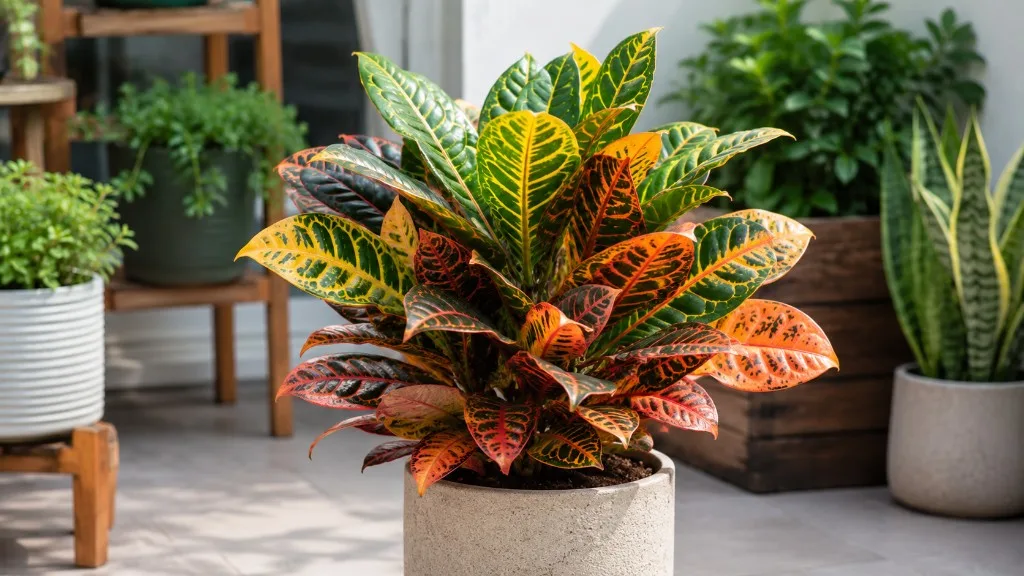
Croton is the west-window color champion. Afternoon sun deepens red, orange, and yellow pigments that wash out in north or east rooms. Unlike south-window setups where all-day sun can bleach variegation on some tropicals, croton often thrives on west because the intensity arrives when the plant has already had softer morning light from elsewhere in the room.
Placement tip: Acclimate over seven to ten days—start behind sheer curtain, then open the fabric during afternoon hours only.
Common mistake: Buying a vivid nursery croton for a west window that is shaded by a neighboring building after 3 p.m. Verify the 4 p.m. shadow test before purchase.
Avoid this plant if: You have curious pets—croton is toxic if ingested and drops leaves when stressed.
Useful care guides:
Rubber plant
Best placement: West window with sheer curtain
Light need: Bright indirect; tolerate some late-day sun when filtered
Water: When top 2 in. dry
Difficulty: Easy
Main light risk: New leaves scorch on hot unfiltered glass
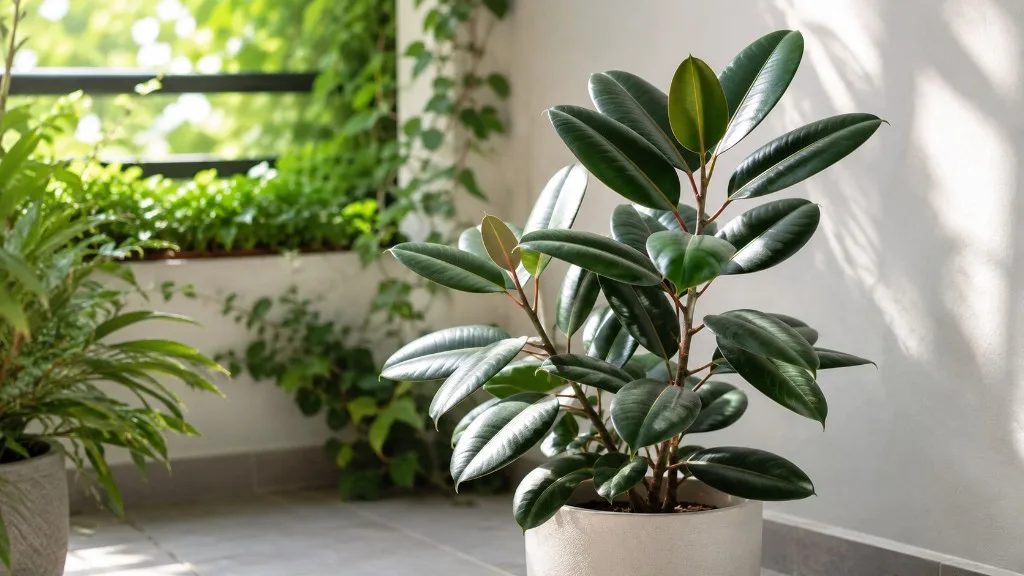
Rubber plant uses west-window brightness for glossy, upright growth without needing south-window hours. The afternoon peak helps red-leaf varieties hold color, but direct glass contact on a July afternoon can sunburn fresh leaves. One foot back or a sheer panel during 3–6 p.m. is usually enough.
Placement tip: Rotate the pot a quarter turn monthly so one side does not face the afternoon blast all season.
Common mistake: Placing a new rubber plant on blazing west glass the day you bring it home—acclimate first.
Avoid this plant if: You need a pet-safe floor tree—rubber plant is toxic if chewed.
Useful care guides:
Fiddle leaf fig
Best placement: One to two feet from west glass, filtered
Light need: Bright indirect
Water: When top 2 in. dry
Difficulty: Medium
Main light risk: Bleached or crisp patches from hot afternoon pane contact
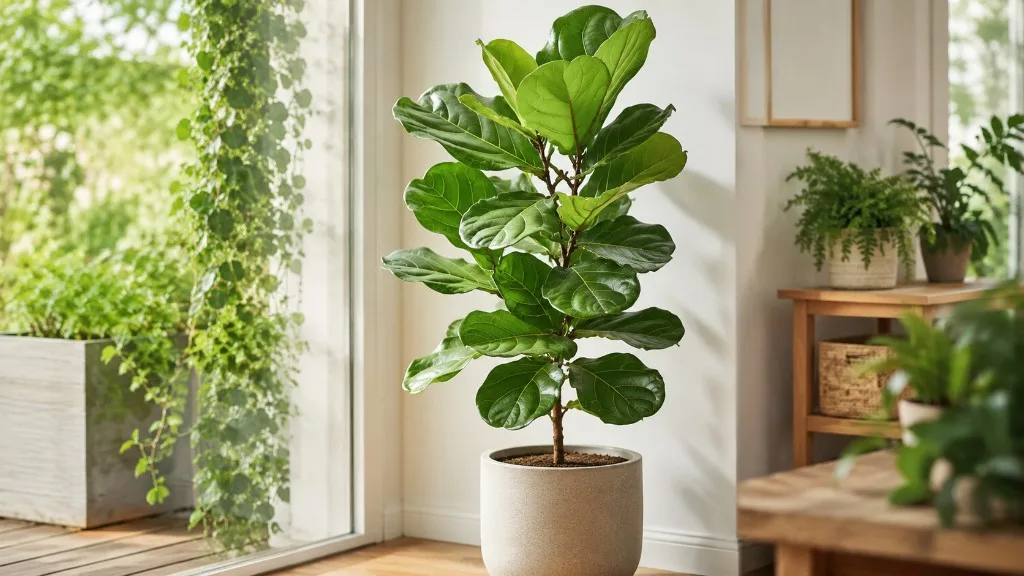
Fiddle leaf fig benefits from west-room brightness—the afternoon boost can support large leaves without the sustained direct sun a south sill delivers. The trade-off is sensitivity: fiddle leaf fig hates being moved, and west-window heat on glass can crisp the leaf pressed nearest the pane even when the rest of the plant looks fine.
Placement tip: Keep the largest leaves at least six inches from glass; use a sheer curtain during peak afternoon hours in summer.
Common mistake: Treating west like south and leaving the plant on open glass all day—fiddle leaf fig wants bright, not baking.
Avoid this plant if: You rearrange furniture often—every move can drop leaves.
Useful care guides:
Bird of paradise
Best placement: West floor within three feet of glass
Light need: Bright to some direct afternoon sun
Water: When top 2 in. dry
Difficulty: Medium
Main light risk: Slow growth and small paddles in low afternoon light
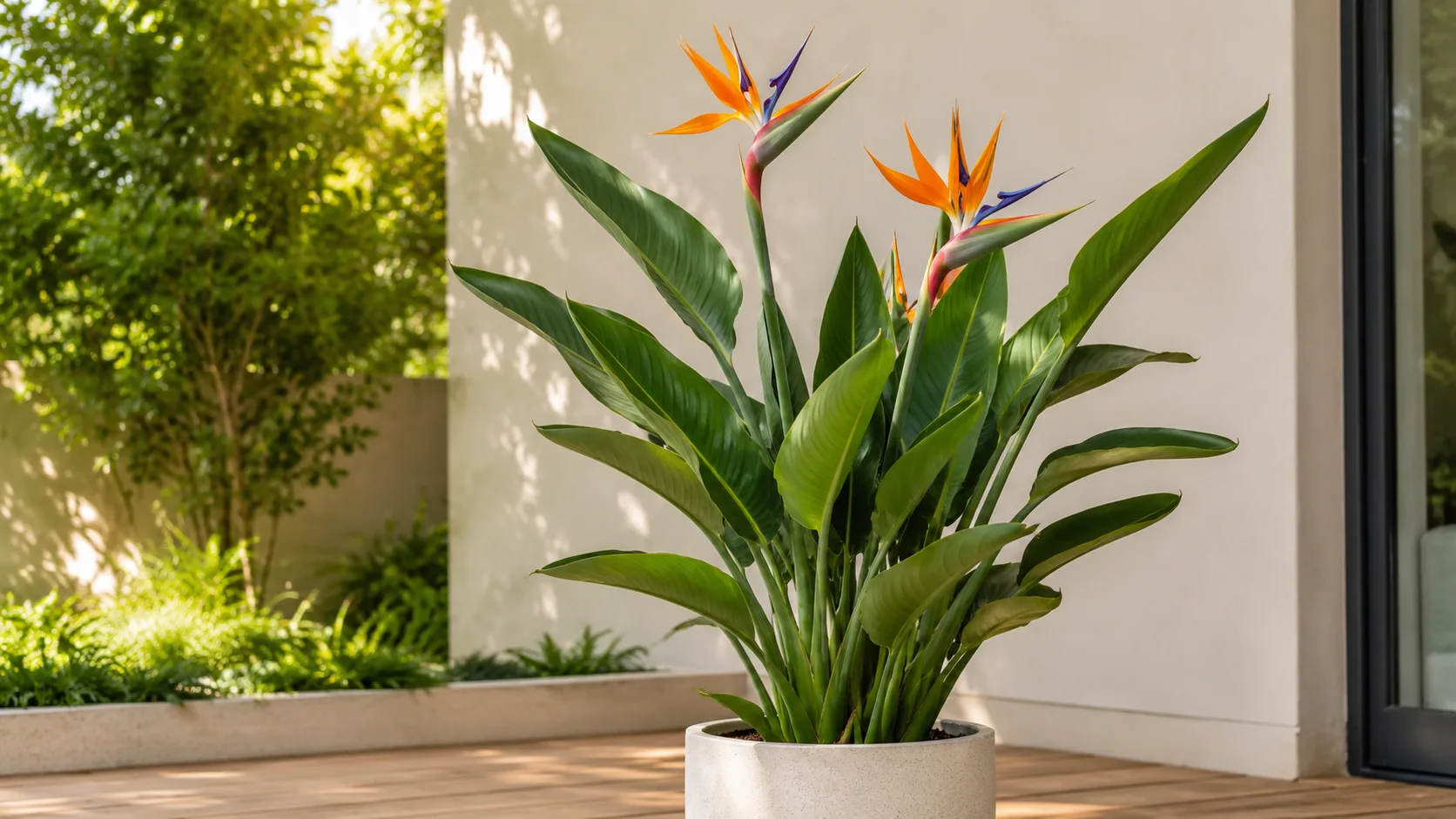
Bird of paradise uses west-window afternoon intensity to push large paddle leaves indoors. It tolerates more direct late-day sun than fiddle leaf fig on many specimens, but still needs room—west corners with ceiling height work better than cramped sills. Split leaf edges are often normal, not a west-window failure.
Placement tip: Wipe leaves monthly—afternoon sun shows dust and water spots more than diffuse north light.
Common mistake: Parking bird of paradise in a west room far from the window, then wondering why new leaves stay small.
Avoid this plant if: You have low ceilings—mature plants want vertical space.
Useful care guides:
Jade plant
Best placement: Open west sill
Light need: Bright to direct afternoon sun
Water: Every 2–3 weeks; more in summer heat
Difficulty: Easy
Main light risk: Leggy, pale growth if afternoon sun is blocked
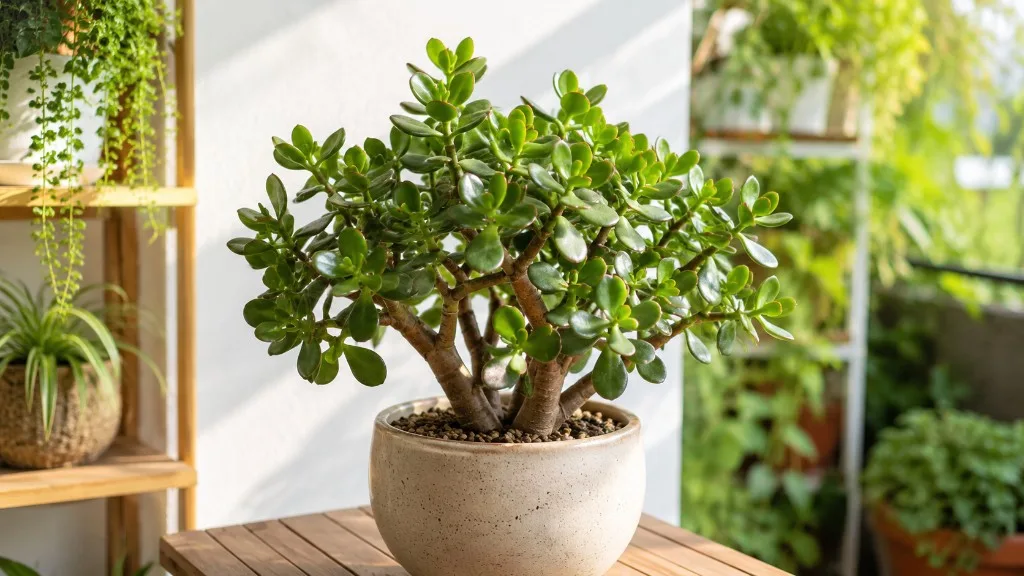
Jade plant stores water in thick leaves and stems—ideal for west sills that spike hot in late afternoon. South windows work too, but jade often performs excellently on west because the shorter sun window still delivers enough intensity without all-day drying stress. Red-tipped varieties color up best with real afternoon rays.
Placement tip: Use a terracotta pot on west sills—porous sides release heat faster than plastic on hot afternoons.
Common mistake: Watering on a calendar instead of checking soil—west summer heat can speed drying even for succulents.
Avoid this plant if: You have pets that chew plants—jade is toxic to cats and dogs.
Useful care guides:
Aloe vera
Best placement: West kitchen or bathroom sill
Light need: Bright to direct afternoon sun
Water: Every 2–3 weeks
Difficulty: Easy
Main light risk: Soft, pale leaves in insufficient afternoon light
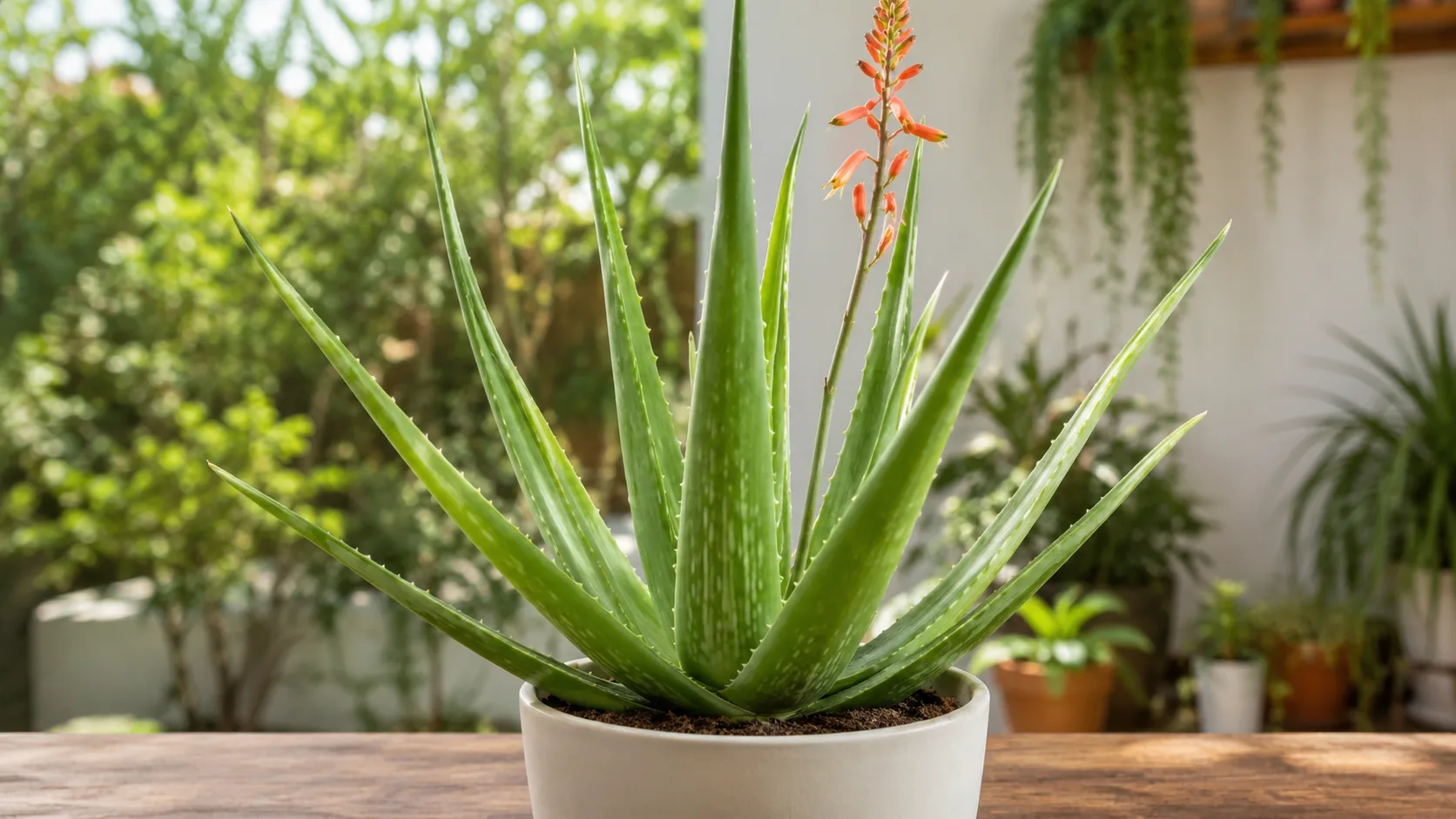
Aloe vera thrives on west afternoon sun with infrequent water—classic kitchen-sill behavior. The west orientation often avoids the longest south-window bake while still giving aloe the intensity it needs to stay compact. Overwatering is the bigger risk than afternoon scorch for established plants.
Placement tip: Ensure the sill pot drains freely—west afternoon heat plus soggy soil rots roots quickly.
Common mistake: Grouping aloe with thirsty ferns because they share a west window—watering schedules should not match.
Avoid this plant if: You need pet-safe succulents—aloe is toxic if ingested.
Useful care guides:
Yucca plant
Best placement: West floor near window
Light need: Bright to direct afternoon sun
Water: Every 2–3 weeks
Difficulty: Easy
Main light risk: Weak, drooping canes in dim west rooms
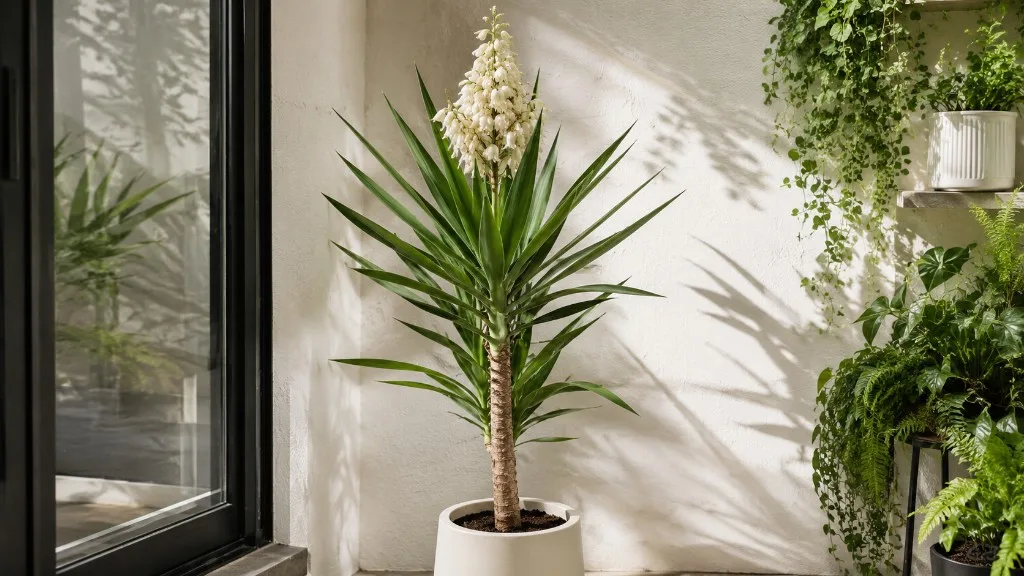
Yucca plant handles dry, hot west rooms well—desert-adapted canes tolerate afternoon heat and low humidity better than rainforest floor species. West windows suit yucca when you want architectural height without the all-day south exposure that can yellow lower leaves on some indoor specimens.
Placement tip: Rotate quarterly so canes grow straight toward afternoon light instead of leaning permanently.
Common mistake: Overwatering because the room feels cool in morning—west afternoon heat still dries soil on sunny days.
Avoid this plant if: You have small children or pets near sharp-tipped canes—yucca is toxic if ingested.
Useful care guides:
Bougainvillea
Best placement: Sunniest west glass you have
Light need: Full sun—afternoon direct preferred
Water: When soil dries deeply
Difficulty: Medium
Main light risk: Few bracts in east-only or filtered west rooms
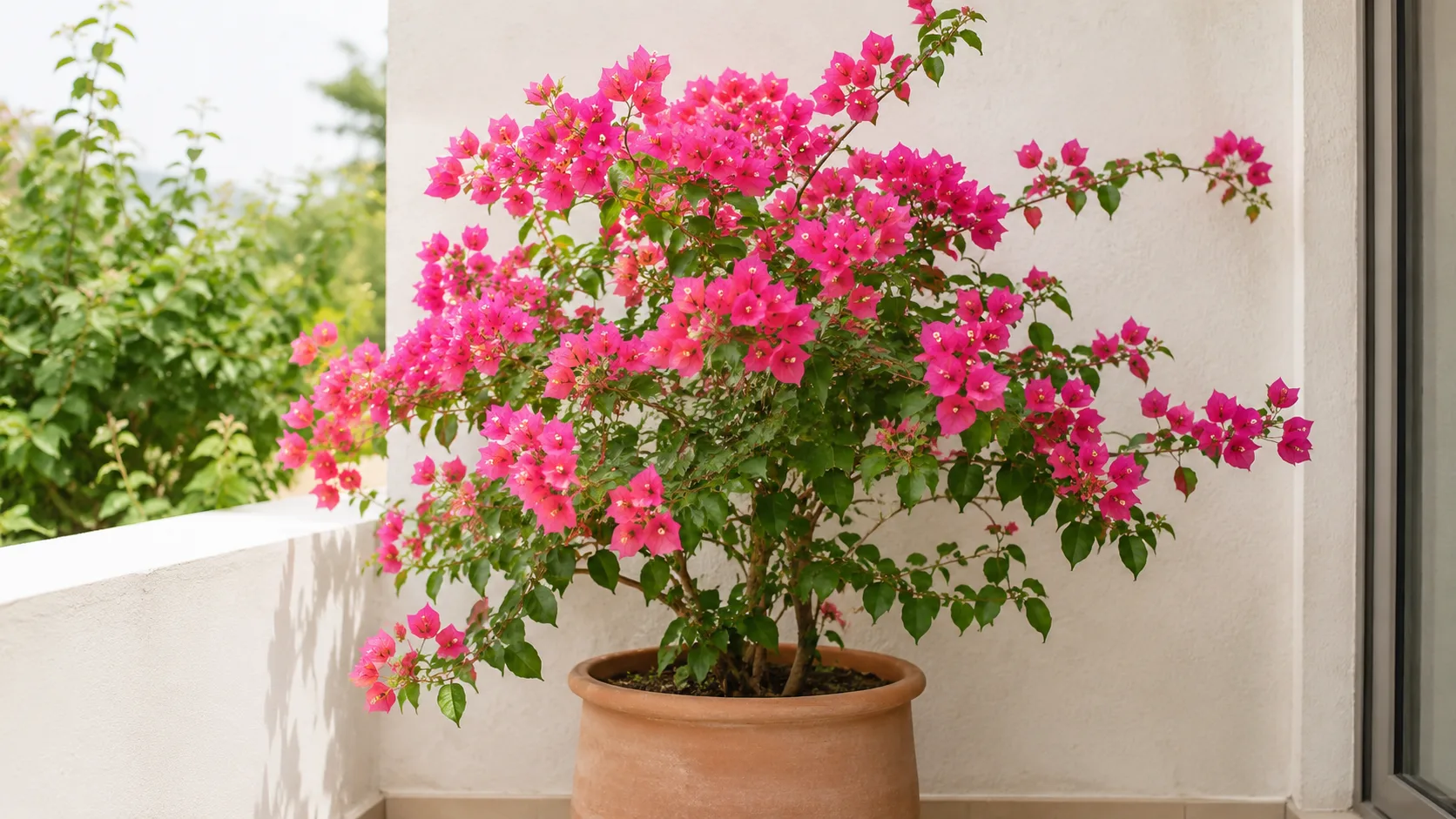
Bougainvillea is one of the few houseplants that often prefers west over south indoors: the late-day sun drives bract color without requiring every midday hour on glass. Indoors, the challenge is dryness and stability—bougainvillea drops color when moved or overwatered, not because west light is wrong.
Placement tip: Keep roots slightly restricted in pot—tight containers plus afternoon sun encourage bloom indoors.
Common mistake: Moving the pot for cleaning during bloom—bougainvillea sheds bracts after relocation.
Avoid this plant if: You cannot tolerate thorns or messy dropped bracts on the sill.
Useful care guides:
Hibiscus
Best placement: Open west sill for bloom
Light need: Bright direct afternoon sun
Water: When top inch dries
Difficulty: Medium
Main light risk: Bud drop from drafts—not west light itself
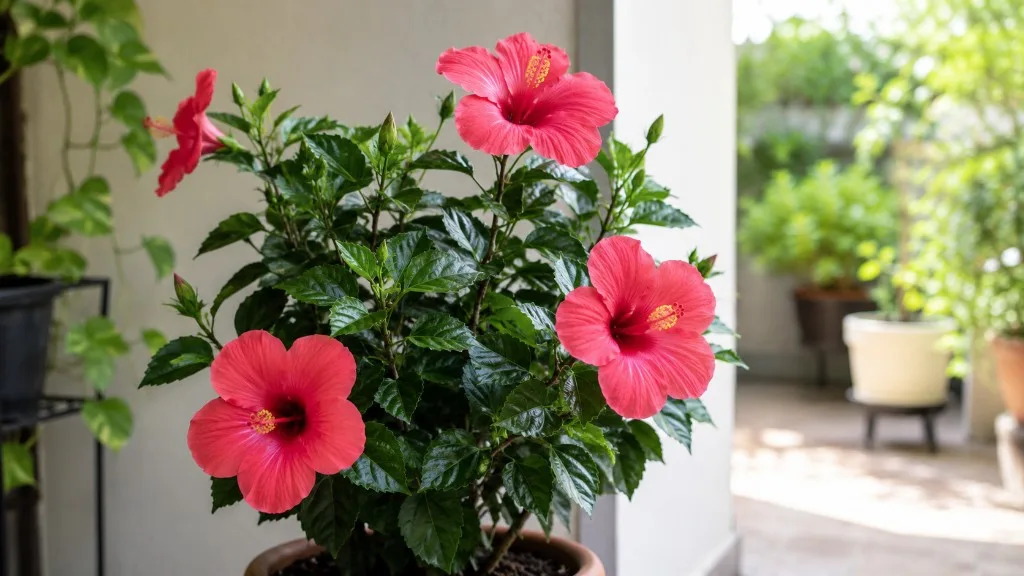
Hibiscus sets buds best with real afternoon sun—west windows often outperform east for indoor flowering because bloom timing aligns with strong late-day light. Hibiscus is also the pet-safe pick on this list (ASPCA non-toxic to cats and dogs), which matters when west sills sit at pet height.
Placement tip: Keep away from HVAC vents that blow across the west window at the same time afternoon sun hits—combined stress drops buds.
Common mistake: Expecting winter blooms in a dim west room when the afternoon sun path is blocked by shorter days and neighbor shade.
Avoid this plant if: You dislike wiping up dropped flowers and spent buds weekly.
Useful care guides:
Monstera deliciosa
Best placement: Two to three feet from west glass, filtered
Light need: Bright indirect
Water: When top 2 in. dry
Difficulty: Easy
Main light risk: Bleached fenestrations from hot glass contact
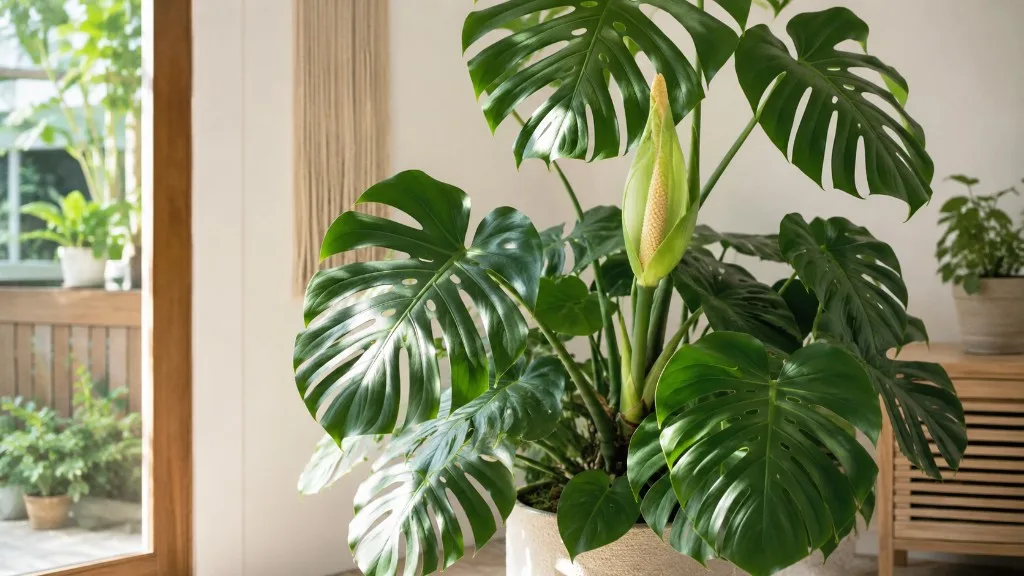
Monstera deliciosa grows fast with west-room brightness when afternoon rays are filtered. West is often the sweet spot: more light than north, less sustained direct bake than south. Pressed against hot west glass in July, however, monstera leaves bleach white or crisp at the edges—pull back or sheer-curtain the peak hours.
Placement tip: A moss pole near—but not on—the west sill lets vines climb into bright air away from hottest glass.
Common mistake: Assuming “west window plant” means on the sill—monstera usually wants near the window, not on it.
Avoid this plant if: You need a compact plant—monstera fills west corners quickly.
Useful care guides:
How to Choose Based on Your West Window
Open west sill, no obstructions: Jade plant, aloe vera, croton, bougainvillea, hibiscus.
West window with sheer curtain: Rubber plant, fiddle leaf fig, monstera deliciosa.
West corner floor space: Bird of paradise, yucca plant, rubber plant.
Pet-safe west sill blooms: Hibiscus only on this list—verify placement away from chewers.
Renters who cannot install film: Pull pots one foot back during June–August peak weeks instead of leaving tropical leaves on glass.
West-Window Light Mistakes to Avoid
Judging light in the morning. West windows look tame at 10 a.m. Test at 4 p.m.
Assuming south and west need the same plants. South-all-day species may want more hours than west delivers; west-afternoon species may scorch on open south glass.
Sunscorching unacclimated tropicals. New fiddle leaf fig and monstera need seven to ten days behind sheer fabric before full west exposure.
Underwatering succulents only in winter. West summer sills dry fast—jade and aloe may need more frequent checks June through August.
Ignoring pet toxicity on low west sills. Croton, jade, monstera, and aloe are toxic—use hibiscus for pet-height west windows.
Conclusion
West windows reward afternoon-tolerant picks: croton and bougainvillea for color, jade and aloe for hot sills, rubber plant and monstera with peak-hour filtering. Unlike south windows, success here is about managing the late-day heat spike—not maximizing total sun hours. Run the 4 p.m. shadow test, acclimate new plants, and match species to whether your west glass is open or filtered.