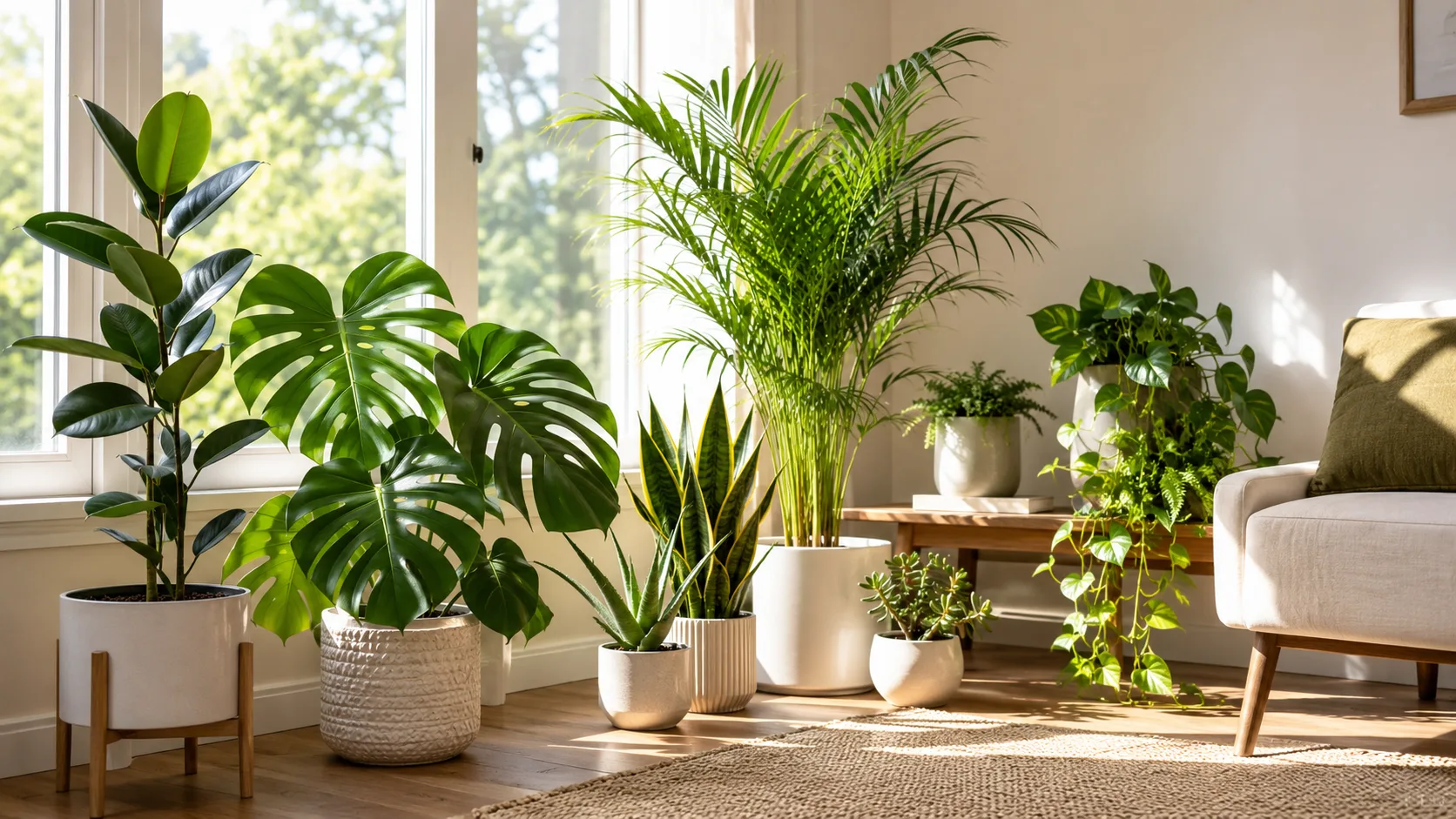
A bright window is one of the most valuable spots in an apartment—and one of the easiest places to burn a houseplant. Bright light indoors usually means a south- or west-facing window where you can see a sharp hand shadow for much of the day, or a spot within one to two feet of that glass. Some plants want direct sun on the leaves; others want bright light without hot afternoon rays scorching tender foliage.
This guide compares ten species that genuinely use strong indoor light: what each tolerates, who it suits, watering reality on a sunny sill, and links to full species care on LeafyPixels. For the opposite problem, see Best Low Light Indoor Plants. For filtered light without harsh sun, see Best Plants for Indirect Light.
The ten best plants for bright light in typical homes are jade plant, aloe vera, snake plant, croton, rubber plant, fiddle leaf fig, bird of paradise, geranium, hibiscus, and bougainvillea. They are not interchangeable. Succulents and snake plant handle direct sun better than fiddle leaf fig; flowering shrubs need more water and pest vigilance than jade on the same sill.
University extension guidance treats light as the first limiting factor indoors—before watering rhythm or fertilizer. A plant in strong light dries faster, grows faster, and shows stress faster when placement is wrong. (University of Maryland Extension)
What Bright Light Looks Like at Home
Bright direct light: Sunbeams hit the leaves for several hours—typical unshaded south or west glass, or a skylight with clear sun patches.
Bright indirect light: The room is strongly lit but leaves do not sit in sunbeams—often one to three feet back from a large south window, or behind a sheer curtain that softens afternoon heat.
Signs of too little light (even on this list): stretching stems, smaller new leaves, loss of variegation, and soil that stays wet for weeks.
Signs of too much light: Bleached or brown crispy patches, wilted leaves in wet soil (sun + overwatering), and rapid soil dry-down that outpaces your watering habit.
Use a noon shadow test on a clear day. A sharp shadow means direct sun is available. A soft but readable shadow a few feet back still counts as bright indirect—enough for fiddle leaf fig and rubber plant when direct rays would burn.
Editor note (south-window acclimation): Nursery plants grown under shade cloth often arrive “sun-soft.” Move new succulents to a bright sill in stages over one to two weeks—two hours of direct morning sun first, then longer—rather than placing a tender tropical directly on hot afternoon glass.
Quick Pick: Best Bright-Light Plant for Your Window
For direct sun and drought tolerance, choose jade plant or aloe vera. Both store water in leaves and tolerate sunny sills where tropicals would scorch.
For architectural height in bright indirect light, choose fiddle leaf fig or rubber plant. They need strength without baking on west glass in summer.
For bold color on a sunny spot, choose croton. Variegated leaves need bright light to stay vivid; dim rooms produce green, leggy growth.
For flowers on a bright sill or balcony door, choose geranium, hibiscus, or bougainvillea. Expect more watering and seasonal bloom cycles than foliage-only picks.
For the easiest bright-light survivor, choose snake plant. It tolerates direct sun and dim corners—useful when you want one forgiving plant while you learn the sill.
For a tropical statement with space, choose bird of paradise—but only if you have ceiling height, a large pot, and patience; it outgrows small apartments quickly.
How We Chose These Ten Plants
We filtered the LeafyPixels database for species whose documented light needs include bright indirect or direct sun indoors, then ranked by:
- Honest bright-window performance — plants that use strong light for growth or color, not merely survive it.
- Container suitability — species that stay manageable in pots without greenhouse conditions.
- Care depth on LeafyPixels — each pick has a full
/plants/{slug}/ hub plus light and watering topic pages.
- Reader mix — succulents, foliage trees, and flowering options so the list serves different sunny-window goals.
Cactus and succulent collections also love bright light but are covered more deeply on individual species pages; this list emphasizes common nursery houseplants renters actually find labeled.
Bright-Light Plant Comparison Table
Jade Plant
Best placement: South or west windowsill with direct morning or afternoon sun
Light need: Bright to direct sun indoors
Water: Deep soak when soil is fully dry; slower in winter
Difficulty: Easy
Main light risk: Soft growth and weak stems in too little light
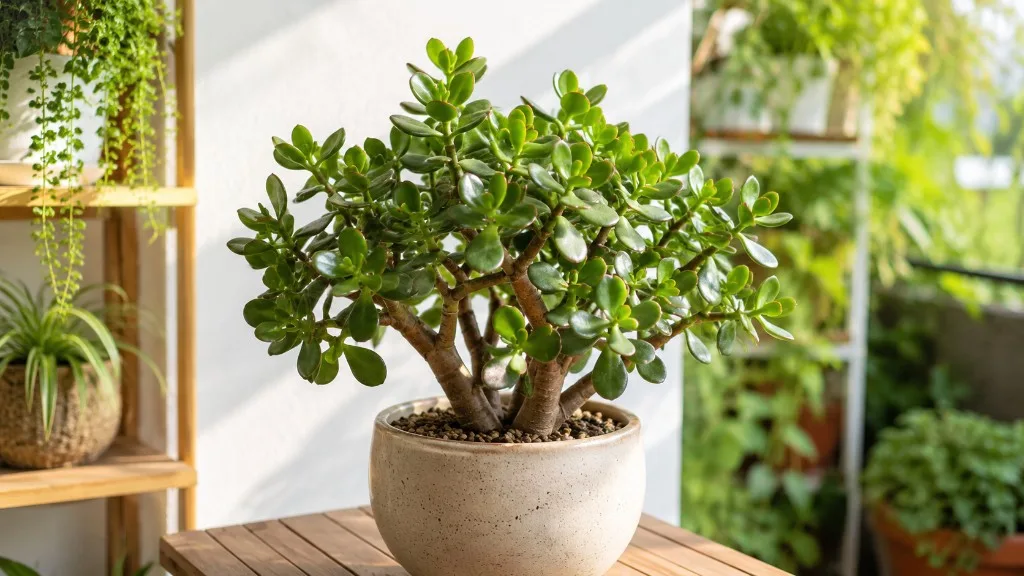
Jade plant (Crassula ovata) is the classic sunny-sill succulent: thick leaves store water, red leaf margins often intensify in strong light, and the plant shrugs off weeks without water better than most tropicals on the same window.
Placement tip: Rotate the pot a quarter turn monthly so stems grow evenly toward the glass.
Common mistake: Watering on the same weekly schedule as a pothos in the next room. Jade in bright sun still needs dry soil between drinks—soggy roots turn leaves mushy fast.
Useful care guides:
Aloe Vera
Best placement: Kitchen south window, sunroom shelf
Light need: Bright to direct sun
Water: Very dry; shallow roots rot easily
Difficulty: Easy
Main light risk: Stretching and pale leaves in dim rooms
Aloe vera wants what many apartments have: strong light and infrequent water. NC State Extension notes aloe as a sun-loving succulent suited to bright indoor exposures when drainage is sharp.
Placement tip: Use a terra-cotta pot and a saucer—you will see dry weight change faster than with plastic.
Common mistake: Keeping aloe in a decorative pot without drainage because the kitchen counter looks cleaner. Bright light accelerates dry-down but trapped water still rots roots.
Useful care guides:
Snake Plant
Best placement: Bright sill, sunroom floor, west window back row
Light need: Low to direct; colors deepen in bright light
Water: Dry down completely between waterings
Difficulty: Easy
Main light risk: None in bright light; overwatering is the real enemy
Snake plant is the flexible bright-light pick when you want structure without fiddle-leaf drama. In strong light it grows faster and may produce offsets sooner than in a dim corner.
Placement tip: Variegated cultivars need more light than solid-green types to keep margins crisp.
Common mistake: Assuming bright light means more water automatically. Snake plant still prefers drought—extra sun increases frequency slightly, not daily soaking.
Useful care guides:
Croton
Best placement: Bright west window with sheer curtain, sunroom
Light need: Bright indirect to some direct; color fades in shade
Water: Moderate; steady moisture in active growth
Difficulty: Medium
Main light risk: Leaf drop after relocation—not always sunburn
Croton (Codiaeum variegatum) is the color plant for bright rooms. Without strong light, yellow, red, and orange variegation reverts toward plain green and stems stretch.
Placement tip: Acclimate slowly—crotons often drop leaves after moving from a dim nursery to a sunny sill even when light level is ultimately correct.
Common mistake: Buying croton for a medium-lit living room because the tag said “houseplant.” You will get survival, not the color you paid for.
Useful care guides:
Rubber Plant
Best placement: One to three feet from large south or east window
Light need: Bright indirect; avoid hot afternoon glass contact
Water: Partial dry-down of top soil
Difficulty: Easy to medium
Main light risk: Scorched leaves on unfiltered west summer sun
Rubber plant (Ficus elastica) uses bright light to produce large, glossy leaves and upright habit. It is less sun-hardy than jade but more forgiving than fiddle leaf fig in many homes.
Placement tip: Wipe dust from leaves monthly—bright light blocked by dust mimics dim stress.
Common mistake: Confusing rubber plant with baby rubber plant (Peperomia obtusifolia), which tolerates less light. Check the botanical tag before placing on a hot sill.
Useful care guides:
Fiddle Leaf Fig
Best placement: Bright east or south room, a few feet from glass
Light need: Bright indirect; limited direct morning sun
Water: Moderate; consistent when soil partly dries
Difficulty: Medium
Main light risk: Too dim → drop; too hot → brown patches
Fiddle leaf fig (Ficus lyrata) is the statement tree for bright apartments. It will not thrive in a dim corner, but it also burns on unshaded west glass in summer.
Placement tip: Support a single trunk with a stake early; bright light drives fast vertical growth that can lean.
Common mistake: Moving the pot every week to “find sun.” Fiddle leaf figs protest relocation with leaf drop—pick a bright spot and stabilize watering there.
Useful care guides:
Bird of Paradise
Best placement: Bright room with ceiling height, near south or west glass
Light need: Bright to direct; more light = faster growth
Water: Moderate to heavy in warm active growth
Difficulty: Medium to hard indoors
Main light risk: Slow growth and split leaves in weak light
Bird of paradise (Strelitzia) rewards bright light with banana-like leaves and occasional indoor blooms on mature plants—but only if you have space. It is a floor plant, not a sill specimen.
Placement tip: Rotate monthly and wipe leaves; dust blocks the strong light this plant needs.
Common mistake: Expecting a six-inch nursery plant to look like hotel-lobby staging within a year indoors. Growth is honest but slow without greenhouse conditions.
Useful care guides:
Geranium
Best placement: Sunny sill, bright balcony door, south window box indoors
Light need: Bright to direct sun for best bloom
Water: Moderate; let top dry slightly
Difficulty: Easy to medium
Main light risk: Leggy, flowerless growth in weak light
Geranium is the practical flowering pick for people who actually have sun. Bright light drives repeat bloom cycles; dim rooms produce long stems and few flowers.
Placement tip: Deadhead spent blooms to redirect energy to new buds.
Common mistake: Keeping the same geranium indoors year-round without repotting or rejuvenation pruning—older woody stems bloom less even with good light.
Useful care guides:
Hibiscus
Best placement: Bright south or west window, sunroom
Light need: Bright to direct; blooms need strong light
Water: Moderate to heavy in bloom
Difficulty: Medium
Main light risk: Bud drop from drafts and inconsistent water
Tropical hibiscus brings large flowers when light is strong and air is stable. It is more demanding than geranium but dramatic on a sunny sill.
Placement tip: Keep away from heating vents—dry hot air drops buds even when the window is bright enough.
Common mistake: Blaming pests for yellow leaves when the real issue is soggy soil in a cool dim spell after bloom. Check roots and light together.
Useful care guides:
Bougainvillea
Best placement: Direct sun on balcony door, unshaded south glass in cool rooms
Light need: Direct sun for color bracts
Water: Dry–moderate; less in winter dormancy
Difficulty: Medium
Main light risk: Weak color and thorny leggy growth in dim light
Bougainvillea is a sun specialist. The colorful “flowers” are bracts around tiny true flowers—without direct sun indoors, you get green leaves and thorns, not the show.
Placement tip: Expect a rest period in short winter days; reduce water when growth slows.
Common mistake: Treating bougainvillea like a peace lily for watering frequency. It wants drought between soaks, especially when light weakens in winter.
Useful care guides:
Bright-Light Mistakes to Avoid
- Placing every “bright light” plant in direct afternoon sun — Succulents often handle it; fiddle leaf fig and croton may need filtering.
- Watering on a calendar — Strong light dries soil faster; check depth, not the day of the week.
- Skipping acclimation — Move new plants to the sill in stages over one to two weeks.
- Ignoring pot heat — Dark pots on south glass can cook roots even when leaves look fine.
- Buying for bloom without sun — Geranium, hibiscus, and bougainvillea need the window you have, not the window you wish you had.
Conclusion
Match the plant to the type of bright light you measured, not just the compass direction. Jade plant, aloe vera, and snake plant are the most forgiving on sunny sills; croton and rubber plant reward bright rooms with color and gloss; fiddle leaf fig and bird of paradise deliver height when you stabilize water and placement; geranium, hibiscus, and bougainvillea justify the window if you want flowers and can keep up with active-season care.
Start with one plant on the measured sill, learn dry-down speed for two weeks, then expand. Open the species hub for watering rhythm in your glass—not a generic weekly rule.
Related guides
How This List Was Reviewed