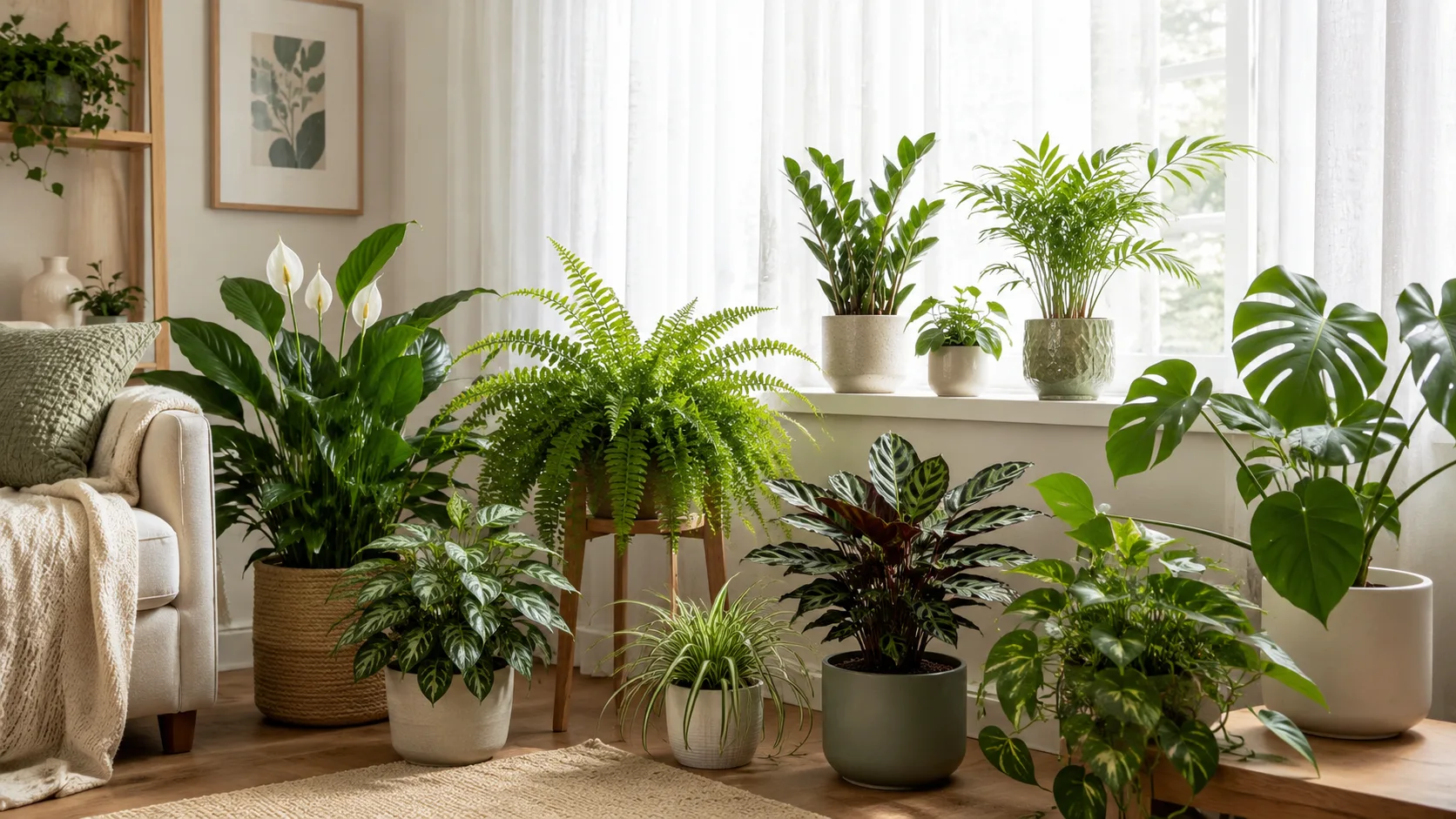
Bright indirect light is the sweet spot for many popular houseplants—and the light condition most renters think they have before leaves scorch or stretch. Bright indirect means the room is well lit but sunbeams do not hit the leaves directly for long stretches. Think a living room near a large window with sheer curtains, or a spot three to five feet back from east or south glass where you can read without a lamp most of the day.
This guide compares ten species that genuinely thrive in that filtered brightness: growth habits, humidity reality, pet notes, and species care links on LeafyPixels. For harsh sunny sills, see Best Plants for Bright Light. For dim north rooms, see Best Low Light Indoor Plants.
The ten best plants for indirect light in typical homes are monstera deliciosa, pothos, heartleaf philodendron, spider plant, rubber plant, fiddle leaf fig, peace lily, anthurium, calathea, and prayer plant. They share a light band but not care difficulty—pothos and philodendron forgive uneven watering; calathea and prayer plant punish dry air.
Extension resources consistently rank light as the primary indoor limiter; watering mistakes often follow when a plant sits in too little light and soil stays wet. (University of Maryland Extension)
What Indirect Light Means Indoors
Bright indirect light usually includes:
- A spot behind sheer curtains on south or west windows.
- Three to five feet back from an unobstructed east or south window.
- A bright bathroom with frosted glass that diffuses sun.
It is not:
- A dark interior hallway with no daylight path.
- Hot afternoon sun directly on leaves—even “indirect” plants burn there.
- A north window alone unless the room is open and bright; many picks here need more than north-only exposure to grow vigorously.
Shadow test: At midday you should see a soft but readable hand shadow at the plant. A sharp, dark shadow means direct sun—move humidity lovers back or filter the glass.
Editor note (sheer curtains): White sheer panels often turn a scorching west window into usable indirect light for monstera and fiddle leaf fig. Without them, the same plant three feet back may be the safer placement than leaves touching glass.
Quick Pick: Best Indirect-Light Plant for Your Room
For fast trailing growth on a shelf, choose pothos or philodendron. Both use bright filtered light to produce long vines without demanding greenhouse humidity.
For a statement split-leaf tree, choose monstera deliciosa. Give it a moss pole and room to climb; dim corners produce small leaves without fenestrations.
For patterned leaves and movement, choose calathea or prayer plant—only if you can supply steady moisture and 50–70% humidity.
For glossy upright foliage, choose rubber plant or fiddle leaf fig. Fiddle leaf fig is pickier about drafts and relocation; rubber plant is more forgiving.
For flowers in filtered light, choose peace lily or anthurium. Peace lily wilts visibly when thirsty—a useful beginner signal.
For pet-aware homes, choose spider plant—ASPCA-listed non-toxic to cats and dogs—while noting cats often chew spiderettes.
How We Chose These Ten Plants
We filtered LeafyPixels records for species whose light guidance centers on bright indirect indoors, then ranked by:
- Growth quality in filtered light — not merely survival away from the window.
- Nursery availability — common tags at big-box and local shops.
- Care cluster depth — full hubs plus light and watering pages on site.
- Profile diversity — vines, trees, bloomers, and patterned foliage.
Aglaonema and parlor palm also suit indirect light and appear on other LeafyPixels lists; this guide emphasizes ten distinct growth habits renters ask about most often.
Indirect-Light Plant Comparison Table
Monstera Deliciosa
Best placement: Living room three to five feet from east or south window, or behind sheer curtain
Light need: Bright indirect; direct sun bleaches leaves
Water: Moderate dry-down; less in winter
Difficulty: Easy to medium
Main light risk: Small solid leaves without splits in too little light
Monstera is the iconic indirect-light climber. Bright filtered light drives large fenestrated leaves when the plant has a moss pole or trellis to climb.
Placement tip: Rotate the pot monthly; monsteras lean toward the window fast.
Common mistake: Expecting splits on juvenile leaves in the first month. Fenestrations deepen as the plant matures and light stays strong.
Useful care guides:
Pothos
Best placement: Top of bookcase, kitchen cabinet, bathroom with frosted window
Light need: Bright to medium indirect
Water: When top soil dries; leaves soften when thirsty
Difficulty: Easy
Main light risk: Variegation fades in dim interior spots
Pothos is the default indirect-light vine for good reason: fast growth, clear thirst signals, and tolerance of typical home humidity.
Placement tip: Trim bare vines to encourage bushier growth near the pot.
Common mistake: Keeping pothos in a dim hallway and watering weekly because “indoor plants need water.” Low light + frequent water causes yellow leaves.
Useful care guides:
Heartleaf Philodendron
Best placement: Hanging basket, shelf edge, plant stand near window
Light need: Bright to medium indirect
Water: Moderate; similar to pothos
Difficulty: Easy
Main light risk: Slow growth and small leaves in north-only rooms
Philodendron (Philodendron hederaceum) trails softer than pothos and handles the same filtered light band. It is ideal when you want a lush cascade without monstera’s floor footprint.
Placement tip: Higher light produces larger leaves; dim light still maintains but looks sparse.
Common mistake: Confusing heartleaf philodendron with split-leaf philodendron (Monstera or Thaumatophyllum types)—different light and space needs.
Useful care guides:
Spider Plant
Best placement: Bright sill, hanging basket in filtered sun
Light need: Bright indirect for full spiderettes
Water: Moderate; tolerates brief dry spells
Difficulty: Easy
Main light risk: Sparse plantlets in very dim rooms
Spider plant is the pet-friendlier trailing option on this list—ASPCA non-toxic to cats and dogs—though cats often bat at spiderettes.
Placement tip: Brown tips often trace to fluoride in tap water or dry winter air, not light alone.
Common mistake: Assuming non-toxic means cats should chew freely. Nibbling can still cause vomiting; move the pot if chewing becomes habitual.
Useful care guides:
Rubber Plant
Best placement: Floor plant one to three feet from bright window
Light need: Bright indirect
Water: Partial dry-down of top two inches
Difficulty: Easy to medium
Main light risk: Dull leaves and leaf drop in dim corners
Rubber plant uses indirect light to build glossy, broad leaves on an upright trunk—less drama than fiddle leaf fig for many renters.
Placement tip: Support young plants with a stake if they lean toward the window.
Common mistake: Overwatering because the pot looks small for the leaf size. Rubber plants prefer slightly snug pots and dry intervals.
Useful care guides:
Fiddle Leaf Fig
Best placement: Bright living room corner, east window room
Light need: Bright indirect; morning sun OK
Water: Moderate; consistent when partly dry
Difficulty: Medium
Main light risk: Leggy stems and dropped leaves after relocation
Fiddle leaf fig belongs on an indirect-light list because it wants strength without baking—but it punishes inconsistency more than pothos or rubber plant.
Placement tip: Clean leaves monthly; dust cuts the filtered light fiddle leaf fig needs.
Common mistake: Buying a tall showroom tree for a medium-lit bedroom because the label said “houseplant.”
Useful care guides:
Peace Lily
Best placement: Office desk near window, bedroom with bright ambient light
Light need: Medium to bright indirect; blooms need brightness
Water: Steady moisture; dramatic wilt when dry
Difficulty: Easy to medium
Main light risk: Few blooms in dim rooms; brown tips if water swings wildly
Peace lily is a low-drama bloomer in filtered light when soil stays evenly moist—not soggy.
Placement tip: Use wilt as a watering cue once, then water before full collapse to reduce stress.
Common mistake: Placing peace lily in direct south sun because it “likes light.” Leaves bleach and brown quickly on hot glass.
Useful care guides:
Anthurium
Best placement: Bright side table, kitchen counter away from direct rays
Light need: Bright indirect for spathes
Water: Moderate; airy orchid-like mix
Difficulty: Medium
Main light risk: Green spathes and no rebloom in weak light
Anthurium rewards stable bright filtered conditions with long-lasting waxy “flowers” (spathes). It dislikes drafts and soggy roots more than pothos.
Placement tip: Group with other plants or use a pebble tray for modest humidity—see pebble tray guide if you need a tray setup.
Common mistake: Treating anthurium like a succulent because the leaves look thick. It wants moisture and indirect light, not a sunny dry sill.
Useful care guides:
Calathea
Best placement: Bathroom with window, bright kitchen, humidifier zone
Light need: Bright indirect; no direct sun
Water: Steady moisture; sensitive to dry soil
Difficulty: Medium to hard
Main light risk: Faded patterns in dim light; crisp edges in dry air
Calathea is the pattern plant for indirect light—if you can supply humidity. NC State Extension classifies many calatheas as understory plants needing filtered brightness and consistent moisture.
Placement tip: Use filtered or distilled water if leaf edges crisp despite good light.
Common mistake: Pairing calathea with pothos watering habits on the same shelf. Calathea needs steadier moisture and higher humidity.
Useful care guides:
Prayer Plant
Best placement: Bright bathroom, grouped plant corner
Light need: Bright indirect
Water: Steady moisture; less tolerant of drought than pothos
Difficulty: Medium
Main light risk: Brown tips when humidity drops
Prayer plant (Maranta leuconeura) folds leaves at night and shows striking veins in bright filtered light. ASPCA lists it non-toxic to cats and dogs—a useful alternative to toxic calathea cousins for pet homes that can meet humidity needs.
Placement tip: Avoid cold window glass contact in winter; chill plus bright light stresses margins.
Common mistake: Buying prayer plant for a dry, hot living room with strong afternoon sun filtered only by distance—it needs moisture in the air, not just near a window.
Useful care guides:
Indirect-Light Mistakes to Avoid
- Confusing bright indirect with any spot near a window — Hot direct rays still burn “indirect” plants.
- Watering calathea like pothos — Match species to humidity and soil dry-down, not the neighbor pot.
- Moving fiddle leaf fig weekly — Pick a bright stable spot; relocation shock drops leaves.
- Expecting bloom in dim rooms — Peace lily and anthurium need real brightness for repeat flowers.
- Ignoring north-window limits — Many picks maintain in north light but grow slowly; adjust expectations or add a grow light.
Conclusion
Bright indirect light supports most of the houseplant aisle—if you match care difficulty to the species. Start with pothos, philodendron, or spider plant when you want forgiving growth; add monstera or rubber plant for structure; choose peace lily or anthurium for blooms; reserve calathea and prayer plant for humid, stable rooms.
Measure your spot with the shadow test, buy one plant, learn soil dry-down for two weeks, then expand. Species hubs: monstera, pothos, philodendron, spider plant, rubber plant, fiddle leaf fig, peace lily, anthurium, calathea, prayer plant.
Related guides
How This List Was Reviewed