Table of Contents
The short answer
Usually, no — at least not for most desert succulents and desert cacti. A pebble tray is meant to raise humidity around a plant, and that solves a real problem for many tropical houseplants. But most succulents and many cacti are not tropical humidity lovers. University of Minnesota Extension says many cacti and succulents are well adapted to homes with low relative humidity, around 10% to 30%, and Iowa State says it is rare for indoor conditions to be too dry for succulents. (University of Minnesota Extension)
That does not mean a pebble tray is always wrong. It means you should stop treating all fleshy plants as one category. A jade plant, an Echeveria, a Haworthia, and a Christmas cactus do not all want the same environment. The smart answer is this: most desert succulents and cacti do better with strong light, fast drainage, careful watering, and airflow than with extra humidity, but holiday cacti and a few other exceptions may benefit from slightly more humid air. (Yard and Garden)
What a pebble tray actually does
A pebble tray is a shallow tray filled with stones and water. The pot sits on top of the pebbles, not in the water. As the water evaporates, it raises humidity in the air immediately around the plant. That is the whole mechanism. It is not watering the plant from below, and it is not a substitute for proper soil, light, or watering habits. (The Spruce)
That detail matters because pebble trays get recommended far too casually. They are often useful for ferns, orchids, calatheas, and other humidity-hungry plants. The problem starts when that advice gets copied over to succulents and cacti without checking what kind of succulent or cactus you actually own. A humidity fix can be logical for a tropical understory plant. It can be irrelevant, or even counterproductive, for a plant adapted to dry air and rapid drying between waterings. (Yard and Garden)
Why humidity matters less than people think
A lot of indoor plant problems get misdiagnosed as “low humidity.” Brown tips, shriveling, wrinkling, or stalled growth can also come from poor watering practice, weak light, compacted soil, root problems, heat stress, or plain species mismatch. For succulents and cacti, humidity is often lower on the priority list than people assume. These plants are defined less by a need for moist air and more by their ability to store water, tolerate drying cycles, and suffer when roots stay wet too long. (Yard and Garden)
That is why “my succulent looks thirsty” does not automatically mean “add humidity.” A wrinkled succulent may need a correct deep watering, better root health, or more light. A stressed cactus may be reacting to cold drafts, stale damp soil, or low light rather than dry air. Chasing humidity first can send you in the wrong direction. (Yard and Garden)
Most succulents are built for drier air
Most common indoor succulents are comfortable in the low humidity found in ordinary homes, especially if the plant is in a gritty mix and a pot with drainage. Iowa State says low humidity usually helps succulent soil dry more quickly, which is beneficial. That lines up with basic succulent logic: these plants are much more often damaged by lingering moisture than by a lack of atmospheric humidity. (Yard and Garden)
That does not mean dry air can never stress them. In unusually dry indoor setups, some succulents may show wrinkling, shriveling, or dry edges, and Iowa State notes that a humidifier or pebble tray can be considered if the air is extremely dry and symptoms point that way. But the same source is clear that this is rare, not routine. In practice, if your succulent is struggling, it is usually smarter to inspect the roots, the light level, the pot size, and your watering pattern before you build a humidity setup. (Yard and Garden)
Desert cacti usually prefer low humidity and good airflow
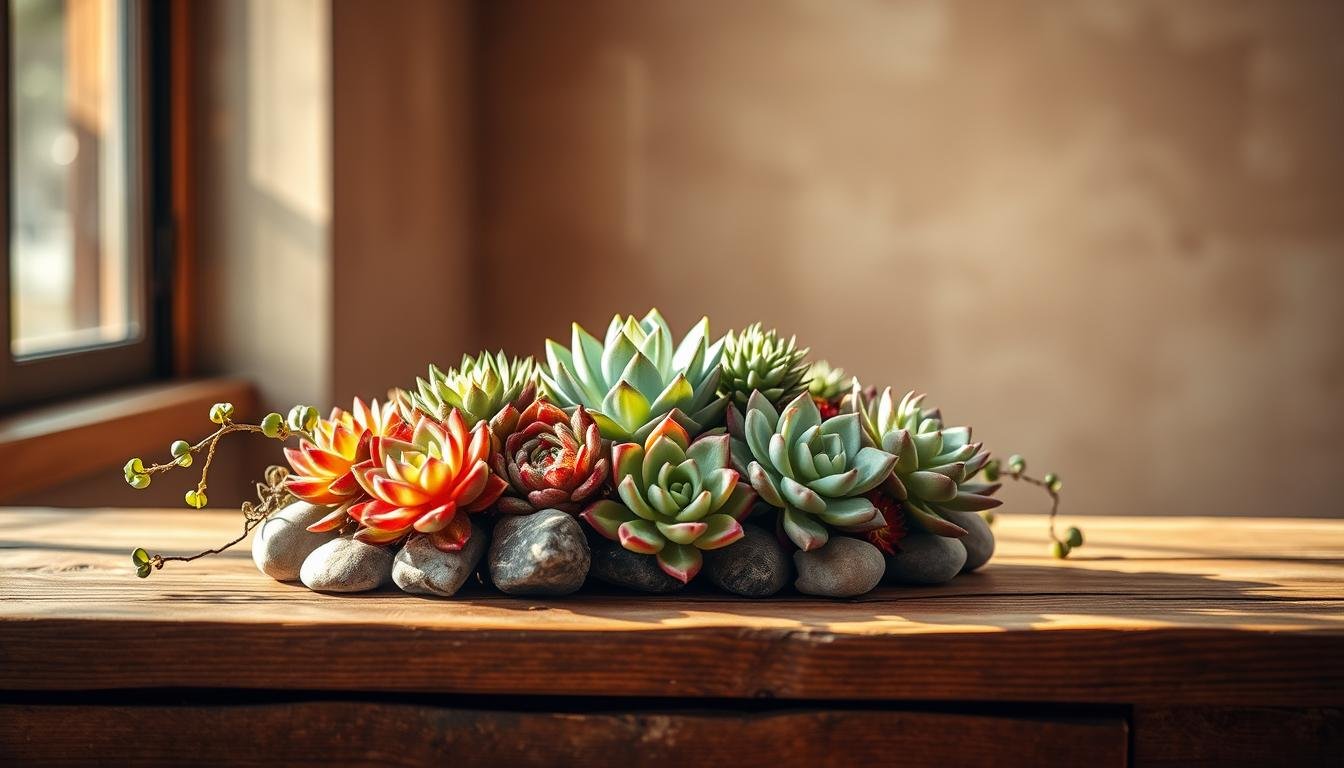
The basic story is even stronger for desert cacti. University of Minnesota Extension says many cacti and succulents are adapted to low relative humidity, and RHS guidance for some succulents warns against crowding and excess humidity because these plants enjoy good airflow. Humid air is not automatically deadly, but it is rarely the thing desert cacti are missing indoors. (University of Minnesota Extension)
This matters because cacti problems often get blamed on dryness when the real issue is stagnant care. A cactus in a dim corner, dense soil, and a decorative pot without drainage is in a bad setup even if you put a pebble tray underneath it. Extra humidity does not fix weak light or wet roots. In some cases it nudges the environment in the wrong direction by slowing surface drying and encouraging a damper microclimate than the plant wants. (Yard and Garden)
The big exception: holiday cacti and other epiphytic types
This is the exception people miss. Holiday cacti, including Christmas cactus and Thanksgiving cactus in the genus Schlumbergera, are not desert cacti in the usual sense. University of Minnesota Extension says their need for high humidity, bright filtered light, and relatively moist soil sets them apart from most cacti and succulents. RHS also says Christmas cacti come from tropical rainforests and prefer humid air, unlike desert-dwelling cacti. (University of Minnesota Extension)

So if the plant in question is a holiday cactus, a pebble tray can make sense. Even then, the goal is gentle humidity support, not wet roots. Holiday cacti still need good drainage, and prolonged exposure to soggy soil can cause root rot. That is why the phrase “cactus” on a label is not enough to make a care decision. You need to know whether you are dealing with a dryland cactus or an epiphytic rainforest cactus. (University of Minnesota Extension)
When a pebble tray can help
A pebble tray can help in a narrow set of cases. First, it can make sense for holiday cacti and similar epiphytic types that appreciate more moisture in the air. Second, it may help a succulent that is in an unusually dry indoor environment, especially during heating season, if the plant is showing stress that truly points to overly dry air and not to bad roots or bad watering. Third, it can be a reasonable low-cost experiment when you want a small local humidity bump rather than a whole-room solution. (University of Minnesota Extension)
It can also help if you are being realistic about what it does. A pebble tray is not a miracle device. It is a microclimate tool. Better Homes & Gardens quotes horticulturist Justin Hancock saying pebble trays can work, but they work best with small, low-growing plants and wide trays, because indoor air circulation disperses the added moisture. That means the method is more plausible for a compact plant near the tray than for a tall cactus where the foliage sits well above the evaporating water. (Better Homes & Gardens)
When a pebble tray is a bad idea
A pebble tray is a bad idea when it becomes a substitute for actual diagnosis. If your succulent is stretching, paling, or leaning, the issue is usually light. If the stem base is mushy, blackening, or collapsing, the issue is far more likely to be overwatering or rot. If the soil stays damp for days, adding a humidity tray underneath the pot is not smart problem-solving. It is noise. (Yard and Garden)
It is also a bad idea when the pot touches the water. Iowa State explains that the pot needs to stay above the water line so the soil can still dry properly. If the base of the pot sits in water, the mix can wick up moisture and stay wet, which raises the risk of root rot. That risk is especially serious for desert succulents and cacti, which are already less forgiving of wet feet than tropical foliage plants. (Yard and Garden)
One more red flag: using a pebble tray for plants that actively dislike humid, crowded conditions. RHS guidance for string of beads says never to mist them or group them too closely because they dislike humidity and prefer airflow. That kind of plant is not asking for a humidity tray. It is asking for space, air, and restraint with water. (RHS)
How effective pebble trays really are
Pebble trays are mildly effective, not broadly powerful. They can raise humidity in the immediate area around a plant, but the effect fades quickly as air moves through the room. That is why Justin Hancock’s advice is so useful: the wider the tray and the lower the plant, the better the odds of a noticeable local effect. The taller the plant or the stronger the air circulation, the less meaningful the extra humidity becomes. (Better Homes & Gardens)
That limited effectiveness is not a flaw if you use the method for the right reason. A small boost may be enough for a holiday cactus near a heater vent, or for a stressed succulent in an exceptionally dry room. But if you are trying to transform a dry room into a humid zone for multiple plants, a pebble tray is usually not the best tool. Even general humidity guidance from Costa Farms says a humidifier is the most effective way to raise humidity consistently. (Costa Farms)
The practical takeaway is simple. Pebble trays can work at the margins. They do not rewrite the plant’s basic needs. If the species prefers dry air, a pebble tray is usually unnecessary. If the species prefers more humidity, the tray may help, but often as a modest assist rather than a complete solution. (University of Minnesota Extension)
Better fixes that usually matter more
For most succulents and cacti, the big wins come from getting the basics right. That sounds obvious, but it is exactly where most failures happen. People add gadgets and hacks before fixing light, drainage, watering, and species fit. Those four things usually matter far more than humidity. (Yard and Garden)
A desert cactus in strong light with a fast-draining mix and careful watering is usually on solid ground even in low indoor humidity. A holiday cactus in bright indirect light with drainage and moderate humidity is also on solid ground. Trouble starts when the care plan ignores what type of plant it is. The fastest way to improve results is to match the environment to the plant, not to copy a generic “houseplant tip” from somewhere else. (University of Minnesota Extension)
Fix the light before you chase humidity
If a succulent or cactus is underperforming, light is often the first variable to check. Weak light can cause stretching, slow drying, reduced vigor, and general decline that owners misread as “the plant wants more moisture.” No humidity tray can compensate for a bad light setup. A healthy cactus or succulent needs the right level of sun or bright indirect light for its species before anything else starts working properly. (University of Minnesota Extension)
This is especially important indoors, where a plant can survive for months in mediocre light before its structure starts to show the problem. Once that happens, people often reach for humidity, fertilizer, or frequent watering. Those are usually the wrong levers. Fixing placement near a brighter window or adding an appropriate grow light often changes the plant’s performance more than any humidity tweak. (Yard and Garden)
Fix watering habits and soil drainage
Most succulent and cactus losses are really moisture-management failures, not humidity failures. These plants need a deep watering followed by enough drying time, plus soil that does not hold too much moisture. University extension guidance repeatedly stresses drainage holes, well-drained mix, and avoiding waterlogged conditions. Holiday cacti also need drainage even though they prefer more humidity than desert types. (Yard and Garden)
That is why a pebble tray can become a distraction. If the plant is sitting in a heavy peat mix, inside a cachepot with trapped water, or in a pot without drainage, the humidity conversation is secondary. Fix the root zone first. Succulents and cacti do not care how elegant your humidity setup looks if their roots are suffocating. (Yard and Garden)
Improve airflow and spacing
Airflow does not get enough attention in houseplant advice. Yet for many succulents and cacti, moving air helps the plant dry correctly and reduces the stale, damp conditions that invite trouble. RHS guidance for some succulents explicitly says they dislike humidity and should not be crowded. That is a useful corrective to the common instinct to cluster every plant together in one decorative corner. (RHS)
This does not mean putting plants in harsh drafts. It means avoiding cramped, stagnant setups where leaves never dry and soil stays cool and damp. If your succulent collection is packed tightly together beside a tray of evaporating water, you may be creating the exact environment a desert-type plant dislikes. In many cases, a little more space and airflow will help more than extra humidity ever could. (RHS)
How to use a pebble tray safely if you still want one
If you still want to try a pebble tray, use it with precision. Start with a wide, shallow tray, add clean pebbles, and pour in water only to a level below the tops of the stones so the pot sits above the water. Refill the water as it evaporates, and clean the tray regularly so you are not creating a dirty, stagnant dish under the plant. This is standard guidance across houseplant care sources because the whole method depends on evaporation, not on soaking the pot. (The Spruce)
Use it only where it makes botanical sense. A holiday cactus is a better candidate than an Aloe or a barrel cactus. A compact plant is a better candidate than a tall one. And if you want to know whether it is doing anything, use a hygrometer rather than guessing. Even consumer plant guides now recommend measuring humidity around the plant because pebble trays tend to create small, local effects rather than dramatic room-wide change. (University of Minnesota Extension)
The safest mindset is experimental, not doctrinaire. Try it for the right plant, monitor the result, and stop if the setup keeps the area too damp or encourages sloppy watering habits. A pebble tray should support good care, not complicate it. (Better Homes & Gardens)
Common mistakes that cause trouble fast
The first mistake is using a pebble tray for the wrong plant. People hear “cactus” or “succulent” and assume all of them love dry neglect or all of them benefit from the same generic care hack. They do not. A Christmas cactus is not a desert cactus, and a string of beads is not asking for more humidity. Species ID is not a nerdy extra. It is the foundation of the whole decision. (University of Minnesota Extension)
The second mistake is letting the pot sit in water. That changes the system from a humidity tray into a bottom-watering accident you never intended. Iowa State is blunt about this: the pot must stay above the water level or the soil may never dry properly, leading to root rot. For succulents and cacti, that mistake can undo weeks of otherwise decent care. (Yard and Garden)
The third mistake is using humidity to solve dehydration symptoms without checking the roots. A wrinkled succulent can be underwatered, overwatered with dead roots, rootbound, or in poor soil. Humidity is only one possible factor, and often not the main one. The fourth mistake is assuming “more humidity” is automatically safer than “more watering.” For arid-adapted plants, neither excess soil moisture nor stale humid air is automatically helpful. The right answer is almost always balance: dry-friendly air, good light, draining mix, and water when the plant actually needs it. (Yard and Garden)
Pebble tray vs humidifier vs no humidity boost
If the plant is a desert succulent or desert cactus, the winner is usually no humidity boost at all. Those plants are commonly comfortable in the dry air of an average home, and raising humidity adds complexity without solving the most common failure points. Your effort is usually better spent on light exposure, potting mix, drainage, and disciplined watering. (University of Minnesota Extension)
If the plant is a holiday cactus or another humidity-friendlier exception, the best tool depends on the size of the problem. A pebble tray is cheap, simple, and fine for a modest local bump. A humidifier is better when the air is truly dry or you want a more consistent result. Costa Farms’ humidity guidance says a humidifier is the most effective way to raise humidity consistently, which matches the practical limits Justin Hancock describes for pebble trays. (Costa Farms)
That comparison matters because it keeps you from overestimating what the tray can do. Think of a pebble tray as a small tool for a small job. If the plant barely needs humidity support, it may be enough. If the plant strongly depends on humid air, or the room is aggressively dry, the tray may be too weak to make much difference. (Better Homes & Gardens)
Conclusion
Yes, you can use a pebble tray for succulents and cacti — but for most desert succulents and desert cacti, you usually do not need to, and it may not be the smartest move. Most of these plants are already adapted to low indoor humidity, and the bigger care wins usually come from better light, fast drainage, controlled watering, and airflow. (University of Minnesota Extension)
The important exception is holiday cacti like Christmas cactus, which come from more humid environments and can benefit from a pebble tray or other humidity support when used correctly. That single distinction explains most of the confusion around this topic. The word cactus on the label is not enough. Identify the plant, understand its native habit, and then choose the tool that matches the problem. (University of Minnesota Extension)
If you remember one rule, make it this: do not use a pebble tray as a generic houseplant hack. Use it only when the species and the symptoms justify it. That is how you avoid root rot, bad assumptions, and a lot of unnecessary plant drama. (Yard and Garden)
FAQs
Can a pebble tray cause root rot in succulents?
Yes, it can if the pot sits in the water or the setup keeps the root zone too wet. A proper pebble tray keeps the pot above the water line so the water can evaporate without wicking into the mix. Iowa State specifically warns that if the pot stays in contact with water, the soil may not dry and root rot can follow. (Yard and Garden)
Do indoor succulents ever need more humidity?
Sometimes, but not often. Iowa State says it is rare for indoor conditions to be too dry for succulents, though extremely dry air can contribute to wrinkling or dry edges in some cases. Before adding humidity, check light, watering, soil, and root health first, because those are more common causes of stress. (Yard and Garden)
Should you mist succulents and cacti instead?
Usually, no for desert types. General humidity advice that works for tropical plants does not translate cleanly to arid-adapted plants, and RHS guidance for some succulents specifically says they dislike humidity and should not be misted. If a plant genuinely needs more humid air, a measured approach like a humidifier or carefully used pebble tray is usually more controlled than frequent misting. (RHS)
Is a pebble tray good for Christmas cactus?
Yes, it can be. Christmas cactus and related holiday cacti come from more humid environments than desert cacti, and both University of Minnesota Extension and RHS describe them as plants that appreciate more humid air. Just keep the roots well drained and never let the pot sit in water. (University of Minnesota Extension)
What is better than a pebble tray for plant stress?
That depends on the cause of the stress. For most succulents and cacti, improving light, drainage, watering habits, and airflow is usually better than adding humidity. If the plant truly needs more humid air, a humidifier is generally more effective and consistent than a pebble tray. (Yard and Garden)