How to Grow and Care for a China Doll Plant Indoors
China doll plants can drop leaves after sudden changes. Learn a stable care routine for light, water, soil, pruning, propagation, pests, and recovery.
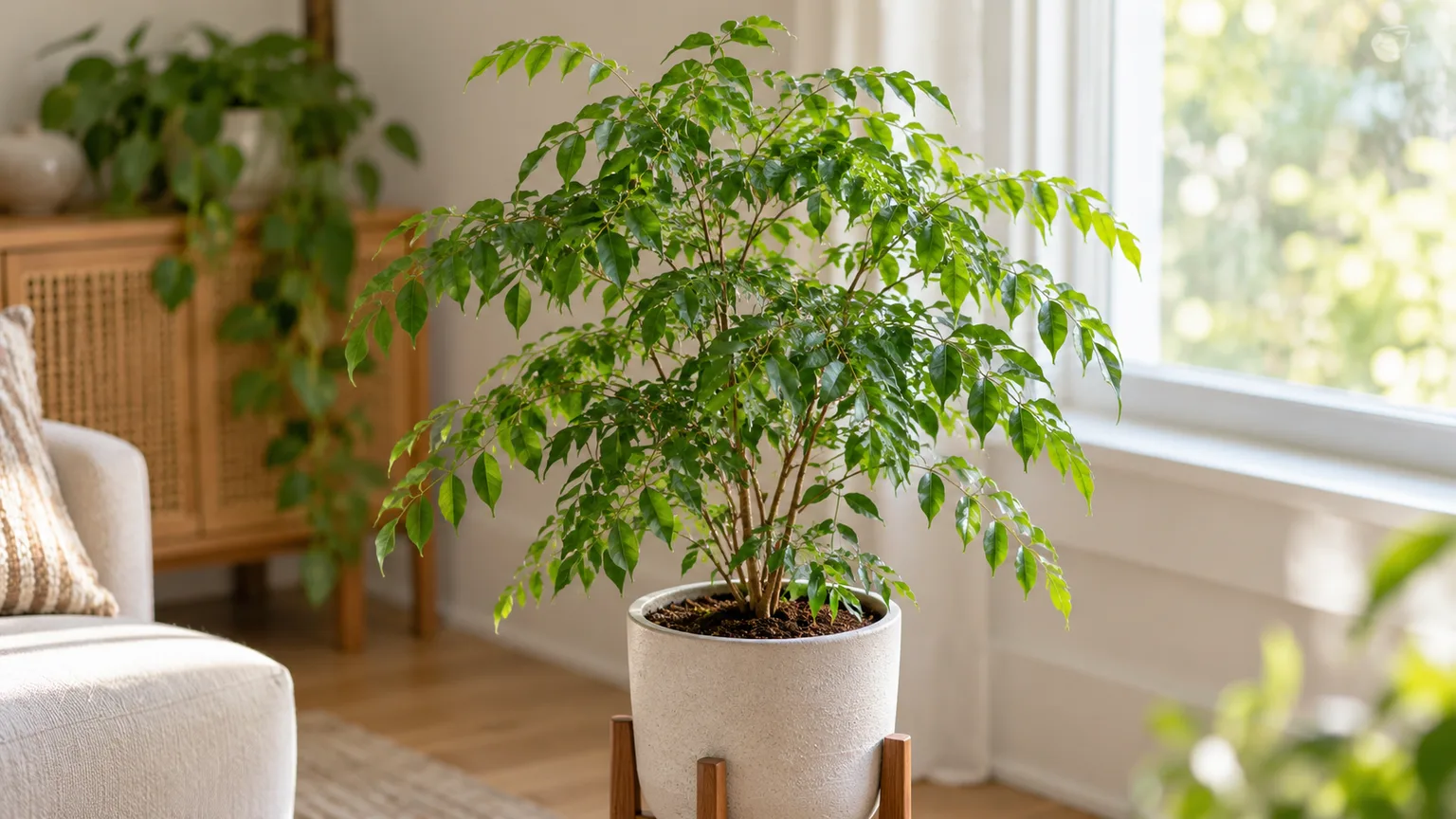
China doll (Radermachera sinica) is a small, tree-like houseplant with glossy, finely divided leaves that give it a light, ferny outline. It grows quickly when conditions suit it, but it can shed foliage after abrupt changes in light, temperature, watering, or location. The useful care principle is simple: give it bright filtered light, let the pot drain, and change one thing at a time.
The plant is not impossible to grow, but it is a poor match for a dim corner or a home where it will be moved often. If you can give it a stable spot and check its soil instead of watering by calendar, you can avoid most of the stress that makes China doll plants look difficult.
Is a China Doll Plant Right for Your Home?
A China doll is a subtropical evergreen grown indoors for its foliage, not its flowers. It can become several feet tall in a bright home, though regular tip pruning can keep it compact; indoor plants rarely bloom. The glossy leaflets and upright, woody stems make it look more like a miniature tree than a trailing tropical plant. Better Homes & Gardens describes the plant’s tree-like habit and notes that flowering indoors is uncommon.
Before bringing one home, look at the room as it is through the seasons. A bright east-facing window, a few feet back from a sunny south or west window, or a bright room with a properly placed grow light is usually more promising than a shelf far from glass. Avoid a spot directly over a heater, beside an air-conditioning vent, or in a high-traffic area where the pot will be shifted every few days.
A newly purchased plant may lose some leaves while adjusting to a different environment. That does not automatically mean it is dying. Inspect the stems and soil, then hold the plant in one suitable location while it acclimates rather than repeatedly moving it to chase each fallen leaflet.
Give It Bright, Stable Light
Aim for several hours of bright, filtered daylight. A position near an east window often works well; with a stronger south- or west-facing window, use a sheer curtain or move the pot back from direct midday rays. Gentle morning or late-afternoon sun can be tolerated after gradual acclimation, but a sudden move from shade into hot direct sun can scorch the fine leaves. Plant-specific care guidance commonly points to about four to five hours of bright light, while the exact exposure depends on the window, season, and distance from the glass (BHG; Gardening Know How).
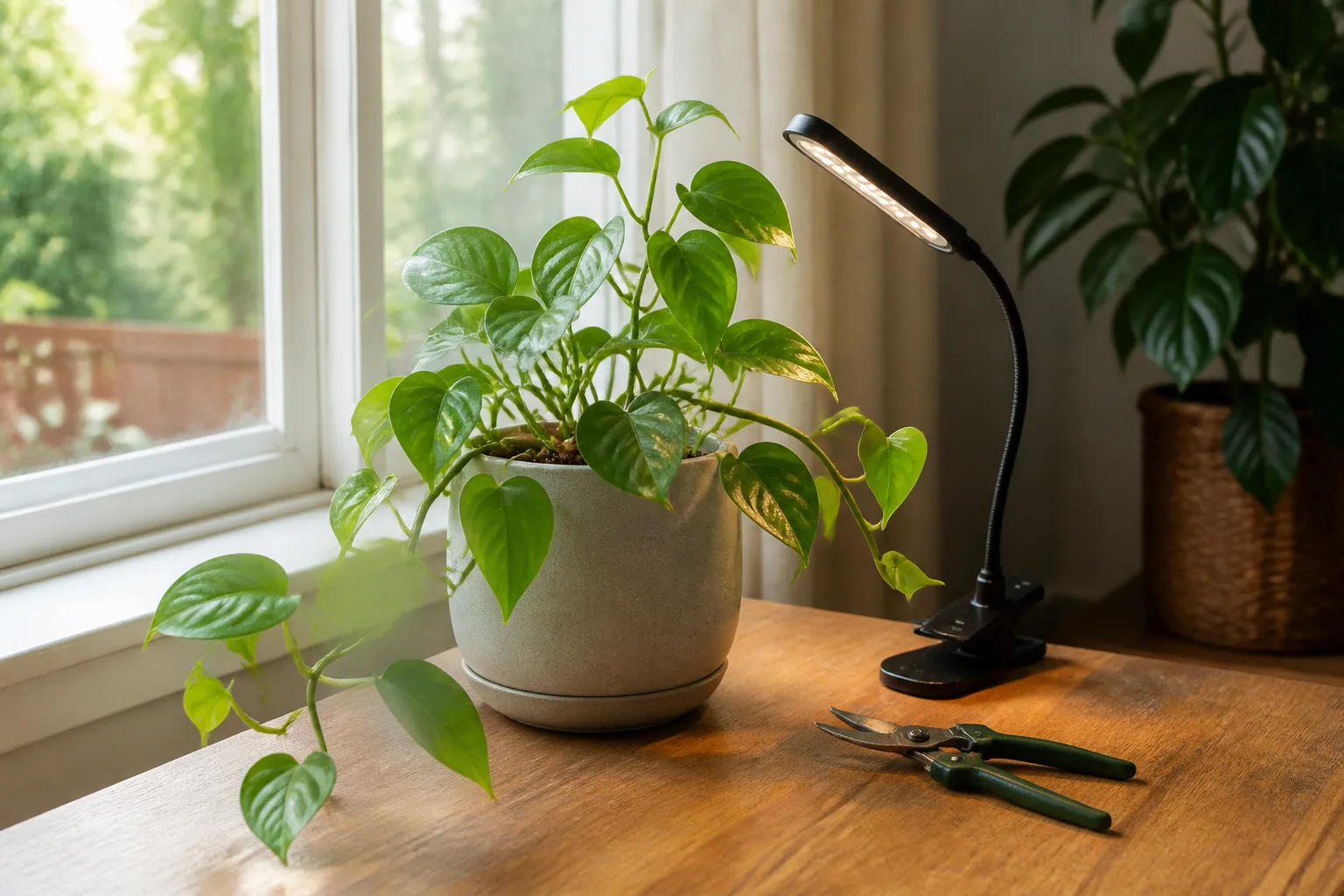
Use the plant’s growth as feedback. Long gaps between leaves, stretched stems, smaller new leaflets, or growth leaning hard toward the window point to insufficient light; pale, dry patches on the window-facing side suggest excess direct sun. Rotate the pot a quarter turn every week or two if you want a more even outline, but keep the plant in the same general place so rotation does not become a full change of conditions.
If your brightest room is still dim, supplement with a full-spectrum grow light on a timer. Keep the lamp at the distance recommended by its maker and provide a consistent daytime period, rather than placing a hot bulb close to the foliage. Add light gradually over several days, especially if the plant has been in low light; a sudden jump in intensity can stress leaves just as much as a sudden drop.
Keep Temperature Steady and Humidity Sensible
China doll plants do best in warm indoor conditions, roughly 65–75°F (18–24°C). The important part is avoiding abrupt cold drafts and hot, dry blasts from vents. A plant on a windowsill may experience a much colder night than the room thermometer suggests, while one beside a furnace register can dry out quickly even if the thermostat reading looks comfortable.
Humidity advice varies: BHG recommends extra humidity in very dry homes, while UK Houseplants says average room humidity is generally acceptable. Both agree that the plant should not sit near a radiator or dry vent. Start by keeping it away from those sources and watching new growth. If leaf edges keep crisping after you have checked watering, light, and pests, measure the room with a small hygrometer and consider a room humidifier; misting the leaves is temporary and does not reliably raise room humidity.
A pebble tray may slightly humidify the air immediately around the foliage, but it is not a substitute for a humidifier in a dry room. If you use one, keep the pot base above the waterline so the roots are not left standing in water. Stable warmth and an appropriate root zone matter more than trying to create tropical humidity around a single plant.
Water When the Root Ball Begins to Dry
Do not water on a fixed weekly schedule. Check the top inch of mix with a finger; when that surface layer feels dry, water slowly until excess runs through the drainage holes. Let the pot drain fully and empty the saucer or cachepot. This gives the root ball a thorough drink without leaving it waterlogged. The University of Wisconsin–Madison Extension recommends adjusting watering to pot size, material, growth, and season, and keeping houseplant roots out of standing water.
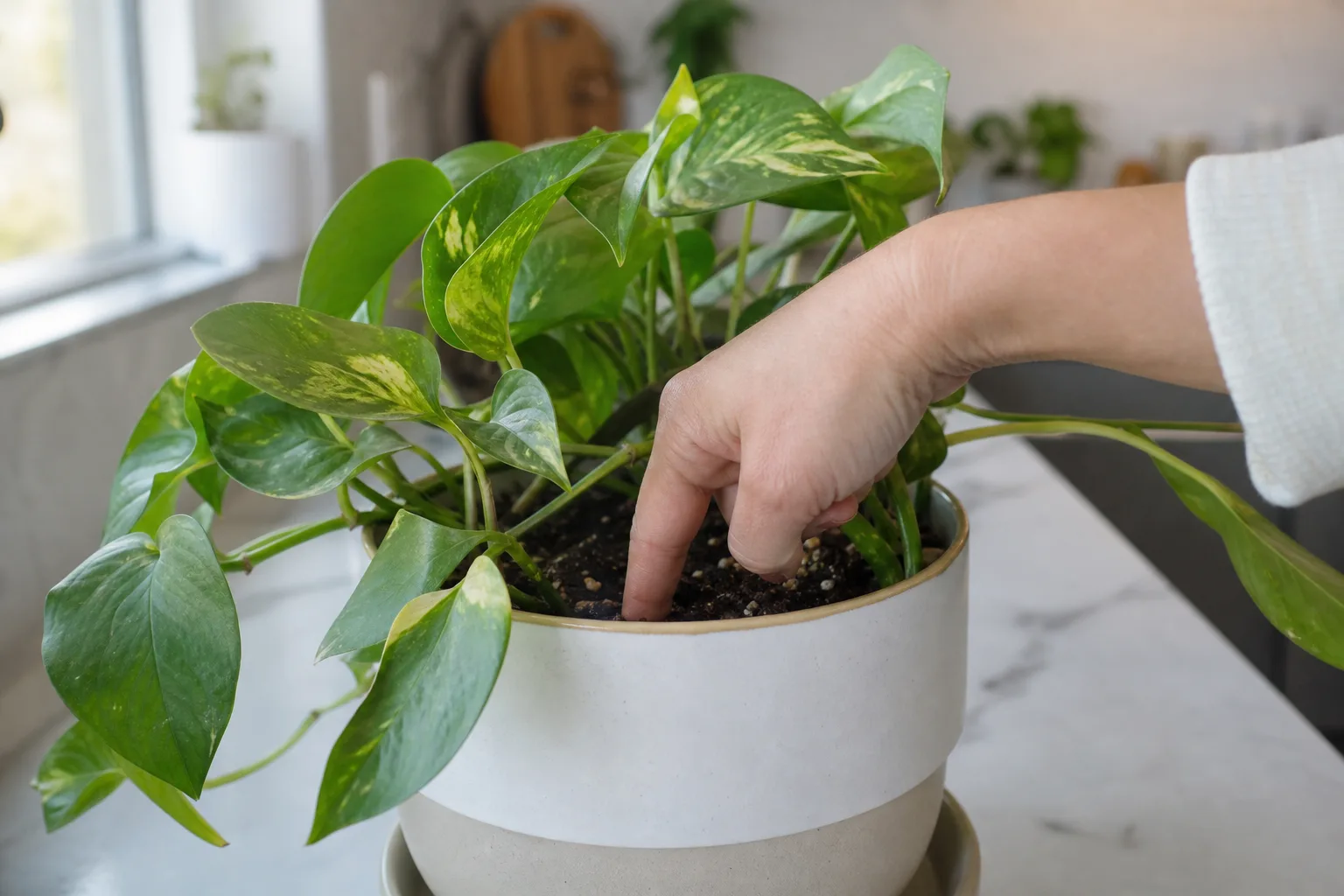
The mix should not be bone-dry for long, but constant wetness is more dangerous than waiting an extra day. In spring and summer, warm light and active growth can make the pot dry faster. In winter or in a cool, dim room, evaporation slows, so the same plant may need water less often. Feel the mix each time; do not assume last week’s interval still applies.
If the top is dry but the center of the root ball is still damp, wait and check again. If the mix has pulled away from the pot and water runs straight down the sides, water in two or three slow passes so the root ball can rehydrate instead of letting the first pour escape. A pot with no drainage hole makes this judgment much harder; use a nursery pot with holes inside a decorative cachepot and pour away the collected water after draining.
Build an Airy Potting Mix and Choose a Draining Pot
Use a quality indoor potting mix that holds some moisture but does not pack into a dense, soggy block. If the mix stays wet for days, blend in perlite or fine orchid bark to increase air space. A practical starting point is about three parts general potting mix to one part perlite or small bark, then adjust based on how quickly your home’s pot dries. Avoid garden soil, which can compact in a container, and do not add a gravel layer at the bottom; a drain hole and a porous mix are more useful.
Choose a pot with open drainage holes that is only slightly wider than the current root ball. Unglazed terracotta dries faster than plastic, so it can help in a home where the mix stays wet; plastic or glazed ceramic may suit a brighter, warmer room where pots dry quickly. No material is automatically best. The pot should match how you water and how fast the root zone dries, not simply the look of the leaves or the idea that the plant likes to be root-bound.
Feed During Active Growth, Not During Recovery
Once new growth is visible in spring, feed with a balanced liquid houseplant fertilizer diluted according to its label, often at half strength for a cautious start. A monthly application during active growth is a reasonable routine for a plant in fresh potting mix, but the product label and your plant’s response should decide the final interval. Wisconsin Extension notes that houseplants need fertilizer during active growth and warns that overfertilizing can damage leaves and roots.
Pause feeding in winter when growth slows, and do not fertilize a plant that is dropping leaves, has soggy soil, or has just been repotted. Fertilizer cannot repair poor light or root damage, and extra salts can add stress. If a healthy plant grows well in fresh mix, it may need little or no fertilizer for several months.
Prune for Shape After Growth Is Stable
Prune to manage height, remove dead stems, or encourage branching—not to compensate for low light. If the plant is becoming leggy, improve the light first and let it adjust before cutting. Then use clean, sharp bypass pruners to shorten a long stem just above a leaf node, the point where a leaf or side shoot joins the stem. New side growth may develop below the cut, giving the canopy a fuller outline over time.
Light tip-pruning can be done during active growth, when the plant can respond quickly. Avoid removing more than about one-third of the leafy growth at once, and do not give a stressed plant a severe haircut. Keep the healthy green stems even if much of the foliage has fallen; first correct the likely stressor and wait to see where new buds break. Remove dead material as it appears, but leave structural pruning until the plant is stable.
Repot Only When the Root Ball Needs Space
China doll plants dislike unnecessary disturbance, but “keep it root-bound” should not become a rule to ignore a crowded root system. Repot when thick roots circle the outside of the root ball, emerge from drainage holes, or leave so little mix that the pot dries unusually fast. Stalled growth can be another clue, but check light and feeding before blaming the container. Wisconsin Extension recommends looking at the root ball and moving up only one pot size; an oversized pot can retain excess water around roots.
Spring or early summer is the easiest time to repot because roots can resume growth. Slide the plant out gently, loosen only the outer roots that are tightly circling, and set it at the same soil depth in a pot just one or two inches wider. Fill around the root ball with fresh, airy mix, water once to settle it, then return the plant to its usual bright spot. Do not combine repotting with a major prune or a move to a different room unless a serious root problem makes it necessary.
If the roots are brown and soft, or the mix smells sour, treat it as possible root rot rather than ordinary crowding. Remove clearly decayed roots with clean tools, discard the saturated mix, and repot into a clean container with drainage. Afterward, water only when the surface layer begins to dry and avoid fertilizer until healthy growth resumes.
Propagate China Doll From Green Stem Cuttings
Take cuttings in spring or early summer from a healthy plant that is already growing. Water the parent plant the day before so it is hydrated before you remove a stem, a general houseplant propagation precaution recommended by Washington State University Extension. Choose a flexible green stem tip with at least two nodes, and cut a few inches below the tip with clean scissors. Remove the lowest leaflets so a node can sit in the rooting mix; rooting hormone is optional. Woody, weak, or pest-damaged pieces are less reliable than vigorous young growth. BHG describes using flexible tip cuttings in moist potting mix under a plastic cover; cuttings can be slow and success is not guaranteed.
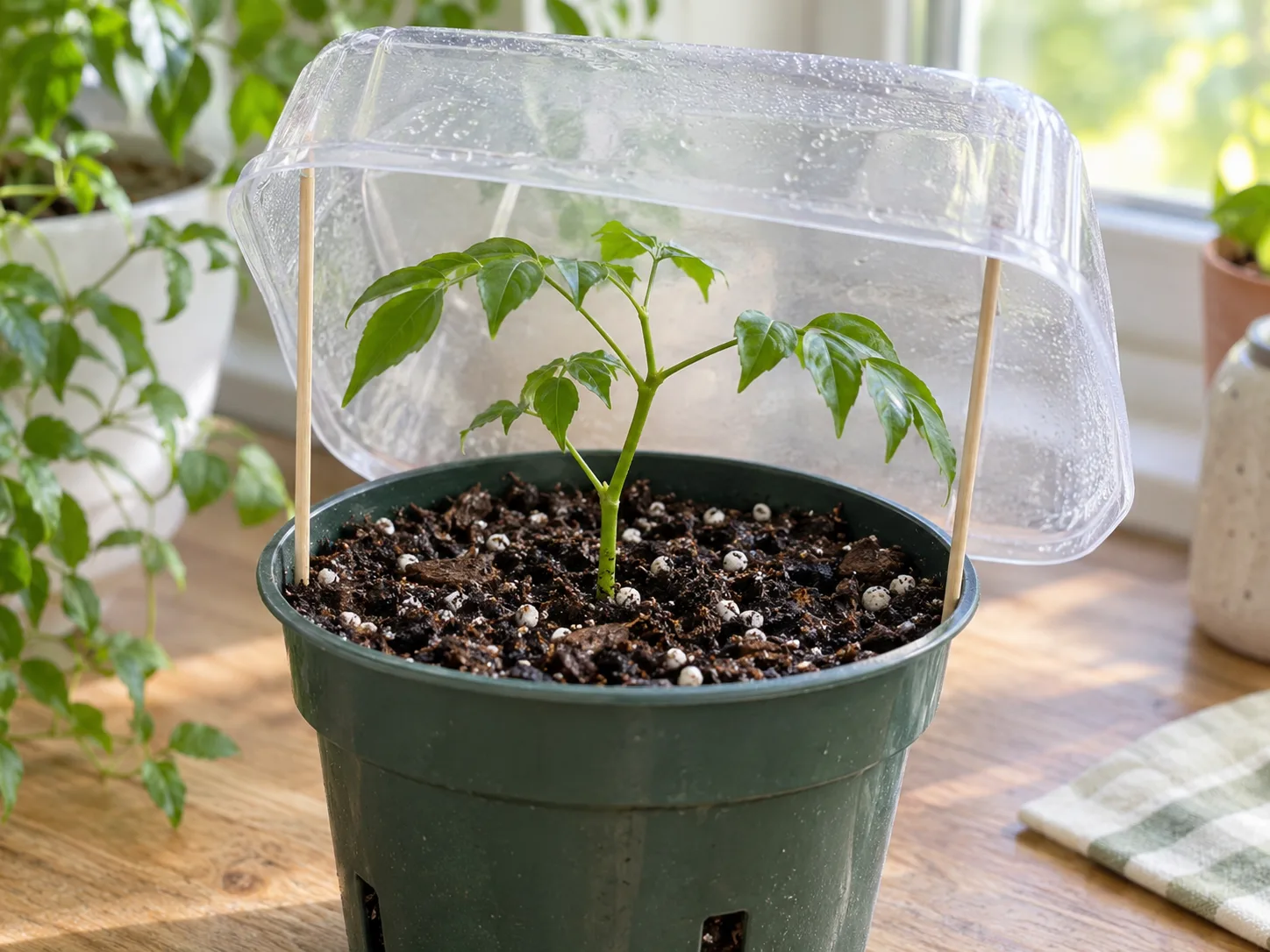
Set the cutting into a small pot of moist, airy propagation mix, with at least one node below the surface and the remaining leaflets above it. Cover the pot loosely with a clear bag or propagation dome to slow moisture loss, but support the cover so it does not touch the leaves. Keep the setup warm and in bright indirect light, not direct sun. Open it briefly each day to refresh the air and check for mold; the mix should stay lightly moist, never saturated.
Check for roots by giving the cutting a very gentle tug after several weeks rather than repeatedly pulling it out. New growth is a better sign than a fixed number of days. Once roots hold the mix and the cutting is growing, remove the cover over several days and care for it like a young plant. If the stem turns black or collapses, discard it and try again with a healthier cutting; do not keep a rotting piece in the parent plant’s pot.
Move It Outdoors Only After Gradual Acclimation
China doll is usually easiest to manage indoors, but a potted plant can spend a warm summer outside. Wait until nights are consistently above about 60°F (16°C), then begin in a sheltered, bright-shade location protected from wind. Over one to two weeks, increase its exposure gradually; avoid moving it straight from filtered indoor light into hot afternoon sun. BHG notes that the species can grow outdoors in warm regions, but a container plant still needs protection from abrupt changes.
Outdoor light and airflow can dry a pot much faster than indoor conditions, so check the mix more often rather than automatically keeping the indoor watering interval. Move it back inside before nights turn chilly, and inspect leaf undersides and stems for pests before placing it near other houseplants. The transition back indoors is another change in light and humidity, so choose the plant’s indoor location ahead of time and avoid a second move once it is settled.
Troubleshoot Leaf Drop and Yellowing by Pattern
A fallen leaflet is a symptom, not a diagnosis. Before changing care, note what changed in the last two weeks: a new spot, a cold night, a repot, a missed watering, or soil that has stayed wet. Then check the root zone and the plant’s light; those observations are more useful than applying fertilizer or pruning as a first response.
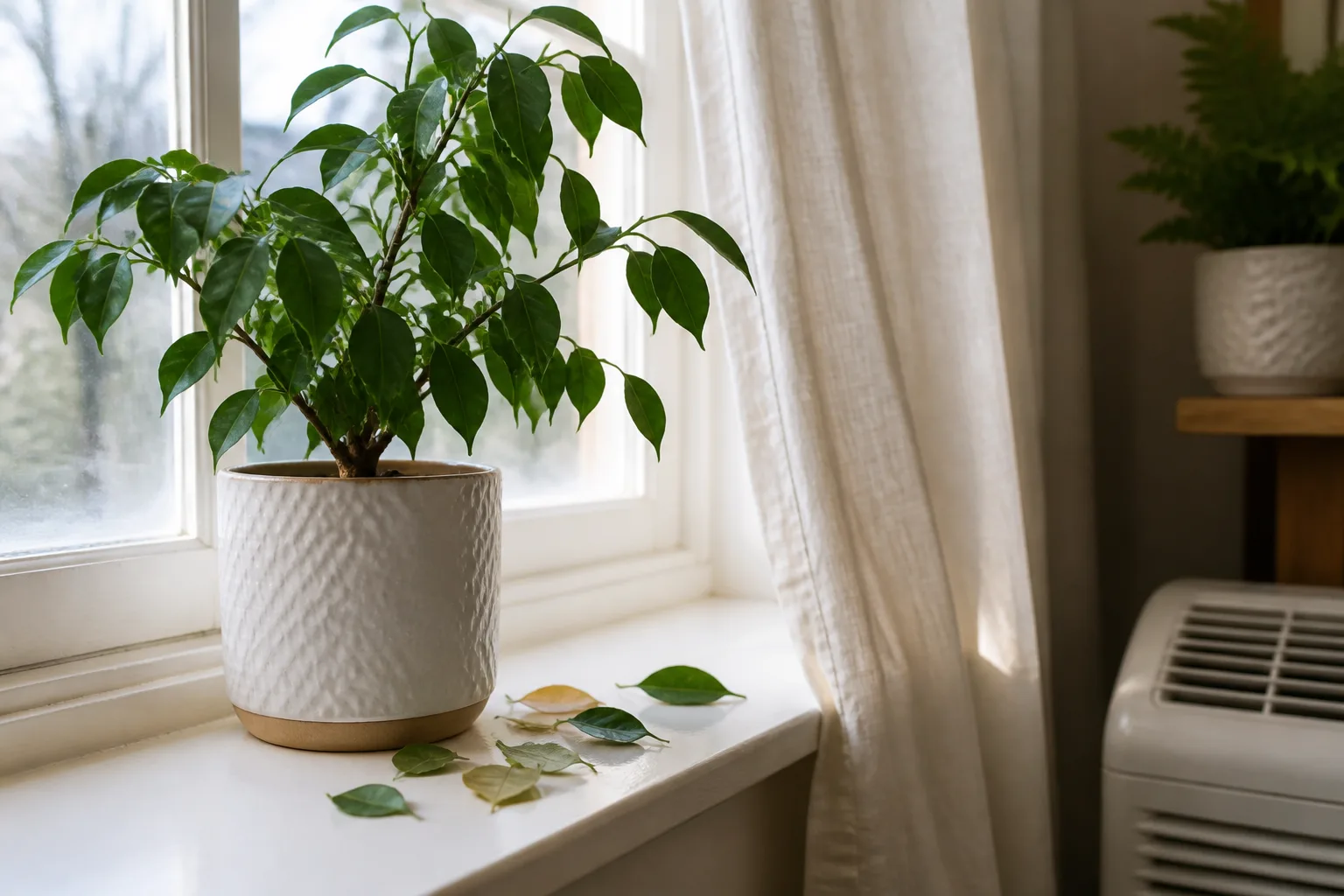
Sudden leaf drop after a move
If leaf drop began soon after purchase, rotation, repotting, or a change in temperature, environmental shock is a likely explanation. The species-specific care notes from BHG and Gardening Know How both stress that China doll foliage may fall after conditions change. Return the plant to a bright, draft-free position and keep it there; do not keep moving it to test new locations.
Check soil moisture before watering. If the mix is damp, wait until the top inch dries; if it is dry and pulling from the pot, water slowly until the root ball is evenly moist and excess drains away. Remove only fully dead leaves. For the next couple of weeks, hold fertilizer and pruning, and watch for firm stems or new buds rather than expecting every bare branch to leaf out immediately.
Yellow leaves with wet soil
Yellow lower leaves paired with persistently wet mix, a sour smell, or soft stems point toward too much water or poor drainage. Let the pot drain and dry somewhat before watering again. If the container has no holes or roots are soft and brown, inspect the root ball; simply adding a drier calendar schedule will not fix a blocked pot or damaged roots. Root problems can also make a plant wilt while its soil is wet, which is why checking the pot matters more than reading the leaves alone.
A few older leaves yellowing slowly can be normal as the plant replaces foliage. If many leaves yellow while the mix is dry, or stems look limp rather than soft, water thoroughly and reassess the light and temperature. Make one correction at a time so you can tell which change helped.
Brown edges and crispy leaflets
Crisp brown edges often follow dry soil, hot direct sun, low humidity, or salt buildup, and the same symptom can have several causes. Check whether the mix is drying too far between waterings, whether the plant sits beside a heater, and whether the damage is worst on the window-facing side. If the care routine seems sound but white crust has formed on the soil or pot rim, mineral or fertilizer salts may be accumulating; flush the mix thoroughly with water and let it drain, or replace old compacted mix at the next appropriate repot.
Do not respond to brown tips by misting repeatedly or increasing watering blindly. Brown tissue will not turn green again, so trim only the dry portion if it bothers you, leaving a narrow brown edge rather than cutting into healthy leaflets. Judge improvement by the next leaves, which should develop without the same damage once the underlying cause is corrected.
Check for Common Houseplant Pests
Inspect the undersides of leaves, stem joints, and new growth every week or two, especially after bringing the plant home or moving it back indoors. China doll can attract spider mites, mealybugs, and scale (BHG; UK Houseplants). Fine webbing and pale stippling suggest spider mites; cottony clusters point to mealybugs; fixed, shell-like bumps or sticky honeydew may indicate scale. Keep a suspect plant separate while you identify the pest.
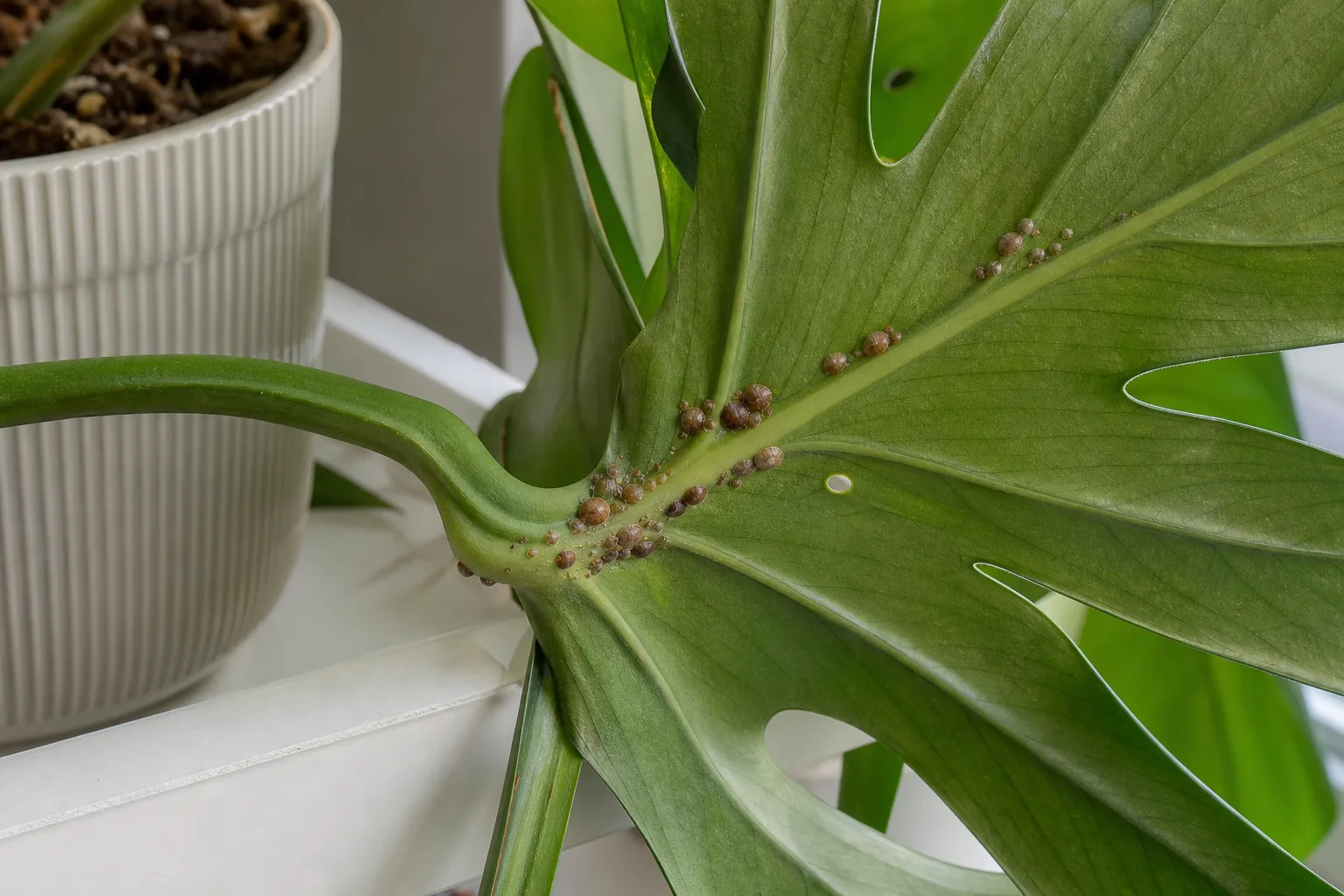
For a small infestation, rinse foliage and stems with lukewarm water, then remove visible insects with a damp cloth or cotton swab. Recheck the plant every few days because eggs and hidden insects can survive the first cleanup. If you use an insecticidal soap or another treatment, confirm the pest first, choose a product labeled for that plant and indoor use, and follow its directions; test a small area before treating all the foliage. West Virginia University Extension recommends inspecting new plants, quarantining them briefly, and checking leaf undersides where pests often hide.
Avoid These Care Mistakes
The most common mistake is responding to leaf drop with several changes at once: moving the plant, pruning hard, watering more, and adding fertilizer. That removes the clues you need and may worsen the original problem. Stabilize the location, check soil and drainage, then change one factor and give the plant time to respond.
Do not water because the top looks dry without checking below it, use a pot without drainage, or move a recovering plant into stronger sun. Do not repot simply because a calendar says it is time, and do not assume extra humidity will correct a root problem. Avoid routine misting as a cure, fertilizer while the plant is stressed, and severe pruning before you know whether the stems are alive.
Conclusion
China doll plant care comes down to bright filtered light, evenly spaced watering based on the soil, a draining pot, and a stable location. Check the top inch of mix before watering, empty the saucer, keep the plant away from drafts, and make pruning or repotting a response to a clear need rather than a routine chore.
If leaves fall, start with the last change and the condition of the root ball. Correct the likely cause, keep the plant steady, and wait for healthy new growth before feeding or reshaping it. That slower, more deliberate response is usually what helps this sensitive-looking houseplant settle in.