How to Grow and Care for Chinese Snowball Viburnum
Chinese snowball viburnum can reach tree-like proportions. Get practical advice on sunlight, soil, spacing, bloom problems, propagation, and winter care.
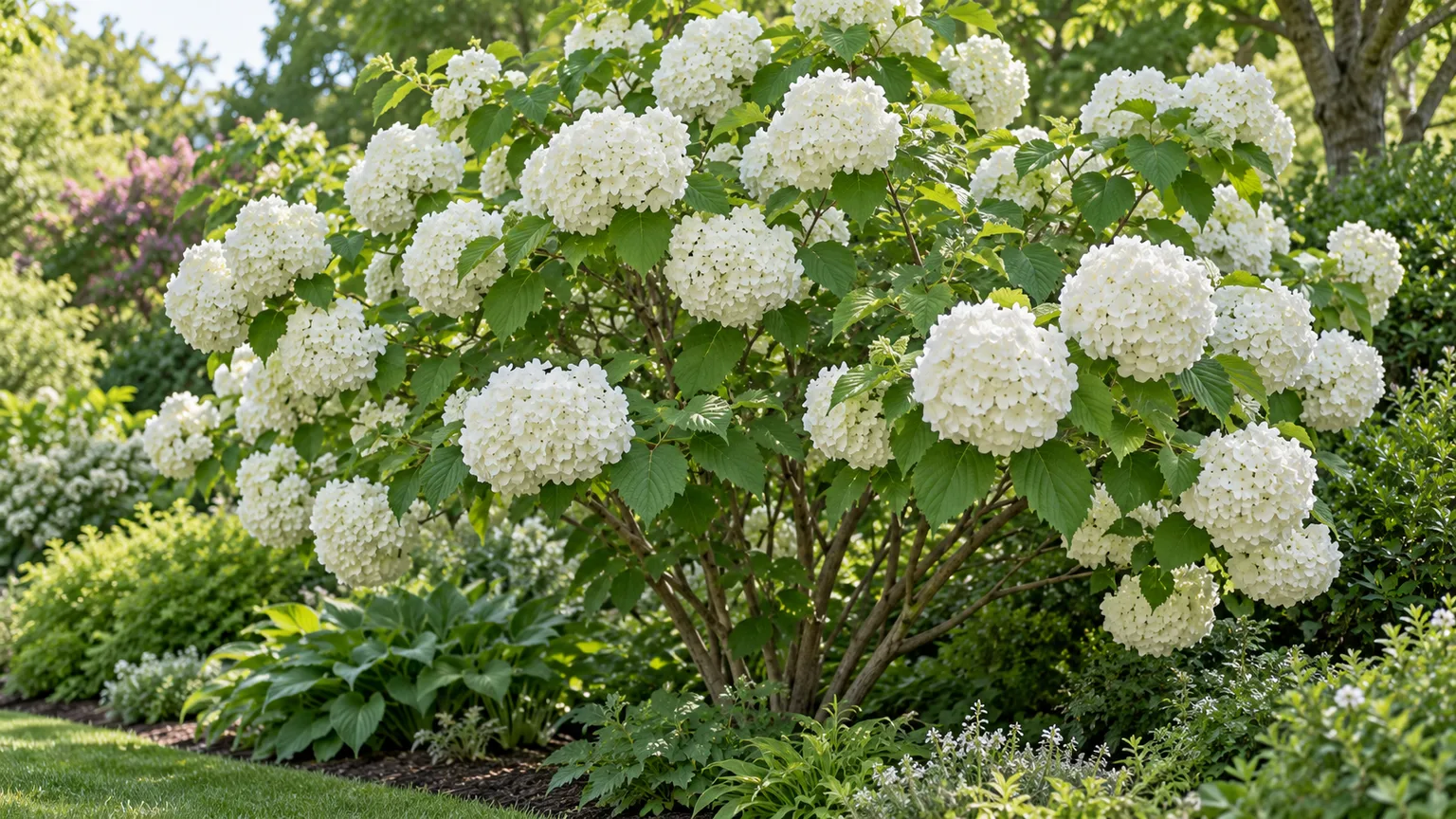
Chinese snowball viburnum (Viburnum macrocephalum) is a large, rounded shrub grown for dense flower globes that open apple green and mature to white. It can lose its leaves in colder areas and hold some foliage in mild southern climates.
The most useful thing to know before planting is its potential size: depending on form and growing conditions, this can become a broad shrub or small tree rather than a compact foundation plant. Give it room, keep its root zone moist but drained, and prune after its spring display if you want flowers the following year.
What Makes Chinese Snowball Viburnum Different?
The name points to a real species, but plant labels and common names can still create confusion. Viburnum macrocephalum belongs to the viburnum family and is native to China; it is not a hydrangea, even though its rounded flower clusters look similar from a distance. North Carolina State Extension describes a rounded, vase-shaped shrub that may reach 25 feet tall and 20 feet wide, while the Royal Horticultural Society gives a more typical upper range of about 4 meters in its conditions. That spread in reported dimensions is a reason to plan for the larger footprint or ask the nursery for the exact cultivar’s mature size rather than assuming every plant stays 6 to 10 feet tall. (NC State Extension Plant Toolbox; Royal Horticultural Society)
Chinese Snowball Versus Other Snowball Shrubs
“Snowball bush” can refer to several different plants, including European snowball viburnum (V. opulus ‘Roseum’) and Japanese snowball viburnum (V. plicatum). They are related at the genus level but do not share identical dimensions, hardiness, or pruning needs.
Chinese snowball is the one botanically named V. macrocephalum; its round clusters can reach several inches across, and the plant’s height and broad vase shape deserve more space than a small hydrangea-like shrub suggests. If the tag says only “snowball bush,” confirm the Latin name before choosing a spot.
The distinction matters beyond appearance. Some other viburnums produce ornamental berries after flowering, but many cultivated Chinese snowball forms have sterile florets and set no fruit. If berries are part of your plan, ask whether the nursery is selling the fertile wild-related form or a sterile ornamental selection; do not infer fruit production from the word “viburnum” alone.
Identify the Flower Form and Foliage
Chinese snowball is easiest to recognize in spring. Its broad, opposite leaves have finely toothed edges, and its flower heads are rounded or slightly domed rather than flat. The clusters usually begin apple green or chartreuse, then lighten to cream and white as they mature.
NC State Extension reports flower clusters roughly 3 to 8 inches across and notes that some locations see a second fall flush. That autumn repeat is an occasional response to local conditions, not a dependable second season to count on when planning a display. (NC State Extension Plant Toolbox)
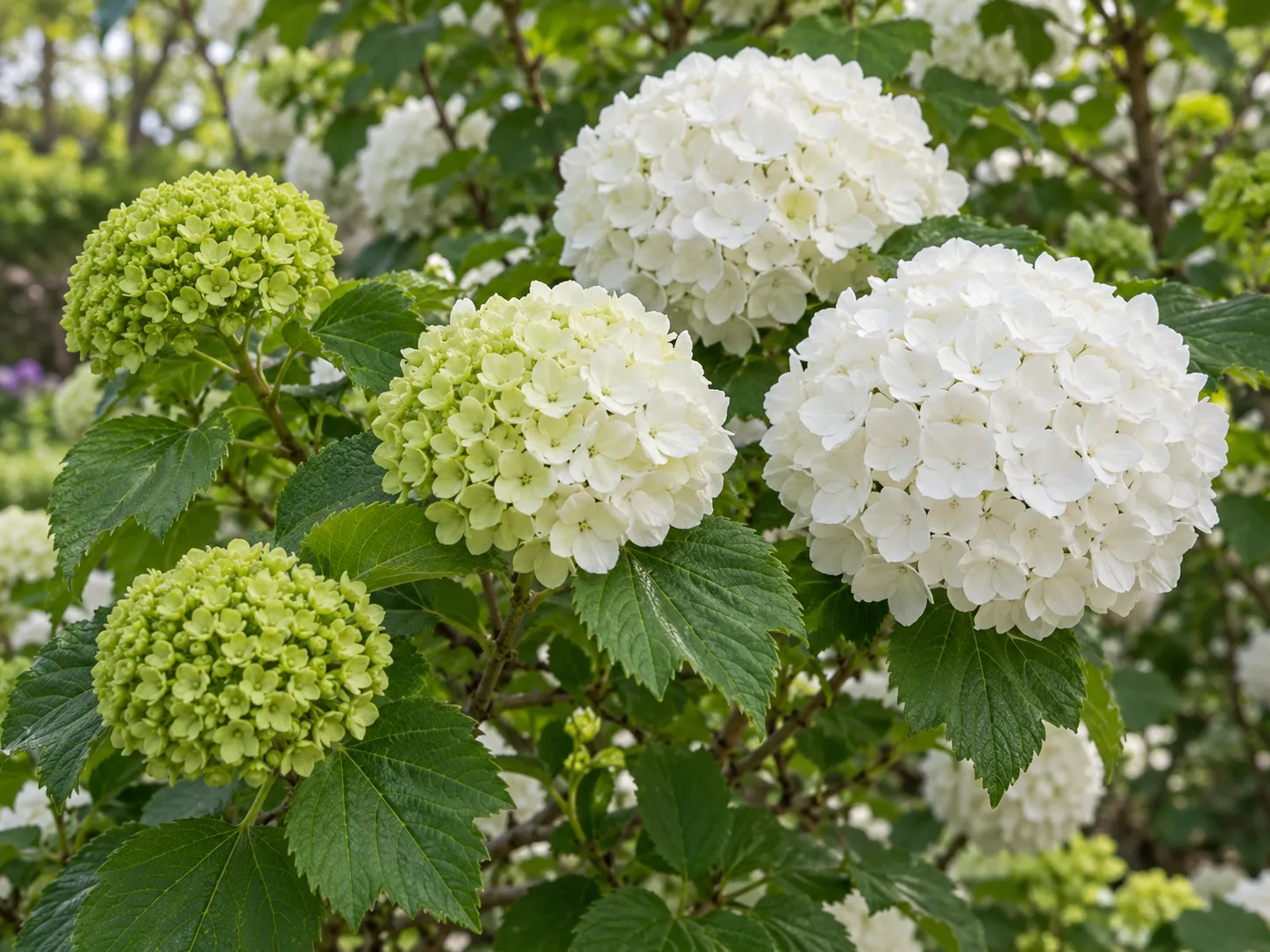
Most plants sold for showy flower globes are cultivated forms whose florets are sterile. They produce no berries, and the flowers are generally not fragrant. The less commonly grown fertile wild form has smaller, less showy flower heads with fertile flowers and may set red, berry-like drupes.
NC State’s plant profile makes this distinction explicitly, while nursery tags can use older or alternate names such as Viburnum macrocephalum f. keteleeri. Ask the seller how the specific plant behaves if you want either fruit or a sterile, fruitless display. (NC State Extension Plant Toolbox)
Its foliage is deciduous in colder areas and can be semi-evergreen in the mildest parts of its range. A plant that drops its leaves after a cold autumn has not necessarily failed; leaf retention varies with winter temperature and exposure. The green leaves and multi-stem framework still provide a substantial shrub presence in summer, but this is not a reliable year-round evergreen screen in a cold climate.
Choose a Site With Room and the Right Exposure
Chinese snowball performs best where its roots can access steady moisture without sitting in saturated soil. Choose the site by checking three things before digging: available width at maturity, hours of direct sun, and how quickly the soil drains after rain. The plant tolerates some shade, but persistent deep shade can reduce flowering; a soggy planting pocket is a worse problem than soil that is not perfectly acidic.
Sunlight and Summer Heat
A sunny location supports the fullest bloom, and the species also grows in partial shade. Aim for about six hours of direct light when the site allows it. In places with hot summers, morning sun with afternoon shade can reduce heat stress while retaining enough light for flowering.
In cooler areas, a bright open location can help shoots mature before winter. These are site adjustments, not a reason to expect the same bloom count every year; age, frost, pruning, and the previous season’s growth also matter.
Avoid placing the shrub beneath a dense tree canopy where it competes for light and water. A young plant may establish there but gradually become thin as surrounding trees grow. If the existing site has only deep shade, either accept fewer flowers or select a shrub better suited to that exposure rather than repeatedly feeding or hard-pruning the viburnum.
Soil, Drainage, and pH
Give the roots soil that stays moderately moist yet drains between waterings. The RHS lists Chinese snowball for several soil textures and a range of pH conditions, with a preference for moist but well-drained ground; NC State lists good drainage and notes a preference for moist, acidic soil. In practice, drainage and consistent moisture matter more than trying to force a pH number without a soil test. (RHS plant profile; NC State Extension Plant Toolbox)
Check the bed after a soaking rain. If water is still standing the next day, choose a higher location or correct the broad drainage problem before planting; filling a small hole with loose compost can create a basin that holds water around the root ball.
In heavy clay, loosen the surrounding soil and backfill with the native soil rather than creating a sharply different pocket. Add compost to improve soil structure when needed, but do not use peat, lime, or acidifier as a universal recipe.
Plant a Container-Grown Shrub Correctly
Plant a container-grown viburnum in spring after the soil is workable or in early fall while there is time for roots to settle before the ground freezes. Avoid planting during hot, dry weather unless you can keep up with close watering.
The RHS recommends planting deciduous viburnums from autumn to early spring when the ground is neither frozen nor waterlogged, and taking extra care if planting during dry spells. Local timing should account for your climate and the plant’s leaf habit. (RHS viburnum growing guide)
Water the nursery pot before planting. Dig a hole two to three times as wide as the root ball but no deeper, loosen circling roots around the outside, and set the top of the root ball level with the surrounding ground. Backfill with the excavated soil, firm lightly, and water slowly so it settles around the roots.
Do not bury the base of the stems or pile soil against them. The correct depth lets water reach roots while keeping the crown from staying constantly damp.
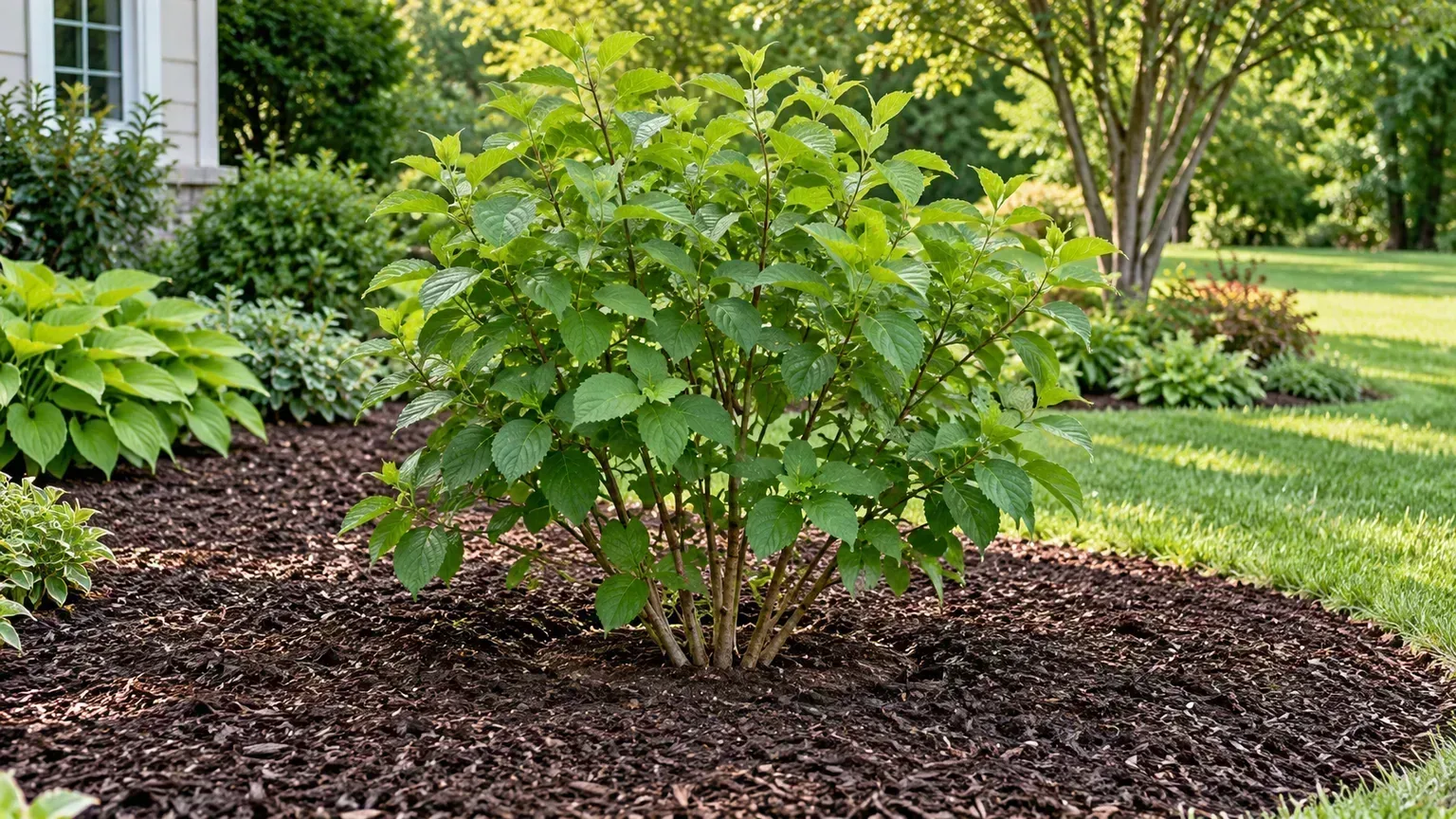
Plan spacing from the expected mature width, not the plant’s current container. For a stand-alone shrub, leave roughly half its mature spread between the center of the plant and a wall or path, adjusting for the cultivar and the shape you want. A mature specimen may need 10 feet or more on each side.
For a loose screen, space plants so their eventual branches can meet without being forced into constant shearing; exact spacing depends on the cultivar. A nursery-grown plant that is already large may be root-bound, so check the outer roots and loosen them before setting it in the ground.
Water, Mulch, and Fertilizer for Steady Growth
During the first year or two, check moisture at the root ball and surrounding soil every few days during warm or dry weather. Water slowly at the base when the upper few inches begin to dry; rainfall that wets leaves does not always soak the root zone.
As the shrub establishes, reduce watering frequency but give a deeper soak during extended drought. The RHS similarly advises watering newly planted viburnums as needed through establishment, particularly in dry weather. (RHS viburnum growing guide)
Avoid using a fixed weekly schedule as a substitute for checking the soil. Sand drains and dries faster than clay; a mulched bed loses moisture more slowly than bare ground; a recently planted root ball can dry even when nearby lawn looks damp. If leaves wilt in the afternoon, check soil before watering.
Dry soil calls for a thorough soak; wet soil calls for drainage and root inspection, not more water. Repeatedly saturated roots can decline even though the leaves look thirsty.
Apply a 2- to 3-inch layer of organic mulch over the root zone to reduce moisture swings and weed competition. Keep the mulch a few inches away from the stems so bark remains exposed to air.
Add to the layer as it decomposes instead of piling deep mulch against the shrub each year. The RHS recommends annual mulch and leaving a mulch-free circle at the plant base. (RHS viburnum growing guide)
Routine fertilizer is often unnecessary in a reasonably fertile garden bed. If growth is weak, first check drainage, light, root competition, and watering, then test soil if the cause is not clear.
An early spring dose of high-nitrogen fertilizer can push leafy shoots without fixing a site problem and may leave the shrub less focused on flowering. If a soil test or local extension recommendation supports feeding, apply an appropriate product at the label rate; do not fertilize simply because spring has arrived.
Prune After Flowering to Protect Next Year’s Display
Do planned shaping soon after the spring flowers fade. Chinese snowball blooms on growth produced the previous season, so late summer, autumn, winter, or early spring cuts can remove buds before they open. An Iowa State Extension response on Chinese snowball recommends pruning immediately after flowering and cautions that late-season cuts may remove many of the flower buds. (Ask Extension response)
Begin by removing dead, broken, crossing, or poorly placed stems. Use clean, sharp bypass pruners on small shoots, loppers on thicker stems, and a pruning saw only when needed. Cut back to a healthy side branch or just beyond the branch collar, rather than leaving stubs or cutting flush to the main stem.
If you want the shrub’s natural vase shape, thin selected branches from inside instead of shearing every outer surface into a flat ball. Shearing can make the outside dense and leafy while the interior becomes shaded and bare.
The flower heads can be cut for arrangements once they begin to fade. Deadheading is optional and mainly a cosmetic choice on sterile garden forms; it does not compensate for shade, drought, or incorrect pruning and should not be treated as a way to guarantee another bloom flush. If you are pruning in spring or early summer, check for active bird nests and delay work around an occupied nest, as the RHS advises for garden shrubs. (RHS viburnum growing guide)
Reduce an Oversized Shrub Without Ruining Its Shape
A mature shrub that outgrew its bed can be renewed gradually. After flowering, remove a portion of the oldest stems close to the ground, keeping younger strong canes to preserve the framework and some flowers.
Repeat over two or three seasons if necessary. This improves light and air movement inside the plant without turning a large shrub into a row of bare stumps in one afternoon.
A severe cutback can be useful when a plant is badly overgrown, but expect to lose most flowers for at least one season and allow for a recovery period. Do not assume a hard prune will permanently keep a naturally large selection compact: vigorous replacement shoots can quickly rebuild its height. If the mature width blocks a path or crowds a building, replacing the shrub with a smaller plant may be easier than repeatedly forcing it into a space it cannot fit.
Propagate by Softwood Cuttings or Layering
Vegetative propagation is the practical way to reproduce a named ornamental form. A sterile selection may not produce seed, and seed from a fertile form may not come true to the parent. NC State lists stem cuttings and layering as propagation options; Fine Gardening recommends greenwood cuttings in summer. (NC State Extension Plant Toolbox; Fine Gardening plant profile)
For a softwood cutting, choose a healthy, non-flowering shoot from the current season when it is flexible but not limp. Iowa State Extension’s general shrub method uses cuttings about 4 to 6 inches long, with lower leaves removed and flowers stripped; a well-drained medium such as perlite and coarse sand helps retain moisture without leaving the stem in waterlogged mix.
Dip the base in rooting hormone if you choose to use it, insert it into pre-moistened medium, and cover the pot with a clear bag supported so plastic does not press on the leaves. Keep it in bright indirect light, not direct sun, and ventilate or remove excess condensation if the cutting stays wet. (Iowa State University Extension and Outreach)
Check moisture daily and do not tug on the cutting to test it. Iowa State says many deciduous shrubs root in six to eight weeks, but that is a general range, not a guarantee for every Chinese snowball selection. Once roots are established, gradually acclimate the young plant to open air, pot it up, and grow it on in a sheltered spot before planting it permanently.
If you have access to a low flexible branch, layering may be simpler: pin part of the branch beneath shallow soil while it remains attached to the parent, then separate it after roots form. Either method takes patience; cuttings will need more than one season to become a substantial landscape shrub.
Plan for Winter and Seasonal Changes
Chinese snowball is generally listed for USDA hardiness zones 6 through 9, with NC State’s regional profile spanning 6a to 9b. Zone labels describe average annual extreme minimum temperatures, not how a particular plant will fare in every yard.
A cold pocket, drying winter wind, late freeze, or poorly drained soil can stress a plant near the edge of its range. Choose a sheltered site in colder areas and keep young roots mulched without piling material against the stems. (NC State Extension Plant Toolbox)
Expect the shrub to change appearance through the year. Buds open in spring; flower clusters deepen from green to white and then fade; summer foliage fills out the vase-shaped framework; and colder winters may strip the leaves.
In mild climates the plant may hold leaves longer, and some locations report an occasional fall flower flush. The flowers are the main show, so do not use fall color or winter evergreen coverage as the deciding reason to buy it.
Do not wrap a healthy established plant automatically. At the colder edge, wind protection, appropriate planting depth, and reliable soil moisture before freeze-up matter more than a tight cover that traps moisture.
Avoid late-season fertilizer and pruning that encourages tender growth or removes next year’s buds. If winter dieback occurs, wait until spring growth begins before deciding which stems are dead, then cut back to living wood after the flowering period when possible.
Troubleshoot Sparse Blooms and Common Leaf Problems
If a healthy-looking shrub has few or no flowers, start with pruning history. A cut in late summer or winter may have removed the buds; if so, the shrub may need to grow through a full season before flowering returns.
Next, look at light: deep shade often reduces bloom even when leaves remain green. A newly planted shrub may also spend its first years establishing roots, while a late freeze can damage buds in an otherwise suitable site.
If leaves are pale or growth is stunted, check the root zone before feeding. A dry root ball, waterlogged clay, compacted soil, or competition from a tree can limit growth.
If the shrub produces lots of long leafy shoots but flowers poorly, reduce fertilizer, improve light where feasible, and avoid pruning before bloom. These checks prevent a common mistake: treating every low-flower year as a nutrient deficiency.
Separate Cultural Stress From Disease
Chinese snowball is considered relatively trouble-free, but no viburnum is immune to all problems. Distorted new growth may indicate aphids; white powder or spotting can suggest fungal disease; and brown edges may follow drought, heat, or root stress.
Match symptoms to conditions and inspect the undersides of leaves before reaching for a spray. The University of Minnesota’s plant diagnostic pages distinguish several viburnum leaf-spot and powdery-mildew patterns, while Clemson Cooperative Extension covers broader viburnum insect and disease issues. (University of Minnesota Extension plant diagnostics; Clemson Cooperative Extension)
Water at soil level when practical and avoid keeping foliage wet overnight. Remove badly affected fallen leaves, improve airflow by selective thinning, and confirm a diagnosis before using fungicide or insecticide.
A product labeled for one viburnum pest may not be appropriate for another; follow local extension guidance and the pesticide label. When leaf damage is minor and the shrub is still growing, correcting shade, drainage, or watering is often the more useful first step.
Use the Shrub as a Specimen, Screen, or Small Tree
The large flower clusters make a single specimen shrub an easy focal point in a spring garden. It can also work in a mixed border or informal screen if there is enough room for its full width.
A mature plant can be pruned into a small tree form by selecting a few sturdy trunks and gradually removing lower shoots, but that changes the silhouette and does not make the canopy small. Plan for the height and spread of the crown, and avoid planting it where heavy flowering branches will obscure a narrow walkway.
For a layered garden, combine it with plants that contribute interest after the white flowers fade: an evergreen backdrop, spring bulbs below the canopy, or shade-tolerant perennials near the outer edge. Keep companions clear of the shrub’s immediate root zone so they do not intensify competition for water.
Horticulturist Steve Huddleston of the Fort Worth Botanic Garden, quoted by Texas gardening writer Neil Sperry, describes using Chinese snowball in a woodland planting among evergreen hollies, Japanese maples, redbuds, and oakleaf hydrangeas. That is a useful design example for a sheltered site, but the local light and mature widths still determine which combination works in your yard. (Neil Sperry’s Gardens)
A screen of Chinese snowball viburnums will not look dense in every season. Sterile selections provide no berries, and plants in colder regions can be leafless in winter.
Use it when spring flowers and a substantial summer shrub are the goal; pair it with evergreens if year-round screening matters. Because mature sizes and nursery labels vary, confirm the botanical name and cultivar before buying more than one.
Conclusion
Chinese snowball viburnum succeeds when you plan for its eventual size, protect its spring-blooming wood, and keep soil consistently moist without letting roots sit in water. Give it full sun to partial shade, room for a broad vase-shaped canopy, and light pruning just after flowering.
Most cultivated forms are sterile, so choose the plant for its green-to-white flower globes rather than expecting berries. Confirm the exact form on the nursery label, then let the shrub grow into a site that fits its scale.



