How to Grow and Care for a Flapjack Succulent
Keep a flapjack succulent compact and healthy with practical indoor and outdoor care, plus fixes for stretching, soft leaves, rot, and flowering.
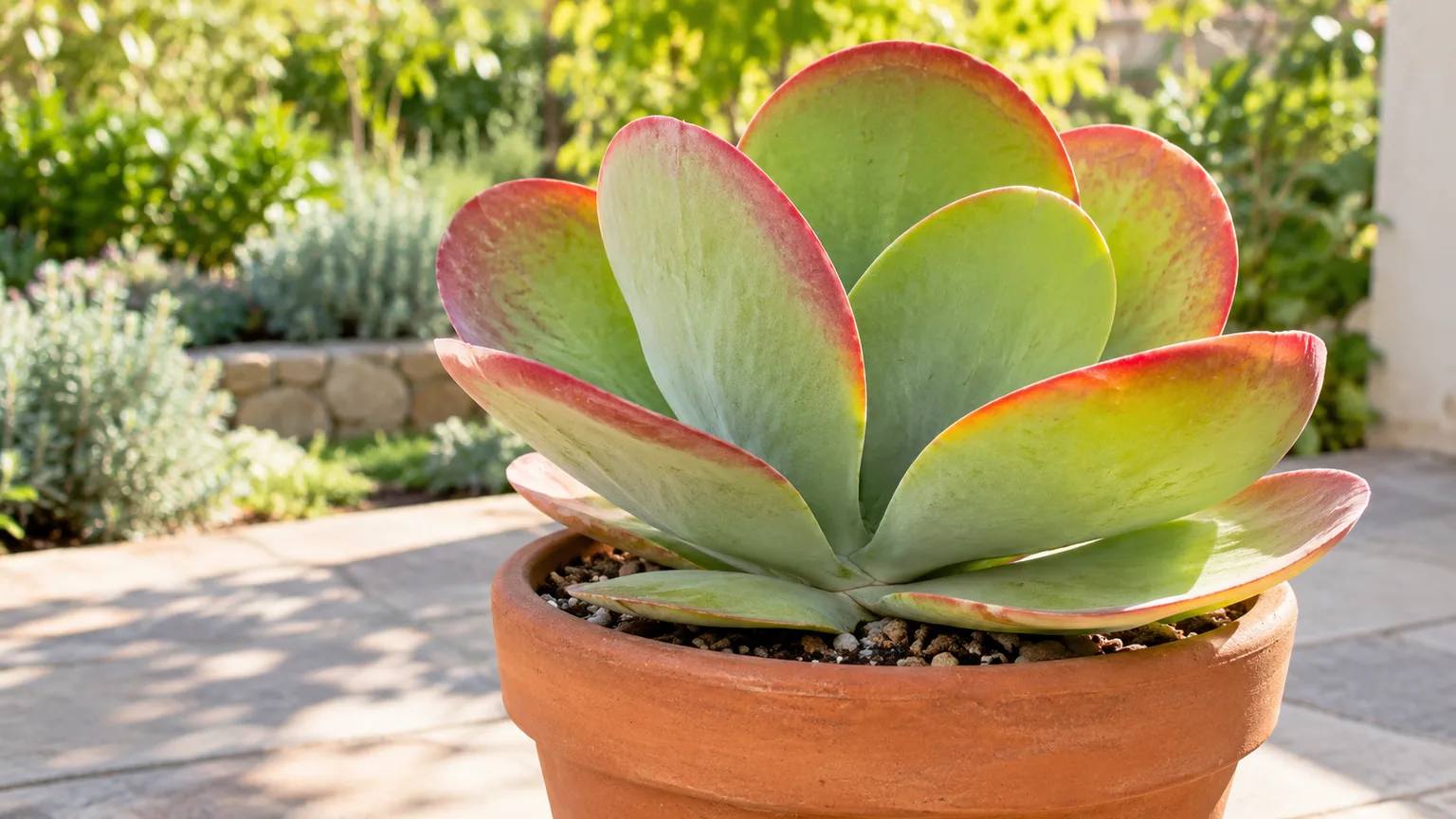
A flapjack succulent is happiest in strong light, an airy potting mix, and a pot that dries between thorough waterings. Its fleshy leaves store water, so the main mistake is treating it like a plant that wants frequent small drinks. Give it a bright position, let the root zone dry before watering again, and protect it from frost; those choices do more for a healthy rosette than a strict calendar or heavy feeding.
The common name usually refers to Kalanchoe luciae, a broad-leaved succulent also called paddle plant. It can live indoors near a very bright window or outdoors where winter conditions stay mild. Red leaf margins are a response to growing conditions, not a required sign of health, and the plant’s tall flower stalk has a life-cycle consequence worth knowing before you decide to keep it.
| Care need | Reliable starting point |
|---|---|
| Light | Brightest practical spot; introduce direct sun gradually |
| Water | Soak the root ball, drain, then wait until the mix is dry through |
| Soil | Fast-draining succulent mix with added pumice or perlite if needed |
| Pot | Drainage hole, sized close to the root ball |
| Cold | Keep frost away; move container plants under cover before a freeze |
| Propagation | Root offsets first; stem cuttings are another option |
Identify the Flapjack You Bought
“Kalanchoe,” “paddle plant,” and “flapjack” can refer to more than one plant in shops and online listings. This guide focuses on Kalanchoe luciae: it forms a low rosette of thick, flat, spoon-shaped leaves, usually green with red or pink edges when light and temperature bring out the color. NCBI recognizes K. luciae as a distinct species, while growers often encounter it sold under a loose common name that is also applied to the closely related K. thyrsiflora. Succulents & Sunshine’s species notes also flag K. thyrsiflora as a frequent look-alike.
The distinction matters most when matching a photo or care label, not because the two plants need opposite routines. A redder margin does not by itself prove that a plant is K. luciae, and nursery color changes with conditions. If the exact identity is uncertain, use the shared needs of these paddle-shaped kalanchoes—strong light, draining soil, and a full dry-down—rather than trying to diagnose health from one color cue. NCBI Taxonomy is a reliable place to confirm the scientific name.
Find a Bright Spot and Acclimate Slowly
Flapjack succulents need more light than a dim room can provide. Indoors, place the pot close to the brightest unobstructed window you have; several hours of gentle direct sun can help it hold a tighter rosette. A grow light can fill in for weak winter daylight, but a plant kept far from both a window and a lamp will gradually stretch, lean, and space its leaves farther apart.
Outside, morning sun and bright open light are a good starting point. A plant that has spent months in a greenhouse or on an indoor shelf can scorch if moved directly into harsh afternoon sun, even though a mature, acclimated plant can handle much stronger exposure. Red margins may intensify in bright, cooler conditions, but chasing red color by exposing an unacclimated plant to punishing heat can produce bleached, crisp patches instead.
Move Outdoor Plants Into Stronger Sun in Stages
When moving a plant outdoors for the warm season, begin in bright shade or filtered morning light. Over about a week or two, increase direct exposure in small steps, checking the leaves between moves; back off if the sun-facing side develops pale, tan, or dry patches. Sunburned tissue does not turn green again, so the aim is to protect new growth while the plant adjusts.
A windowsill can create a similar shock when the season changes. Glass, reflected heat, and a sudden jump in midday sun can make a spot much harsher than it felt in winter. Shift the pot closer to the window gradually, and avoid letting the leaves press against hot glass.
Choose Soil That Dries Through
A paddle plant needs a mix that wets evenly when you water but releases excess moisture quickly. A packaged cactus-and-succulent mix is a useful base; if it stays damp for many days in your home, blend in extra pumice or perlite to open the texture. A practical starting mix is roughly equal parts commercial succulent mix and a coarse mineral amendment, then adjust toward more mineral material in humid rooms or for plastic pots that dry slowly.
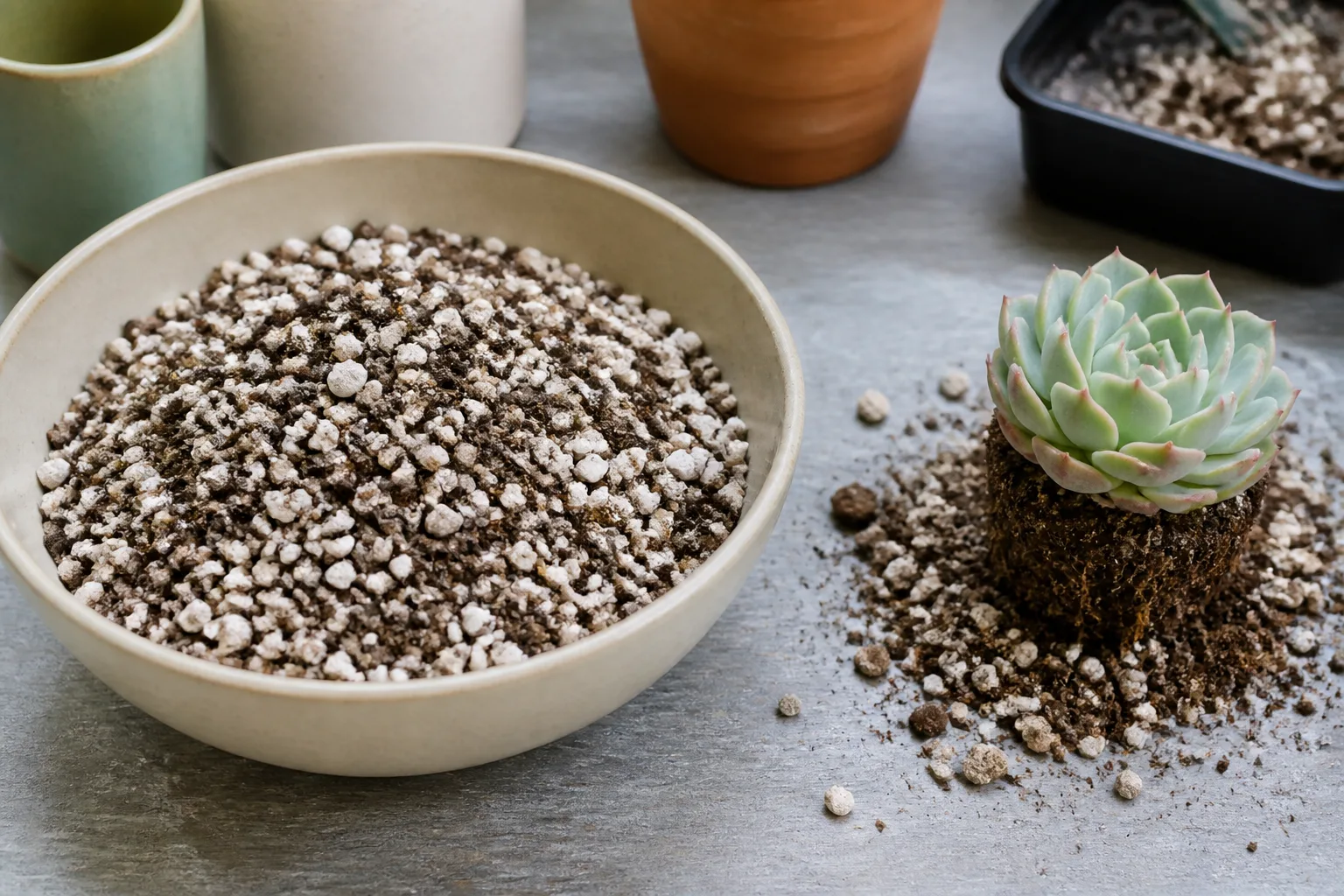
Use a pot with an open drainage hole. Terracotta often dries faster than glazed ceramic or plastic, which helps in cool or humid homes; it can also dry very quickly in a hot, sunny climate, so check the root zone instead of assuming the pot material solves everything. Avoid a container that is much wider than the root ball: extra wet mix around a small plant can take too long to dry. Pebbles in the bottom do not replace drainage holes or a well-structured mix.
Water Only After the Root Zone Dries
Water thoroughly, then wait. When the mix has dried through the root ball, pour water slowly over the surface until it runs from the drainage hole. Let the pot finish draining and empty any saucer or cachepot; leaving the base standing in runoff keeps roots wet even if the top looks dry. A small splash on a fixed weekly day often wets only the top layer and encourages an unreliable routine.
There is no dependable number of days that suits every flapjack. A small terracotta pot in bright light may dry much sooner than a large plastic pot on a cool shelf, and active growth uses water faster than a plant resting through a hot or dim period. Check moisture below the surface with a wooden skewer or your finger, and compare the pot’s weight after watering with its weight when dry. If the center is still cool or damp, wait.
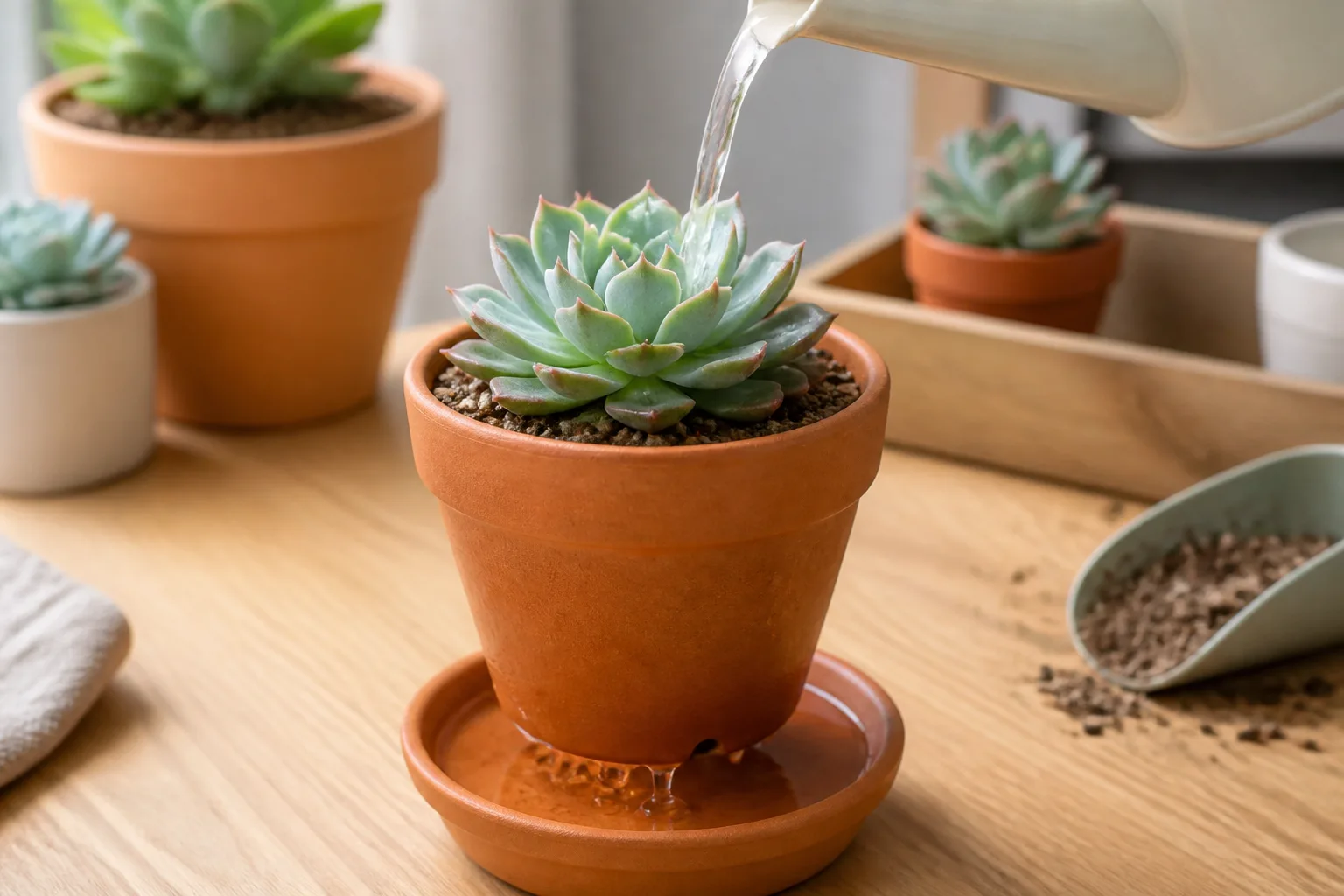
In winter, reduce watering when growth slows and daylight is short; do not keep the same summer interval by habit. Conversely, a sunlit outdoor plant in a small pot may need water more often during a long hot spell. Adjust to the drying mix and the plant’s condition rather than either extreme: constant dampness or months of neglect while the leaves visibly shrivel.
Read Wrinkles, Soft Leaves, and Lower-Leaf Loss
Wrinkled, thinner leaves paired with bone-dry soil usually point to thirst. Give the root ball a complete drink and see whether the leaves firm up over the next several days. If the soil is wet, soft or translucent leaves suggest a different problem: roots may be struggling in a mix that holds water too long. Do not add more water to “fix” a collapsed plant until you have checked the soil.
An occasional older bottom leaf drying as the plant grows is normal. A cluster of yellowing lower leaves, a dark or mushy stem base, or soil that stays wet for an unusually long time calls for a drainage check. If rot is present, remove the plant from the wet mix, cut away soft roots or stem tissue with a clean blade, let healthy cuts dry, and restart in fresh, dry, airy mix; firm healthy offsets or stem sections may still be saved.
Use Fertilizer Sparingly
A flapjack can grow well without frequent feeding if it is in fresh, nutrient-containing succulent mix and receives enough light. If growth is active and the plant has been in the same mix for a long time, apply a balanced fertilizer diluted to the low end of the label rate once in spring or early summer. Water the soil first if it is dry, and keep fertilizer off the leaves and rosette center.
Skip feeding when the plant is stressed, newly repotted, dormant, or showing soft growth in wet soil. Extra nitrogen does not correct weak light or root damage; it can instead push softer, looser growth. Do not add more fertilizer just because a plant has not flowered—age, light, season, and growing conditions all affect blooming.
Protect From Cold, Heat, and Damp Air
Kalanchoe luciae is a warm-climate succulent, not a frost-tolerant garden perennial. Keep a container plant where it can be brought under cover before freezing weather, and keep its mix relatively dry when temperatures are cool. A damp root ball combined with cold is more dangerous than a brief cool night, so do not water heavily just before a cold spell.
Very humid weather does not automatically harm the plant, but a crowded, stagnant spot and slow-drying soil make leaf and root problems more likely. Give outdoor plants space for air movement and shelter them from prolonged rain if the bed or pot stays wet. During extreme summer heat, a little afternoon shade can prevent sun scorch and reduce stress, particularly for a plant that was recently moved outside.
Grow Flapjack Outdoors or Indoors
In a frost-free or mild-winter garden, a flapjack can grow in a sunny, sharply drained bed or a raised container. Choose a place where rainwater does not collect around the base and leave enough room for the rosette and its offsets to widen. It works well among other plants with similar dry-soil needs, but do not crowd it against plants that require regular irrigation.
Indoors, the limiting factor is usually light, not room temperature. Use a bright south- or west-facing window where the plant can receive strong light without overheating against the glass; an east-facing window may work if it is genuinely bright for much of the day. Rotate the pot occasionally if it leans toward the window, and use a grow light if new leaves become noticeably farther apart than the older ones.
Move Containers Before a Cold Snap or Heat Wave
Containers make seasonal care easier because you can move the plant before conditions turn damaging. Bring it inside before frost, inspect the undersides and leaf joints for pests, and let the pot dry at a normal indoor pace rather than watering on the outdoor schedule. After a cold period, return it outside gradually instead of placing it straight into full afternoon sun.
During a hot spell, move a recently exposed plant to bright shade or morning sun if its leaves develop scorch marks. Established plants may cope with high temperatures better than recently purchased or recently repotted ones, but heat does not make a wet, poorly draining pot safe. Check the mix and roots before increasing watering; fast evaporation at the surface can hide a soggy center.
Repot Only When the Roots Need It
Repot when roots fill the container, the plant becomes unstable, or the old mix has compacted and stopped draining—not simply because a calendar year has passed. Move it into a pot only a little wider than the root ball, with drainage holes and fresh succulent mix. A pot that is too large holds a surplus of damp soil around a small root system and can make overwatering harder to avoid.
The easiest time is during active growth in warm weather, when the plant can recover quickly. Ease it out by supporting the root ball rather than pulling on the leaves, and remove only soil that falls away easily. If roots are firm, keep them intact; trim only dead or mushy sections with a clean tool. After repotting, give damaged roots time to settle before returning to a normal soak-and-dry routine, especially if the mix is already moist.
Prune Tall Stems and Manage Flowering
A mature flapjack may send up a central flower stalk, often in late winter or spring when light and growing conditions support it. The stalk can rise well above the flat rosette and carry clusters of small flowers. This is not automatically a sign that the plant is unhealthy or “stretching”; flowering is a separate, normal stage of its life cycle.
The flowering rosette is generally monocarpic: the main rosette that flowers may decline after blooming. That does not mean the whole planting has to be lost. Offsets can form around the base or along the flowering stem and continue growing after the parent rosette fades. Joy Us Garden’s account of paddle plant pruning and offsets describes how pups can remain even when a flowering mother plant dies.
If you want the flower display, let the stalk open and remove it after it has finished; then keep the offsets that remain. If you prefer a compact plant and do not want a tall stalk, you can cut it while it is still developing, but that removes the bloom and may also reduce the offsets produced on that stalk. Cutting it is not a guarantee that the rosette will never flower again. Remove only dead leaves or clearly spent stems, and avoid stripping healthy lower leaves just to expose the trunk.
Propagate With Offsets First
Offsets, often called pups, are the simplest way to make more flapjack plants while preserving the parent rosette. Wait until a pup has its own small leaves and a visible base, then separate it with a clean, sharp blade. If it is already loose at the soil line, ease it away without tearing the parent stem; if it is attached, include a short piece of stem so the cutting has a stable base.
Leave the cut surface in a dry, airy spot out of direct sun until it has callused. A small offset may need only a day or two, while a thicker cut can take longer; the important cue is a dry sealed surface rather than a clock. Set it into dry or barely moist succulent mix, keep it in bright indirect light while roots begin forming, and avoid repeatedly tugging to check progress. Once it is anchored and shows new growth, resume a normal dry-down watering pattern.
When Stem and Leaf Cuttings Are Worth Trying
A stem cutting is useful if a mature plant has become tall, bare, or top-heavy. Cut below a healthy rosette or section, remove a few lower leaves if needed, and let the cut end callus before setting it in dry mix. Keep the cutting upright and supported; burying a large section of fleshy stem deeply in damp soil makes rot more likely. This method also lets you reset the shape of an older plant, but the base left behind may take time to produce new growth.
Leaf propagation is possible but less predictable than rooting a pup. Twist a healthy leaf away cleanly rather than leaving half of its base attached, let the wound dry, and lay the leaf on a gritty mix in bright indirect light. Some leaves produce roots or a tiny plantlet; others simply dry out. Do not seal the pot in a plastic bag or keep the mix wet to force a result. Succulents & Sunshine’s K. luciae propagation notes likewise describe leaf propagation as more difficult and offsets as an option.
Troubleshoot Common Flapjack Problems
Start with the new growth, the light level, and the moisture in the root zone before changing several care habits at once. A stretched rosette usually needs more light, not extra fertilizer; soft translucent leaves paired with wet soil point toward excess moisture or root trouble, not thirst. Correct one likely cause, then give the plant time to respond.
| What you see | What to check first | Useful first move |
|---|---|---|
| Long, leaning stem or widely spaced leaves | Light level and direction | Move it nearer a bright window or acclimate it to more sun |
| Wrinkled leaves with dry mix | Moisture deeper in the root ball | Soak thoroughly, then let it drain |
| Soft, yellow, or translucent leaves with damp mix | Drainage, pot size, and root condition | Stop watering and inspect roots if the decline continues |
| Pale, dry patches on the sun-facing side | Recent change in sun exposure | Move to bright shade and restart acclimation more slowly |
| Green leaves without red edges | Season, temperature, and light | Treat green as normal; improve light only if growth is stretching |
| White powdery film on leaves | Whether the coating is even and intact | Avoid rubbing it off; the plant may have a natural waxy surface |
Mealybugs and scale can hide where leaves meet the stem, especially on a stressed or crowded plant. Isolate an infested pot, inspect nearby plants, and remove visible pests carefully; test any treatment on a small area first because succulent leaf surfaces can be sensitive. If the white substance is clustered, cottony, or moving rather than a uniform coating, treat it as a possible pest rather than assuming it is the plant’s natural bloom.
Keep Pets Away From Kalanchoe
Treat flapjack kalanchoe as unsafe for cats and dogs. The ASPCA lists Kalanchoe species as toxic to dogs and cats and identifies bufadienolides as the toxic principle; reported signs include vomiting and diarrhea, with abnormal heart rhythm listed as rare. The Pet Poison Helpline’s Kalanchoe guidance notes that a large enough ingestion can carry a risk of more serious signs such as weakness or collapse.
Place the plant where a curious pet cannot reach fallen leaves or offsets, and collect trimmings before pets enter the area. If you suspect a cat or dog has chewed it, contact a veterinarian or animal poison service promptly and describe the plant and amount if known; do not wait for symptoms or try a home treatment. ASPCA Poison Control lists a consultation number on its plant page, and your veterinarian can advise based on the animal and exposure.
Conclusion
The simplest reliable flapjack routine is to give it the brightest safe light you can, grow it in a draining pot and mix, and water only after the root zone has dried. Change light exposure gradually, protect the plant from frost and prolonged wet soil, and use offsets to continue the planting if a rosette flowers and declines. When a leaf changes, check light, soil moisture, and drainage before changing everything at once; those three observations usually point you toward the right next step.



