15 Garden Bench Ideas for Your Backyard
Explore 15 garden bench ideas for a backyard: compare built-in, arched, metal, wood, and compact seats, then check the path, sun, and surface before placing one.
A garden bench can make an overlooked corner usable, give a path a destination, or create a spot where you can watch the yard change through the day. The best one is not necessarily the most decorative: it is the seat that fits the way you move through the garden, the weather it will face, and the view you want from it.
Before choosing a style, test the location. The RHS recommends mapping the garden’s shape, fixed features, and sunlight before making a plan; its design advice also suggests offering seats in sun and shade and considering the views from inside the house. Those are practical checks for a bench too: the spot should be comfortable at the time you will use it, easy to reach, and pleasant to look toward. RHS garden planning advice and RHS advice on garden seating both reinforce that a seat works best as part of the whole garden rather than as a loose ornament.
1. Put a small bench just outside the back door
A short bench near the door is the one you are most likely to use for five-minute jobs: waiting for someone, setting down a harvest basket, taking off muddy shoes, or stepping outside with coffee. Give it a firm landing rather than balancing it on lawn, and position it to one side of the door swing. If the patio is small, an armless two-seat bench keeps the entry useful without turning the threshold into a furniture obstacle course.
This practical seat does not need to dominate the garden. Match its finish to one detail already present—fence, door, paving, or planter—and let a single container or compact shrub soften the edge. Keep the approach broad enough for people carrying bags or a watering can; if the bench makes the everyday route awkward, move it before adding cushions or decor.
2. Turn a garden view into the destination
A bench at the far edge of a lawn can make a small yard feel deeper because it gives the eye somewhere to travel. It might face a specimen tree, a pond, a flower border, or simply a patch of morning light. Do not automatically point it toward the house: sit in the proposed spot first, notice where your eyes land, and angle the bench so you see the thing you want to enjoy rather than the fence, compost area, or utility equipment.
A useful trick is to choose the view before you choose the bench. Stand at the future seat and check what is visible at eye level while seated, not only while standing. If a blank boundary dominates, create a layered foreground with grasses or shrubs, or use a trellis to frame rather than completely hide the background. Keep plants far enough from the seat that they do not brush wet foliage across clothing or close off the way in.
3. Set a bench where you can catch the evening light
Many gardens have one comfortable hour that changes with the seasons. A seat positioned for late afternoon sun can be wonderful in a cool climate or shoulder season, while the same exposed spot may be punishing in a hot summer. Track the sun for a few days before moving paving or buying a permanent bench; morning and evening exposure are not interchangeable, and fences or neighboring buildings can shift the usable window.
This idea works especially well beside herbs, a vegetable bed, or a fragrant border that you tend in the evening. Keep the bench outside the bed’s working lane so knees, buckets, and hoses can pass without trampling plants. If the spot is bright in spring but shaded by a leafy tree in summer, decide whether you want seasonal sun or dependable shade. A movable bench solves that trade-off more cheaply than trying to engineer a year-round microclimate.
4. Make a cool pause beneath an existing tree
An established tree offers shade and a ready-made canopy, but it also brings roots, dripping leaves, fruit, and seasonal changes. A freestanding bench beneath the outer part of the canopy is easier to place than one built tightly around the trunk. Choose a point with enough headroom and a reasonably level surface, and avoid excavating large roots just to make the furniture sit perfectly; a loose gravel pad or a few well-placed pavers may work with less disruption than a continuous slab.
Do not assume the darkest spot is automatically the most comfortable. A dense canopy can make a seat damp and dim, while a high branching tree can provide shifting shade and a better view. Check whether falling fruit, sticky sap, or bird droppings will make the bench unpleasant to clean. If roots are already lifting the ground, use a light movable seat and accept that it may need to be repositioned as the tree grows.
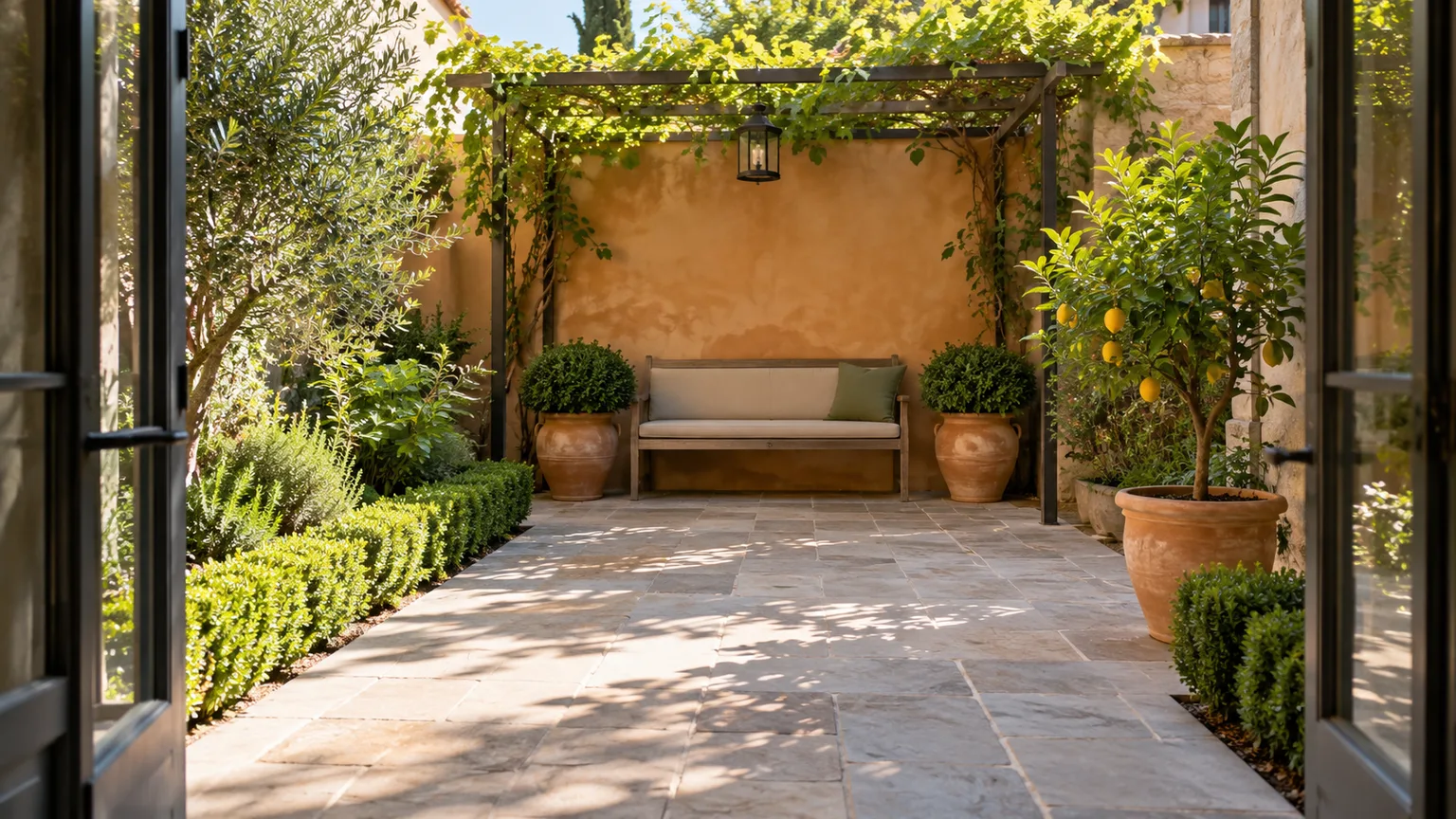
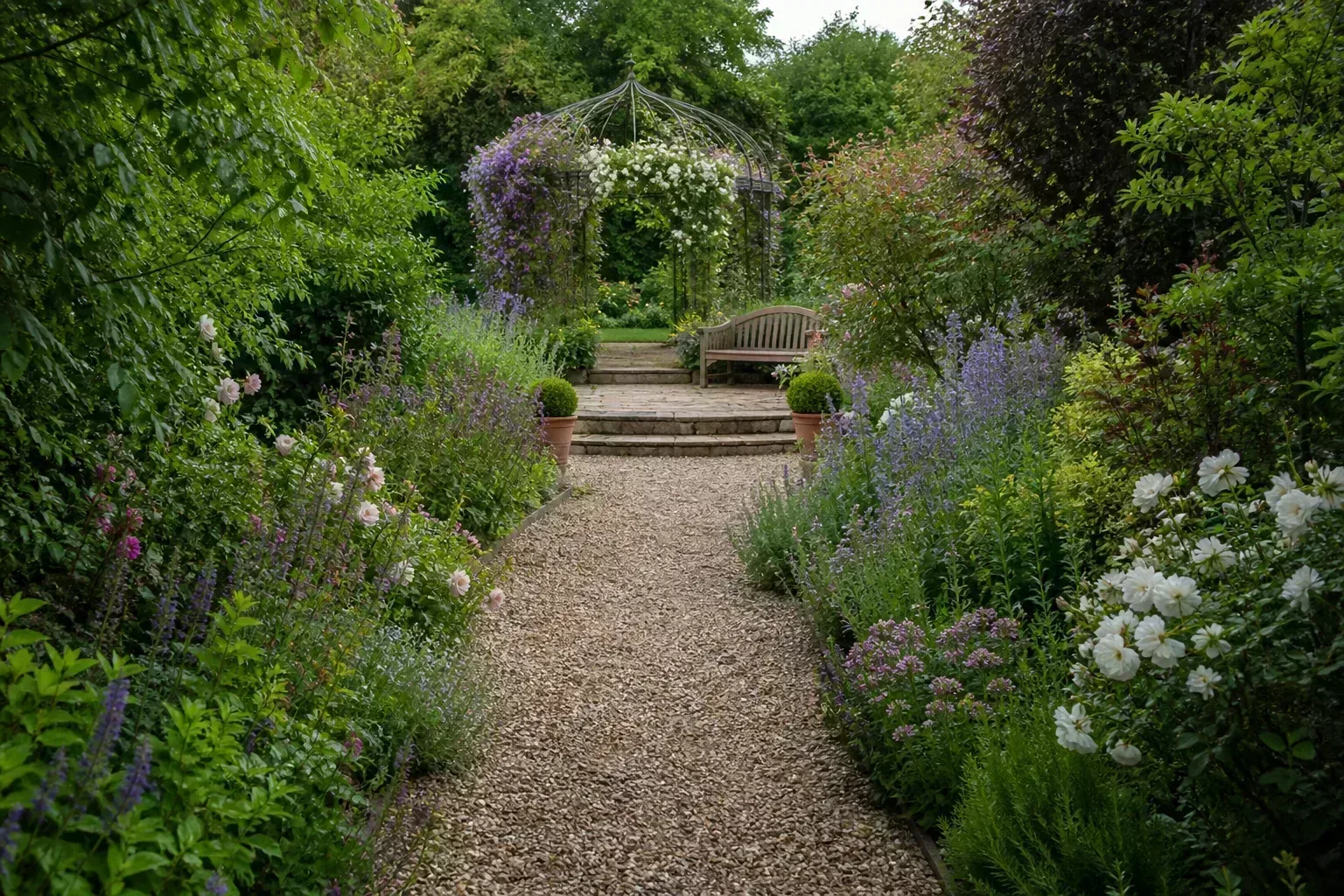
5. Frame the seat with an arbor or pergola
A small arbor over a bench creates a clear garden room without enclosing the yard. It can frame a view down a path, mark the transition from patio to planting, and provide support for a carefully chosen climber. The structure should be designed and anchored for its own loads; do not assume the bench can brace an arbor or that a light garden arch can carry a mature vine. Consider the growth habit and pruning work of the plant before letting it cover a place where you want to sit.
Keep the overhead layer open enough to enjoy light and air. A deciduous climber may give seasonal shade, while a heavy evergreen or vigorous woody vine can make the seat dark and difficult to maintain. If you mainly want a defined nook rather than a climbing project, a simple slatted screen behind a regular bench offers a lower-commitment frame. A well-planned courtyard bench can be a useful visual reference for this approach.
6. End a path with a simple garden bench
A bench at the end of a path gives the route a purpose: you walk toward a place to pause instead of stopping at an arbitrary patch of gravel. It can be a plain slatted seat, a painted metal design, or a compact stone slab depending on the garden’s style. Keep the path arriving at the bench rather than running straight into its legs, and leave enough standing space in front to turn, sit down, or get back up without stepping into a planting bed.
This works in both formal and relaxed gardens. In a small yard, even a short path can make the bench feel like a destination if a trellis, arch, or change in paving frames the arrival. In a larger space, a slight bend can reveal the seat gradually, but do not add a long winding walk if you only need to cross the garden to sit. A seat at the end of a planted route makes the path feel complete.
7. Build seating into a retaining wall
A low wall can become a bench when its top is broad, smooth, stable, and comfortable for the people who will use it. This makes good sense beside a terrace, raised patio, or sloped garden where a retaining structure is already necessary. A timber cap or removable seat pad can soften stone or concrete, but the surface must shed water and be easy to clean. If the wall needs to hold back soil, have its structure planned for that job before adding any sitting load.
Built-in seating saves floor space and looks deliberate, yet it is hard to move once installed. Test the seat height and depth with a temporary board or stool before ordering masonry; what feels fine for a quick perch can be awkward for a long conversation. Include a backrest only if it can be safely supported, and avoid a narrow wall cap that encourages people to perch on an edge rather than sit securely.
8. Extend a raised bed into a work-and-rest seat
A bench at the end of a raised bed can serve as a place to sort seed packets, rest after weeding, or sit close to the flowers and vegetables you grow. It is a useful choice for a gardener who wants the seat to have a work-related purpose rather than stand alone as a focal point. Keep the surface clear of soil splash, and leave enough room to reach the bed without stepping over the bench or squeezing between it and the path.
One version is a seat-height ledge built into the bed’s outer face; another is a separate bench that can move as crops change. The separate seat is more adaptable and avoids making the bed structure carry a load it was not designed for. If the bed is in full sun, provide shade or choose a cooler time of day for a break. A work perch should make garden tasks easier, not become another surface permanently buried under tools.
9. Use planters to create a sheltered bench nook
Two large containers can visually flank a bench and make a blank patio corner feel like a small outdoor room. Choose planters with mature shrubs, ornamental grasses, or compact trees that suit the local light and winter temperatures. The greenery creates privacy without a permanent fence, and containers can be rearranged if the first layout blocks a window or makes the seat too enclosed.
Planters also add upkeep and weight. Large pots become difficult to move when filled, and plants in containers need attention that in-ground plants may not. Leave air around the bench so it can dry after rain, and avoid foliage that grows across the seat or hides a walking route. A limited palette—one container material and a repeated foliage color—usually feels calmer than a collection of unrelated pots. Garden designers interviewed by Martha Stewart emphasize tying furniture colors and textures to the architecture and surrounding planting; use that as a guide, not a rule that every piece must match. Martha Stewart’s garden bench design feature discusses those material and palette choices.
10. Curve a bench around a shared focal point
A curved or semicircular bench can turn a fire bowl, mature tree, pond, or small sculpture into the center of a gathering area. It also lets people see one another instead of lining up shoulder to shoulder along a wall. Before ordering a curved piece, mark its full arc on the ground and check that people can enter and leave from more than one side. A shape that looks generous in a wide lawn can overwhelm a compact patio.
Think about the center as carefully as the seat. A fire feature needs the required safety clearances in its manufacturer’s directions and local rules; do not place cushions, overhanging vines, or low branches where sparks or heat could reach them. Without a fire feature, a small table or planted island can provide the shared focal point. If a curved bench is too large, two ordinary benches set at an angle create the same social feeling and are much easier to rearrange.
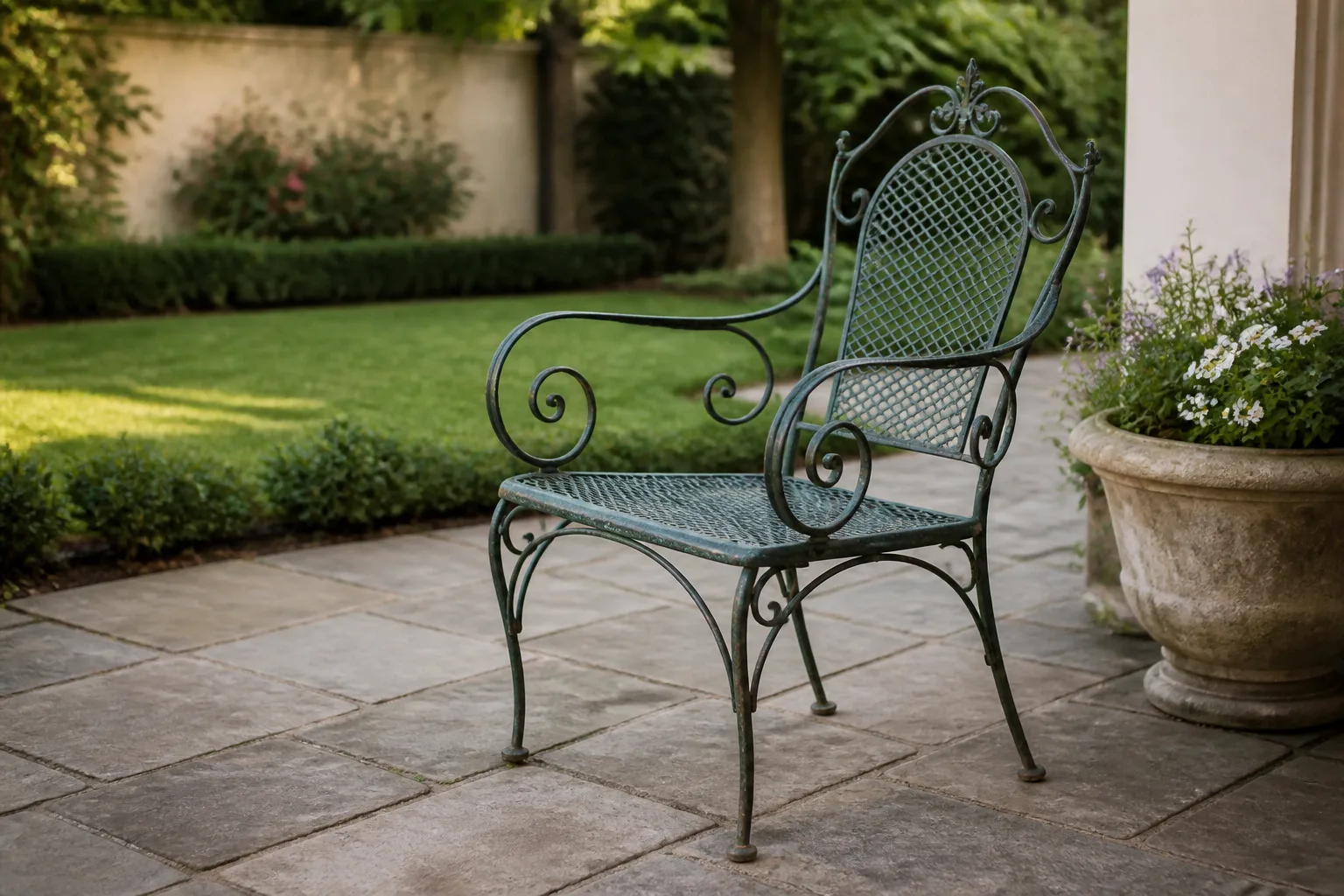
11. Choose patterned metal for a light visual accent
An openwork metal bench can add detail without visually blocking a small courtyard. Painted iron feels traditional beside brick, clipped hedges, or an older house; a simple powder-coated frame can look cleaner beside modern paving. A patterned back casts shadows that change through the day, so the bench can act as sculpture as well as seating. Landscape designers interviewed by Martha Stewart recommend considering how a metal finish relates to nearby color and texture rather than choosing a color in isolation.
Check the finish and the ground where the bench will sit. Scratches can expose metal to rust, and feet placed directly on wet soil may corrode sooner than feet on a firm dry pad. Dark metal in full sun may become uncomfortable to touch, while delicate scrollwork can be hard to wipe down. For a bench, look for the same open profile with a seat length that fits the intended number of people.
12. Let a slatted wood bench blend into the planting
A wood bench is a natural fit beside a fence, woodland edge, or relaxed flower border because its grain repeats the garden’s organic textures. Slats can let rain drain off rather than pool on a solid seat, and the gaps make leaves easier to clear. Choose the wood species, finish, and care plan together: “outdoor” does not mean maintenance-free, and some finishes need periodic attention to keep a particular color or level of protection.
Bob Vila’s bench roundup, for example, notes that teak can be left to weather toward gray or maintained with oil for a warmer color; the practical choice is whether you like the aged look enough to leave it alone. Bob Vila’s garden bench examples illustrate several wood profiles and finishes. Place the bench where it will dry between rains, lift the feet off perpetually wet ground, and avoid burying the lower rails in mulch. A simple bench that ages honestly is often easier to live with than a painted one that needs frequent touch-ups.
13. Make stone or concrete a permanent garden feature
A stone or concrete bench has visual weight, which can be an advantage at the end of a path or against a low wall. It will not blow around in a storm and can make a garden feel settled, especially where the same stone appears in steps or edging. But heavy seating is an installation decision: plan access for delivery, prepare a stable base, and settle on the position before the material arrives. It is not a piece you can slide aside when you want to change the layout.
Hard surfaces can feel cold in a shaded garden and become hot in strong sun. A small wood cap or cushion can improve comfort, but fabric needs a dry place when not in use. Match the stone tone to nearby paving or masonry rather than trying to duplicate a material that is almost—but not quite—the same. If the garden is still evolving, start with a portable bench and use stone as a permanent feature only after you have lived with the proposed spot through a season.
14. Fit a compact armless bench into a narrow space
A narrow side yard, balcony, or strip beside a fence may not have room for a deep, high-backed bench. An armless design can fit where a larger seat would block a gate or passage, and it can be turned toward a container display or small border. Measure the bench at its widest point, including any angled legs or back, then mark the footprint and open nearby doors and gates. The usable clearance matters more than the catalog’s nominal width.
Compact seats are best for a short pause, not necessarily a long reading session. If the location is exposed, a slim bench may need to be secured against tipping or moved during high winds. A folding version can be stored when the balcony becomes a work area, but test the latch and feet for stability before regular use. Keep the path from the house to the garden clear rather than making every spare inch into a seat.
15. Choose storage or movable seating for flexible use
A storage bench earns its footprint if you truly need a place for cushions, children’s outdoor toys, or small garden accessories. Choose one with a lid that stays open safely, a dry floor, and enough ventilation that damp textiles can dry rather than stay sealed inside. Check the maker’s load rating before treating the lid as a seat, and keep sharp tools, chemicals, or anything a child could misuse in secure storage elsewhere.
If flexibility matters more than storage, choose a light bench that one person can move without dragging it across the patio. A portable seat lets you follow spring sun, summer shade, or a garden event, and it is a good trial piece before building anything permanent. The trade-off is stability: lightweight frames can shift on uneven ground, so set the feet on a firm surface and bring the bench in during strong winds. One adaptable seat often serves a small yard better than several fixed pieces that compete for room.
Choose and place the bench before buying
Start with the job. A seat for taking off muddy shoes needs to be close to a door and easy to clean; a reading bench needs a comfortable back, useful shade, and a view that will hold your attention; a conversation bench needs enough room for people to face one another. Those jobs point toward different shapes. A bare backless plank is simple and visually quiet, but it is not the most supportive choice for someone who wants to sit for an hour.
Then check access and the surface. The U.S. Access Board’s guide for outdoor developed areas says that, where its standards apply, a bench needs nearby clear ground space; it also notes that back support and at least one armrest can help people who need support when standing up. The guide is for defined outdoor recreation settings, not a blanket code for private residential gardens, but its advice is a useful home-design prompt: keep a firm approach, do not block the route, and consider how a visitor will transfer into or out of the seat. U.S. Access Board guidance on outdoor benches explains the relevant clear-space and support considerations.
Test the footprint, route, and sunlight
Use painter’s tape, a garden hose, or cardboard to mark the seat’s full footprint and the room needed to walk around it. Sit in an existing chair at that spot at the time of day you expect to use the bench. Look toward the view from a seated height, open the nearby gate, carry a watering can through the route, and check whether standing rainwater, sloping ground, or an overhanging branch will make the site uncomfortable. The RHS likewise recommends measuring the garden and noting sunlight before committing to a fixed plan; it is much cheaper to shift a mark on paper than to move a finished patio.
For an inclusive setup, look at the whole arrival, not just the seat. A level, firm path and an open area beside the bench can matter as much as the bench itself. The Access Board’s outdoor guide uses a 36-by-48-inch clear ground space beside certain benches in covered recreation settings and explains how a backrest and an armrest can support people getting up. Treat those figures as context-specific guidance, not a universal residential requirement; local building rules and the needs of the people using your yard should determine the final design.
Match bench material to weather and care
| Material | Works well when | Check before choosing |
|---|---|---|
| Wood | You want a warm, natural look that can blend into beds, fences, or a deck | Ask how the species and finish should be maintained; keep feet and joints from sitting in wet soil |
| Painted or coated metal | You want a defined silhouette, color, or openwork detail | Inspect the coating, protect scratches, and consider heat in full sun |
| Stone or concrete | You want a stable focal point that will stay put | Plan the base, delivery, and permanent location; test the surface temperature and comfort |
| Resin or recycled plastic | Easy cleaning and low routine upkeep matter most | Check structural quality, load rating, color stability, and whether the look suits the garden |
| Built-in masonry or timber | You need seating at a wall, bed, or patio edge | Confirm the structure can carry sitting loads and make sure the finished seat is comfortable before construction |
There is no universally best outdoor bench material. Rain, salt air, frost, intense sun, and nearby irrigation all change how a finish ages, and the local manufacturer’s care instructions are more useful than a generic claim that a material is “weatherproof.” If you want a natural patina, choose a finish you are happy to let age; if you want a consistent color, budget time for maintenance. The designers quoted in Martha Stewart’s garden bench feature point to the value of relating seat color and texture to the home and planting, while Bob Vila’s examples show how a wood finish can be allowed to weather or maintained for a different appearance. Those sources offer style context, not a guarantee of lifespan.
The seat itself should feel right to the person who will use it. Test the height, depth, back angle, armrests, and edge shape in person if possible; a beautiful bench is still a poor choice if it is too low to stand from comfortably or too deep for the intended user. Cushions can help but add storage and drying chores. If a seat is meant for several people, check its stated capacity and make sure it sits level on a stable base rather than relying on soft lawn to hold it.
Conclusion
The strongest garden bench idea is the one that gives a real purpose to a specific part of the yard. Use a small seat near a door for daily stops, a path-end bench to create a destination, an arbor or planters to make a nook, or a built-in seat when the wall or bed already needs to be there. Then consider who will use it, how the weather reaches it, and whether you are willing to maintain or move it.
Before spending money, mark the footprint, sit in the proposed position, and test the route at the time of day you want to be outside. If the view, footing, and approach feel right, choose a material that suits your maintenance habits and local weather. That short trial turns inspiration into a seat you will actually use.