How to Care for a Fiddle Leaf Fig Indoors
Learn fiddle leaf fig care indoors: choose light, water by root-zone dryness, manage humidity, repot safely, prune, propagate, and fix leaf problems.

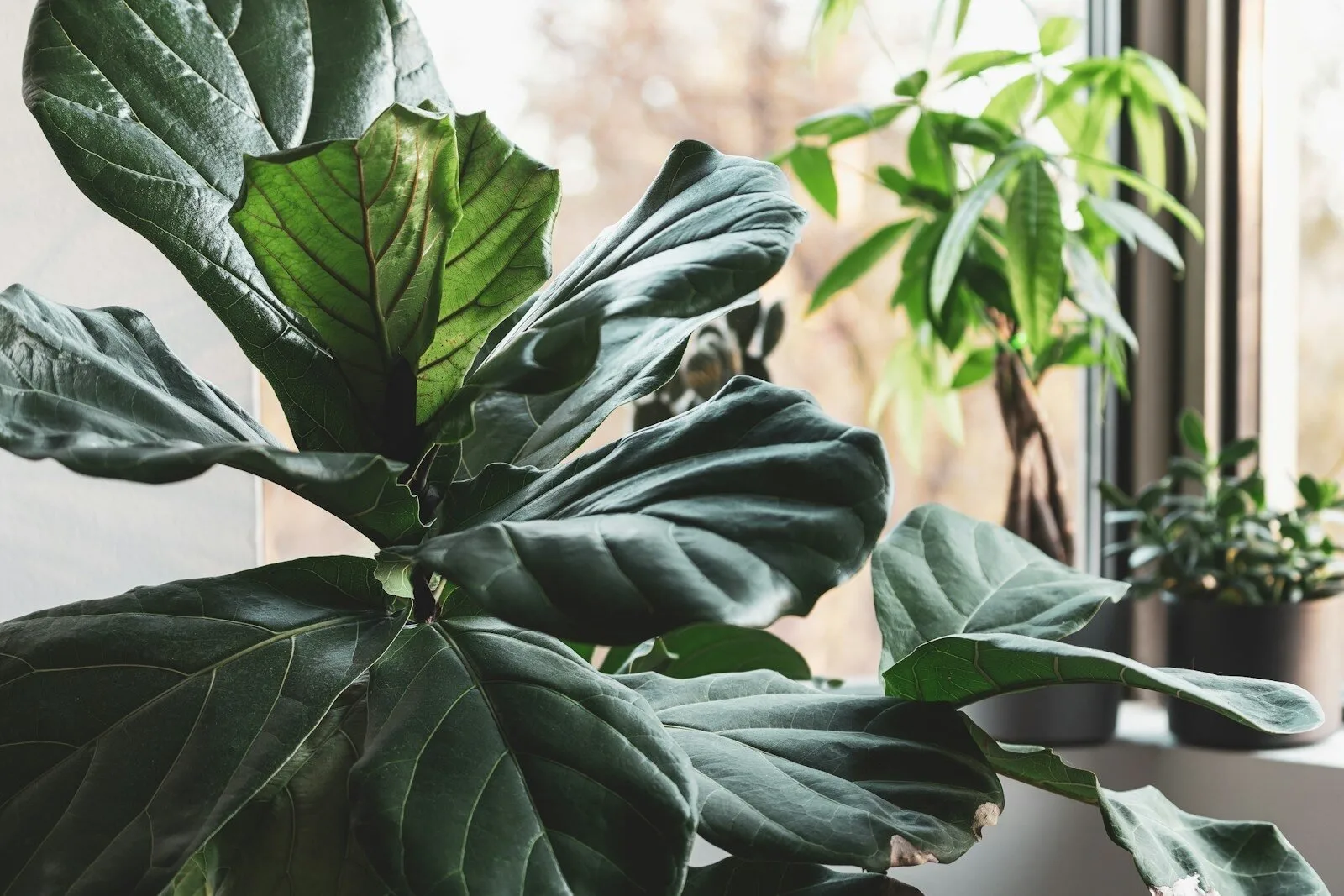
Fiddle leaf fig care is mostly an exercise in stability. Give Ficus lyrata bright usable light, let the root zone partly dry before you water again, keep the pot draining, and resist changing five things at once when a leaf looks unhappy. In return, this tropical evergreen can become a tall, architectural houseplant with broad, violin-shaped leaves; NC State Extension describes indoor plants commonly reaching 2 to 10 feet.
The most useful rule is to read the plant and its pot together. A limp leaf does not automatically mean thirst, and a brown spot is not automatically a disease. The sections below turn “bright indirect light” and “water consistently” into checks you can actually make in an apartment, office, or sunny room.
What Fiddle Leaf Fig Care Is Really Trying to Balance
In its native tropical western and central Africa, Ficus lyrata is a much larger tree than the specimen sold for a living room. Missouri Botanical Garden lists the outdoor tree at 60 to 100 feet in its native range, while indoor plants usually stay closer to a manageable 2 to 10 feet. That difference explains why an indoor fig needs strong light but also a container that controls the roots, water, and final size.
Think of care as four linked controls rather than a checklist of isolated chores:
| Control | What you are aiming for | What throws it off |
|---|---|---|
| Light | Bright filtered light reaching the whole canopy | A dark corner, hot afternoon glass, or a sudden move |
| Water | A thorough drink followed by partial drying | Tiny sips, soggy mix, or a calendar-only routine |
| Roots | Airy mix in a pot with an open drainage path | Compaction, an oversized pot, or a cachepot holding runoff |
| Environment | Warm, moderately humid, steady conditions | Vents, cold windows, heating, and frequent relocation |
The plant does not need a perfect number for every factor. It needs a setup in which the root ball can take up water without staying airless, and the leaves can replace lost moisture without being scorched or chilled. That is why correcting light before increasing fertilizer often produces a better result.
Choose a Healthy Plant and a Stable Home
When buying a fiddle leaf fig, inspect the undersides of leaves, the newest growth, and the pot itself. Look for firm stems, evenly colored foliage, no fine webbing or cottony clusters, and a pot that is not standing in a saucer of water. A few old cosmetic marks are less concerning than fresh spots spreading across several leaves.
Decide where the plant will live before you bring it home. A bright east window is often an easy starting point; a south or west window can work if the plant is protected from harsh afternoon heat and introduced gradually. Leave room for the canopy, keep it away from forced-air vents and frequently opened exterior doors, and use a heavy, stable pot or a support stake if the trunk leans.
Do not rotate or relocate the plant every few days in search of a perfect angle. A quarter-turn every week or two is reasonable once the plant is settled, but a move from a greenhouse to a dim corner—or from filtered light into full afternoon sun—is a change the plant needs time to absorb.
Get the Light Right at Leaf Level
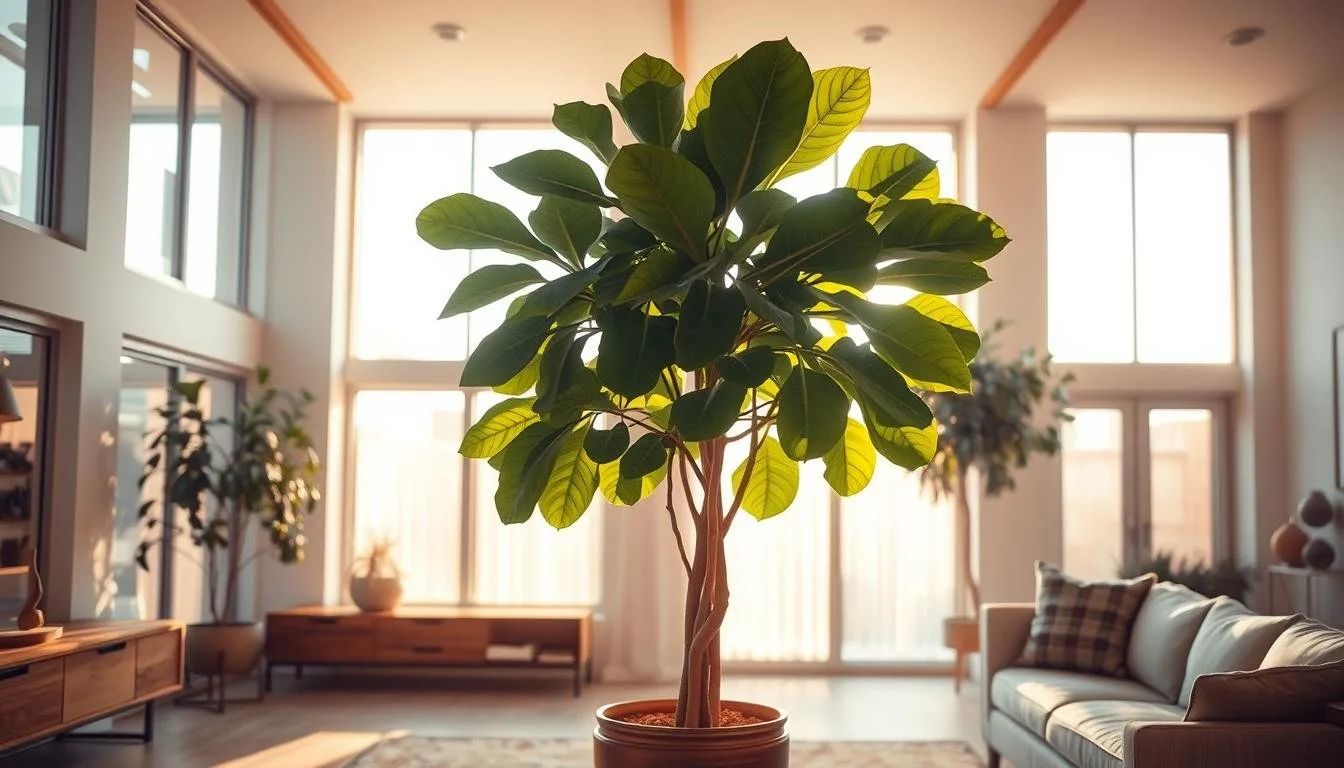
Fiddle leaf figs need more light than their reputation for tolerating “indirect light” sometimes suggests. NC State Extension and the RHS both place the species in bright or filtered light and caution that conditions must remain well drained and sheltered; indoors, that usually means placing the plant close to a bright window rather than across the room.
The safest target is bright light through much of the day with the canopy protected from the hottest direct rays. An east-facing window often supplies gentle morning sun. For a south- or west-facing window, sheer curtains, a small offset from hot glass, or a gradual acclimation period can prevent bleached patches and leaf scorch.
Watch the plant’s growth pattern instead of judging the room by eye. Long gaps between leaves, a canopy leaning toward one direction, smaller new leaves, and soil that stays wet for an unusually long time all suggest that the plant may not be receiving enough usable light. Weak light is especially risky because it slows water use while owners continue watering on the schedule they used in summer.
If winter light is poor or the plant must sit far from a window, a grow light can supplement the canopy. Keep it close enough to be useful, follow the fixture’s distance guidance, and change only one variable at a time so you can tell whether new growth improves.
Acclimate a Nursery Plant to Stronger Light
Never assume a plant grown under greenhouse shade is ready for several hours of intense sun behind glass. Start with bright filtered light, then add a little gentle morning sun every few days if the leaves remain comfortable. Epic Gardening makes the useful point that these plants can adapt to different light levels, but the move between them is where stress occurs.
If a pale tan patch appears on the window-facing side soon after a light change, move the plant back from the glass or filter the light; that tissue will not turn green again. If the plant is simply growing slowly in dim conditions, increase usable light before pruning, repotting, or feeding.
Water by Root-Zone Dryness, Not the Calendar
There is no reliable “every Sunday” interval for every fiddle leaf fig. Pot diameter, soil texture, light, temperature, season, and root density all change how quickly the mix dries. Missouri Botanical Garden recommends regular watering during the growing season while warning against overwatering and reducing water from fall through late winter.
Let the upper few inches of mix dry before watering again, then water slowly and thoroughly until excess comes from the drainage holes. The goal is not to keep the surface permanently damp; it is to wet the full root ball and then give the roots an interval with air-filled spaces. Empty the saucer or cachepot once drainage stops.
Do not use a small cup every few days as your default method. It can leave the center of a large root ball dry while keeping the surface and lower edges in an unpredictable cycle of wet and dry. A full drink followed by a measured wait is easier to evaluate.
Use Three Checks Before You Water
Use these checks together, especially with a large floor plant:
- Push a finger or wooden skewer a couple of inches into the mix near the center of the pot. If it still feels cool and moist at that depth, wait and check again in a few days.
- Lift or tilt the pot when you know it is freshly watered, then compare that weight later. A noticeably lighter pot supports the moisture check; it does not replace it.
- Notice the drainage. Water that runs straight through every time can indicate a channel or a shrunken, hydrophobic mix, while water that barely exits can indicate compaction or blocked holes.
Wilting is a clue, not a verdict. If the mix is dry and the pot is light, water deeply. If the leaves are limp while the mix is wet, inspect the roots and drainage instead of adding more water; damaged roots can leave a plant thirsty even in saturated soil.
Build the Right Soil, Pot, and Drainage Setup
Use a well-draining, airy indoor mix that holds some moisture without collapsing into a dense block. A quality houseplant mix amended with perlite and a little chunky bark is a practical starting point, but the exact recipe matters less than the finished texture: water should move through the pot, and roots should not sit in a sealed, muddy layer.
Choose a container with a real drainage hole. A decorative pot without drainage can still be a cachepot, but the growing pot must be removed for watering and allowed to drain before it goes back inside. UF/IFAS lists fiddle leaf fig as a container and patio plant and emphasizes well-drained soil; the same principle applies indoors.
Avoid jumping to an enormous pot because the plant is tall. A large volume of unused mix stays wet longer than a filled root ball, especially in a dim room. A modest increase in pot size is usually easier to manage, and a stable support is often a better fix for a top-heavy fig than extra soil around its roots.
Keep Temperature and Humidity Steady
Aim for a warm, steady room rather than a plant that swings between extremes. Epic Gardening places preferred indoor temperatures around 60 to 75°F and moderate humidity around 40% to 60%; NC State Extension also notes that fiddle leaf figs perform best above about 55°F and in medium relative humidity.
The practical lesson is to inspect placement when leaf drop follows a seasonal change. A plant beside a heater, air-conditioning outlet, cold pane, or drafty door can react even if the thermostat reading looks acceptable. Move it only once, gradually if light changes too, then give it time to settle.
Misting is not a dependable way to raise room humidity. It wets the leaf surface briefly but does not stabilize the air around a large canopy. A hygrometer and a small room humidifier are more measurable options; grouping plants can help modestly, while a pebble tray should keep the pot above the waterline rather than turning the root ball into a standing-water container.
Feed Only When Growth Can Use It
Fertilize during active growth, usually spring and summer, when the plant has adequate light and is producing or holding new leaves. A balanced houseplant fertilizer or a formula modestly higher in nitrogen can support foliage, but more fertilizer cannot compensate for dim light, rotted roots, or a recent move.
Use the product label as the upper limit and err on the restrained side when the mix is fresh. Pause feeding when the plant is in shock, newly repotted, or declining for an unknown reason. If a crust forms on the soil or leaf margins brown after repeated feeding, flush the pot thoroughly with plain water only if drainage is excellent, then reassess the fertilizer strength and watering quality.
Prune for Shape, Support, and New Branches
Prune to solve a clear structural or aesthetic problem, not because a stressed plant needs “more care.” Remove dead leaves and damaged tissue with clean, sharp pruners. For a taller single-stem plant, a cut just above a healthy node during active growth can interrupt the top’s dominance and encourage buds below the cut to grow, although branching is never instant or guaranteed.
The RHS lists fiddle leaf fig propagation by semi-hardwood cuttings and pruning as part of its culture guidance, while UF/IFAS notes that corrective pruning helps develop stronger structure in outdoor trees. Indoors, make smaller cuts and keep the plant’s light and root health strong before attempting a major reshape.
Expect milky sap from a cut stem. Wear gloves, keep the sap away from eyes and broken skin, wipe tools clean, and do not prune a plant that is already severely wilted or declining unless removing a dead section is necessary.
Repot Only When the Root Ball Needs It
Repotting is not a yearly performance review. Do it when roots are densely circling, escaping through drainage holes, the mix has broken down and stays wet, water rushes through without wetting the root ball, or the plant has become unstable in its container. A young, fast-growing plant may need attention sooner than a mature tree that is still draining and growing normally.
Choose a clean pot only modestly wider than the current root ball, preserve the planting depth, and use a mix similar in texture to the old one. A dramatic change in pot size, soil, location, and light on the same day makes it difficult to separate transplant shock from a care mistake.
Follow a Low-Shock Repotting Sequence
Water a day or two before repotting if the mix is extremely dry, but do not repot a waterlogged plant simply because the calendar says spring. Slide the plant out while supporting the trunk and root ball, then inspect what you can see before disturbing anything.
- Cut away only dead, black, or mushy roots; leave firm, pale or tan roots in place.
- Set the root ball at the same depth in a pot with an open drainage hole.
- Fill around it with airy mix, firming gently so the trunk is stable without compressing the soil.
- Water thoroughly once, let the pot drain, and return it to a familiar bright location.
- Hold fertilizer for several weeks and watch moisture more closely while the smaller root ball settles into the new container.
Yellowing or a dropped leaf after repotting does not automatically mean the procedure failed. Keep the conditions steady, check the mix before watering, and look for new growth or worsening root symptoms rather than reacting to one old leaf.
Propagate from Stem Cuttings
Fiddle leaf figs can be propagated by stem cuttings or air layering, but they are slower and less forgiving than pothos or many soft-stemmed plants. A leaf by itself will not make a new tree; the cutting needs a stem section with at least one viable node. This distinction is also highlighted in Epic Gardening’s propagation guidance.
Choose a healthy, actively growing parent plant. Propagation is a poor rescue strategy for a fig with soft stems, widespread root rot, or severe dehydration because the cutting inherits the parent’s stress and the parent loses valuable foliage.
Choose Between Water, Soil, and Air Layering
Water propagation lets you see roots develop and makes it easy to notice rot, but the cutting must later adjust from water roots to potting mix. Soil propagation avoids that transition, yet the hidden root zone is harder to monitor and can rot if the mix remains saturated. Air layering keeps the developing roots attached to the parent, which can be useful for a large branch, but it takes more setup and patience.
For a simple cutting, use clean pruners to take a tip or stem section with multiple nodes and one or two leaves. Remove leaves that would sit below water or mix, allow excess sap to stop flowing, and place the node in clean water or a barely moist, airy rooting mix. Give it warmth, bright filtered light, and ventilation rather than hot direct sun.
If using a clear cover to hold humidity, keep it from touching the leaves and open it regularly. New roots and new growth are better signs of success than a fixed promise about how many days rooting should take. Once a soil-rooted cutting is holding itself and growing, acclimate it gradually to normal room conditions.
Diagnose Brown Spots, Yellow Leaves, Wilting, and Leaf Drop
Large fiddle leaf fig leaves record stress clearly, but the same symptom can have different causes. A brown edge can follow a missed watering, dry air, hot glass, or root trouble; a yellow leaf can be old shade leaf, wet-root stress, or environmental shock. Start with the pattern and the root zone before reaching for fertilizer or pesticide.
Here are useful first interpretations:
- Bleached tan patches on the window-facing surface: likely too much direct sun or a fast light change. Filter or move the plant back, and do not expect damaged tissue to recover.
- Soft dark brown patches, especially low on the plant, with wet mix: inspect drainage and roots for overwatering and rot.
- Crispy brown margins with a dry, light pot: underwatering is more likely; water deeply and correct the interval.
- Fine stippling, webbing, sticky residue, or cottony clusters: inspect undersides and leaf joints for spider mites, scale, mealybugs, or other pests.
- Green leaves dropping after a move: check relocation shock, weaker light, temperature changes, and drafts before you prune.
Use a Symptom-First Decision Path
When the plant looks worse, use this order rather than changing everything at once:
- Ask what changed. Was the plant moved, repotted, rotated into stronger light, placed near a vent, or exposed to a new watering pattern in the last few weeks?
- Check the root zone. Feel several inches down and smell the mix. Wet, sour-smelling soil and mushy roots point in a different direction from a dry, shrunken root ball.
- Read where the damage sits. Window-facing bleached patches suggest light; lower yellowing with wet soil suggests root stress; crispy margins with dry soil suggest moisture loss.
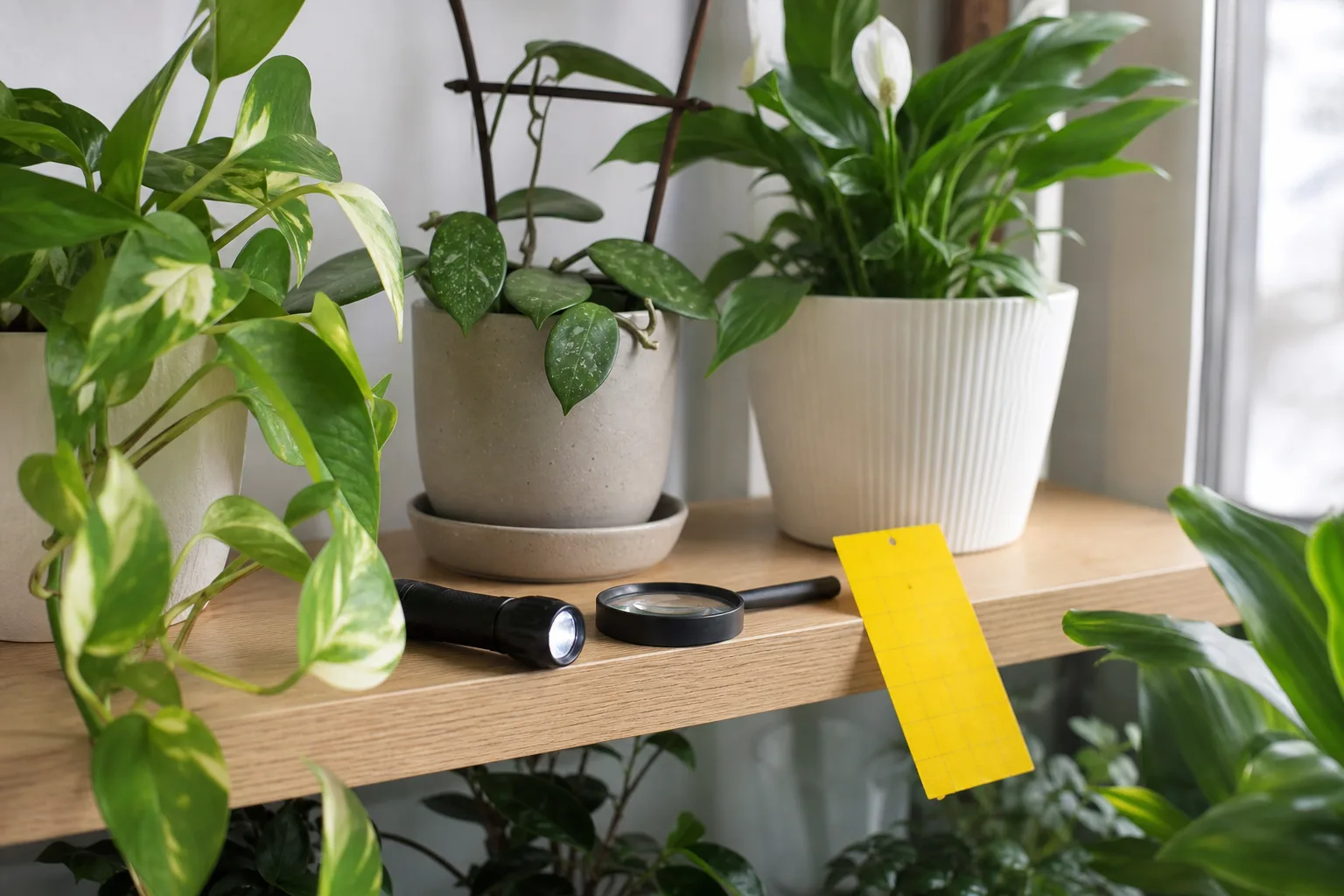
- Inspect pests before spraying. Use a flashlight on leaf undersides, veins, and stem joints. Treat only after you identify a likely pest, and follow the label for any horticultural oil or insecticidal soap.
- Make one primary correction. Improve light, adjust watering, isolate a pest, or repair drainage first. Give the plant time to respond before adding fertilizer or undertaking a major repot.
Brown tissue will not turn green again, so judge the fix by whether new damage stops and new growth looks healthy. If dark spots continue to expand despite corrected watering and stable light, isolate the plant and seek a local extension diagnosis rather than guessing that every spot is root rot.
Control Common Pests Without Creating More Stress
Fiddle leaf figs are not doomed to pest problems, but indoor plants can host scale, aphids, mealybugs, thrips, and spider mites. Missouri Botanical Garden and the RHS both flag common sap-feeding pests, especially under protected or glasshouse conditions.
Isolate a suspect plant, rinse or wipe accessible foliage, and remove heavily infested leaves when appropriate. For a small infestation, physical removal may be enough; for a larger one, use a product labeled for indoor plants and the pest you identified. Keep treated leaves out of harsh sun, never improvise a pesticide concentration, and repeat only as the label directs.
Clean leaves gently with a damp, soft cloth so dust does not hide pests or block the leaf surface. Avoid oily “shine” products and aggressive scrubbing: the goal is clean foliage, not a polished coating that can irritate or mark the leaves.
Handle Sap and Pet Safety Carefully
The milky sap of Ficus lyrata can irritate skin, and NC State Extension lists the plant as toxic if ingested by people, cats, or dogs, with possible oral irritation, drooling, or vomiting. Keep the pot away from pets and children who chew leaves, and wear gloves when pruning, repotting, or taking cuttings.
If a person or pet eats part of the plant, do not wait for symptoms or attempt a home remedy. Contact a veterinarian, poison-control service, or medical professional promptly and provide the plant’s common and botanical name.
Conclusion
The reliable way to care for a fiddle leaf fig is to make the root zone and the room predictable. Put it in bright filtered light, acclimate it before stronger sun, water deeply only after the upper mix has dried, and keep the pot draining freely. Stable warmth, moderate humidity, restrained feeding, and clean leaves then do more for long-term growth than a shelf full of corrective products.
When a leaf changes, pause before reacting. Check what changed, inspect the soil and roots, read the damage pattern, and make one targeted correction. That calm sequence is what turns Ficus lyrata from a dramatic impulse purchase into a thriving, long-lived indoor tree.