How Often to Reseed Your Lawn (and When to Wait)
How often should you reseed your lawn? Use three signs, grass-type timing, soil-temperature checks, and a practical plan for thicker turf.
If you are asking how often to reseed your lawn, the most honest answer is not “every year.” Reseeding, commonly called overseeding, is a response to thinning turf and the conditions causing it. A dense lawn in the right grass type may go several seasons without new seed, while a cool-season lawn exposed to heavy traffic may benefit from an annual fall pass while it recovers.
The timing matters just as much as the interval. Cool-season grasses usually have their best seeding opportunity in late summer to early fall, while warm-season grasses are seeded in late spring or early summer. The sections below give you a simple frequency rule, three signs to watch for, and a complete process that protects the seed after it goes down.
Quick answer: reseed by lawn condition, not by calendar
Inspect your lawn at the end of its most stressful season, then reseed during the next suitable growth window if the turf is thin, bare soil is visible, or weeds are colonizing open spaces. For a healthy cool-season lawn, that may mean overseeding every two to three years or simply waiting until thinning appears; for a heavily used lawn, it may mean once a year until density returns. Warm-season lawns often need it less frequently because many spread through rhizomes or stolons and can fill small gaps on their own.
Think of reseeding as a density tool, not a yearly chore. New seed cannot compensate for deep shade, standing water, compacted soil, active disease, or the wrong grass for your climate. Penn State Extension’s seasonal turf guidance lists overseeding as one part of seasonal turf management and emphasizes that seed needs direct soil contact and room to germinate; that principle is more important than any generic schedule.
Cool-season lawns
Tall fescue, fine fescue, Kentucky bluegrass, and perennial ryegrass are cool-season grasses. They grow most strongly during the cooler parts of the year, so late summer to early fall is usually the best time to overseed: the soil is still warm enough to start germination, air temperatures are easing, and seedlings have fall and spring growth ahead of the next major summer stress.
Use an annual pass only when the lawn has a reason for it, such as repeated dog traffic, sports, winter damage, or a recent recovery from drought. If the lawn is already dense and the grass is well matched to the site, reseeding every year can create unnecessary competition, extra watering, and wasted seed. A fall inspection is a better habit than an automatic annual purchase.
Spring is a workable fallback for some cool-season lawns, but it is usually less forgiving. Weed competition rises as temperatures climb, and seedlings may face summer heat before they have built a strong root system. Penn State Extension notes that spring overseeding is possible when conditions are favorable, but late-summer or early-fall seeding is generally the more reliable window for establishment.
Warm-season lawns
Bermudagrass, zoysiagrass, centipedegrass, and bahiagrass grow most actively in warm weather. Seed them in late spring to early summer after the soil has warmed and while enough growing season remains for the seedlings to establish before cool weather arrives. A warm-season lawn seeded too early may sit in cold soil; one seeded too late may not develop enough roots before dormancy.
Warm-season turf often needs reseeding on an as-needed basis rather than every year. Rhizomes and stolons can spread into small thin spots when the lawn is actively growing, so first correct mowing, sunlight, watering, and compaction problems and give the existing grass a chance to fill in. St. Augustinegrass is generally established with sod, plugs, or sprigs rather than ordinary seed, so identify the grass before you buy a bag labeled for a warm-season lawn.
The 3 signs it is time to reseed
The three most useful signs are changes in density, competition, and recovery. Do not judge from one brown patch alone: drought, insects, disease, mower damage, and a temporary dormant period can all look like a reseeding problem. Walk the lawn, look at several representative areas, and decide whether the grass is missing or merely stressed.
1. Thin turf exposes soil
Healthy turf should close over the soil so that you see mostly blades and stems at normal mowing height. If you can see dark soil between plants across broad areas, footprints expose dirt, or sunlight reaches bare ground in the spaces between clumps, the lawn has lost density. That is the clearest signal that new grass could improve the stand—provided the cause of the thinning is also addressed.
Do not confuse normal seasonal color change with a thinning stand. Cool-season grass may slow during summer heat, and warm-season grass may go dormant in cold weather; a lawn can look less green without actually losing plants. Check for living crowns and roots, compare several spots, and look again when the grass is in its active growing period.
Small isolated spots can often be repaired without treating the whole yard. If thinness is widespread but most of the existing lawn is healthy, overseeding the whole area gives the new grass more consistent care and reduces the visual mismatch that can result from spot repairs.
2. Weeds are filling the gaps
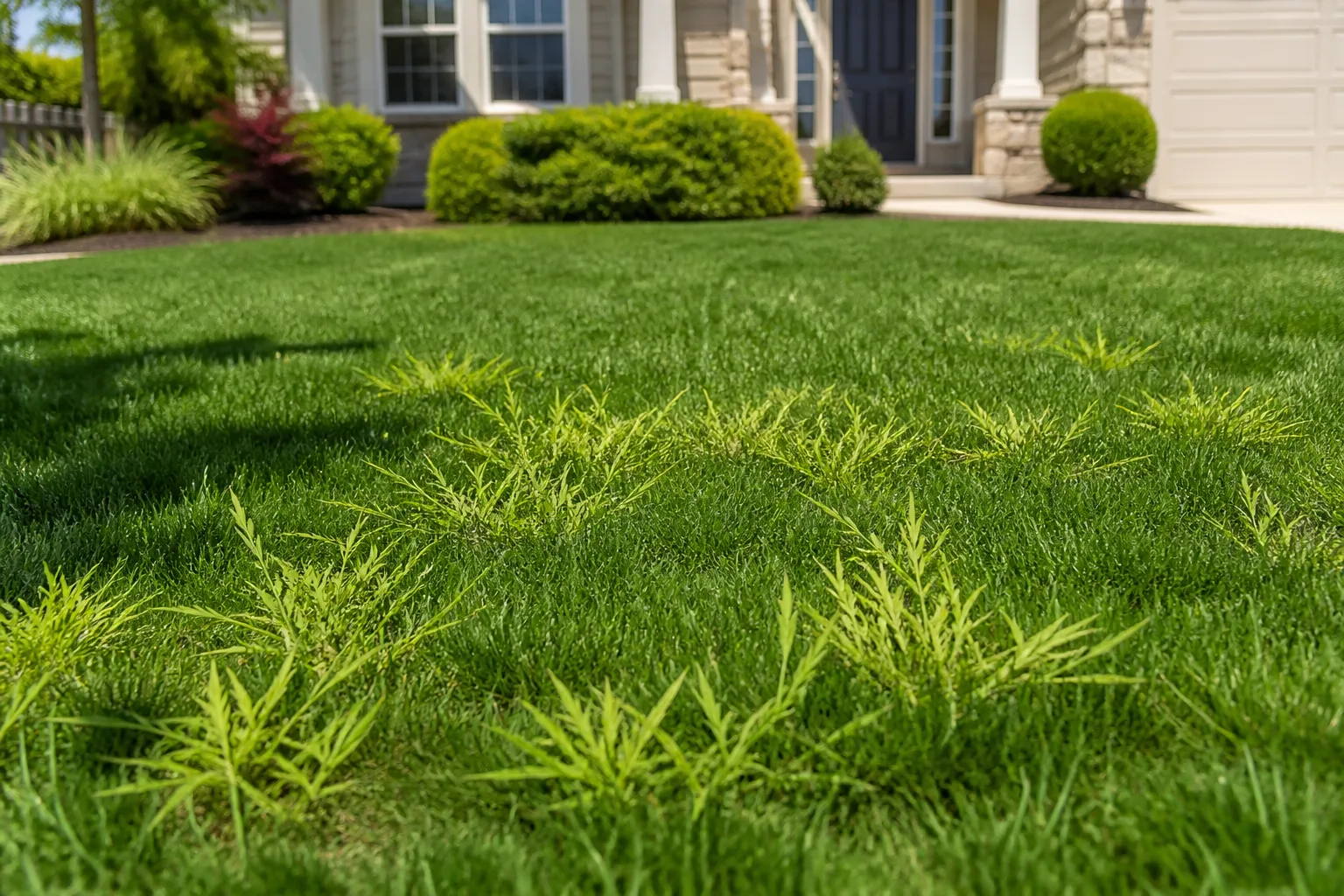
A few weeds do not automatically mean the lawn needs seed. But when crabgrass, broadleaf weeds, or volunteer plants appear in clusters where turf has opened up, the weeds are using the space that grass no longer occupies. A dense stand shades much of the soil; a thin stand leaves light, moisture, and room for weed seedlings.
Penn State Extension describes indicator weeds as clues to conditions that favor weeds but disadvantage turf. That makes weeds a reason to investigate, not simply a reason to scatter more seed. Pull back from the patch and ask what changed: did foot traffic compact it, does a downspout keep it wet, does a tree block the light, or did drought kill the grass before the weeds arrived?
Control existing weeds in a way that is compatible with your seeding date. Many pre-emergent products also prevent grass seed from germinating, and post-emergent products can have their own waiting periods. Read the exact product label and do not assume that a weed-control application and an immediate overseeding are compatible.
3. Grass recovers slowly after stress
Temporary damage should improve when the weather and care improve. If a worn path remains open after regular mowing resumes, a drought-stressed section fails to thicken after adequate irrigation, or the lawn stops spreading into small gaps during its active season, the stand may be too thin to repair itself.
Recovery speed is especially informative after heavy use. A healthy lawn may be flattened by a party or a season of play and still rebound; a lawn that stays open week after week may need more plants. Reseeding adds those plants, but it will not stop the same traffic from killing them again unless you change the route, rest the area, or choose a more wear-tolerant grass blend.
Treat slow recovery as a prompt to diagnose rather than a command to seed immediately. If the entire lawn is pale, if damage is in expanding circles, or if roots pull up easily, you may be looking at nutrition, insects, disease, or water management rather than a simple density gap.
Diagnose the cause before you buy seed
The most expensive reseeding mistake is paying to grow grass in a place that still cannot support it. Before shopping, make a short site diagnosis: identify the existing grass, note the hours of direct sun, check whether water drains, inspect the soil surface for compaction or thatch, and mark whether the damage follows traffic, shade, irrigation coverage, or a disease pattern.
Compaction, shade, drought, pests, and disease
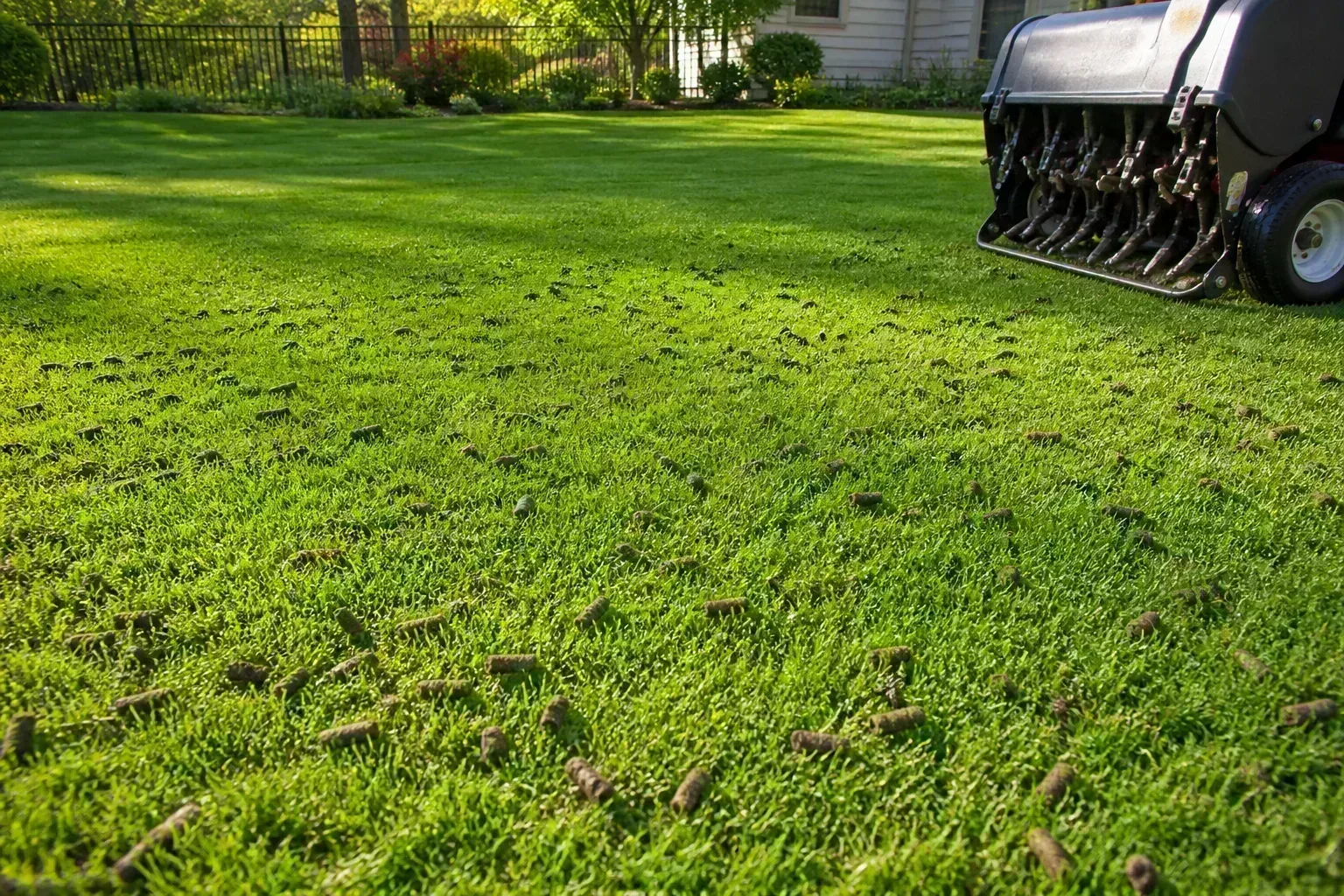
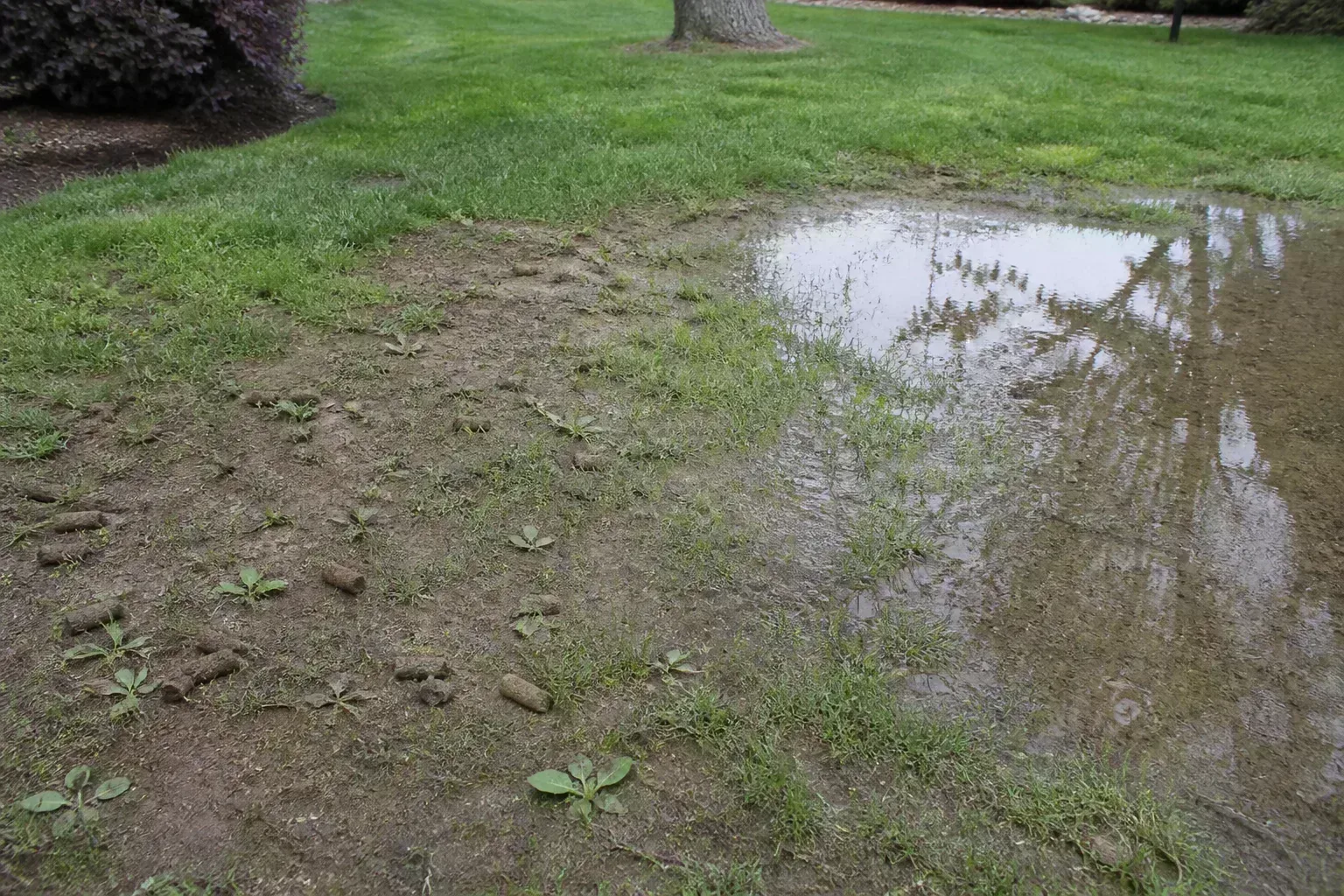
Compaction is likely when soil is hard, water runs off instead of soaking in, puddles form after ordinary rain, or thinning follows a walkway or play area. Core aeration can open channels for water, air, and roots, but do it only when the turf is actively growing and the soil is moist enough for the tines to penetrate—not saturated and not baked hard. Penn State Extension distinguishes core aeration, which removes plugs, from solid-tine poking that may do little to relieve dense soil.
Shade is a light problem, not a seed shortage. If a lawn under a mature tree receives only a few hours of weak light, even a shade-tolerant blend may remain thin. Prune only where it is safe and appropriate, improve the light if possible, or accept a different groundcover or bed in the darkest area. Do not keep reseeding a spot that the site cannot support.
Drought or uneven irrigation leaves dry edges, crisp turf, or damage concentrated beyond a sprinkler’s reach. Improve coverage and water deeply enough for the established lawn before seeding. New seed needs a consistently moist surface, so do not start the job unless you can keep up with the more frequent watering that germination requires.
Pests and disease need identification before treatment. Root-feeding insects can loosen or kill sections of sod, while fungal problems may expand under humid, wet, or overfertilized conditions. Mark the edge of a suspicious patch and watch whether it grows; if the pattern is spreading, the soil stays wet, or you find insects at the crown or roots, contact a local extension office or turf professional before reseeding. New seed placed into an active problem can fail for the same reason the old grass failed.
Choose the repair: spot seed, overseed, or renovate
Use spot seeding for a few small, clearly understood gaps. Loosen the surface, add compatible seed, keep it moist, and protect the spot from traffic. This is efficient when the surrounding turf is vigorous and the cause is local, such as a removed shrub, a single pet-worn corner, or a small area of winter salt damage.
Use overseeding when living grass still occupies most of the lawn but the stand is thin across a larger area. You add seed over the existing turf after mowing, raking, dethatching only when needed, and aerating compacted soil. This approach keeps the established roots and reduces the bare-dirt period, but the new seedlings must compete with old grass for light and water, so seed-to-soil contact is nonnegotiable.
Choose renovation or a new seeding when the lawn is mostly bare, dominated by weeds, damaged by an unresolved disease or pest, badly graded, or planted with a grass that cannot tolerate the site. There is no magic number that applies to every yard, but when you are trying to make seed compete with more weeds and dirt than healthy turf, starting over can be more honest and more efficient. Renovation is a larger project, so correct the soil, drainage, grade, and grass choice before spreading anything.
Pick seed and set the timing
Start with the lawn you want to keep, not the brightest photograph on a seed bag. Identify whether the existing stand is cool-season or warm-season, then match the new seed to the climate, sun, soil drainage, mowing height, and wear the area receives. A blend is often useful because different cultivars handle shade, drought, or traffic differently, but every component still needs to be compatible with the site.
Do not introduce a fast-germinating grass just because it promises quick color. Perennial ryegrass can be useful in some cool-season blends and for temporary winter color in some warm-season regions, but it may not behave like the permanent turf around it. Read the seed label for purity, germination, weed-seed content, and the recommended rate; a smaller amount of appropriate, fresh seed is better than a large amount of poorly matched seed.
Use soil temperature, not just the calendar
Calendar dates shift with elevation, coastal influence, unusual heat, and late frosts. As a practical check, cool-season seed is commonly timed when soil temperatures are roughly 50–65°F, while warm-season seed generally needs warmer soil around 65–75°F. These are working ranges, not guarantees: measure the soil in the seeding area and use local extension guidance plus the seed label when the readings and calendar disagree.
For a useful reading, insert a soil thermometer about two inches deep in several spots, preferably in the morning, and look for a stable trend rather than one warm afternoon. Gardening Know How suggests waiting until cool-season soil is consistently at least 50°F for spring overseeding, and its fall grass-seeding guidance explains why warm soil plus cooler air makes fall favorable for cool-season establishment. Lawn Love’s timing guide also recommends soil temperature as the deciding check rather than a calendar date.
In much of the northern United States, cool-season lawns are typically seeded from late August into September, with the exact window moving earlier in colder areas and later in milder areas. Purdue Extension gives Indiana homeowners a general cool-season window of August 15 to September 15, with northern parts of the state leaning earlier. That is a regional example, not a universal deadline; your goal is to give seedlings enough active growth before the first hard freeze.
Warm-season lawns are usually seeded after the last frost when the soil is reliably warm and the grass is entering strong growth. Avoid pushing seed into a cool spring or a late summer window that leaves little time before dormancy. If you are in a transition zone, choose the grass that matches the site first; trying to maintain a warm-season and cool-season lawn as if they shared one calendar creates conflicting seeding and mowing demands.
How to reseed a lawn step by step
Once the grass type, cause, and timing agree, plan the job around several calm days without extreme heat, saturated soil, or a damaging storm. Gather the correct seed, a mower, rake, spreader, soil thermometer if available, and a way to water gently and consistently. A soil test is worthwhile when the lawn has repeatedly failed or the soil is unknown; Penn State Extension’s field-improvement checklist calls testing the first step in a field improvement plan because fertilizer and lime decisions should be based on actual soil needs.
Prepare the surface and create seed contact
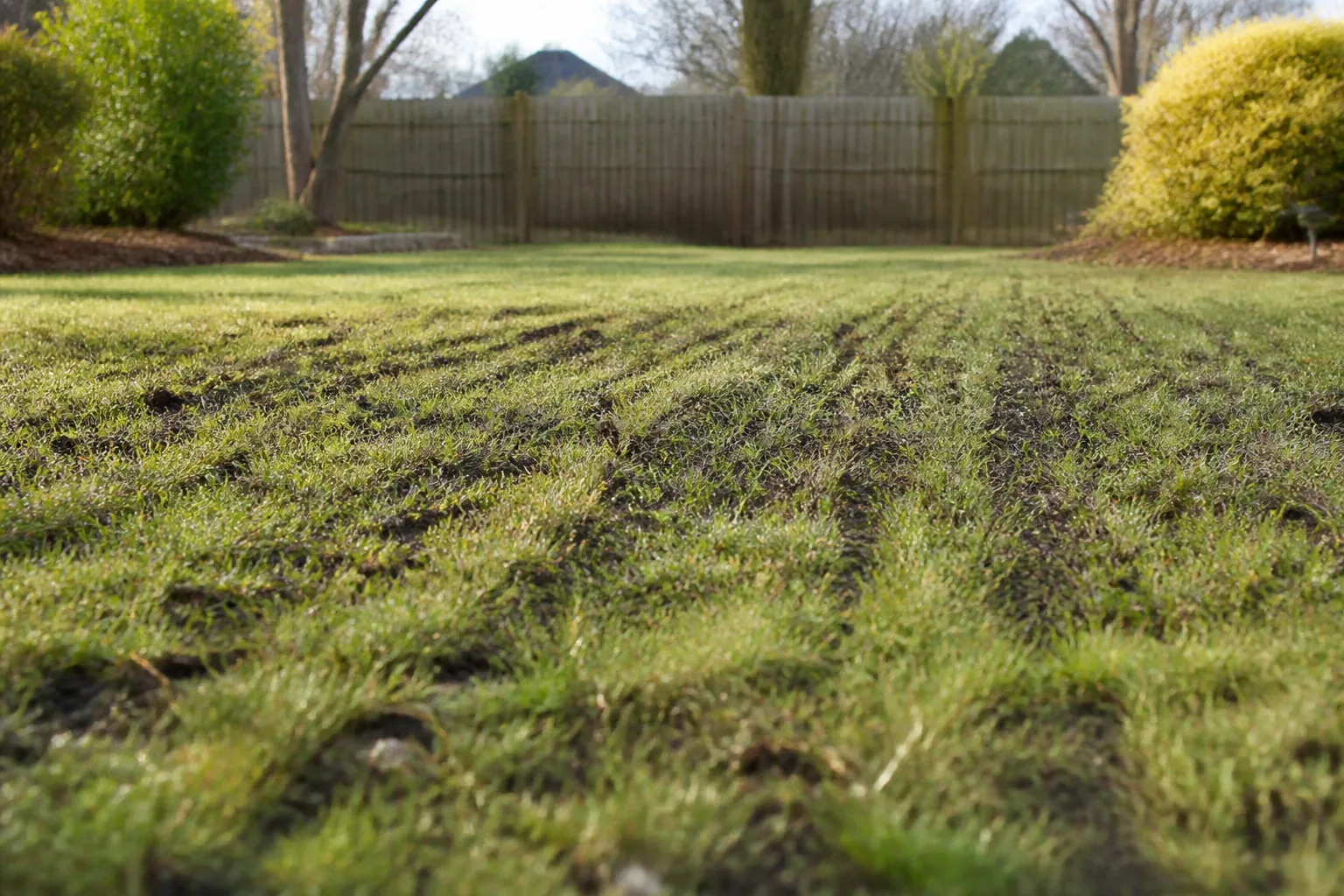
Mow lower than your normal maintenance height just before seeding, but do not scalp the lawn or remove more leaf than the grass can tolerate. For many cool-season overseeding jobs, about 1.5–2 inches exposes enough surface for seed; adjust for your grass type and the seed label. Rake away heavy clippings, leaves, and debris so seed reaches soil instead of resting on a mat of leaves.
Check the thatch layer before reaching for a dethatcher. Thatch is useful in a thin layer, but a thick, tightly woven layer can block water and seed from reaching soil. Penn State Extension recommends mechanical removal when thatch is at least about an inch thick and conditions are cool and adequately moist; it does not recommend dethatching every year or during heat and drought.
Core-aerate if compaction is actually present, using a machine that removes plugs rather than simply poking holes. If the soil is reasonably open, you may only need mowing and raking. A light compost topdressing can help a prepared surface, but do not bury the existing grass. Joe Gardener’s compost guidance recommends roughly a quarter- to half-inch layer, spread thinly enough that grass remains visible, especially when topdressing and overseeding together.
Spread, water, and protect the seed
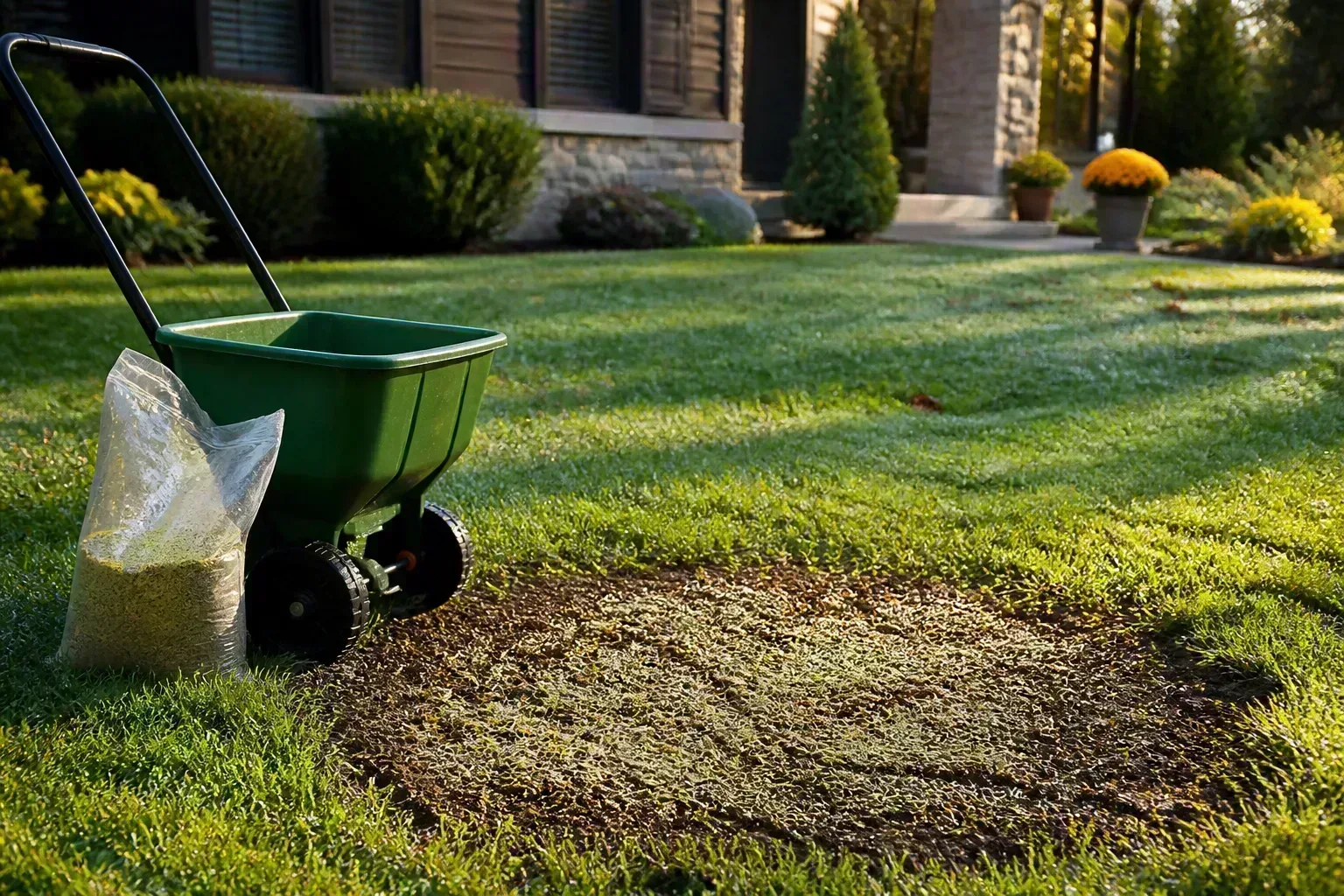
Measure the lawn and set the spreader according to the seed label. Divide the recommended amount into two equal portions: apply one in a north–south pass and the other east–west. This crosshatch reduces the chance that a missed strip or a heavy hand leaves obvious bands, and it is safer than guessing at a higher rate. For tiny patches, distribute seed by hand and press or rake it lightly into the surface.
After spreading, the goal is firm contact with the soil, not buried seed. A light raking or a roller suited to the site can settle the seed; do not bury small grass seed under a thick compost layer. If the area is exposed to drying wind or erosion, a very thin layer of clean, weed-free straw or an appropriate seed mulch can protect it, but heavy cover can block light and hold too much moisture.
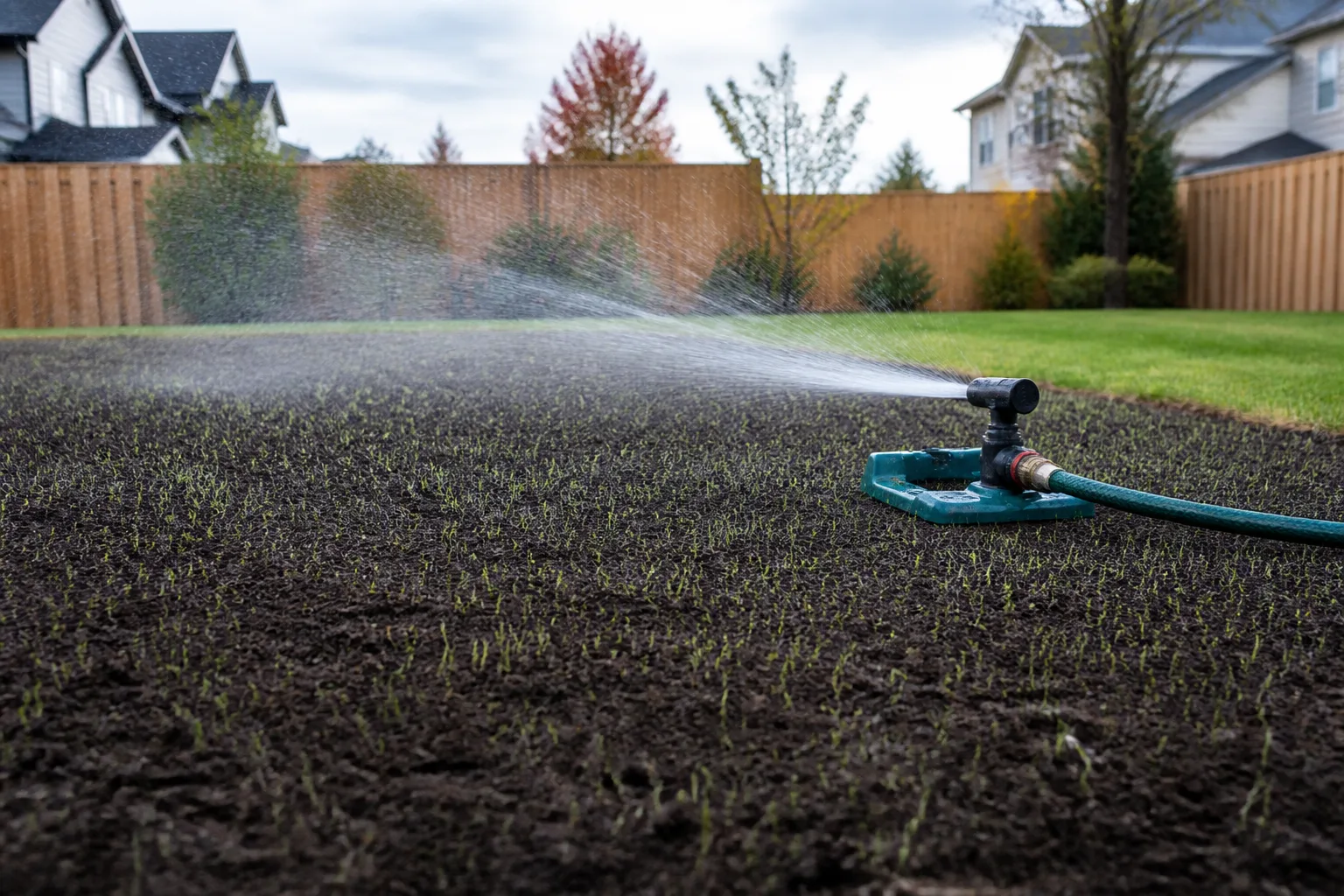
Water gently enough that seed stays in place. The surface should remain consistently damp during germination, not glossy with standing water. Purdue Extension’s home-lawn guidance recommends watering newly seeded areas three to four times daily for the first few weeks, but your soil, weather, sprinkler output, and seed mix determine the actual duration; short, light cycles are safer than a hard stream that creates runoff.
As seedlings emerge, gradually lengthen the interval and reduce the number of daily waterings so roots follow moisture deeper into the soil. Do not make the transition abruptly during a hot, dry spell. If you see puddling, algae, washed seed, or channels, reduce the force and fix the drainage or slope instead of adding more water.
Mow and feed after seedlings appear
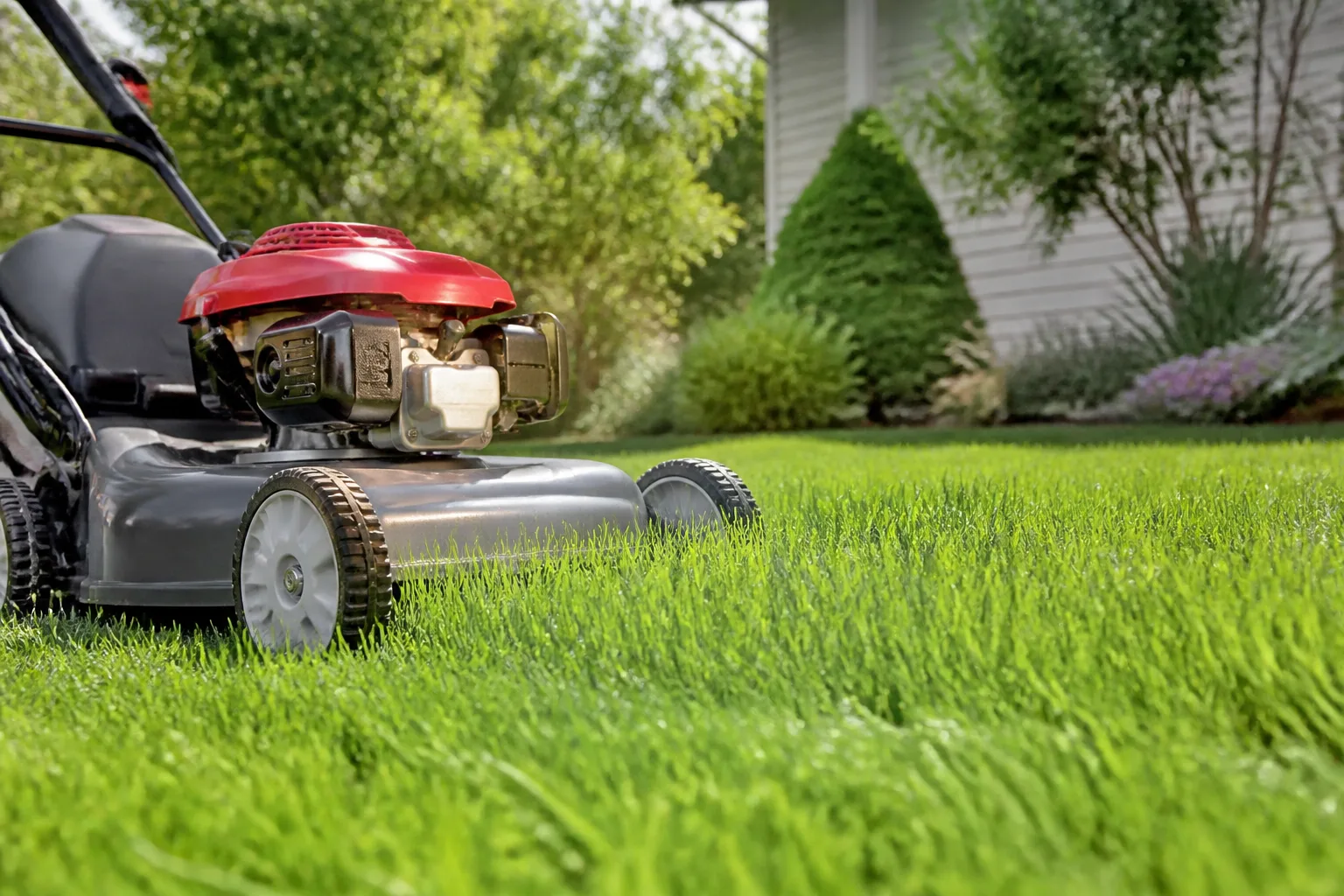
Keep people, pets, and equipment off the newly seeded area as much as possible while roots are shallow. Wait until the new grass is tall enough for the first cut—often around 3–4 inches for a cool-season blend, unless the label or local recommendation says otherwise—then use a sharp mower and remove no more than one-third of the leaf in a single mowing. Purdue Extension advises starting low after germination and raising the height in steps toward the lawn’s normal range.
Do not fertilize by reflex. A soil test can show whether phosphorus or potassium is needed, and nitrogen timing depends on the grass type, season, and local rules. If a starter fertilizer is appropriate, use the labeled rate; excess fertilizer can burn young turf, encourage weak growth, or move nutrients into waterways. Penn State Extension likewise warns that careless timing and overapplication can damage turf and contaminate water.
Once the seedlings are rooted and mowing is routine, return to the height that helps the existing grass build density. A sharp blade and the one-third rule reduce shredding and stress. Purdue Extension describes a gradual return to normal mowing height after overseeding rather than an immediate jump to a tall, tangled lawn.
Avoid the failures that make reseeding look pointless
The most common failure is seeding at the first convenient date instead of the first suitable date. Cool-season seed placed into peak summer heat may dry faster than you can water it, while seed placed into frozen ground will wait or wash away. Warm-season seed in cold soil can stall. Extreme heat, drought restrictions, saturated ground, or a forecast of hard rain are all reasons to wait.
The second failure is letting seed sit on leaves, thatch, or a hard crust. A spreader can distribute seed evenly, but it cannot create the contact that germination requires. Mow, rake, and aerate only when the surface calls for it; excessive mechanical work can damage crowns and bring more weed seed to the surface.
The third is trying to solve a light, water, or traffic problem with seed. If the same delivery truck crosses the area every morning, or a sprinkler misses the strip beside the driveway, newly seeded turf will repeat the same failure. Change the use pattern, improve irrigation coverage, correct drainage, or choose another groundcover where lawn is a poor fit.
The fourth is combining weed control and seeding without checking the label. Pre-emergent herbicides are designed to stop germinating seeds, which can include the grass you are trying to establish. Product chemistry and waiting periods differ, so record what was applied, read the label’s seeding restriction, and delay the job if the label requires it.
Finally, do not panic after a slow first week. Different grasses germinate at different speeds, and cool weather slows the process. Check moisture and seed contact first, then look for washout, birds, crusted soil, or a damaged sprinkler. If nothing emerges after the label’s expected germination period, test a small area with fresh seed rather than immediately doubling the rate across the entire lawn.
Conclusion
You do not need to reseed your lawn on a fixed annual schedule. Reseed when the stand is losing density, weeds are taking advantage of open soil, or the grass no longer recovers from ordinary stress—and only after you identify the reason the turf became thin.
For cool-season grass, late summer to early fall is usually the best window; for warm-season grass, wait for reliably warm soil in late spring or early summer. Match the seed to the lawn, create real seed-to-soil contact, keep the surface moist without washing it away, and delay fertilizer or herbicide decisions until the label or soil test supports them. If you build the schedule around the lawn’s condition and growth cycle, reseeding becomes a targeted repair that lasts instead of a yearly gamble.