How to Clean Moldy Leather Clothes and Shoes
Clean moldy leather clothes and shoes with a material-first plan. Know when to call a pro, protect the finish, and prevent mold from returning.
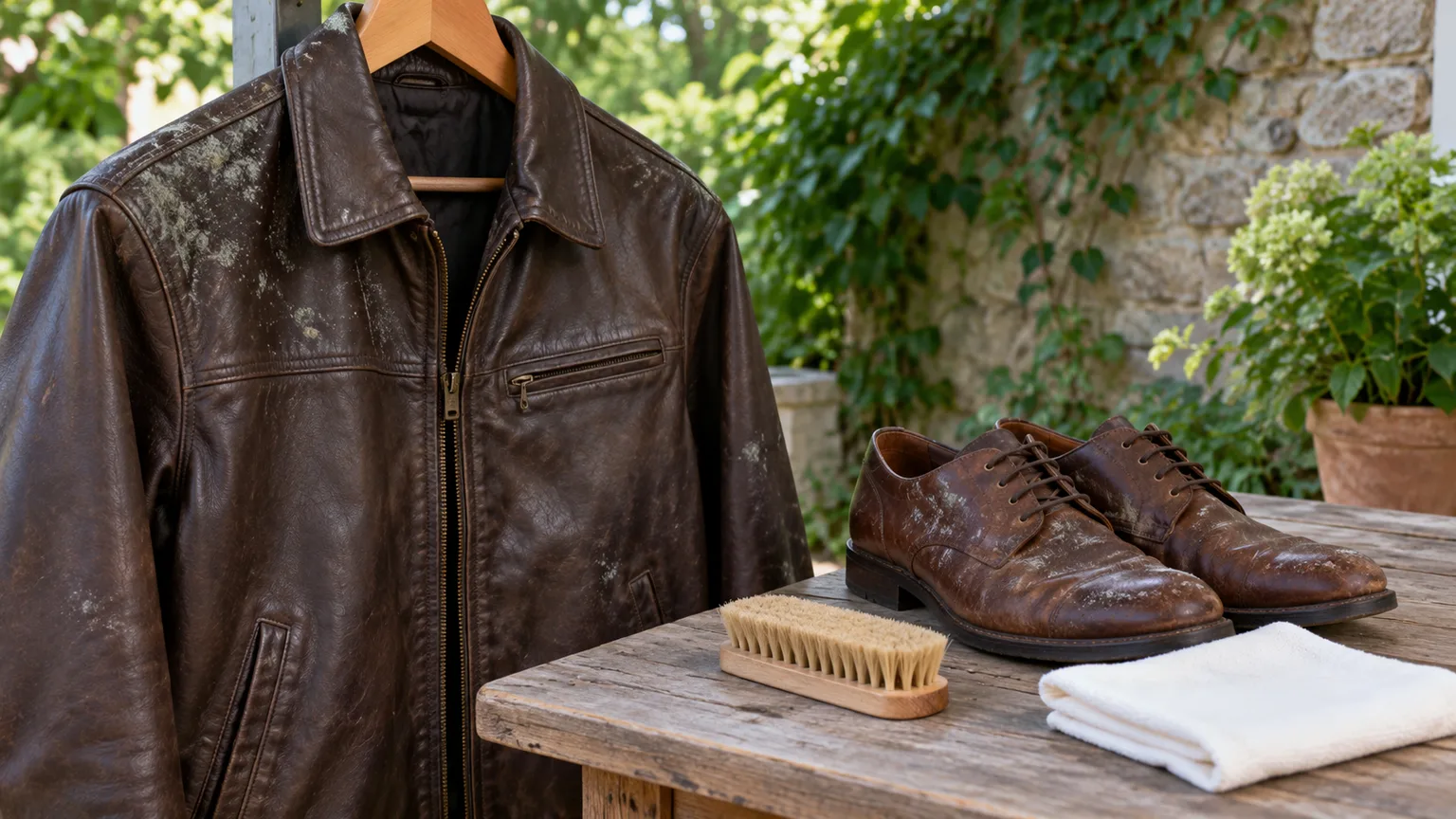
A powdery patch on a leather jacket or shoe can be mold, but white residue is not proof by itself. Before reaching for rubbing alcohol, vinegar, bleach, or saddle soap, identify the leather finish and check the maker’s care instructions: a cleaner that is tolerable on one smooth, coated shoe can stain or roughen suede, nubuck, aniline leather, and shearling.
For a small amount of dry surface growth on an intact, finished leather item, the safer approach is to isolate it, limit exposure, remove loose growth gently, use only a leather-safe cleaner the manufacturer approves, and dry it completely. If the item is suede, damp inside, badly affected, valuable, or still smells musty after surface cleaning, pause and use a leather-care professional.
What mold on leather looks like
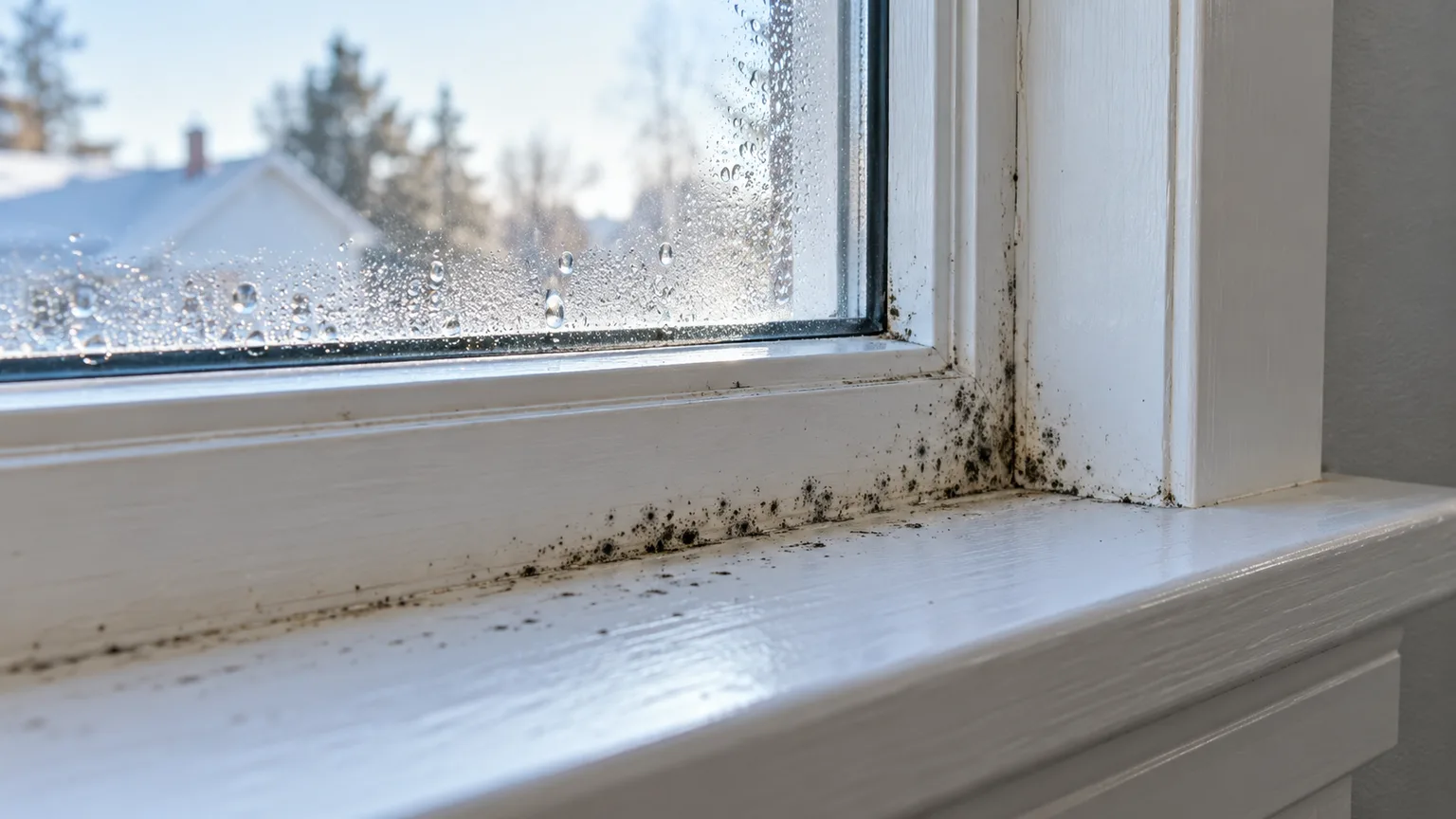
Leather mold may appear as white, gray, green, or black powdery spots, a soft haze, or small clustered marks. It commonly develops after leather sits in a warm, humid, poorly ventilated place, especially if the garment or shoes were put away with sweat, soil, body oils, or moisture on them. Mold can stain the finish and weaken fibers over time; wiping away what you can see does not guarantee every spore is gone.
Not every pale deposit is mold. The Canadian Conservation Institute (CCI) notes that mold can look like a powdery surface deposit or small dark dots, while fatty bloom from dressings or cleaners may feel waxy and perspiration salts tend to look crystalline. These clues are useful, not a home lab test. If the material is brittle, flaking, or an heirloom piece, avoid rubbing it to find out what it is; a leather conservator or specialist cleaner can identify the deposit without turning a small mark into permanent damage. The CCI’s leather-care guidance also explains that high humidity encourages mold on leather and that different leather types react differently to moisture.
Decide whether to clean it at home
A small, dry patch on a modern, smooth finished leather item may be a reasonable home-care job if you can work safely, identify the finish, and follow the care label. The choice is less straightforward if the growth is widespread, returns after cleaning, has penetrated stitching or lining, or has left the leather stiff or discolored. In those cases, cleaning alone may not restore the material.
Think of the job as three separate questions: Can you reduce exposure while handling it? Can you identify a cleaning method approved for this finish? Is the leather still structurally sound? If any answer is no, stop before adding liquid or rubbing the surface. A cleaner cannot reverse cracking, dye loss, weakened seams, or mold embedded in padding.
People with asthma, chronic lung disease, mold allergies, or weakened immune systems should not handle mold cleanup, according to the CDC’s mold cleanup guidance. If you are in one of these groups, ask someone else to isolate the item and contact a professional. If mold is also growing on walls, carpeting, or multiple belongings, treat the situation as a broader moisture or indoor mold problem rather than a shoe-cleaning task; professional help may be needed for the room as well as the leather. The CDC notes that cleanup choices depend on how much water damage occurred and where mold is growing, so a leather spot alone cannot tell you whether a surrounding room is safe to ignore.
When a leather specialist is the safer choice
Ask a leather cleaner, cobbler, or conservator to assess the item when it is suede, nubuck, shearling, unfinished or aniline leather; when mold is on the lining, inside a shoe, or around many seams; or when the piece is vintage, expensive, delicate, or decorated. The same applies if the leather feels tacky, brittle, stiff, or powdery, or if the color transfers during a hidden-area test. Those symptoms can signal a finish or structural problem that household cleaning can worsen.
Also stop if the mold patch is large or fuzzy, if several items are contaminated, if you cannot keep spores away from other people or possessions, or if an odor persists after the visible deposit is gone. A professional may decide that full cleaning, lining treatment, color repair, or replacement is appropriate; no one can promise that every stain or odor will disappear. Tell the cleaner what the item is made of, where it was stored, whether it was damp, and what products have already touched it.
Identify the leather finish before cleaning
“Leather” covers surfaces with very different finishes. Look for the care tag, product page, box, or maker’s instructions, and check the whole item rather than only its largest panel: a leather jacket may have suede trim, and a shoe can combine smooth leather, nubuck, fabric lining, rubber, adhesives, and a coated finish. If you cannot confirm the material, treat it as delicate and avoid household solvents.
| Surface | What it looks or feels like | Home-cleaning boundary |
|---|---|---|
| Pigmented or finished smooth leather | Relatively even color with a sealed or coated surface | Use only the manufacturer-approved cleaner, after a hidden patch test |
| Aniline, unfinished, or lightly finished leather | Natural grain remains visible; color can be more sensitive to liquid | Get maker or specialist advice before wet cleaning |
| Suede or nubuck | Soft, brushed nap rather than a smooth sealed surface | Do not use a general leather cleaner, soap, alcohol, or a wet cloth; brush only if the item is dry and lightly affected, otherwise consult a specialist |
| Shearling or sheepskin | Fleece or wool attached to a leather skin | Professional care is usually safest because both the hide and fleece can hold moisture |
| Bonded, patent, or coated leather | A surface film may cover the material or show peeling and cracking | Follow the exact label; if the surface is lifting, do not scrub or condition it |
Manufacturers publish different care instructions for different materials. For example, Timberland’s product-care guide separates smooth leather, suede, nubuck, and oiled leather. Use a maker’s advice for its own material system, not as blanket permission to apply that product to another brand’s shoes.
Finished leather
A finished leather surface is generally less absorbent than suede, but “less absorbent” does not mean stain-proof or safe for every chemical. Dyed leather can lose color; aniline and lightly finished surfaces may darken or develop water marks; old or cracked coatings can lift when rubbed. Even a smooth jacket may have a delicate lining or trim that needs separate treatment.
If the maker gives a product-specific cleaning method, follow it exactly. If instructions are missing, contact the brand or a leather-care specialist before using rubbing alcohol, vinegar, bleach, household mold spray, or dish detergent. These products may remove dye, dull a finish, dry the material, or leave residue. A hidden-area test reduces risk but cannot make an unsuitable chemical safe.
Suede, nubuck, and shearling
Suede and nubuck have a napped surface that absorbs moisture and is easy to flatten or mark. Do not wipe them with an alcohol solution or saturate them with soap and water based on instructions for smooth leather. For an isolated, dry speck on a sturdy item, a clean suede brush may lift loose surface material; stop if the nap darkens, clumps, or sheds.
Visible growth on a larger area, mold in the lining, or a persistent smell is a job for a suede or leather specialist. A professional can choose a dry or material-specific process after inspecting the dye, nap, and construction. Shearling needs added caution because liquid can affect both the wool and the attached hide. The specialist leather-care guidance from Ace of Suedes likewise separates smooth finished leather from suede, nubuck, and shearling; its practical advice should still yield to your item’s maker instructions.
Gather a small, safe cleaning kit
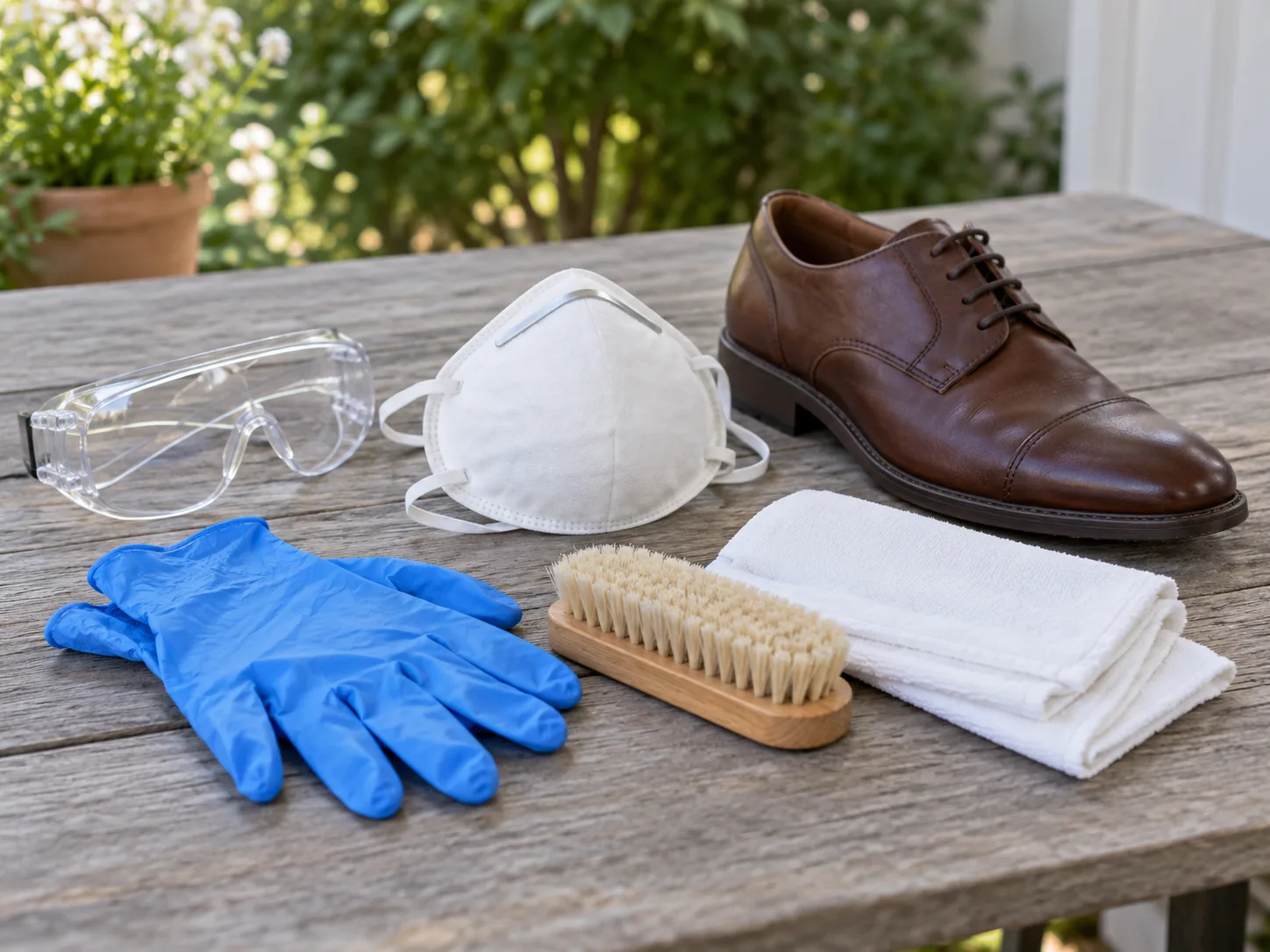
For a small surface-cleaning job, prepare only what your item’s care instructions call for: a soft clean brush, white lint-free cloths, a leather-safe cleaner made for that finish, and a clean place to let the item dry. White cloths make color transfer easier to spot. A shoe may also need a clean, dry shoe tree or plain white paper to support its shape, but paper should not be forced into a damp shoe or allowed to leave dye behind.
Mold cleanup also calls for personal protection. The CDC advises a NIOSH-approved N95 respirator, gloves, and goggles when cleaning mold; follow the respirator’s fit and use instructions, and keep the work away from children, pets, and people who are sensitive to mold. A HEPA-filtered vacuum can capture loose particles more effectively than brushing alone; the CCI specifically recommends HEPA filtration when vacuuming mold from leather. If you do not have suitable protection or cannot safely contain the cleanup, use a professional.
Do not assemble a shelf of chemicals “just in case.” More products mean more chances of an incompatible reaction or finish damage, and using several treatments does not prove the item has been disinfected. Never mix cleaners; the CDC warns that bleach must not be mixed with ammonia or other cleansers.
How to clean mold off leather step by step
This process is for a small, dry, surface-level patch on an intact item of finished leather, and only when the maker’s care instructions allow gentle cleaning. It is not a universal treatment for every leather type or every level of contamination. If you encounter a surprise material, widespread growth, damp lining, or color transfer, stop and get specialist advice.
Isolate the item and protect yourself
Move the item away from clean clothes, shoes, and other leather goods without shaking it. If it is dry and you cannot clean it right away, the CCI recommends isolating a moldy leather object in a closed bag or container to limit transfer of spores. Do not seal a wet or damp item and leave it there: moisture can support further growth. Keep the container labeled and open it only in the prepared cleanup area while wearing suitable protection.
Choose an outdoor area on a dry day, away from people, open windows, and building air intakes, or a controlled work area with good ventilation. Put on gloves, goggles, and an N95 respirator before opening a bag or disturbing the growth. The goal is to keep spores from spreading and avoid touching or inhaling them; do not brush the item indoors over a carpet, bed, or pile of laundry.
Dry it before disturbing surface growth
If the leather is damp, do not scrub or wipe the mold. Moist growth can smear and push deeper into the surface. The CCI advises drying damp leather promptly and notes that mold may smear when the leather is not dry enough to clean. Let the item dry in a ventilated, isolated place, away from radiators, hair dryers, heaters, and direct sun, which can fade or stiffen leather.
For a jacket, support it on a broad hanger and leave space around it; open pockets and separate any removable components if the care label permits. For shoes, remove laces and removable insoles only if they come out easily. Keep the shoes upright and let air circulate around the opening. A fan can move room air nearby, but do not aim a strong stream directly at visible mold, which can scatter spores.
Lift loose growth without grinding it in
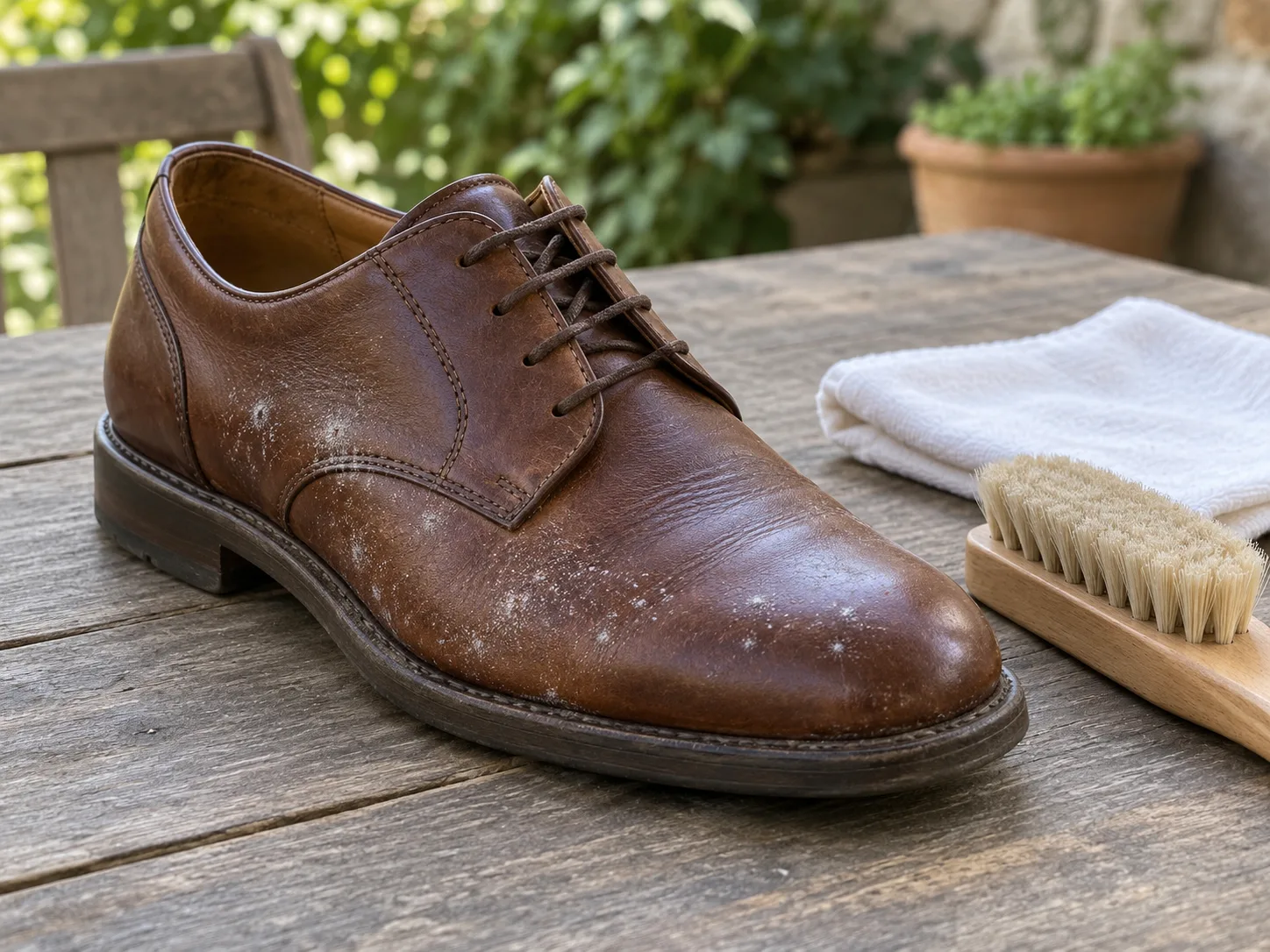
Once the leather is fully dry, use gentle strokes with a soft brush. If you have a HEPA-filtered vacuum with adjustable suction and a suitable upholstery attachment, hold the nozzle close to the surface and guide loose material toward it, rather than pressing the nozzle into the leather. The conservation guidance recommends systematic close vacuuming over the whole object, not only the spot where growth is visible. A stiff brush, vigorous scrubbing, or shaking the item can spread particles and abrade the finish.
If you do not have a HEPA vacuum, you can still work outdoors with protective gear and use very light brush strokes, but keep the brush close to a disposable bag or waste container and avoid making a cloud of dust. Do not use compressed air or a household vacuum that vents unfiltered air back into the room. When the deposit smears, returns immediately, or seems embedded in the nap or seams, stop rather than brushing harder.
Clean finished leather with the maker’s method
After loose growth is removed, consult the label or manufacturer before applying a liquid cleaner. If the maker approves a product for this exact leather, apply the smallest amount directed to a clean white cloth, not directly to the item. Work a small section gently, then wipe away residue exactly as the product label specifies. A barely damp cloth may be appropriate for some finished leather, but never soak the hide or let liquid pool around seams, stitching, hardware, or edges.
First test the cleaner on a hidden spot and let that area dry fully. Check for color transfer on the cloth, darkening, tackiness, a cloudy finish, or a change in texture. If you see any of these, stop. Even a successful patch test does not guarantee the product is suitable for every panel, so keep the treatment restrained and avoid trying to remove deep stains at home.
The CCI’s leather-mold method focuses on isolating, drying, and removing surface growth with careful HEPA vacuuming; it does not prescribe rubbing alcohol, vinegar, or bleach for ordinary leather garments and footwear. That distinction matters: wiping away visible growth is not the same as sterilizing an object, and no home recipe can promise that every spore has been eliminated. Use a manufacturer-approved cleaner for the material rather than improvising a disinfectant.
Check the lining, insoles, and seams
A clean exterior can hide residue inside a jacket, boot, or shoe. Turn out pockets and inspect the collar, cuffs, underarms, shoe tongue, seams, removable footbeds, and the edge where lining meets leather. Do not pull hard on a lining that is stitched in place. If you see spots or smell a strong musty odor inside foam, padding, or a non-removable lining, call a professional; surface wiping cannot reach those layers.
Wash or replace a removable fabric insole only if its care label allows it, and dry it completely before putting it back. Do not put leather clothes or shoes in a washing machine or dryer unless the manufacturer specifically says the exact item is machine washable. Water and agitation can distort the shape, damage adhesives, and alter the finish. If a garment’s lining is removable, follow its fabric label while keeping any cleaning solution away from leather.
Dry slowly, then reassess before conditioning
Let the cleaned item air-dry completely in its natural shape. Keep it away from direct heat and strong sunlight. Stuff shoes lightly with plain, undyed paper only if they need support, and replace the paper if it becomes damp. Do not wear or store the item while the lining or seams still feel cool or damp.
Only after the leather is fully dry should you consider conditioning it, and only if the manufacturer recommends conditioner for that finish. Use the product sparingly and test it in a hidden place; some conditioners darken leather or leave oily residue. The CCI cautions that frequent dressings can darken, stain, or otherwise affect leather objects, so conditioning is not an automatic final step for every leather item. If the leather feels normal and the brand does not call for conditioning, leave it alone.
Handle leftover stains and musty odor separately
Mold can leave a shadow even after the loose surface growth has been removed. That shadow may be permanent dye change or finish damage, not active mold. Repeating stronger chemical treatments to chase a stain can make the leather worse without changing the result. Photograph the spot and ask a leather specialist whether color repair is possible, especially on light, aniline, or vintage leather.
Odor also deserves its own assessment. A faint musty smell may lessen after the item is clean and fully aired, but a strong smell that remains can come from the lining, padding, or interior of a shoe. Do not mask it with perfume, deodorizing sprays, baking soda rubbed into the leather, or a sealed box of powders; these can leave residue and do not fix hidden contamination or the moisture source. If odor persists after drying, have the item professionally assessed before wearing or storing it.
Prevent mold from returning in storage
Mold returns when the conditions that supported it remain. The CCI describes relative humidity above about 65 percent as favorable to mold on leather objects, while its collection-storage recommendations call for a stable, moderate environment. Those conservation targets are not a guarantee for a household closet, but they reinforce the practical rule: keep leather clean and completely dry, lower persistent humidity, and let air move around stored items.

Before storing a jacket or shoes for a season, remove soil and surface grime using the maker’s method, let the item dry after wear or rain, and check pockets, cuffs, and linings. Do not return a musty or damp item to a closet just because the exterior looks clean. Clean the shelf or storage box and investigate any condensation, leak, or damp wall nearby; if the source is still present, the item can mold again.
Store jackets with space between them on sturdy hangers and avoid cramming them against a cold exterior wall. Keep shoes on an open rack or in a ventilated cupboard rather than a damp basement or a tightly sealed plastic bag. If you use a dust cover, choose one that allows airflow and make sure the leather is dry first. A small humidity meter can help identify a persistently damp closet; a dehumidifier may help when high indoor humidity is the underlying problem, but it cannot fix a leak.
Make a quick inspection part of seasonal storage. Look for a new powdery film, discoloration, or a musty smell before growth spreads to other pieces. If mold returns despite cleaning and improved storage, check the surrounding room and the item’s lining or construction, then escalate to a professional rather than repeating the same surface wipe.
Conclusion
For mold on leather clothes and shoes, identify the finish first, isolate the item, protect yourself, and remove only dry surface growth with a light touch. Use a cleaner only when the manufacturer approves it for that exact material; suede, nubuck, shearling, unknown finishes, hidden lining growth, and valuable pieces deserve specialist care. Let the item dry completely, treat lingering stains and odor as separate problems, and correct the humidity or storage issue before putting leather away again.