Is Clover a Weed? Benefits, Drawbacks, and Control
Is clover a weed or a useful lawn plant? Learn its nitrogen and pollinator benefits, common drawbacks, and when to keep, contain, or remove it in your yard.
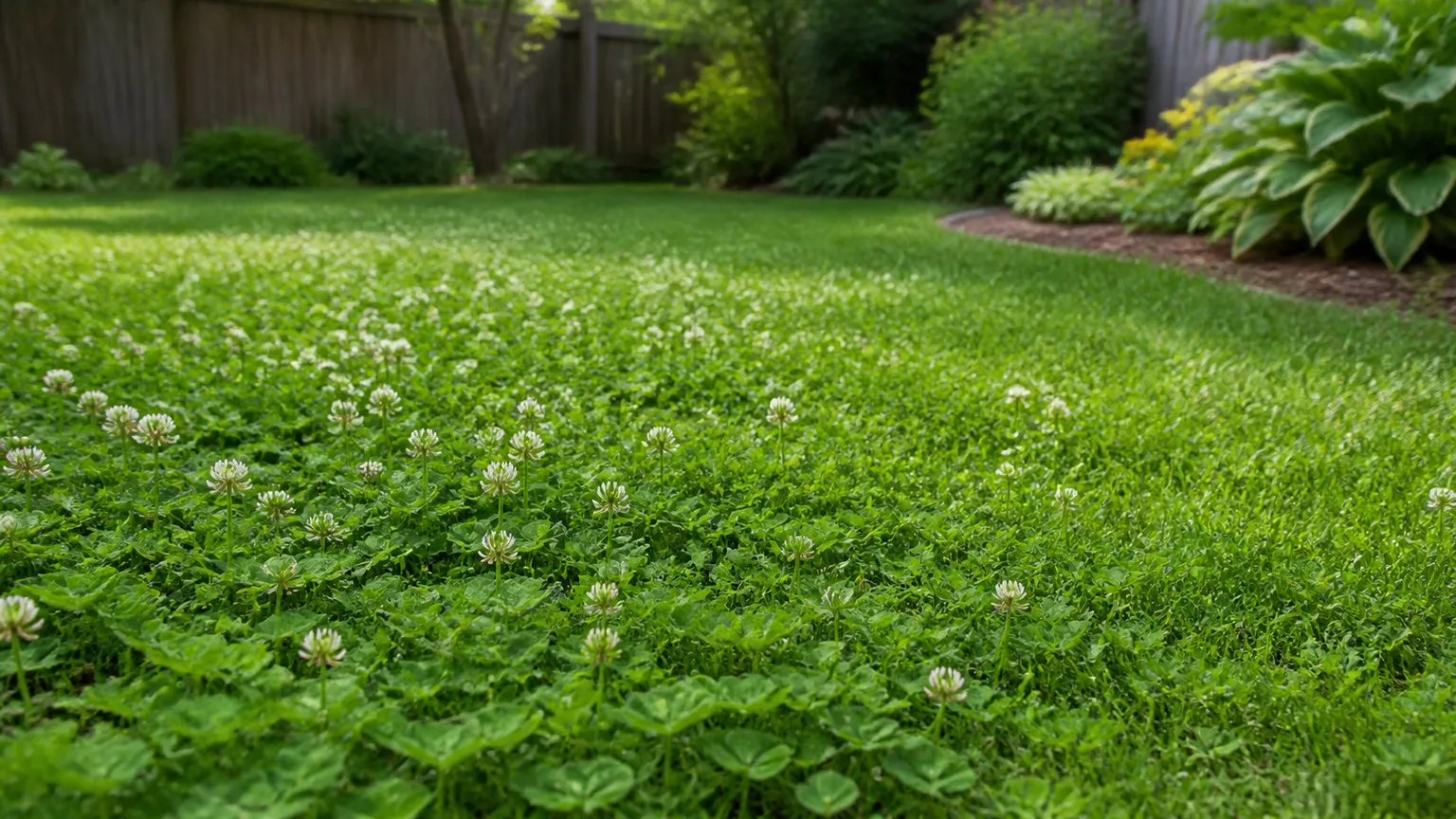
Clover is a weed when it grows where you do not want it; it is a useful lawn plant when its spreading habit, flowers, and lower-input care fit your yard. White clover is a perennial legume, not a grass, so the real question is whether you want a uniform turf lawn, a flowering pollinator lawn, or something in between. Before you pull it or spray it, identify the plant and decide what job you want that patch to do.
What “weed” means in a lawn
“Weed” is a gardening label, not a botanical category. A weed is a plant growing where the person managing that space does not want it, which means the same white clover can be a nuisance in a formal front lawn and a deliberate groundcover in a bee-friendly yard.
That distinction matters because clover does not damage grass simply by existing beside it. It can occupy open or thin areas and spread outward, but a mixed lawn is an intentional combination of turfgrass and flowering plants. A weed-free lawn is therefore not automatically healthier, and a lawn with clover is not automatically neglected.
You can make the decision with three questions: Do you like the look? Does the patch fit how people use the lawn? Are you willing to accept flowers and some spread in exchange for a more diverse, less uniform surface? If the answers are yes, keep or contain it. If you need uninterrupted turf for a particular use, focus on the patch and the underlying lawn conditions instead of treating every clover plant as an emergency.
Identify white clover before deciding
The most common lawn clover is white clover, also called Dutch white clover (Trifolium repens). It has three oval leaflets on each leaf stem, often with a pale, inverted V-shaped watermark near the base of each leaflet. Its rounded flower heads contain many small white or pale-green flowers; a patch can bloom repeatedly through the growing season.
A three-part field check
Look at the leaves, the way the plant spreads, and the flowers together. A single three-leaf pattern is not enough for a confident identification because wood sorrel and other plants can have three leaflets too; white clover’s small, oval leaflets, pale watermark, and low creeping growth are a more useful combination.
White clover grows by surface-level runners called stolons. The runners can root at their nodes, creating a connected mat that creeps into bare soil and thin turf; that growth habit explains both why it fills gaps and why cutting off the visible leaf tops does not remove the whole plant. Penn State Extension describes white clover as a perennial with prostrate stems that root at nodes and notes the characteristic leaf pattern and rounded flower clusters. (Penn State Extension)
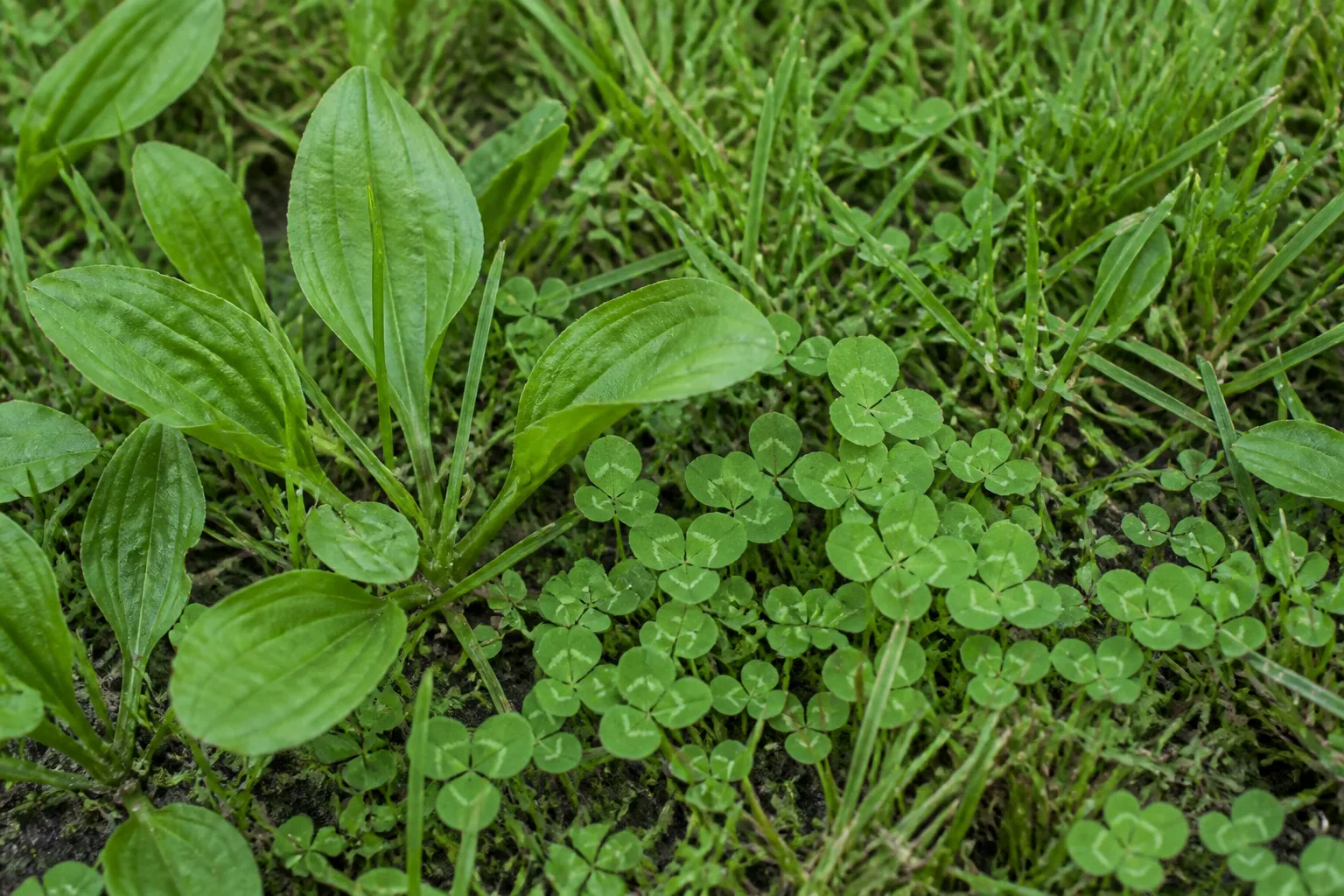
If you are unsure whether a plant is clover, pull one small section and check the stem before treating the whole lawn. Clover’s runners lie along the surface and can root in several places, while plants with a single crown or a deep taproot behave differently; identifying that structure first prevents you from choosing a removal method for the wrong weed.
Why clover appears in grass
Clover often becomes conspicuous where grass is thin, patchy, or not competing strongly. Penn State Extension says white clover is more likely to form large patches when turf is not adequately fertilized with nitrogen, but also notes that it can grow in fertilized lawns and partial shade. Treat a clover patch as a clue about lawn density and site conditions, not as a soil test that diagnoses one nutrient problem by itself. (Penn State Extension)
A bare spot can arise from foot traffic, shade, poor drainage, drought, compacted soil, unsuitable grass, or uneven establishment. Clover’s low, creeping runners can take advantage of open ground and persist between mowing sessions, while grass that is stressed or sparse leaves room for other plants to establish. If you remove the clover but do not correct the reason the grass was thin, another plant can occupy the same space.
The first useful action is to compare the patch with nearby turf. Is it concentrated under trees, along a path, on a slope that dries quickly, or in a spot where pets and people repeatedly cross? Those patterns point to different fixes: adjust traffic or drainage, choose a more shade-tolerant grass for that site, or repair the bare area at the right season rather than applying nitrogen everywhere.
What clover contributes to a lawn
Clover offers several practical benefits when it is in the right place. It stays low, covers exposed soil, provides flowers for pollinators, and can reduce the need for some lawn inputs. Those benefits are strongest in a lawn designed to include clover, not necessarily in every conventional turf lawn where it appears by chance.
Nitrogen fixation helps, but it is not lawn fertilizer
White clover is a legume. Bacteria associated with its root nodules can convert nitrogen from the air into forms the plant can use, which is why clover can grow without the same nitrogen feeding schedule as many turfgrasses. That biological process is real, but it should not be treated as a precise fertilizer calculation or a promise that every nearby grass blade receives enough nitrogen. Penn State Extension identifies the nitrogen-fixing relationship between white clover and Rhizobium bacteria; Iowa State Extension notes that bee lawns generally need less fertilizer and that too much nitrogen can favor grass over flowering plants. (Penn State Extension) (Iowa State University Extension and Outreach)
If you want to keep clover, avoid routine fertilizer applications that are not based on the grass type, soil test, and lawn goal. Too much nitrogen can push grass to grow faster and shade out flowering plants; too little may leave grass weak if your aim is a durable turf surface. The right rate depends on the site and grass, not on a general claim that clover “fertilizes the lawn.”
Low cover, flowers, and reduced inputs
A clover patch can cover bare soil and provide a green surface between grass plants. The white flower heads supply nectar and pollen to visiting bees and other insects, which is a main reason extension programs recommend clover as one possible plant in a pollinator lawn. Iowa State describes bee lawns as mixtures of turfgrass and flowering plants, including Dutch clover, that can retain lawn function while providing more food and habitat for pollinators. (Iowa State University Extension and Outreach)
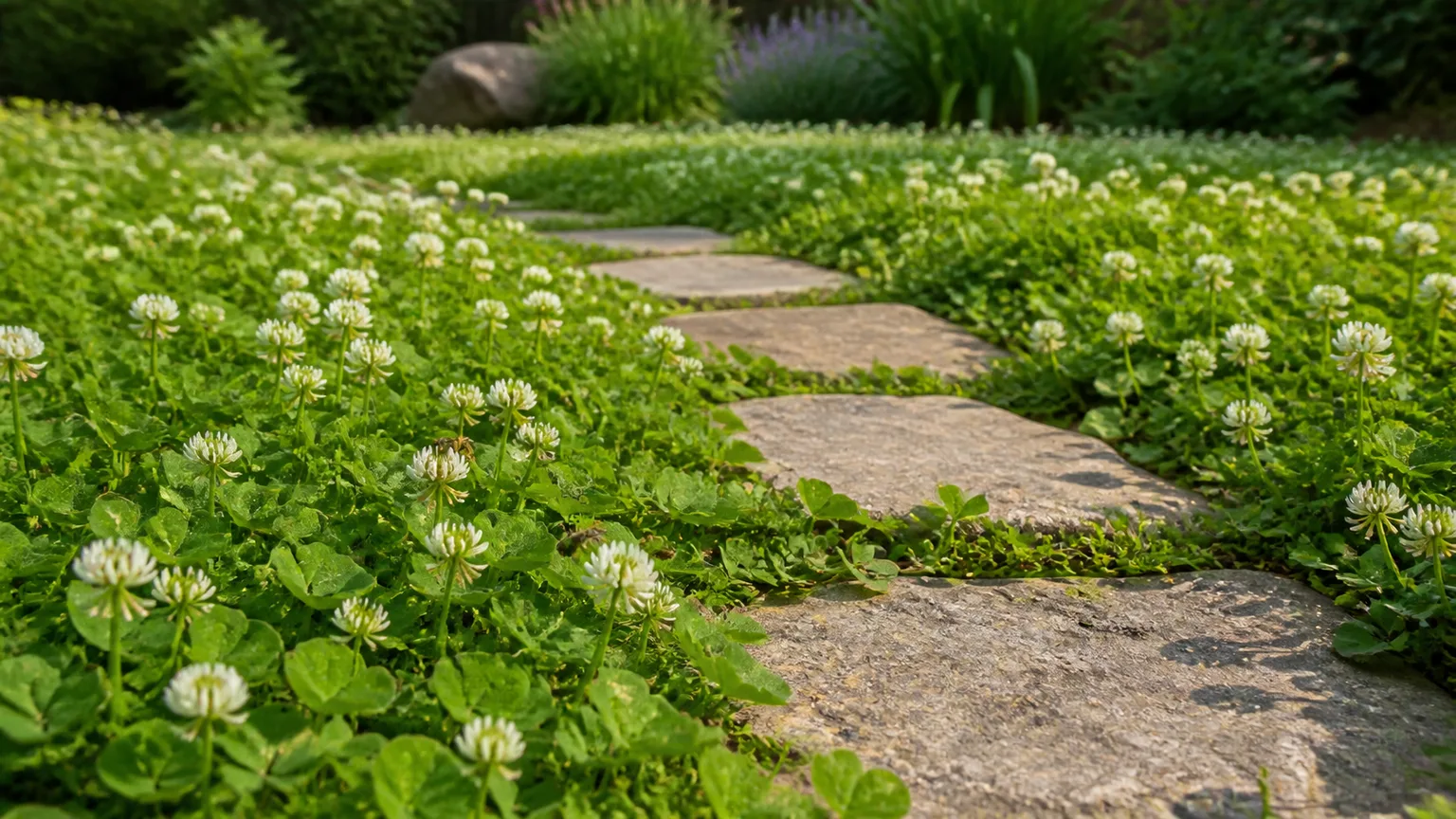
Some homeowners also value clover because it may need less frequent mowing and fewer fertilizer inputs than a conventional grass-only lawn. Actual water and mowing needs vary by climate, soil, grass species, shade, and how closely you want the lawn clipped, so there is no dependable “one-third less water” promise for every property. Lawn Love’s comparison of clover and grass lawns is useful for framing the maintenance trade-offs, but a local extension recommendation should guide your watering and fertility decisions. (Lawn Love)
A flowering lawn is not a maintenance-free lawn. It still needs establishment care, selective mowing, occasional watering during prolonged dry periods, and weed management while young. Iowa State Extension notes that new pollinator lawns need close attention during establishment and often become more competitive in later seasons; the first year can take more hands-on work than an established patch suggests. (Iowa State University Extension and Outreach)
Costs and limits that are easy to miss
Clover’s benefits do not make it the right surface for every yard. It spreads beyond the original patch, looks different from a tightly striped grass lawn, and can be less durable than turfgrass under repeated heavy traffic. Iowa State Extension also points out that pollinator lawns can be less uniform and harder to weed because ordinary broadleaf herbicides also harm clover and other desired flowering plants. (Iowa State University Extension and Outreach)
Foot traffic, flowers, and appearance
If your lawn is mainly a play surface, a pure clover lawn may wear more quickly than a grass lawn built for repeated foot traffic. A grass-and-clover mix can be a better compromise: grass carries much of the wear, while clover fills some open space and flowers between mowing cycles. Lawn Chick similarly recommends thinking about use and appearance before converting to clover, noting that heavy-use areas and people who want a uniform finish may prefer a resilient grass component. (Lawn Chick)
Flowers also change how you use the yard. Bees visiting clover are a benefit in a pollinator area but a practical concern where children run barefoot, people sit on the grass, or someone in the household has a serious sting allergy. You can mow before using a small play zone to remove flowering heads temporarily, but that also removes much of the clover’s pollinator value and does not turn mowing into a permanent bee barrier. If sting allergy is a concern, plan the yard around that person’s medical guidance rather than assuming a mowing schedule guarantees safety.
Clover compared with other common lawn weeds
“Lawn weeds” do not all provide the same value or create the same management problem. Some low-growing flowers fit an informal pollinator lawn; others are simply tough plants that reveal bare soil, spread into beds, or interfere with the use you want from the lawn.
| Plant or group | Why someone might keep it | When it becomes a problem |
|---|---|---|
| White clover | Low cover, nitrogen-fixing legume, flowers for pollinators | Creeps into beds, looks patchy, or conflicts with a uniform-turf goal |
| Dandelion, violet, or self-heal | Flowers can contribute to a flowering lawn; often tolerated in informal areas | Seed heads, appearance, or spread conflict with the homeowner’s plan |
| Crabgrass, spotted spurge, or foxtail | Usually little reason to encourage them in a pollinator lawn | Can crowd out desired turf or flowering plants, especially while a lawn is establishing |
| Ground ivy and other creeping plants | May cover soil in a location where low groundcover is welcome | Can be difficult to contain at edges and move into garden beds |
Iowa State Extension includes clover, violet, and dandelion among plants that may be welcomed in a pollinator lawn, while distinguishing them from weeds such as crabgrass, spotted spurge, and plantain that can compete with the desired mix. That does not make every “beneficial” plant universally desirable; it means you can set a threshold for which species belong in each part of your property. (Iowa State University Extension and Outreach)
A useful boundary is function. Keep flowering plants in a side yard, orchard strip, or low-traffic patch if you want pollinator food; keep paths, play areas, and formal beds tidy if that makes the space safer and easier to use. The lawn does not have to be one uniform management zone, and the label “weed” does not need to decide the whole yard.
Choose a response: keep, contain, or remove
Before reaching for a tool, decide what outcome you want for the exact patch. You can keep clover in an informal or pollinator section, contain it where it meets beds and paths, or remove it from a formal turf area; each choice has a different maintenance cost.
Keep flowers where they fit
Keep a patch if you like its look, the lawn is not a high-impact play or sports surface, and the flowers are welcome. Letting the patch flower supports the reason many people choose a bee lawn, while mowing it more often trades some flowers for a tidier appearance and reduced bloom exposure.
If you want the same look across a larger area, treat that as a lawn design decision rather than simply leaving one patch unmanaged. Select a mix suited to your region, soil, light, and traffic, and be prepared for slower establishment and more hand-weeding at first. Do not add clover seed to a lawn that you intend to maintain as a uniform monoculture unless you are comfortable with the visible change.
Contain clover at garden edges
If you like clover in the lawn but not in flower beds, maintain a crisp physical edge and remove runners that cross it before they root in several places. Because stolons can root at nodes, pulling the visible leaves alone may leave sections attached; trace the runner back into the lawn and lift out the rooted pieces without disturbing nearby plant crowns.
Check the boundary after rain or irrigation, when the soil is easier to work. A narrow mown or mulched strip can make a useful inspection zone, but it will not stop a determined runner forever, so occasional edging is part of the bargain. This approach is usually less disruptive than treating the entire lawn because it preserves the clover where you want it.
Remove it from a formal turf lawn
If uniform turf is the goal, remove clover in a way that also restores the grass. For a small patch, loosen the soil when it is damp, lift the connected runners and rooted nodes, and refill the opening with a grass seed suited to the site and season. Leaving a bare spot invites another weed; overseeding immediately gives turf a chance to reclaim the space.
A larger patch may be better handled as a turf-density problem. Mow at the recommended height for your grass, correct shade, compaction, drainage, or traffic issues where possible, and use soil-test results to guide fertilizer rather than applying nitrogen as a clover-killing shortcut. Penn State Extension recommends improving turf density and choosing grasses adapted to the site as cultural steps that reduce white clover. (Penn State Extension)
Reduce an established patch without wrecking the lawn
For a small infestation, work from the outside inward and remove the runners, not just the flower tops. A hand fork or narrow weeding tool can loosen the mat so you can lift out rooted nodes; shake soil back into the lawn and avoid scattering detached pieces across a new bare patch. The goal is to reduce the living network while preserving as much healthy grass as possible.
For broad patches, first decide whether to renovate the whole area, overseed a healthier lawn, or use a labeled lawn herbicide. Penn State Extension notes that white clover can regrow after some spring treatments and that fall treatment is often more effective, but the appropriate product, timing, and turf tolerance depend on the current label and local conditions. Do not copy an active ingredient or rate from an old article: confirm that the product is labeled for your turf species, the target weed, and the site you intend to treat, and follow every precaution.
Clover is a broadleaf plant, so many selective broadleaf lawn herbicides that spare grass will also injure or kill clover. In a mixed or pollinator lawn, that is a reason to rely on hand removal and careful spot management instead of using a blanket weed-and-feed product. Iowa State Extension cautions that broadleaf herbicides are not compatible with pollinator lawns because they harm clover and other desirable broadleaf flowers. (Iowa State University Extension and Outreach)
Avoid home remedies such as concentrated vinegar or salt on a lawn. They are not selective clover treatments and can damage turf and nearby plants, leaving bare soil where new weeds can establish. If a chemical treatment is truly needed, ask your county Extension office which products are currently labeled for your turf and location rather than relying on a generic internet mixture.
If you want more clover, make a mixed lawn on purpose
An existing clover patch can be the start of a mixed lawn, but it is not a complete plan by itself. Decide where flowers are useful, where durable turf matters, and whether the grass species already in the yard will tolerate the amount of sunlight, shade, drought, and foot traffic at that location.
On a reasonably healthy lawn, overseeding can add flowering plants while retaining most of the turf. Iowa State Extension recommends good soil-to-seed contact and notes that very thick or compacted turf may need preparation before overseeding; for an unhealthy lawn crowded with unwanted weeds, renovation may be more successful than scattering more seed over the problem. Its pollinator-lawn guidance also describes establishment as a multi-season process, with care and weeding needed before the planting becomes competitive. (Iowa State University Extension and Outreach)
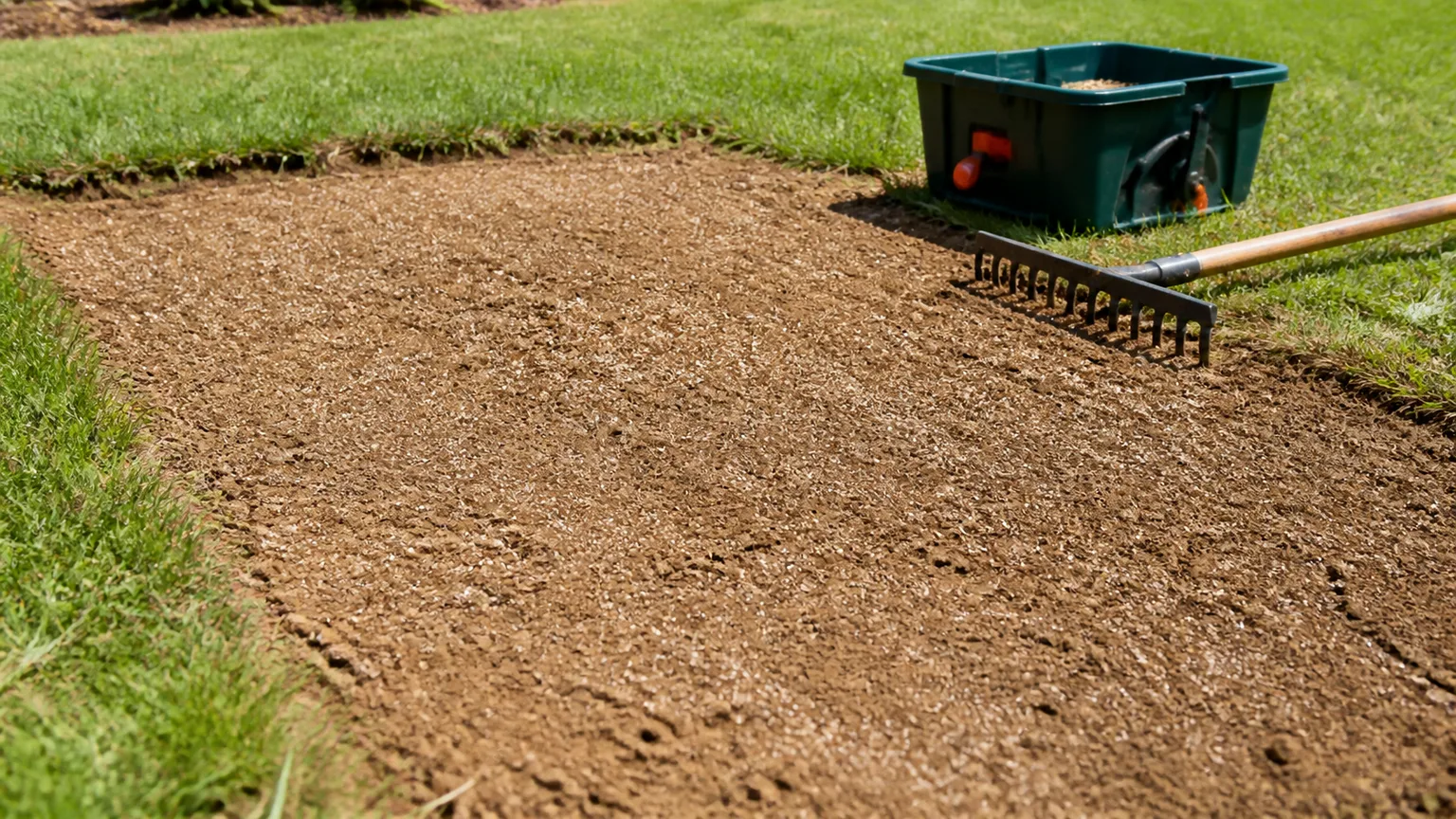
Keep seed choice local. White clover is one option, but a regionally suitable bee-lawn mix may include other low-growing flowers that tolerate mowing and provide a longer bloom period. If you prefer a uniform lawn, do not force clover into every square foot; a mixed border, orchard lane, or backyard patch can deliver some ecological benefit without changing the entire front yard.
Prevent the unwanted version from returning
Prevention starts with grass that is dense enough for your site and the way you use it. Repair bare areas promptly, avoid mowing lower than your grass type can tolerate, reduce repeated traffic over the same soft ground, and select turf species suited to the sun and soil conditions rather than trying to make a poor match thrive with more fertilizer.
Use a soil test before adjusting nutrients or pH. A clover patch may correlate with low nitrogen, but that is not proof that the whole lawn needs feeding; excess fertilizer can create runoff, waste money, and favor grass over flowering plants you meant to retain. Where clover is welcome, choose a mowing and edging routine that controls spread without removing every flower.
If your goal is a mixed lawn, do not use broadleaf weed-and-feed products that would remove clover along with unwanted broadleaf weeds. If your goal is a uniform lawn, keep new patches small by lifting runners early and reseeding gaps so the turf can close. Either way, consistent observation is more effective than waiting until a patch has crossed the whole lawn.
Conclusion
Clover is not automatically a problem or a benefit. White clover is a perennial legume that spreads by runners, fixes nitrogen through root bacteria, and produces flowers that can feed pollinators; it can also look patchy, travel into garden beds, attract bees to busy play areas, and complicate broadleaf weed control.
Choose based on how your yard needs to function. Keep it where flowers and low cover are welcome, contain runners where lawn meets beds, or remove it from formal turf while repairing the conditions that allowed it to spread. Once you choose the role, the practical answer to “Is clover a weed?” becomes clear: it is a weed only where it conflicts with the lawn you want.



