How to Grow and Care for Nova Zembla Rhododendron
Learn Nova Zembla rhododendron care, from acidic soil and shallow planting to watering, pruning, winter protection, and diagnosing yellow leaves and wilt.
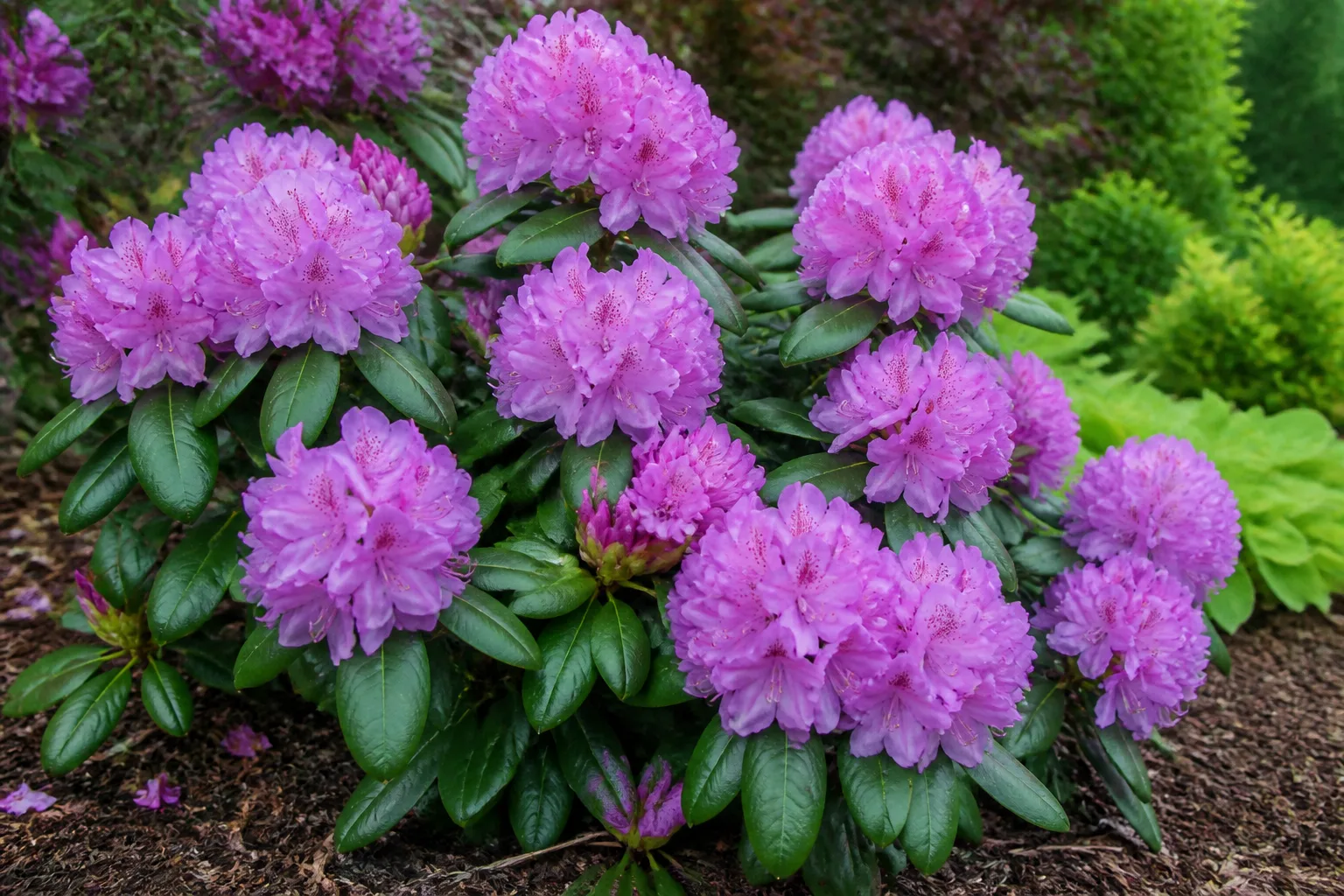
Nova Zembla is a large-leaved, evergreen rhododendron valued for vivid red spring flower trusses and better cold tolerance than many broadleaf evergreens. Its reputation for toughness can be misleading: the shrub handles winter cold well when established, but it still needs acidic soil, oxygen around its shallow roots, steady moisture, and protection from drying wind. Get those conditions right before reaching for fertilizer, and most routine care becomes simpler.
Quick care profile
| Need | Practical target |
|---|---|
| Mature size | About 5–8 feet tall and 5–6 feet wide |
| Light | Dappled or open shade; morning sun is usually safer than hot afternoon sun |
| Soil | Humus-rich, acidic, moist but freely drained; aim near pH 5.0–5.5 |
| Water | Keep the root ball evenly moist while establishing; water deeply during extended dry spells |
| Bloom and pruning | Spring bloom; prune or deadhead just after flowers fade |
| Hardiness | Commonly listed for USDA Zones 4–8; wind and winter exposure still matter |
These figures are starting points, not guarantees for every site. The Missouri Botanical Garden’s cultivar profile lists the plant at roughly 5 to 8 feet tall and 5 to 6 feet wide, with a preference for acidic, organic soil and part shade. Its Plant Finder also describes the cultivar as one of the “iron-clad” rhododendrons, an informal label for hardy selections—not a claim that the shrub can shrug off poor drainage or drought.
What makes ‘Nova Zembla’ different
‘Nova Zembla’ is an old hybrid, introduced in 1902 by Koster & Sons in the Netherlands. It is an upright broadleaf evergreen with leathery green foliage and showy clusters of bright red, trumpet-shaped flowers marked with darker spots. In intense sunlight, the flower color may fade toward deep pink; the Missouri Botanical Garden describes flowers reaching about five inches across.
Think of this as a medium-to-large landscape shrub, not a compact azalea. Give it room for a mature spread of five to six feet, with extra space if you want to walk behind it or keep air moving through a border. It works as a specimen, a group planting, or a woodland-edge shrub, provided the site meets its soil and exposure needs.
The cultivar is often listed for Zones 4 through 8, but a hardiness zone describes average extreme winter temperature; it does not describe summer heat, drying wind, soil pH, drainage, or winter sun. In a colder zone, a sheltered site can make the difference between dormant buds and winter burn. In a warm summer climate, afternoon shade and reliable root moisture are more important than the label’s cold rating.
Choose light and shelter
The dependable starting point is dappled light or high open shade, ideally with some morning sun and protection from strong afternoon rays. Nova Zembla tolerates more sun than many rhododendrons, especially during cool northern summers, but a hot, exposed afternoon can scorch the leaves and stress the shallow root zone. A bright woodland edge or the east side of a building is often easier to manage than deep shade or an all-day western exposure.
Deep shade is not a fix for hot sun. Under a dense canopy the shrub may stay alive but produce fewer flower buds and a thin, stretched framework. Look upward as well as at the current shade: deciduous trees allow spring light before leaf-out, then shade the shrub in summer, while evergreens create a darker, drier root zone year-round.
Shelter it from drying winter wind, especially wind funneled between buildings or across an open corner. Avoid planting it directly under black walnut, butternut, pecan, or hickory if you can; the Missouri Botanical Garden notes that rhododendrons can be sensitive to juglone from walnut-family roots. Nearby trees also compete for water, so a site can look shady and still be too dry below ground.
Give its shallow roots acidic, draining soil
Soil is the make-or-break decision. Aim for acidic ground near pH 5.0 to 5.5, with plenty of organic matter and a texture that holds moisture without remaining saturated. The Royal Horticultural Society gives a broader pH range of 5.0 to 6.0 for rhododendrons, while the Missouri Botanical Garden lists 5.0 to 5.5 for this cultivar; that overlap is a useful target, not a reason to chase a decimal point.
Test the bed before adding sulfur, iron, or an “acidifying” fertilizer. Take a representative sample from the future root zone and follow your local soil laboratory’s directions. The amount of an amendment needed to change pH depends on the soil’s texture and buffering capacity, so a generic scoop-per-square-foot recipe can overshoot or accomplish very little. If the soil is alkaline because of limestone, concrete, or hard irrigation water, it may be more practical to use a large container or a raised bed with an appropriate growing medium than to keep correcting a small planting hole.
Check drainage at the same time. Heavy clay, a low spot, a downspout outlet, or a compacted layer can leave roots short of oxygen even when the surface looks dry. Do not solve a drainage problem by adding water-holding compost only to the planting hole; a rich pocket surrounded by dense clay can behave like a basin. Choose another site, improve a broad bed, or plant on a raised mound if water lingers after rain.
The RHS notes that rhododendrons are surface-rooting plants and do poorly in alkaline soil; its guidance also recommends containers when the garden soil is unsuitable. NC State Extension likewise emphasizes moist, well-drained acidic soil and warns that poorly drained roots are vulnerable to rot. These are connected needs: correct pH helps nutrient access, while drainage lets fine feeder roots function.
Plant shallowly and at the right time
Plant in fall or early spring when the soil is workable and temperatures are mild; in a hot-summer region, avoid establishing the shrub during the most stressful heat. A cool, cloudy day is useful, but the condition of the root ball matters more than a particular month. If it has dried out in its nursery pot, soak the pot until the mix is evenly damp before planting.
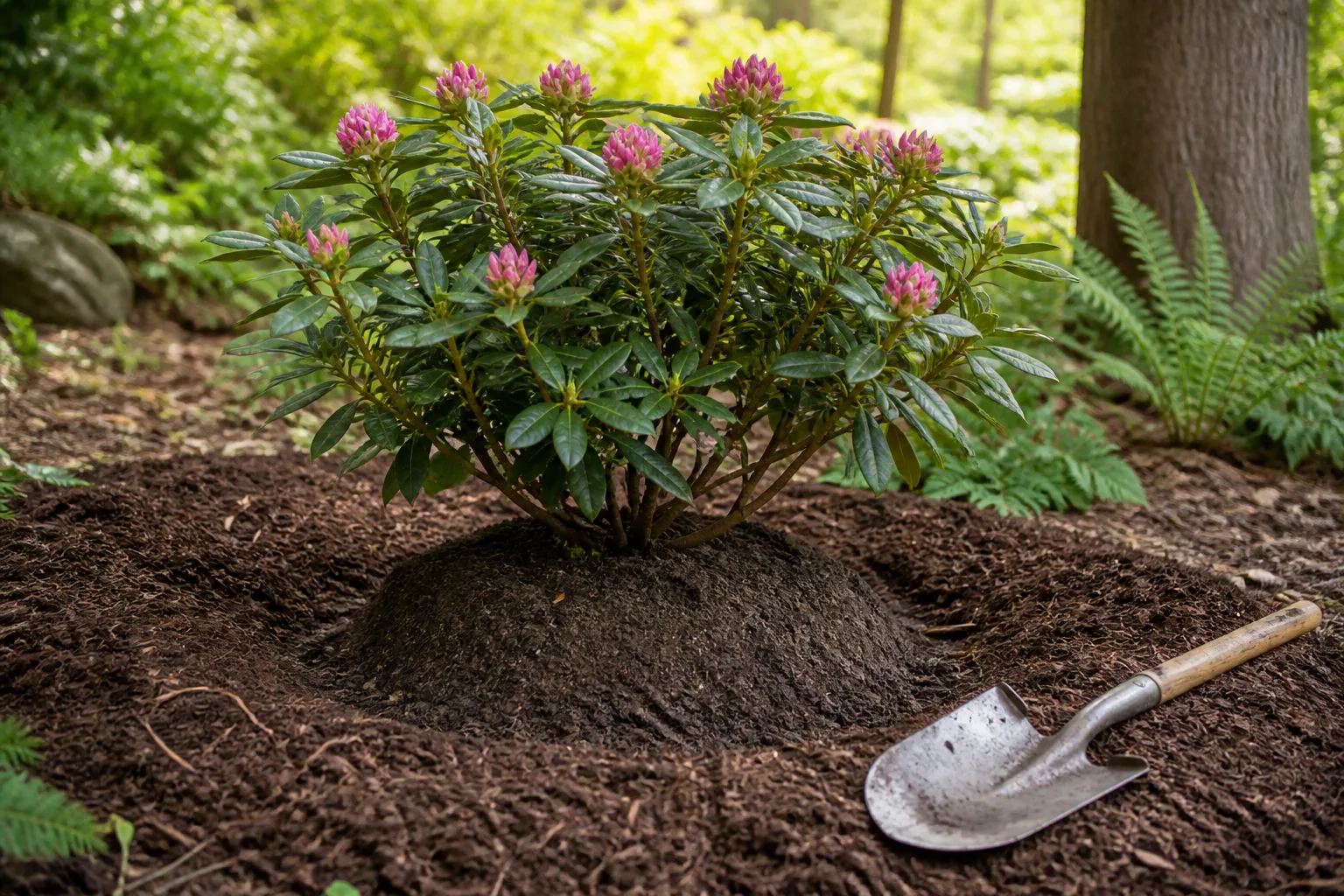
- Dig a hole two to three times wider than the root ball but no deeper than its height. Loosen compacted soil across the bed rather than creating a narrow amended pocket.
- Slide the shrub out of its pot and inspect the outer roots. If they circle tightly, tease a few free or make shallow vertical cuts through the root mat so new roots can move outward; do not shred the root ball.
- Set the plant so the top of the root ball is level with, or slightly above, the surrounding soil. Rhododendron roots need air near the surface; burying the crown is a common route to decline.
- Backfill with the native soil if it is suitable, firm it gently, and water slowly to settle the root zone. Do not mound soil against the stems.
- Spread organic mulch over the root area, leaving a gap around the base. The mulch should cover the shallow feeder roots, not the trunk or crown.
The RHS growing guide says roots should be just covered, and Gardening Know How’s planting guidance similarly warns against planting rhododendrons too deeply. If the root ball is unusually tall or the nursery mix sits well above the surrounding grade, let the top remain slightly proud rather than burying it to make the bed look level.
Water by root-zone moisture
For the first growing season, check the actual root ball every few days during warm or dry weather. Water slowly when the top inch or two begins to dry, then let excess drain away. A newly planted shrub can wilt because the potting mix has dried out even while the surrounding clay is wet, so check both the root ball and the nearby soil before deciding what to do.
Once established, water deeply during prolonged dry periods, especially while the shrub is forming flower buds and pushing new spring growth. Do not follow a rigid weekly schedule if rain has already soaked the bed. Rhododendrons need consistent moisture, but saturated soil deprives roots of oxygen and increases root-rot risk; a wilted shrub in wet ground needs a drainage investigation, not more water.
Water at the soil line in the morning when practical. In regions with hard, alkaline tap water, occasional tap-water use is generally less consequential than chronic drought, but rainwater is a useful choice when available for repeated irrigation. The RHS notes that hard water can affect acidity around the roots over time. Do not let the shrub’s leaves become a cue to water automatically: leaves can droop in heat or cold even when the root zone is adequately moist.
Mulch without burying the crown
Apply about two to three inches of loose organic mulch over the root zone, extending toward the canopy edge as the shrub grows. Shredded bark, pine bark, leaf mold, or well-rotted leaves reduce evaporation and soften soil-temperature swings. Renew the layer as it decomposes, but keep a visible space around stems so damp mulch does not stay pressed against the crown.
Rhododendrons have fine, shallow roots, so avoid hoeing or cultivating beneath the branch tips. Pull weeds by hand while they are small, or use a light mulch layer to suppress them. The goal is not to make the soil acidic with a magic mulch; the effect of organic materials on pH is gradual and variable. Test soil and correct it deliberately if the pH is unsuitable.
Fertilize only when evidence calls for it
If the shrub is growing well in fertile, acidic soil, it may not need fertilizer. Yellow leaves, poor growth, or fewer flowers do not prove that the plant needs feeding; the cause may be high pH, waterlogged roots, drought, too much shade, or winter injury. Correct the growing condition before adding nutrients.
If a soil test or clear growth deficiency supports feeding, use a product labeled for rhododendrons or other acid-loving plants and follow its label rate. Apply in late winter or early spring, or just after flowering where that better matches local growth timing. The American Rhododendron Society warns that too much fertilizer can injure roots and leaves, and advises gardeners in cold climates not to apply nitrogen after late June, when it can push soft growth toward winter.
Do not add phosphorus just to “force” flowers. The society recommends using phosphorus only when a soil test indicates a deficiency. Likewise, iron products may provide temporary relief from iron chlorosis, but they do not solve alkaline soil; lasting improvement depends on understanding and correcting the pH or choosing a more suitable site.
Prune after flowering; deadhead if useful
Nova Zembla needs little routine pruning. Remove dead, broken, or diseased branches when you notice them, cutting back to healthy wood or a branch junction. For size or shape, prune soon after the flowers fade; rhododendrons form next year’s buds during the growing season, so a late-summer or fall trim can remove the next display.
Deadheading is optional. If you want a tidier shrub or want to limit seed formation, pinch or snip off the spent flower truss just above the first set of new growth. Handle the small buds clustered beneath the old flower carefully. On a mature shrub with dozens of clusters, leaving them alone is reasonable; do not sacrifice healthy shoots or injure next year’s buds just to remove every faded bloom.
Avoid routine shearing into a tight ball. It can leave a hard outer shell of leaves, reduce air circulation, and remove flower buds without fixing the plant’s underlying size problem. If a shrub is severely overgrown, stage structural pruning over more than one year or consult a local arborist or horticulture professional before cutting back into old wood.
Grow it in a container when soil is wrong
A container is a sensible alternative when garden soil is alkaline, compacted, or poorly drained, or when you need to move the shrub away from hot afternoon sun. It is not automatically easier: a mature cultivar can become bulky, and container roots heat, dry, and freeze faster than roots in the ground. Before buying a pot, check the cultivar’s size and whether you can protect the container through winter.
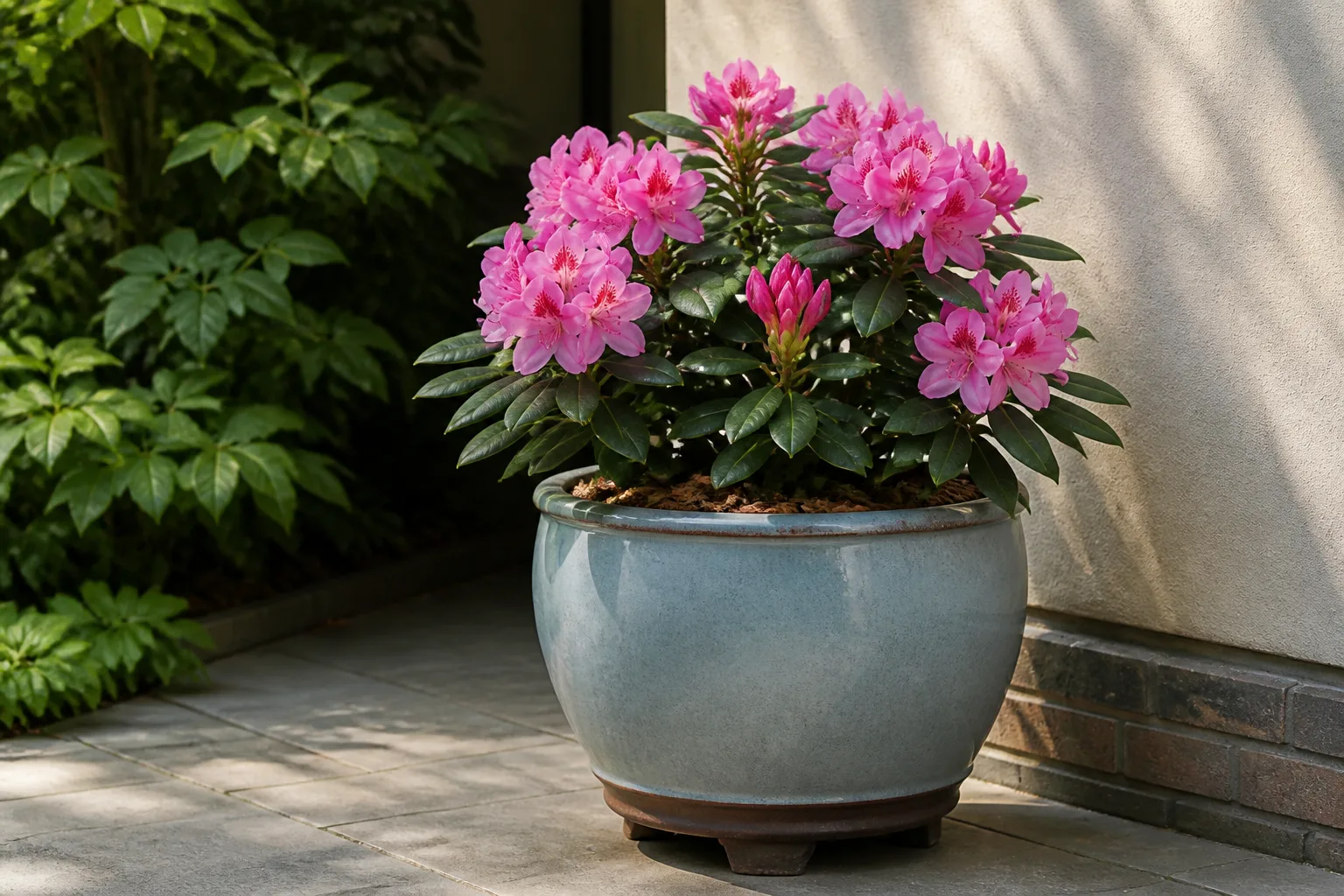
Choose a sturdy pot with generous drainage holes and an acid-loving, airy container mix. Do not use heavy garden soil by itself, and do not place gravel in the bottom as a substitute for drainage. Water thoroughly until it runs from the holes, then empty any saucer so the roots do not stand in water. In warm, breezy weather, check moisture more often than you would for an in-ground shrub.
The RHS notes that compact rhododendron hybrids can suit containers and recommends refreshing the growing medium as it loses structure. Nova Zembla is not especially compact, so plan for an increasingly large pot, root-space maintenance, and a sheltered winter location. If those jobs are unrealistic, choose a smaller cultivar rather than repeatedly restricting or severely pruning this one.
Protect evergreen leaves through winter
Cold hardiness does not prevent winter desiccation. On bright, windy days, evergreen leaves can lose moisture while cold or frozen soil limits root uptake. If the ground is dry going into a freeze, water the root zone beforehand while the soil can still absorb it. Maintain mulch over the shallow roots, but keep it away from stems.
Select a site sheltered from prevailing winter wind rather than wrapping the shrub every year. Where exposure is unavoidable, a temporary burlap wind screen on the windward side can reduce desiccation; leave room for air circulation and do not wrap the foliage tightly in plastic. In a container, insulate or move the pot to a protected, unheated location appropriate to the cultivar’s hardiness. A plant hardy in the ground may not tolerate the same low temperature when its roots sit aboveground in a pot.
Leaves curling or drooping during a sudden cold snap can be a temporary response, not proof of a watering emergency. Wait until the weather moderates, inspect the soil, and assess whether the leaves recover. Persistent browning, branch dieback, or wilt in wet ground calls for a closer look at roots and drainage.
Troubleshoot yellow leaves, weak bloom, and wilt
Start with the pattern and the site, not a bottle of fertilizer. Check whether the symptom affects new or old leaves, whether the soil is dry or saturated several inches down, and how much direct afternoon sun the plant receives. Take a soil test if pH or nutrients are in question; one yellow leaf cannot diagnose a deficiency.
Yellow leaves: check age, vein pattern, and pH
Yellowing between green veins on new leaves often points to iron becoming unavailable, commonly because soil pH is too high. Yellowing between veins on older leaves can have other causes, including magnesium deficiency. The American Rhododendron Society distinguishes those patterns and recommends a soil test before treatment. If the shrub is uniformly pale, also check drainage, root depth, drought, and normal seasonal leaf replacement.
If pH is high, avoid repeated iron sprays as the sole long-term fix. Find out why the root zone is alkaline and whether it is realistic to lower pH in the whole bed. If it is not, growing the shrub in an appropriate container or replacing it with a plant suited to local soil may be less frustrating than endless amendments.
Few flowers: audit light, buds, and pruning date
Poor flowering can follow too much shade, a pruning cut made after new buds formed, drought during bud development, or winter damage to the buds. Check whether branches receive enough filtered light, then review when and how much you pruned the previous year. Do not fertilize heavily in the hope of buying more flowers; excess nitrogen can promote foliage at the expense of a balanced shrub.
Spring bloom timing varies with local temperatures and exposure, so compare the plant with other rhododendrons in your area rather than expecting a fixed May or June date. If the shrub has never bloomed, verify that the plant tag really says ‘Nova Zembla’ and that it receives several hours of useful light without being scorched by hot sun.
A young or newly planted shrub may also need time to settle before it flowers heavily. Epic Gardening’s rhododendron guide notes that young plants can take a season or two to produce a fuller display, so a first quiet spring is not by itself proof that the shrub is failing.
Brown edges or wilt: separate drought from root rot
Dry, crispy leaf margins after hot weather usually call for a root-zone moisture and sun check. Water the root ball if it has dried out, add mulch if the soil surface is bare, and consider whether afternoon exposure is too harsh. If leaves brown after a cold, windy period, winter desiccation may be more likely than a nutrient problem.
Wilt in soil that stays wet is different. Check whether water drains, whether the shrub sits too low, and whether the crown or lower stems are buried. Phytophthora root rot can cause reduced vigor, leaf loss, branch dieback, and wilting in susceptible rhododendrons; NC State Extension emphasizes good cultural conditions and drainage. If decline continues despite correcting obvious site problems, have a local diagnostic clinic examine a sample rather than applying a fungicide by guesswork.
Propagate without losing the cultivar
Seed is useful for breeding, but it will not reliably produce a plant identical to ‘Nova Zembla.’ Seedlings inherit variable traits, so flower color, hardiness, and shape may differ. To preserve the named cultivar, use a vegetative method such as semi-ripe cuttings, layering, or grafting.
The RHS propagation guide describes named rhododendron cultivars as plants to propagate by cuttings, grafting, or layering rather than seed. Cuttings can be slow and inconsistent for home gardeners; use healthy current-season shoots and maintain a humid, evenly moist rooting environment without waterlogging the medium. Layering is slower but requires less specialized equipment. If you need a guaranteed, true-to-name plant, buying a labeled nursery specimen is usually the dependable route.
Keep pets and children from eating it
Treat all rhododendrons, including Nova Zembla, as plants that should not be eaten. The ASPCA lists rhododendron as toxic to dogs and cats; ingestion can cause serious illness. Keep fallen leaves, pruned trusses, and discarded branches away from animals, and supervise pets in beds where they can browse.
If a pet may have chewed the shrub, contact a veterinarian or animal poison-control service promptly and share the plant name and estimated amount. Do not wait for symptoms or try to induce vomiting unless a veterinary professional instructs you. If young children use the garden, teach them not to taste ornamental plants and place the shrub where casual nibbling is less likely.
Conclusion
Nova Zembla is a rewarding red-flowering evergreen when its site is right: acidic soil, reliable drainage, bright filtered light, steady moisture, and shelter from drying winter wind. The most useful first steps are to test pH, observe how water leaves the bed, and plant the root ball at the surface instead of burying it. After establishment, mulch, water during real dry spells, feed only when evidence supports it, and prune just after bloom so next year’s buds remain.
When the leaves yellow or the shrub wilts, inspect soil moisture, drainage, pH, and exposure before treating it. That diagnosis-first approach protects the shallow roots and avoids creating new problems with excess water or fertilizer. Keep trimmings away from pets, and choose a container or another shrub if your soil or climate makes the required conditions impractical.



