17 Best Trees With Pink Flowers for Your Yard
Compare 17 pink flowering trees by mature size, bloom time, hardiness, and trade-offs so you can choose a tree that fits your yard and climate with confidence.
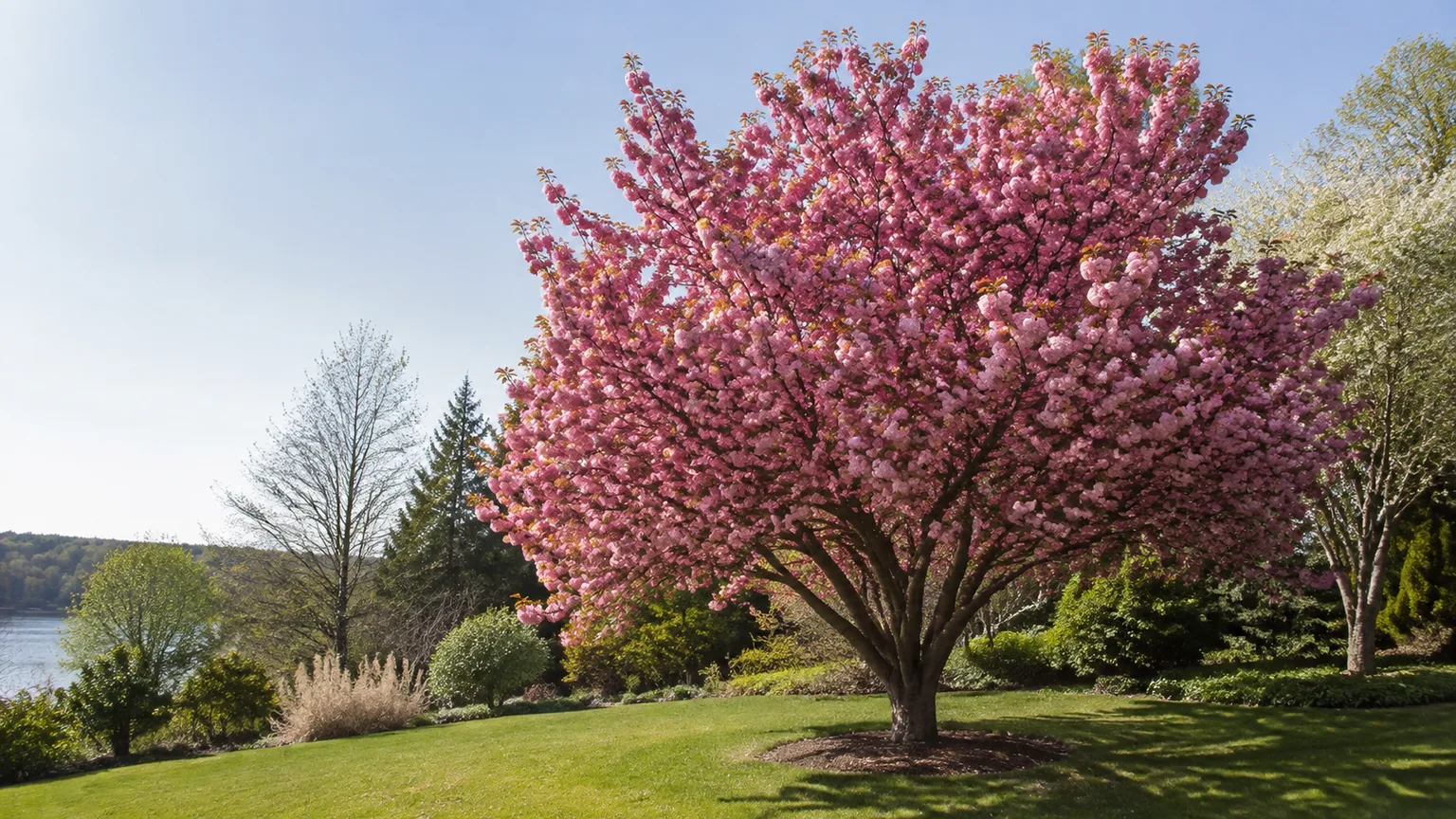
A pink-flowering tree earns its space for only a few weeks of bloom, so choose it for the whole year, not just the spring photograph. Before you buy, compare the tree’s mature width with the distance to your house, sidewalk, driveway, overhead wires, and neighboring plants; then check its bloom window, winter hardiness, and tolerance for your soil and summer weather.
These 17 options range from compact magnolias to broad ornamental cherries and warm-climate trees. Approximate hardiness zones are starting points for U.S. gardens, not promises: cultivars, rootstocks, microclimates, and local winter swings all matter. If you garden elsewhere, use your local climate rating and nursery guidance instead.
How to Choose a Pink-Flowering Tree That Fits
Start with the space the tree will occupy at maturity. A tree sold in a small pot can become a 25-foot-wide canopy, and trimming it every year to squeeze it into the wrong spot usually creates more work than choosing a smaller cultivar in the first place. If a tree must be planted under a utility line, over a narrow walk, or close to the foundation, cross off large cherries and horse chestnuts before comparing flower color.
| Your priority | Trees to compare first | Main trade-off |
|---|---|---|
| Small garden or modest canopy | ’Jane’ magnolia, star magnolia, compact Okame cherry, smaller crabapple cultivar | Confirm the cultivar’s mature width; nursery labels may describe young trees |
| Native spring flowers and wildlife | Eastern redbud or flowering dogwood | Both need a site suited to their moisture and soil needs |
| Double blossoms and a strong focal point | Kwanzan or weeping Higan cherry | Showy bloom can be brief, and cherries need room and cleanup |
| Pink flowers beyond spring | Crape myrtle; pink trumpet tree in frost-free regions | Warm-climate choices may not survive a cold winter |
| Flowers plus fruit | Crabapple or apple | Fruit drop, pollination, and disease resistance matter |
Bloom time is another kind of fit. Early magnolias and cherries can open during changeable weather; a late frost may ruin that year’s flowers without killing the tree. If spring frosts are common where you live, favor later bloomers such as Kousa dogwood or summer-flowering crape myrtle, and avoid placing early magnolias in a low pocket where cold air settles. No cultivar can guarantee flowers after a hard freeze.
Check the light and soil honestly. Most flowering cherries and crabapples bloom best in full sun, while redbud and flowering dogwood can handle some shade; wet, poorly drained soil is a problem for many ornamental trees. When planting, keep the root flare visible at soil level, water the root ball and surrounding soil deeply while the tree establishes, and spread mulch over the root zone without piling it against the trunk. The RHS tree-planting guide covers site preparation and planting basics; local extension advice can refine them for your soil and climate.
One naming trap: some lists mix trees with shrubs. Camellia, weigela, and most rhododendrons are shrubs, while flowering almond is usually grown as a multi-stem shrub even though it can be trained as a small tree. Japanese snowbell is a genuine tree, but its flowers are typically white. If your goal is a traditional tree silhouette and pink blooms, check the plant’s mature form and actual flower color before buying.
1. Kwanzan Japanese Cherry
Kwanzan, also sold as ‘Kanzan’, is the double-flowered cherry for gardeners who want a dense, rose-pink spring display. It typically reaches roughly 25 to 30 feet tall and wide, so it is a better lawn or open-yard specimen than a tree for a tight foundation bed. The blossoms are full and showy, and the young foliage adds a coppery spring note before turning green.
Give it full sun and moist but well-drained soil, and leave generous room around the future canopy. Fine Gardening notes that ‘Kanzan’ can outgrow the space homeowners expect, and that ornamental cherries are often relatively short-lived compared with many shade trees; site it where fallen petals and leaves will not become a daily nuisance. Typical guidance places it in USDA zones 5–9, but local cultivar stock may vary. Fine Gardening’s cherry-tree comparison is useful for comparing size and seasonal interest.
2. Weeping Higan Cherry
A weeping Higan cherry creates a very different effect: arching branches form a rounded canopy that can bring flowers closer to eye level. ‘Pendula’ forms are often around 20 to 30 feet tall, with the spread depending on the grafted tree and how its branches are trained. The single or semi-double flowers are generally lighter than Kwanzan’s, so the effect is softer rather than a solid pink mass.
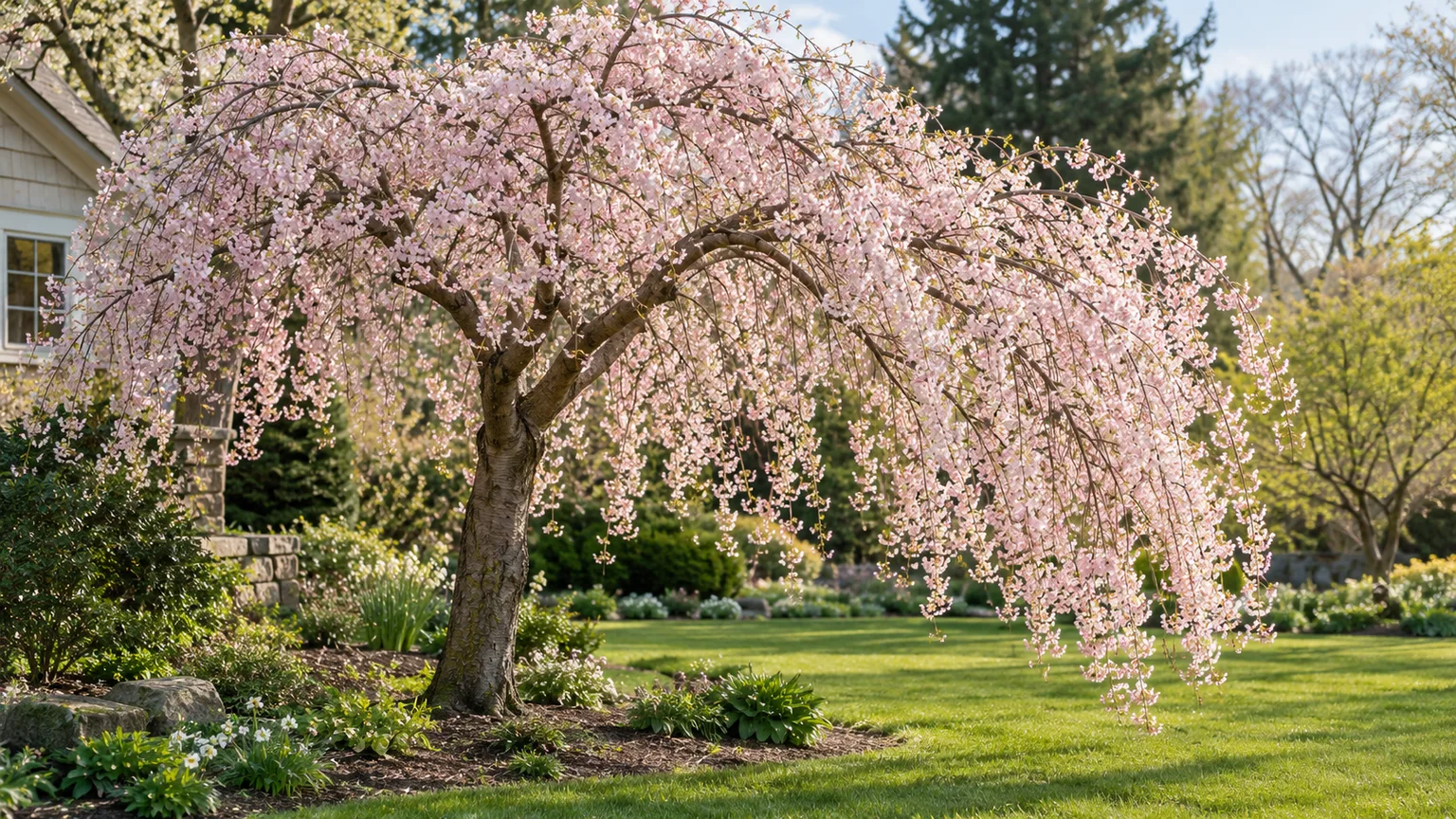
Choose a visible spot with full sun and enough clearance for the drooping branches; avoid planting where they will sweep across a path. Higan cherries suit gardens in roughly zones 5–8, though a nursery should confirm the exact cultivar and rootstock. Their ornamental value does not make them low-maintenance: inspect the structure while young, remove damaged wood, and avoid unnecessary heavy pruning that spoils the natural umbrella shape. BBC Gardeners’ World describes the weeping form and its seasonal foliage in its profile of ‘Pendula Rubra’.
3. Okame Cherry
Okame cherry is a useful pick when you want a smaller, earlier flowering cherry rather than a large canopy. Expect about 15 to 25 feet tall and a similar or somewhat narrower spread, depending on the site and nursery stock. Its pink flowers can open before many other ornamental cherries, giving the yard an early spring signal when magnolias and redbuds are just beginning.
It generally suits USDA zones 6–9 and a sunny, well-drained position. Early flowering is also its main risk: a cold snap can spoil the display, especially in an exposed garden or a low spot that collects cold air. Use it as a specimen or in a small group, not as a source of edible cherries; ornamental flowering selections are chosen for blossoms and form rather than dependable fruit harvest.
4. Yoshino Cherry
Yoshino cherry is best for a wide lawn or park-like yard where its spreading canopy can be seen from a distance. It may grow 30 to 40 feet tall and about as wide, so it is not a compact-tree solution. The flowers often open pale pink and fade toward white, which gives the canopy a soft, cloudlike look rather than a saturated pink one.
Plan for full sun, even moisture during establishment, and a broad footprint; hardiness is commonly listed around zones 5–8. A mature Yoshino can be a memorable spring focal point, but the blossom season is short and wind or rain can end it quickly. Choose it if you value the whole form and spring atmosphere, not if you need a small tree or insist on strong pink color for the entire bloom period. Fine Gardening’s regional cherry guide compares Yoshino’s color and size with other flowering cherries.
5. Eastern Redbud
Eastern redbud is among the best choices for a native North American small tree with pink-to-purple spring flowers. Its blooms appear along bare branches before the heart-shaped leaves unfold, so the display reads clearly even from across the yard. A mature tree is often about 20 to 30 feet tall and 20 to 35 feet wide, with a loose, rounded shape.
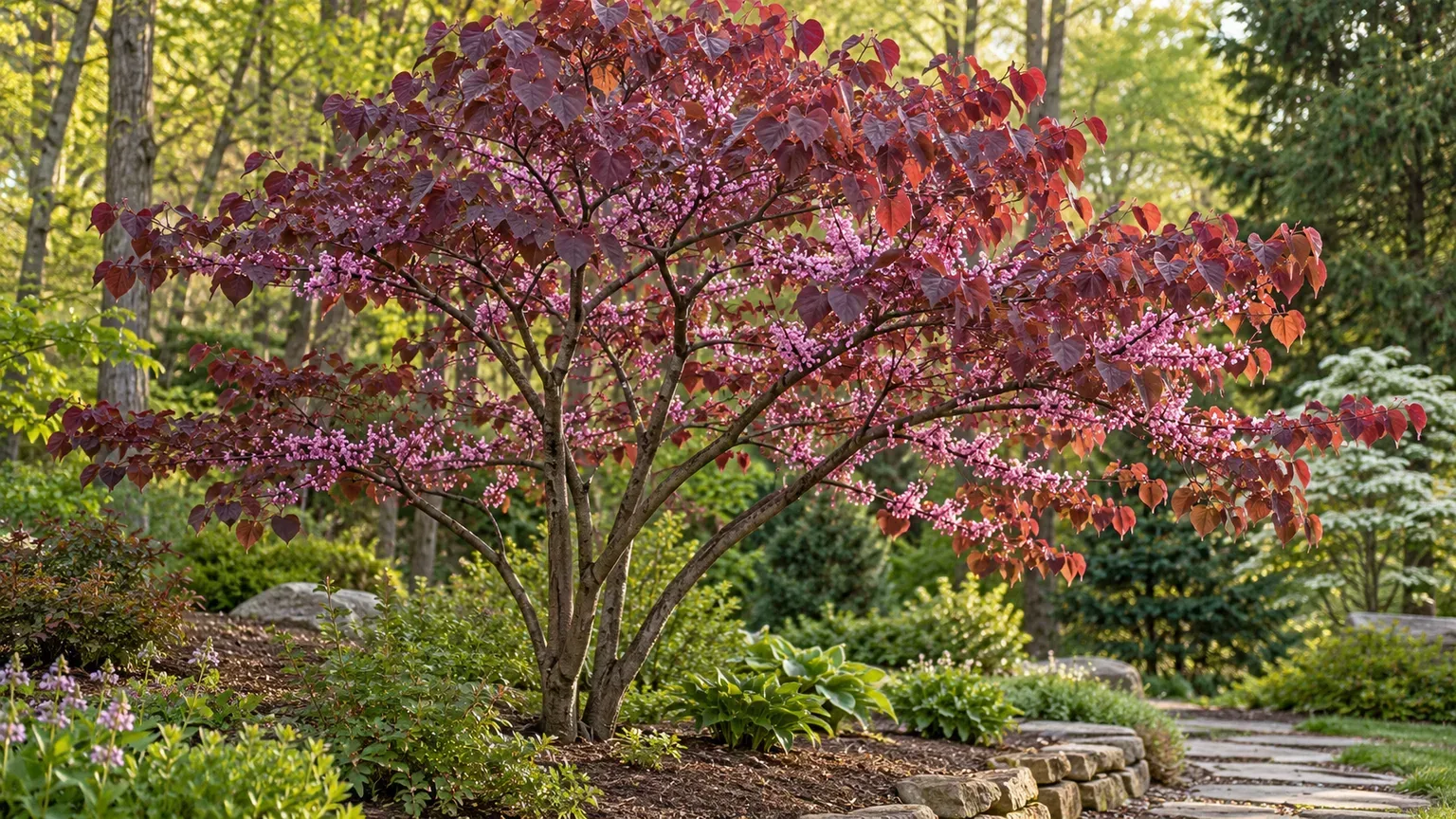
Redbud tolerates full sun to part shade and works well at a woodland edge, but its branches can be vulnerable to breakage and it dislikes wet soil, drought stress, and root disturbance. Water it consistently while establishing and choose its permanent spot early. North Carolina State Extension notes its native range, pollinator value, light tolerance, and sensitivity to drought and saturated soil in its Eastern redbud profile. In many U.S. gardens it is hardy around zones 4–9; use a locally adapted cultivar for the best fit.
6. Pink Flowering Dogwood
Pink flowering dogwood adds a smaller, layered canopy and a spring display that can work in a garden with some afternoon shade. What looks like four large pink petals is actually a set of petal-like bracts surrounding the tiny true flowers. The native flowering dogwood usually matures around 15 to 25 feet tall, making it easier to fit into a residential yard than a large canopy tree.
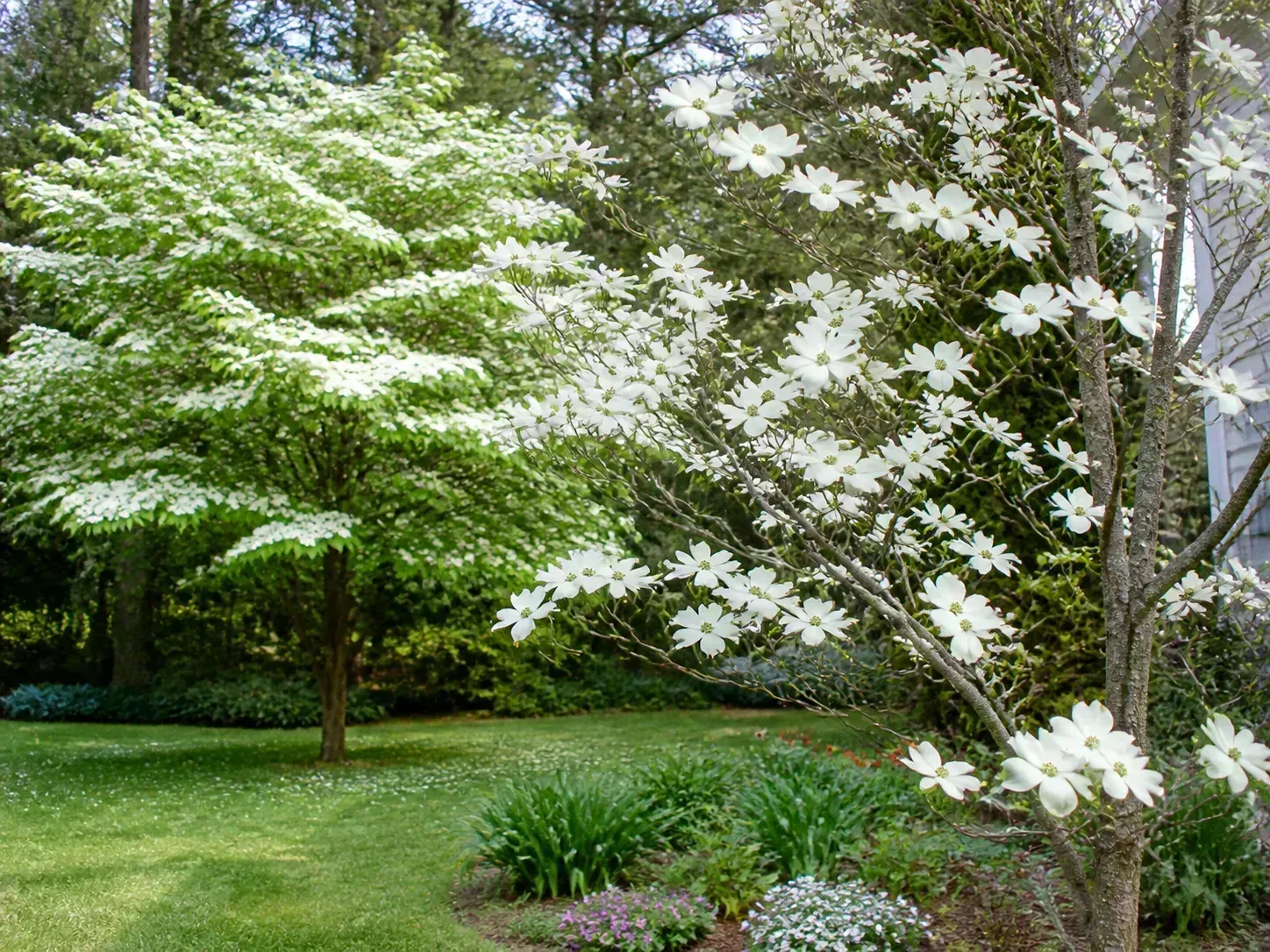
Choose moist but well-drained soil with organic matter; in hotter areas, protection from intense afternoon sun can help. Dogwood can be demanding in exposed, dry, or poorly drained sites, and disease pressure varies with region and cultivar. North Carolina State Extension explains the tree’s understory habit, bract structure, size, and site preferences in its flowering dogwood profile. Typical hardiness is about zones 5–9, but local disease-resistant selections deserve priority over a flower-color label alone.
7. Pink Kousa Dogwood
Kousa dogwood ‘Satomi’ is a choice for gardeners who want a later display than many flowering cherries and native dogwoods. It usually forms a small, horizontal-branched tree in the 15- to 25-foot range, though mature size depends on cultivar and growing conditions. The showy bracts can take on pink tones, and the tree’s layered branching keeps it attractive after the spring color fades.
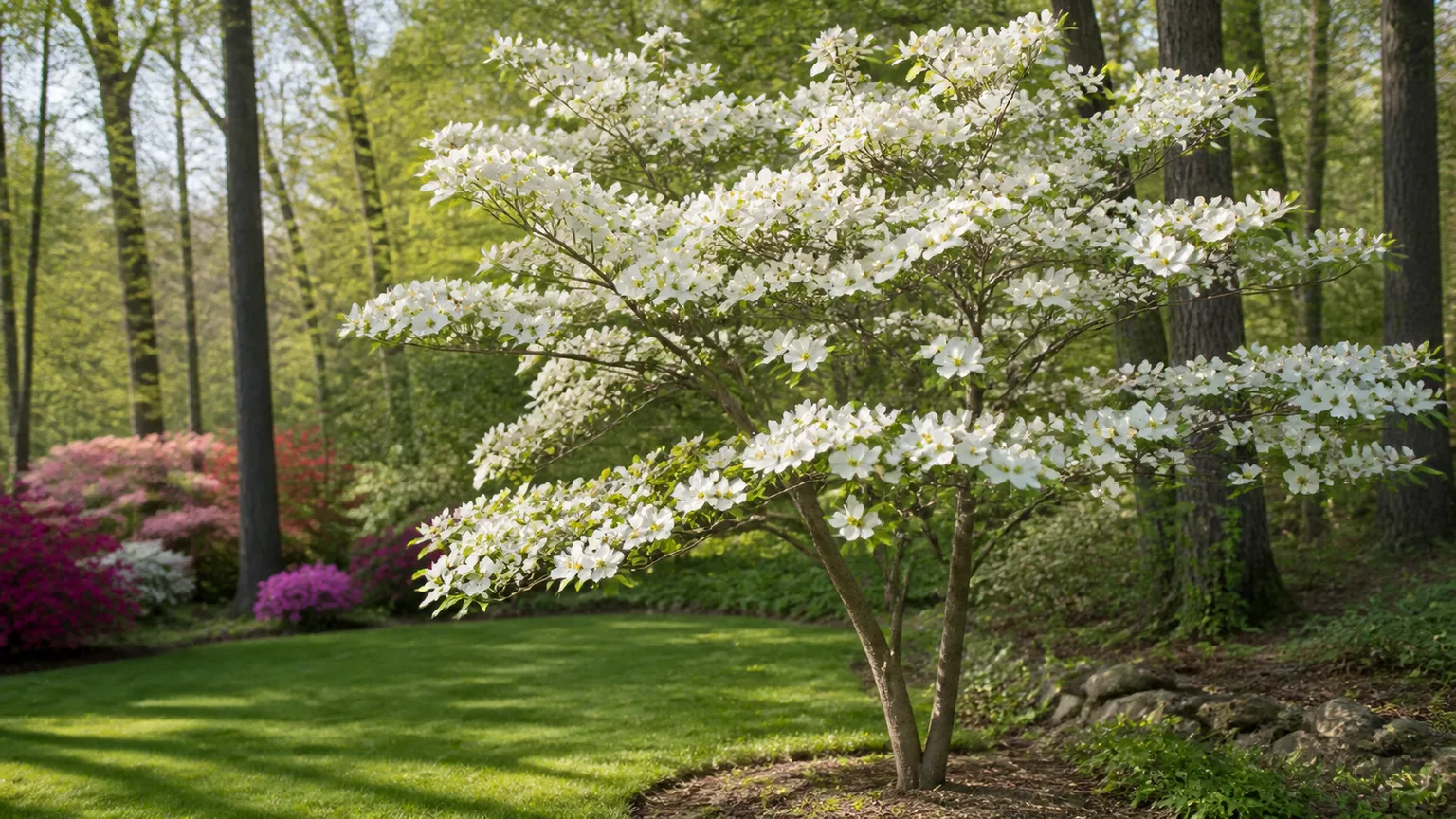
Plant it in sun or light shade in soil that drains well; it can take years to develop its full shape. Kousa dogwood is often placed in zones 5–8, but check the cultivar tag and local guidance. It is not a shortcut around every dogwood problem: drought, heat, or poor drainage still weaken a young tree. Its later flowers can extend the season, but do not assume every plant sold as a pink Kousa will have the same intensity of color.
8. Magnolia ‘Jane’
‘Jane’ magnolia is one of the strongest pink-flowering trees for a smaller yard. It commonly grows around 10 to 15 feet tall and wide, with a compact multi-stem form and large pink-purple flowers. It blooms later than some magnolias, which can reduce—but cannot eliminate—the chance that one late freeze will brown the buds.
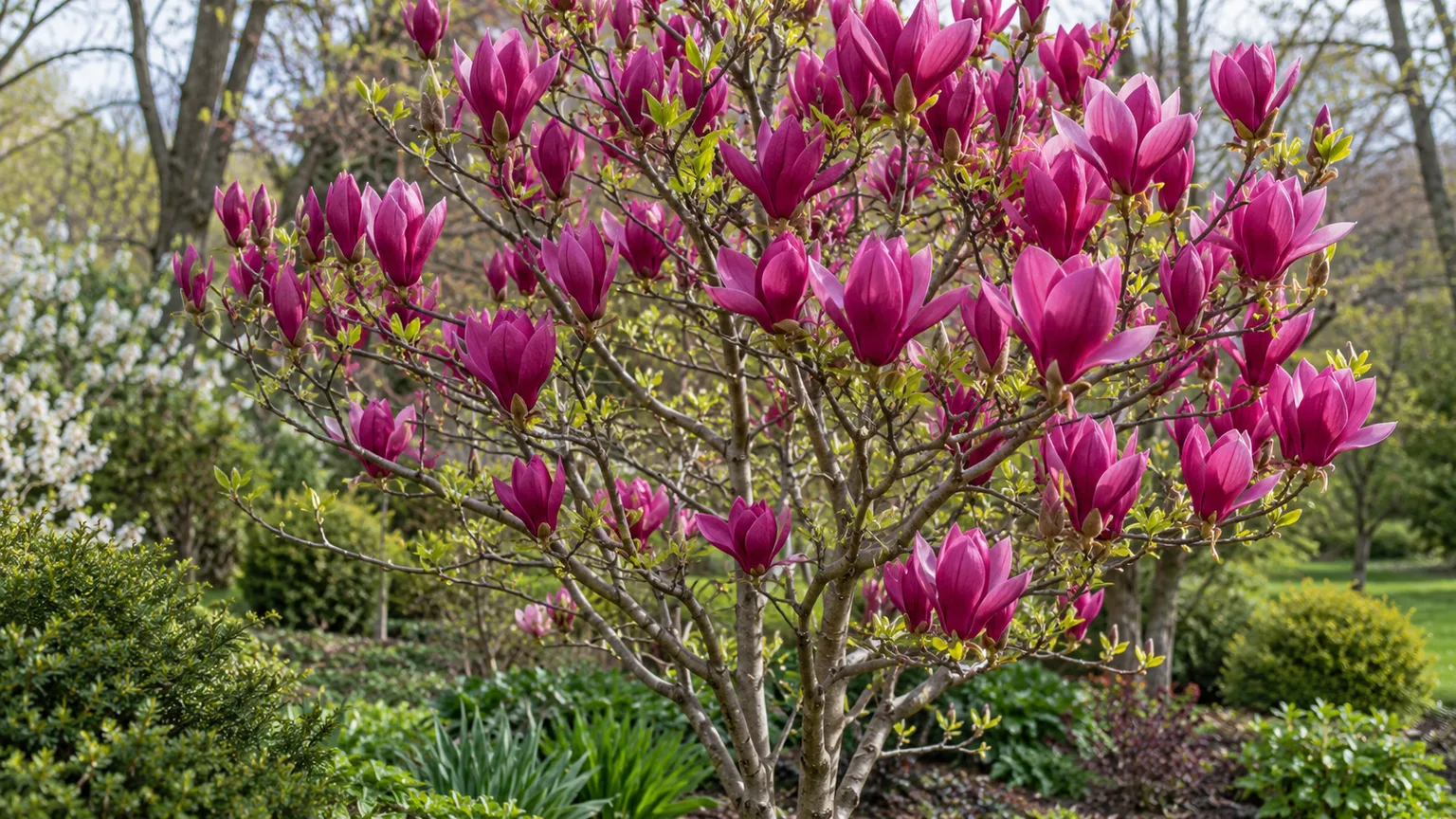
Use it as a specimen near a patio or lawn, allowing room for its mature spread and avoiding a spot where the roots or branches will be repeatedly disturbed. Full sun to light shade and moist, well-drained soil suit it; a sheltered site can help preserve early flowers. It is generally grown in zones 4–8. If you want a restrained tree with oversized blossoms rather than a broad shade canopy, ‘Jane’ is often a more realistic fit than a full-size saucer magnolia.
9. Saucer Magnolia
Saucer magnolia has large, tulip-shaped flowers in pink, purple-pink, or white combinations, depending on the cultivar. It is a small-to-medium tree, often around 20 to 30 feet tall and wide, and it needs space to develop its broad crown. The flowers emerge early, before the leaves, which makes the tree striking but also exposes the display to late frost.
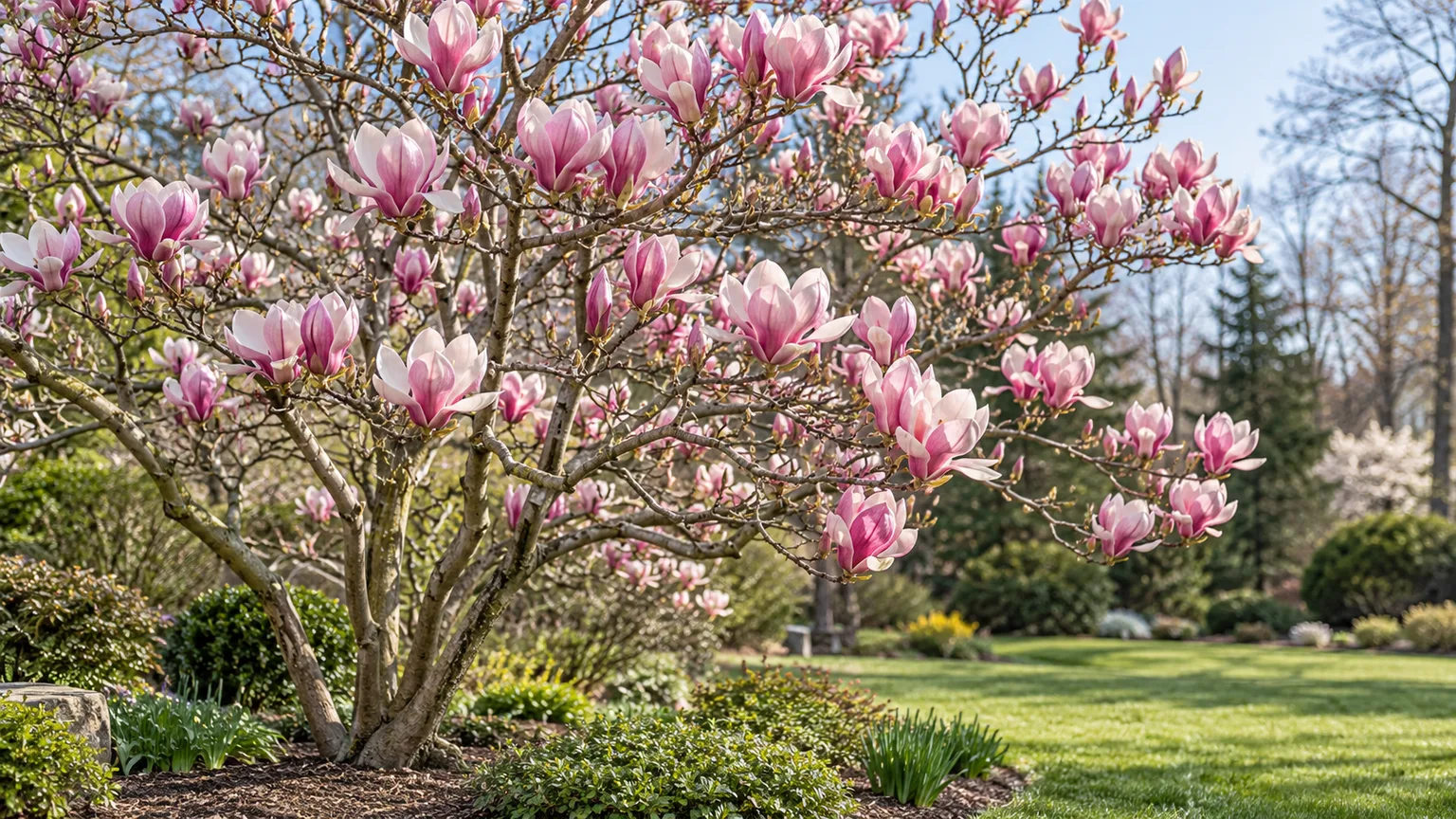
Choose an open, sunny site with well-drained soil and avoid planting it in a frost pocket or against a hot south-facing wall that encourages very early bud opening. The tree is commonly listed for zones 4–9, but its bloom timing shifts with local weather and cultivar. Do not judge the whole tree by one season of browned flowers: frost damage to blossoms is not the same as permanent injury to the branches.
10. Star Magnolia
Star magnolia is smaller than many saucer magnolias and produces narrow, many-petaled flowers that open from fuzzy buds. The species is usually about 10 to 20 feet tall and wide; some selections carry pink buds or pink-tinged flowers, while others open nearly white. It is a practical option when a large magnolia would overwhelm the yard but you still want an early focal point.
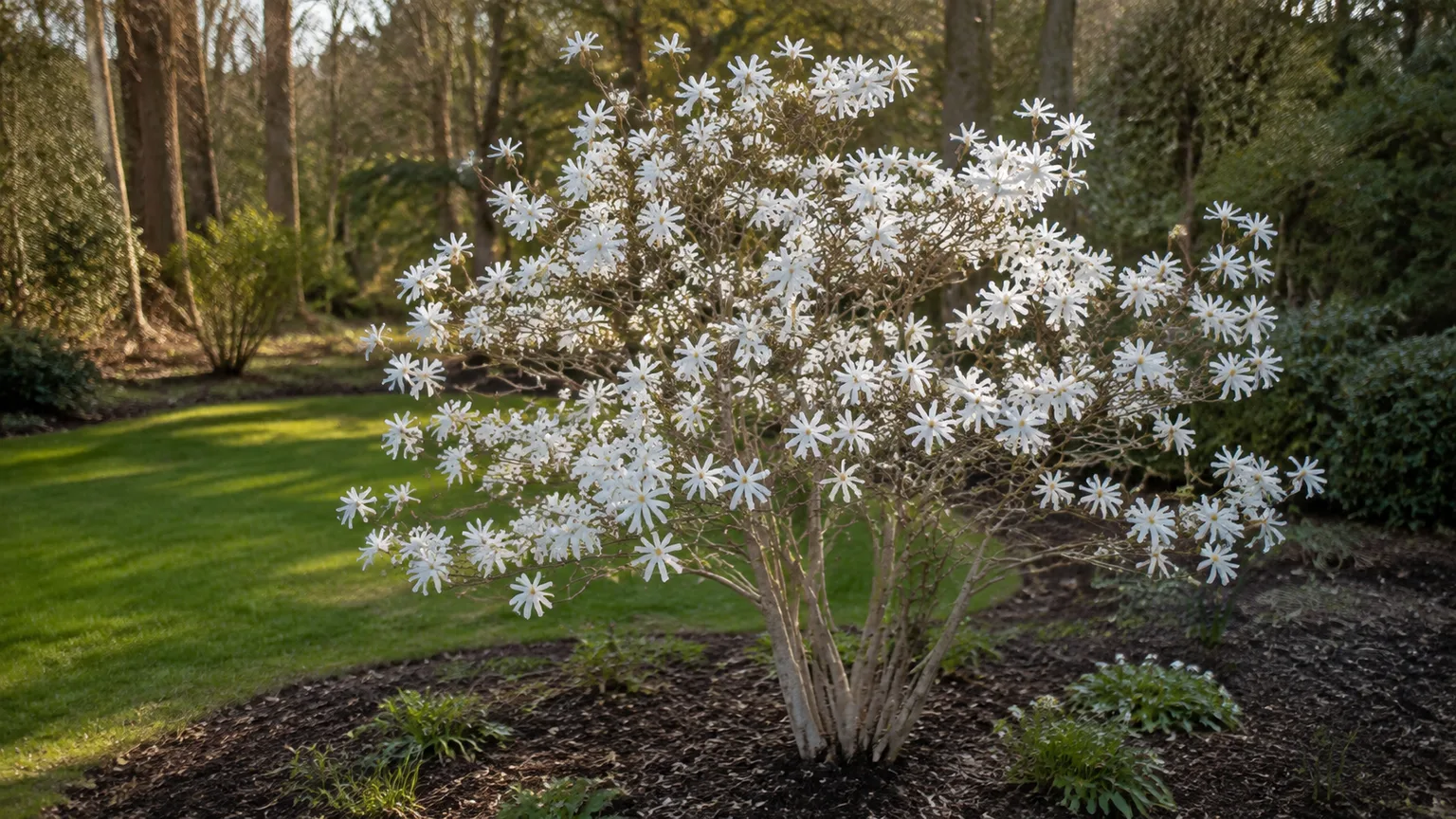
Its early bloom is vulnerable to late cold, so a sheltered garden location is more useful than extra fertilizer. Give the plant room to branch naturally and keep the root zone from drying out as it settles in. Star magnolia is generally hardy around zones 4–8. When buying, ask to see the cultivar’s mature size and flower color; “pink magnolia” may describe the bud or the outer petal rather than a uniformly deep-pink flower.
11. Flowering Crabapple
Crabapple is the most flexible pick if you want spring flowers plus a second season of fruit and wildlife interest. Choose a cultivar selected for dark pink blooms, such as ‘Prairifire’; other crabapples may open pink buds and then turn mostly white. Depending on the selection, the tree can be a compact upright form or a broad canopy, commonly from about 10 to 25 feet tall.
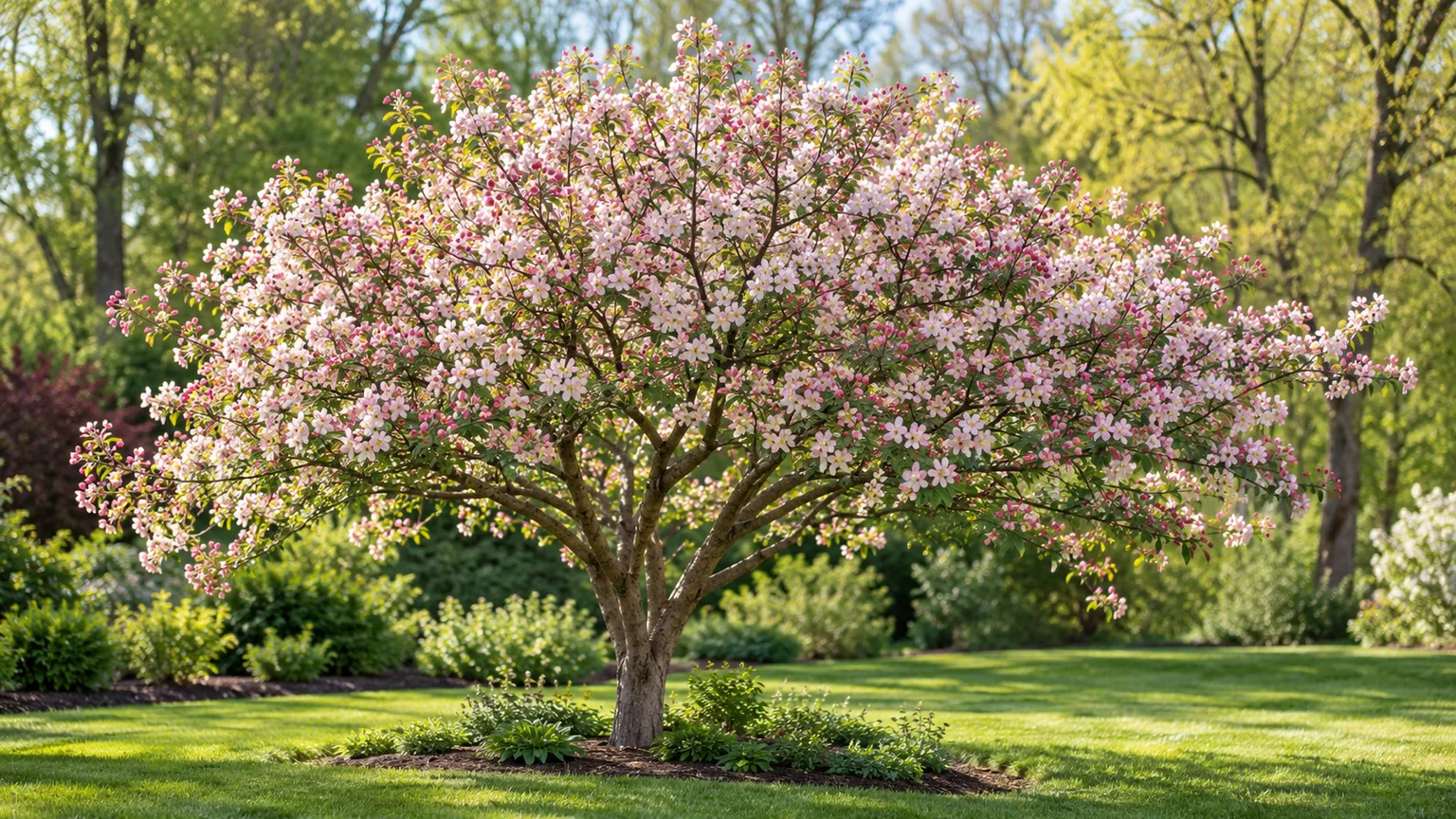
The cultivar matters more than the general label. Fruit can persist on branches or fall and become messy underfoot, while disease resistance varies; Penn State Extension recommends looking for cultivars with strong resistance to common problems such as apple scab and fire blight. Give crabapples full sun and enough room to clean up fallen fruit. They usually suit zones 4–8. Penn State’s flowering crabapple guide compares flower colors, forms, fruit, and disease resistance.
12. Gala Apple Tree
A Gala apple tree offers pink spring buds that open into flowers, then can reward a suitable site with edible fruit. The mature size depends heavily on rootstock: dwarf trees may fit a small garden, while a standard tree can become a much larger planting. Ask the nursery for the mature height and width of the exact rootstock, not just the name ‘Gala’.
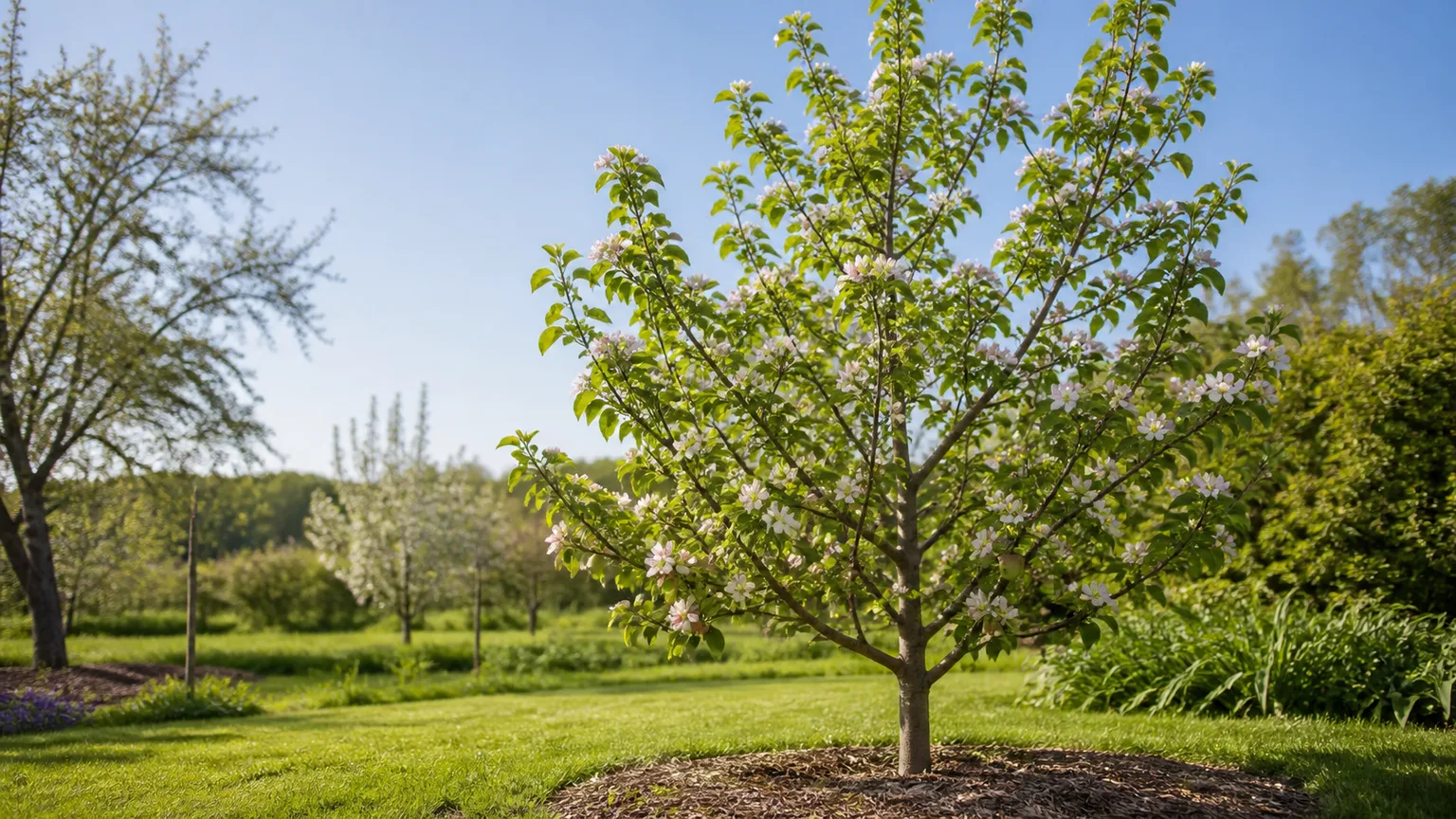
Apple trees need full sun, pruning, and a plan for pollination if fruit is part of the reason you are planting one; verify compatible bloom times with a local extension service or nursery before purchase. Expect fruit drop and routine pest or disease monitoring, which makes an apple less carefree than a purely ornamental tree. The ASPCA lists apple plants as toxic to dogs, cats, and horses, so keep pets from chewing leaves, stems, or seeds; see its apple safety entry. Apples are commonly grown in zones 4–8, though cultivar and rootstock affect the fit.
13. Purple-Leaf Plum
Purple-leaf plum combines spring flowers with deep purple foliage, giving it visual interest beyond the bloom window. Trees often mature around 15 to 25 feet tall, with pink to pale pink flowers appearing before or as the leaves emerge. It can work as a small lawn specimen or accent tree where a darker canopy will contrast with green shrubs.
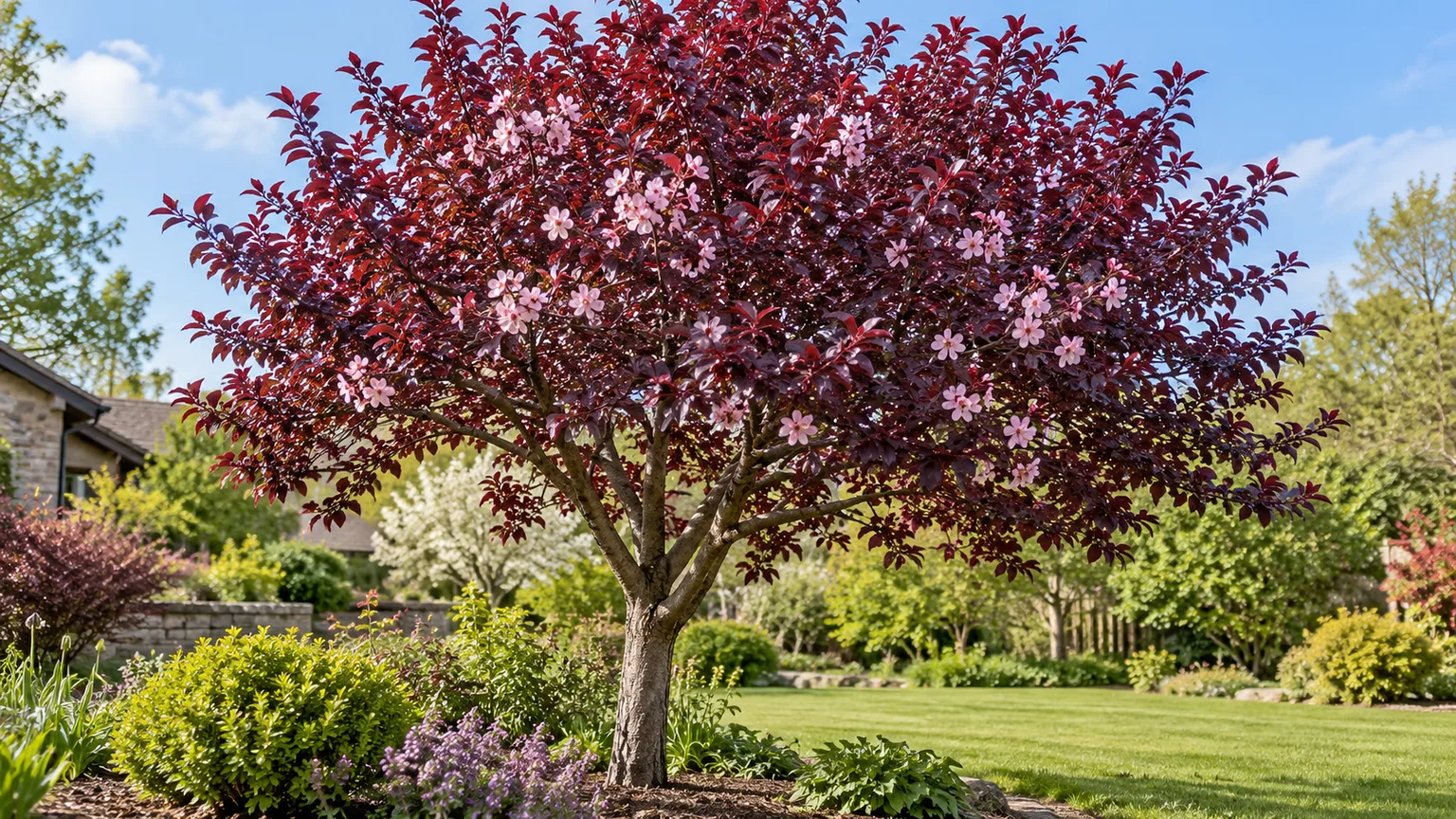
It needs sun for the strongest foliage color and flowers, plus soil that drains well. Some selections produce small fruit, and ornamental plums can have shorter lifespans or more disease and pest issues than the best long-lived shade trees; do not plant one expecting zero maintenance. Typical hardiness is about zones 4–8, depending on cultivar. Choose it for the combination of leaf color and blossom, and confirm the exact fruiting habit with the seller.
14. Red Horse Chestnut
Red horse chestnut bears upright clusters of pink to red-pink flowers in late spring and makes a more substantial tree than most options here. It can reach roughly 30 to 40 feet tall, so reserve it for a large lawn or park-like yard rather than a narrow planting strip. The flower spikes stand above the foliage and can be visible from a distance.
This tree needs space and tolerates sun or partial shade, but its seeds are not edible chestnuts. Horse chestnuts contain toxic compounds; the ASPCA identifies horse chestnut as toxic to pets, and the seed pods can also create a cleanup issue. Keep children and animals away from fallen seeds and plant debris, and choose another tree if the drop zone is a play area. The ASPCA’s horse chestnut entry provides pet-safety information. Typical hardiness is around zones 5–8.
15. Crape Myrtle
Crape myrtle brings pink flowers in summer, when many spring-flowering trees have finished. A named pink cultivar can be a shrub-like small tree or a taller multi-stem specimen, and the mature height varies dramatically among selections—from a few feet to well over 20 feet. Its exfoliating bark and warm-season bloom make it useful in long, hot summers where spring cherries are less reliable.
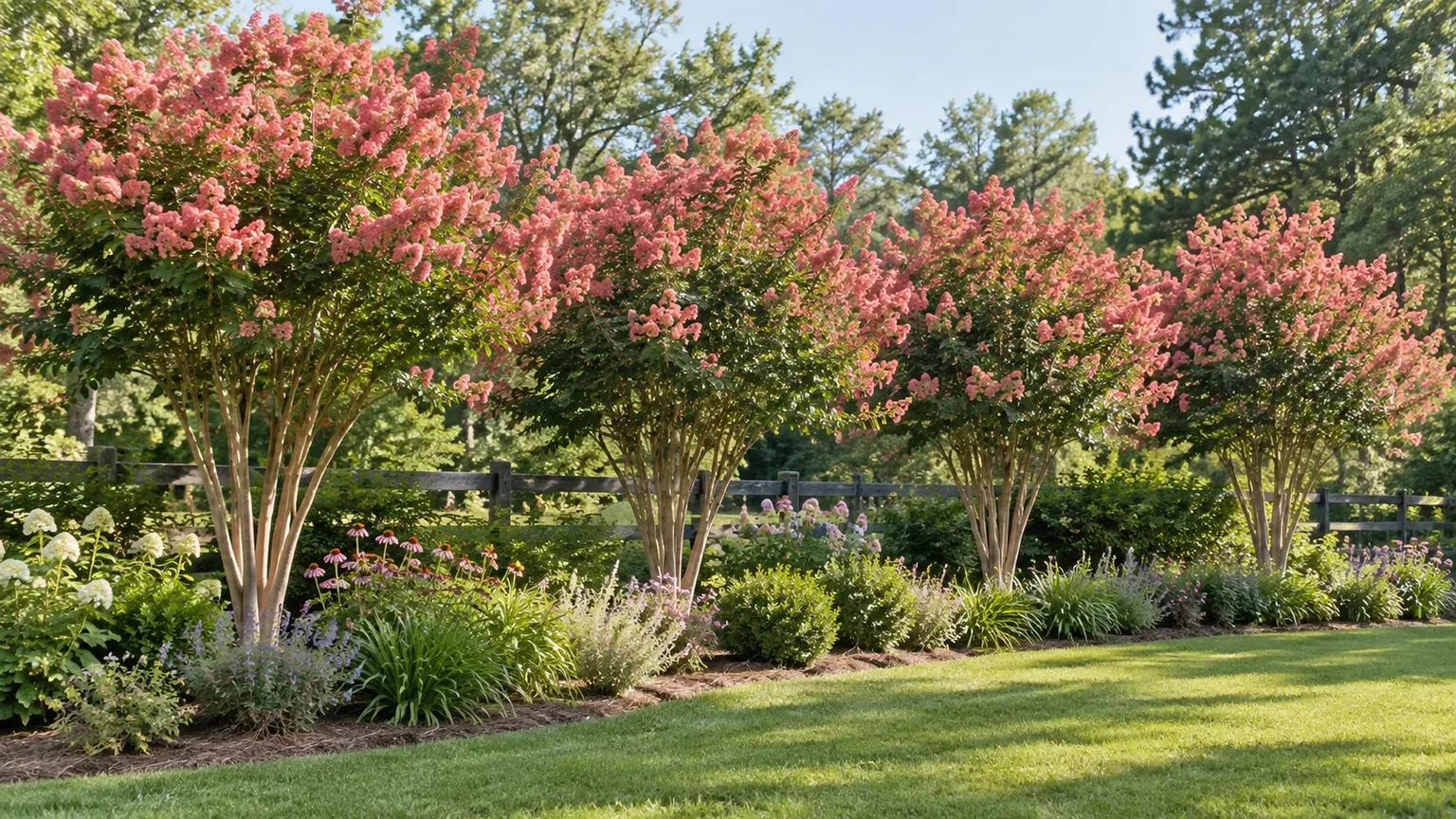
Choose a cultivar for the space and winter climate, rather than buying a generic crape myrtle and planning to cut it back every year. Full sun encourages flowering; shade, excess nitrogen, or pruning at the wrong time can reduce blooms or damage the natural form. Crape myrtles are usually best in zones 6–9, with cultivar differences. North Carolina State Extension’s crape myrtle profile explains the plant’s growth habit and landscape needs.
16. Silk Tree (Mimosa)
Silk tree, also called mimosa or Persian silk tree, carries fluffy pink flower heads in summer and has a light, fernlike canopy. It grows quickly and can reach 20 to 40 feet, though its open branching provides less dense shade than a broad-leaved shade tree. The flowers are unusual and attractive to pollinators, but the tree’s behavior matters as much as its bloom.
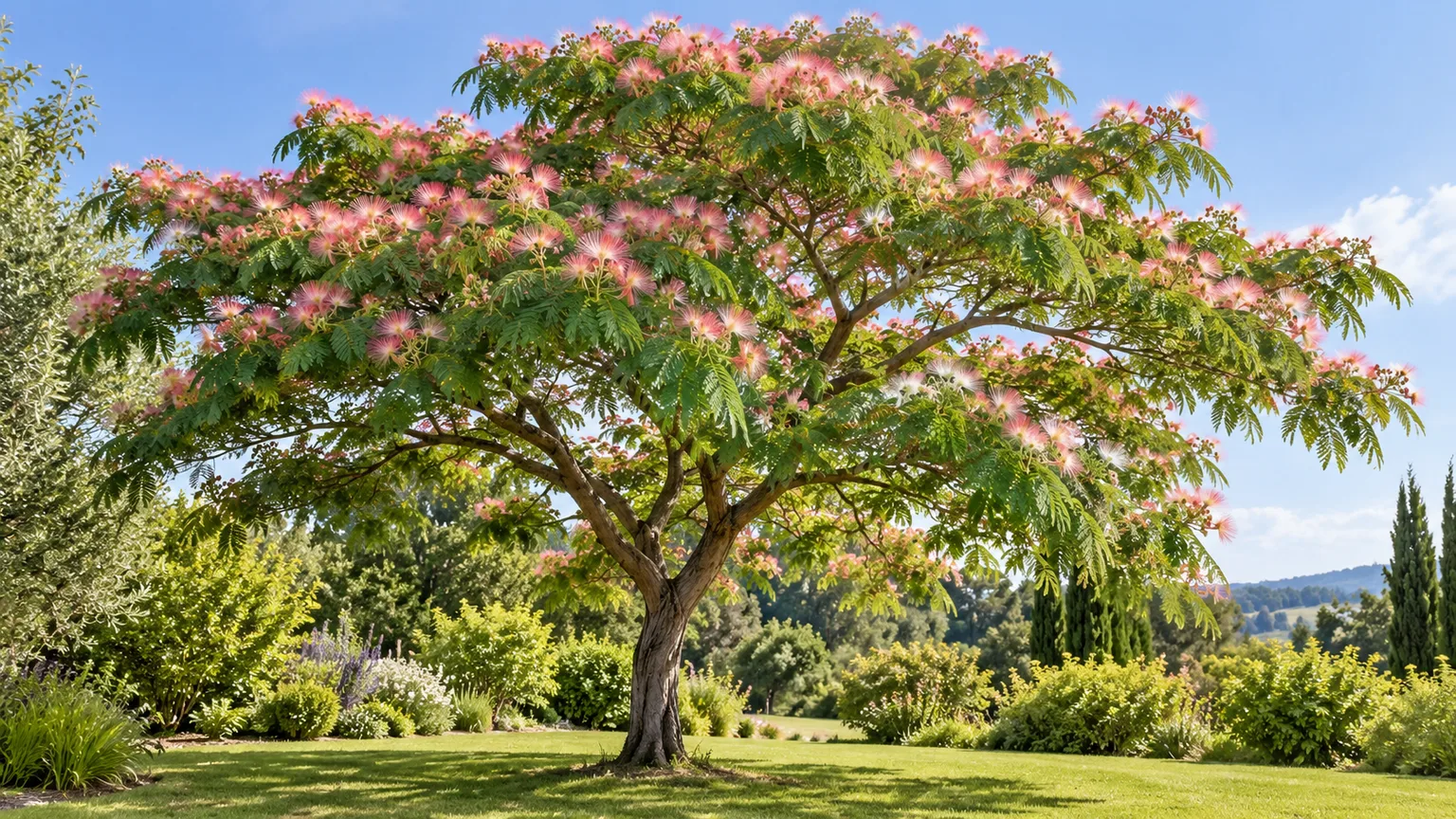
Mimosa can produce many seeds and is listed as invasive in some regions, including North Carolina. Check your local invasive-plant list before buying; if it is a concern locally, select a native alternative such as redbud. It is generally suited to warmer sites, around zones 6–9, and can be short-lived with storm damage in exposed locations. North Carolina State Extension flags its invasive status in its silk tree profile, so this is a conditional recommendation rather than a universal one.
17. Pink Trumpet Tree
Pink trumpet tree is a warm-climate choice for a frost-free or nearly frost-free yard, not a cold-winter landscape. The South American tree commonly identified as Handroanthus impetiginosus can drop its leaves before producing a striking canopy of vivid pink trumpet-shaped flowers in the cool or dry season. At maturity it can become a large tree, so it belongs in a spacious tropical or subtropical garden.
The bloom timing and leaf drop differ from spring cherries, making it a useful choice when you want color in a warm-region garden outside the usual spring display. The U.S. National Arboretum describes its seasonal flowering and striking pink canopy in its trumpet tree overview. Confirm the species identity and local cold tolerance before purchase; “trumpet tree” can refer to several related trees, and a plant that thrives in a frost-free city may fail in a nearby colder valley.
Conclusion
The best pink-flowering tree is the one whose mature shape, bloom season, and care demands fit the site you actually have. For a small yard, start with ‘Jane’ magnolia, star magnolia, or a compact flowering cherry; for native spring color, compare redbud and flowering dogwood; for summer blooms, consider a correctly sized crape myrtle. Warm-region gardeners can evaluate a pink trumpet tree, while mimosa deserves a local invasiveness check before planting.
Measure the space, check the cultivar and rootstock, and ask how much sun and drainage the tree needs. Then plant it with the root flare at grade, water it as it establishes, and keep mulch off the trunk. A realistic choice will give you pink flowers without forcing you into years of pruning, cleanup, or climate-related disappointment.