26 Silver Foliage Plants for Sun, Shade, and Pots
Compare 26 silver-foliage plants by light, drainage, spread, and size, then choose dependable options for sunny borders, shade, containers, and large landscapes.
Silver foliage can cool a hot-colored border, bring contrast to green leaves, or make a dim corner feel brighter. The color may come from fine hairs, a waxy surface, or pale leaf undersides that flash when wind turns them; NC State Extension’s silver willow profile describes the silky hairs behind one such effect. That distinction matters because a silver look does not tell you, by itself, whether a plant wants dry sun, damp shade, a pot, or a large landscape.
The useful way to choose silver foliage plants is to match the plant’s roots and mature habit to the site first, then use color and texture to build the composition. Below are 26 possibilities—from small thyme to a full-size tree—grouped by where they are most likely to work, with the trade-offs that are easy to miss on a plant label.
Choose silver foliage by light, moisture, and scale
Start with four questions: How many hours of direct sun reach the planting area in summer? Does the soil drain promptly after rain? How much room can the mature plant occupy? And are you willing to prune or contain a vigorous grower? These questions will narrow the list faster than choosing by leaf color alone.
Silver foliage spans several very different habits. A low, woolly groundcover such as lamb’s ear can soften a sunny edge; a shade perennial such as ‘Jack Frost’ brunnera wants more even moisture; a trailing licorice plant can spill from a seasonal pot; white poplar is a large tree that may sucker and is listed as invasive in some regions. For a mixed border, combining plants with different leaf sizes and growth forms usually looks more intentional than repeating a single silver plant everywhere. Fine Gardening’s silver-foliage selections illustrate the range, while the Royal Horticultural Society’s silver-leaved perennials show how foliage can vary from white-silver to blue-gray.
A quick starting match:
| Site condition | Strong candidates | Avoid assuming |
|---|---|---|
| Hot, sunny, well-drained bed | Lavender, artemisia, lamb’s ear, thyme, sedum | That every new planting is drought-proof immediately |
| Bright shade with ordinary garden moisture | Brunnera, Japanese painted fern, selected dead-nettles | That fuzzy silver leaves automatically tolerate deep shade |
| Patio pot or hanging basket | Licorice plant, dusty miller, silver thyme | That a tender plant will survive winter outdoors |
| Wet soil or a low area | Consider a site-matched moisture plant, such as silver willow where a tree fits | That drought-adapted silver perennials will tolerate soggy roots |
| Small yard | Compact mound-forming perennials and containers | That a fast-growing silver tree can be kept small by casual pruning |
26 silver-foliage plants to consider
Sunny beds and dry borders
These plants are strongest where light is generous and drainage is reliable. Most still need regular checks while establishing; “drought tolerant” describes an established plant in a suitable site, not a transplant with a dry root ball.
1. ‘Silver King’ artemisia (Artemisia ludoviciana ‘Silver King’). Its upright, narrow silver leaves bring height and a loose, cool-toned rhythm to perennial beds. It spreads by rhizomes, so give it an edge or place it where a colony is welcome; choose a more compact cultivar if the bed is small.
2. Lavender (Lavandula angustifolia). The evergreen-to-semi-evergreen gray leaves stay useful after the purple flowers fade, particularly in a sunny, gravelly border. Lavender is a poor choice for heavy soil that remains wet in winter; drainage and airflow are more dependable than adding fertilizer for faster growth.
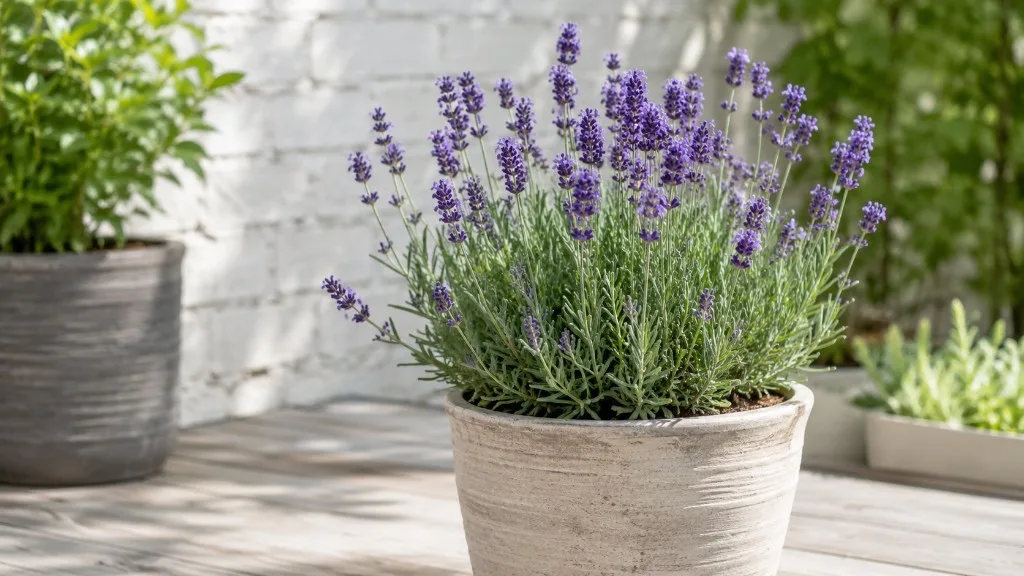
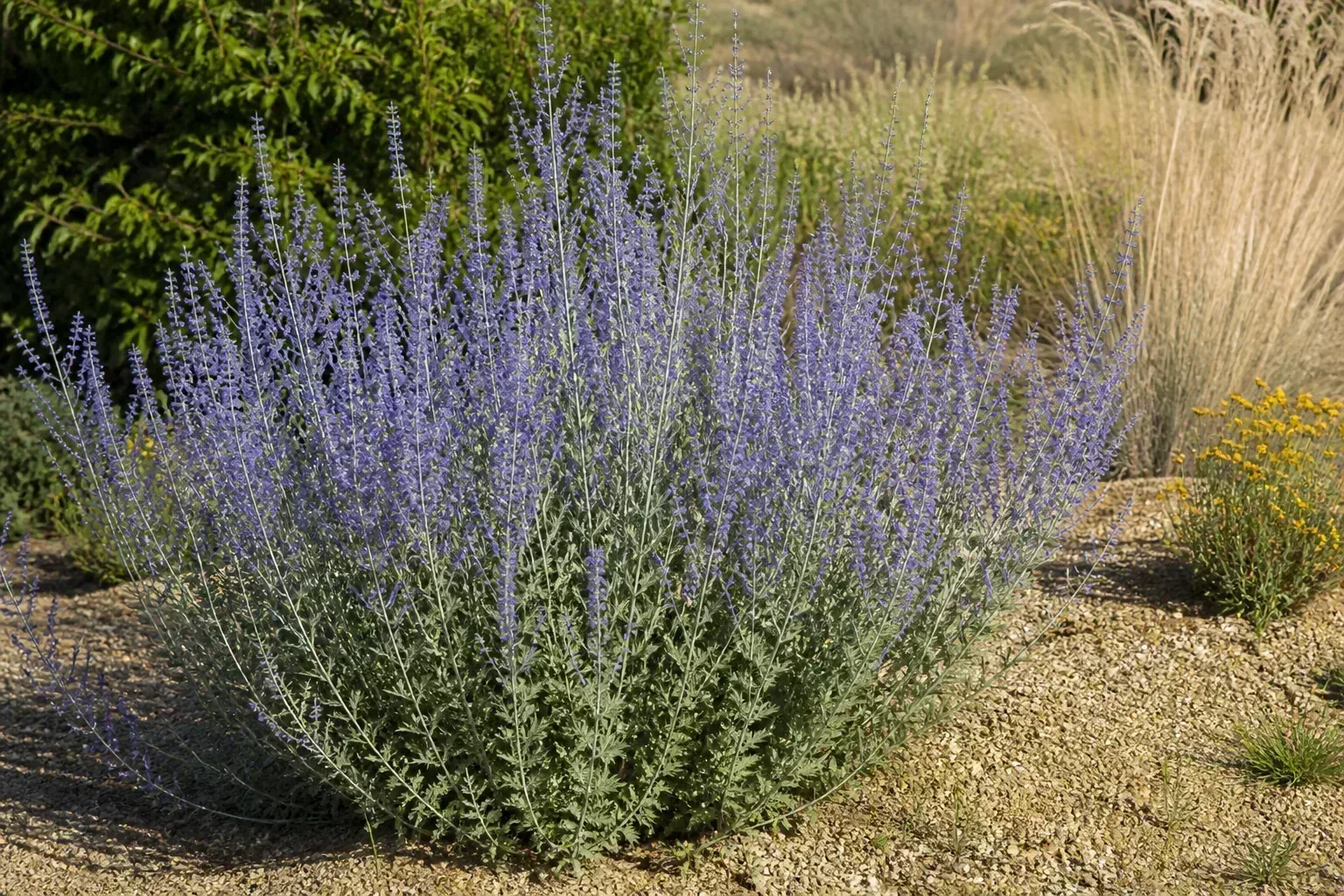
3. Russian sage (Salvia yangii, formerly Perovskia atriplicifolia). Its pale stems and gray-green, aromatic leaves create a light, airy silver effect, followed by lavender-blue flowers. It needs sun and room to form a broad, twiggy clump, so avoid squeezing it between plants that require frequent watering.
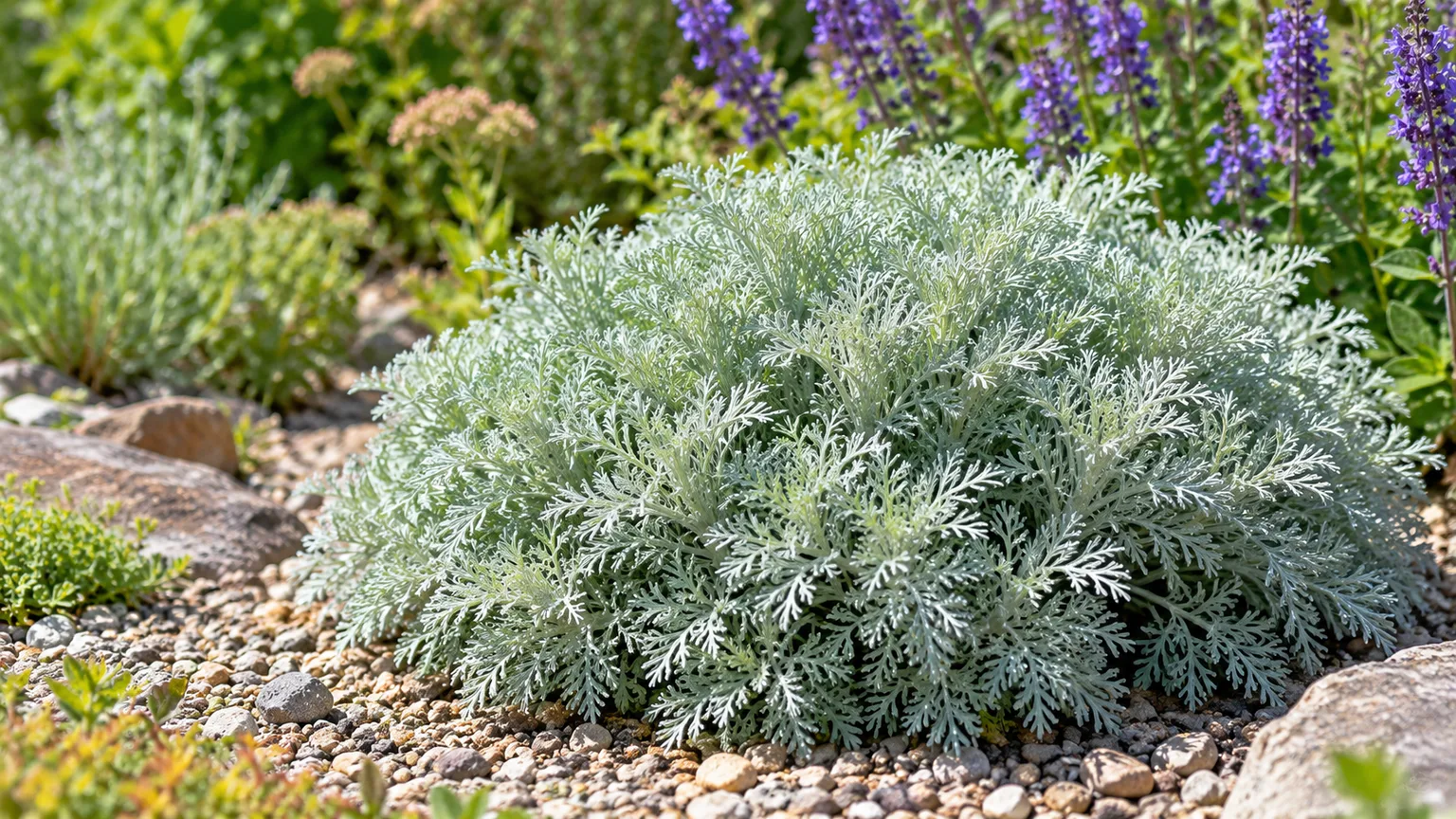
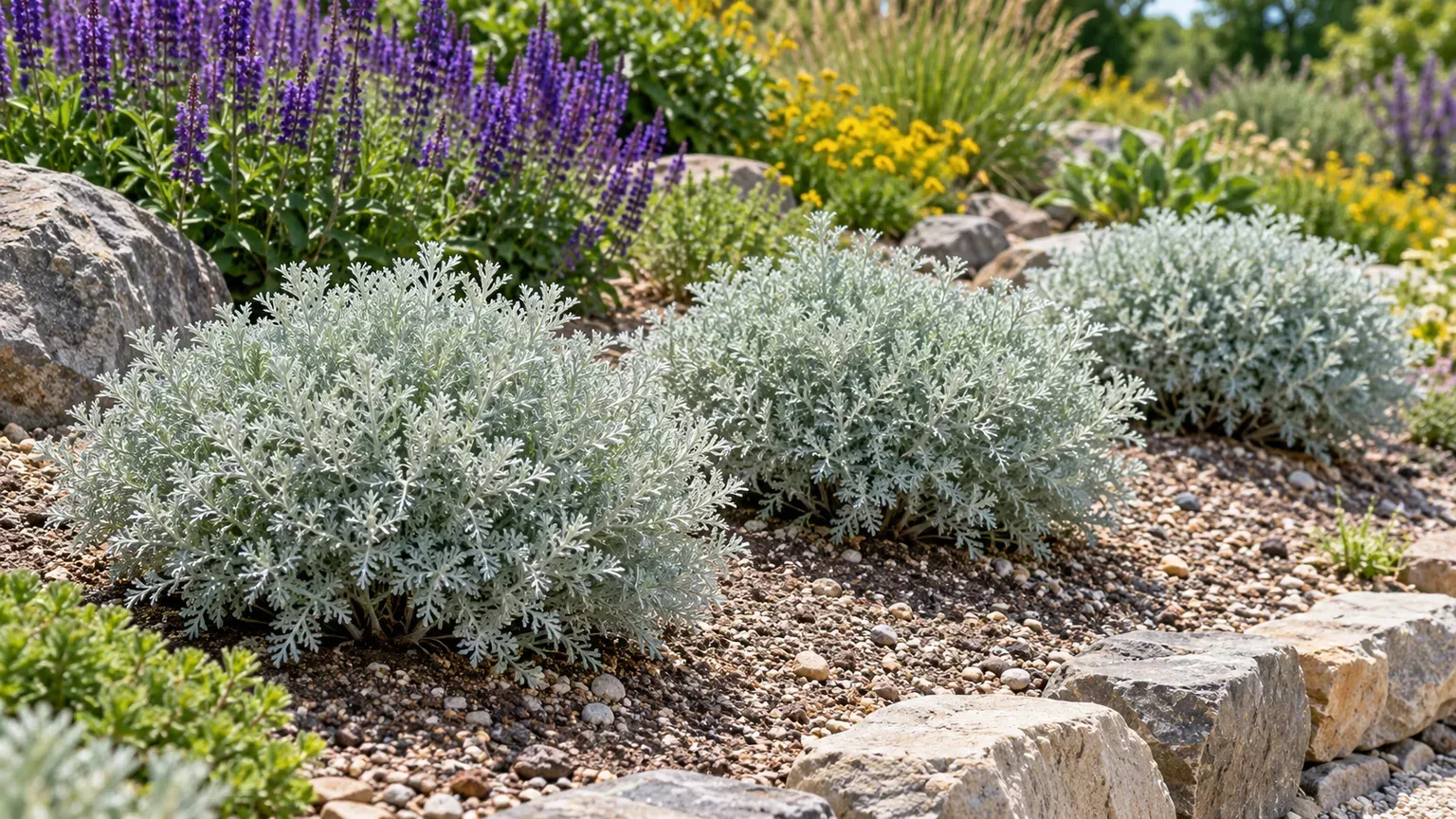
4. ‘Silver Mound’ artemisia (Artemisia schmidtiana ‘Silver Mound’). Fine, silky foliage makes a low cushion that contrasts well with broad leaves and upright flowers. It needs sharp drainage: in persistently wet soil or humid conditions, the center may open or rot, so use a raised or gravelly site rather than trying to correct the problem with more pruning; Gardenia’s plant profile likewise emphasizes excellent drainage.
5. Snow-in-summer (Cerastium tomentosum). This low mat carries silver-gray leaves and white spring-to-summer flowers, making it useful on a sunny slope or along a dry wall. It can spread past a neat edge, so decide whether you want a broad carpet before planting it between slower-growing perennials.
6. Woolly thyme (Thymus pseudolanuginosus). Its tiny gray-green leaves have a soft, silvery cast, and the low growth can fill gaps around stones. It is a better fit for a path edge or rock garden than a wet lawn; occasional foot traffic is different from repeated trampling.
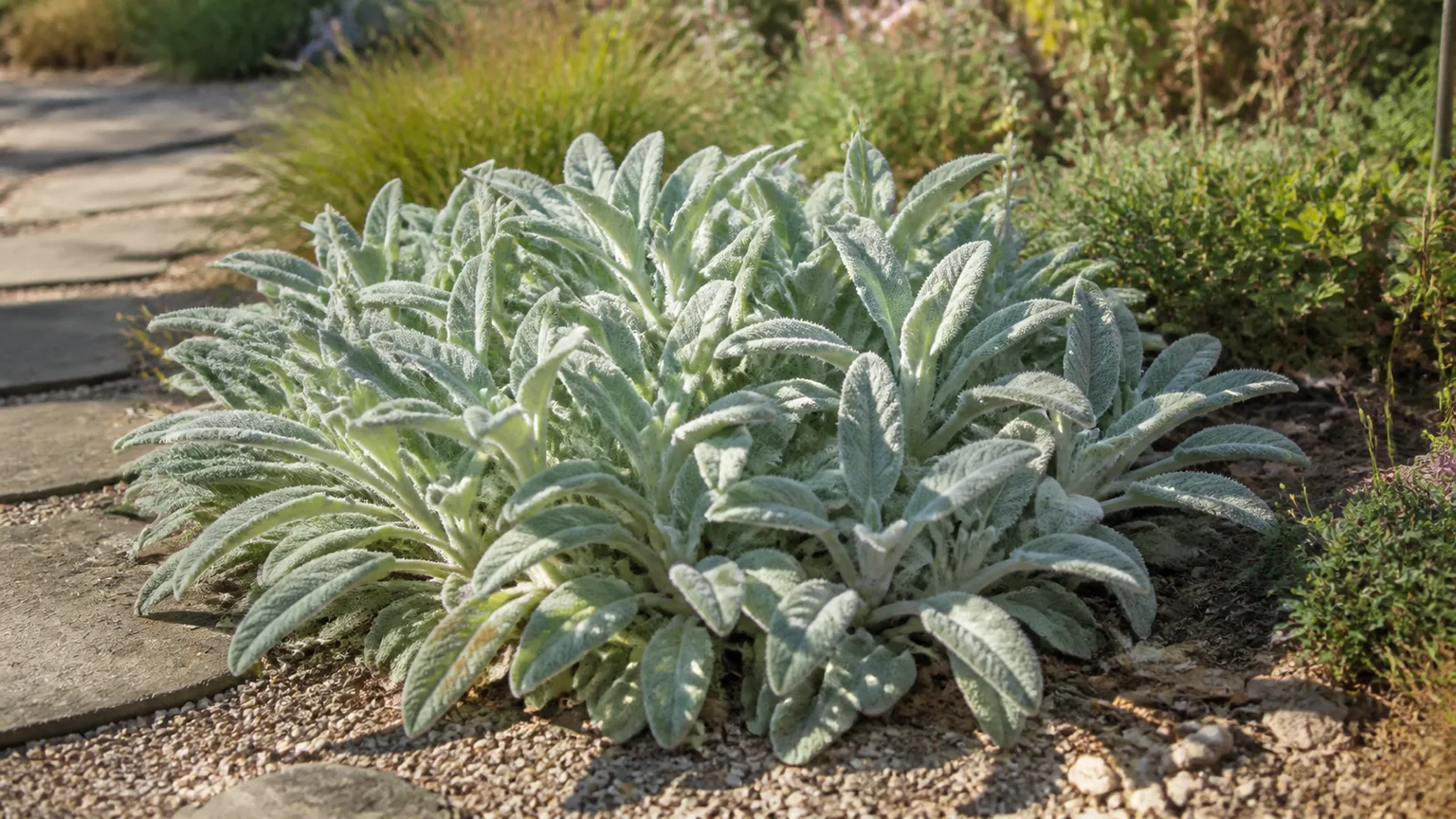
7. Lamb’s ear (Stachys byzantina). Broad, felted leaves create one of the strongest silver textures in a sunny border, and the plant can make a soft edge or low drift. In humid or rainy climates, space plants so air can move through the foliage and keep the crown from sitting in wet mulch; the RHS perennial list and Fine Gardening’s silver-foliage selections both include it among foliage standouts.
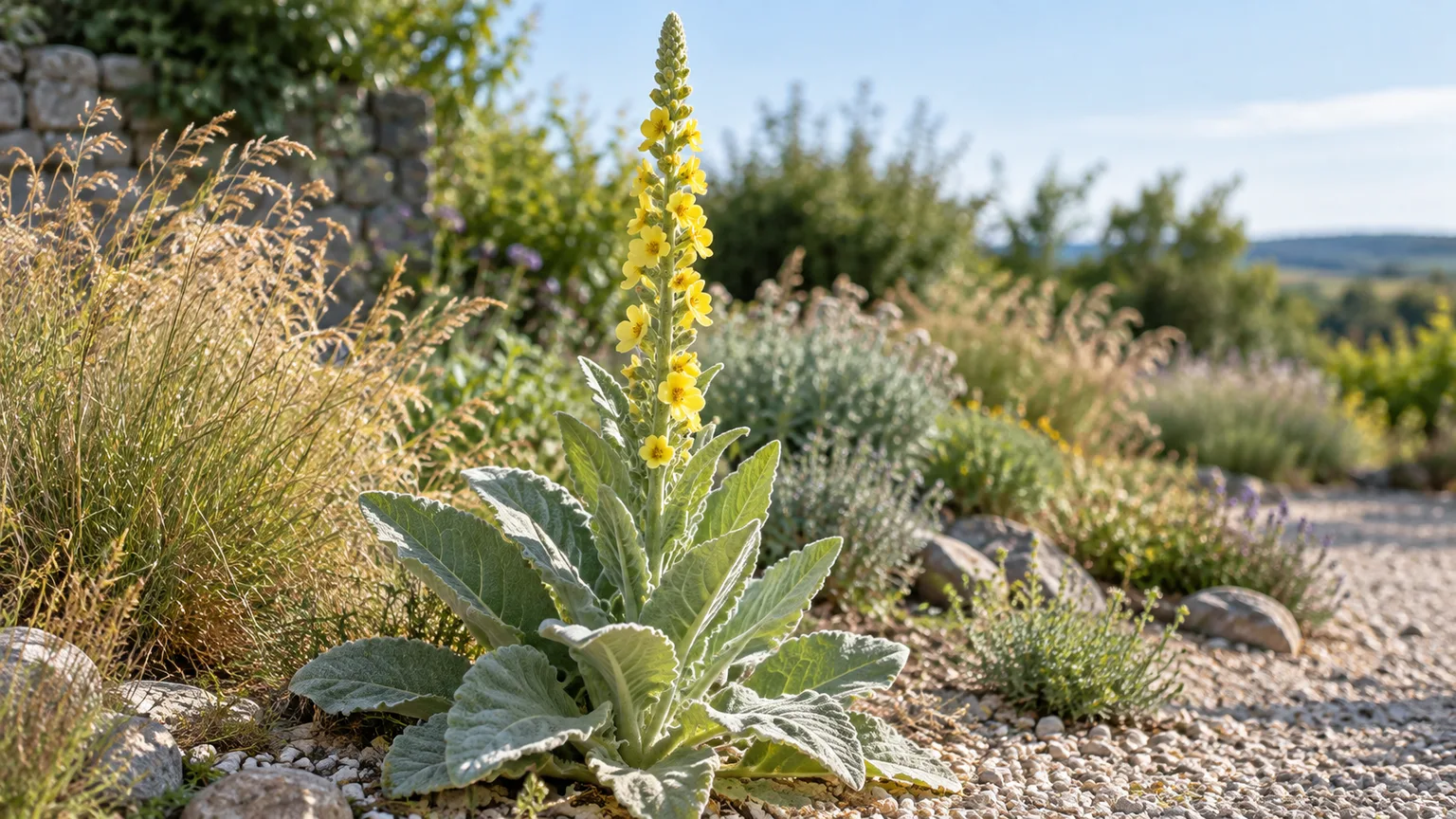
8. Mullein (Verbascum thapsus). A broad, felted rosette can be striking before its tall flower stalk appears. Common mullein is short-lived and may self-seed; if you want a tidy perennial mound, look for a named garden selection rather than assuming the roadside species will stay compact.
9. Rose campion (Silene coronaria). The fuzzy, pale leaves make a useful low contrast beneath magenta flowers. It often behaves as a short-lived perennial that reseeds, so leave a few seed heads if you want replacements and remove them if you prefer a controlled drift.
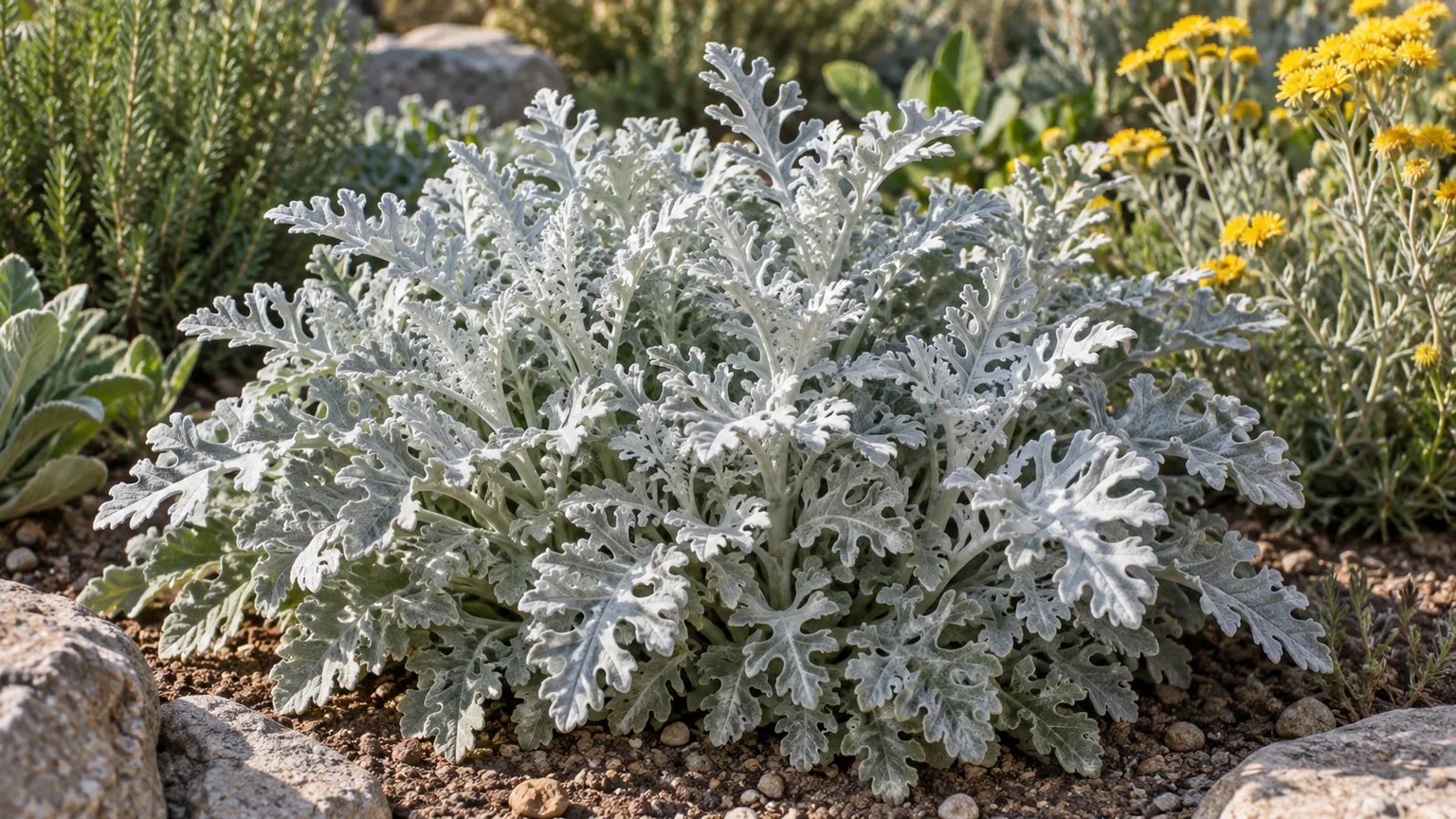
10. Dusty miller (Jacobaea maritima). Deeply cut silver-white leaves offer a crisp edge beside dark foliage or colorful annuals. It is perennial only in mild climates and is often grown as a seasonal bedding plant elsewhere; remove flower stalks if the foliage is the main reason you chose it.
11. Parry’s agave (Agave parryi). This compact rosette has thick, blue-silver leaves and a strong geometric shape suited to a sunny, sharply drained rock garden. Its stiff leaf tips and slow growth make it a poor plant beside a narrow walkway or where people brush past it; cold tolerance depends on the form and how dry the crown stays.
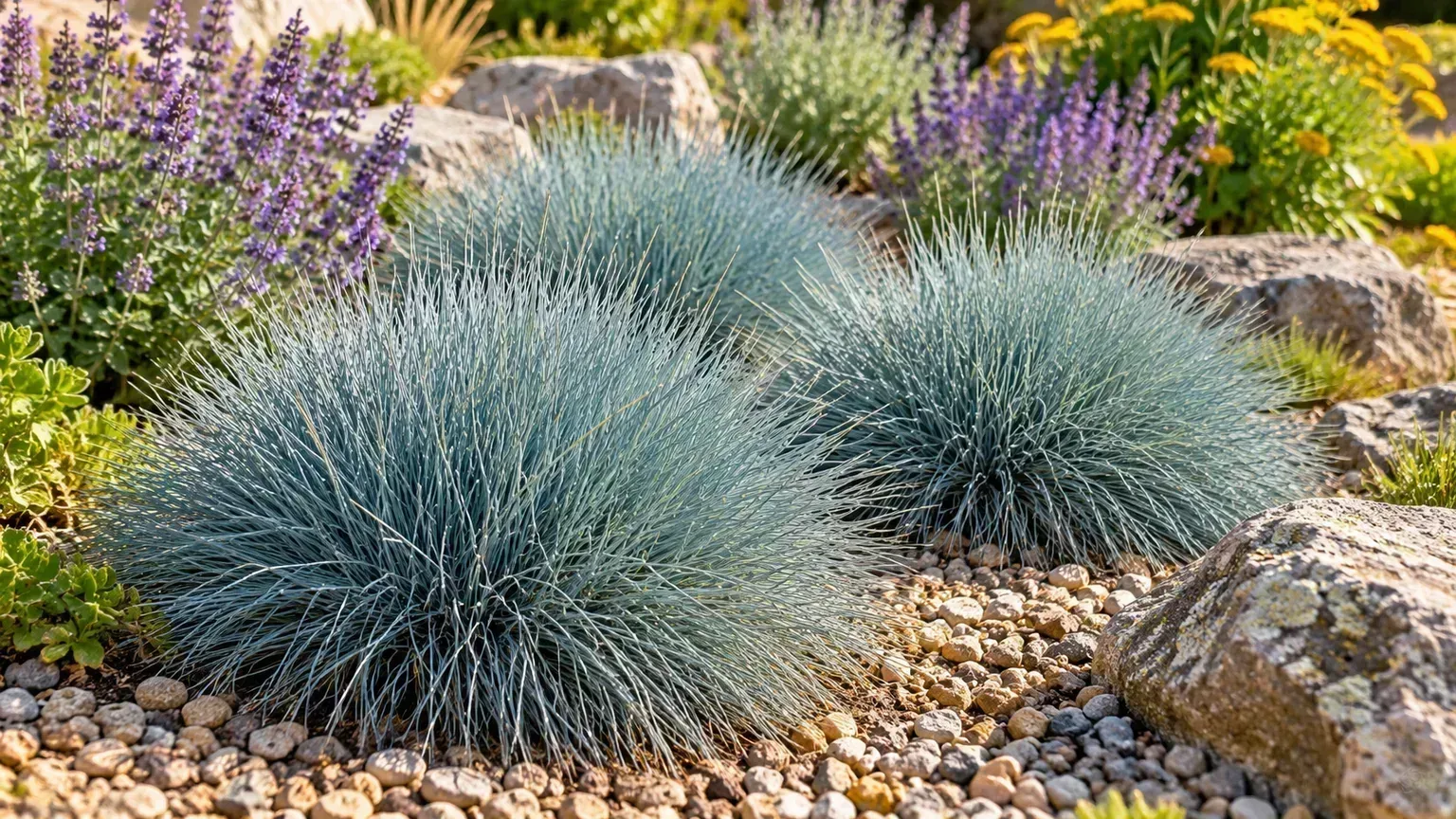
12. Blue fescue (Festuca glauca). The rounded tufts add blue-silver color and fine texture at the front of a sunny border. It dislikes prolonged wet soil, and older clumps can thin in the center; divide or replace them when the mound loses density rather than overwatering it.
13. Carnation (Dianthus caryophyllus). Blue-gray foliage gives this flowering perennial a silver accent even when it is not in bloom. Treat it as a flower-first choice with useful foliage, not as a permanent silver mound; provide sun and drainage, and check the selected cultivar’s hardiness before expecting it to overwinter.
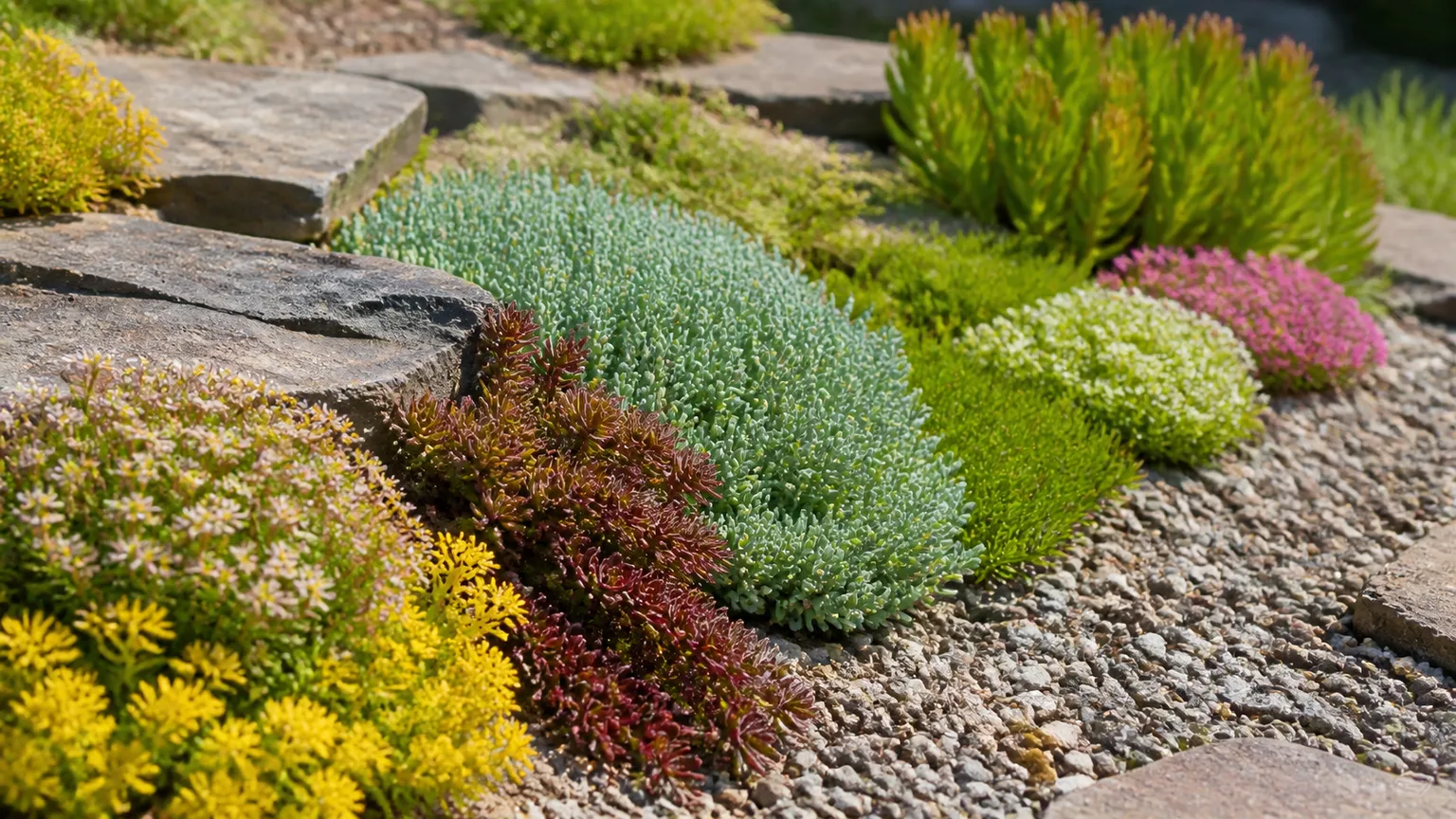
14. Silver sedum (Sedum rupestre ‘Silver’). Narrow, fleshy leaves form a low, blue-silver mat that suits rock gardens and dry walls. It stores water and can be damaged by rich, wet soil, so use it where runoff drains freely rather than in an irrigated bed that stays damp.
15. Silver sage (Salvia argentea). Its large, woolly leaves form a silver rosette, then the plant flowers in its second season. It may self-seed; remove the flower stalk after bloom if you want to limit seedlings, or leave some seed for a loosely naturalized planting.
16. Silver thyme (Thymus vulgaris ‘Argenteus’). Small green-and-silver leaves bring color to an herb bed, edging, or pot, and the plant can be harvested lightly for cooking. Treat it like a Mediterranean thyme: give it sun, modest fertility, and a container or bed that drains well.
17. Curry plant (Helichrysum italicum). Narrow gray-silver leaves have a distinctive aromatic scent, and yellow flowers add a summer accent. It is an evergreen shrub only where winters are mild enough; in colder areas, grow it in a pot that can be moved or treat it as seasonal rather than relying on a hardiness label from another climate.
Shade and woodland beds
Silver and green variegation can brighten shade, but these plants are not interchangeable with drought-loving artemisias. Keep the soil evenly moist enough for active growth, then reduce watering if the ground is already damp.
18. Yellow archangel (Lamiastrum galeobdolon, often sold as Lamium galeobdolon). Green leaves with silver markings and yellow spring flowers make a quick groundcover for shade. It can travel vigorously by runners, so use it in a contained area and check local invasive-plant guidance before planting near natural areas.
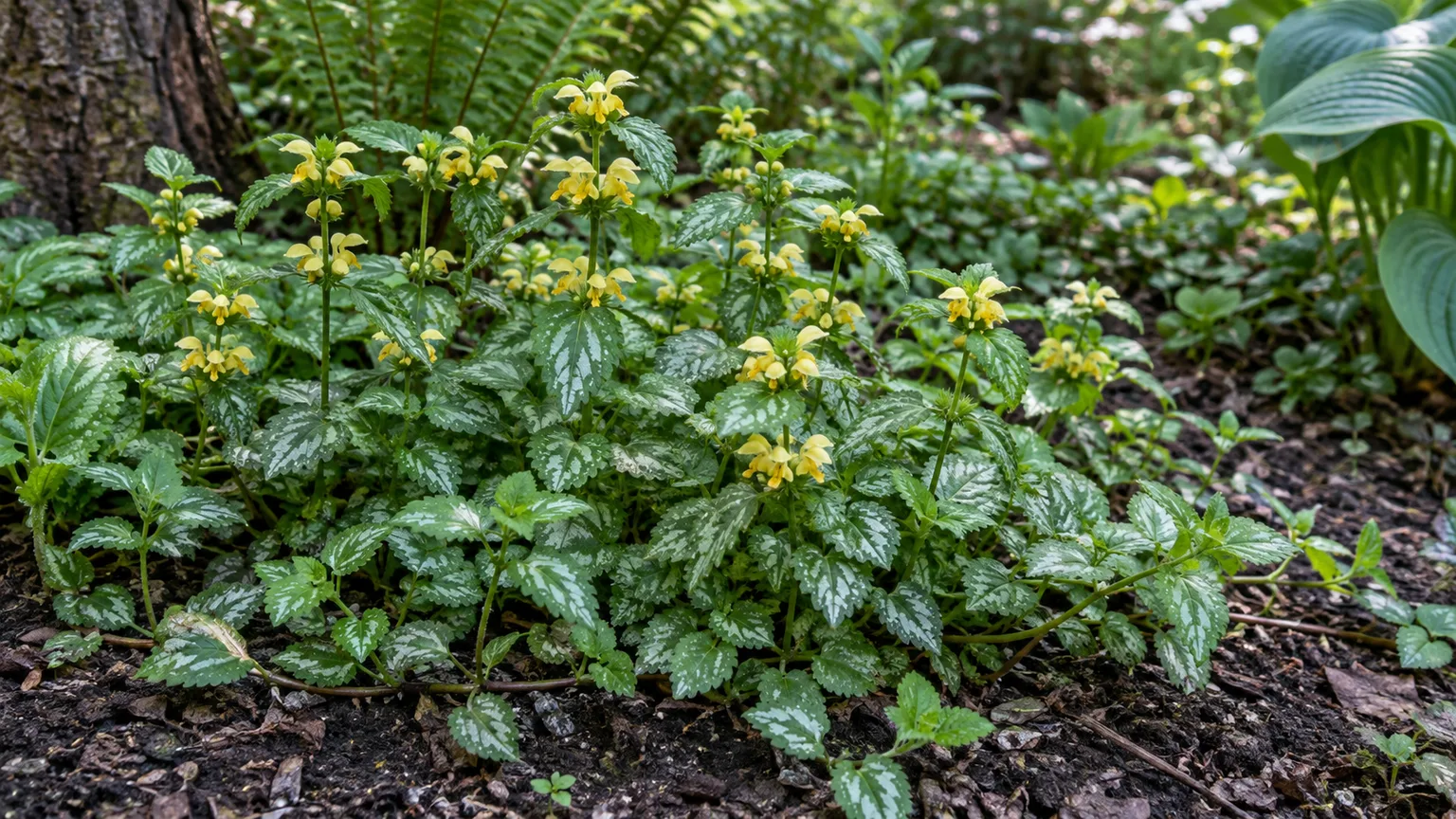
19. Spotted dead-nettle (Lamium maculatum). Many cultivars have broad silver patches on low leaves, with flowers in pink, purple, or white. It tolerates shade better than many silver-leaf plants and is useful beneath shrubs, but runners can move into neighboring beds; trim the edge if it crosses its boundary.
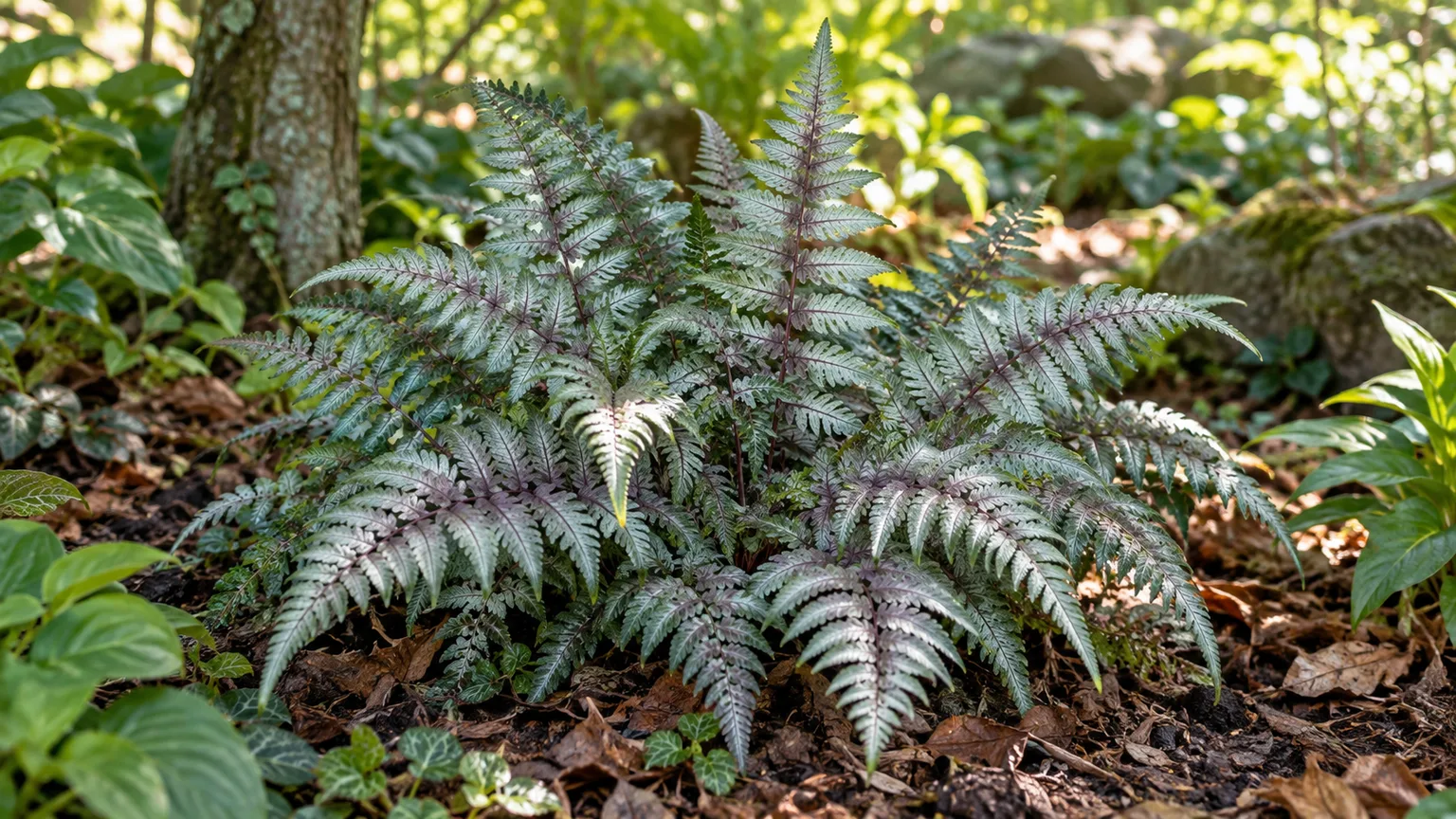
20. Japanese painted fern (Athyrium niponicum var. pictum). The arching fronds combine silver with purple-red midribs, making this one of the clearest choices for a shaded bed. Give it humus-rich soil and steady moisture, not the dry gravelly conditions preferred by artemisia; the RHS notes the silvering and colored veins of painted fern selections.
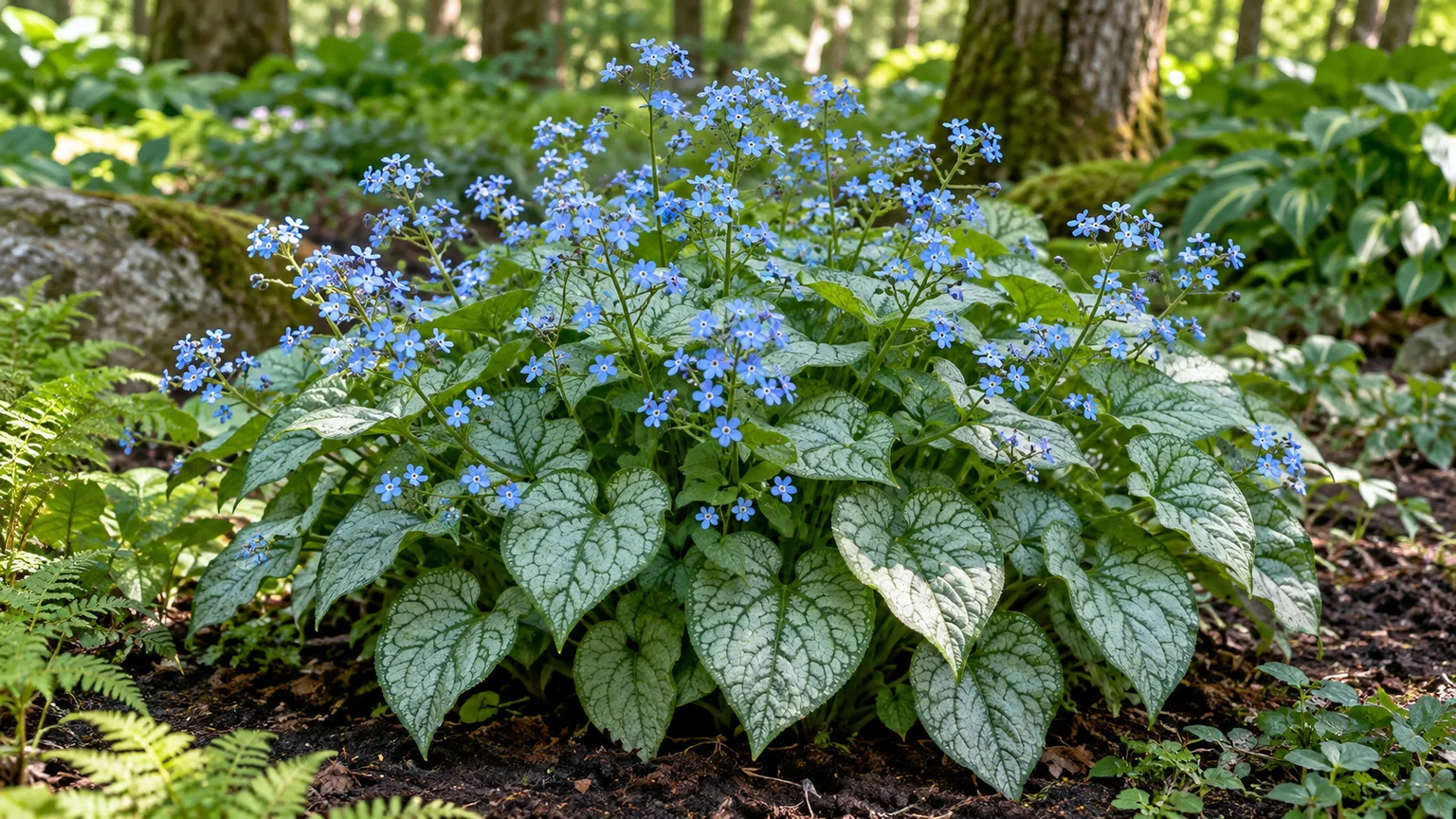
21. ‘Jack Frost’ brunnera (Brunnera macrophylla ‘Jack Frost’). Heart-shaped silver leaves with green veining create a bright patch in partial to full shade, and small blue spring flowers add a second season of interest. The plant forms a clump rather than a drought-tolerant carpet, so protect it from hot afternoon sun and do not let its root zone dry repeatedly.
Containers and warm-climate foliage
Pots make tender silver plants easier to move and keep spreading plants in bounds. They also dry faster than beds, so use a container with drainage holes and check moisture more often during hot or windy weather.
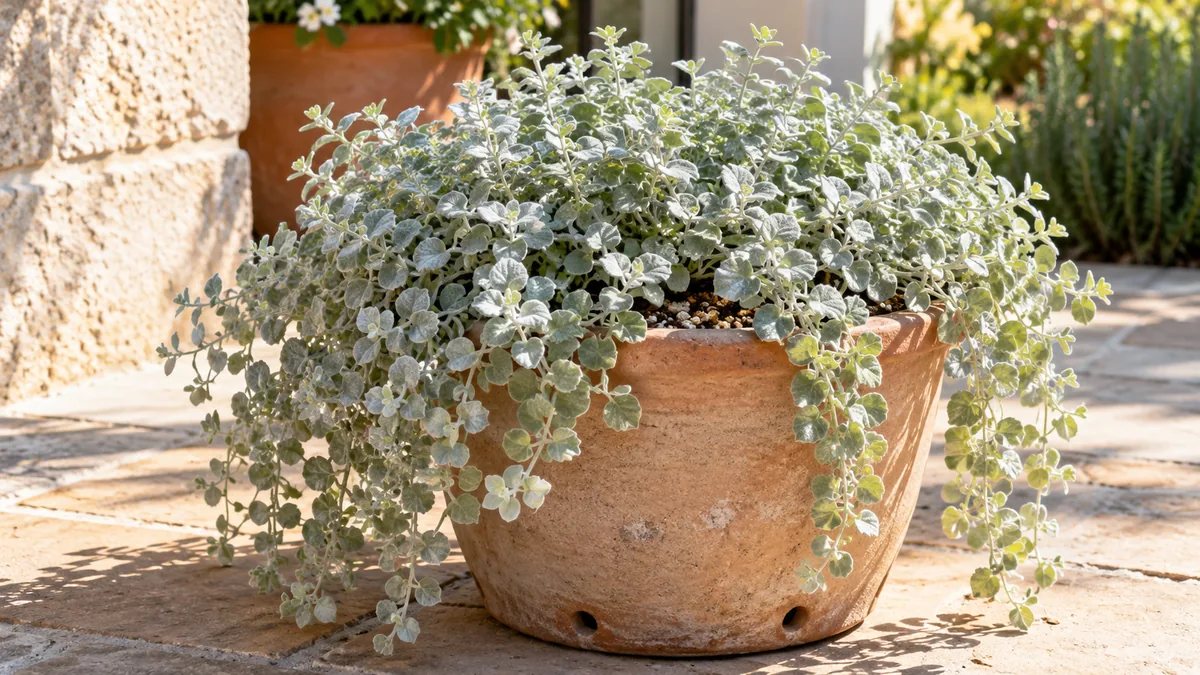
22. Licorice plant (Helichrysum petiolare). This trailing plant has soft gray-silver leaves that spill over container edges and mix well with flowering annuals. It is perennial in warm regions but commonly grown as an annual in cold climates; leave enough room for its stems and do not bury it among plants that need frequent, heavy watering.
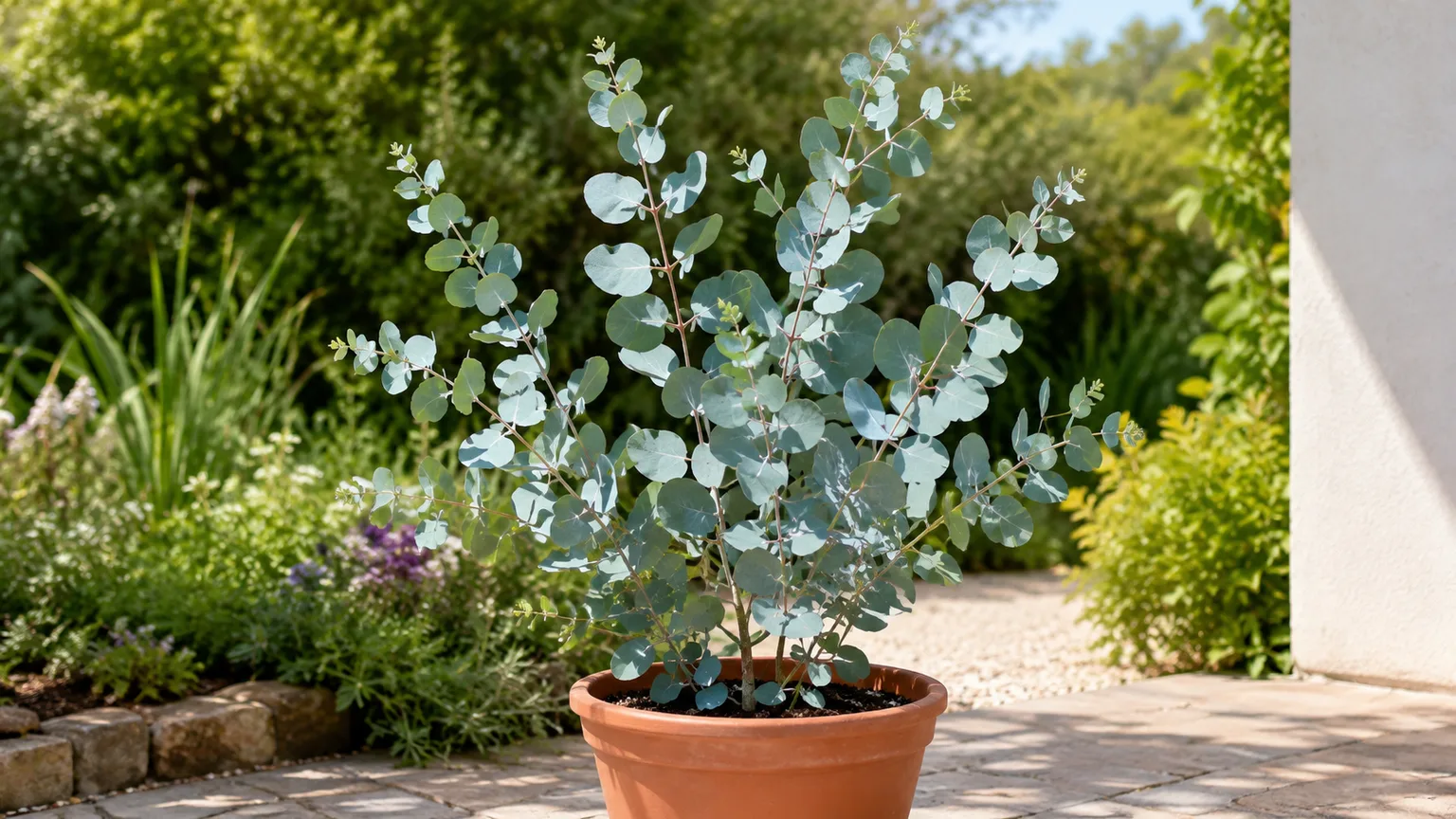
23. Eucalyptus (Eucalyptus cinerea). Round, blue-silver juvenile leaves make this a striking foliage plant, but the small pot specimen can become a substantial tree in climates where it is hardy. Use it outdoors only where there is room for mature growth; in colder regions, grow a young plant in a container for seasonal use and protect it from frost.
24. Honey bush (Melianthus major). Large, deeply divided gray-green leaves create a bold tropical-looking texture, and dark red flower spikes can follow in warm conditions. It needs a large space or container and protection from cold winds; do not mistake its coarse, spreading habit for a compact border perennial.
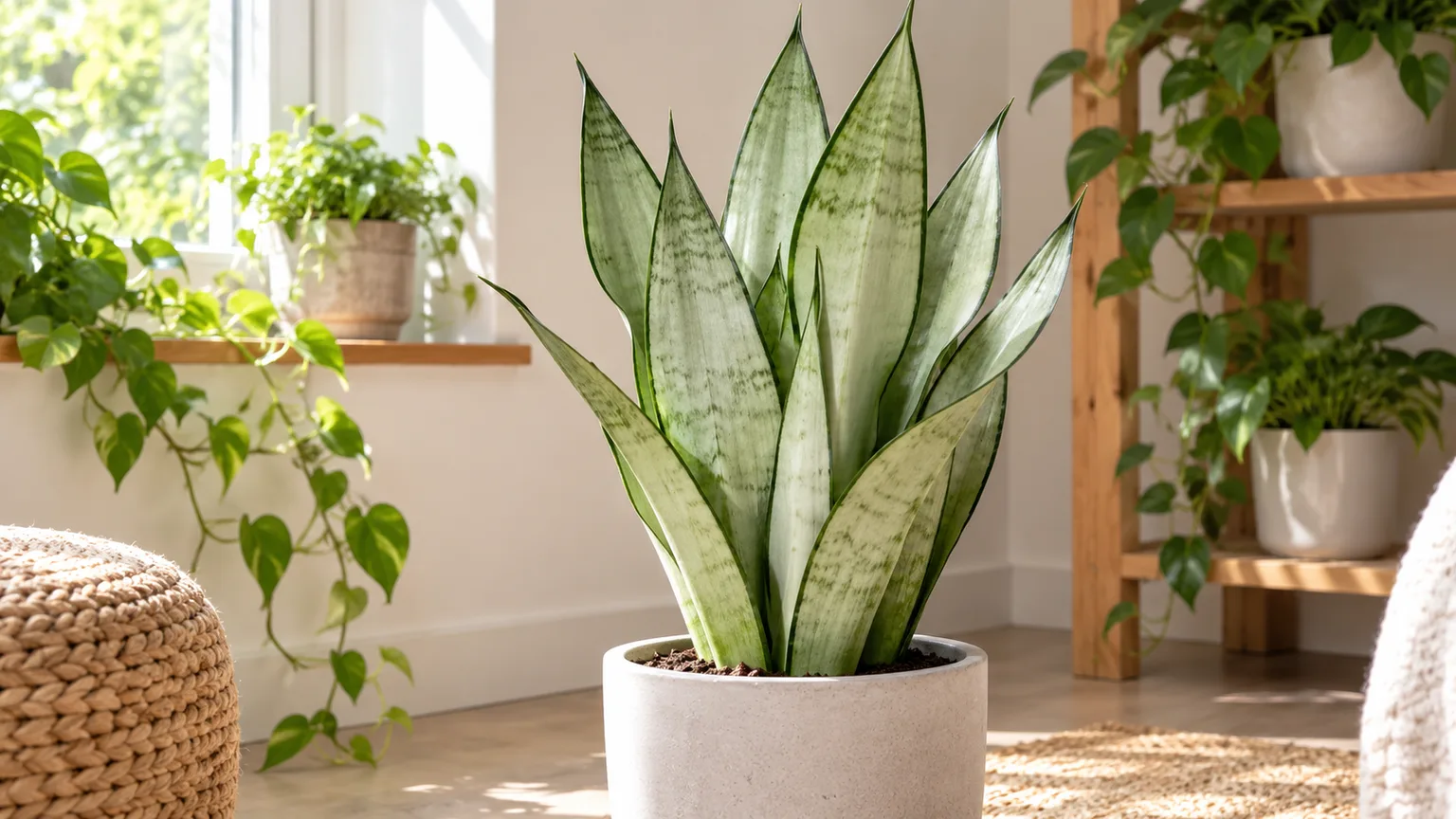
25. ‘Moonshine’ snake plant (Dracaena trifasciata ‘Moonshine’). Young leaves are pale silver-green, often becoming greener as they mature, so the plant’s color changes with age and conditions. It works best as an indoor foliage accent in most climates; move it outdoors only after nights are reliably warm and return it before cold weather.
Trees and architectural accents
26. White poplar (Populus alba). The mature leaves are green above and conspicuously white-silver beneath, so wind makes the canopy flash. The tree grows large, produces suckers, and is treated as invasive in some states; Maine’s natural-areas program and the Invasive Plant Atlas document regional concerns. Do not plant it as a small-yard specimen or near natural areas. If you want a silver tree, first compare local status, eventual canopy, roots, and maintenance; NC State Extension’s silver willow profile shows why another silvery tree can still demand ample moisture and space.
Pair silver leaves with color and texture
Silver is a supporting color: it gives the eye a pause between stronger hues and can make both warm and cool flowers feel more distinct. Try silver foliage beside purple or blue flowers for a cool, blended border, or place it next to red, orange, and yellow blooms when you want contrast without adding another saturated flower color. A Gardening Know How guide to monochromatic garden design emphasizes using variation in shade and texture even when the palette is narrow.
Texture is just as important as color. Put finely cut artemisia or dusty miller beside broad brunnera leaves, upright grasses, or rounded sedum; the difference in silhouette helps the planting read from a distance. For a simple combination, repeat one silver plant in a short drift, then add two companions with different heights and leaf shapes. Avoid mixing every silver shade in one small bed: blue-gray, white-silver, and green-silver are distinct colors, and too many unrelated textures can make a compact space look restless.
Are silver-leaf plants drought tolerant?
Some are, but silver is not a care label. Many plants with reflective hairs or a pale, waxy surface are adapted to strong light and dry conditions; the RHS describes this pattern among several silver-leaved shrubs and trees. Yet painted fern, brunnera, and silver-marked dead-nettle are shade plants that perform better with consistent soil moisture, while silver willow naturally needs ample moisture. The Missouri Botanical Garden’s silver linden profile also describes a large tree whose silvery leaf undersides flutter in wind—not a small, dry-garden perennial.
Use the plant’s root and habitat requirements, not the leaf color, to plan watering. A newly planted lavender or lamb’s ear needs water as roots establish even though a mature plant can tolerate dry spells. Conversely, do not withhold water from a shaded fern because its leaves have silver markings. The most dependable drought-smart choices in this list are those planted in the drainage and light conditions they prefer, then watered deeply and less often as they establish.
Can silver foliage grow in shade?
Yes. ‘Jack Frost’ brunnera, Japanese painted fern, and spotted dead-nettle are useful shade choices, and yellow archangel can cover a larger shaded area if you can control its spread. They are different from the sun-loving woolly plants: too much direct afternoon sun can scorch shade foliage, while very dense shade may soften the silver contrast or make flowering sparse.
For a shaded bed, check the amount of summer light, not only the spring canopy. A deciduous tree may allow bright sun before it leafs out, then create deep shade through summer. The Fine Gardening list includes silver plants for both sun and shade; the practical lesson is to choose by the light and moisture conditions each plant actually receives.
Plant and care for silver foliage successfully
Fix drainage before amending soil
A “well-drained” site does not have to be sandy or poor. It means excess water leaves the root zone instead of keeping crowns and roots saturated for long periods. Before planting lavender, artemisia, lamb’s ear, or thyme, observe the site after a soaking rain; if water pools or the soil stays sticky and wet, use a raised bed, a slope, or a different plant.
Do not improve a whole planting hole with a small pocket of compost if the surrounding clay still holds water. That can create a basin where water collects. A better fix is to raise the planting area or choose a shade-appropriate silver plant that can use more consistent moisture.
Water by root establishment, not silver color
Water new plants thoroughly, then check soil moisture at root depth before watering again. The first season is usually more demanding than later years because roots have not yet spread beyond the nursery pot. In containers, check more often: wind and sun can dry the mix well before a bed dries.
After establishment, reduce watering for plants adapted to dry soil, but do not equate drought tolerance with neglect. Persistent wilting, leaf collapse, or a soft crown can signal root stress; first check soil moisture and drainage instead of adding fertilizer. For shade plants, aim for evenly moist rather than saturated soil.
Control spread and keep plants in scale
Look up mature width, not just the height listed on a nursery pot. Rhizomatous artemisia, dead-nettle, yellow archangel, and snow-in-summer can spread outward; poplar and eucalyptus can outgrow a small landscape. Containers, edging, and regular boundary checks are useful when the plant is otherwise a good fit.
Some short-lived choices, such as mullein and rose campion, may reseed rather than form a permanent clump. That can be an advantage in a naturalistic bed and a nuisance in a formal border. Decide whether you want the seedlings before the seed heads ripen, and remove them if the planting is already full.
Troubleshoot fading or dull foliage
Decide whether the shift is normal or a site problem
First compare new growth with mature leaves. Some plants, including ‘Moonshine’ snake plant, emerge paler and turn greener as leaves mature; that change can be normal. Silver foliage can also appear less intense in shade, while leaves that turn yellow, brown, or soft may indicate water, heat, cold, or root trouble rather than a color variation.
Check one variable at a time. Confirm the plant’s identity and light requirement, inspect whether the root zone is wet or dry, and look for leaf damage or pests before moving or feeding it. If a sun-loving plant has lost its compact shape in shade, relocation may help; if a shade plant is pale after hot afternoon exposure, more fertilizer is unlikely to solve the underlying light stress.
Best silver plants for common garden situations
For a low silver edge in a dry, sunny border, start with lamb’s ear, woolly thyme, or ‘Silver Mound’ artemisia—then pick based on whether you want broad fuzzy leaves, a fine ground-hugging mat, or a compact cushion. For a colorful summer bed, dusty miller and lavender provide a longer season of foliage contrast, while Russian sage adds height and movement.
For shade, shortlist brunnera for bold, heart-shaped leaves, painted fern for finely divided fronds, and spotted dead-nettle for a spreading groundcover. For a patio pot, choose trailing licorice plant or a silver thyme, and reserve tender eucalyptus or honey bush for climates or containers where you can protect them. If a site is wet, sunny, and spacious enough for a tree, investigate silver willow locally rather than forcing a dry-soil perennial into it.
Before buying, use this five-point site check
- Light: Record whether the bed gets full sun, morning sun, dappled light, or deep shade in summer.
- Drainage: Notice how long water remains after rain; do not plant a dry-soil species in a persistent puddle.
- Mature size: Measure the space and compare it with the plant’s expected width and height.
- Growth habit: Ask whether it forms a clump, trails, reseeds, suckers, or spreads by runners.
- Winter fit: Check the named species or cultivar against local conditions; do not assume a plant sold as a seasonal annual will overwinter.
These checks also catch misleading labels. “Silver” may describe a silver underside, a blue-green leaf, a temporary juvenile color, or variegation rather than a uniformly silver plant. Read the cultivar name and look at a mature specimen if the exact shade is central to your design.
Silver foliage through the seasons
Silver leaves can carry a border between flower seasons, but not every plant stays evergreen or equally colorful year-round. Lavender, thyme, and some artemisias retain structure in mild climates; dusty miller may be replanted seasonally; perennials such as brunnera emerge in spring and may die back in winter. A tree with pale leaf undersides, such as silver linden, gives a different seasonal effect because the color flashes as the canopy moves rather than remaining a solid silver mass.
Plan the bed so the silvery plants do more than fill a gap. Pair early foliage and spring bulbs with summer flowers, then let seed heads and grasses carry the outline into fall. Leave winter structure where it remains attractive, but remove diseased or collapsed foliage when it creates a wet, crowded crown.
Conclusion
The best silver-foliage plant is the one that fits your site before it fits your color scheme. For sunny, well-drained beds, compare lavender, artemisia, lamb’s ear, thyme, and sedum; for shade, choose brunnera, Japanese painted fern, or a controlled dead-nettle; for containers, use trailing or tender plants that can be moved as seasons change.
Treat large or fast-spreading choices with care. A silver leaf can brighten a border, but mature size, water needs, local invasive status, and maintenance decide whether that brightness is a lasting improvement or a recurring problem.