How to Remove Moss From Your Roof Safely and Effectively
Learn how to assess roof moss from the ground, when to call a roofer, and how shade, debris, roof material, and runoff affect treatment choices for your home.
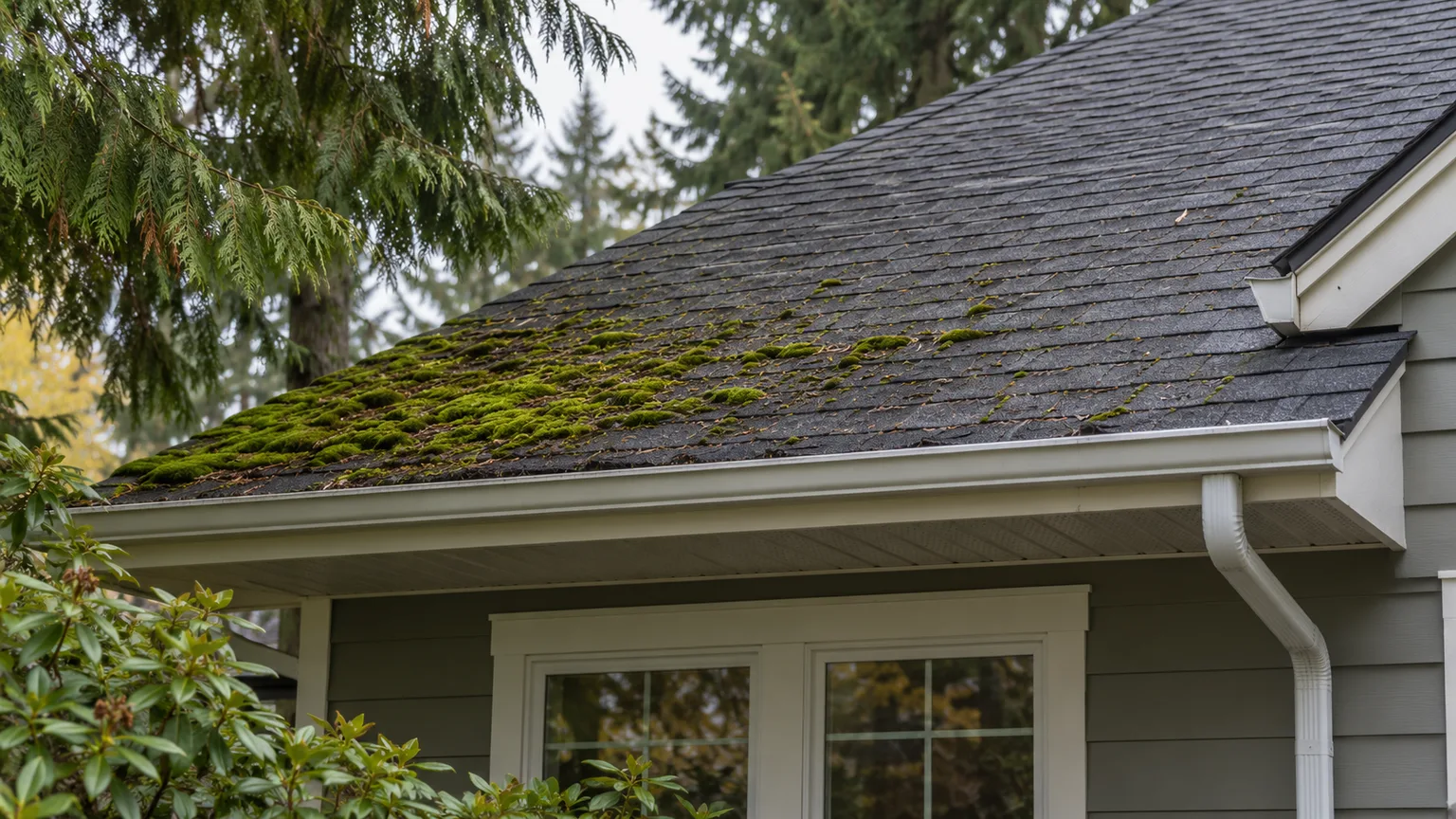
If you see green growth on a roof, do not start by climbing a ladder or buying a chemical. First decide whether the growth is moss, where it appears, what the roof is made of, and whether there are signs of damage. Moss can hold moisture and debris against some roof coverings, and lifted shingles or persistent dampness deserve attention, but a photograph from the ground cannot tell you whether a roof needs cleaning, repair, or no immediate work.
Roof work carries a serious fall risk. The safest first step is to observe from the ground, then call a qualified roofing professional if the roof is high, steep, wet, fragile, damaged, or difficult to reach. Oregon State University Extension warns that roof moss removal can be hazardous and that high-pressure devices can degrade roof surfaces. The OSU Extension guidance and its roof moss prevention article are useful starting points, but your roof manufacturer’s instructions and local conditions should govern any treatment.
Start with an observation from the ground
Use binoculars or a phone camera with zoom to look from a stable position on the ground. Note which roof planes show growth, whether it follows a shaded side or gutter edge, and whether debris is collecting in valleys. Do not lean out of an upper-story window or climb onto a ladder to get a better view. If you cannot see the roof clearly from a safe place, let a roofing professional inspect it.
Look for broad mats, green streaks, lichen-like crusts, dark staining, lifted shingle edges, sagging areas, and damaged flashing. These observations do not identify the material or prove a leak, but they help you describe the issue when requesting an inspection. Take a photograph from the same ground location every few months if you want to monitor whether a patch is spreading.
A small, stable patch and widespread growth are different situations. Growth around a chimney, valley, skylight, or roof-wall intersection deserves closer professional attention because these details already manage water. Moss near a tree canopy may point to a shade and debris issue; growth around a gutter may accompany clogged drainage. Avoid assuming that every dark spot is moss or that all moss means the roof is failing.
Check gutters and roof intersections
From a safe viewpoint, note whether the moss follows a roof valley, chimney, skylight, or edge where two materials meet. Also look for branches or leaves that funnel debris into one area. These observations help the contractor inspect the places where water changes direction, but they are not proof of a leak. Avoid probing flashing or lifting shingles to investigate; a qualified roofer can inspect those details without turning a small question into roof damage.
Understand why moss grows on roof coverings
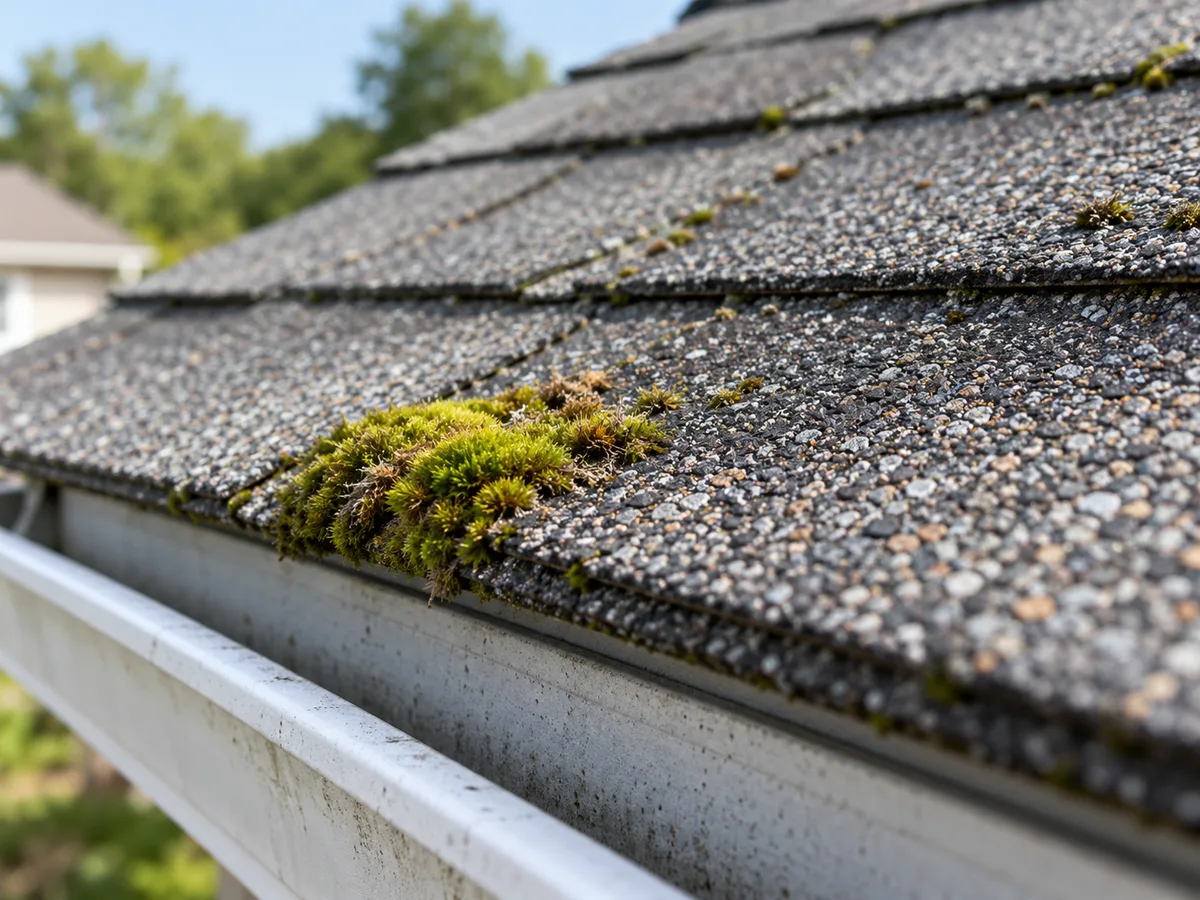
Moss tends to persist where shade and moisture slow drying. North-facing or tree-shaded roof planes may remain damp longer, and leaves, needles, and dust can provide a place for growth to settle. Rain is unavoidable, but overhanging branches, debris-filled valleys, leaking gutters, and poor drainage can add to the time surfaces stay wet.
The effect depends on the roof material and condition. On wood shingles or shakes, moss and trapped debris can extend wet periods and contribute to conditions that favor decay. On asphalt shingles, moss can hold moisture and its growth may lift shingle edges; cleaning methods that remove protective granules can shorten roof life. Metal coverings have different surface and coating considerations, so a method appropriate for one roof should not automatically be applied to another.
OSU Extension explains that moss may trap soil and debris, holding moisture against roofing, and notes that it can lift shingles in some situations. That does not mean moss itself always causes a leak or that a roof will fail on a fixed timetable. A roofing professional can distinguish surface growth from damaged shingles, underlayment problems, flashing faults, and normal weathering.
Decide whether treatment is needed
Not every green patch calls for immediate chemical treatment. Consider the roof covering’s age, manufacturer guidance, the amount and location of growth, drainage, and any evidence of lifted or damaged material. Aesthetic preference is one factor, but it should not outweigh the risk of damaging shingles with an aggressive cleaning method. If the roof is under warranty, check the warranty terms before authorizing any work.
Ask a qualified roofer to explain whether removal is recommended now, what method suits the roof, and what signs would justify repair. Request a written estimate that separates inspection, cleaning, preventive treatment, and any repairs. If the person recommends replacing an entire roof because of a small visible patch, get a second opinion from another established roofing professional before agreeing.
Look for warning signs without climbing
From the ground or an upper-floor window, watch for visible shingle edges that appear lifted, missing tabs, sagging lines, water staining on ceilings, or gutters that overflow after rain. Indoors, note when a stain appears and whether it changes after a storm. These clues do not establish the cause, but they help a roofer decide what to inspect first.
If water is entering the home, the roof is actively shedding pieces, or a tree limb has damaged the surface, arrange professional help promptly. Do not walk on a wet or damaged roof to investigate. A small stain may come from flashing, a plumbing vent, condensation, or another issue unrelated to moss, so avoid applying a moss product as a substitute for leak diagnosis.
Put fall safety before the cleaning method
A roof can be slick even when it looks dry, and moss, algae, pollen, and fine debris can make footing unreliable. Roof pitch, height, fragile coverings, skylights, power lines, weather, and nearby edges all add risk. Ladder setup adds another hazard. OSHA’s residential fall-protection guidance describes fall risks in residential construction; homeowners should treat roof access as serious work, not as an ordinary weekend chore.
For most homeowners, the safer choice is to hire a qualified roofing contractor who has the equipment and experience for the specific roof. Do not rely on a consumer harness kit as a substitute for training, suitable anchors, and a plan. Do not work alone or in rain, frost, wind, or heat that makes the roof and equipment unsafe. If you are uncomfortable with heights, stop before climbing and arrange a ground-level estimate or professional inspection.
Know when a roofer should take over
Hire a professional if the roof is steep, high, wet, fragile, moss-covered, or near overhead wires, or if you see sagging, loose material, soft spots, or an active leak. A contractor should assess the fall-protection plan and identify the roof covering before choosing tools or treatment. If anyone begins work without discussing access, weather, protection for surrounding areas, and cleanup, pause the job and ask for a clear safety plan.
Ask a roofer about a material-compatible treatment
If an inspection confirms that moss should be controlled, ask which cleaning and treatment method the roof manufacturer allows. A suitable approach may vary by asphalt shingle, wood shake, tile, or metal surface, and by the coating, age, and existing damage. Ask whether the contractor will use hand tools, a low-pressure rinse, or a labeled moss-control product, and how they will avoid loosening roofing material.
Do not copy a recipe or product strength from a different roof. Follow the specific product label, including application rate, protective equipment, weather limits, waiting period, and restrictions on nearby surfaces. Keep people and pets away from treated areas until the label says they can return. Do not mix products or add household cleaners to a commercial treatment.
Protect gutters, plants, and runoff
Treatment can wash from the roof into gutters, downspouts, soil, storm drains, and nearby waterways. Ask the contractor how runoff will be managed and whether your municipality or water-quality agency restricts particular ingredients. If a product label warns against contact with plants, metal, or water, follow the warning and use the listed precautions. Covering plants is not enough if concentrated runoff can collect at their roots.
Some zinc-based treatments can corrode copper components, and local rules may limit discharge to stormwater systems. OSU’s roof moss guidance cautions about compatibility between zinc treatments and copper gutters, downspouts, or flashing. Tell the contractor about copper, painted metal, rain barrels, vegetable beds, ponds, and sensitive plantings before work begins. A responsible provider should be able to explain how the selected method addresses those conditions.
The National Federation of Roofing Contractors advises homeowners who are concerned about moss to seek a reputable roofing professional. Ask for the company’s qualifications, insurance, references, cleanup plan, and warranty implications. The least expensive quote is not a good value if the method strips granules, breaks tiles, damages gutters, or leaves chemical runoff unmanaged.
Avoid high-pressure washing and harsh mixtures
Do not use a pressure washer to blast moss from shingles. High-pressure water can dislodge granules, force water beneath overlapping materials, loosen tiles, and damage coatings. OSU Extension specifically warns that high-pressure devices degrade roof quality. A power washer may remove visible growth quickly while leaving a more expensive repair behind.
Do not scrape, pry, or wire-brush the roof yourself. A stiff tool can tear shingle edges, break brittle materials, or remove surface protection; loose debris can also become a slipping hazard. Avoid household bleach, vinegar, dish soap, or other improvised mixtures unless the roof manufacturer and product label explicitly permit a particular treatment. Homemade chemicals can damage roofing, corrode metal, harm landscaping, or create unsafe runoff.
If a contractor proposes pressure washing, ask them to explain why it is compatible with the exact roofing material and what the manufacturer says. OSU’s extension article notes that experienced users may pressure-wash under some circumstances but cautions that improper technique can damage shingles. That specialized nuance is not a recommendation for an untrained homeowner to climb up and try it. A qualified contractor should be able to justify a method and accept responsibility for the work.
Reduce shade and damp debris where practical
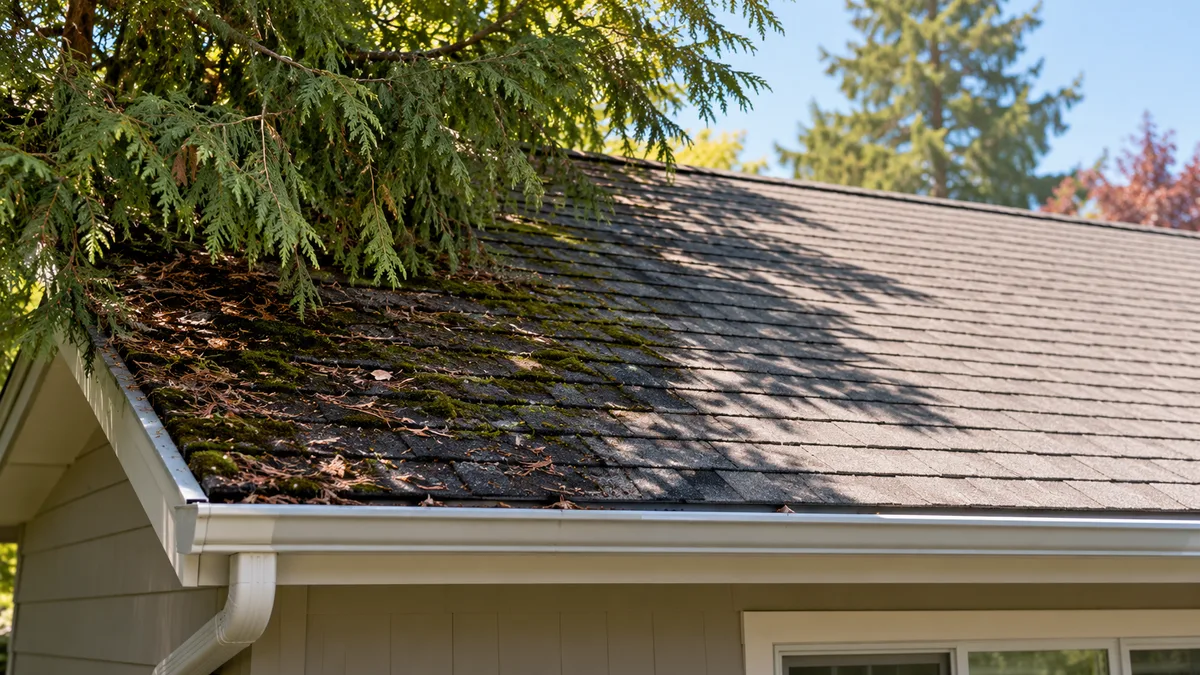
The best prevention starts with the conditions that favor moss. If tree branches shade the roof, a qualified arborist can advise whether selective pruning is safe and appropriate. Do not cut large limbs, work near utility wires, or climb a tree without training and equipment. Branch removal must balance sunlight with tree health, privacy, habitat, and local rules.
Keep gutters and downspouts functioning so water drains away instead of backing up at the eaves. Clear fallen leaves and needles from the ground or have a professional remove them from the roof. Repair obvious plumbing or flashing leaks through a qualified roofer. Avoid placing a sprinkler where it repeatedly wets the roof. More sunlight may discourage moss but will not eliminate growth in a damp climate or guarantee a moss-free surface.
Some roofs use metal strips or other preventive products, but suitability depends on roofing material, installation details, runoff, and local rules. Have a roofer confirm that an add-on will not void the warranty or corrode nearby components. Prevention is not a one-time promise; shaded sites may need periodic observation and maintenance.
Plan inspection and follow-up
After work, ask for a clear description of what was cleaned, any damage found, and what maintenance is recommended. Keep the product name and label instructions if a treatment was used. Monitor the same areas from the ground after rain and during the next season. Some methods take time to loosen dead growth, and aggressive immediate brushing can cause avoidable damage.
Schedule routine roof inspections based on the roof age, material, climate, and manufacturer guidance. A professional inspection can catch worn flashing, lifted shingles, blocked drainage, or other maintenance issues before they appear as an interior leak. If moss returns quickly, ask whether shade, drainage, or a continuing moisture source needs attention rather than repeatedly applying stronger chemicals.
Keep a short roof-care record
Save inspection notes, estimates, treatment labels, warranty documents, and dated ground photographs in one place. Record which roof plane was affected and whether the issue returned after a season. That history helps a new contractor compare changes and makes it easier to tell whether a recurring patch is a maintenance pattern or a sign that the roof needs repair. Include any changes to nearby tree cover or gutter drainage as well.
Conclusion
Treat roof moss as a reason to assess the roof, not as an invitation to climb up with a scraper. Observe from the ground, check for damage or water intrusion, and ask a qualified roofer whether treatment is necessary and compatible with the covering. Avoid high-pressure washing, improvised chemicals, and unsafe roof access. Reducing shade and debris where practical can slow regrowth, but no method guarantees a moss-free roof.