English Roseum Rhododendron: Care and Growing Guide
Learn how to grow English Roseum rhododendron in acidic, well-drained soil, choose the right light, water shallow roots, prune after bloom, and protect flowers.
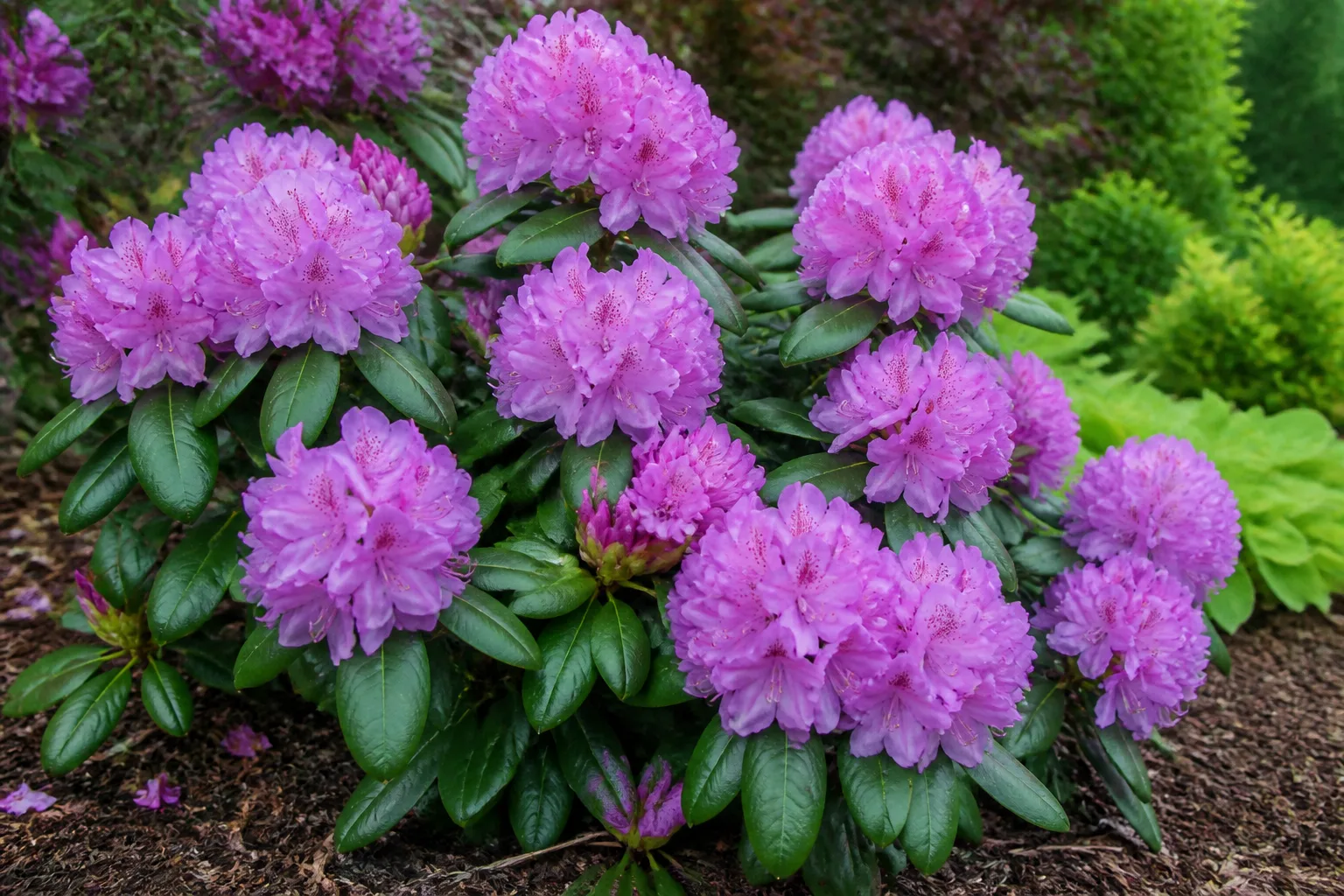
English Roseum is a large, broadleaf evergreen rhododendron with late-spring clusters of lilac-rose flowers. Give it room, bright filtered light, acidic soil, and a root zone that stays evenly moist without standing water. The main care mistake is treating “moist” as “wet”: its fine, shallow roots need air as much as water.
A quick profile helps set expectations, but the exact growth and bloom timing depend on climate and garden conditions. The Missouri Botanical Garden lists English Roseum for USDA Zones 4–8 and describes a wide mature-size range; use the plant tag and a local source to confirm the selection before choosing a permanent spot.
| Care point | Practical starting point |
|---|---|
| Habit | Broadleaf evergreen shrub |
| Mature size | Missouri Botanical Garden lists about 4–10 feet tall and 5–11 feet wide; allow generous space |
| Hardiness | Commonly listed for USDA Zones 4–8 |
| Light | Part shade to shade; morning light and afternoon protection are a safe starting point |
| Soil | Acidic, humus-rich, moist but well drained; aim around pH 5.0–5.5 |
| Bloom | Midseason spring in some climates; late spring to early summer in others |
| Root behavior | Fine, shallow roots that benefit from mulch and little cultivation |
| Safety | Keep pets away from all parts of the shrub and its clippings |
The Missouri Botanical Garden’s profile for this exact cultivar gives the size, zone, bloom, and growing-condition details above. The RHS recommends a pH range of 5.0–6.0 for rhododendrons generally, so a tested reading near 5.0–5.5 is a practical target rather than a decimal to chase. (Missouri Botanical Garden Plant Finder; RHS growing guide)
Identify the cultivar you bought
Cultivar names matter. English Roseum is a selection, not a generic description for any rhododendron with pinkish flowers, and it should not be confused with the separately named ‘Roseum Elegans’. Nursery listings can use common names loosely, so keep the plant tag or invoice and check that its botanical label says ‘English Roseum’ before applying cultivar-specific size or bloom information.
That distinction matters because rhododendrons vary from compact shrubs to large screens. The Missouri Botanical Garden gives English Roseum a mature height of 4–10 feet and a spread of 5–11 feet, while Gardenia describes it as typically 6–8 feet tall and wide. These estimates are not necessarily contradictory: age, climate, pruning, and how a nursery defines mature size all affect the figure, so plan for a broad shrub rather than expecting the smallest number.
English Roseum flowers in domed trusses of trumpet-shaped, light rose to lilac blooms; Gardenia describes orange freckles in the flowers. It is grown primarily for that spring display and its glossy evergreen foliage, not fragrance. The dependable way to identify it is the full cultivar label, since flower color alone cannot distinguish it from similar hybrids. (Gardenia cultivar profile)
Match its size and hardiness to your garden
This is a landscape shrub, not a small foundation plant. Before buying, mark out an area at least as wide as the expected mature canopy and leave additional room for access, airflow, and neighboring plants. Do not squeeze it against a walkway and plan to shear it every year; constant trimming can remove flower buds and leaves little room for its natural rounded form.
The published hardiness range is USDA Zones 4–8, but a zone describes average winter lows, not summer heat, soil, exposure, or winter wind. In cold zones, a sheltered site helps evergreen leaves avoid drying injury. In warm regions, the bigger challenge may be hot afternoon sun and dry soil rather than winter cold. Treat the zone range as one filter, then choose the site based on actual summer conditions and your soil test.
Plan for a broad evergreen shrub
Allow for a mature spread that could reach several feet beyond a typical small shrub. English Roseum can work as a specimen, a loose screen, or the back layer of a woodland-style border if there is room to see and reach it. It is less suitable for a narrow passage or a small pot that will need to support a large canopy for decades.
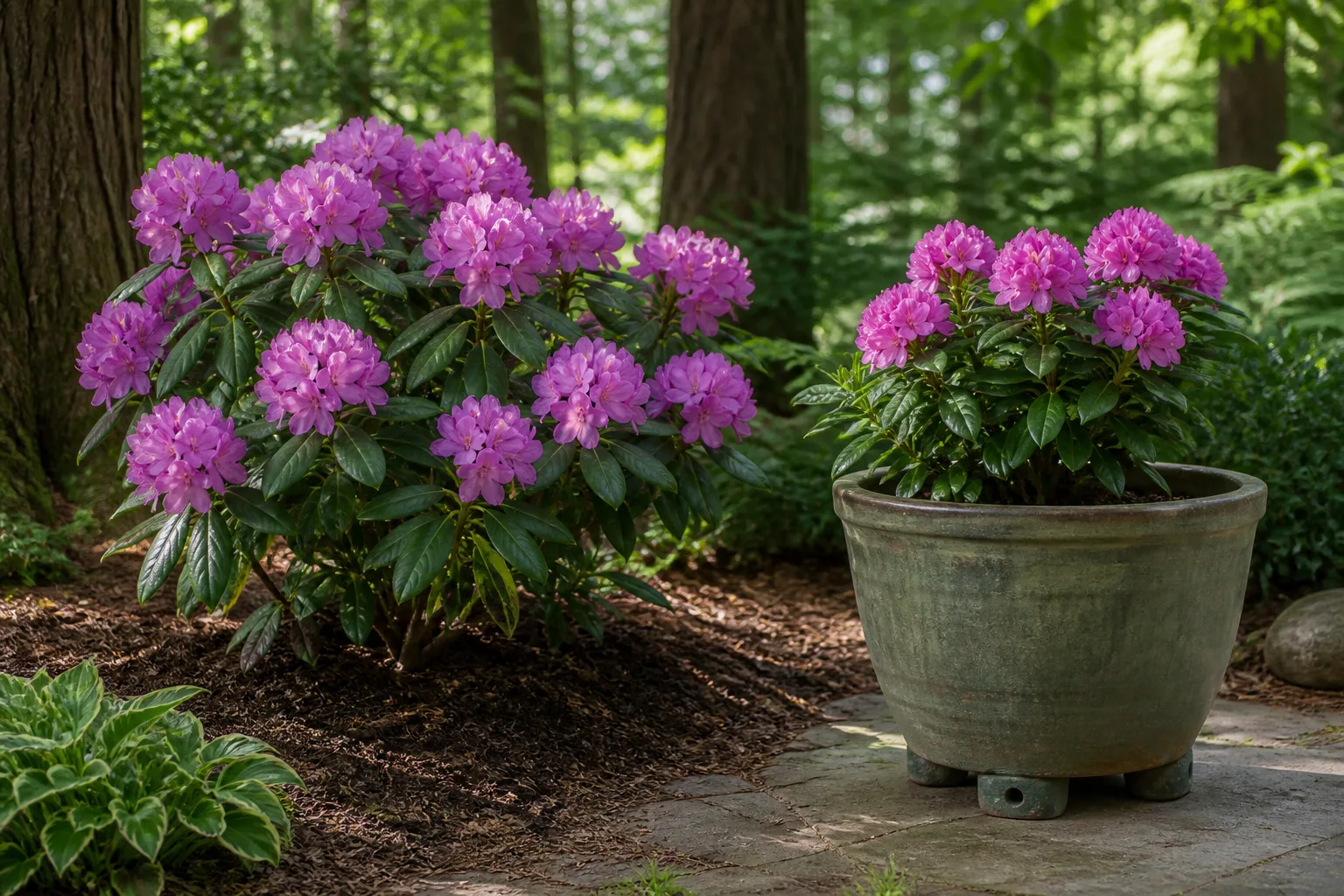
A container is possible if garden soil is alkaline or the shrub needs a more controlled root zone, but container culture brings frequent moisture checks and winter protection. Use a broad, stable pot with open drainage and an ericaceous mix, and expect the root ball and canopy to outgrow a small nursery pot. For a patio where space is tight, a compact rhododendron cultivar is usually easier to maintain. The rhododendron container guide goes deeper on the pot-versus-ground trade-off without replacing the cultivar-size check.
Choose shade, shelter, and good airflow
Choose dappled shade or high open shade with some morning light and protection from harsh afternoon sun. English Roseum is often described as more tolerant of sun than delicate shade selections, but exposure still needs to match local heat and water availability. Cool northern summers can support more open light than a hot, dry site beside pavement or a south-facing wall.
Deep shade is not the same as a good woodland site. In very low light, the shrub may grow slowly, stretch toward brighter areas, and flower sparsely. Conversely, all-day direct sun can heat the shallow root zone and scorch foliage, especially where wind dries the soil quickly. If the only available place receives strong afternoon sun, consider a different plant or plan reliable shade and irrigation before planting.
Look for a position sheltered from cold, drying winter winds, with air movement around the canopy but not a windy corridor. Avoid planting under a dense evergreen tree where roots compete for water; a bright deciduous canopy can provide summer shade while allowing spring light before leaves emerge. Check the site after rain as well: shade does not help if the ground remains saturated.
Prepare acidic soil that also drains
Rhododendron roots need soil that is acidic, rich in organic matter, moisture-retentive, and well drained. For English Roseum, aim around pH 5.0–5.5; RHS guidance places most rhododendrons within pH 5.0–6.0. Test before planting so you know whether the site is already suitable. A bag of “acid-loving plant” fertilizer cannot reliably fix a strongly alkaline bed, and a low pH will not compensate for poor drainage.
Test the area where the mature root system will spread, not only the soil in a small planting hole. Take samples according to your local extension laboratory’s directions and test again after a major amendment has had time to work. The amount of sulfur or another soil amendment needed varies with soil texture and starting pH; follow local soil-test instructions instead of applying a universal dose.
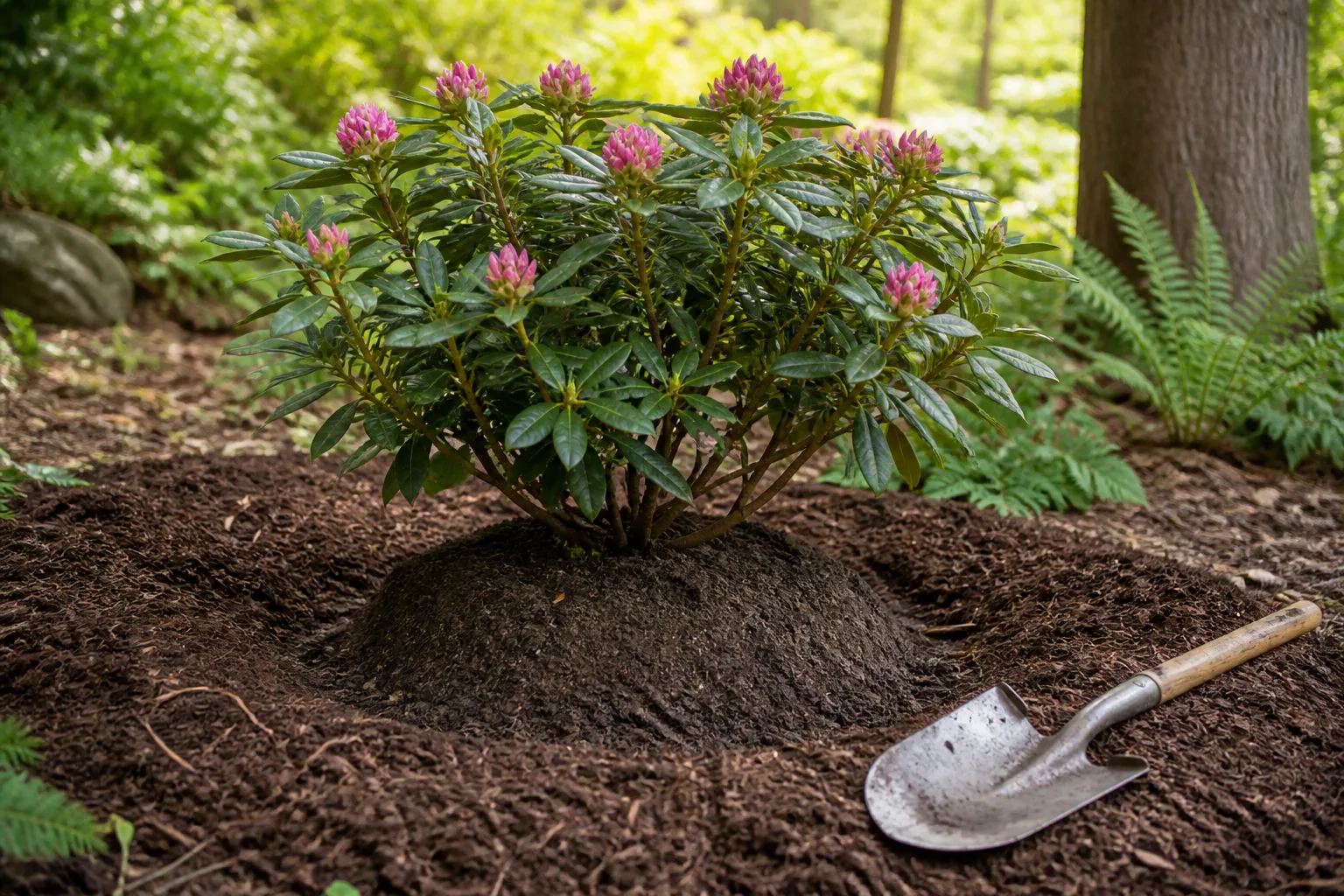
Rhododendrons have a shallow network of fine roots. In heavy clay or a low site that stays wet after rain, standing water can deprive roots of oxygen and raise the risk of root rot. Improve drainage across a broad bed, plant on a raised mound, or choose a different site rather than filling a deep hole with loose compost that can collect water like a basin.
If native soil is heavy or alkaline
If your garden soil is heavy but can be improved, prepare a wide area with organic matter and preserve a route for water to drain away. Do not add a small pocket of peat or potting mix only to the hole; the boundary between amended soil and clay may keep the root ball too wet. A raised bed is often more reliable where water consistently sits after rainfall.
If testing shows strongly alkaline soil, decide whether you can realistically maintain an acidic root zone over the shrub’s full spread. Concrete, limestone, and hard irrigation water can keep pushing the pH upward. A large container with ericaceous mix can isolate the roots, but it will dry faster and need more monitoring. If neither the bed nor a container is practical, choose a shrub suited to the existing soil rather than repeatedly trying to correct the whole yard.
Plant shallowly and mulch the root zone
Plant in spring or fall when the soil is workable and temperatures are moderate. In colder climates, leave enough time for roots to settle before the ground freezes; in hot regions, avoid the peak of summer heat. Water the nursery plant before planting so the root ball starts evenly moist.
Dig a broad hole no deeper than the root ball, and set the root flare at soil level or slightly above grade where drainage is marginal. The RHS notes that rhododendrons are surface-rooting and their roots should be just covered. Backfill with suitable native soil, water slowly to settle it, and keep soil away from the shrub’s stems. A plant buried deeply can stay wet at the crown and decline even when its upper branches look healthy.
Spread 2–3 inches of loose organic mulch over the root zone, extending toward the branch tips as the plant grows. Pine bark, shredded bark, or leaf mold helps reduce evaporation and buffers soil temperatures. Leave a few inches of open space around the stems; mulch against the crown holds moisture where bark needs to dry. Avoid digging or hoeing under the branches because shallow feeder roots can be cut easily. (RHS growing guide)
Water by checking the root ball
Newly planted rhododendrons need close monitoring during their first growing season, especially in warm, windy weather. Check the original root ball and the nearby soil a couple of inches down: if the root ball feels dry, water slowly until the water reaches it; if the area remains cool and damp, wait. Surrounding clay may stay wet while a peat-based nursery root ball dries out, so test both rather than relying on the surface.
Once established, water deeply during extended dry spells, summer heat, and the period when the plant is setting next season’s buds. Do not follow a fixed weekly schedule after rainfall; the goal is even moisture, not constantly saturated ground. Wilting while the soil is wet is a warning to check drainage or root health, not a cue to add more water.
If your tap water is very hard, rainwater is useful for routine irrigation because calcium can gradually affect acidity near the roots. Occasional tap-water use is not a crisis, and avoiding drought matters more than saving a plant from every tap-water session. If leaves pale or the plant loses vigor, test the soil and check drainage before blaming water quality alone. (RHS growing guide)
Mulch and fertilize with a light hand
Refresh the mulch when it thins, keeping it porous and away from the stems. A wide mulch ring reduces competition from weeds and helps maintain the cool, moist conditions that shallow roots prefer. Pull weeds by hand rather than cultivating deeply beneath the branch canopy. Mulch is a moisture and temperature buffer, not a substitute for an appropriate pH.
A healthy English Roseum growing in acidic, fertile soil may need little or no added fertilizer. If leaves turn yellow or growth slows, first check pH, drainage, light, and root-zone moisture; extra fertilizer can worsen salt stress or push soft leafy growth without correcting the real problem. Where a soil test or clear deficiency supports feeding, use a fertilizer labeled for rhododendrons or acid-loving shrubs and follow its rate and timing exactly.
Spring or shortly after flowering is a sensible window for a measured application if one is needed. Avoid heavy nitrogen late in the season, when fresh growth may not harden before cold weather. Do not fertilize a drought-stressed or waterlogged shrub until the root-zone problem is corrected. The RHS advises that rhododendrons in decent acid soil are unlikely to need extra feed and warns that overfertilizing can burn roots and leaves.
Prune after flowering to protect buds
Most English Roseum shrubs need little pruning beyond removing dead, damaged, or crossing branches. For shaping, prune soon after the flowers fade, while there is still time for new growth to mature before winter. Rhododendrons set next year’s flower buds during the growing season, so late-summer and fall cuts may remove the display before it opens.
Use selective cuts that preserve the natural rounded outline instead of shearing the outer layer into a tight ball. Follow a branch to a healthy side shoot or leaf cluster and make a clean cut just above it. Take out a few poorly placed branches at a time, then step back and reassess. This keeps light and airflow in the interior without removing more leaf area than the plant can replace.
Fine Gardening describes three distinct jobs—maintenance, shaping, and rejuvenation—and the timing differs by goal. Its guidance supports post-bloom cleanup for routine maintenance; a dormant-season shaping cut may cost some flower buds, and severe renewal pruning is not a reliable shortcut for every cultivar. If an old shrub requires drastic reduction, test one branch and confirm that the plant is healthy before considering a larger renovation. (Fine Gardening pruning guide)
Deadhead without snapping new growth
Deadheading is optional. Removing a spent flower truss can tidy the shrub and reduce seed formation, but it is not required for a healthy plant to bloom next year. If you do it, wait until petals fade and snip the old truss at its base without pinching off the small buds or fresh leaves immediately below.
On a mature plant with many trusses, leaving some flowers in place is reasonable. Reaching into the shrub and snapping whole branch tips can do more harm than leaving a few seed heads. Prioritize dead, broken, or diseased wood; shape for size only when the shrub genuinely needs it.
Protect the shrub through winter
English Roseum is commonly listed for Zones 4–8, but evergreen leaves can still lose moisture in winter. Cold wind and bright sun pull water from foliage while frozen ground limits replacement. The best protection is a sheltered planting site, a well-watered root zone before the ground freezes, and mulch over the shallow roots.
In a windy, exposed garden, a temporary burlap wind screen placed on the windward side can reduce exposure. Do not wrap the canopy tightly in plastic or leave burlap in place after temperatures moderate. After heavy wet snow, gently lift or brush snow from lower branches upward rather than pushing down on brittle stems; ice should be allowed to melt rather than chipped off.
A brief curl or droop during hard cold can be a protective response and may reverse when temperatures rise. Wait for milder weather before watering a shrub simply because its leaves look limp. Check soil moisture and look for persistent browning, broken branches, or wilt in wet soil before deciding whether winter damage or root trouble is involved.
Encourage a full spring bloom
English Roseum flowers in late spring or early summer depending on climate; the Missouri Botanical Garden records midseason spring bloom, while other horticultural profiles describe a later spring display. A plant in one region may open weeks before the same cultivar in a cooler region. The flowers are held in rounded trusses, so a mature shrub can produce a broad mass of light rose-lilac color.
The buds for that show are prepared before spring, often during late summer. A dry period then can interfere with bud formation, so keep an eye on the root zone after flowering ends. Mulch helps, but it does not replace a slow, deep watering when the soil actually dries out. Avoid overfertilizing: lush foliage is not the same as a strong flower set.
If a mature plant has few flowers, check these causes in order: too much shade, late pruning, dry soil during bud formation, frost damage, or excess nitrogen. A newly planted shrub may also spend its first seasons establishing roots. Compare its bloom with nearby rhododendrons and remember that a late frost can damage flower buds even when the leaves look normal. Correct the cause rather than forcing more fertilizer or removing healthy foliage. (RHS growing guide; Gardenia English Roseum profile)
Diagnose common signs of stress
One symptom rarely points to one cause. Note whether the damage affects new or old leaves, whether the soil is dry or wet below the surface, and whether symptoms are spreading from one branch or across the whole shrub. Those observations are more useful than treating a yellow leaf with iron or watering every wilted plant on sight.
Yellow leaves: test pH before adding iron
New leaves that turn yellow between green veins can signal iron chlorosis, often because high pH makes iron unavailable to roots. Older interior leaves may yellow and fall as part of normal evergreen leaf replacement, particularly in spring and summer. Uniform yellowing can also come from drought, waterlogging, root injury, or a nutrient problem, so look at the leaf age and pattern before acting.
Start with a soil test and a drainage check. If pH is too high, an iron feed may improve symptoms temporarily but will not fix the underlying alkaline soil. Use local test recommendations before amending, and consider a raised acidic bed or container if the site remains alkaline. Gardenia’s diagnostic guide also advises matching the yellowing pattern with pH and root conditions rather than treating every case as an iron deficiency. (Gardenia rhododendron problem guide)
Wilt: distinguish dry roots from wet soil
If the root ball is dry, water slowly and deeply, then recheck that the water soaked through the original nursery mix. If the soil is wet, stop adding water and check whether runoff drains, the plant was planted too deeply, or the root crown is buried. Rhododendrons wilt when roots cannot take up water, including when the surrounding soil is saturated and short of oxygen.
Wet-soil wilt may result from waterlogging or Phytophthora root rot, which can cause declining vigor, yellowing, branch dieback, and leaf loss. Remove standing water and correct drainage if possible, but do not move contaminated soil around the garden or apply a fungicide without a diagnosis. If the shrub keeps declining after moisture and planting depth are corrected, contact a local plant diagnostic clinic or extension service; visual symptoms alone may not distinguish root rot from waterlogging. (Missouri Botanical Garden Plant Finder; Gardenia rhododendron problem guide)
Pests and leaf spots: identify the pattern
Rhododendron lace bugs feed on leaf undersides; look for pale stippling above and dark specks beneath. Vine weevil adults leave rounded notches at leaf edges, while larvae can injure roots. A distorted or swollen young leaf may be leaf gall, and discrete spots or scattered dead branches can indicate disease or winter injury. Do not spray on sight: identify the pest or disease, assess how much of the plant is affected, and follow local extension or product-label guidance if treatment is warranted.
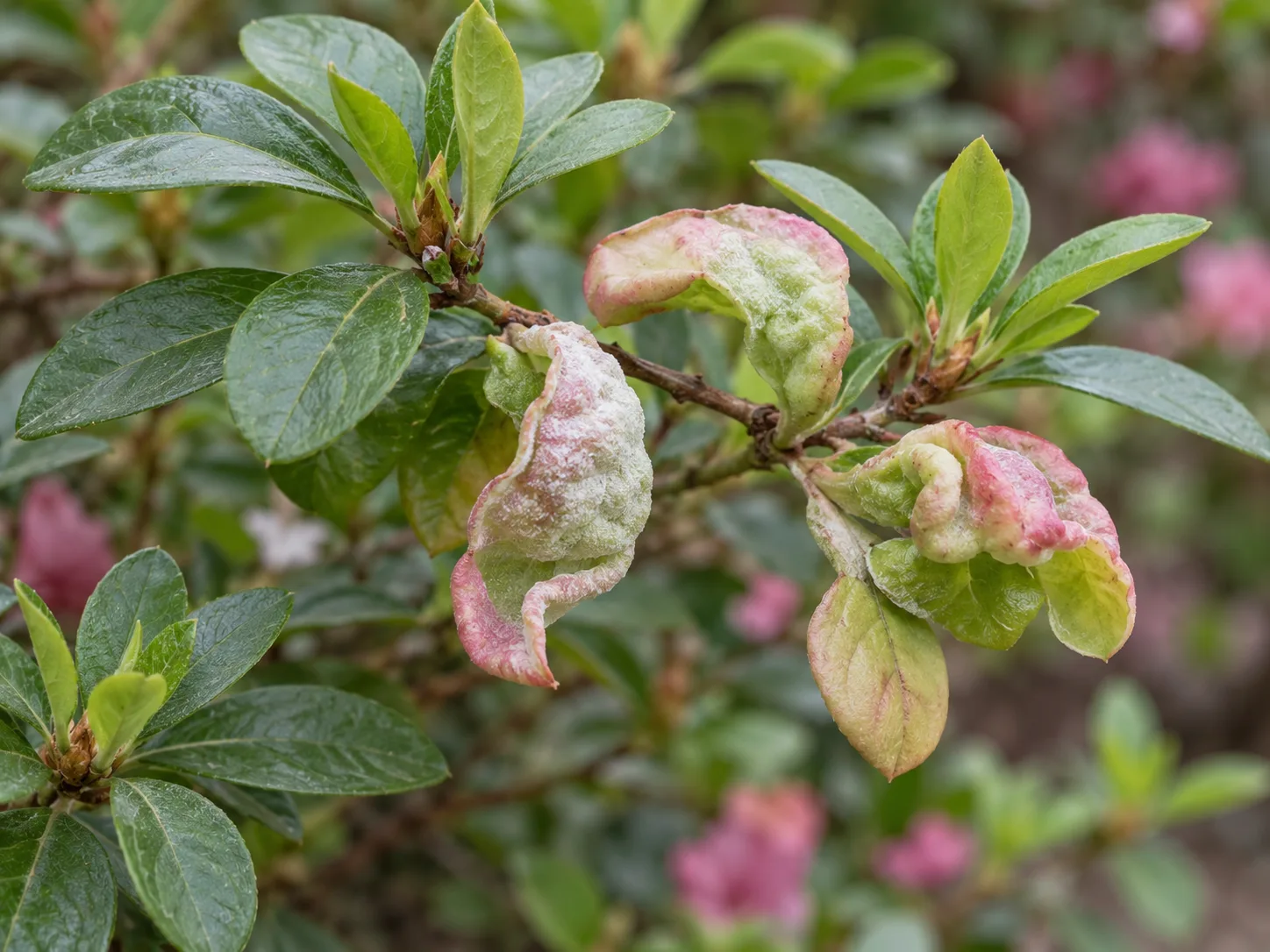
A few older spotted leaves are usually a different problem from rapid branch dieback or whole-shrub wilting. Remove clearly dead or diseased material with clean pruners, keep fallen debris from building up beneath the plant, and improve airflow if shrubs are crowded. Take photographs of both leaf surfaces and the full shrub when asking an extension service to identify a persistent problem.
Rhododendrons, including English Roseum, should not be eaten. The ASPCA lists rhododendron as toxic to dogs and cats; keep leaves, spent trusses, and pruning waste away from pets. If an animal may have chewed any part, contact a veterinarian or animal poison-control service promptly and provide the plant name. (ASPCA rhododendron listing)
Propagate the named cultivar
Seed is useful for raising species plants, but seedlings from a named hybrid may not keep the parent’s flower color, form, or hardiness. If you want another shrub that matches English Roseum, choose a vegetative method such as semi-ripe cuttings or layering. The RHS specifically recommends cuttings, grafting, or layering for named rhododendron cultivars rather than relying on seed.
Layering is a practical home method because the new roots develop while the branch remains attached to the parent. In spring, choose a low, flexible, healthy stem; make a small wound on the underside near a node, bend that section to the soil, and pin it under a few inches of loose acidic mix while the growing tip remains above ground. Keep the spot moist, but not waterlogged, and check for roots only after the plant has had a full growing period.
Do not sever the branch as soon as it resists a light tug. Rhododendron layering can take 15 months to two years, and some smooth-barked types take longer, so wait until the rooted section can support itself. Then separate it from the parent and transplant it during a cool, mild period. Semi-ripe cuttings taken from current-season growth in late summer or fall can also preserve the cultivar, but they need close humidity and moisture control. (RHS growing guide)
Conclusion
English Roseum grows best when its size, shade, soil, and shallow roots are treated as one connected decision. Check the cultivar label, allow several feet of mature width, test pH and drainage, plant high enough to keep the root crown airy, and mulch without burying the stems. Water when the root zone begins to dry, and feed only when the site or a soil test supports it.
After flowering, prune selectively if the shrub needs shaping; late cuts can remove next year’s buds. In summer, protect the forming flower buds from drought, then shelter evergreen leaves from drying winter wind. When leaves yellow or the plant wilts, check soil pH and moisture before adding iron or water. Keep all plant parts and clippings away from pets, and use layering or cuttings—not seed—when you want a new plant true to the named cultivar.



