Rhododendron maximum Care and Growing Guide
Learn how to grow Rhododendron maximum in dappled shade, prepare acidic soil, water its shallow roots, protect flower buds, and prune at the right time.
Meet great laurel before you plant
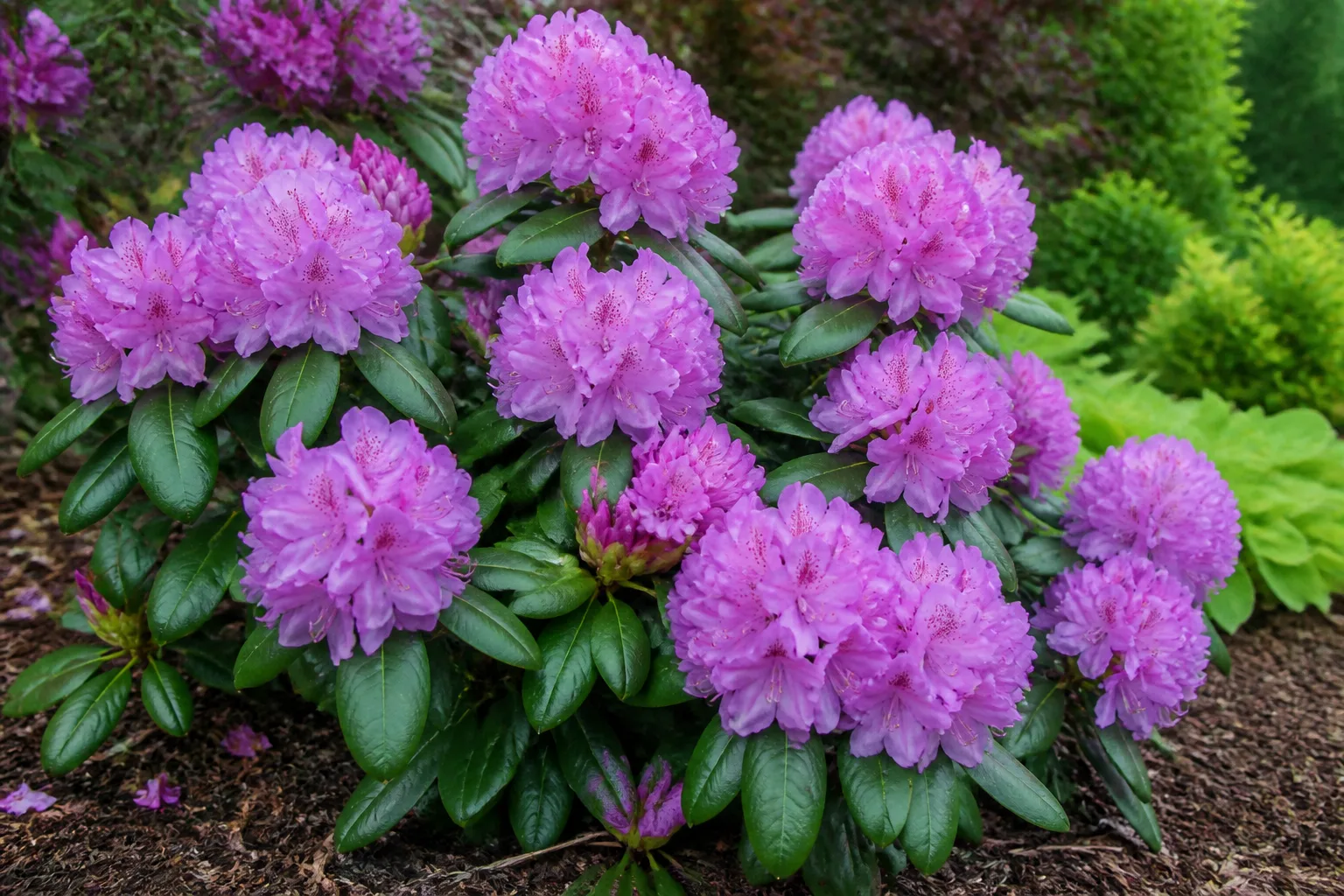
Rhododendron maximum, commonly called great laurel or rosebay rhododendron, is a broadleaf evergreen native to eastern North America. It grows as a loose, multi-stemmed shrub and can become a small tree or thicket; expect roughly 10 to 20 feet tall in many landscapes, with some plants spreading as broadly as they grow. This is a long-term woodland feature, not a compact foundation shrub.
Its thick, oblong leaves remain through winter, while flowers arrive later than many garden rhododendrons. Depending on region, flowers open from late June into summer in rounded clusters of pink, rose, purplish-pink, or nearly white bells, often marked with yellow-green or orange spots. In Maine, the species typically flowers in late June or early July; farther south, local weather can shift the season. UConn Plant Database records the late bloom and the plant’s preference for cool, moist, acidic woodland conditions.
Before buying, check the mature size on the plant tag and ask whether the nursery stock is the species or a named cultivar. Cultivars can differ in habit, flower color, and hardiness. If the label only says “rhododendron,” do not assume it will have the height, bloom window, or regional adaptability of Rhododendron maximum.
Choose a site that matches its woodland roots
Start with the site, because correcting a bad location is harder than adjusting routine care. Great laurel does best in dappled or partial shade, with protection from hot afternoon sun, winter wind, and reflected heat from paving or walls. It tolerates fairly deep shade, but a spot with filtered light usually gives a better balance of sturdy growth and flowers.
Think about what the shade is like across a full day. Under a high-canopied tree or on the east or north side of a building, light may be gentle and the soil cool. Under dense shallow-rooted trees, however, the shrub can face intense competition for moisture; you may need to water during dry spells, and digging among established roots can damage both plants.
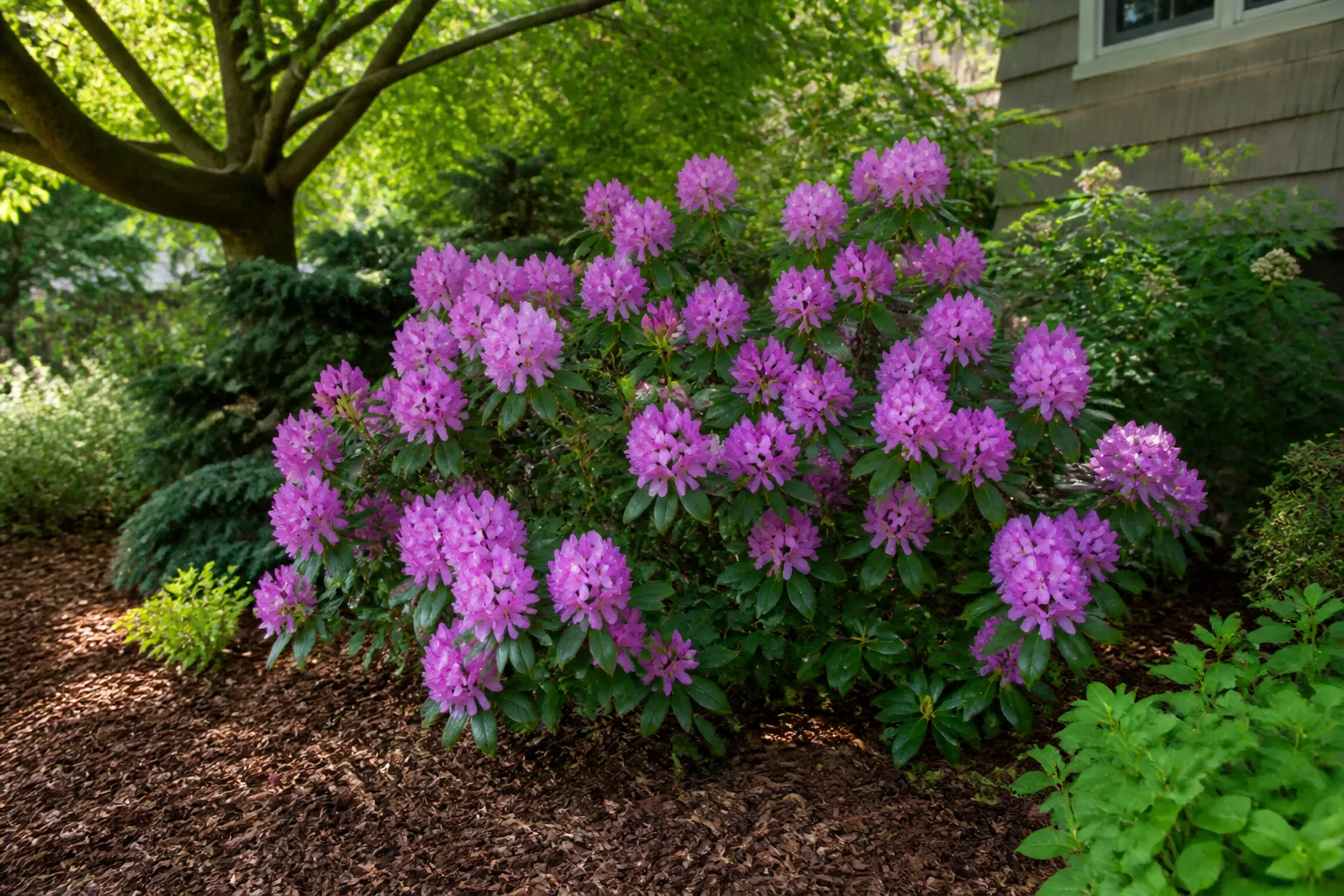
Leave generous room for the mature shrub and air movement. Its natural form is open rather than tightly clipped, and crowded placement makes it harder to inspect leaves or reach the root zone. NC State Extension describes the species as an upright, loose shrub suited to woodland edges and naturalized groups, and notes that afternoon sun can scorch its foliage.
Prepare acidic, well-drained soil
The ideal root zone stays cool and evenly moist while excess water drains away. Rhododendron maximum prefers humus-rich, acidic soil; dense, compacted clay that remains saturated can suffocate its fine roots and invite root rot. A sandy soil that drains almost immediately has the opposite problem: it may dry between waterings, especially under tree roots.
Test the soil before changing it. General rhododendron references often give a target around pH 4 to 5, while plant needs and local recommendations vary; NC State describes this species as requiring strongly to moderately acidic soil, and UConn flags chlorosis on high-pH ground. A soil test tells you whether the problem is acidity, drainage, or both. Do not add sulfur, lime, vinegar, or fertilizer by guesswork, and do not try to acidify the whole yard if the test calls for a large correction. Plantura’s rhododendron soil guide gives a general pH range and explains the balance between moisture retention and drainage.
If the soil is alkaline or poorly drained, compare two options before planting. In mildly unsuitable ground, a broad, raised planting area made from acidic, organic-rich soil can improve drainage; it must be wide enough for the spreading shallow roots and watered consistently. If the site is persistently wet, badly compacted, or very alkaline, choose another location or a locally suitable shrub instead of trying to maintain a permanent pocket of amended soil.
Work compost or leaf mold into a broad area only when a soil test or local extension advice supports the amendment. Avoid filling a small planting hole with a radically different mix from the surrounding soil: water can behave differently at that boundary, and roots may stay confined to the amended pocket.
Plant the root ball shallow, wide, and high
Plant in cool weather when the ground is workable and the shrub can establish before its first period of heat or hard freeze. In cold-winter areas, early spring is practical; in milder climates, fall planting gives roots time to grow. Avoid planting into waterlogged soil, during a heat wave, or just before a long dry spell if you cannot keep the root ball moist.
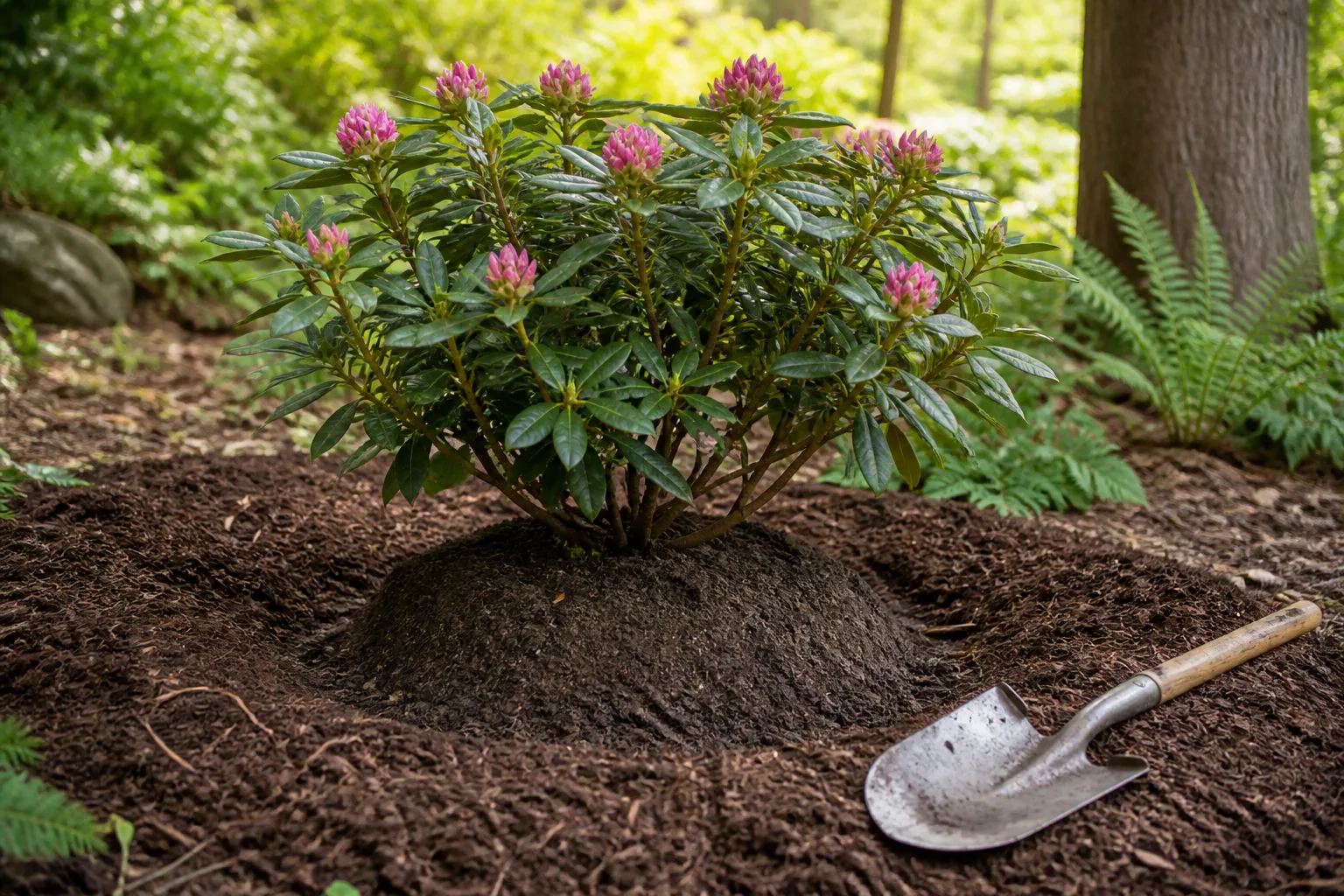
Dig a hole two to three times wider than the root ball but no deeper than its height. Rhododendrons have shallow, fibrous roots, so the top of the root ball should sit at or slightly above surrounding grade, particularly where drainage is marginal. Loosen circling roots gently and tease apart only what you can separate without shredding the root system.
Set the shrub straight, backfill with the excavated soil improved only as appropriate, and water slowly to settle it. Do not pile soil over the stem bases or bury the root flare. If the site is sloped or the soil is heavy, a low, broad mound is safer than a deep basin that collects rainwater.
Water by checking the root zone
A newly planted shrub needs closer attention than an established one, but “twice a week” is not a reliable schedule for every garden. Rainfall, heat, wind, soil texture, canopy cover, and root-ball size all change how quickly the plant dries. During the first growing season, check the soil near the root ball every few days in warm weather; water when the upper few inches begin to dry, then recheck rather than repeating automatically.
Apply water slowly over the root ball and the surrounding soil so it can soak into the shallow root zone. A hose set to a gentle trickle or a soaker line is more useful than a brief splash over the leaves. New plants may need regular supplemental water through their first summer and during dry autumn weather, while established shrubs usually need extra water only during prolonged drought.
Wilting does not always mean thirst. Leaves may droop temporarily in heat and recover in the evening, but persistent wilt in wet soil can signal damaged roots or Phytophthora root rot. Before increasing irrigation, feel the soil several inches down and look for poor drainage, standing water, or a decline that continues despite moist ground.
Mulch without burying the stems
Mulch helps stabilize soil temperature, slow evaporation, and limit weeds that would compete with the shrub. Apply a loose layer of bark, wood chips, or pine needles over the root zone, extending toward the drip line as the plant grows. Keep mulch a few inches away from the stems so the crown stays open to air and does not sit in a damp collar.
Because the roots lie close to the surface, pull weeds by hand rather than hoeing or cultivating around the plant. Avoid deep edging, trenching, and heavy foot traffic under its branches. A plant that suddenly weakens after nearby construction or bed renovation may have lost feeder roots even if the visible stems look undamaged.
Fertilize only when the plant needs it
Do not fertilize by calendar simply because rhododendrons are acid-loving. If the shrub is growing steadily and its leaves have normal color, it may need nothing beyond suitable soil and an annual mulch. Too much fertilizer can injure shallow roots, push soft leafy growth at the expense of flower buds, and worsen damage where drainage is already poor.
If growth is weak or foliage is pale, check moisture, pH, drainage, and root health before adding nutrients. A soil test can distinguish a nutrient shortage from iron or manganese becoming unavailable in high-pH soil. When feeding is justified, use a product labeled for rhododendrons or other acid-loving shrubs and follow its label rate, applying in early spring while the plant is actively growing.
Keep fertilizer off the stems and do not place concentrated granules against the root ball. Skip late-season feeding in cold climates so new growth is not encouraged just before winter. Avoid “more bloom” products unless a soil test shows the relevant nutrient is needed; excessive phosphorus can accumulate without correcting the actual cause of poor flowering.
Prune after flowering, and with restraint
Great laurel usually needs little shaping. Remove dead, broken, or crossing branches with clean pruners, cutting back to a healthy branch union rather than leaving long stubs. If you want to reduce height or width, prune just after the flowers fade; the shrub sets next year’s buds during summer, so late pruning can remove the display you were hoping to keep.
Make selective cuts rather than shearing the outside into a tight ball. Shearing can remove flower-bearing tips, create dense outer growth, and leave bare interior branches. For a badly overgrown shrub, spread rejuvenation over two or three years, removing a portion of the oldest stems at ground level after flowering instead of cutting the entire plant back at once.
Deadheading faded flower clusters is optional. It can make a formal planting look tidier, but a large shrub may take more time than the visual benefit warrants. If you do it, snap or clip only the spent cluster and avoid breaking the new growth directly below it.
Understand bloom timing and next year’s buds
Rhododendron maximum flowers later than many familiar hybrids, often around early summer. The exact bloom window follows local climate: the Maine Natural Areas Program records late June to early July for Maine, while UConn notes flowering into summer. New growth can partly cover some clusters, so a shrub may flower well even when the display looks less exposed than the flowers of a compact cultivar.
Poor flowering has several possible causes. Deep shade can reduce bud formation, late frost can injure developing buds, and pruning after midsummer can remove buds already set for the following year. Drought stress, compacted roots, and unsuitable pH can also weaken growth enough to reduce flowering.
If the shrub is healthy but bloom is sparse, track the timing rather than feeding immediately. Note the light it receives, whether buds survived winter, when pruning occurred, and whether the root zone dried out the previous summer. Change one condition at a time where possible; otherwise, it is difficult to tell whether the plant needed more light, steadier moisture, or simply another season to establish.
Protect an evergreen shrub through winter
An evergreen plant continues to lose some water through its leaves in winter, especially on sunny, windy days when roots are cold or the ground is frozen. Choose a sheltered site away from an exposed corner, salt spray, and strong winter winds. Water thoroughly before the soil freezes if autumn has been dry, then keep the mulch layer in place without mounding it around the stems.
Leaf curling in cold weather can be a normal response, not a sign that the shrub is dying. UConn’s plant profile notes that leaves roll in temperatures below about 25°F and unfurl again as conditions warm. If leaves remain brown or brittle after thawing, check for winter desiccation, wind exposure, salt, drought before freeze-up, or root problems before pruning.
Do not wrap the foliage tightly in plastic. In especially exposed gardens, a temporary breathable wind screen can reduce drying, but the better long-term fix is a protected site and an established root zone. Brush off exceptionally heavy wet snow only if branches are bending dangerously; avoid striking frozen limbs.
Propagate Rhododendron maximum
Choose a propagation method based on the result you want. Layering is simple when a low branch can reach the soil, cuttings produce a clone without bending a branch to the ground, and seed is useful when you want to raise several plants or do not need them to match the parent exactly. These methods take time: this is a woody shrub, not a fast annual.
Layer a low branch for the simplest clone
In summer, find a healthy, flexible branch low enough to rest on the ground. Make a shallow nick on the underside where it touches soil, pin the wounded section down with a wire staple, and cover it with a few inches of acidic, well-drained soil or an appropriate rooting medium. Leave the leafy tip exposed and mark the spot so it does not get disturbed.
Keep that small area evenly moist, not waterlogged. Check for roots the next growing season; do not tug hard, because a few new roots are easy to break. Once the layer is well rooted, sever it from the parent and transplant during a mild period, ideally after it has had time to establish. BBC Gardeners’ World’s rhododendron layering guide, including pegging a low branch and leaving the parent connected while roots form.
Try semi-ripe cuttings for more plants
Take semi-ripe cuttings in late summer from current-season growth that has begun to firm but is not fully woody. Use a clean blade to cut a healthy shoot several inches long, remove lower leaves and any flower buds, and reduce large remaining leaves if they would crowd the propagation container. Dip the cut end in rooting hormone only if the product label supports use on woody ornamentals, then insert it into a sterile, airy, acidic propagation mix.
Cover the pot with a clear bag or propagation lid supported so it does not touch the leaves. Keep it warm, humid, and in bright indirect light; open the cover regularly for fresh air and keep the medium barely moist. A cutting can take several months to root, and success is variable, so take more than one and do not move them outdoors until they have a stable root system and have been acclimated. The RHS profile for Rhododendron maximum lists semi-ripe cuttings in late summer as a propagation option.
Sow seed when variation is welcome
Collect ripe seed capsules after they turn brown and begin to open, then sow fresh seed on the surface of a sterile, fine-textured medium. Rhododendron seed is tiny and needs light to germinate, so do not bury it under a thick layer of mix. Cover the container with clear plastic or a humidity dome, keep it warm and evenly moist, and provide bright indirect light.
Remove the cover gradually after seedlings emerge to reduce damping-off. Pot them individually after they have several true leaves, then grow them on in protected conditions; young seedlings are more vulnerable to drying and hard frost than established shrubs. Seed-grown plants may vary from the parent, so use layering or cuttings when you want a predictable flower color or habit. The University of Tennessee Gardens give a surface-sowing method and note that great laurel can spread by seed and vegetative growth.
Diagnose yellowing, wilt, and leaf drop
Yellow leaves have more than one cause, so look at the pattern and soil before treating. If new leaves turn yellow between green veins, high pH can be limiting iron availability; the fix is not automatically an iron supplement. Test pH first, then address the underlying soil condition using a lab’s recommendation or local extension guidance.
If older leaves yellow evenly, consider normal replacement of a few aging leaves, seasonal stress, nitrogen availability, or root injury. Widespread yellowing with weak growth is more concerning than a few older leaves dropping. Check whether the plant was recently disturbed, fertilized heavily, or kept too wet.
For wilt, distinguish dry from waterlogged soil. Dry, crumbly soil around a new root ball calls for a slow soak; wet soil with persistent wilt points toward poor drainage or root disease and needs a different response. Brown leaf edges may follow drought, winter wind, salt, or hot sun, so use the exposure and recent weather as clues instead of applying a fungicide or fertilizer at random.
Watch for pests and diseases
Rhododendrons can be affected by lace bugs, scale, aphids, borers, mites, and other insects. Lace bug feeding often leaves pale stippling on the upper leaf surface and dark specks underneath; inspect the underside before deciding that yellowing is a nutrient issue. Deer may also browse the foliage in some regions, even though the leaves are toxic.
Root and crown rots deserve particular attention because the shrub’s shallow roots are sensitive to saturated soil. Phytophthora can cause declining vigor, wilting, leaf loss, and branch dieback; those symptoms are not enough to confirm the disease, but they do justify checking drainage and getting a diagnosis if decline continues. NC State Extension recommends cultural prevention first: improve drainage where feasible, avoid overwatering, and do not overfertilize.
Leaf spots, powdery mildew, and galls may appear in stressful or humid conditions. Remove heavily affected fallen leaves, avoid overhead watering late in the day, and improve spacing or airflow when plants are crowded. Do not apply a pesticide or fungicide until you identify the problem and confirm that a labeled product is appropriate for the plant and site.
Consider toxicity and wildlife
Plant Rhododendron maximum for its flowers and evergreen structure, not for food or home remedies. University plant references identify the species as toxic, and the RHS lists it as harmful if eaten; keep clippings, leaves, flowers, and seed capsules away from children and animals that chew plants. Wear gloves when pruning if you have sensitive skin, wash tools and hands afterward, and never brew tea or make medicine from garden material.
Risk depends on what was eaten and how much, and a brief accidental taste is not the same as consuming a large quantity. Poison Control notes that small accidental exposures to azalea or rhododendron may cause mild mouth or stomach symptoms, while serious toxicity is possible with larger ingestions. If a person has eaten part of the plant and feels unwell, use Poison Control or call 1-800-222-1222 in the United States; for a pet, contact a veterinarian promptly and share the plant’s identification.
The flowers also provide nectar and pollen for bees, butterflies, and hummingbirds. NC State Extension lists rosebay rhododendron as a pollinator plant, and University of Tennessee Gardens notes its wildlife value. Toxicity is a reason to prevent ingestion, not to assume that the shrub has no ecological value or that pollinators should be kept away from its blooms.
Conclusion
Rhododendron maximum succeeds when the site supplies what a woodland shrub needs: cool dappled shade, acidic soil that drains, and steady moisture around shallow roots. Give it room to reach its natural size, plant the root ball high rather than deep, and use mulch instead of cultivating beneath the canopy.
After establishment, keep care light and responsive. Check soil before feeding or acidifying, prune soon after flowers fade, and treat yellowing or wilt as a clue to inspect the roots and site. Those habits preserve the shrub’s late-season blooms while letting great laurel grow into the long-lived evergreen screen or woodland specimen it is meant to be.