Silver Falls Plant Care for Full, Silvery Trailing Growth
Learn how to grow Silver Falls with drainage, watering checks, pruning choices, propagation, and winter protection for plants growing in pots.
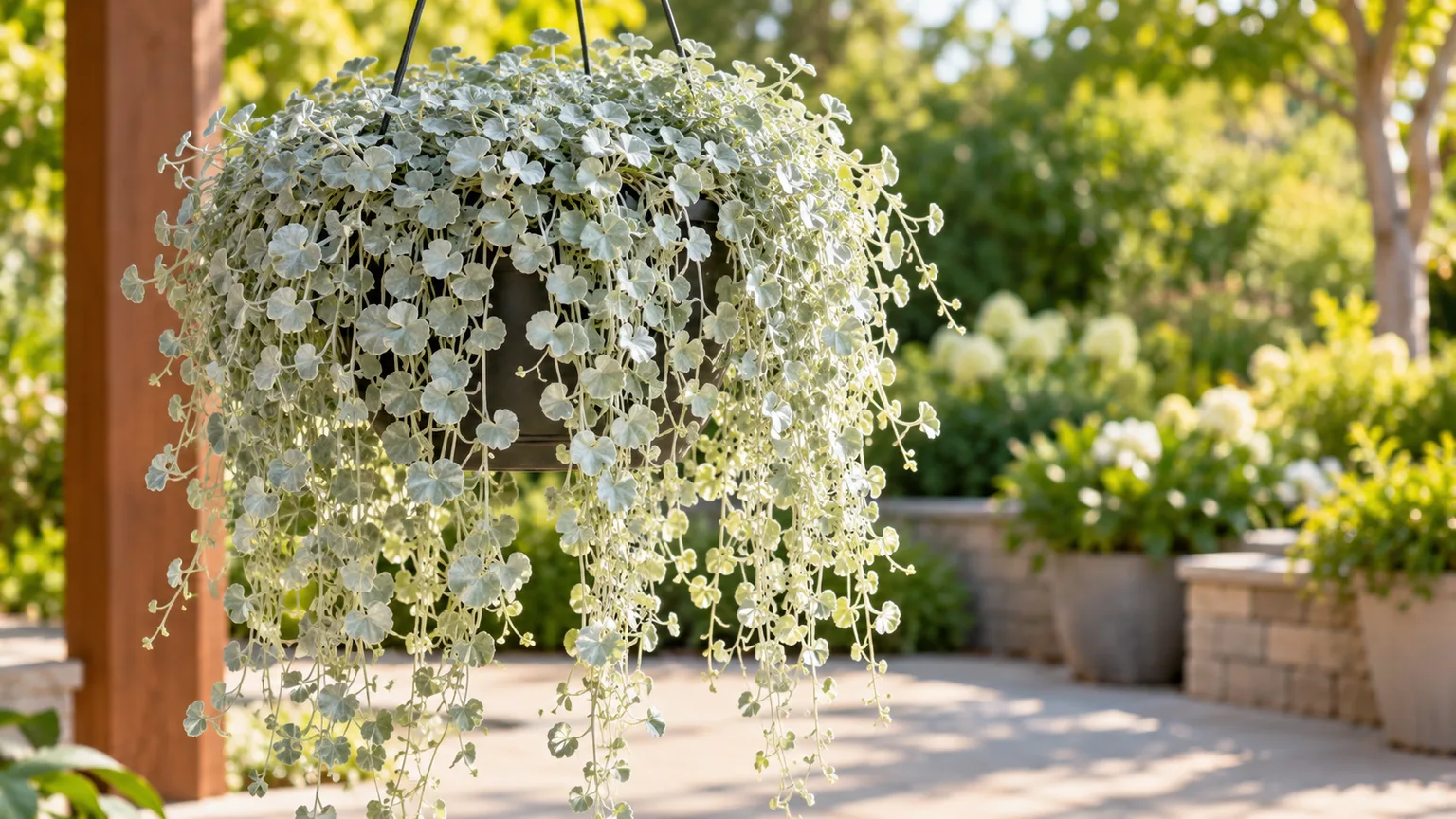
Silver Falls is grown for the way its slender stems spill over a basket, low wall, or raised-bed edge, carrying small leaves that catch the light like pewter. Give it plenty of sun, a root zone that drains freely, and enough water to establish without leaving the soil soggy. Those three choices do more for a full cascade than frequent pruning or heavy feeding.
The name usually refers to Dichondra argentea ‘Silver Falls’, also sold as silver ponyfoot or silver nickel vine. It is a low, fast-growing foliage plant that can be a perennial in warm conditions, but winter advice varies widely by source and climate. This guide treats that uncertainty honestly and focuses on the decisions you can control: where to plant it, how to read its water needs, how to multiply a good plant, and when to move a container before cold weather.
Silver Falls at a glance
‘Silver Falls’ is a named cultivar of Dichondra argentea in the morning-glory family, Convolvulaceae. Its leaves are small, softly rounded to fan-shaped, and silvery gray; its tiny pale flowers are easy to miss. The ornamental effect comes from the foliage and trailing habit, not from a showy bloom. NC State Extension describes a plant only a few inches tall that can spread several feet across, while RHS lists it as a low plant with trailing stems that can reach about 1.2 meters. (NC State Extension; RHS)
| Feature | What to expect |
|---|---|
| Growth habit | Low, creeping plant with long, cascading stems |
| Main feature | Silvery foliage; flowers are small and inconspicuous |
| Best exposure | Full sun for the strongest silver color; partial shade is tolerated |
| Soil | Sandy or loamy potting mix with reliable drainage |
| Water | Moderate while establishing; allow the root zone to dry partly between waterings |
| Common uses | Hanging baskets, window boxes, raised beds, retaining walls, seasonal ground cover |
| Winter role | Tender perennial in some climates; annual or overwintered container plant in colder ones |
The dimensions on a label describe potential, not a deadline. A recently planted plug may take much of the season to drape, while a plant in warmth, sun, and a generous container can extend several feet. If you need a compact edge, treat the runner length as something you will manage rather than assuming the plant will stay within its nursery-pot footprint.
Choose a site around its trailing growth
Think first about what the stems should do. In a hanging basket or tall pot, they can fall without covering neighboring plants. On a wall or raised-bed edge, their runners soften a hard line. As ground cover, the same habit means stems will spread where they can touch soil, so use it where you can keep the edge trimmed and drainage is good.
The cultivar is also useful as a “spiller” in a mixed container: silver leaves cool down vivid petunias, angelonia, or bronze foliage, and pair naturally with blue, purple, pink, or white flowers. Wisconsin Horticulture recommends these combinations and notes that stems can cascade several feet from a bed edge. Choose companions with similar sun and water needs. A thirsty plant that needs constantly damp mix can turn the shared pot into a poor fit for dichondra, even if the color combination looks right. (Wisconsin Horticulture)
In a hot, reflective spot, a container gives you more control than a broad bed: you can move it out of the harshest afternoon exposure or lift it under cover before frost. In a mild, well-drained garden, a bed lets the plant spread into a low mat. Avoid a site where water collects after rain or where a dense, moisture-loving planting will shade it all day.
Give it light that keeps foliage silver
Full sun is the most reliable route to dense growth and the brightest pewter color. NC State Extension lists full sun and dappled sunlight, and Wisconsin Extension says the plant performs from full sun to partial shade. RHS likewise lists full sun and partial shade, noting that the leaves are more silvery in full sun. (NC State Extension; RHS)
Partial shade is a useful compromise where afternoons are scorching, especially while a young plant is acclimating. It does not mean deep shade: too little light can leave stems longer and thinner, reduce the silvery effect, and make the center look sparse. If your plant is greenish and stretched, move it gradually into a brighter position rather than changing water and fertilizer at the same time. A week or two of transition helps prevent a sudden jump from shade into intense midday sun.
Indoors, a bright windowsill may keep a pot alive for a while, but a normal room is not an equal substitute for outdoor light. Treat indoor placement as temporary overwintering, not as the ideal year-round display, unless you can provide unusually strong light and good air movement.
Match expectations to your climate
Silver Falls is heat tolerant and handles dry spells once established, but frost is the dividing line between a dependable perennial and a seasonal plant. Published hardiness guidance is inconsistent: NC State Extension lists USDA zones 10–12, Wisconsin Horticulture describes it as hardy to zone 8a, and RHS classifies the cultivar as tender and usually grown as an annual. That disagreement is a reason to avoid treating one number as a promise for your garden. (NC State Extension; Wisconsin Horticulture; RHS)
Local winter lows, duration of cold, wind exposure, drainage, and whether the plant is in the ground or a pot all affect survival. Roots in an exposed hanging basket cool faster than roots protected by garden soil, while a wet, cold root zone creates more risk than a dry, sheltered one. In frost-prone regions, the reliable plan is to enjoy it as an annual, take a few rooted pieces before the season ends, or bring a container into a bright, frost-free space. If it survives outside, count that as a benefit of your particular microclimate, not a guarantee to plan around.
Build fast-draining soil
Drainage matters more than a precise pH target. Silver Falls tolerates a range of soil reactions, but it does not want a dense mix that stays wet around the crown and shallow roots. RHS lists chalk, loam, and sand among suitable soil types and recommends well-drained compost; NC State Extension also emphasizes well-drained, occasionally dry soil. (RHS; NC State Extension)
For a pot, start with a quality container mix rather than garden soil. If it holds water for too long, blend in a coarse, stable ingredient such as perlite, pumice, or fine bark so excess water can move through while the mix still holds some moisture. Do not try to fix heavy clay by adding a small amount of sand; that can make a compact bed harder to work. For an in-ground site, choose a raised or naturally sloping area, or improve the whole planting zone with organic matter and a structure appropriate to your soil.
Test the site after rain: if water remains pooled long after the surrounding area has drained, choose a raised bed or container instead. A gravel layer at the bottom of a pot will not compensate for blocked drainage holes or a water-retentive mix. Use a container with open drainage and keep its saucer empty after watering.
Water by checking the root zone
Silver Falls is drought tolerant after establishment, but “drought tolerant” does not mean “never water.” Newly planted roots need a steady supply of moisture while they spread into surrounding soil. Once growth is established, let the upper layer dry partly between thorough waterings. NC State Extension describes its preferred moisture as dry to medium; Wisconsin Extension advises letting larger plants dry well between waterings. (NC State Extension; Wisconsin Horticulture)
Fine Gardening also describes the plant as drought tolerant while recommending well-drained soil. Read those points together: established roots tolerate a dry interval, but the plant still benefits from a thorough drink when the root zone has dried, and they should not sit in stagnant water. (Fine Gardening)
Use the plant’s container and weather to set the interval. In a hanging basket, insert a finger about an inch into the mix; water when that layer has dried and the pot feels noticeably lighter. In a bed, check a little below the surface near the root zone, not just the dusty crust. When it is time, water slowly enough to wet the root ball and let the excess drain. A quick splash on the surface can leave the center dry while the outside looks wet.
Small baskets in wind or strong summer sun can dry much faster than a deep patio pot or garden bed. Check more often during hot, windy spells, after a plant fills the container, and during the first weeks after planting. In cool, cloudy weather, wait longer. Do not follow a fixed schedule such as every nine days: it ignores pot size, rainfall, mix, and exposure.
If leaves droop, feel the soil before acting. Dry mix plus limp foliage points toward thirst; wet, heavy mix plus yellowing or soft stems points toward poor drainage or overwatering. Wisconsin Extension notes that established plants can recover quickly after watering following wilt, but repeated severe drying weakens a container plant and spoils its appearance. The goal is to water before that repeated cycle, without keeping the roots constantly wet.
Plant Silver Falls in a bed or container
Wait until frost danger has passed and the soil has warmed before planting outdoors. Give plants enough room for the spread you want: a few feet of trailing stems are normal in a favorable season. In a mixed pot, place dichondra near the rim so the foliage can fall outward, while upright flowers occupy the center. Do not crowd every opening with a single young plant; airflow and access for watering make the mature container easier to manage.
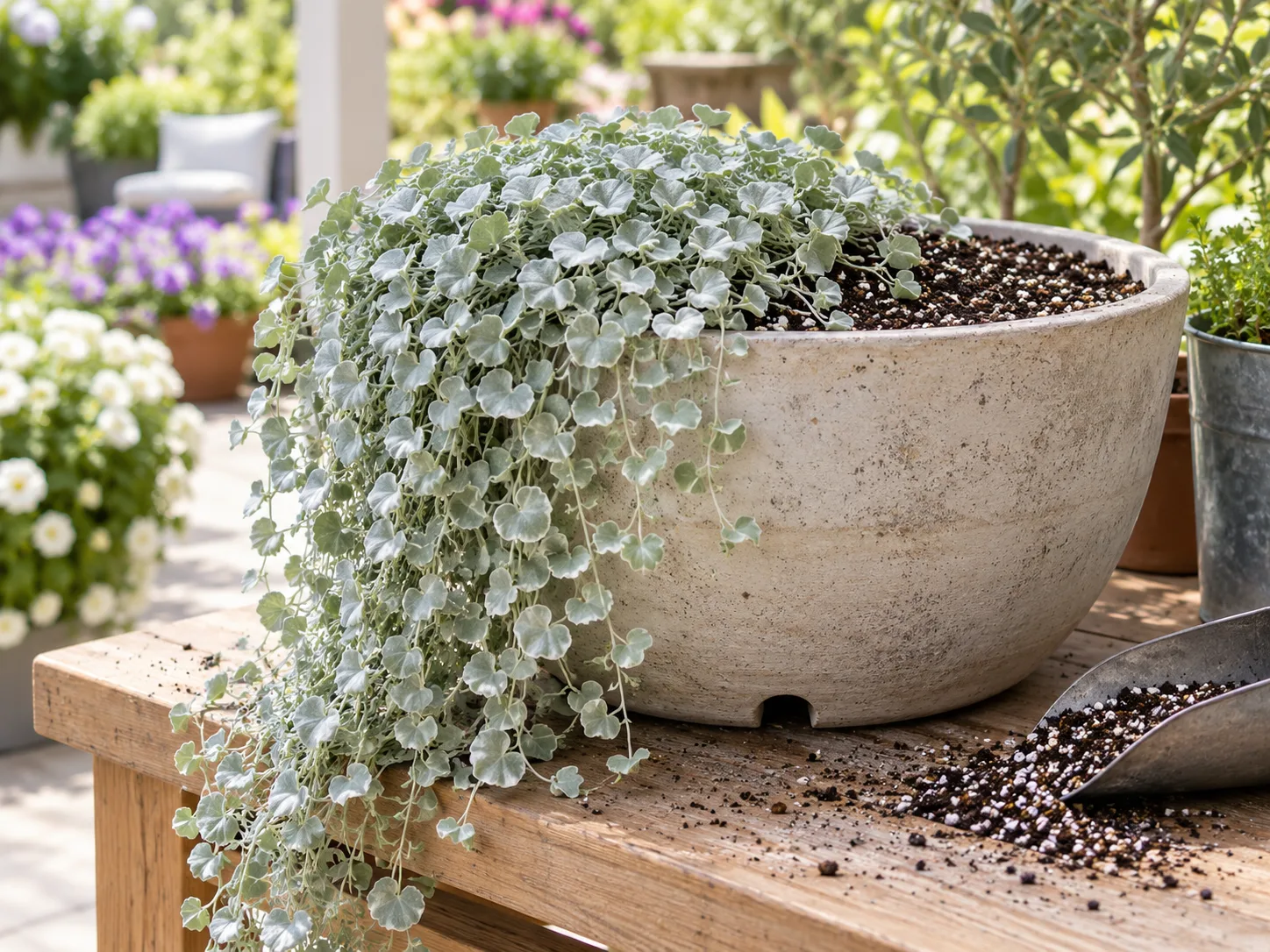
To transplant a nursery plant, water it lightly before removing it from the pot so the root ball holds together. Set the crown at the same depth it grew before; burying the stems can encourage rot, while leaving most of the roots exposed makes establishment harder. Fill around the root ball with the prepared mix, press gently to remove large air pockets, and water until the entire root zone is moist and excess drains away.
For a hanging basket, favor a container with several clear drainage openings and enough volume that the plant is not forced into rapid dry-down as soon as summer heat arrives. A basket liner can slow drying, but it should not seal off the bottom. If you combine Silver Falls with flowers, use compatible plants and avoid overfilling the root space. For a bed, loosen the planting area rather than digging a narrow hole in clay; the goal is a broad, draining transition between the root ball and surrounding soil.
Mulch lightly around in-ground plants while they establish, keeping material off the crown and stems. In a container, mulch is rarely necessary; a thick layer can keep the surface too wet and hide the moisture cues you need to read. After planting, check more frequently than you would for an established plant, but still let the top layer start to dry between waterings.
Fertilize lightly and mulch sparingly
Silver Falls is grown for foliage and does not need heavy feeding to trail. A fresh container mix may already include starter fertilizer. If so, wait for active growth and follow the product’s label before adding more. Too much feed can create soft, overly lush growth and salt buildup in a confined pot; pale foliage alone is not proof that the plant is hungry, since low light and wet roots can produce similar symptoms.
In a garden bed, a modest amount of finished compost at planting is usually a better starting point than repeated high-nitrogen feeding. For a container that has been growing for months, use a balanced fertilizer at the label rate if growth has slowed despite good light, a healthy root zone, and suitable temperatures. Do not fertilize dry roots or a plant that is already stressed; correct water and drainage first. Stop or reduce feeding as growth slows in cool weather.
Prune to shape the cascade
Routine pinching is optional, not required. Wisconsin Extension notes that Silver Falls branches well without pinching, while other horticultural guidance suggests trimming above a node when you want a fuller outline. Use pruning to solve a visible problem: stems have crossed a walkway, the edge looks untidy, or one runner is much longer than the rest. (Wisconsin Horticulture; Epic Gardening)
Use clean, sharp scissors or pruners and shorten individual stems just above a healthy leaf node. That is where a new side shoot can develop. Trim a few stems at a time instead of shearing the entire plant into a hard line; a selective cut keeps the plant’s natural cascading form and avoids exposing a bare center. Remove damaged or dead foliage as you notice it, but do not strip healthy leaves merely because they are small.
If a basket is thin at its center, first check the light and root-zone moisture, then rotate the pot so growth is not reaching in one direction. Cutting every runner back cannot compensate for shade or an unhealthy root system. A moderate trim during active growth can stimulate branching, but a plant that is cold or newly transplanted needs time to recover before it is shaped.
Propagate from runners or seed
You can expand a planting by rooting a runner, separating an already rooted node, or raising seed. Use a runner when you want a quick, reliable copy of a plant you already like. Use seed when you need more starts or are growing it as a seasonal annual. Surface runners root where they contact soil, which makes the first method especially straightforward. (NC State Extension; Epic Gardening)
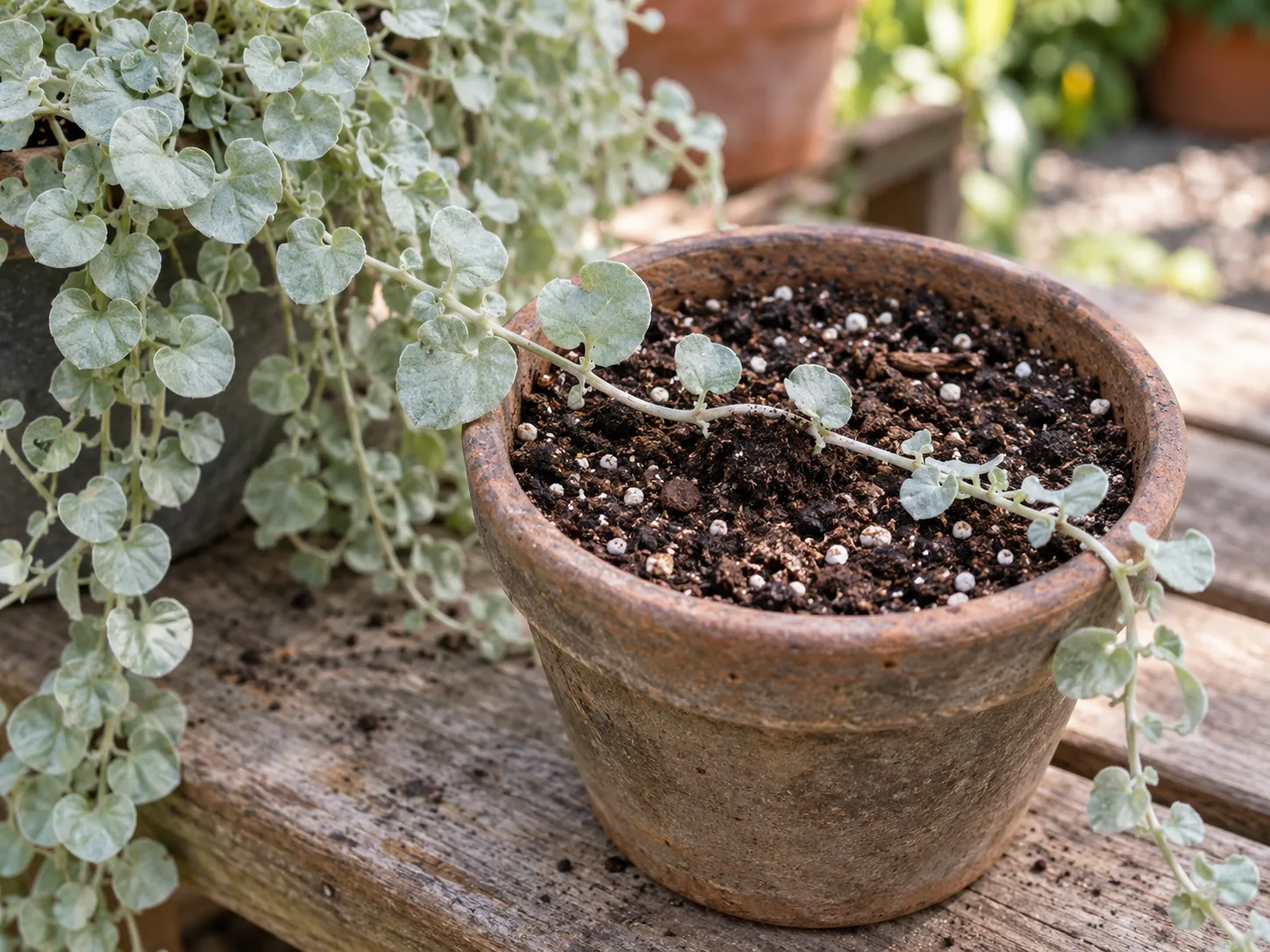
Root a runner by layering or division
Choose a healthy stem with several leaves and a visible node. Lay it across the surface of a small pot filled with moist, free-draining mix, then pin or lightly cover one node while leaving the growing tip exposed. Keep the medium lightly moist, not saturated. After roots form and the new plant resists a gentle tug, snip it free from the parent and move it into its own pot or planting spot.
If a mature mat already has rooted nodes, follow a stem to where it has anchored, lift a small section with roots attached, and replant it at the same depth. Water the new piece to settle the mix, then keep it out of harsh midday sun while it re-establishes. Avoid pulling a runner by force; a clean cut preserves both the donor plant and the rooted section. Layering is usually kinder than trying to root a long, unrooted stem in a glass of water, where the transition back to soil can add another stress.
Start seed indoors
For a large seasonal display, start seed about 10 to 12 weeks before your expected last frost. RHS recommends sowing at 20–24°C, and Wisconsin Extension describes warm conditions around 75°F with high humidity and germination commonly taking one to two weeks. Seed guidance differs on whether to leave seeds on the surface or cover lightly; a shallow dusting of fine mix or vermiculite is a sensible middle ground. Do not bury them deeply. (RHS; Wisconsin Horticulture)
Use clean seed-starting mix and keep it evenly damp during germination, not waterlogged. Once seedlings emerge, give them the brightest light you can and good air circulation; warm, dim rooms produce thin starts. Pot them on after they have several true leaves and a root system that holds the plug together. Harden plants outdoors gradually over about a week, then plant after frost danger has passed. If you are growing a named cultivar from saved seed, remember that seedlings can vary; a rooted runner is the better choice when you want to preserve the exact look of a parent plant.
Overwinter containers before frost
If you want to keep a plant from one season to the next, a container is the easiest form to protect. Before frost is forecast, inspect the leaves and soil, remove damaged growth, and check for insects. Bring the pot into a bright, frost-free place before it is chilled. A sunny window, greenhouse, or conservatory is more useful than a dark garage; if the only available space is dim, accept that the plant may become thin and plan to replace it rather than expecting the same outdoor cascade.
Growth typically slows indoors, so water less often and use the mix as your guide. Do not keep the soil wet simply because the plant is inside, and do not let it sit in a water-filled saucer. Keep it away from hot, dry air from heaters and provide enough space for some airflow. You can trim long stems to make the plant easier to move, but take only what is needed and use the healthy tips as possible starts.
In spring, wait until nights are reliably mild before returning the plant outdoors. Acclimate it over several days, beginning in a sheltered bright-shade location and gradually increasing sun. Even a plant that survived last winter may be tender after months indoors. In cold climates, overwintering is an experiment rather than a promise: compare the effort and indoor light available with the cost of buying a fresh plant or starting seed.
Troubleshoot Silver Falls decline
When Silver Falls looks wrong, check conditions before reaching for fertilizer or pesticide. Inspect the roots and stems, note how wet the mix feels, and compare the current light and weather with the plant’s recent growth. One symptom can have more than one cause, so change one major condition at a time and give the plant several days to respond.
Yellow leaves and soft stems
If foliage yellows while the pot remains heavy or the soil smells sour, suspect poor drainage or too-frequent watering. Stop watering until the upper mix dries, empty the saucer, and make sure the drainage openings are clear. If the root ball is soggy, slide it from the container; healthy roots are firm, while badly rotted roots are dark and soft. Remove only clearly dead tissue with clean scissors and repot into fresh, airy mix. Recovery is uncertain once most roots have deteriorated, so take healthy rooted pieces as insurance if any remain.
If the soil is dry well below the surface and the leaves are limp, water slowly until the root ball is evenly moist, then let the excess drain. A plant can wilt from either drought or damaged roots, which is why watering first without checking can turn a root problem worse. If yellowing is limited to a few older leaves while new growth is healthy, remove the spent leaves and monitor rather than overcorrecting.
Sparse growth and green leaves
Long gaps between leaves, a weak center, or a plant reaching toward one side often points to insufficient light. Move it to a brighter position gradually. Silver Falls can tolerate partial shade, but it usually shows its strongest color and most compact growth in brighter conditions. If only one side is sparse, rotate the pot periodically so each section receives similar light.
Check whether the plant has simply used the room in its container. A dense basket may need repotting, division, or selective thinning if water runs straight through without wetting the root ball. Do not feed a thin plant automatically: low light and root problems are more common explanations than nutrient shortage. When conditions are sound and stems are healthy, a modest trim above nodes can encourage side growth during the warm season.
Spots, chewing, or stalled growth
Silver Falls is generally low trouble, and NC State Extension reports no significant pest or disease problems. That does not mean every garden is pest-free. Wisconsin Extension notes few serious problems in the Midwest, while Epic Gardening lists occasional flea beetles, cutworms, and foliar diseases. Regional pressure and weather matter. (NC State Extension; Wisconsin Horticulture; Epic Gardening)
Small holes or notched leaves call for close inspection, especially under leaves and around young stems. If you find a chewing insect, identify it before treating; on a small ornamental planting, hand removal may be enough. For leaf spots, remove badly affected leaves, avoid wetting foliage late in the day, and open up crowded growth so leaves dry faster. A spreading pattern, collapsing stems, or repeated losses deserves a diagnosis from a local extension service rather than a guess based on one photograph.
Conclusion
Silver Falls succeeds when its silver foliage gets bright light, its shallow root zone has space to drain, and watering follows the actual conditions instead of the calendar. Choose a basket or bed based on how much room you have for long runners, and trim only when their shape needs managing. Layer a healthy runner if you want a reliable copy, or start seed well before the growing season if you need several young plants.
Treat winter survival as a local question. The published hardiness descriptions do not agree, so gardeners in frost-prone places should enjoy the plant as an annual or protect a container before cold weather arrives. Those simple choices preserve the best part of Silver Falls: a soft, silvery cascade that brightens the edge of a container or bed without demanding constant attention.



