The 8 Best Garden Carts, Tested and Reviewed
We tested 18 garden carts on mulch, gravel, and lawn. Compare our 8 top picks by capacity, terrain, and storage—plus a route-first buying guide.
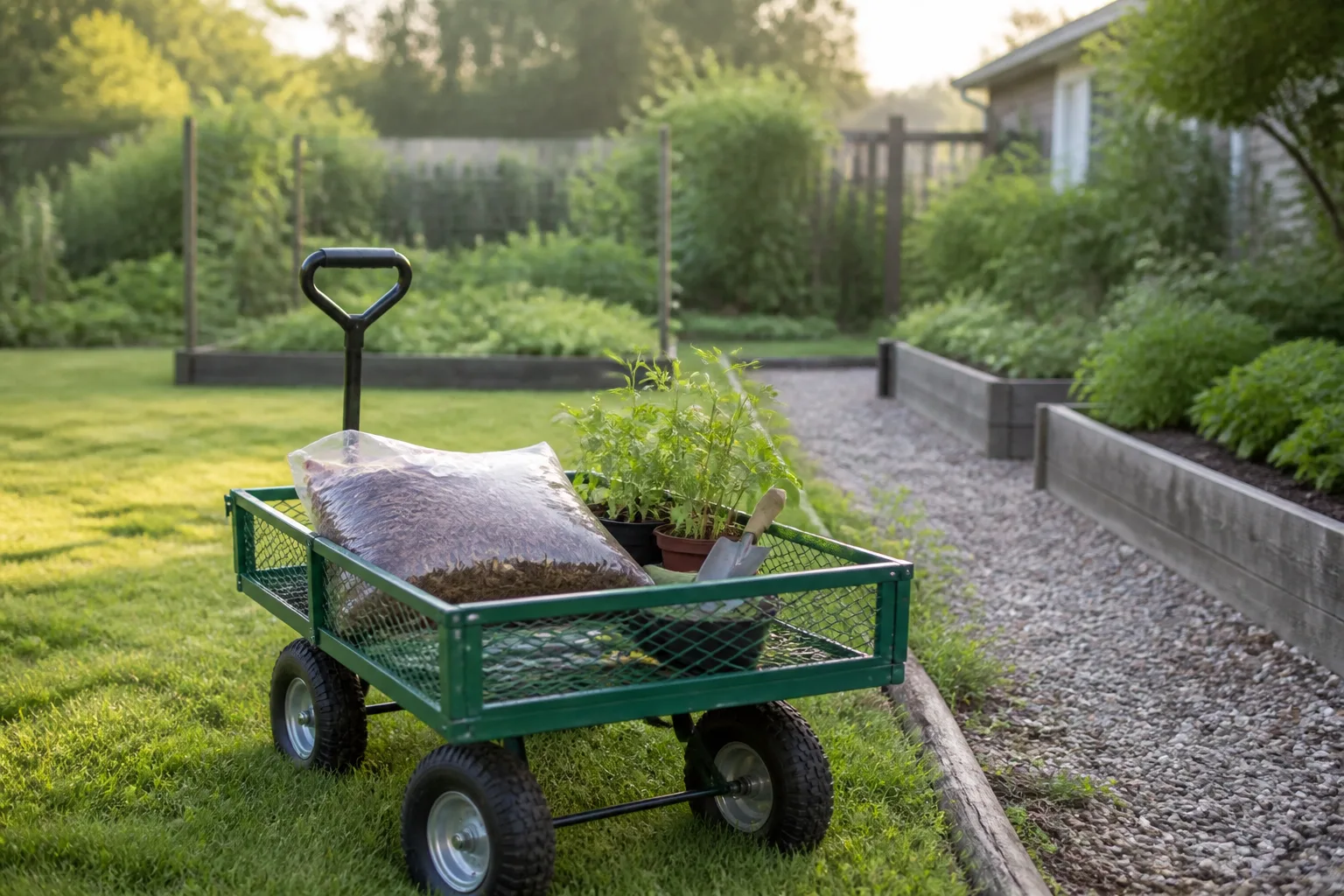
A garden cart is the difference between one trip with a full mulch bag and four trips cradling potting soil against your chest. The wrong cart—too wide for the side gate, too flimsy for gravel, or impossible to dump on a slope—sits in the shed while your back pays the price. We tested 18 garden carts and utility wagons across sand, mulch, gravel, pavement, and lawn, then kept the eight strongest performers for months of real yard work. Below: quick picks, a route-first buying guide, and honest limits on every model.
Quick picks by yard job
Match the hauler to the job and the path, not the biggest number on the spec sheet.
Best overall for mixed light-duty work: Ames Lawn Buddy Rolling Garden Cart — pre-assembled, holds a full mulch bag, doubles as a seat, and keeps tools organized without hogging shed space.
Best dump cart for bulk material: Gorilla Carts 4 Cubic-Foot Dump Cart — quick-release dumping, 600-pound rating, and confident tracking over mulch and edging.
Best rolling seat for low beds: Best Choice Products 4-Wheel Garden Cart Mobile Rolling Work Seat — swivel seat and front tool tray for weeding and planting without crouching.
Best budget hauler for flat routes: Suncast Resin 15.5-Gallon Rolling Cart — under $80, 10 pounds empty, collapsible handle for tight storage.
Best collapsible wagon for multi-use hauling: Sekey Collapsible Cart with Brake — 440-pound capacity, folds flat, step-lock brake on slopes.
Best electric for heavy loads: SuperHandy Utility Service Cart — self-propelled, up to 1,000-pound towing, dump bed for rock and firewood.
Best foldable for small storage: Allsop WheelEasy Foldable Garden Cart — lies flat for raking debris in, folds to sliver-thin profile.
Best tow-behind for tractor owners: Brinly-Hardy 10 Cu. Ft. Poly Utility Cart — 650-pound bed, foot-pedal dump, universal hitch pin.
Read on for how we tested, what separates cart types, and where each pick fails.
Choose by route, not brochure capacity
The most expensive mistake in cart shopping is buying capacity you cannot deliver. A 600-pound dump cart is useless if the assembled width will not clear a 28-inch gate, the turning arc clips a raised-bed corner, or the loaded cart becomes uncontrollable on a wet slope. Practical yard guides frame the decision as route first, format second: measure the narrowest clear width, walk the path with a broom handle at handle height, and note every turn, threshold, and dump spot before comparing tub volume (Small Yard Starter: yard cart vs wheelbarrow).
Rated weight limits are lab-style maximums, not comfortable working loads. On gravel or soft lawn, plan to use 60–70 percent of the printed rating if you want to steer without fighting the cart. On slopes, reduce further and never treat a four-wheel cart as self-braking—shifted mulch or compost changes the center of gravity mid-turn.
The RHS recommends sturdy footwear when lifting and moving heavy objects and using tools that keep loads close to your body rather than awkward reaches (RHS: how to garden safely). A cart that forces you to twist while dumping on a grade works against that advice no matter how high the capacity number climbs.
The five-minute route test
Before opening a product page, measure five things:
- Narrowest clear width — gate, fence gap, or side-yard pinch point. Compare against the cart’s complete outside width including wheels, not just the tub.
- Sharpest turn — swing a broom handle through the corner at handle height. Four-wheel carts need a wider arc than single-wheel wheelbarrows.
- Surface and grade — note soft soil, roots, curbs, and any slope where a loaded hauler could run away.
- Weekly load — buy for what you move every weekend, not a one-time patio project you could rent equipment for instead.
- Stored footprint — wet wheels and dirty tubs need a dry slot that does not block a door or walkway.
If storage is impossible, a collapsible wagon or periodic rental beats a rusting steel cart blocking the only path to the garage.
Garden cart vs wheelbarrow
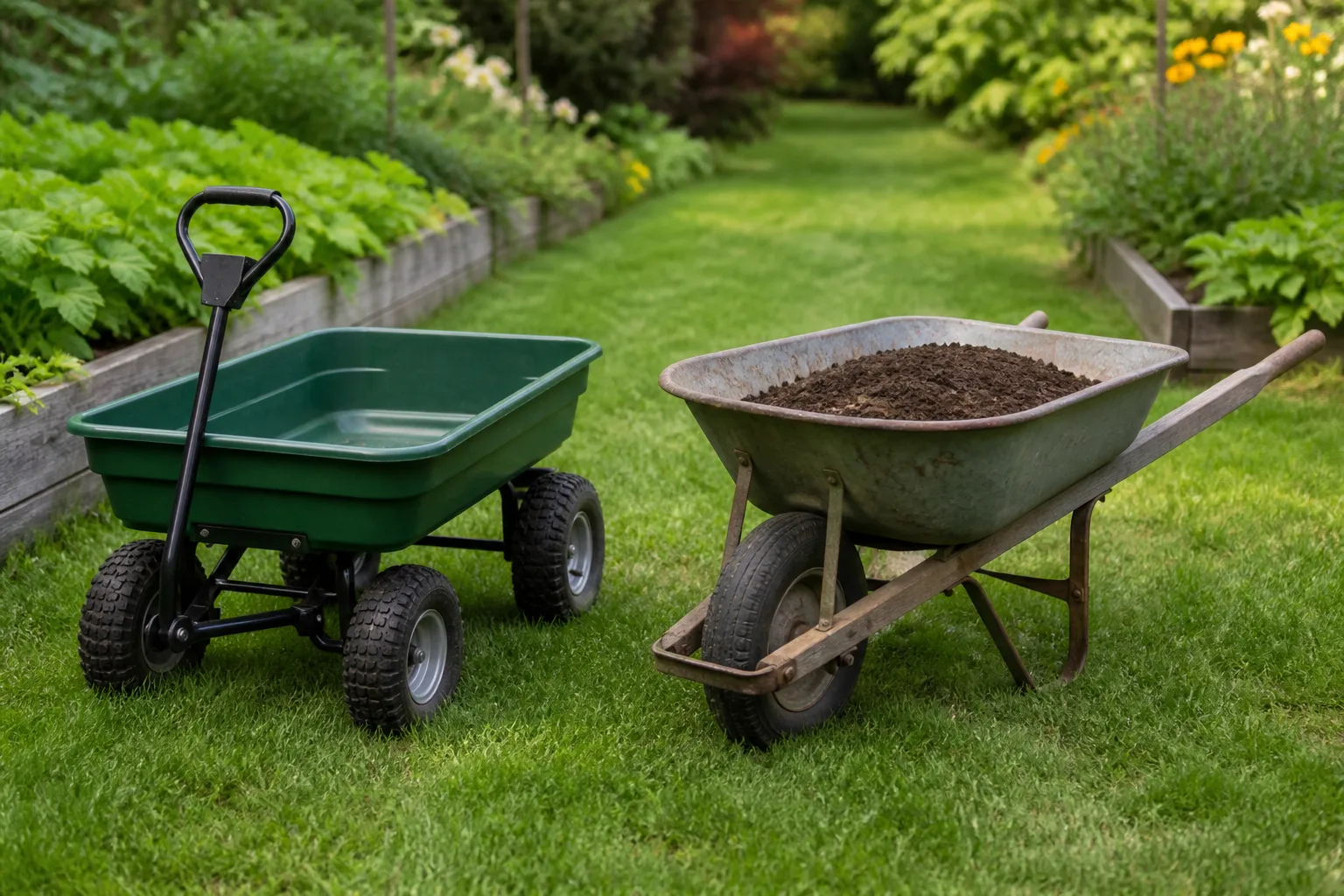
These tools overlap but solve different physics problems. Four-wheel garden carts spread weight across a stable platform—ideal for bags, pots, tool trays, and mixed shapes that would slide in a tipping tray. Wheelbarrows concentrate load over one or two front wheels, making them better for controlled dumping of loose mulch, compost, and soil into a precise pile.
When a four-wheel cart wins
Choose a cart when your route is fairly open and level, you haul mixed cargo (flats, pots, hand tools, partial bags), and you want the load supported while parked during bed work. Dump-bed carts add tipping convenience on flat ground; fixed-side wagons keep irregular loads contained.
When a wheelbarrow still makes sense
Stick with a wheelbarrow when you thread narrow paths, need to land loose material in one spot, or work on ground where a wide four-wheel footprint cannot pivot. A two-wheel wheelbarrow trades some maneuverability for side-to-side stability compared with a classic single-wheel model (Small Yard Starter: yard cart vs wheelbarrow).
Many gardeners end up with both: wheelbarrow for bulk soil runs, compact cart for daily tool-and-plant shuttling.
How we tested garden carts
We purchased 18 carts and wagons from mainstream retailers and ran each through a standardized obstacle course twice—once empty, once loaded to the manufacturer’s recommended capacity with bagged mulch, potted plants, and tool weight as appropriate.
Maneuverability: grass, mulch, gravel, pavement, landscape edging, and a tight 90-degree turn between raised beds. We noted wander on cambered lawn, tracking over edging, and whether one-handed pulling was realistic at full load.
Assembly: timed builds, instruction clarity, hardware quality, and whether tires arrived inflated. Power-tool-friendly bolt heads scored higher on heavy steel frames.
Capacity and durability: loaded to stated limits where safe, then inspected for tub flex, weld stress, wheel bracket creep, and handle loosening after 20+ laps.
Dumping and controls: dump levers, foot pedals, and brake mechanisms were tested with dry mulch and, where relevant, damp compost. We logged any latch that required leaning across the load.
Long-term follow-up: the eight picks below stayed in rotation three to six months across spring planting and summer mulch runs. Pneumatic tires were checked for slow leaks; plastic tubs were left in sun to watch for UV warp.
What to look for in a garden cart
Cart types, beds, and materials
Utility wagons — four wheels, fixed or removable sides. Best general-purpose haulers for tools, plants, and bagged goods. Flatbed mode (removable panels) helps sheet goods and firewood.
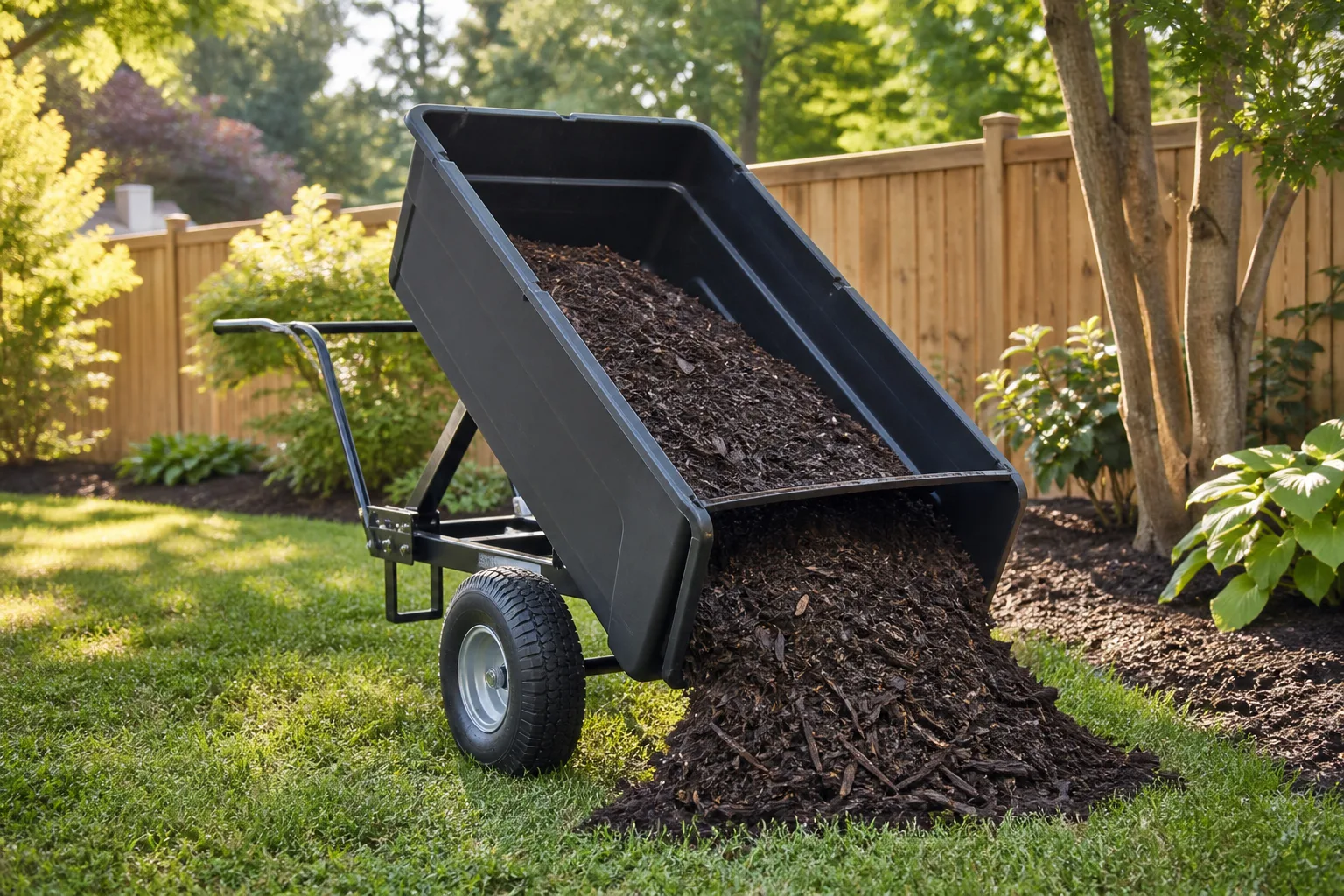
Dump carts — hinged beds with lever or pedal release. Essential when you move loose cubic-yard material weekly. Worth the assembly time if your dump zone is level.
Rolling work seats — low platform with swivel seat and tool storage. Not for mulch volume; invaluable for kneeling replacement along borders and raised beds.
Collapsible fabric wagons — fold flat, high capacity for weight, lower sides for loose soil. Excellent multi-use haulers; fabric can trap grit if not shaken out.
Electric utility carts — battery drive for estates, firewood, and mobility-limited gardeners. Budget for charger storage, battery replacement, and weight (often 130+ pounds empty).
Tow-behind carts — require a lawn tractor, ATV, or UTV. Manual pushing is not the design intent; unmatched for half-ton bulk runs on open property.
Bed materials: polypropylene and resin resist rust and denting but can crack in cold impact or warp with prolonged UV if left uncovered. Powder-coated steel frames need wipe-down after wet loads to prevent rust at scratches. Nylon and canvas beds lie flat for loading debris but puncture on sharp branches if overloaded.
Tires and the capacity you can actually use
Pneumatic tires absorb bumps on gravel and tree roots but need monthly pressure checks and patch kits. They soften over time on carts left loaded in hot sheds.
Flat-free foam or plastic tires eliminate flats and maintenance but transmit vibration and can feel skiddy on wet grass.
Wheel diameter matters as much as width: 10-inch+ tires roll over mulch berms and edging; 7-inch plastic wheels suit pavement and flat lawn only.
Treat manufacturer capacity as a ceiling, not a target. If steering requires two hands and grunting on your actual surface, the cart is overloaded regardless of what the sticker says.
Best overall: Ames Lawn Buddy Rolling Garden Cart
Capacity: 200 lbs | Bed: 2 cu. ft. plastic | Wheels: 4 × 7-inch pneumatic | Price: ~$96
The Ames Lawn Buddy earned top overall because it hits the sweet spot for daily gardeners who move tools, a mulch bag, flats, and hand supplies—not half-ton stone loads. It arrived fully assembled, rolled through our obstacle course with stable tracking, and fit a standard bag of mulch without crowding the removable tool tray.
Standout features: molded clips for long-handled tools, fold-down lid that doubles as a garden seat, and two molded beverage holders that sound gimmicky until a July afternoon proves otherwise.
Where it shines: light mulching, plant shuttling, tool organization, and quick trips on mowed lawn or pavement.
Honest drawbacks: tight turns take planning when the tub is full; the handle is functional but not padded for long pulls at capacity. Not weatherproof enough to live outdoors year-round—store under cover to slow plastic UV fatigue.
Bottom line: The best first cart for gardeners who want versatility without a Saturday assembly project.
Best dump cart: Gorilla Carts 4 Cubic-Foot Dump Cart
Capacity: 600 lbs | Bed: steel frame, plastic tub | Wheels: 4 × 10-inch pneumatic | Price: ~$130
The Gorilla Carts GOR4PS is the dump cart we kept reaching for when testing moved to volume material—double mulch bags, compost, and gravel over mixed terrain. The quick-release dump lever tilts the tub backward without wrestling the handle, and 10-inch pneumatics rolled over edging and mulch berms with less chatter than budget plastic-wheel carts.
Standout features: padded pull handle, high sides that contain shifting loads, and a frame stiff enough that the tub did not taco on repeated full loads.
Where it shines: bulk mulch and soil distribution, firewood stacks on flat routes, and any job where feet stay on the ground for dumping.
Honest drawbacks: assembly took over an hour—enlist a second set of hands and a socket set. Fully loaded pulls are a two-handed job on gravel. Tires lost a few PSI during testing; top off before heavy sessions.
Bottom line: Best manual dump cart for gardeners who move loose cubic material weekly and can spare shed floor space.
Best with seat: Best Choice Products Rolling Work Seat
Capacity: 300 lbs (combined seat + cargo) | Frame: powder-coated steel | Wheels: 4 × 10-inch pneumatic | Price: ~$100
The Best Choice Products 4-Wheel Rolling Work Seat is not a mulch hauler—it is a mobility platform for low weeding, deadheading, and bulb planting along borders. The 360-degree swivel seat and 90-degree front steering bar let testers work a bed edge without standing every 18 inches.
Standout features: under-seat tray plus front basket for hand tools, seed packets, and a water bottle; 10-inch tires that handled lawn transitions better than small caster-style garden scooters.
Where it shines: long sessions at ground level, raised beds with wide paths, and gardeners who need to offload knee stress without abandoning bed access.
Honest drawbacks: at 35 pounds, it is awkward to lift into a truck. Cargo space is tools only—do not expect bagged soil. Requires assembly and periodic bolt checks on the steering linkage.
Bottom line: Best seated garden cart when the job is body position, not cubic yards.
Best budget: Suncast Resin Rolling Cart
Capacity: 100 lbs | Bed: 15.5-gallon resin | Wheels: 2 × 7-inch plastic | Price: ~$80
The Suncast Resin Rolling Lawn Cart is the ultralight option for smooth, flat routes—hauling potting soil bags across pavement, moving harvested vegetables to the kitchen door, or shuttling hand tools on a patio garden. At 10 pounds empty, almost anyone can lift it into a closet.
Standout features: UV-resistant resin tub, retractable handle for compact storage, and five-minute assembly (handle only).
Where it shines: balcony and patio gardens, flat suburban lawns, and renters who need a hauler without a shed commitment.
Honest drawbacks: plastic wheels sink and chatter on mulch and gravel. The fixed handle height frustrated taller testers. Rated for light duty only—over 80 pounds and the tub flexes on turns.
Bottom line: Best budget cart when your world is flat and paved.
Best collapsible: Sekey Collapsible Cart with Brake
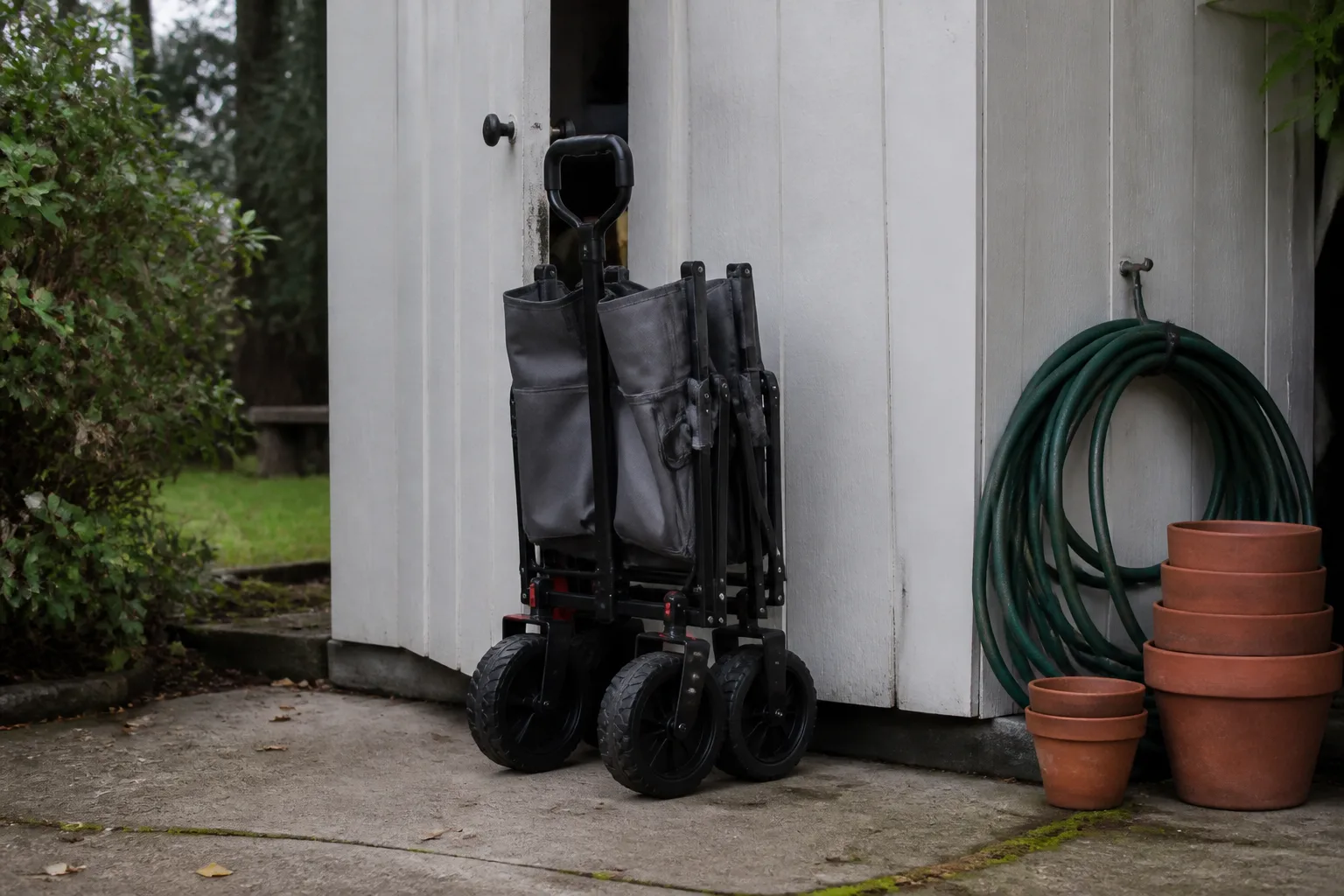
Capacity: 440 lbs | Bed: Oxford fabric on steel frame | Wheels: 4 × 9-inch balloon tires | Price: ~$90
The Sekey Collapsible Cart bridges garden, beach, and market runs. In our folding-wagon follow-up tests, it opened in seconds, tracked quietly on lawn, and the step-lock brake held position on a gentle driveway slope while loading pots.
Standout features: exterior pockets for gloves and twine, 360-degree front wheels for tight garage maneuvering, and a folded footprint slim enough for car trunk storage.
Where it shines: gardeners with no dedicated shed space, multi-property caregivers, and anyone who needs high capacity without a steel tub permanently occupying floor space.
Honest drawbacks: fabric sides are not ideal for sharp branches or wet concrete mix. At 30+ pounds, carrying it folded is awkward—roll it instead. Not a precision dump cart for loose soil piles.
Bottom line: Best collapsible wagon when storage and portability matter as much as capacity.
Best electric: SuperHandy Utility Service Cart
Capacity: 660 lbs in bed; 1,000 lbs towing | Drive: brushless electric, lithium battery | Wheels: 4 × 13-inch pneumatic | Price: ~$1,070
The SuperHandy Utility Service Cart is the hauler for estate-scale work and mobility limitations—firewood stacks, bagged concrete, and long driveway transits that would exhaust a manual cart. Forward and reverse controls sit at the handle base; removable side panels convert the bed to a flat deck.
Standout features: quiet electric drive (no exhaust), dump function for bulk unloading, and enough torque to climb modest grades at partial load.
Where it shines: large properties, aging gardeners who refuse to downsize beds, and contractors moving material across hundreds of feet daily.
Honest drawbacks: 133-pound empty weight means it is not portable. Instructions are thin for assembly and battery care. Pneumatic tires needed frequent top-offs. Price and storage footprint only make sense if you haul heavy loads weekly.
Bottom line: Best electric garden cart when manual pulling is off the table and the budget matches the property size.
Best foldable: Allsop WheelEasy Foldable Garden Cart
Capacity: 150 lbs | Bed: nylon canvas on steel frame | Wheels: 1 × 10-inch pneumatic | Price: ~$200
The Allsop WheelEasy solves a niche problem: minimal storage without giving up a rigid dumping motion. The canvas bed lies flat on the ground so you can rake leaves or grass clippings directly in—no lift-over sidewall. Folded, it slides behind a narrow shed gap.
Standout features: padded handles, low load height, and surprisingly tough canvas that did not tear when loaded with wet mulch during follow-up testing.
Where it shines: leaf collection, tight urban yards, and gardeners who store tools in a hall closet or balcony locker.
Honest drawbacks: confusing instructions stretched first assembly to 30 minutes. Single-wheel balance requires practice when full. Premium price for modest capacity—you are paying for fold geometry, not volume.
Bottom line: Best fold-flat cart when storage inches matter more than cubic feet.
Best tow-behind: Brinly-Hardy Poly Utility Cart
Capacity: 650 lbs | Bed: 10 cu. ft. polypropylene | Wheels: 2 × 15-inch pneumatic | Hitch: universal pin | Price: ~$299
If you already own a lawn tractor or UTV, the Brinly-Hardy Tow-Behind Poly Utility Cart moves material manual carts should not attempt—firewood cords, fieldstone, and multi-bag concrete runs across acreage. The foot-pedal dump releases hands-free; the bed locks back in trail position automatically.
Standout features: rust-proof poly bed, powder-coated steel frame, and oversized tires that floated over rutted lawn without bulldozing.
Where it shines: rural and large suburban lots with open approaches and machine access to beds.
Honest drawbacks: no pull handle—manual use is unsafe and awkward. Requires towing vehicle maintenance and storage for a 67-inch rig. Overkill for a 40-foot townhouse path.
Bottom line: Best tow-behind garden cart for tractor owners who treat hauling as fleet work, not hand work.
Comparison at a glance
| Pick | Best for | Capacity | Wheels | Standout limit |
|---|---|---|---|---|
| Ames Lawn Buddy | Daily light hauling | 200 lbs | 4 × 7” pneumatic | Tight turns when full |
| Gorilla GOR4PS | Dumping mulch/soil | 600 lbs | 4 × 10” pneumatic | Long assembly |
| BCP Work Seat | Low bed work | 300 lbs total | 4 × 10” pneumatic | Not for bulk material |
| Suncast Resin | Budget flat routes | 100 lbs | 2 × 7” plastic | No rough terrain |
| Sekey Collapsible | Storage + portability | 440 lbs | 4 × 9” balloon | Fabric not for sharp loads |
| SuperHandy Electric | Heavy estate loads | 660 lbs / 1,000 tow | 4 × 13” pneumatic | Price, weight, battery care |
| Allsop WheelEasy | Fold-flat storage | 150 lbs | 1 × 10” pneumatic | Low volume for cost |
| Brinly-Hardy Tow | Tractor/UTV hauling | 650 lbs | 2 × 15” pneumatic | Requires towing vehicle |
Care and storage that extends cart life
Rinse mud and fertilizer residue from tubs and frames before storage—salt and ammonia-based products accelerate steel corrosion. Wipe pneumatic tires dry and store carts off wet grass to slow bearing rust. Inflate pneumatics to sidewall PSI monthly; underinflated tires flex sidewalls and feel heavier to pull.
Plastic and resin tubs last longer out of direct summer sun when not in use. Collapsible fabric wagons should be shaken out and dried fully before folding to prevent mildew stiffening the Oxford cloth.
Bolt-on handles and dump latches deserve a seasonal hardware check—vibration loosens cart hardware faster than most owners expect. A drop of oil on wheel axles after wet seasons prevents squeal and galling.
Conclusion
The best garden cart is the one that clears your narrowest gate, turns at your sharpest bed corner, and dumps where you actually work—not the one with the highest number in the headline. For most gardeners moving tools, flats, and a mulch bag on mowed lawn, the Ames Lawn Buddy is the balanced daily pick. When bulk loose material defines your weekends, step up to the Gorilla dump cart; when storage is measured in inches, choose the Sekey wagon or Allsop fold-flat. Measure your route once, buy once, and let the cart earn its floor space by saving your back every trip.