Green Manure: Benefits, Crops, and How to Grow It
Learn what green manure is, choose a cover crop for your season and soil goal, then sow and terminate it without delaying your next vegetable planting.
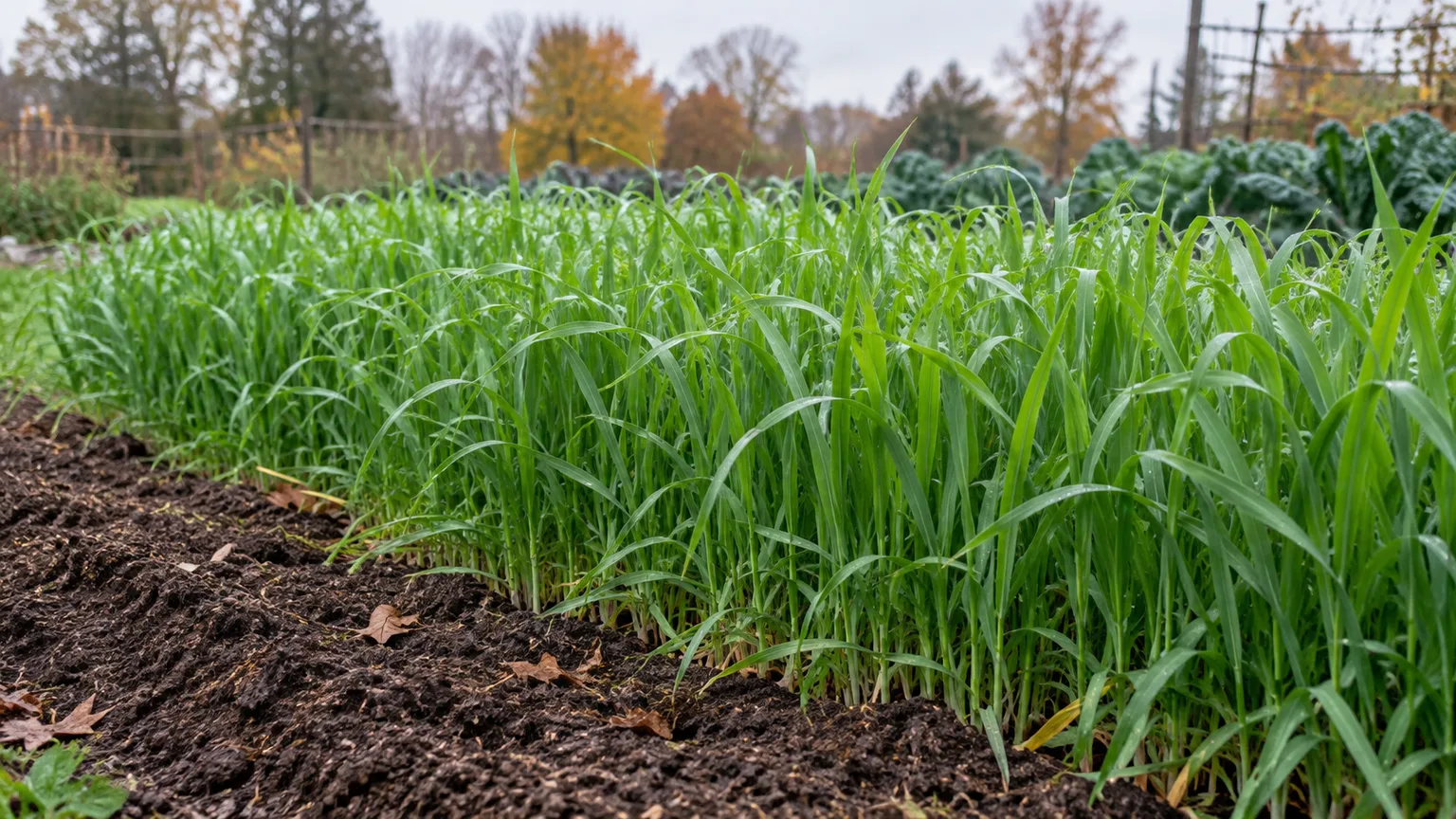
Green manure is a cover crop grown to protect or improve garden soil, then cut and returned to the bed. It is not animal manure and it is not a fertilizer you sprinkle on a schedule: the plant grows first, and its roots and tops become part of the soil system when you terminate it.
Gardeners use the terms cover crop and green manure loosely, but they describe different parts of the job. A cover crop is grown for a service—such as covering bare ground, competing with weeds, or holding onto mobile nutrients. Green manure describes a cover crop that is returned to the soil as fresh plant material, usually by shallowly incorporating it or leaving it as surface residue. The Royal Horticultural Society describes green manures as quick-growing plants used to cover bare soil and improve soil structure and nutrient cycling (RHS).
The practical question is not simply “Which green manure is best?” It is “What do I want this bed to do, how long can it stay out of production, and how will I end the crop?” Answer those in that order and the choice becomes much easier.
What Green Manure Does for Soil—and What It Cannot Do
A living cover protects the surface from the force of rain, helps hold loose soil in place, and shades some weed seedlings. Roots occupy the bed while it would otherwise be bare; when they die, they leave channels and organic residues that soil organisms can break down. The aboveground growth can also supply a layer of mulch or material for compost.
The nutrient benefit depends on the kind of plant. Oats, rye, and other non-legume covers take up nutrients already present in the soil and store them in their leaves and roots. If those plants remain in the garden and decompose, some of those nutrients can cycle back into the bed. This is nutrient capture and recycling, not new nitrogen production.
Legumes such as clover, peas, and vetch can form partnerships with compatible rhizobia bacteria that fix nitrogen from the air into forms the plant can use. That nitrogen is held in the growing plant and root system; it does not all become immediately available to the next vegetable simply because a legume is growing nearby. Returning the tops and roots, allowing decomposition, and timing the following crop all affect how much nitrogen becomes available when that crop can use it. UGA Extension notes that legume inoculation is most useful when the matching bacteria may not be present and soil nitrogen is low (UGA Extension).
Cover crops can also reduce nutrient loss from fields by taking up nitrate that might otherwise move through the soil profile. A global meta-analysis found an overall reduction in nitrate leaching in agricultural systems, but the effect varied with crop family, soil, climate, and management; that is evidence for the mechanism, not a promise that one backyard planting will change groundwater quality (Nouri et al.).
Green manure is not a shortcut for every soil problem. It will not correct unsuitable pH, replace a soil test, remove compaction caused by traffic or construction, or feed a hungry crop on demand. A cover crop also occupies growing time and can use water, so in a dry climate or a bed needed next week, a compost mulch or an edible succession crop may be a better fit.
Choose a Cover Crop by Purpose, Season, and Next Planting Date
Pick the vegetable you want to grow next, then work backward. A cover that is ideal for a bed resting all winter can be a poor choice when you want to sow carrots in early spring. Climate matters too: winter survival, sowing windows, and the time available for growth vary by region, so use local extension calendars and the seed packet rather than treating a month from another climate as universal.
| Cover crop | Useful when you want | Typical fit | Main tradeoff |
|---|---|---|---|
| Buckwheat | Fast warm-season cover and weed competition | A short summer gap after spring crops | Frost-sensitive; can set seed quickly if left too long; does not fix nitrogen |
| Oats | A quick stand with relatively easy spring cleanup | Fall sowing where winter cold reliably kills it | Winter survival varies; not a nitrogen-fixing legume |
| Cereal rye | A dense, cold-hardy winter cover and substantial residue | A bed that can stay covered into spring | Vigorous growth and persistent roots can make termination and seedbed preparation harder |
| Clover, peas, or vetch | Legume biomass and potential nitrogen contribution | A longer window that suits the species and local winter | Nitrogen fixation depends on compatible rhizobia; some species regrow or host crop-family pests and diseases |
These are starting points, not interchangeable seed choices. Iowa State Extension’s home-garden guide organizes cover crops by season and goal, and recommends planning how the crop will be terminated before sowing it (Iowa State Extension).
Buckwheat for a short, warm-season gap
Buckwheat is a broadleaf annual that grows quickly when the soil is warm. It can fill the interval between an early vegetable harvest and a later planting, shade bare ground, and flower for pollinators if you allow it to reach bloom. That makes it useful when a bed has weeks rather than an entire winter available.
Its speed is also the main management issue: cut it before mature seed forms if you do not want volunteers. Buckwheat is not a legume, so do not choose it for nitrogen fixation. It can still return organic material to the bed when you cut and leave or incorporate the growth.
Seasonal garden guides also group buckwheat among warm-weather green manures and clovers among crops for fall cover, as in Homes & Gardens’ green-manure guide. Use that kind of crop list to narrow your choices, then translate its month labels to your own frost dates and planting window.
Oats for quick cover and simpler spring cleanup
Oats establish readily in cool weather and are often chosen for fall cover because they can winter-kill in colder regions. A winter-killed stand can leave residue on the bed without asking you to mow or dig out a living crop in spring. That convenience depends on local winter conditions; a mild winter may let oats survive longer than expected.
Choose oats when ease of cleanup matters more than keeping the bed green through spring. Iowa State Extension lists oats among cover crops that can winter-kill in its region, but gardeners elsewhere should confirm their own local performance before counting on frost to terminate the stand (Iowa State termination guide).
Cereal rye for persistent winter cover
Cereal rye is a grass grown for strong winter survival, fibrous roots, dense cover, and a large amount of residue. It can be useful on a bed that would otherwise remain exposed for a long, wet or windy offseason. Unlike a legume, rye is not fixing nitrogen; it mainly captures nutrients and returns them as its residue decomposes.
That durability takes planning. Rye can continue growing when you would like to prepare the bed, and mature stems can be difficult to cut or incorporate by hand. If you have a small raised bed and need it early in spring, pick a winter-killed crop or a more manageable species unless you are ready to terminate rye and wait for the residue to settle.
Legumes when nitrogen is the goal
Clovers, field peas, and vetches are common legume cover crops. Their nitrogen contribution is most relevant when plants establish well, form an effective partnership with the right rhizobia, produce enough growth, and are returned to the bed rather than removed. If your garden has not grown that legume before, look for seed inoculation guidance for that specific legume group; inoculants are not one-size-fits-all, and they contain living organisms that need proper storage and handling (UGA Extension).
Do not select a legume solely because “nitrogen fixing” sounds like a free fertilizer. It still needs time, suitable conditions, and a sound rotation plan. Some legumes share pests or disease risks with vegetables in the same plant family, so avoid putting a legume cover immediately before a closely related crop when local rotation guidance warns against it. The RHS also cautions that clovers, vetches, and other legume green manures can share disease problems with related vegetables (RHS).
Should You Sow One Crop or a Mix?
A single species is often the clearest choice for one small bed. You know what it is meant to do, when it is likely to reach the useful stage, and what tool or method can end it. A single crop is especially helpful for a first attempt or when you need the bed back on a firm date.
A mixture can combine jobs—for example, a grass for ground cover and a legume for nitrogen fixation—but the species may grow at different speeds and reach different stages at different times. The mixture is only an improvement if you can terminate all its parts before they become weeds and if none conflicts with the next crop. An easy rule: do not buy a blend until you can name the purpose of every component and the plan for ending it.
How to Plant Green Manure in a Garden Bed
Most home-garden cover crops are direct-sown. You do not need a rototiller for a small plot, but you do need seed-to-soil contact, the right sowing depth, and reliable moisture while the seed germinates. Follow the crop-specific seed label for rate and depth because a tiny clover seed and a large pea seed should not be buried alike.
For a small-bed example, East Fork Growing’s home-garden cover-crop guide describes broadcasting clover over a harvested vegetable bed, raking it in, and watering it. Iowa State Extension describes the same basic sequence; seed placement in a home plot is a rake-and-water job, not a reason to rent farm equipment.
Prepare the bed and sow at the right depth
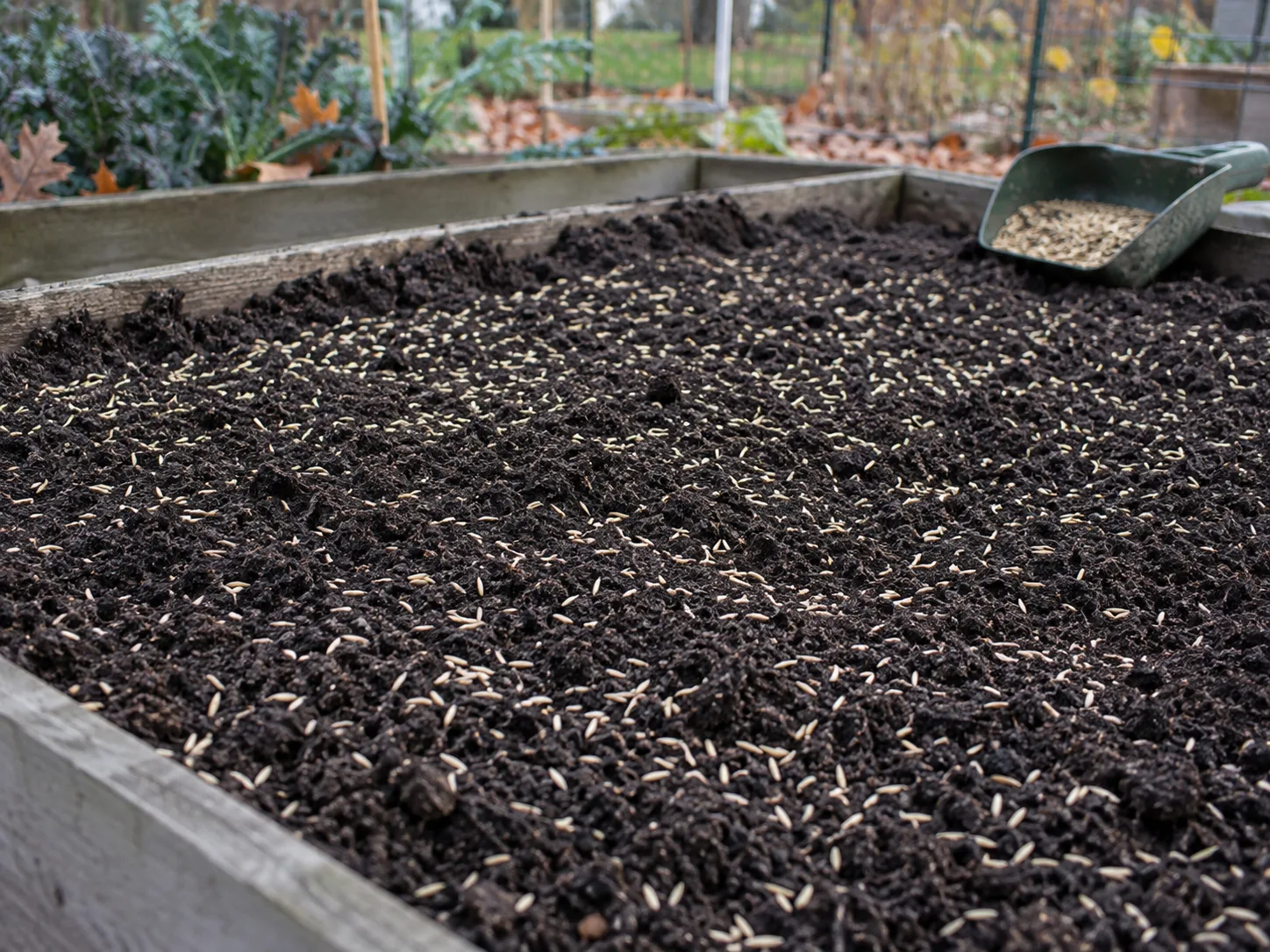
First remove finished vegetables, large weeds, and any diseased plant material. Rake the surface until it is level enough for seed to touch soil rather than landing on thick stems or hard clods. You usually only need to loosen the top layer; avoid working heavy soil when it is wet enough to smear or form a sticky ball.
Scatter seed evenly by hand or with a small spreader, using the package rate for the crop and the area you are planting. For a tiny bed, divide the seed into two portions and sow one in each direction; this simple cross-sowing pattern helps avoid bare stripes. Rake or drag the surface lightly to cover the seed to the depth listed on the packet, then firm it gently so wind or runoff cannot move it. Iowa State Extension gives a general depth of about one-eighth to one-quarter inch for many garden cover crops, while still emphasizing contact and the crop’s needs (Iowa State Extension).
Keep the seed zone moist until the crop is established
Sow just before a stretch of dependable rain when the forecast and season make that practical. Otherwise, use a gentle watering that wets the upper soil without washing seed into one corner. Keep the seed zone evenly damp until germination; a crusted or dried surface can leave a thin stand, which exposes soil and gives weeds room to fill the gaps.
Once seedlings are established, water according to the weather and crop rather than keeping the bed constantly wet. If you are planting in a dry, hot period and cannot reliably irrigate, wait for a better window or use a mulch that does not need to germinate. A cover crop should protect the garden, not compete with nearby vegetables for scarce water.
When and How to Terminate a Cover Crop
Decide the exit before you sow. Mark the date you need the bed and count backward from the next crop’s planting window; then choose a crop whose maturity, winter survival, and regrowth fit that schedule. The RHS notes that green manures should be cut down and chopped before incorporation, while SARE’s materials describe termination as a planned part of cover-crop management rather than an afterthought (SARE).
For most small gardens, the practical options are winterkill, cutting or mowing, smothering, and digging or shallowly incorporating. Winterkill needs no spring cutting but is reliable only where local winter cold kills that species. Cutting is simple with hand shears for a small bed; taller growth may need several passes with a mower or trimmer. Check for regrowth rather than assuming that a cut crop is dead.
Choose between surface mulch, compost, and incorporation
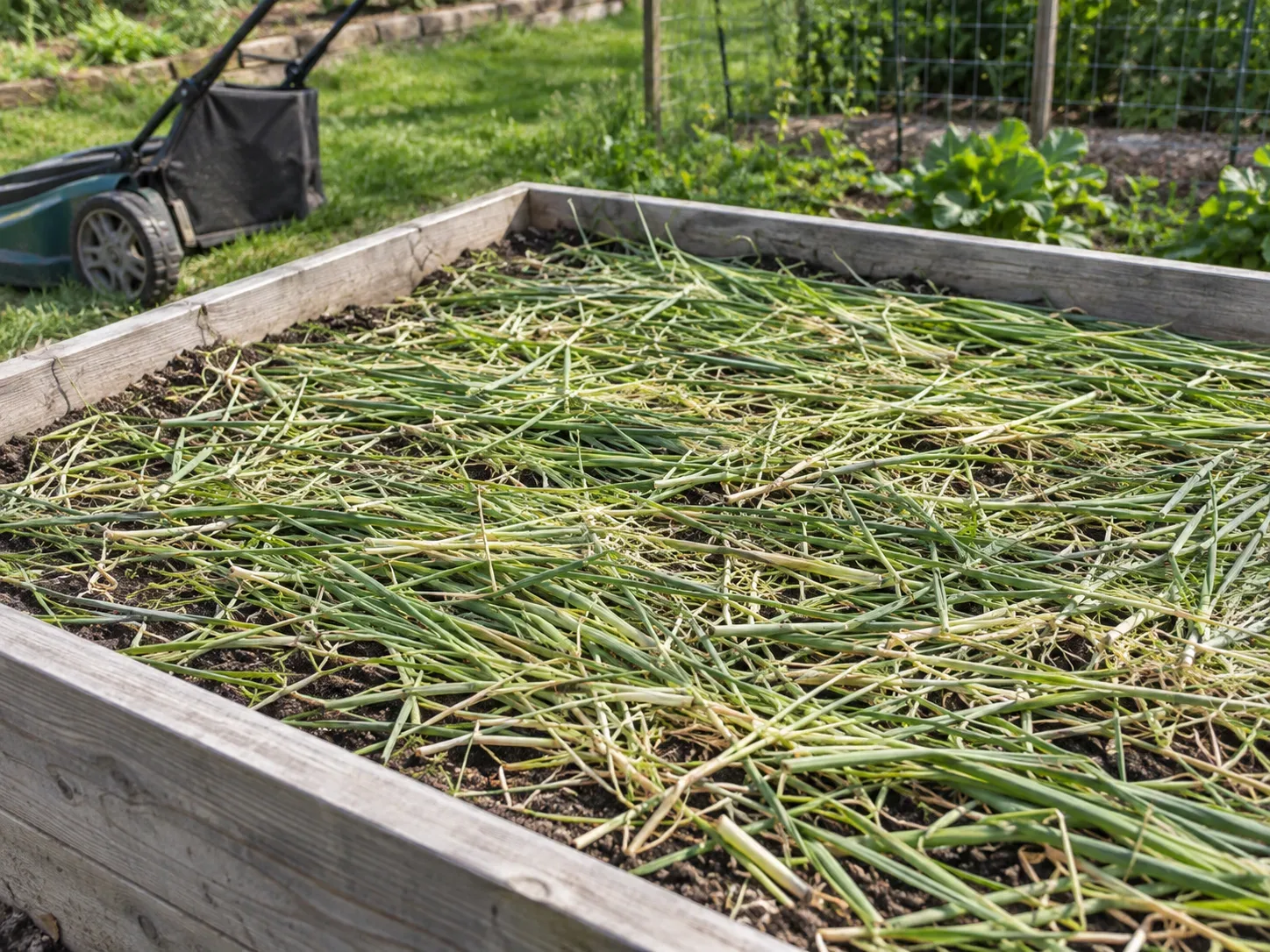
If you want minimal soil disturbance, cut the cover close to the ground and leave the residue on the surface as mulch. This keeps soil covered and can suit transplants that are set through the residue. The method works only when the crop is actually terminated and the layer is not so thick or tangled that it blocks small seedlings or keeps the soil too wet.
For a cleaner seedbed, chop the plants into shorter pieces and mix them into the top layer of soil with a fork or spade. Do this only when soil is workable, not saturated; digging wet soil can damage its structure. Incorporation speeds contact between residue and soil organisms, but fresh material needs time to break down. Iowa State Extension recommends allowing at least two to three weeks before planting after incorporation; the RHS advises a month because decaying green material can suppress new growth. Treat these as planning buffers, not a universal countdown: mature stems, a large amount of residue, cool soil, or a direct-sown crop may need more time (Iowa State Extension; RHS).
You can also cut excess growth and carry it to the compost pile, leaving the roots in place. That is useful when a dense stand would make planting difficult, but moving the tops also moves nutrients out of that bed until you return finished compost. Whichever method you choose, do not leave mature seed heads in place unless you want that cover crop to volunteer later.
Get the Bed Ready for the Next Crop
Look at the residue and soil, not just the calendar. If green pieces remain thick and intact, if the soil is still cool and wet, or if new shoots are pushing up from the cut stand, the bed is not ready for a delicate direct-sown crop. Either wait, remove a narrow planting strip, or choose transplants that can be set through a surface mulch.
Fresh grass-heavy residue can temporarily tie up some available nitrogen as soil organisms decompose it. That effect is more likely to matter when mature, carbon-rich material is incorporated close to the planting date. A legume-dominant residue generally breaks down differently from mature grass, but neither guarantees a precise nitrogen credit; use a soil test and crop-specific fertility advice if the next vegetable has high nutrient needs.
The rotation matters as much as the residue. Do not follow a mustard cover crop with cabbage-family vegetables if clubroot or other brassica diseases are a concern in your area. Likewise, do not assume every clover or vetch is suitable before every bean or pea crop. The RHS notes that mustard can contribute to clubroot risk in brassica rotations, and its guide recommends allowing decomposing material to settle before sowing or planting (RHS).
Common Green-Manure Problems to Prevent
The stand never fills in. Seed may have landed unevenly, been buried too deeply, or dried out during germination. Reseed thin patches while there is still enough growing time, or accept a partial cover rather than adding seed too late to establish before the weather changes.
The cover crop becomes a weed. A crop allowed to make viable seed can return in places you did not plan. Cut flowering plants before seed matures, and be especially watchful with vigorous rye or species that can regrow after mowing. If you need a guaranteed simple spring reset, choose a species known to winter-kill in your local climate; Iowa State Extension identifies winter-killed covers as a lower-input option for many home gardeners (Iowa State Extension).
The bed stays damp and slugs move in. Dense foliage and surface residue create shelter as well as soil cover. Check young vegetables after rain, clear only the planting spots that need airflow, and avoid leaving thick, wet residue packed around seedlings. The RHS lists increased slug and snail pressure among the possible disadvantages of dense green manure cover (RHS).
The next crop is slow after incorporation. The issue may be immature residue, cool soil, or a nitrogen draw during decomposition rather than a failed cover crop. Give residue more time to soften, keep the bed from becoming waterlogged, and use a soil test before adding fertilizer by guesswork. For small-seeded crops, a surface layer or planting strip may be easier than burying a large volume of fresh growth.
Regrowth, volunteer seed, slugs, and crop-family disease
Check a few weeks after cutting. If green shoots return, cut again or remove the regrowing plants before you transplant or direct-sow the next crop. That follow-up is important with winter-hardy species and with plants cut before they have finished their growth cycle.
Keep cover crops in your rotation notes just like edible crops. Mustard is in the cabbage family, while clovers, peas, and vetches are legumes; related crops can share disease hosts. A cover crop that flowers may feed pollinators, but if your priority is quick bed turnover, cut it before flowering or before seeds mature. Match the finish line to what you want next: flowers and wildlife habitat are benefits only when they do not compromise the following planting.
Conclusion
Green manure is a useful way to keep an empty garden bed working: it can cover soil, compete with weeds, capture nutrients, and return biomass when you cut it. The best choice depends on the season, your soil goal, local winter conditions, and how soon the next crop must go in. Start with one manageable bed, choose a crop you can reliably terminate, and treat the residue as part of the planting plan rather than an automatic fertilizer.



