Why Geranium Leaves Turn Yellow: 7 Causes
Yellow geranium leaves? Learn seven common causes—from overwatering and low light to cold, nutrients, disease, and herbicide drift—and what to check first.
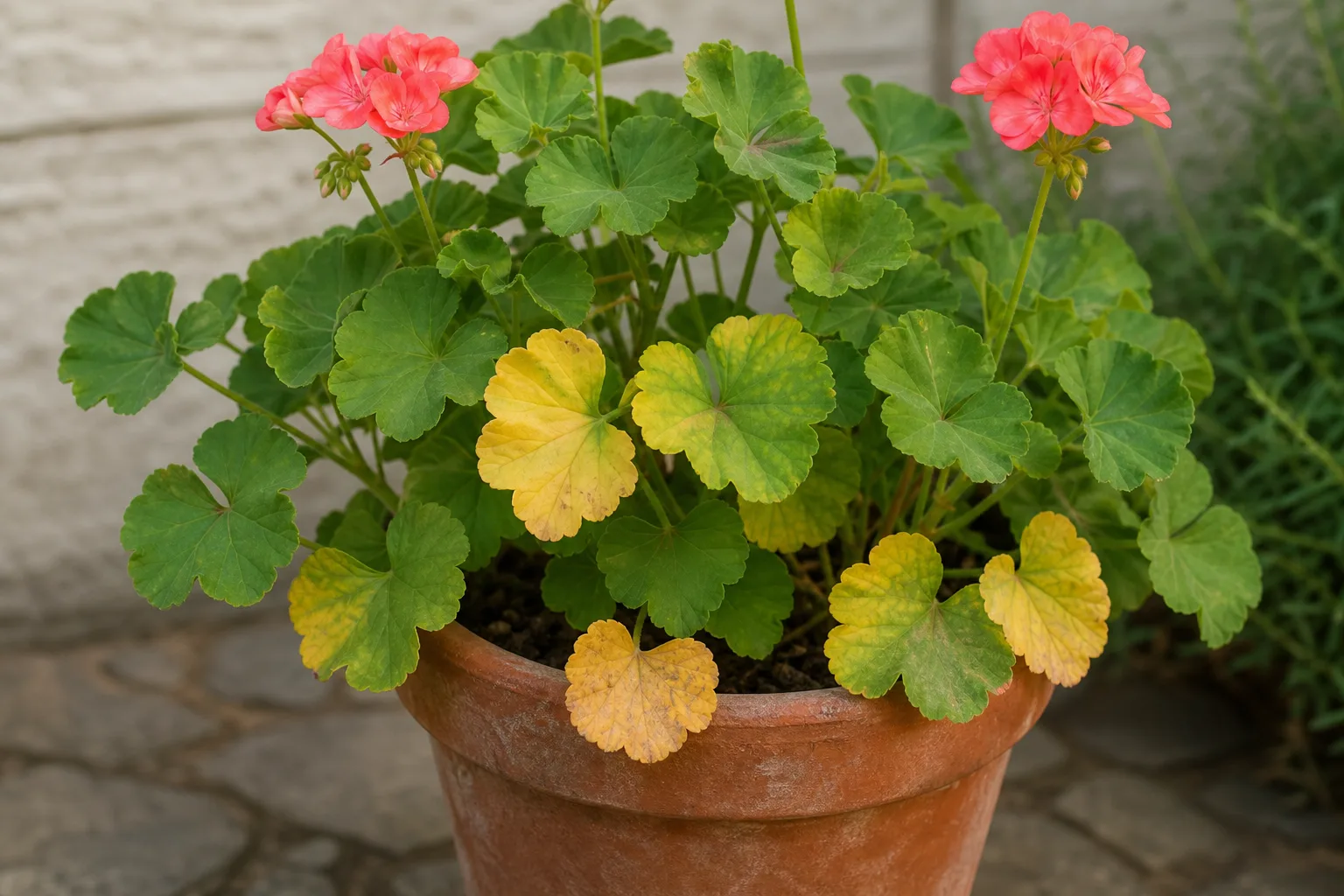
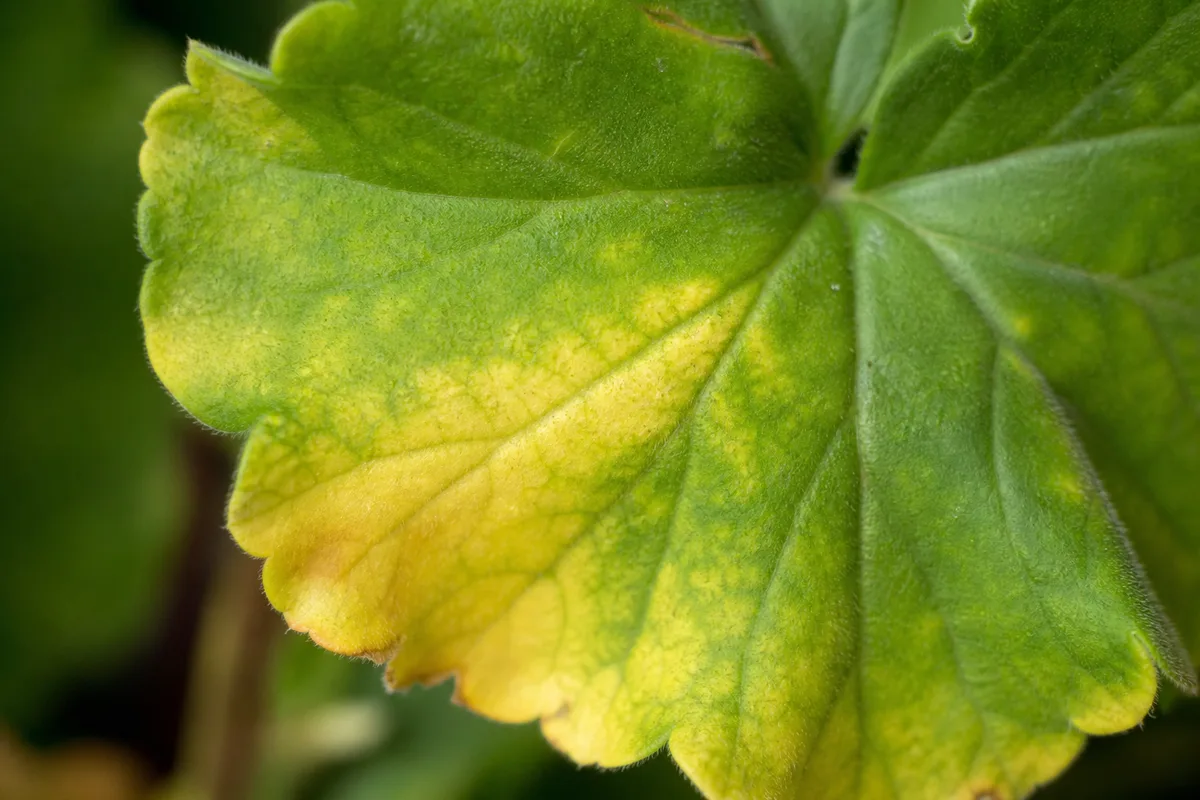
Yellow geranium leaves are a clue, not a complete diagnosis. Before you change watering, fertilizer, or light, identify which plant you are growing, where the yellowing started, and what the soil and weather were doing in the days before the color changed.
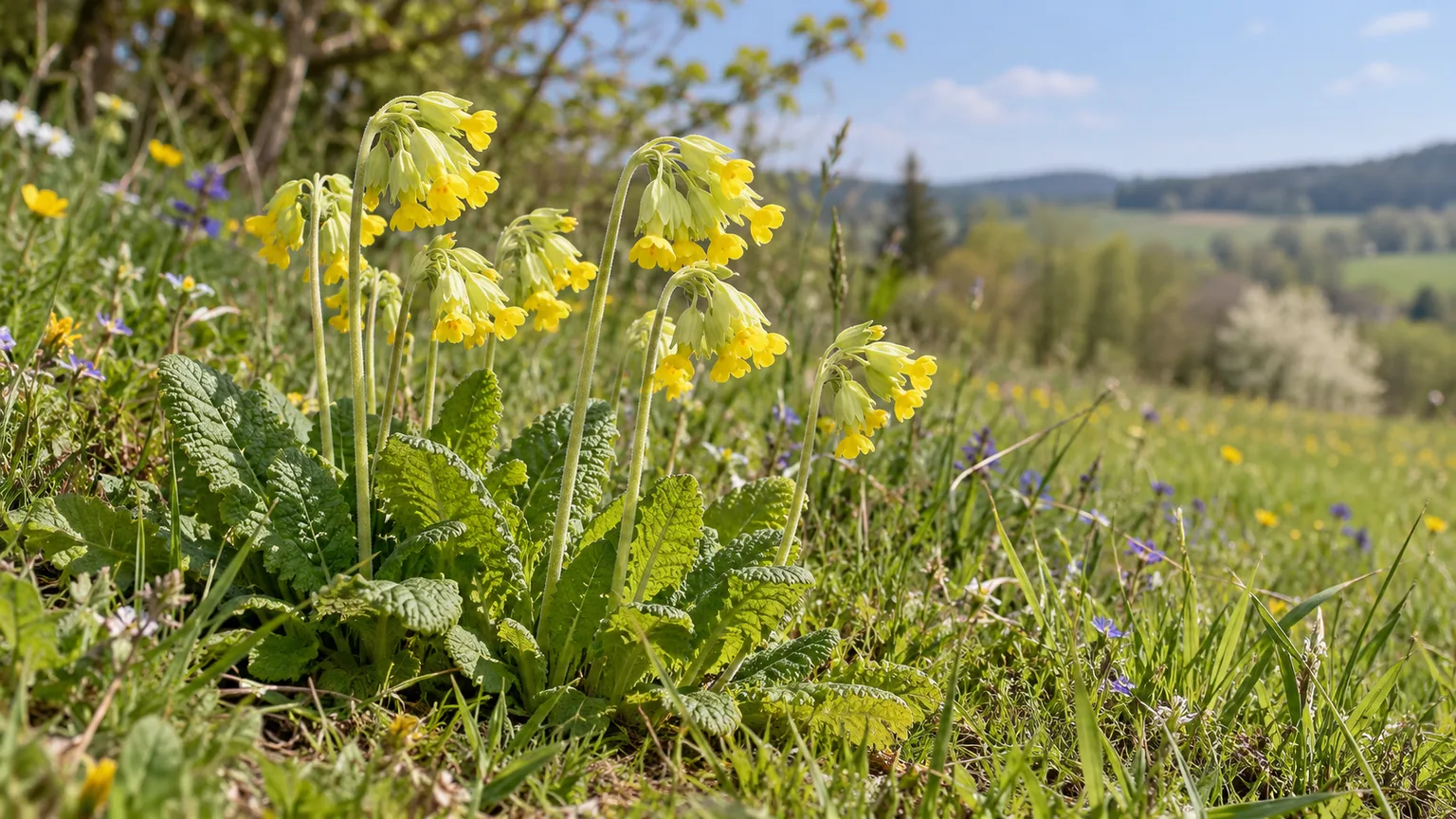
Most garden centers sell Pelargonium—zonal, ivy, regal, and scented types—while gardeners also grow true hardy geraniums (Geranium species such as cranesbill). Both are called geraniums, but their watering tolerance, winter behavior, and normal leaf shed differ. A yellow lower leaf on a patio Pelargonium may be harmless aging; the same pattern on a waterlogged hardy geranium in heavy clay is a warning. NC State Extension describes Pelargonium as a sun-loving, drought-tolerant container plant that needs excellent drainage, which already tells you that wet roots belong high on the suspect list. (NC State Extension Pelargonium)
Know which “geranium” you are growing
Pelargonium (the flowering plant most people mean) has thick, somewhat succulent stems, often zonal leaf markings, and is grown as an annual or tender perennial in many climates. It prefers bright light, tolerates drying between waterings better than constant sogginess, and commonly sheds older lower leaves as it grows. Ivy and regal types share the same genus but differ in habit; all are sensitive to cold wet soil and low winter light indoors.
True geraniums (Geranium spp.) are generally hardy perennials with thinner, more herbaceous foliage. They can yellow from wet spring soil, late frost, or normal fall dormancy. Michigan State Extension notes that geraniums need well-drained soil and can struggle in heavy, poorly drained sites—exactly the conditions that produce chronic yellowing in the ground. (Michigan State Extension geraniums)
If you are unsure, look at the stem: Pelargonium stems are often thicker and somewhat woody at the base, while hardy cranesbill stems are softer and the plant dies back or thins in winter in cold climates. Your first fix should match the plant’s real identity.
Start with the pattern, not panic
Read several leaves on the same plant before acting. Compare the oldest leaves at the base with the newest growth at the tips. Note whether yellowing is even, spotted, one-sided, or confined to edges. Feel the leaf: soft and limp suggests wet roots or disease; crisp margins suggest drought or salt injury; stippling or webbing on the underside suggests pests.
Then check soil moisture at root depth. For a container, lift the pot and feel an inch below the surface; for a garden plant, dig gently near the root zone after rain or irrigation. Watering on a calendar is a weak diagnostic tool because a Pelargonium in a small pot on a hot patio can dry out in a day, while the same plant overwintered indoors may stay wet for a week.
One fully yellow lower leaf, especially on an otherwise green Pelargonium, is less alarming than yellowing that keeps climbing the stem or appears on new growth. Photograph the plant today if you plan to compare progress; phone cameras can shift green toward yellow, so use the image to track trend, not as the only evidence.
Seven common causes at a glance
| What you see | Check first | Most likely direction | First move |
|---|---|---|---|
| Lower leaves yellow, soil stays wet, plant droops | Drainage holes, pot weight, roots | Overwatering or root stress | Stop routine watering; inspect roots |
| Leaf edges yellow first, soil is dry and light | Moisture depth, heat, pot size | Underwatering or drought stress | Water slowly at soil line; empty saucer |
| Pale, stretched stems; yellowing in shade | Hours of direct sun | Too little light | Move gradually to brighter exposure |
| Yellowing after frost or in late fall | Recent low temps, plant type | Cold injury or dormancy | Protect or accept seasonal shed |
| Overall pale growth in poor soil | Fertilizer history, leaf age | Nutrient shortage | Test soil before guessing a mineral |
| Water-soaked spots, V-shaped yellow wedges, branch wilt | Leaf pattern, weather | Bacterial blight or wilt | Isolate; do not compost infected tissue |
| One-sided yellowing after lawn treatment | Spray history, drift pattern | Herbicide injury | Rinse soil; wait for new growth |
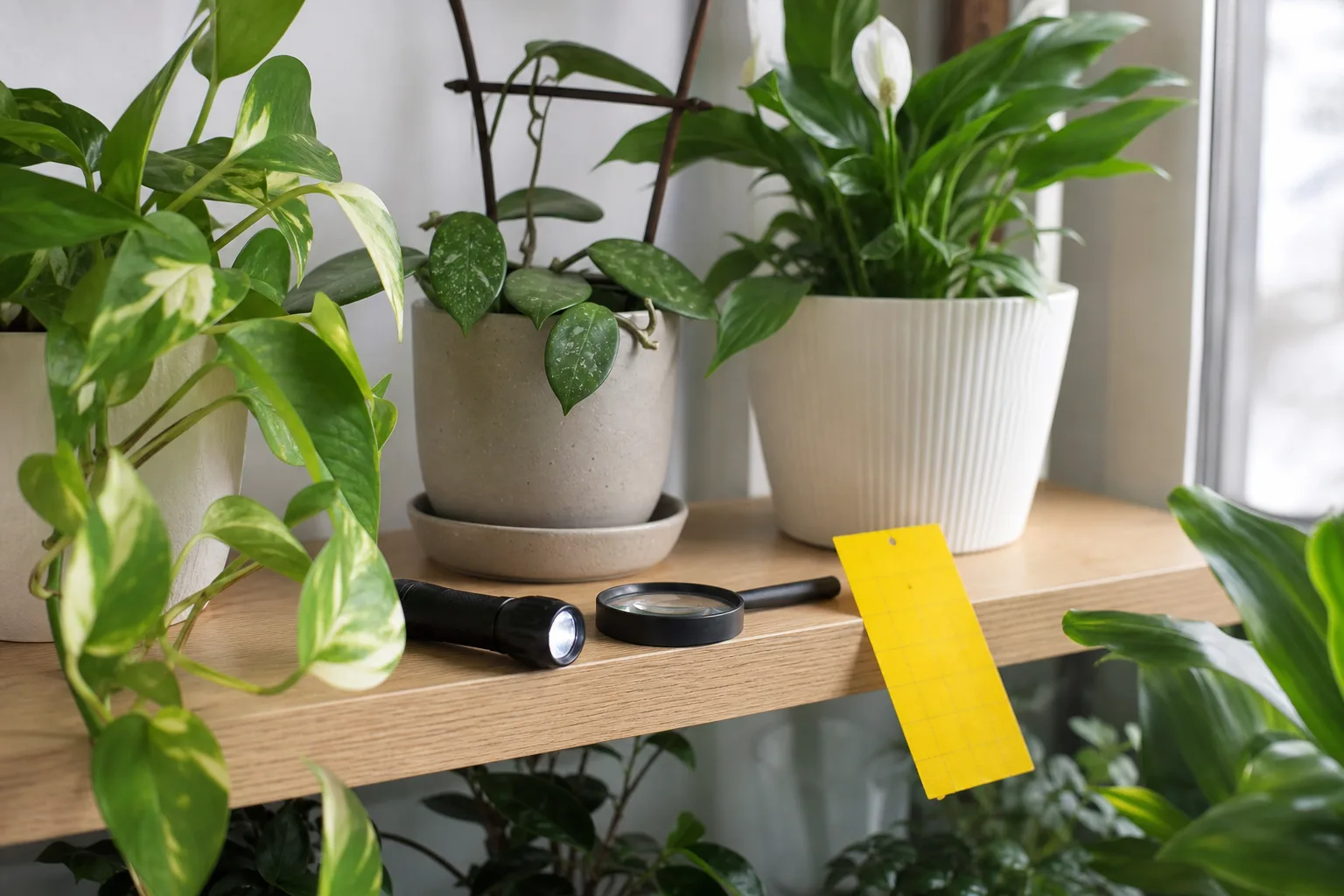
If you also see fine stippling, sticky residue, or webbing under leaves, read the pest section below before assuming the problem is only cultural. Sap-feeding insects can yellow foliage even when watering and light look acceptable.
1. Overwatering and poor drainage
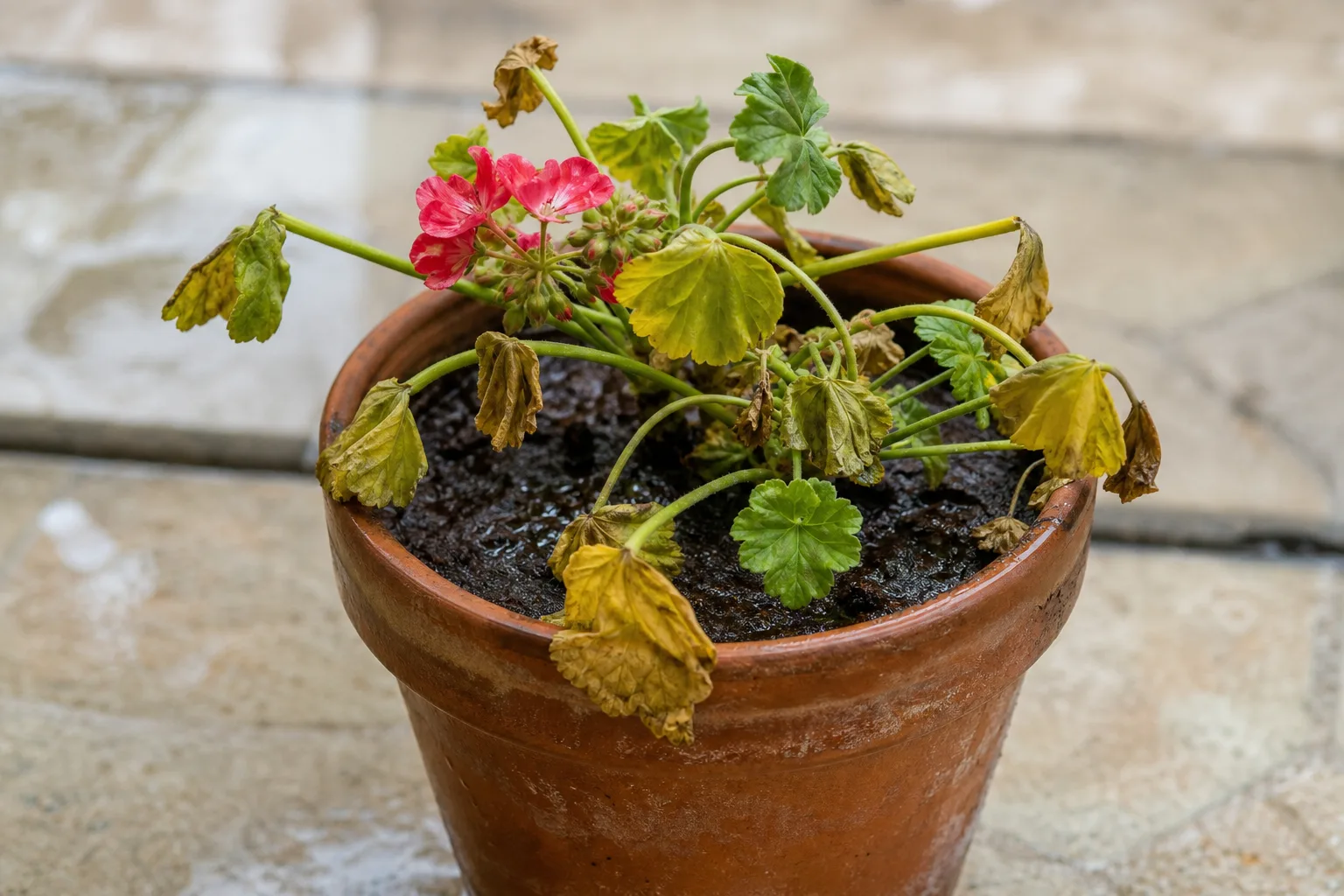
Pelargoniums are more likely to yellow from too much water than from occasional dryness. Roots need air as well as moisture; soil that stays saturated shuts down uptake, turns lower leaves yellow, and can progress to soft stems and root decay. This is common in pots without drainage holes, saucers that hold standing water, oversized containers filled with wet mix, and garden beds that collect runoff.
Overwatered geraniums often feel heavy, show yellow lower leaves that may also droop, and may wilt while the soil is still damp—a confusing but important clue. A sour smell, algae on the soil surface, fungus gnats, or brown mushy roots when you slide the plant out of its pot raises the urgency. Hardy geraniums in clay soil can show the same pattern during a wet spring even though the plant is labeled drought tolerant once established.
How to fix wet roots on geraniums
Stop automatic watering and confirm that water can leave the root zone. Empty saucers after each irrigation, clear blocked drainage holes, and move containers out of repeated rain if they sit in a puddle. Do not add gravel to the bottom of a pot as a substitute for an open drainage path; a free-draining mix and a hole that actually drains matter more.
If the soil is only temporarily wet and stems are still firm, let the upper mix dry until it feels barely moist before watering again. Water thoroughly when you do irrigate, then let excess drain away. For Pelargonium, Michigan State and NC State both emphasize well-drained soil and caution against keeping the root zone constantly saturated. (Michigan State Extension geraniums; NC State Extension Pelargonium)
When yellowing continues in wet mix, inspect roots. Trim brown, mushy tissue with a clean tool and repot into fresh, porous mix only if a significant portion of the root system is still firm and white. Hold fertilizer until new growth stabilizes; feeding waterlogged roots adds stress without solving the oxygen problem. In the ground, improve drainage or relocate the plant rather than watering more in hope the color returns.
2. Underwatering and drought stress
Underwatering is less common on established Pelargoniums than overwatering, but it happens during heat waves, on windy balconies, in small pots, and when a plant is root-bound and the mix dries almost as fast as you water. Hardy geraniums in sandy soil during a long dry spell can also yellow, usually starting at leaf edges and tips rather than as an even fade across the whole blade.
Dry-stressed leaves may feel thin or crisp, and the pot will feel light. The plant can wilt, then partially recover after watering, which tempts some gardeners to keep the soil soggy afterward—swinging from drought to overwater and yellowing the foliage from both extremes.
How to rehydrate without shocking the plant
Water at the soil line slowly enough that the mix absorbs moisture rather than running straight through dry channels. In a container, irrigate until water exits the drainage holes, wait a few minutes if the mix was bone dry, water once more, and empty the saucer. In the garden, soak the root zone rather than sprinkling the leaves.
After recovery, check moisture by weight or by feeling an inch down instead of following a fixed weekly schedule. Mulch garden plants to slow evaporation, keeping mulch away from the stem crown. Do not compensate for one missed watering by leaving the plant in saturated soil for days; the goal is a moist, oxygenated root zone.
3. Too little sunlight
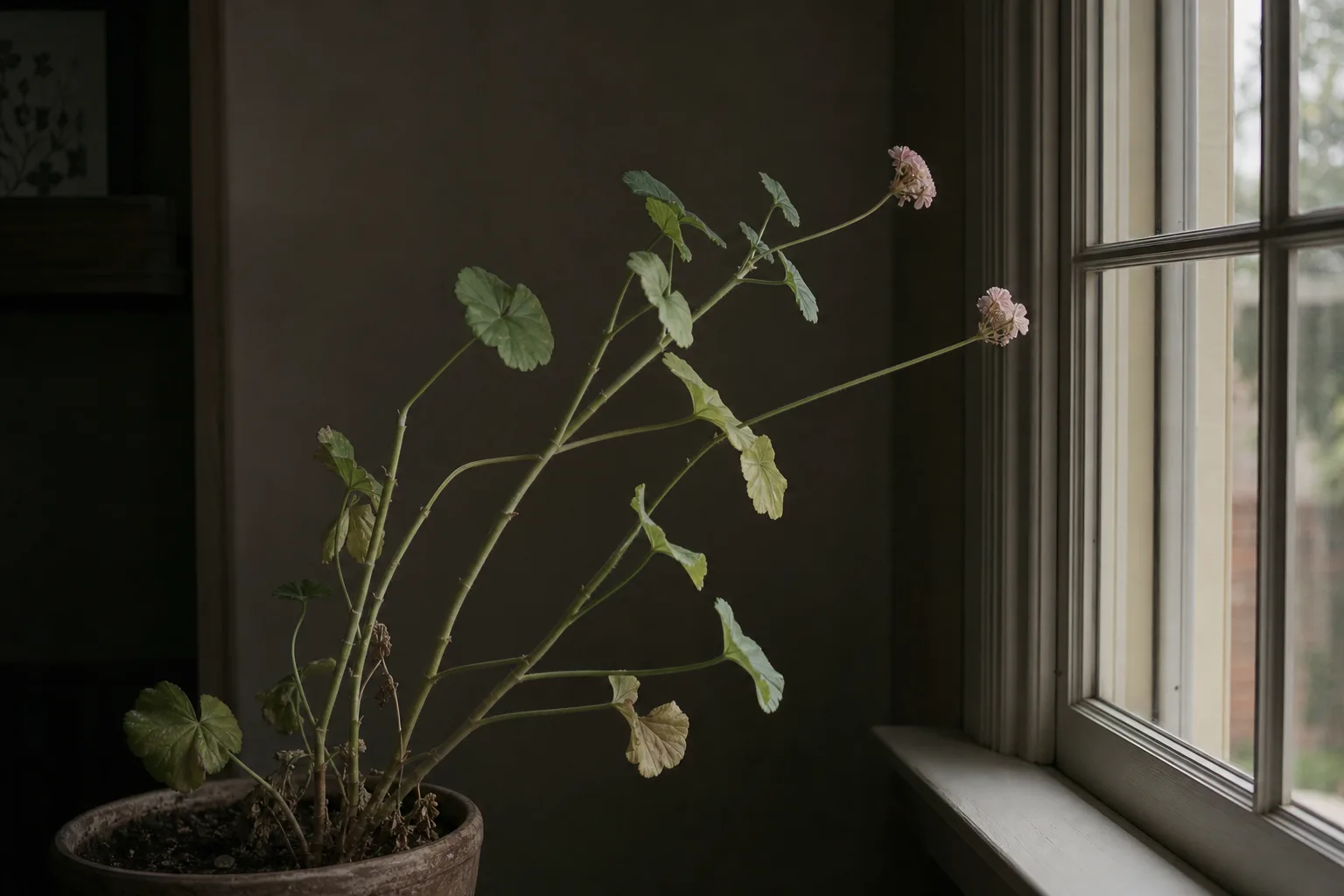
Geraniums need bright light to stay compact and green. Pelargoniums perform best with full sun to light afternoon shade in hot climates; too much shade produces pale, stretched growth and yellowing lower leaves as the plant reallocates resources toward any available light. Indoors overwintered plants often yellow in dim rooms because winter sun is weak and days are short.
Light-related yellowing tends to be gradual and accompanied by long internodes, smaller new leaves, and a plant that leans toward the window. It can be mistaken for nitrogen deficiency, but fertilizer will not fix a dark corner.
Increase light in steps. Move a container a little closer to a south or west exposure, rotate it weekly for even growth, and prune surrounding plants that cast shade on a border geranium. If you bring a plant indoors for winter, place it in the brightest spot available and accept that some lower leaves may still yellow until spring growth resumes. Avoid jumping from deep shade to harsh midday sun in one day; sunscorch can bleach or yellow leaves on the exposed side.
4. Cold weather and seasonal decline
Hardy geraniums are perennials that naturally yellow and die back as they approach dormancy in fall. That seasonal color change is normal, not a call for heavy feeding. In spring, a late frost or extended cool, wet weather can also bleach or yellow new foliage; healthy plants usually replace damaged leaves once temperatures stabilize.
Pelargoniums are frost-tender. A cold night on a patio, a forgotten plant left outside after the first frost, or a drafty windowsill can yellow leaves overnight. Cold injury may look like water-soaked patches that later turn yellow or brown, often on the outer or upper leaves first.
Protect container plants before frost with shelter, a wall microclimate, or moving pots indoors. Do not fertilize a cold-stressed plant immediately; let it warm and resume active growth first. For hardy geraniums, distinguish fall dormancy from disease: dormancy is plant-wide and predictable with the season, while bacterial problems show spots, wedges, or branch dieback out of pattern.
5. Nutrient shortages and poor soil
Geraniums are not heavy feeders, but chronic yellowing in nutrient-poor soil, old container mix, or a bed that has been cropped for years can reflect a real shortage—most often nitrogen on older leaves, or magnesium when yellow tissue appears between green veins on mature foliage. Iron, sulfur, and zinc deficiencies can also cause chlorosis, usually with a pattern tied to leaf age and soil pH.
Before adding fertilizer, ask whether roots can take nutrients up. Waterlogged soil, cold roots, and compacted beds can produce pale leaves even when nutrients are present. Yellow leaves that stay yellow after a random feeding are not proof that more fertilizer is needed.
Apply a balanced slow-release fertilizer once at the start of the growing season if the plant is in poor soil and actively growing, following label rates. Pelargoniums in containers may need lighter, more frequent feeding than garden plants because irrigation leaches nutrients. Do not dump Epsom salt, iron chelate, and high-nitrogen feed in the same week without a reason.
Magnesium, iron, and when to soil test
Magnesium supports chlorophyll; interveinal yellowing on older leaves can fit magnesium trouble, while young leaves yellowing with green veins point more toward iron availability. pH extremes lock up several micronutrients in mineral soils. If yellowing is widespread, repeated, or affects multiple plants in the same bed, a soil test through your local extension office is more useful than guessing from a photo.
If a test confirms magnesium need, use a product labeled for that purpose at the recommended rate. If foliage stays discolored after correcting drainage and pH, retest rather than escalating salts. Fully yellow leaves rarely return to deep green; judge success by new leaves emerging with normal color and firm texture.
6. Bacterial disease
Yellow leaves on geraniums are sometimes a disease signal, not a watering mistake. Bacterial blight (Xanthomonas species on Pelargonium) produces small water-soaked spots that enlarge into tan or brown areas with yellow halos, often in V-shaped patterns along leaf veins. University of Minnesota Extension describes blotches or spots on geranium leaves as a starting point for distinguishing cultural yellowing from infectious problems. (University of Minnesota Extension geranium diagnostics)
As blight advances, leaves on a branch wilt, turn yellow, and die; stems may darken. Warm, wet weather and leaves that stay wet overnight from overhead watering or poor airflow encourage spread. Penn State Extension notes that bacterial blight is highly infectious and can survive in plant debris in soil for up to a year, which is why cleanup matters. (Penn State Extension bacterial blight of geranium)
Southern bacterial wilt (Ralstonia solanacearum) is a separate serious problem. UMass reports wilting and yellowing without the distinct leaf spots seen in blight, often more evident in warm weather, and notes that it affects geraniums plus many ornamentals and nightshade-family vegetables. (UMass southern bacterial wilt)
For either disease, isolate suspected plants, avoid overhead watering, improve spacing, and remove and discard infected plants in the trash rather than composting them. Disinfect pruners between cuts. Do not propagate from diseased stock. Replanting the same site may require choosing resistant crops and local extension guidance because soilborne inoculum can persist.
7. Herbicide drift and chemical injury
Yellow, twisted, or narrowed geranium leaves can follow herbicide exposure from lawn weed treatments, fence-line spraying, or drift on a windy day. Damage is often one-sided, follows a spray line, or appears on plants downwind of a treated area. Growth may look stunted or distorted rather than evenly pale.
If herbicide contact is plausible, rinse the soil thoroughly with clean water to dilute residue near the roots, as long as drainage is good and you are not creating a new soggy layer on top of saturated soil. Remove badly distorted tissue only after you know which leaves are still functional. Some injury is irreversible; the practical question is whether new growth emerges clean after the exposure stops.
Prevent drift by calibrating sprayers, avoiding application on windy days, and shielding desirable plants with cardboard or temporary covers when treating nearby weeds. Never use a lawn herbicide product on or near ornamental beds without reading the label restrictions for overspray and root uptake.
Pests that can yellow geranium leaves
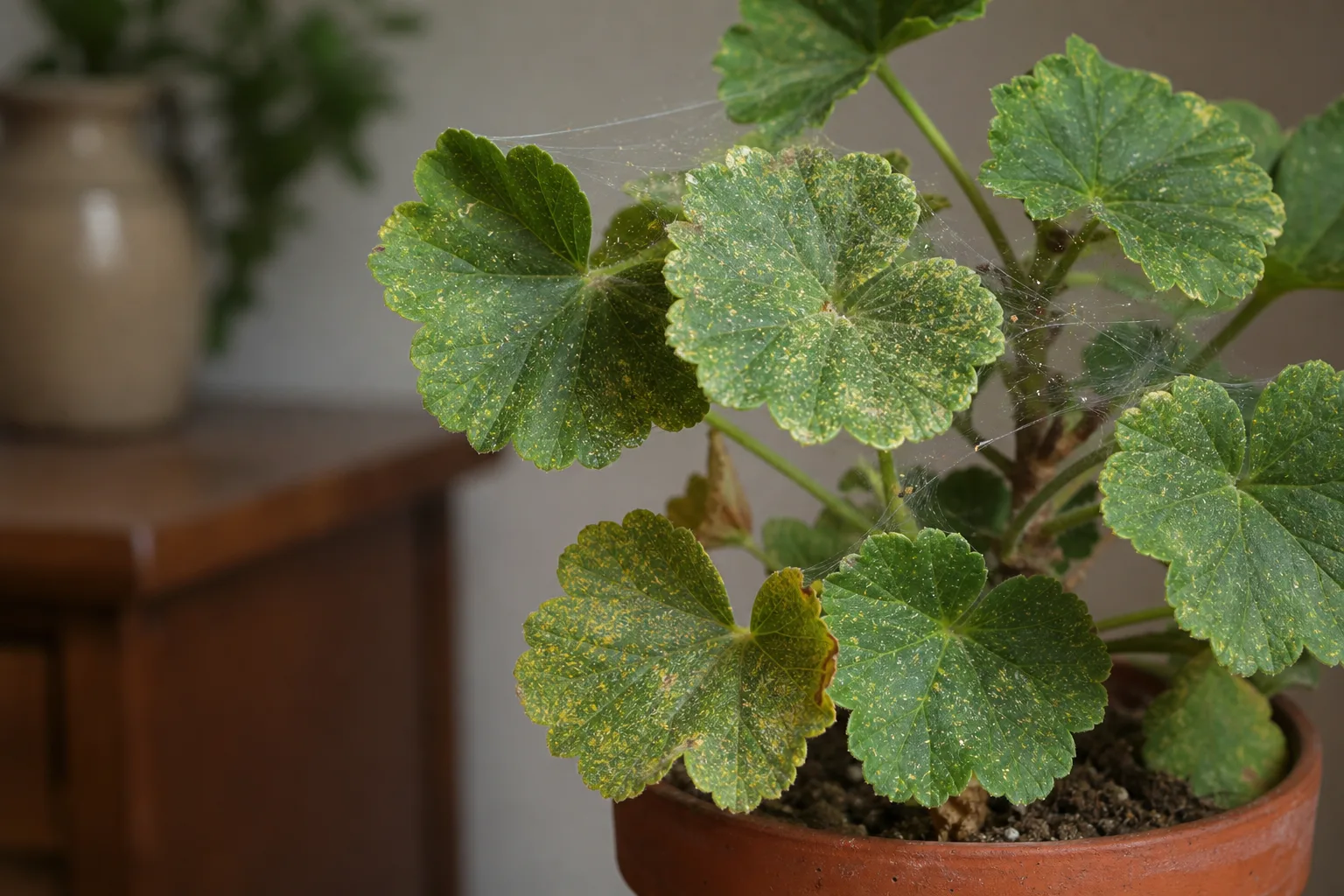
The seven cultural and disease causes above cover most chronic yellowing, but sap-sucking pests belong on the checklist because they are common on Pelargonium and easy to miss. Spider mites cause fine stippling, bronzing, and eventual yellowing, especially in hot, dry, indoor air. Aphids cluster on tender shoots and leaf undersides, leaving sticky honeydew and distorted new growth. Both weaken the plant enough that leaves fade before you notice the insects.
Inspect with bright light under the leaves and along stem tips. Mites may require a white paper tap test: shake a branch over paper and look for moving specks. For light infestations, a firm rinse and improved humidity around the plant may be enough; for heavier populations, use a product labeled for the pest and for ornamental geraniums, testing a small area first and avoiding sprays during peak heat.
Do not treat yellow leaves with pesticide if you have not confirmed a pest; chemical stress on top of mite damage can make the foliage look worse. Fix culture first, then target insects with a narrow, labeled approach.
When yellowing is normal leaf aging
Pelargoniums naturally shed older lower leaves as they produce new growth at the tips. One or two yellow leaves at the base, especially on a flowering plant in active growth, often mean the plant is recycling nitrogen rather than failing. Remove them if they are unsightly, but do not repot, fertilize heavily, or change light based on a single senescent leaf.
Normal aging is limited in scope: the growing tips stay green, new leaves look healthy, and yellowing does not march up the stem over a few days. If you are seeing a wave of color change, treat it as an active problem even if the first leaf happened to be an old one at the bottom.
Hardy geraniums may yellow broadly in fall as they enter dormancy. That pattern is seasonal and predictable. Spring yellowing on new shoots after frost is different from fall decline and should be read as injury or disease only if spots, wilt, or stem discoloration accompany the color change.
Should you remove yellow geranium leaves?
Keep a leaf that is still mostly green unless it is clearly diseased, pest-ridden, or blocking airflow in a dense cluster. Green tissue still photosynthesizes and supports recovery. A fully yellow leaf will not turn green again because chlorophyll breakdown is not reversible, but it may still export mobile nutrients briefly before drop.
Remove fully yellow, brown, or diseased leaves with clean pruners, cutting the petiole near the main stem. Bag and trash material suspected of bacterial blight rather than composting it. Disinfect tools before working on healthy plants. On Pelargonium, avoid stripping half the canopy at once; gradual cleanup reduces stress on a plant already coping with root or light problems.
A seven-day recovery plan
Today: Photograph the plant, note whether yellowing is on old or new growth, and record recent weather, watering, and any nearby spraying. Check soil moisture an inch down, lift containers, inspect leaf undersides, and smell the soil surface for sourness before making one correction.
Days two through four: Apply the single clearest fix. Let wet soil dry to a sensible level, rehydrate dry soil slowly, move the plant toward brighter light in steps, shelter a cold-injured container, or begin a confirmed pest treatment. Hold fertilizer if roots are wet, the plant was recently frosted, or disease is suspected.
Days five through seven: Look for stable moisture, firm stems, stopped spread of yellowing, and healthy new leaves at the tips. Old yellow tissue may still drop after the cause is corrected; recovery is defined by new growth, not by repainting lower leaves.
Avoid changing pot size, fertilizer, pesticide, light, and watering all in the same week unless roots are rotting or a severe infestation is confirmed. One measured change teaches you what the plant needed and prevents several new stresses from masking the original cause.
Prevent yellow leaves next season
Match the plant to the site: bright light for Pelargonium, well-drained soil for hardy types, and containers with open drainage holes rather than decorative pots without exits. Water when the root zone begins to dry, not on a fixed calendar; empty saucers; and avoid overhead irrigation late in the day when foliage stays wet overnight.
Feed lightly and deliberately at the start of active growth if soil is lean, using a balanced product at label rates. Test soil when yellowing repeats in the same bed. Space plants for airflow, scout leaf undersides during warm weather, and protect frost-tender Pelargoniums before the first cold night rather than rescuing them after leaves bleach.
If bacterial disease has occurred, follow extension guidance on debris removal and rotation before replanting susceptible crops. Start overwintered indoor plants in the brightest window you have, accepting some lower leaf drop until spring lengthens the days again.
Conclusion
When geranium leaves turn yellow, start with plant identity, soil moisture, and leaf pattern. Wet soil with a heavy pot points toward overwatering; dry soil with crisp edges points toward drought; pale stretch in shade points toward low light; frost or fall timing points toward cold or dormancy; even paling in poor soil points toward nutrients; spots and V-shaped wedges point toward bacterial disease; one-sided distortion after spraying points toward herbicide injury.
Make the smallest correction that fits the evidence, then judge recovery by whether yellowing stops and new leaves emerge green and firm. One yellow leaf at the base of a healthy Pelargonium may be normal aging; a plant that keeps declining needs a clearer diagnosis and sometimes disposal rather than more fertilizer. That distinction saves good plants and stops bad problems from spreading through the garden.