Curling Leaves on African Violet: Water & Pest Checks
Quick answer
Curling leaves on African Violet cup inward, dome downward, or twist at the petiole—distinct from healthy flat rosette symmetry. First step: check soil moisture at the top inch and whether you recently splashed cold water on velvety leaves; dry soil with limp curl means underwatering, tight curl with stippling means mites.
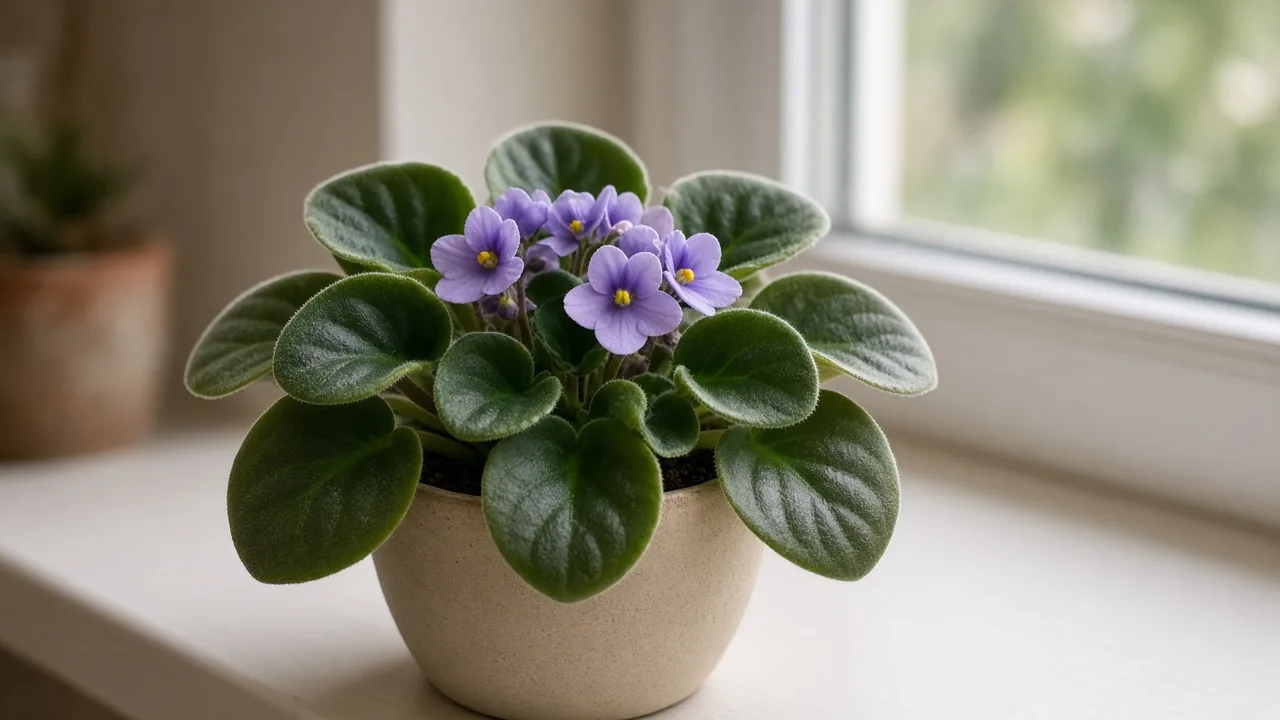
Curling Leaves on African Violet: Causes, Checks & Fixes
This guide covers curling leaves on African Violet. See also the general Curling Leaves guide, watering, and light pages for this plant.
Curling Leaves on African Violet: Causes, Checks & Fixes
Quick answer
Curling leaves on African Violet show inward cupping, downward doming, or twisted petioles in the symmetrical rosette. See our curling leaves guide. On African violets, cold water on fuzzy leaves and cyclamen mites are plant-specific causes that do not apply to smooth-leaved pothos.
First step: probe the top inch of mix and review your last watering method—bottom-tray room-temperature water vs cold splash on leaves.
When to use this page vs other African Violet guides
| Pattern | Read next |
|---|---|
| Dry top inch, limp plant, light pot | Underwatering |
| Tight center curl, stunted heart | Cyclamen mites—inspect center crown with magnifier |
| Pale rings or arcs on upper leaf faces | Cold-water injury — see distorted leaves |
| Wet soil, soft crown | Overwatering |
| Fine webbing on leaf undersides | Spider mites |
What curling leaves look like on African Violet
A healthy violet rosette is flat and symmetrical—leaves radiate evenly from the crown without cupping or twist. Curl signals that something is wrong with moisture, temperature, pests, or root uptake.
Common patterns on Saintpaulia:
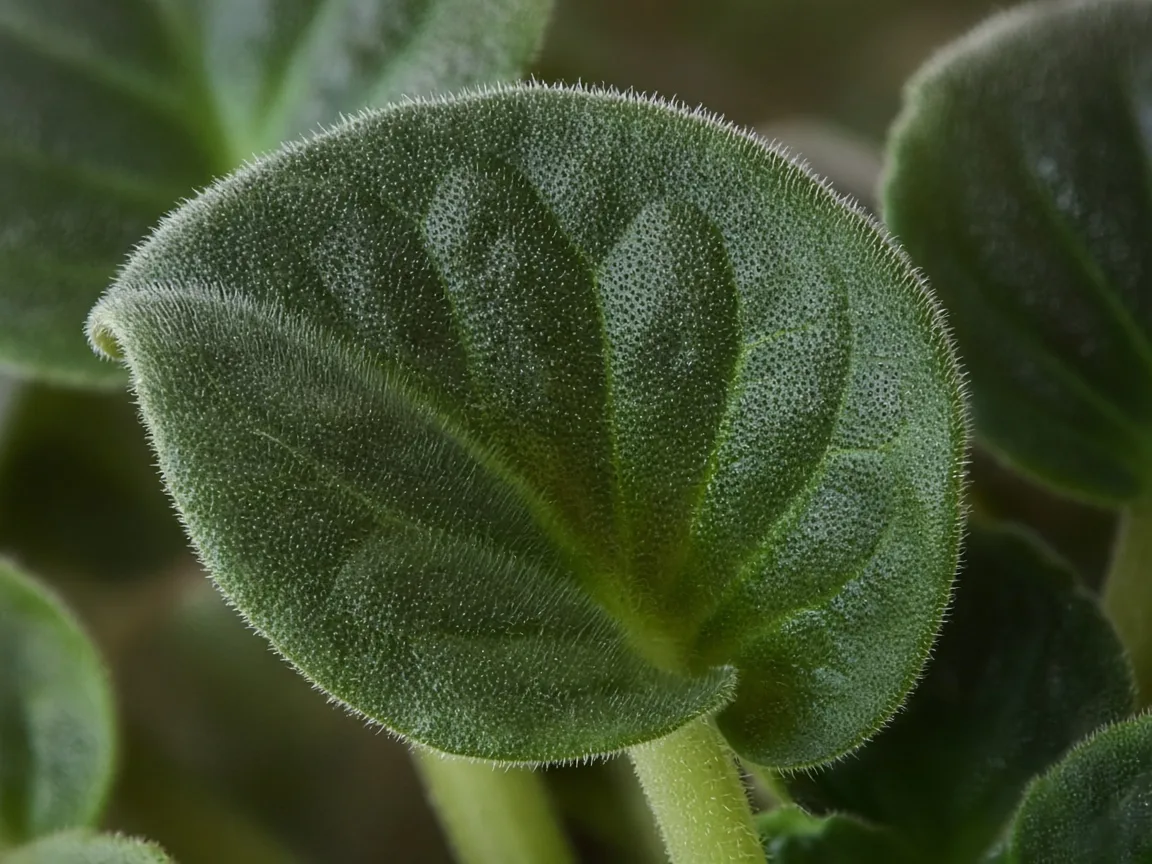
Curling leaves on African violet—compare cupped velvety tissue with flat healthy rosette symmetry.
- Downward cup on a dry, lightweight pot — Leaves fold to conserve water when the small root ball dries faster than you expect in a shallow pot. Outer leaves may look worse than the center; the plant often perks after bottom-watering.
- Tight inward curl on center leaves with a stunted heart — The classic cyclamen mite pattern. New leaves stay small, hairy, and grayish while older outer foliage can look normal for weeks (Clemson HGIC).
- Random curl or stiff leaves after top-watering with cold tap — Cold water splashed on leaves causes ring spots and permanent warp on the velvety surface. This is not reversible on the affected leaf.
- Curled new leaves with fine stippling and webbing on undersides — Points to spider mites in dry heated rooms, not cyclamen mites (which hide in the crown).
- Pale green leaves with edges turned up in a cold window — Temperatures below about 60 °F can make leaves curl down, cup, and turn brittle without any pest present.
Localized center curl on one pot is almost never room humidity alone—it is water method, cold, or crown pests.
Bottom-water curl check
African violets are built for bottom watering: fuzzy leaves stay dry and the crown avoids rot (RHS African violet guide). When curl appears, run this protocol before repotting or spraying:
- Lift the pot — light weight with dry top inch points to thirst, not mites.
- Bottom-water in a tray with room-temperature water for 30 minutes, then drain per the watering guide.
- Re-check in four hours — thirst curl lifts; mite and cold-injury curl do not.
- Never pour cold water on velvety leaves — water at 55 °F or below causes ring spot when leaf and water differ by 10 °F.
Wet heavy pot? Skip watering and read overwatering—roots that cannot absorb water mimic drought curl on soggy soil.
Cyclamen mite lookalikes on the rosette crown
Cyclamen mites are the most serious curl mimic on African violets and the one most growers miss because the pests are nearly invisible. They feed on new growth in the center of the plant and inject a toxin that disrupts normal development, producing severe stunting, leaf curling, hairy grayish new foliage, and distorted buds.
Mite curl vs thirst curl — quick separation:
| Feature | Thirst curl | Cyclamen mite curl |
|---|---|---|
| Pot weight | Light; top inch dry | Often normal |
| Which leaves | Outer or whole rosette | Center heart first |
| Texture | Soft, limp | Tight, hairy, brittle |
| Magnifier | No pests in crown folds | Stunted, bunched center |
| After bottom-water | Improves in hours | No change or worsens |
Mites favor the crown and petiole folds where new leaves emerge and spread when pots touch or tools move between plants. If center leaves match the mite column, isolate immediately before inspecting neighbors. Badly infested plants are often discarded to protect a collection; salvage only plants you will monitor for weeks. See stunted growth for heat-dip and miticide options on valuable plants.
Broad mites cause similar crown twisting—their toxic saliva distorts growing points and can mimic herbicide damage. Treat the same way: isolate, confirm, act.
Cold-water injury on velvety rosette leaves
Fine hairs on every African violet leaf trap cold water and create temperature shock. Cold water contact causes yellow or white ring and line patterns—permanent scars, not a nutrient issue. RHS notes blotches and pale spots from water that is too cold; keep foliage dry when watering.
Cold drafts compound the problem. Plants below 60 °F produce deformed, curled, brittle leaves even with correct watering. Move a winter-window violet before assuming pests.
Prevention: room-temperature water only, water from below in a tray for half an hour, leaves dry. Ring scars after a careless top-water will not heal—judge recovery by new flat center leaves.
How to confirm the cause
Work through these in order—stop when one fits:
- Moisture and pot weight — Dry top inch plus light pot: thirst. Wet heavy pot: root problem.
- Watering history — Cold splash in the last few days? Ring-spot injury before mites.
- Crown magnification — 10× lens into the heart. Bunched, hairy new leaves: mites.
- Temperature — Below 60 °F near glass? Move before treating pests.
- Bottom-water test — Tray rehydration; improvement in hours confirms thirst.
- Underside scan — Webbing on lower faces: spider mites, not cyclamen mites.
First fix for African Violet
If the top inch is dry and the pot is light: bottom-water with room-temperature water for 30 minutes, drain fully, and recheck leaves in four hours.
That single action solves most thirst curl without stacking repotting, fertilizer, or pesticides.
If the center is tightly curled, hairy, and stunted while outer leaves look normal: isolate the plant, inspect the crown with magnification, and treat or discard per collection policy before handling other violets (Clemson HGIC).
If wet soil and a heavy pot accompany curl: hold water, improve airflow, and follow overwatering guidance—adding water deepens root failure.
If pale rings appeared after cold splash: switch to warm bottom-watering only; do not mist or shower fuzzy leaves.
Recovery timeline
- Thirst: Leaves flatten within hours to one day after bottom-watering.
- Cold-water or mite damage: Old curled tissue does not uncurl—watch new center leaves over two to four weeks.
- Mite salvage: Some symptoms remain until distorted leaves are pruned. A destroyed crown may need a clean leaf cutting.
Escalate if the crown softens, curl spreads to neighbors, or no flat new growth appears after four weeks.
How to prevent curling leaves next time
Bottom-water with room-temperature water and keep leaves dry (RHS). Check the top inch before watering, maintain 65–75 °F, avoid sub-60 °F drafts (UGA Extension), space pots so leaves do not touch, and inspect crowns weekly (Clemson HGIC).
Related African Violet guides
Conclusion
Curled African violet leaves are water method, thirst, cold, or mite signals—not generic houseplant stress. Bottom-water warm, keep velvety crowns dry, magnify the center before mites spread through your shelf, and judge recovery by new flat growth rather than old damaged leaves.