Holes in Leaves on Aglaonema Cutlass: Causes, Checks & Fixes
Quick answer
Holes in Aglaonema Cutlass leaves are gaps or tears in narrow ribbon-shaped blades—not natural splits. Indoors, mechanical snags and holes left after leaf spot necrosis are more common than active chewers. First step: check whether hole edges are green and moist (recent damage) or brown and dry (old healed tissue).
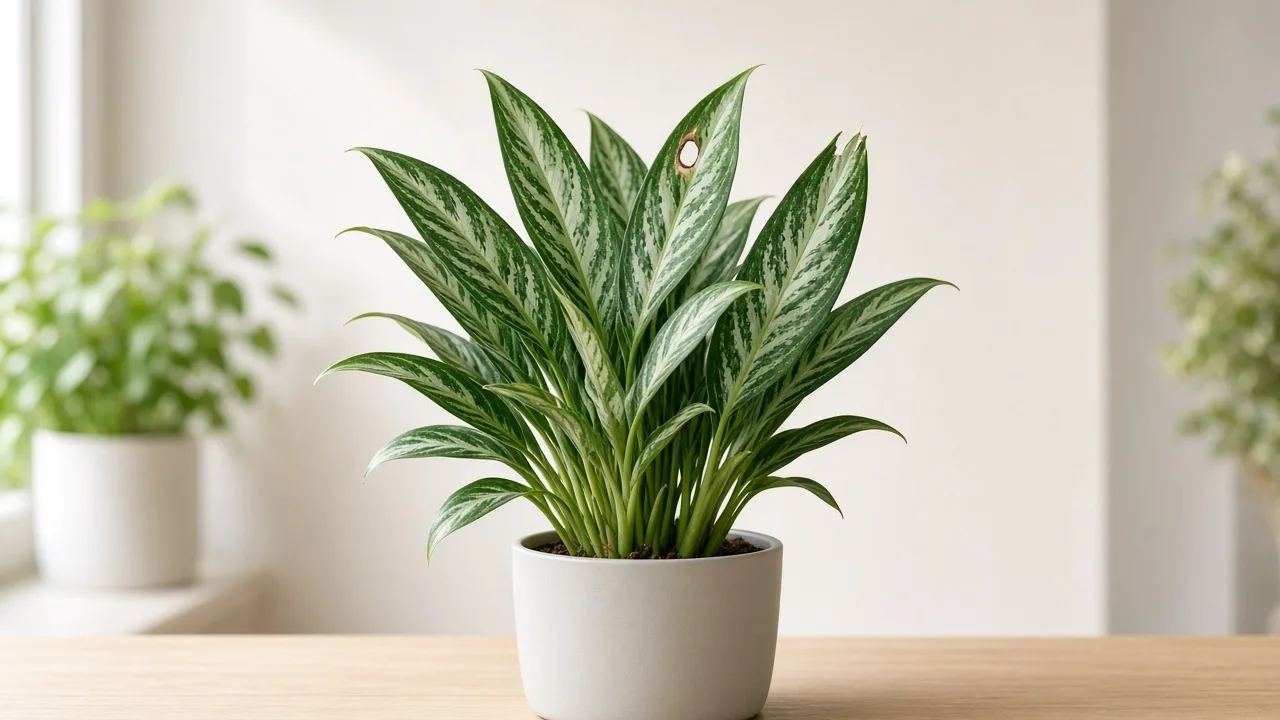
Holes in Leaves on Aglaonema Cutlass: Causes, Checks & Fixes
This guide covers holes in leaves on Aglaonema Cutlass. See also the general Holes in Leaves guide, watering, and light pages for this plant.
Holes in Leaves on Aglaonema Cutlass: Causes, Checks & Fixes
Quick answer
Holes in Aglaonema commutatum ‘Cutlass’ leaves mean tissue is missing from the narrow ribbon blades—not natural fenestration. Cutlass does not develop intentional splits like a Monstera; every gap is damage, disease aftermath, or chewing.
First step: Look at the hole edge. Green, moist margins point to recent mechanical tearing or active feeding. Brown, dry edges with a dark ring around the hole often mean old leaf-spot tissue fell out after the lesion dried.
For general hole mechanics on houseplants, see our holes in leaves guide. On indoor Cutlass, long lance leaves in tight office rows tear on shelf lips and price tags more often than pests chew them—and wet foliage in dim cubicles can leave post-spot holes after black spots necrose.
Route to leaf miners for tunnels inside the blade, not open holes. For ragged new growth without full-thickness gaps, see thrips or distorted leaves.
When to use this page vs other Cutlass guides
| Pattern | Start here | Or route to… |
|---|---|---|
| Open hole, green moist edge | This page | Caterpillars if chewer found |
| Brown dry hole where spot was | Black spots | This page for cosmetic aftermath |
| Serpentine trail inside leaf | Leaf miners | This page if hole is full-thickness |
| Clean tear on one lance tip | This page (mechanical) | — |
| Chew at pot rim outdoors | Slugs—elevate pot | Caterpillars if larva on blade |
| Silver scarring, no open hole | Thrips | — |
What holes look like on Aglaonema Cutlass
Cutlass leaves are long, narrow, and upright—dark green with silver feathering along the veins. Holes stand out against that smooth lance shape.
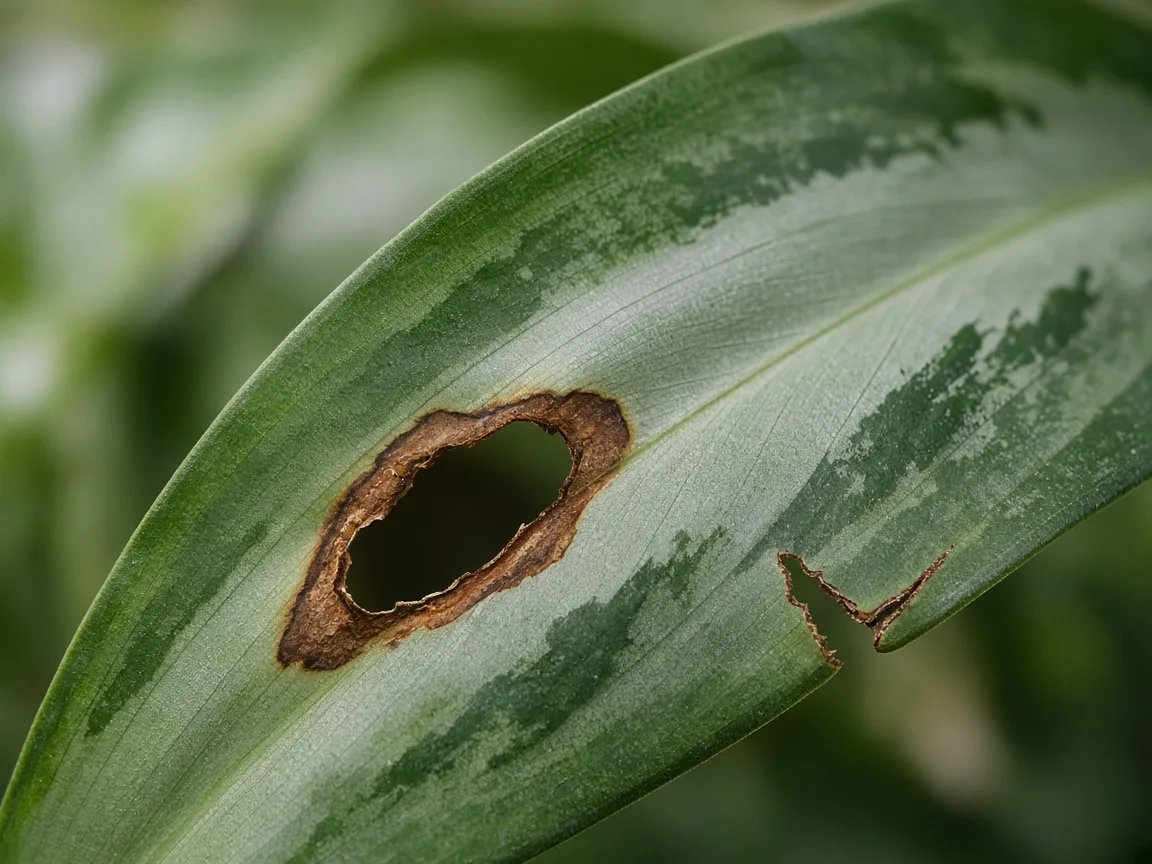
Irregular hole with dry brown rim on a Cutlass lance leaf—check edge color to separate post-spot necrosis from fresh mechanical tears.
Mechanical tears — Clean splits or notches on one edge, often on the longest outer leaves that brush a desk edge, monitor arm, or nursery tag. No pest frass, no slime. Edge may brown later but the tear pattern matches a snag.
Post-spot necrosis holes — Irregular gap surrounded by dry brown or black rim where a leaf-spot lesion died and dropped out. Often on lower lance leaves that stayed wet longest. May follow water-soaked spots described in our black spots guide. Water on leaves encourages fungal leaf spot on many houseplants.
Caterpillar feeding — Ragged holes and notched margins; green or brown larvae tucked along the midrib underside, sometimes after patio summer. Frass pellets on leaves or soil. Clemson lists several chewing and sucking pests on common houseplants.
Slug or snail damage — Ragged holes and slime trails on pot rim or soil—mostly on floor-level patio pots, not typical year-round desk plants.
Pet chewing — Torn sections with crush marks at pet height. Aglaonema Cutlass is toxic to cats and dogs—ASPCA classifies Chinese evergreen as toxic due to insoluble calcium oxalates. Relocate the plant and contact your vet if ingestion is suspected; this guide does not replace medical care.
Thrips or aphid ragged feeding — More often silvery scarring or distorted new blades than round holes—see thrips and aphids on tender crown growth.
Ribbon-lance snag pattern (Cutlass only)
Cutlass is a ribbon-type aglaonema bred for narrow blades that stay upright in low light. That shape is efficient in offices—and easy to catch. In crowded rows, the tip or mid-blade hooks a shelf lip when someone slides a keyboard tray or moves the pot. The tear is usually one clean line on a single lance, not random holes across the clump. Chinese evergreen leaves vary by cultivar but share soft, broad-to-narrow foliage that bruises when brushed. Cutlass blades are among the easiest to snag because they are long relative to pot width.
Why Aglaonema Cutlass gets holes
Mechanical damage in tight spaces — Desk edges, filing cabinets, and hanging tags tear narrow leaves before pests ever appear.
Wet-leaf leaf spot aftermath — Cutlass tolerates dim light but dries slowly in north cubicles. Wet foliage plus stagnant air spreads spot fungi; necrotic centers can fall out and leave holes. This is a Cutlass-specific rhythm: slow growth in low light + overhead misting or splash = chronic wet lower lances touching the pot rim.
Outdoor hitchhikers — Summer patio placement brings caterpillar eggs or slugs to pots returned indoors.
Pet access — Floor pots and low shelves put toxic foliage in chewing range.
Active chewers indoors — Less common than on broad-leaf plants like peace lily, but possible after open windows or mixed patio storage.
Aglaonema does not develop bacterial “shot hole” patterns like some fruit trees indoors. Suspect tears, spot aftermath, or chewers first. NC State notes mealybugs as a common indoor pest on aglaonema—they cause sticky residue and yellowing more often than punched holes.
Confirm the cause in five checks
- Edge color: Green moist = recent; brown dry with dark rim = old spot scar.
- Location: Single outer lance on a crowded shelf → mechanical. Multiple lower leaves with spot history → post-spot holes.
- Underside at night: Flashlight on midrib for caterpillars; slime on rim for slugs.
- Pet height: Tooth marks, disturbed soil, multiple plants chewed?
- Recent outdoor time: Patio season raises caterpillar and slug probability.
If tunnels run inside the blade without a full-thickness hole, stop here and open leaf miners.
First fix by confirmed cause
| Confirmed cause | First fix | Follow-up |
|---|---|---|
| Green-edge mechanical tear | Reposition pot away from snag point | Trim only if leaf is mostly split |
| Brown dry post-spot hole | Stop wetting foliage; remove worst spotted blades | Black spots culture fix |
| Caterpillar found | Hand-pick; isolate plant | Caterpillars if more appear |
| Slug/snail | Remove pest; elevate pot from soil | Night checks one week |
| Pet chewing | Move plant out of reach | Veterinary call if ingested |
| Active spot spreading | Remove infected lance leaves; dry culture | Watering when top half dry |
One action first: classify the hole edge before spraying anything. Cosmetic brown dry holes need culture correction, not fungicide.
Low-light post-spot hole trap (Cutlass only)
This pattern shows up on office Cutlass more than on bright-window plants:
- Pot sits in deep shade; mix stays wet longer than expected.
- Lower lance leaves touch the rim and stay damp after watering.
- Leaf spot fungi colonize wet tissue; spots necrose.
- Dry centers drop out → holes with brown rims on the oldest blades.
Fix the environment before chasing pests: water soil only when the top half of mix dries, drain saucers within 30 minutes, and give slightly brighter filtered light so foliage dries—see not enough light if the pot stays heavy for weeks. Never mist Cutlass leaves; Chinese evergreens prefer even soil moisture but not wet foliage.
Recovery timeline
| Phase | Timing | Improvement | Worsening |
|---|---|---|---|
| After reposition or pest removal | Days 1–3 | No new tears or chews | Fresh holes on new lances |
| Spot culture fix | Weeks 2–4 | Clean emerging blades with silver veining | New water-soaked spots → black spots |
| Cosmetic | Ongoing | Old holed lances remain | Crown softening → root rot check |
Holes do not close. Clean new lance leaves from the crown are the recovery marker. Cutlass grows slowly—expect two to four weeks for a firm new blade after the cause is removed.
What not to do
- Do not fungicide old dry cosmetic holes—treat active spot on surrounding green tissue instead.
- Do not mist “for humidity” on spotted or holed leaves—it spreads spot fungi.
- Do not ignore pet exposure—relocate toxic Cutlass immediately.
- Do not overwater because leaves look damaged—check hole type and overwatering signs first.
- Do not compost heavily spotted blades indoors—discard in sealed bags.
How to prevent holes on Aglaonema Cutlass
- Clearance: Keep lance tips away from shelf edges, tags, and swinging doors.
- Dry foliage: Water soil only; wipe splash off narrow blades after watering.
- Spot early: Route wet expanding lesions to black spots before centers fall out.
- Quarantine patio returns two weeks; inspect crown and undersides.
- Pet-safe placement on elevated stands—toxicity risk plus chew damage.
- Stable culture: Match watering to how fast the pot dries in your light level—Aglaonema excels in low light but still needs drainage.
See Aglaonema Cutlass overview and problems hub.
Related Aglaonema Cutlass guides
- Black spots — wet-leaf spot before holes form
- Caterpillars — ragged chew after outdoor time
- Leaf miners — tunnels vs open holes
- Thrips and aphids — ragged new growth
- Distorted leaves — unfurl damage without holes
- Brown tips — margin damage, not gaps
- Watering and light — dry-down rhythm in dim rooms
Conclusion
Holes in Cutlass leaves are usually snags, spot aftermath, or occasional chewers—not a mystery disease. Read the hole edge first, reposition away from shelf traps, dry the narrow foliage, and treat active black spots before they necrose through the blade. Watch for clean new lance leaves with crisp silver veining over the next month; that is your proof the fix worked.