Curling Leaves on Aglaonema Maria: Thirst & Pest Checks
Quick answer
Curling leaves on Aglaonema Maria show inward cupping or lengthwise roll on dark green and silver marbled blades—usually underwatering in bright dry rooms, spider mites on new growth, or root stress on wet mix in dim corners. First step: check whether the top half of mix is dry and inspect new leaf undersides for mites.
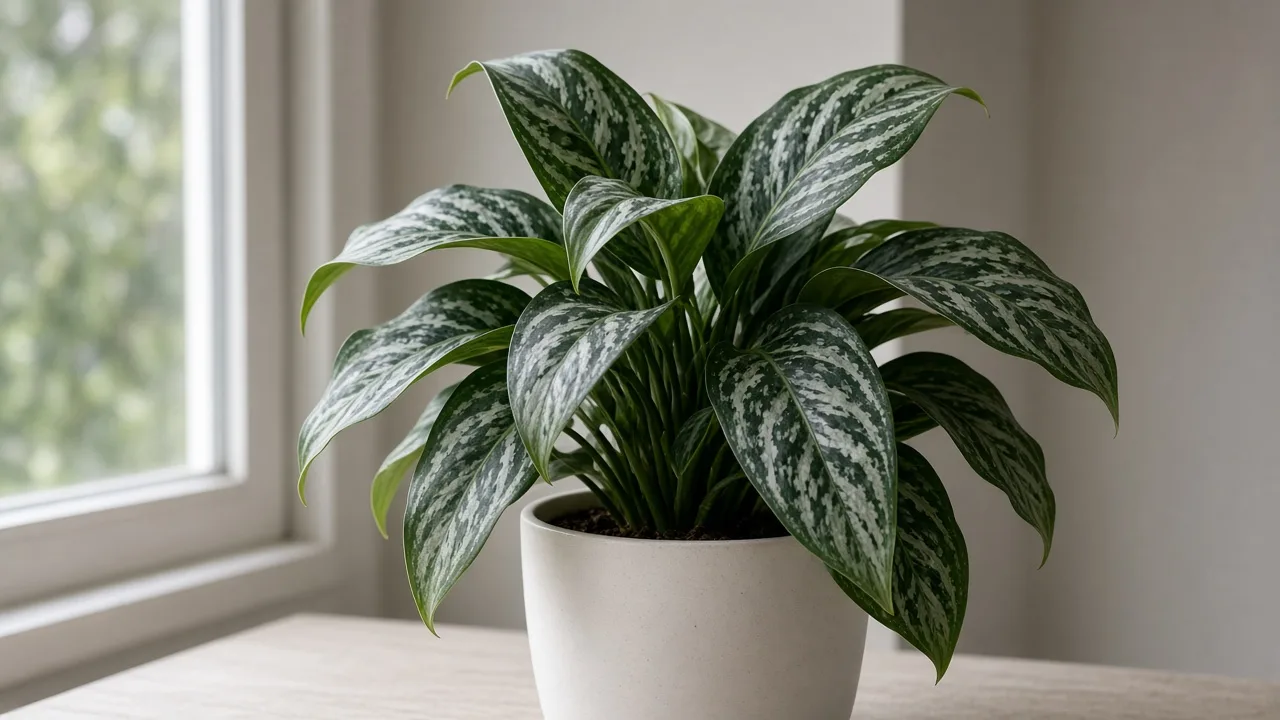
Curling Leaves on Aglaonema Maria: Causes, Checks & Fixes
This guide covers curling leaves on Aglaonema Maria. See also the general Curling Leaves guide, watering, and light pages for this plant.
Curling Leaves on Aglaonema Maria: Causes, Checks & Fixes
Quick answer
Curling leaves on Aglaonema ‘Maria’ mean inward cupping or lengthwise roll on dark green and silver marbled blades. For universal curl mechanics, see our curling leaves guide. On Maria, top-half dry-down and pot weight separate drought curl from overwatered root curl faster than misting ever will.
First step: probe top-half moisture, lift the pot, and inspect new leaf undersides for stippling before you water or spray.
When to use this page vs other Maria guides
| Pattern | Read next |
|---|---|
| Dry top half, light pot | Underwatering |
| Webbing on new leaves | Spider mites |
| Wet heavy pot | Overwatering |
| Long bare stems | Leggy growth |
| Twist, not cup | Distorted leaves |
What curling leaves look like on Aglaonema Maria
Maria’s compact silver-marbled foliage should lie relatively flat. Curl is a turgor or pest signal—not a daily rhythm like prayer plants.
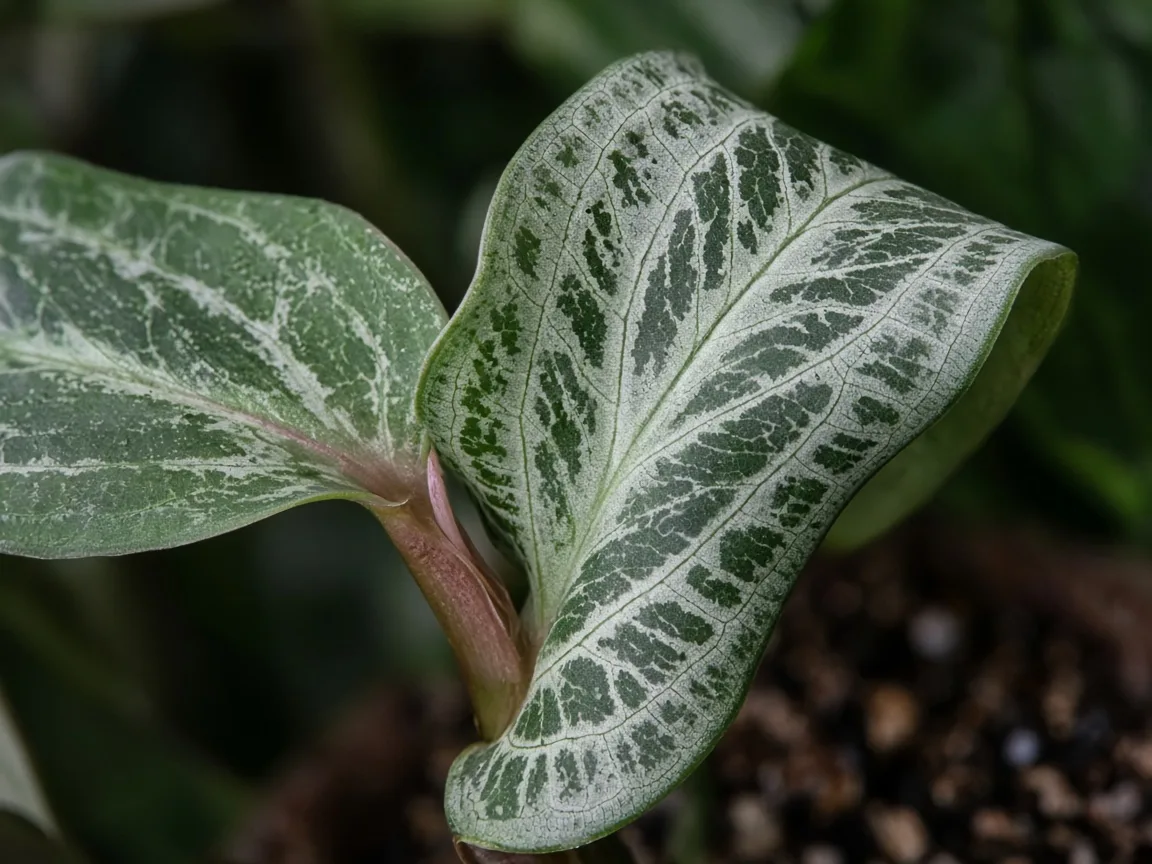
Drought cup on Maria—compare blade thickness with flat lower leaves on the same petiole.
Drought curl (underwatering):
- Lengthwise roll or inward cup on a light, dry pot
- Leaves feel thinner; silver zones look dull
- Often hits outer leaves while crown stays firm
- Common when Maria sits in bright dry air near HVAC vents
Mite curl on new flush:
- Cupped newest tips with fine stippling on silver marbling
- Spider mites thrive in dry warm indoor air
- Webbing where overlapping marbled blades meet at the crown
Wet-wilt curl (root stress):
- Lower leaves curl while mix stays wet and heavy in a dim corner
- Yellowing may accompany curl on oldest blades
- Adding water worsens the curl—roots cannot supply despite wet mix
- See overwatering and root rot if stems soften
HVAC desiccation:
- Curled leaves nearest a heat vent despite moist soil
- Rapid leaf-surface drying outpaces root uptake
Maria does not nyctinastically fold. Persistent curl is always stress—never normal daily movement.
Why Aglaonema Maria gets curling leaves
Maria cups blades before it fully wilts. As a drought-tolerant Aglaonema, it reduces exposed surface area when the top half of mix goes dry—especially in brighter placements where evaporation outpaces a weekly watering habit.
Maria tolerates lower light than pink hybrids—but wet dim corners are dangerous. In low light, the same top-half dry-down may take three weeks. Owners who still water weekly keep the mix soggy. Curl on wet heavy pots is uptake failure, not thirst.
Mites target tender crown flush. Maria’s dense center holds overlapping soft new leaves—ideal habitat for spider mites in winter heat. Stippling plus cup on new growth is pest curl, not moisture stress.
Fluoride can cup tips. Municipal water sensitivity starts as tip curl before margins brown—see brown tips if margins crisp.
Maria marbling and the half-pot curl test
Maria-specific diagnosis:
- Thirst: Dry top half + light pot + firm crown + thin cupped blades = underwatering.
- Wet-wilt: Wet heavy pot + curled lowers + possible yellowing = root stress—hold water.
- Mites: Stippling on newest blade ± webbing = pest—rinse, do not soak.
- Vent: Curl on leaves facing HVAC while mix is moist = move pot, not more water.
In dim rooms, Maria on wet mix curls from roots more often than drought. In bright east windows, drought curl is more common. The half-pot probe stays the same; the calendar does not.
Lookalike symptoms
| Pattern | Check | Likely cause |
|---|---|---|
| Cup + dry mix | Light pot | Underwatering |
| Cup + stippling | Paper tap test | Spider mites |
| Cup + wet heavy pot | Sour smell | Overwatering |
| Limp hang, not cup | Soft stem | Wilting |
| Twist, not cup | Honeydew | Distorted leaves |
How to confirm
- Probe top half of mix—dry vs wet splits thirst from root failure.
- Lift pot weight—light vs heavy confirms the probe reading.
- Tap newest leaves over white paper for moving specks.
- Check vent and window placement against light guide.
- Photo the same leaves in three days—spreading stippling needs pest escalation.
First fix for Aglaonema Maria
If the top half of mix is dry and the pot is light, water thoroughly and drain the saucer within 30 minutes.
If mites are confirmed—rinse undersides weekly; see spider mites.
If the pot is heavy and wet—pause water per overwatering.
Move the plant off the heat vent if leaves curl despite moist mix.
Do not mist curled marbled blades—wet foliage spreads leaf spot on Aglaonema.
Mistakes to avoid
- Misting to “uncurl” leaves
- Watering a wet heavy pot because leaves look thirsty
- Fertilizing curled stressed Maria
- Assuming prayer-plant nyctinasty—Maria does not fold nightly
- Repotting on day one without checking moisture and pests
Recovery timeline
Thirst recovery shows flatter new leaves within one to two weeks. Mite control needs two to three weeks of rinses before clean crown flush.
Severely cupped old blades may stay curled permanently—judge success on new marbled growth.
When to worry on Maria
Escalate beyond basic moisture correction when:
- Crown softens or new marbled leaves collapse while mix is wet—possible root rot.
- Stippling spreads to multiple new blades within a week despite rinsing—see spider mites for treatment escalation.
- Whole plant cups on a chronically heavy wet pot in dim light—unpot and check root firmness before the next watering cycle.
- Curled blades turn brown from margins inward on dry pot despite recent watering—probe deeper; peat may be hydrophobic and repel water at the root zone.
Maria rarely dies from one missed watering if the crown stays firm. It declines faster from weeks of wet dim culture than from a single dry spell.
Prevention
- Water when top half of mix dries—see watering guide.
- Keep low to medium indirect light so the pot dries predictably.
- Rinse crown undersides monthly in winter when heating dries the air.
- Use filtered water if tips cup from fluoride.
- Inspect new growth weekly October through March.
- Quarantine new plants for two weeks before placing near Maria.
Related Aglaonema Maria guides
Conclusion
Curled Maria leaves are top-half moisture or mite signals—weigh the pot before misting.