Distorted Leaves on Aglaonema Maria: Pest Checks
Quick answer
Distorted leaves on Aglaonema Maria—twisted, puckered, or stunted compact marbled blades—usually mean aphids, spider mites, or etiolation in very low light—not fertilizer deficiency. First step: magnify the newest leaves emerging from the crown before feeding.
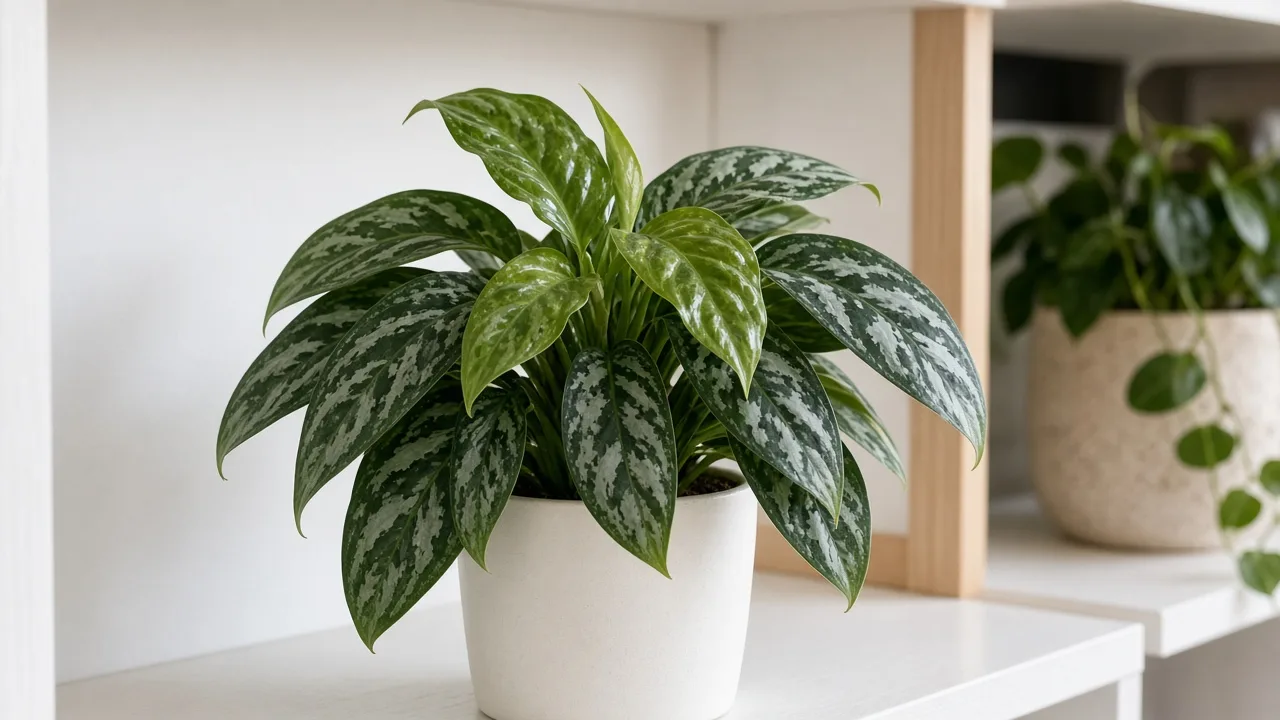
Distorted Leaves on Aglaonema Maria: Causes, Checks & Fixes
This guide covers distorted leaves on Aglaonema Maria. See also the general Distorted Leaves guide, watering, and light pages for this plant.
Distorted Leaves on Aglaonema Maria: Causes, Checks & Fixes
Quick answer
Distorted leaves on Aglaonema ‘Maria’ are puckered, twisted, or undersized dark green and silver marbled blades—not the natural leaf shape. For general distortion mechanics, see our distorted leaves guide. On Maria, the crown flush is the diagnostic hotspot: mature lower leaves can look perfect while the newest tips twist under pest pressure or dim light.
First step: part the foliage at the center and inspect the softest emerging leaves with a 10× magnifier before repotting or feeding.
When to use this page vs other Maria guides
| Pattern | Read next |
|---|---|
| Cupping on dry pot | Curling leaves |
| Small leaves on long stems | Leggy growth |
| Sticky new tips | Aphids |
| Webbing on undersides | Spider mites |
| White cottony patches | Mealybugs |
What distorted leaves look like on Aglaonema Maria
Maria’s compact silver-marbled foliage should emerge broad and flat from a tight crown. Distortion breaks that pattern on new tissue first.
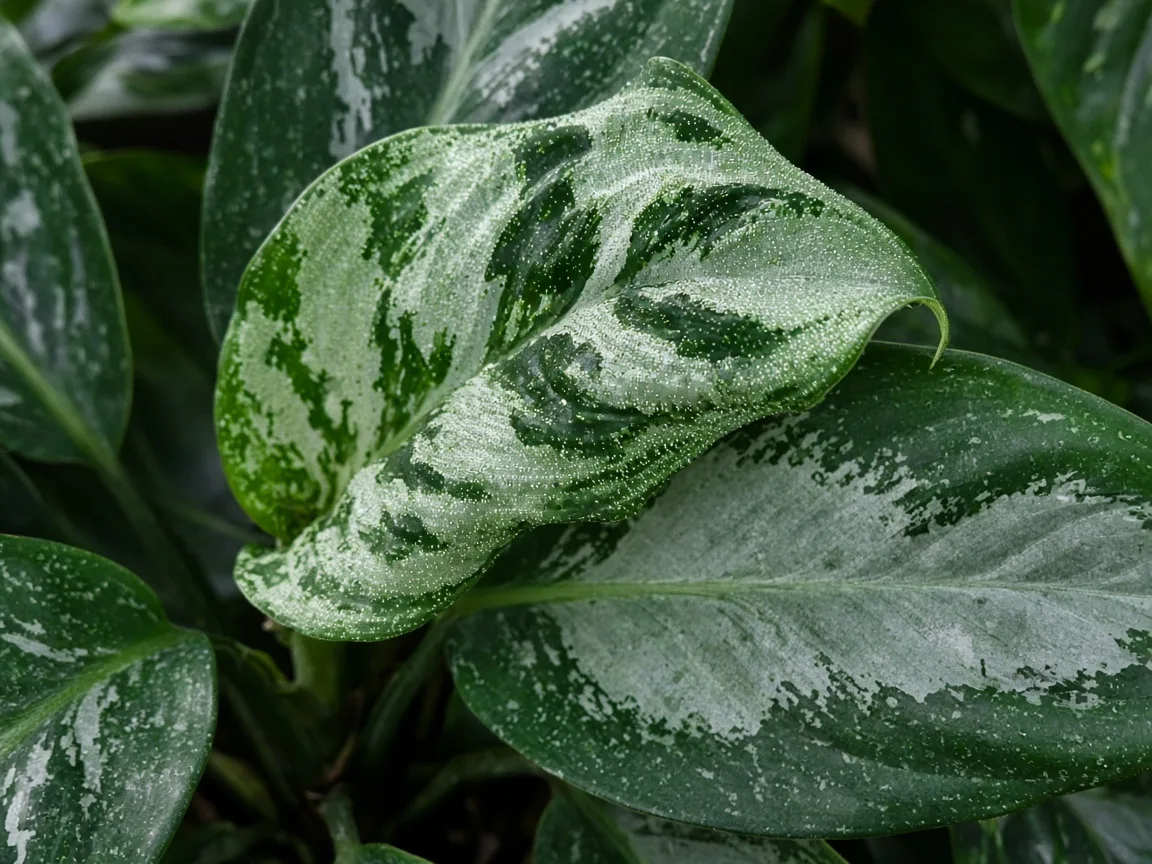
Twisted crown flush on Maria—compare with flat mature blades below on the same plant.
Pest distortion (most common indoors):
- Puckered, crinkled, or twisted newest leaves at the crown
- Fine stippling on silver zones with spider mites in dry heated air
- Soft twisted tips with sticky honeydew and clustered insects = aphids
- Webbing tucked where overlapping marbled blades meet at the center
Etiolation distortion (low light):
- Tiny, narrow, twisted leaves along elongated petioles
- Silver marbling fades; internodes stretch
- Whole plant looks sparse in a dark hallway or far corner—see not enough light
Physical damage distortion:
- Torn or creased new leaves that unfurl crooked after being caught on a shelf edge
- One-off twisted blade with no pests or stretch pattern
Disease distortion (less common):
- Water-soaked puckering with dark margins after wet foliage—see black spots
- Distortion plus yellow limp lowers on wet mix points to roots more than pests—check overwatering
Check newest leaves—damage on fresh growth is urgent. A single old twisted lower leaf with a clean crown is usually mechanical, not systemic.
Why Aglaonema Maria gets distorted leaves
Maria’s crown flush is soft and pest-accessible. New marbled leaves emerge rolled and expand over days. Spider mites and aphids target tender growth on houseplants because cell walls are thin and sap is easy to reach. Maria’s dense crown hides pests until distortion is obvious on the newest blade.
Maria tolerates low light—but not zero light. In very dim offices, the plant stretches toward any light source. New leaves stay small and twisted while petioles lengthen—a distortion pattern that looks like pest damage but shows no stippling or honeydew. Chinese evergreens grow best in low to medium indirect light, not deep shade.
Overwatering rarely twists leaves directly. Chronic wet mix causes yellowing, limp blades, and root stress on Maria—but distortion with firm wet soil still warrants a pest check on new growth before assuming roots alone.
Misting and wet culture can pucker leaves. Wet marbled foliage in stagnant air invites bacterial or fungal leaf spot that puckers tissue as it kills cells—distinct from insect twist but easy to confuse without checking spot margins.
Crown flush inspection on Maria
This four-step check targets Maria’s tight upright crown:
- Part foliage gently at the center without snapping petioles.
- Focus on the softest emerging leaf—the one still partially rolled.
- Flip the underside toward a light source; mites and aphids hide along midribs.
- Compare to mature blades two nodes down—if lowers are flat and only the tip twists, pests or light are the likely cause.
Maria’s silver marbling makes stippling hard to see without magnification. A white paper tap test under new leaves catches moving specks when webbing is absent.
Lookalike symptoms
| What you see | Often confused with | How to tell them apart |
|---|---|---|
| Cupping on dry light pot | Distortion | Uniform drought cup, not twist—see curling leaves |
| Long stems, tiny leaves | Pests | No stippling; whole plant pale in dim spot |
| Sticky twisted tips | Mealybugs | White cotton along petiole bases |
| Puckered spots with dark edges | Mites | Water-soaked lesions = leaf spot |
| One twisted old leaf | Crown pests | Clean crown, no spread |
How to confirm the cause
- Pattern — New growth only, or whole plant including mature blades?
- Magnification — Stippling, insects, webbing, or honeydew on crown flush?
- Light level — Dim placement with stretched petioles? See light guide.
- Soil moisture — Wet heavy pot with yellow lowers? Match to watering guide.
- Progress — Photo crown leaves in three days; spreading twist with stippling = escalate pest treatment.
First fix for Aglaonema Maria
Rinse the undersides of new crown leaves with lukewarm water in the sink, then re-inspect with a magnifier in three days.
If aphids or mites are confirmed, continue weekly rinses and see aphids or spider mites for escalation. If the plant is etiolated in deep shade, move gradually to low to medium indirect light—avoid jumping from a dark corner to direct sun.
Do not fertilize a distorted, stressed Maria. Aglaonema prefers even moisture without chronically wet leaves on active growth—fix pests and light before feeding.
Remove only heavily infested or dead twisted leaves after pests are cleared.
Mistakes to avoid
- Spraying pesticide before confirming pests with magnification
- Fertilizing twisted new growth in a dim wet pot
- Misting the crown to “raise humidity”—wet marbled blades spread leaf spot
- Repotting and pruning heavily on the same day
- Assuming one twisted lower leaf means a dying plant
Recovery timeline
Clean new flat marbled leaves in three to five weeks after pests are cleared and light is adequate. Old twisted blades usually stay misshapen permanently—judge recovery on the next crown flush, not damaged tissue.
Etiolation recovery takes longer: four to six weeks after brighter placement before new leaves reach normal size.
Prevention
- Quarantine new plants for two weeks; inspect Maria’s crown weekly.
- Keep low to medium indirect light per the light guide.
- Avoid misting foliage; maintain average humidity without wetting leaves.
- Rinse crown undersides monthly in winter when indoor heating dries the air.
- Water when top half of mix dries—see watering guide.
Related Aglaonema Maria guides
Conclusion
Distorted Maria leaves are crown pests or low-light stunting—magnify the new flush before repotting, misting, or feeding.