Brown Leaves on Aglaonema Snow White: Water & Light Checks
Quick answer
Brown leaves on Aglaonema Snow White usually mean moisture mismatch, fluoride burn on white margins, or direct sun scorch on pale tissue. First step: probe whether top 2–3 cm of mix is dry or wet, then note if brown is on white zones or whole leaves.
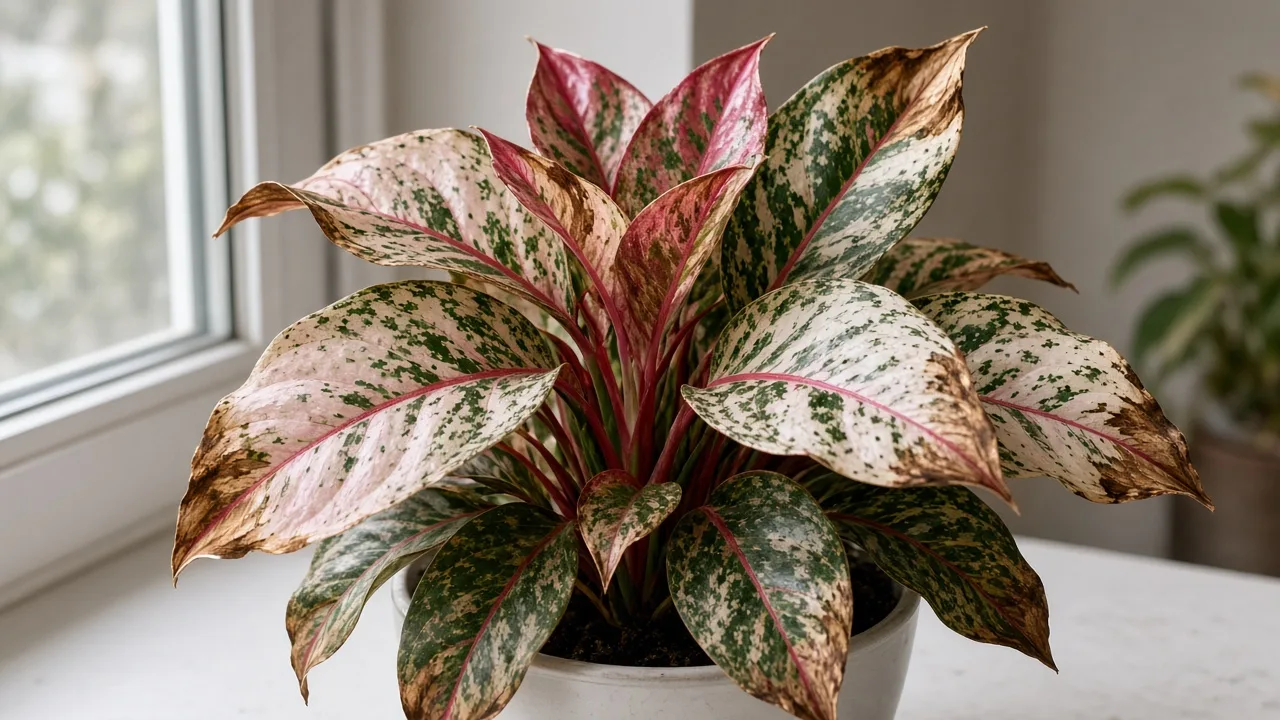
Brown Leaves on Aglaonema Snow White: Causes, Checks & Fixes
This guide covers brown leaves on Aglaonema Snow White. See also the general Brown Leaves guide, watering, and light pages for this plant.
Brown Leaves on Aglaonema Snow White: Causes, Checks & Fixes
Quick answer
Brown leaves on your Snow White Chinese evergreen (Aglaonema ‘Snow White’) are rarely one cause. On this high-variegation cultivar with rose-white, red, and green splashes, brown necrosis usually means moisture mismatch, fluoride on white margins, or direct sun scorch—white zones burn before green. See our brown leaves guide.
First step: touch brown tissue and probe top 2–3 cm of mix. Crispy on dry pot = thirst. Soft on wet pot = root stress. Brown on white window-side sectors = scorch.
When to use this page vs other Snow White guides
| What you see | Read next |
|---|---|
| Brown tips on white margins | Brown tips |
| Wet soil, soft brown lowers | Overwatering |
| Dry light pot, crispy brown | Underwatering |
| Tan patches white zones only | Sun scorch—move back from glass |
| Dark spots with halo | Black spots |
What brown leaves look like on Snow White
Snow White carries broad glossy leaves splashed rose-white, deep red, and green. Brown shows vividly on pale white tissue.
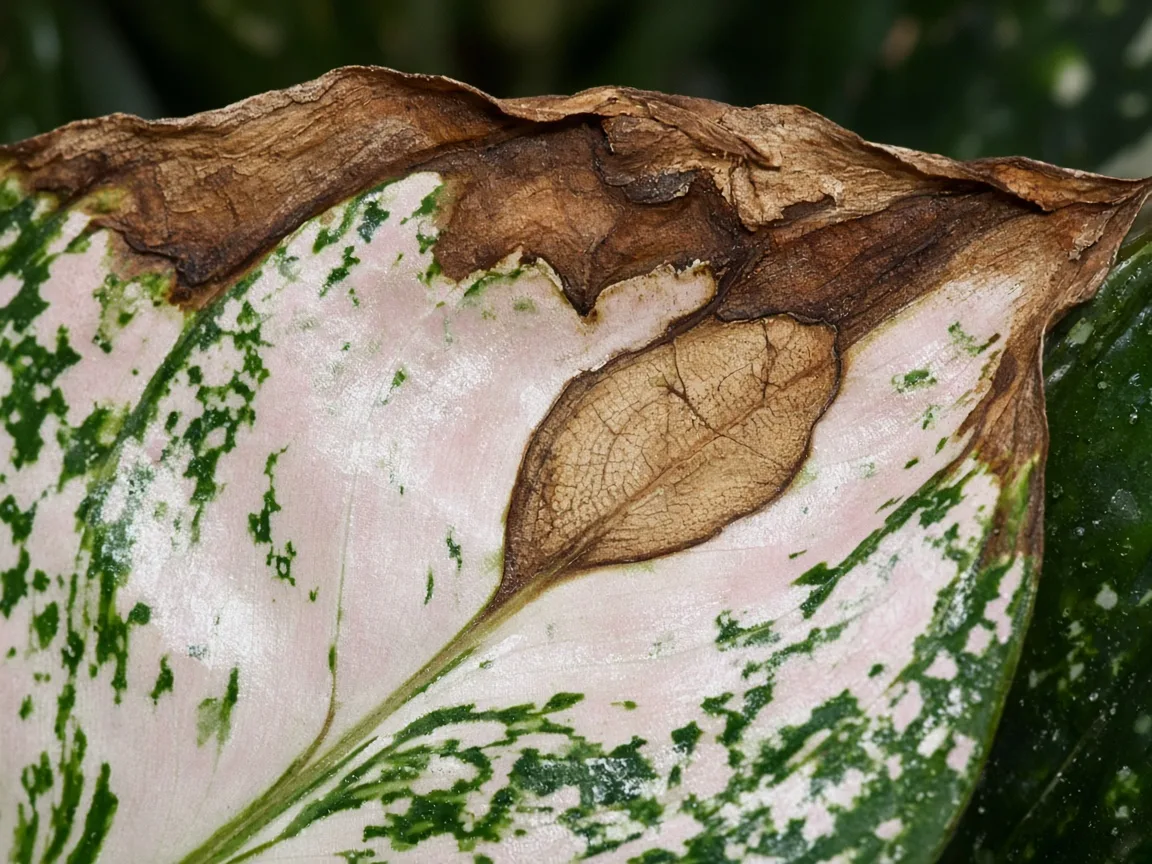
Brown necrosis on Snow White white sector—direct sun and fluoride burn pale tissue before green centers.
Underwatering (crispy brown):
- Crispy brown margins on light dry pot
- Top 2–3 cm bone dry; leaves may curl
- Near HVAC vents in winter
Overwatering (soft brown):
- Soft brown lower leaves on wet mix
- Root stress from anaerobic soil in dim overwatered corners
- See overwatering
Fluoride burn:
- Brown from tips and white margins inward on municipal tap
- White tissue crisps before green—brown tips often precede whole-margin brown
Direct sun scorch:
- Tan to brown patches on window-facing white and rose sectors
- Aglaonema scorches in direct sun—Snow White white zones lack chlorophyll protection
Senescence:
- One or two oldest lowers brown fully at base—rest healthy
Check newest crown leaves—brown on fresh unfurling white tissue is urgent.
Why Snow White gets brown leaves
Chinese evergreens prefer evenly moist, well-drained soil. Snow White needs bright indirect light but not direct sun—owners often place it in a south window for “more light” and scorch white tissue.
White tissue scorches first. Chlorophyll-poor white zones cannot handle direct rays—brown patches appear while green sectors stay intact.
Fluoride on pale margins. Araceae fluoride sensitivity shows on white edges before green centers.
Soft brown on wet mix in hallway is root stress—do not add water when soil is saturated.
Crispy brown on dry pot is thirst—opposite fix.
How to confirm the cause
- Texture: crispy vs soft.
- Probe top 2–3 cm.
- White-sector window-side only = scorch.
- Tips inward on tap water = fluoride.
- Lowers soft on wet soil = roots.
White tissue scorch and burn
Three Snow White-specific details:
Direct sun browns white zones before green—use bright indirect 150–300 fc, not south glass contact.
Fluoride burns pale margins inward on municipal water—filtered or rested water helps.
Soft brown on wet mix in a hallway is root stress—stop watering, improve light for dry-down.
First fix for Snow White
Dry and crispy: soak; empty saucer. See underwatering.
Wet and soft brown: stop water until top 2–3 cm dries. Bright indirect light for faster dry-down.
Fluoride tips: filtered water—brown tips.
Window scorch: move to bright indirect with sheer curtain—never direct afternoon sun on white tissue.
Step-by-step recovery
- Stabilize watering when top 2–3 cm dries.
- Remove fully brown leaves after cause fixed.
- Watch three to four weeks for clean variegated new leaves.
- No fertilizer until new leaves firm two weeks.
- Repot if sour soil—root rot.
Lookalike symptoms
| Pattern | Texture | Likely cause |
|---|---|---|
| Crispy, dry pot | Papery | Underwatering |
| Soft lowers, wet pot | Mushy | Overwatering |
| White margins inward | Crispy | Brown tips / fluoride |
| Window white sectors | Tan scorch | Direct sun |
| Dark spots + halo | Soft spots | Black spots |
Mistakes to avoid
- Do not place in direct sun to “help” variegation—white sectors burn while you think you are fixing pale leaves.
- Do not soak soft brown wet plant; saturated peat in a dim hallway is the most common Snow White brown-leaf mistake in apartments.
- Do not ignore fluoride on white margins—rest tap water overnight or use filtered water before assuming thirst.
- Do not water on calendar without probing soil; top 2–3 cm dry-down changes with season and room humidity.
- Do not remove every partially brown leaf at once on a small Snow White—keep green tissue for recovery photosynthesis.
Recovery timeline
Brown tissue permanent—expect clean variegated crown leaves within two to four weeks after fix. Severe root stress six to eight weeks.
How to prevent brown leaves next time
- Bright indirect 150–300 fc—no direct sun
- Water when top 2–3 cm dries
- Filtered water for white-margin burn
- Empty saucers within 30 minutes
How to prevent brown leaves next time
Match water to dry-down, not a calendar: probe the top 2–3 cm of mix and water only when dry. Use filtered or rested tap water if margins crisp from fluoride—Snow White’s white zones show burn before green tissue does. Keep bright indirect light without direct afternoon sun on the glass; sheer curtains or a foot of setback prevent tan patches on pale blades. Empty saucers within 30 minutes and use well-draining mix so roots never sit in anaerobic peat. In winter, reduce frequency when growth slows—cold wet soil browns lower leaves from root stress faster on this cultivar than on green Silver Bay types in the same room.
When to worry
- Crown brown and soft with wet soil
- Mushy base or sour smell
- Scorch spreading despite moving plant—check if still getting direct rays
Related Snow White guides
Conclusion
Brown Snow White leaves are moisture, water quality, and sun exposure problems—white zones need bright indirect light without direct burn and correct dry-down.