Pale Leaves on Aglaonema Snow White: Light & Root Checks
Quick answer
Pale leaves on Aglaonema Snow White usually mean too little light reverting rose-white to green, or wet soil in a dim corner stressing roots. White zones lack chlorophyll and need more light than green cultivars. First step: probe whether top 2–3 cm of mix is dry or wet.
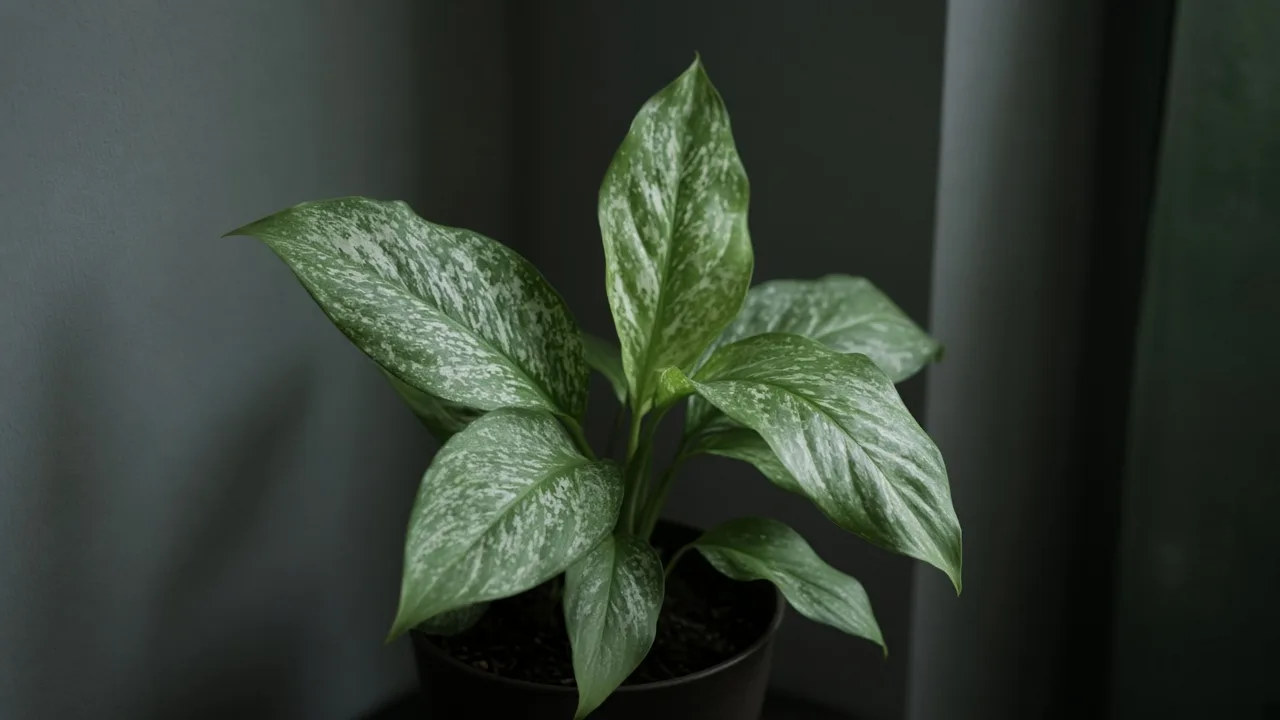
Pale Leaves on Aglaonema Snow White: Causes, Checks & Fixes
This guide covers pale leaves on Aglaonema Snow White. See also the general Pale Leaves guide, watering, and light pages for this plant.
Pale Leaves on Aglaonema Snow White: Causes, Checks & Fixes
Quick answer
Pale leaves on your Snow White Chinese evergreen (Aglaonema ‘Snow White’) are almost always too little light reverting rose-white splashes to plain green, or wet soil in a dim corner stressing roots. Unlike green cultivars, Snow White’s white zones lack chlorophyll and need bright indirect light at 150–300 fc to hold variegation. See our pale leaves guide for general causes.
First step: feel leaves and probe top 2–3 cm of mix. Soft pale limp blades on wet soil = root stress. Firm pale green with lost white splashes = light.
When to use this page vs other Snow White guides
| What you see | Read next |
|---|---|
| Deep shade, lost white splashes | Not enough light |
| Wet soil, soft pale leaves | Overwatering |
| Oldest leaves pale first | Nitrogen deficiency |
| Yellow not pale | Yellow leaves |
| Fine stippling | Spider mites |
What pale leaves look like on Snow White
Snow White carries broad glossy leaves splashed rose-white, deep red, and green. Pale color means lost variegation or root stress—not generic “sick plant.”
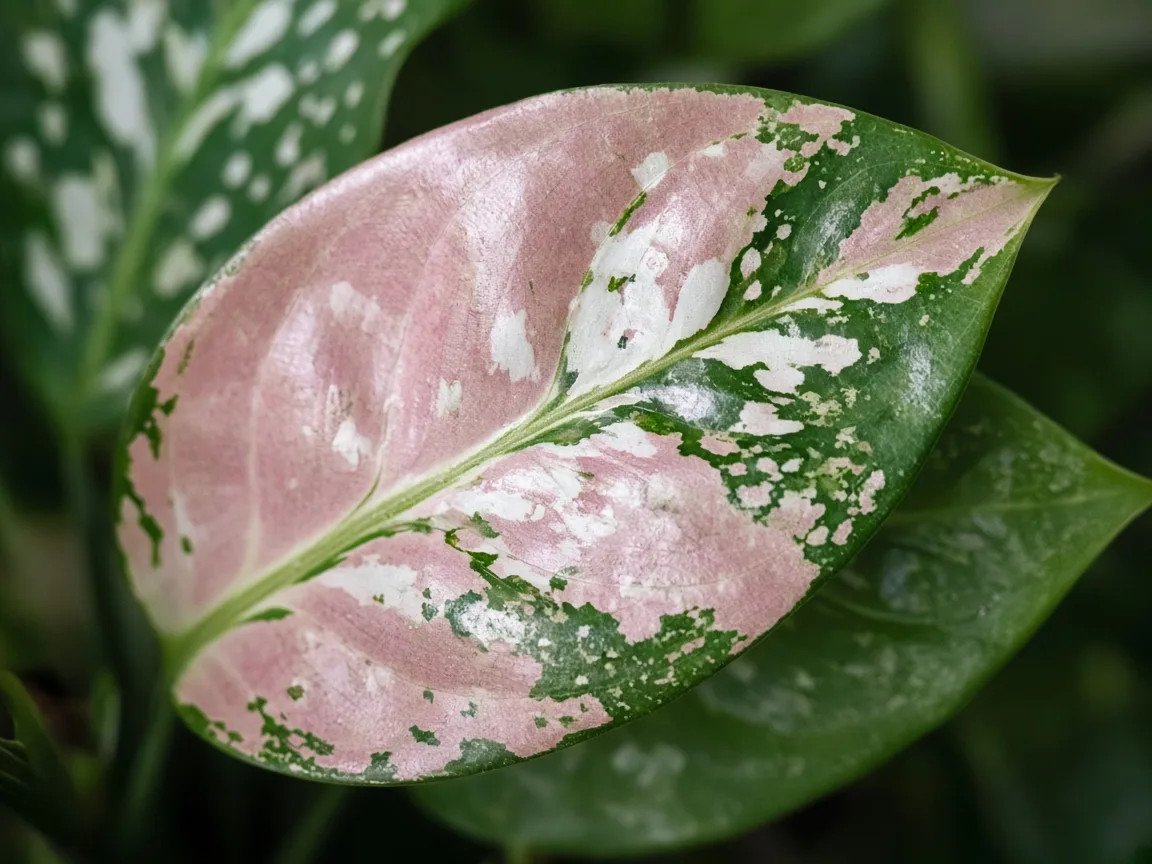
Washed rose-white sectors on Snow White—deep shade reverts splashes to plain green within weeks.
Low light reversion (most common):
- Rose-white and red splashes fade to uniform pale green
- Long thin petioles reaching toward light
- Newest leaves may show less white than when plant was purchased
- Common when kept like a green Aglaonema in a dim hallway
- White sectors bleach or disappear first—green sectors last longer
Root stress from overwatering:
- Pale soft limp leaves on chronically wet mix
- Top 2–3 cm stays wet for days in a dim room
- Pattern washes dull rather than bright
- Lower leaves affected before crown
- Overwatered pale leaves feel soft; thirsty pale leaves feel thin and dry
Nitrogen deficiency (after water ruled out):
- Oldest lower leaves pale yellow-green; new growth relatively greener
- Slow growth months without feed
Spider mite stippling:
- Fine pale dots on white tissue—mites in dry heated air
Check newest crown leaves—pale unfurling tissue with soft texture = urgent root stress.
Why Snow White gets pale leaves
Chinese evergreens prefer evenly moist, well-drained soil and warm indoor temperatures. Snow White is not a low-light plant despite the genus reputation—white tissue needs more photosynthetic support from green sectors and brighter light.
Deep shade reverts variegation within weeks. Rose-white to plain green is the hallmark of insufficient light—not a disease.
Treated like Silver Bay in dim offices. Owners buy Snow White for color then place it where green cultivars survive. White zones cannot sustain splashes without bright indirect light.
Low-light overwatering trap. Wet soil in dim rooms deprives roots of oxygen—pale soft leaves before yellowing.
Direct sun bleaches white zones. Too much sun also pale-bleaches white tissue—different from shade reversion; look for scorch on window side.
How to confirm the cause
- Texture. Soft limp = wet roots. Firm pale = light.
- Variegation loss pattern. Lost white/red splashes uniformly = light. Dull wash on wet soil = roots.
- Probe top 2–3 cm per watering guide.
- Light meter or placement. If you cannot read comfortably without a lamp, Snow White is too dim—aim for 150–300 fc bright indirect.
- Undersides for mites if stippled, not uniformly pale.
Snow White losing white splashes
Three cultivar-specific details:
Deep shade reverts rose-white to plain green within weeks—faster than on Silver Bay.
Move to bright indirect—not direct sun—to hold variegation without scorching white tissue.
Overwatered pale leaves feel soft; thirsty pale leaves feel thin and dry—opposite fixes.
First fix for Snow White
If splashes faded and soil is dry: move to bright indirect light 150–300 fc—east window or several feet from south glass with sheer curtain.
If soil wet and leaves soft: stop water until top 2–3 cm dries. See overwatering.
Do not fertilize until light and moisture stable two weeks.
Step-by-step recovery
- Relocate to bright indirect over a week—never direct afternoon sun on white zones.
- Stabilize watering when top 2–3 cm dries.
- Watch three to five weeks for rose-white splashes on new leaves.
- Do not fertilize until new leaves show firm variegation two weeks.
- Repot only if mix never dries—see soil guide.
Lookalike symptoms
| Pattern | Texture | Likely cause |
|---|---|---|
| Lost white splashes, long petioles | Firm | Not enough light |
| Pale soft, wet pot | Limp | Overwatering |
| Oldest pale first | Firm new crown | Nitrogen deficiency |
| White bleach window-side | Crispy | Sun scorch—move back |
| Fine dots | Stippled | Spider mites |
Mistakes to avoid
- Do not keep Snow White in a hallway “because Aglaonema tolerates low light.”
- Do not fertilize pale plant in dim wet corner.
- Do not move to direct sun to “fix” pale—scorches white tissue.
- Do not confuse sun-bleached white with shade reversion—check window proximity.
Recovery timeline
Existing leaves may not fully regain splashes—judge by new growth. Expect rose-white color on crown leaves within four to six weeks in bright indirect light. Root stress recovery may take six to eight weeks.
How to prevent pale leaves next time
- Bright indirect 150–300 fc from day one
- Water when top 2–3 cm dries
- Rotate monthly
- Do not place with green-only Aglaonema care assumptions
How to prevent pale leaves next time
Snow White is not a low-light office plant despite the Aglaonema name. Hold white color by giving bright indirect light year-round—an east window, a south or west window behind sheer curtain, or a full-spectrum LED 12–18 inches above the crown. Water when the top 2–3 cm of mix dries; a heavy wet pot in shade will pale leaves from root stress even if light is technically adequate. Rotate the pot monthly so all sides receive even light and variegation stays balanced. Do not fertilize on a calendar until new leaves show strong rose-white color for two weeks. Compare new flush color weekly—slow greening over a month means the plant needs more light, not more feed.
When to worry
- Crown pale soft with wet soil—root rot
- Webbing on neighbors—mites
- Entire plant green within one month of purchase—likely already in too dim a shop display
Related Snow White guides
Conclusion
Pale Snow White leaves are light and root-stress signals—white zones need bright indirect light and correct dry-down before fertilizer.