Curling Leaves on Chinese evergreen Aglaonema: Thirst &
Quick answer
Curling leaves on Aglaonema usually trace to dry soil, spider mites on new flush in heated air, or root uptake failure in a wet heavy pot. First step: probe whether top 2 inches of soil is dry or wet and inspect the newest leaf undersides for webbing.
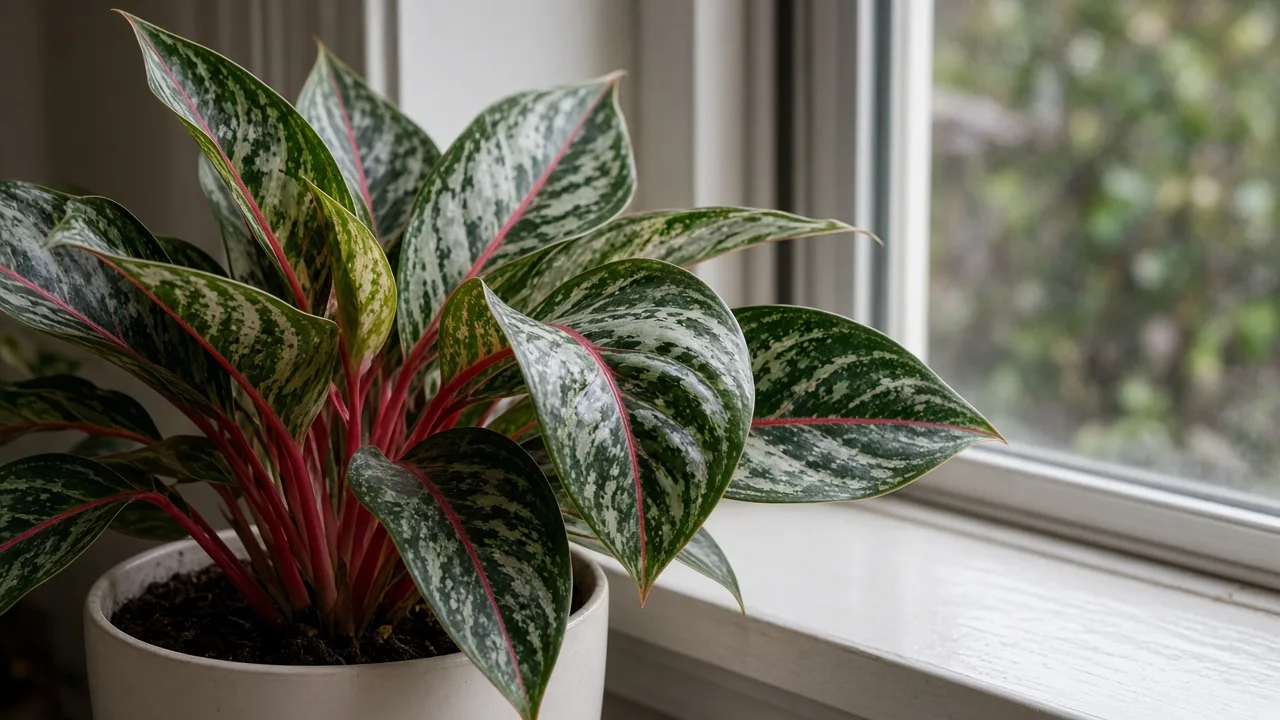
Curling Leaves on Aglaonema: Causes, Checks & Fixes
This guide covers curling leaves on Aglaonema. See also the general Curling Leaves guide, watering, and light pages for this plant.
Curling Leaves on Aglaonema: Causes, Checks & Fixes
Quick answer
Curled leaves on Aglaonema mean the plant is losing turgor on lance-shaped leaves patterned in green, silver, and red—usually from dry soil, spider mites in heated air, or roots that cannot drink in a wet pot. For universal curl mechanics, see our curling leaves guide. On Chinese evergreen, top 2 inches of soil moisture and new-growth inspection narrow the cause fast.
First step: probe top 2 inches of soil and inspect the newest leaf undersides for stippling or webbing.
When to use this page vs other Chinese evergreen guides
| Pattern | Read next |
|---|---|
| Dry top 2 inches of soil | Underwatering |
| Webbing on new leaves | Spider mites |
| Wet heavy pot | Overwatering |
| Twisted new tips | Distorted leaves |
| Faded pattern, flat leaves | Pale leaves |
What curling leaves look like on Chinese evergreen
Aglaonema carries lance-shaped leaves patterned in green, silver, and red typical of Chinese evergreen. Curl shows differently on silver-green blocks on cultivars like Silver Bay and Maria than on solid-green houseplants.
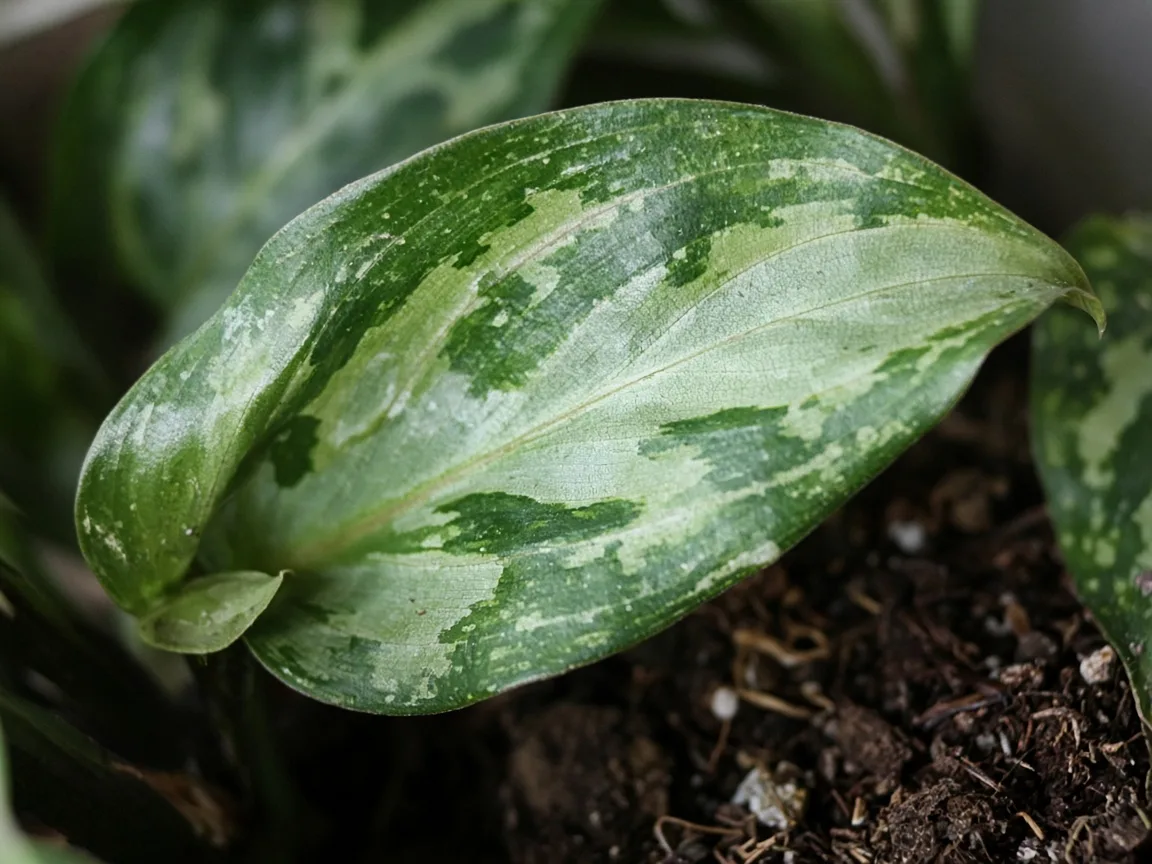
Cupped leaf tissue on Chinese evergreen—compare turgor with firm lower leaves on the same stem.
Drought curl:
- Lengthwise roll when top 2 inches of soil is dry and the pot feels light
- Leaves feel thinner; pale zones may crisp first on variegated cultivars
Mite curl on new flush:
- Cupped tips with fine stippling on tender new growth in dry winter air
- Webbing tucked where lance-shaped leaves overlap at the crown
Root-stress curl:
- Lower leaves curl while soil stays wet and the pot feels heavy
- Often follows weeks of watering on a calendar in low to medium indirect light
HVAC desiccation:
- Curled leaves nearest a heat vent despite moist soil—rapid leaf-surface drying
Why Chinese evergreen gets curling leaves
Chinese evergreen cups leaves before it droops. Aglaonema stores little water in thin stems compared with succulents—top 2 inches of soil dry-down is the primary check.
Mites concentrate on variegated new growth. Pale zones dry fastest near winter sun and heating vents. Spider mites thrive in dry warm conditions on overlapping lance-shaped leaves patterned in green, silver, and red.
Wet soil blocks uptake. In low to medium indirect light, Chinese evergreen uses water slowly. Chronic sogginess causes curl that looks like thirst—adding water worsens it. See root rot if stems soften.
HVAC desiccation curls leaves nearest a heat vent even when soil is moist—the leaf surface dries faster than roots can supply water.
Chinese evergreen does not nyctinastically fold like prayer plants. Persistent curl is always a stress signal, not a daily rhythm.
Lookalike symptoms
| Pattern | Check | Likely cause |
|---|---|---|
| Cup + dry soil | Light pot | Underwatering |
| Cup + stippling | Paper tap test | Spider mites |
| Cup + wet heavy pot | Sour smell? | Overwatering / root stress |
| Twist, not cup | Silver streaks | Distorted leaves |
| Pale, not cupped | Dim placement | Pale leaves |
How to confirm
- Weigh the pot or probe top 2 inches of soil—dry vs wet splits thirst from root failure.
- Tap newest leaves over white paper for moving specks.
- Check placement for vents and winter window chill below 15°C (60°F).
- Inspect neighbors on the same shelf for matching stippling.
First fix for Chinese evergreen
If top 2 inches of soil is dry, water thoroughly and drain the saucer within 30 minutes. If mites are confirmed—rinse undersides weekly; see spider mites. If the pot is heavy and wet—pause water per overwatering.**
Move the pot off the heat vent if leaves curl despite moist soil—fix the microclimate before adding water.
Mistakes to avoid
- Do not mist curled leaves—wet foliage spreads fungal problems on Chinese evergreen.
- Do not fertilize a curled stressed plant without fixing moisture or pests first.
- Do not assume calendar watering—Chinese evergreen in low to medium indirect light may need less water in winter.
- Do not confuse curl with distorted leaves—twisted tips point to thrips or chill, not drought.
Recovery timeline
Correct moisture or mite control shows clean new leaves in two to four weeks. Severely cupped blades may stay curled. Chinese evergreen grows slowly—judge success on the next crown flush, not old tissue.
Prevention
- Water when top 2 inches of soil dries—see watering guide.
- Keep low to medium indirect light per the light guide.
- Rinse undersides monthly in winter when indoor heating dries leaf surfaces.
- Avoid misting foliage; use humidity trays instead.
- Inspect new flush weekly October through March.
Related Chinese evergreen guides
Conclusion
Curled Chinese evergreen leaves are a moisture or mite signal—probe top 2 inches of soil before misting or repotting.