Curling Leaves on Ajwain Plant: Causes, Checks & Fixes
Quick answer
Curling leaves on ajwain plant (Plectranthus amboinicus) usually mean water stress—dry soil with firm inward cupping, or wet soil with limp curl from failing roots—or pests on fuzzy new growth. First step: probe the top 2–3 cm of mix, squeeze the square stems at the soil line, and crush one leaf to check aroma before watering, moving, or spraying.
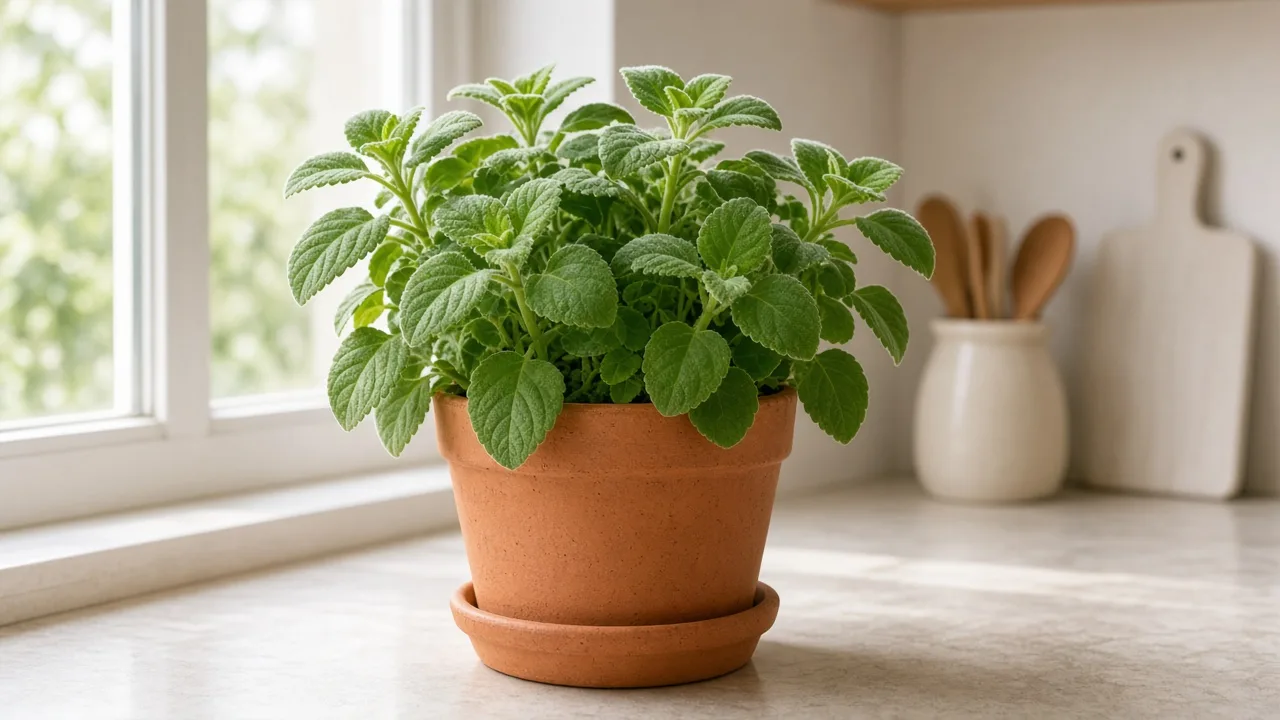
Curling Leaves on Ajwain Plant: Causes, Checks & Fixes
This guide covers curling leaves on Ajwain Plant. See also the general Curling Leaves guide, watering, and light pages for this plant.
Curling Leaves on Ajwain Plant: Causes, Checks & Fixes
Quick answer
Plectranthus amboinicus—the ajwain plant, Indian borage, or Cuban oregano sold as a kitchen windowsill herb—is a mounding, spreading semi-succulent with thick fuzzy leaves on square, water-storing stems. Curling is a stress signal, not one diagnosis. On this species, the leading triggers are underwatering (inward cup on firm leaves), overwatering or root stress (limp curl with wet soil), spider mites and aphids on tender new growth, and hot glass or AC drafts on tropical foliage.
NC Extension describes the leaves as fleshy and velvety on thick square stems and notes the plant prefers a hot, dry location for best performance while full sun can burn the leaves. That combination—succulent tissue that curls when thirsty, but intolerant of chronic wet mix—drives most indoor cases. Full species context: ajwain plant overview.
First step: probe the top 2–3 cm of mix, squeeze the square stems at the soil line, and crush one leaf between your fingers. Dust-dry soil with a lightweight pot and slightly soft leaves means water deeply after confirming dryness. Wet, cool mix with limp curl and soft stems means hold water and inspect roots—not add more. Strong oregano-thyme aroma on firm new growth supports a moisture or placement fix; weak scent plus stippling on fuzzy undersides means check pests before watering again.
For how leaf curl works in general, see our curling leaves symptom guide. On ajwain plant, the pattern usually shows up on paired fuzzy leaves along sprawling square stems—often after a skipped watering, a winter overwatering stretch, or mites hiding in leaf hairs.
What curling leaves look like on ajwain plant
Healthy ajwain leaves are ovate, thick, and velvety, arranged in opposite pairs at right angles along square stems. They lie relatively flat with a strong oregano-thyme fragrance when crushed. Stress curling breaks that flat profile in ways you can read from leaf texture, stem firmness, and soil moisture.
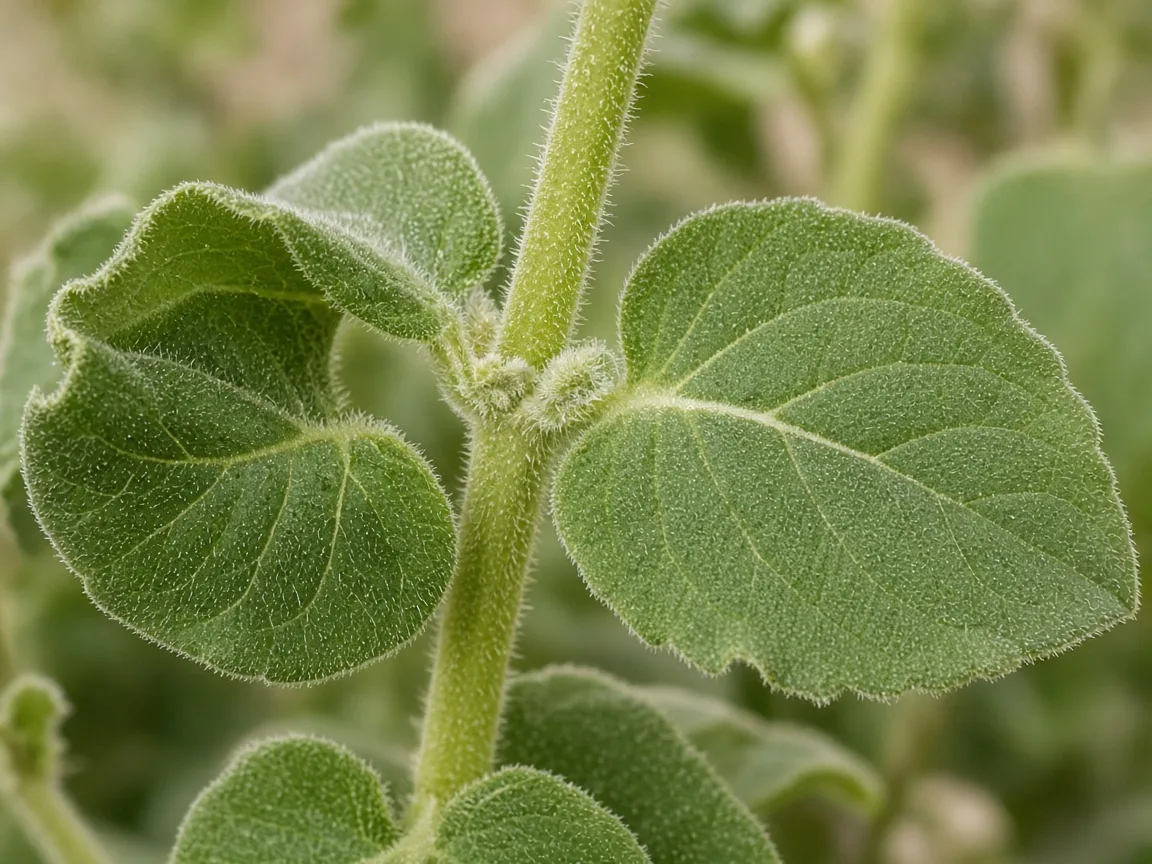
Curling leaf symptoms on ajwain plant—compare cupped fuzzy tissue with flat aromatic leaves on the same stem.
Underwatering (inward cup, firm stems):
- Whole leaf cups inward like a shallow bowl, sometimes with dry, papery edges
- Leaves feel slightly soft but stems at the soil line stay firm when pinched
- Top 2–3 cm of mix is dust-dry; pot feels light for its size
- Aroma may weaken until the plant is watered—overlap with underwatering on ajwain plant
Overwatering and root stress (limp curl, wet soil):
- Leaves curl downward or limply inward even though mix is wet or cool at depth
- Square stems at the soil line feel soft or mushy—a key ajwain-specific warning sign
- Pot stays heavy days after watering; lower leaves may yellow—see overwatering on ajwain plant
- Fungus gnats may hover near the surface when topsoil stays damp
Pest curl (new growth twisted, stippling):
- Newest fuzzy leaves fail to open flat; edges curl and look distorted or silvery
- Fine webbing, sticky residue, or tiny moving specks on leaf undersides and stem tips
- NC Extension lists spider mites and mealybugs as common problems on this species—mites especially hide in the dense leaf hairs
- Confirmed pests: spider mites, aphids, thrips
Heat and light stress (one-sided curl):
- Curl or crisping on the window-facing side only after bright midday sun
- Stems stay firm; soil moisture may be normal
- Often follows moving the pot to hot south-facing glass without acclimation
Cold draft curl (sudden patchy cup):
- Leaves touching cold glass, an AC vent, or a frequently opened door cup suddenly
- Tissue may look water-soaked along veins before curling
- Common on winter kitchen windowsills when soil dries slowly and owners compensate with extra water
Worry when curl spreads to new center growth, pairs with wet soil and soft square stems, or hits many leaves within a week—not when one older leaf cups slightly on an otherwise firm, aromatic plant.
Reading curl on fuzzy leaves and square stems
Ajwain is not a thin-leafed tropical foliage plant. Its fleshy, velvety leaves store water and its stems are thick and square—diagnostic handles other herbs do not offer.
The square-stem squeeze: Pinch the stem where it enters the mix. Firm square stems with dry top mix support a deep watering fix. Soft or spongy stems with wet mix mean root stress—do not water for thirst. This single check separates the two most common curl causes faster than looking at leaves alone.
The aroma test: Crush a healthy leaf on the same plant—it should smell strongly of oregano and thyme. Weak or absent scent on new growth while leaves curl often tracks underwatering or pest damage to tender tissue, not a missing fertilizer dose.
Paired-leaf pattern: Ajwain leaves emerge in opposite pairs along sprawling stems. When both leaves in a pair curl the same way, think root-zone moisture or ambient stress. When only the newest pair twists while older leaves stay flat, inspect pests and heat at the growing tip first.
Kitchen windowsill stress that curls ajwain
Ajwain is often grown where care mistakes stack quickly: a bright kitchen sill above the sink, next to a stove or kettle, or beside an AC vent.
Harvest and pruning gaps: Heavy harvesting of outer stems without watering adjustment can leave the remaining crown dry unevenly. The center may curl from thirst while outer stems still look plump—check moisture at the main root ball, not only at the pot edge.
Winter slow dry-down: In cool, dim months, a pot that dried in five days in summer may stay damp two weeks. Watering on the summer schedule while growth slows is a common path from curl to root rot on ajwain plant. UF/IFAS notes Cuban oregano needs well-drained soil and only occasional irrigation—the same discipline applies indoors.
Hot glass vs. dim corner: Too much direct sun curls and burns fuzzy leaves; too little light slows water use so normal watering becomes overwatering. Placement detail: ajwain plant light guide.
Why ajwain plant gets curling leaves
Water stress is the most common trigger
Leaves curl when cells lose turgor—the same mechanism behind wilting. Ajwain’s semi-succulent tissue makes both extremes visible.
Underwatering: When the top 2–3 cm stays dry too long, thick leaves cup inward to reduce water loss. Owners sometimes read soft fuzzy leaves as “always hydrated” and skip checks—until several pairs curl at once. See ajwain watering guide for the dry-down rule.
Overwatering: NC Extension tags this species as intolerant of wet soils. Saturated mix suffocates roots; damaged roots cannot move water, so leaves curl and yellow even when soil feels damp. Chronic overwatering reduces oxygen at roots and is a frequent indoor trigger on fast-draining herbs grown in heavy peat mix.
Spider mites, aphids, and thrips on fuzzy growth
The velvety leaf surface traps dust and hides spider mites—NC Extension lists them among common pests. Mites cause stippling, webbing, and cupped new leaves in dry heated air. Aphids cluster on tender stem tips and curl young leaves while excreting sticky honeydew. Thrips scar expanding tissue so leaves open twisted and silvery. Always confirm pests before spraying a plant you may also harvest for cooking.
Heat, sun, and cold drafts
Full sun can burn the leaves on this herb; hot window glass produces one-sided curl and crisp edges as a self-protection response. Cold exposure below about 15°C (60°F) on tropical foliage disrupts cell function—curl often appears suddenly on leaves touching cold glass while roots in wet soil make recovery slower.
Low humidity in heated rooms
Ajwain tolerates average indoor humidity but winter heating and constant AC dry leaf margins. Edges may curl while the center stays green—especially on new pairs unfurling in dry air even when roots are adequately watered. Overlap with low humidity on ajwain plant when edges crisp without wet soil or pests.
How to confirm the cause
Work through this inspection in order:
- Moisture at 2–3 cm depth — Dust-dry and lightweight pot = drought curl. Cool and damp at your fingertip = hold water.
- Square-stem firmness at the soil line — Firm supports watering or light fixes. Soft or mushy confirms root stress—inspect roots the same week.
- Which leaves curl — Scattered older leaves with dry soil = underwatering. Multiple pairs + wet soil = overwatering. Only newest tips twisted = pests or heat on growing points.
- Pot weight trend — Getting lighter daily while leaves cup = needs water. Staying heavy for a week = stop watering and check drainage.
- Pest inspection — Use a hand lens on fuzzy leaf undersides, stem tips, and new pairs. Tap a suspect leaf over white paper; mites crawl slowly, thrips dart.
- Placement — Curl on window side only = excess direct sun. Sudden cup on leaves touching glass = cold draft. Dim corner with heavy wet pot = low light slowing dry-down.
- Root spot-check (if wet soil + spreading curl + soft stems) — Gently slide the plant partway out. Firm pale roots support a dry-down fix. Mushy brown roots confirm rot.
Confirmed underwatering shows dry top mix, firm square stems, and inward cup on multiple leaves. Confirmed overwatering shows wet mix at depth, heavy pot, and soft stems—often with yellowing lower leaves.
First fix for ajwain plant
Make one correction based on what you confirmed—nothing else on day one:
If the top 2–3 cm is dry, stems are firm, and the pot is light: Water thoroughly until runoff exits drainage holes, then empty the saucer within 30 minutes. Leaves often relax within hours when roots are healthy. Do not flood repeatedly—one deep drink, then wait for real dryness.
If the mix is wet, sour-smelling, or stems are soft: Stop watering. Move to brighter indirect light so the pot can dry. If soil has stayed wet more than a week, unpot and trim mushy roots before repotting into fresh gritty mix per ajwain soil guide.
If pests are confirmed on new growth: Isolate the plant away from other herbs. Rinse fuzzy leaf undersides with plain water. Apply insecticidal soap on label intervals if mites or aphids persist—avoid harvesting leaves until the label re-entry interval passes.
Do not fertilize curled leaves. Do not mist heavily as a first response—wet fuzzy foliage in stagnant air invites fungal spotting. Do not repot, harvest heavily, and spray pesticides the same day unless rot is confirmed.
Step-by-step recovery
After the first targeted correction:
- Stabilize placement — Bright indirect light with gentle morning sun; away from hot glass, stove heat, and AC blasts. UF/IFAS recommends partial shade for Cuban oregano—the same logic applies indoors.
- Reset watering rhythm — Water only when the top 2–3 cm dries. Active summer growth may mean every 3–4 days; cool winter often means every two to three weeks—always confirmed by touch.
- Treat pests if confirmed — Repeat rinses and labeled sprays until new growth opens flat for two weeks. Scout weekly—mites rebound fast in dry heated rooms.
- Raise humidity if edges crisp without wet soil — Group plants or use a humidifier when winter air stays below 40% RH; avoid soaking fuzzy leaves nightly.
- Light prune after stability — Pinch distorted tips once new pairs stay flat; see ajwain pruning guide for harvest-friendly shaping.
- Propagate backup if stems soften — Healthy tip cuttings root easily in moist mix—insurance if root rot has advanced.
Lookalike symptoms
| What you see | Often confused with | How to tell apart |
|---|---|---|
| Inward cup, dry top mix, firm stems | Wilting from thirst | Wilting droops the whole stem; drought curl keeps stems upright with cupped blades |
| Limp curl + wet soil + soft stems | Drooping leaves | Drooping can follow either extreme; soft square stems with sour wet mix = root stress first |
| Pale stretched growth + curl | Not enough light | Leggy internodes and weak aroma point to light before pests |
| Crisp brown edges only | Brown tips | Tips-only damage is often salt, scorch, or humidity—not full-leaf cup |
| Twisted new leaves + webbing | Distorted leaves | Distortion without pests may be thrips scarring; confirm with a lens |
Recovery timeline
Severely cupped or pest-distorted leaves rarely flatten fully. Recovery is measured by new growth from the center—firm new fuzzy pairs with strong aroma opening flat.
- Mild drought curl — Leaves often relax within hours to one day after one deep watering when stems are firm.
- Overwatering caught early — Curling may stop within one to two weeks once soil oxygen returns; new pairs emerge in two to three weeks.
- Pest recovery — Expect two to four weeks of clean new growth after treatment; old distorted leaves can be removed once replacements look healthy.
- Advanced root rot — Partial recovery only; if stems keep softening, propagate firm tip cuttings as backup.
Signs of improvement: pot weight drops on a normal schedule, new leaves hold flat shape and aroma, square stems feel firm, curl does not climb toward the center. Signs of worsening: sour smell, soft stems, curl on every new pair, soil that never dries.
What not to do
Do not water more because fuzzy leaves look soft when soil is already wet—that deepens root stress on a semi-succulent herb.
Do not fertilize a curled, stressed plant before moisture and pests are ruled out.
Do not move to blazing south glass to “fix” curl from low light—full sun can burn fuzzy ajwain leaves.
Do not harvest heavily and soak the same day without checking whether the remaining crown was already dry.
Do not ignore mites because leaves look healthy from above—inspect the fuzzy undersides where webbing hides.
How to prevent curling leaves on ajwain plant
- Water on dryness, not calendar — Top 2–3 cm dry before every drink; slow winter dry-down needs a slower schedule.
- Use gritty, fast-draining mix — See ajwain soil guide; avoid oversized pots that stay wet.
- Place for bright light without hot midday glass — Morning sun or bright indirect is safer than all-day south exposure indoors.
- Keep temperatures stable — Above 15°C (60°F); Cuban oregano is frost-tender and needs protection from cold drafts.
- Scout fuzzy new growth weekly — Mites and aphids are easier to stop on one stem than across a sprawling mound.
- Match harvest to watering — After a big harvest session, check moisture at the crown before the next routine drink.
When to worry
Treat curling leaves as urgent when:
- Many leaf pairs curl within a week, not one older pair slowly.
- Soil smells sour or square stems feel soft at the soil line.
- New center growth curls while older leaves also decline.
- Fine webbing or sticky residue spreads despite rinsing.
- The plant collapses despite moist soil—roots may be failing to absorb water.
A single slightly cupped bottom leaf on an otherwise aromatic, firm ajwain with normal dry-down is routine. Widespread curl with wet soil and soft stems is not—inspect roots the same week.
When to use this page vs other Ajwain Plant guides
- Ajwain Plant watering guide — Use for routine moisture checks before assuming curl is the main issue.
- Ajwain Plant problems hub — Browse all common issues on this species.
- Underwatering on Ajwain Plant — Better entry when cupping pairs with dust-dry mix and a light pot.
- Overwatering on Ajwain Plant — Better entry when curl pairs with wet soil and soft square stems.
- Spider mites on Ajwain Plant — Better entry when new growth is stippled or webbed, not just cupped.