Distorted Leaves on Ajwain Plant (Indian Borage): Causes &
Quick answer
Distorted leaves on ajwain (Indian borage, Plectranthus amboinicus) are usually puckered, twisted, or undersized blades on the softest new growth at stem tips—most often from aphids, spider mites, or thrips feeding during expansion, not a mysterious herb disease. First step: rinse the newest fuzzy leaf clusters and square stem terminals with lukewarm water, then magnify the undersides in three days before repotting or feeding.
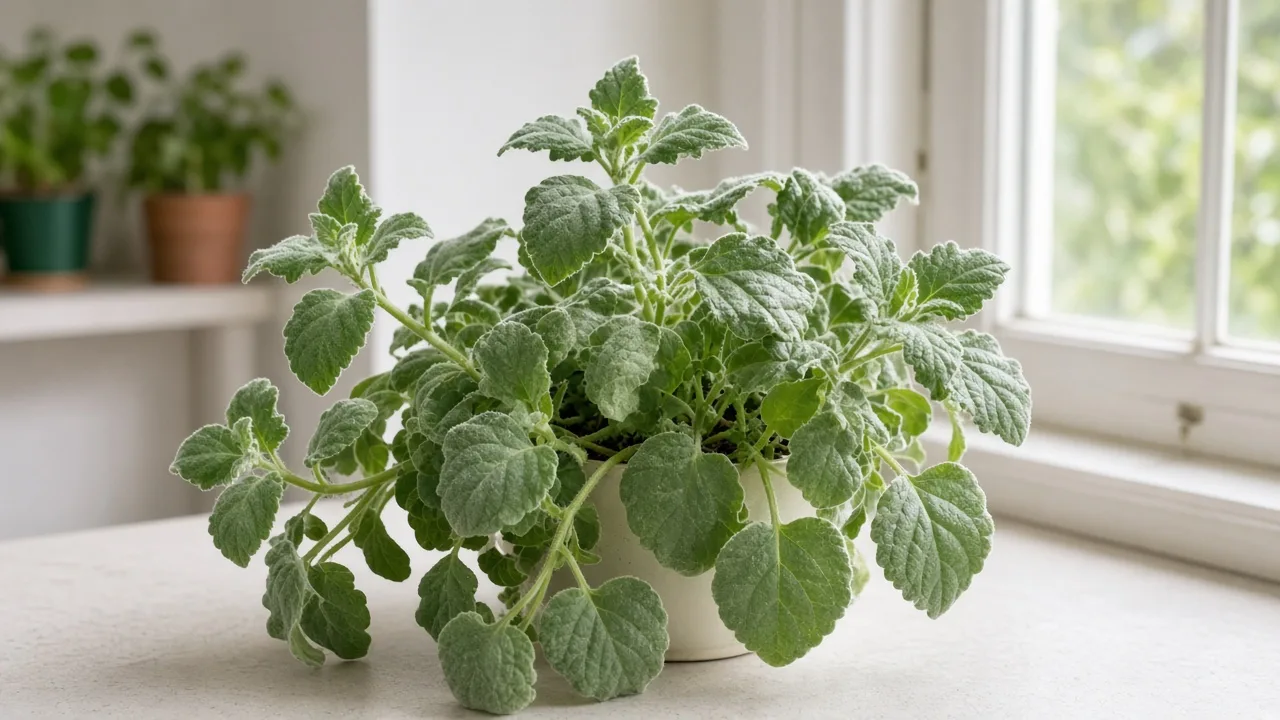
Distorted Leaves on Ajwain Plant: Causes, Checks & Fixes
This guide covers distorted leaves on Ajwain Plant. See also the general Distorted Leaves guide, watering, and light pages for this plant.
Distorted Leaves on Ajwain Plant: Causes, Checks & Fixes
Quick answer
Distorted leaves on ajwain (Indian borage, Cuban oregano, Plectranthus amboinicus) are puckered, twisted, narrowed, or undersized blades on the softest new growth at sprawling stem tips—not random warping on every mature leaf at once. Ajwain Plant overview is a semi-succulent mint-family herb with thick, velvety scalloped leaves and square stems; pests target that fuzzy expanding tissue because cell walls are thin while the leaf is still opening. See our distorted leaves guide for general symptom science; on ajwain, distortion almost always starts on harvest regrowth and monsoon-flush tips while older lower leaves still look normal.
First step: rinse the newest fuzzy leaf clusters and square stem terminals with lukewarm water, then re-inspect with a magnifier in three days before repotting, fertilizing, or spraying.
When to use this page vs other Ajwain Plant guides
| Pattern | Start here | Or route to… |
|---|---|---|
| Twist, puckering, or narrow tips on soft new growth | This page | Aphids, Spider mites, Thrips |
| Whole-leaf upward cup on dry, light pot | Curling leaves | Underwatering |
| Tiny leaves on long bare square stems | Leggy growth | Not enough light |
| Sticky residue on soft tips | Aphids | Whiteflies or Mealybugs |
| Corky bumps on leaf undersides, wet mix | Overwatering | RHS oedema patterns |
| Chewed holes with caterpillars visible | Holes in leaves | Caterpillars |
This page covers twisted, puckered, or misshapen leaf blades. If the whole plant is yellowing from wet soil, start with yellow leaves and watering. If only edges are crisp, see brown tips.
What distorted leaves look like on ajwain
On ajwain, distortion shows on thick, heart-shaped fuzzy leaves still expanding at stem tips—often after you pinched a harvest sprig and triggered soft regrowth. Healthy new blades should open flat with crisp scalloped margins and a matte gray-green velvet surface. Distortion means the blade finishes growth in a twisted, cupped, or crinkled shape that does not flatten out as it hardens.
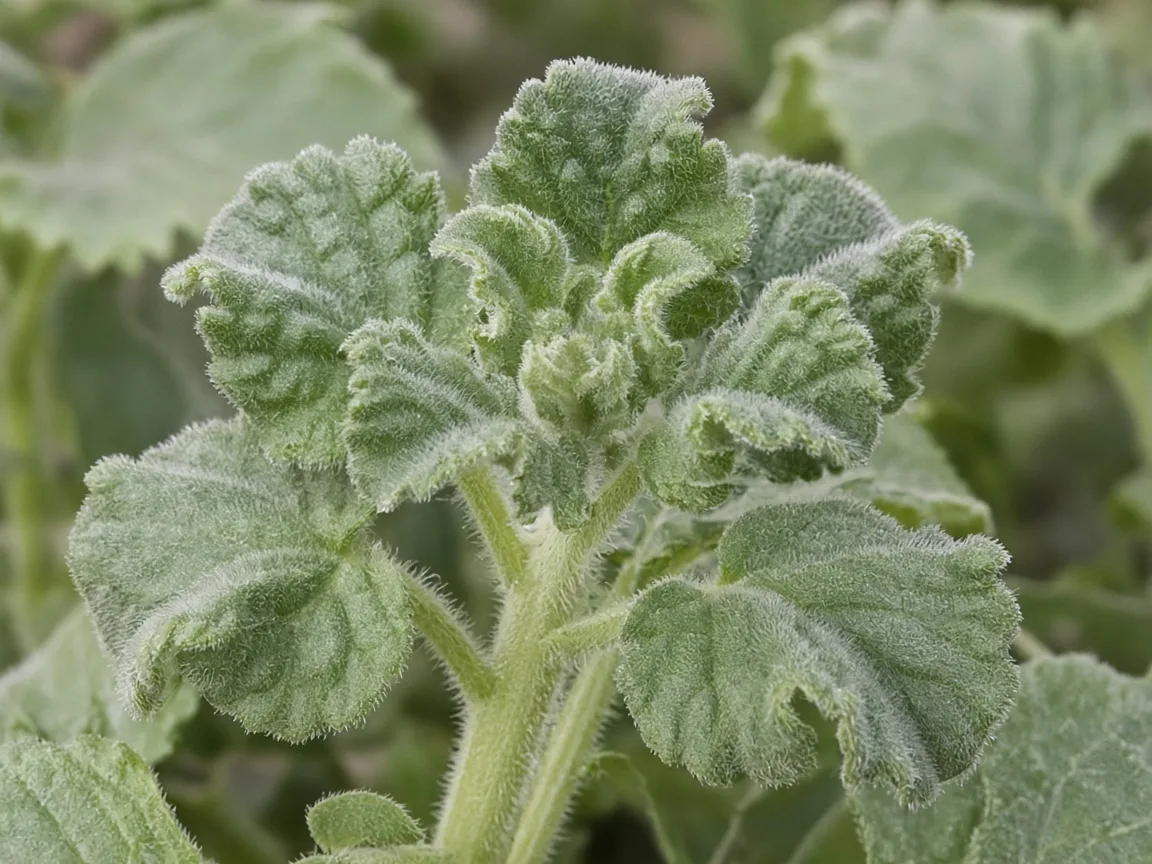
Puckered twisted new growth at an ajwain stem tip—magnify fuzzy undersides before assuming a nutrient problem.
Patterns that help separate causes:
- Aphid clustering — Soft tips twist and pucker with sticky honeydew on fuzzy undersides. RHS notes aphids feed on soft shoots and excrete honeydew that can lead to sooty mold.
- Spider mite stippling — Fine pale dots on velvety upper surfaces, puckered new tips, sometimes faint webbing between leaf and square stem. NC State lists spider mites among common problems on Indian borage.
- Thrips scarring — Silver-gray streaks or scarred patches on expanding blades; new leaves may look ruffled or narrow. Route to thrips when distortion rides with silvery tissue, not simple drought cup.
- Mealybugs at axils — White cottony clusters where square stems branch; adjacent new leaves stay small and distorted. NC State also flags mealybugs on this species.
- Edema puckering — Corky raised bumps on leaf undersides after heavy watering in humid stagnant air—not insects. RHS describes oedema as corky swellings when roots take up water faster than leaves transpire.
The fuzzy tip-growth window (ajwain only)
Ajwain grows fast from square mint-family stems that trail and root at nodes. After harvest pinches or monsoon flushes, the plant pushes multiple soft tips at once. Velvety trichomes that make the leaf aromatic also hide aphids and mites until blades fully expand. Owners who only scan open mature leaves miss damage locked into the tightest unopened fuzzy clusters at terminals—the species-specific place to look is the gray-green spear before scalloped margins flatten.
Why ajwain leaves distort
Pests concentrate on regrowth. Ajwain is harvested by pinching, which constantly produces tender shoots. UC IPM notes that aphids and related sap feeders damage expanding tissue on houseplants, and ajwain’s fast warm-season flushes give them steady food.
Dry winter balconies favor mites. Thick semi-succulent leaves store water, but heated indoor air still stresses foliage plants and speeds mite reproduction when fuzzy tips are not inspected weekly.
Monsoon humidity plus wet mix triggers edema. Ajwain tolerates humid Indian balconies, but stagnant air with constantly moist soil can pucker thick leaves through oedema rather than pests—especially on pots that never dry in shaded corners. Cross-check soil and light before spraying insects you have not confirmed.
Leggy weak tips in dim corners produce small, narrow, sometimes twisted blades on elongated square stems. That is etiolation overlap—see leggy growth when distortion rides on stretched internodes, not just one puckered tip.
Confirm the cause in five checks
- Newest stem terminals: Part trailing stems gently. Look for insects, silver stippling, sticky residue, or white cottony clusters in fuzzy axils.
- Underside of the softest leaf: Aphids and mites hide on tender velvety tissue before the blade fully opens.
- Harvest history: Recent pinching or heavy monsoon growth? Distortion on multiple fresh tips points to pests or edema during that flush.
- Soil and pot weight: Heavy wet mix with corky bumps underneath suggests edema—see overwatering before insecticides.
- Pattern spread: Every new tip distorted → pests or repeated moisture stress. One twisted leaf after a single hard pinch → wait for the next flush before treating.
If square stems soften at the soil line and mix smells sour, switch to root rot protocol—rot causes collapse more than twist alone.
First fix for ajwain
Rinse the undersides of the newest fuzzy leaf clusters and square stem terminals with lukewarm water; re-inspect in three days with a magnifier.
That single action dislodges surface aphids, clears early mites, and gives a clean read before sprays. If you confirm active pests after the rinse, follow aphids, spider mites, or thrips protocols. If the only issue is edema bumps after wet culture, dry the top 2–3 cm of mix and improve airflow per watering—do not fertilize a stressed plant to “fix” leaf shape.
Do not repot, prune heavily, and spray pesticide on the same day. Ajwain roots easily from firm cuttings; if one pot is badly infested, rooting a clean terminal in fresh mix is often faster than nursing every warped sprig.
Step-by-step recovery by cause
| Confirmed cause | First fix | Follow-up |
|---|---|---|
| Aphids | Terminal rinse; isolate from neighbors | Aphids; wipe honeydew so sooty mold does not follow |
| Spider mites | Rinse fuzzy undersides; raise humidity slightly if air is very dry | Spider mites |
| Thrips | Rinse; inspect silver scars on expanding blades | Thrips |
| Mealybugs | Dab visible clusters with alcohol on a swab | Mealybugs |
| Edema | Let top 2–3 cm dry; improve airflow | Overwatering; stop wetting fuzzy foliage |
| Leggy weak tips | Move gradually to brighter spot over 1–2 weeks | Light, leggy growth |
Recovery timeline
Judge progress by clean new shoots at stem tips, not old warped blades. Mild pest cases often show straighter regrowth within one to two weeks after rinsing and clearing insects. Edema puckering stabilizes after one to two dry-down cycles once airflow improves.
Signs you are winning:
- New fuzzy tips open flat with normal scalloped edges
- No fresh stippling, honeydew, or silver scars on the latest flush
- Square stems stay firm; pot weight drops predictably between waterings
Signs the problem is worsening:
- Distortion spreads to every new terminal while insects remain visible
- Stems soften at the base with sour soil
- Tips blacken and collapse after staying wet in stagnant shade
Badly twisted mature leaves do not flatten again—harvest or pinch them once replacement growth looks clean.
Lookalike symptoms
| What you see | Likely cause | Check |
|---|---|---|
| Inward cup on dry, light pot | Drought curl | Curling leaves — whole blade cups, not narrow twist |
| Tiny narrow leaves on long stems | Low light etiolation | Leggy growth |
| Corky bumps under thick leaves | Edema | Wet mix + humid stagnant air; no insects |
| Holes with frass | Chewing pests | Holes in leaves |
| Uniform pale yellowing | Nutrient or water stress | Yellow leaves, pale leaves |
Mistakes to avoid
- Fertilizing distorted ajwain before confirming pests or root health—salt on stressed roots can crinkle new tips further.
- Misting fuzzy foliage to “help humidity”—wet velvety leaves in stagnant air invite fungal issues and mask mite stippling. See low humidity for safer approaches.
- Assuming distortion means virus on an otherwise vigorous harvest herb—confirmed mosaic patterns are rare compared to aphids on regrowth.
- Ignoring square stem axils where mealybugs hide under overlapping fuzzy leaves.
How to prevent distorted leaves next time
Grow ajwain in bright indirect light to partial sun with good airflow, matching UF/IFAS guidance for Cuban oregano in well-drained soil. Let the top 2–3 cm of mix dry between waterings, quarantine new pots for two weeks, and inspect fuzzy stem tips weekly during winter heat when mites peak.
On monsoon balconies, shelter trailing stems from driving rain that keeps inner leaves wet, and harvest in morning when trichomes dry quickly. Pinch regularly for culinary use—that is healthy for the plant—but check fresh regrowth within days for aphids that love soft tips.
When to worry
Escalate if:
- Every new terminal distorts for three weeks despite rinsing and corrected watering
- Square stems blacken and soften at the soil line with foul-smelling mix
- Distortion spreads to cuttings you rooted for salvage—isolate and discard heavily infested stock before it reaches other herbs
Pure tip distortion on firm stems is common and manageable. Wet leaves plus wet soil plus stagnant shade is what turns a cosmetic regrowth issue into stem collapse—watch the base as closely as you watch twisted tips.
Related Ajwain Plant guides
- Ajwain Plant overview
- Ajwain Plant watering
- Ajwain Plant light
- Ajwain Plant soil
- Aphids on Ajwain Plant
- Spider mites on Ajwain Plant
- Curling leaves on Ajwain Plant
- Ajwain Plant problems
Related tool
Use the Plant Problem Diagnosis Tool to narrow causes for distorted leaves on this plant before changing multiple variables at once.