Magnesium Deficiency on Aloe Vera: Causes, Checks & Fixes
Quick answer
Magnesium deficiency on Aloe vera shows as yellow or pale green tissue between dark green veins on older outer and mid-rosette fleshy leaves while the newest central leaf unfurling from the crown may still look normal. First step: confirm interveinal chlorosis on mature serrated blades—not yellow new leaves with green veins at the rosette center.
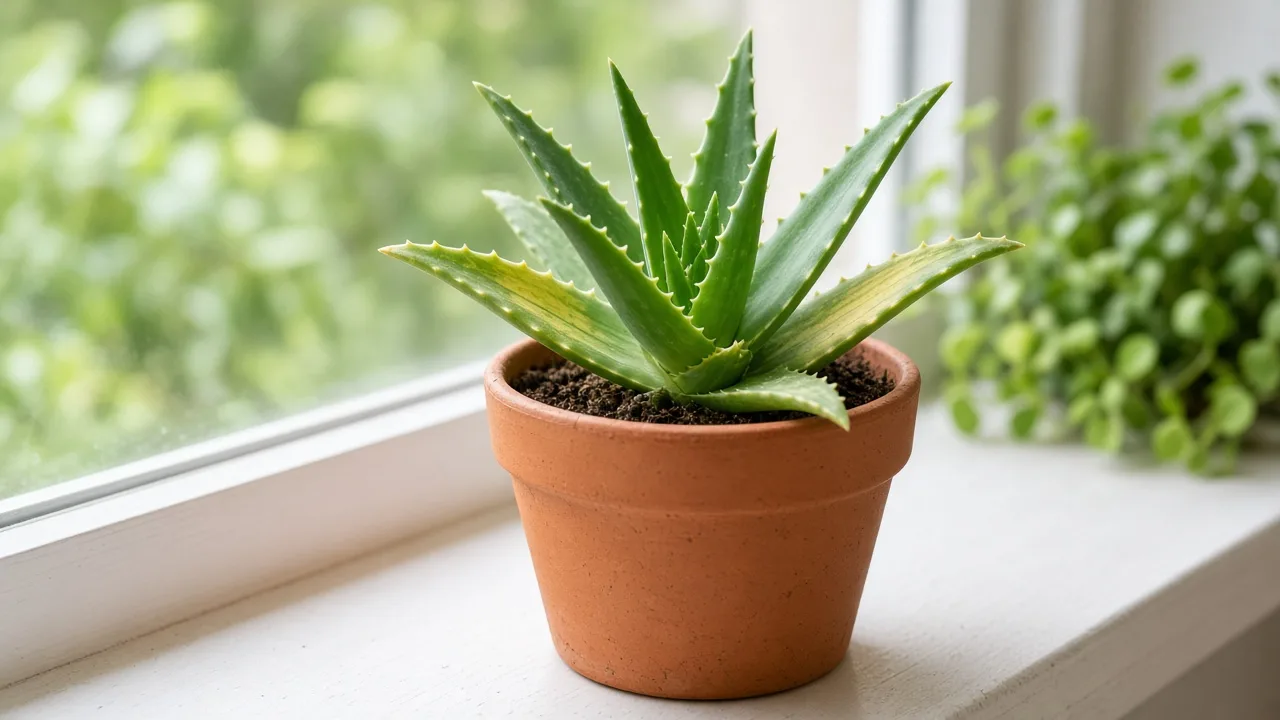
Magnesium Deficiency on Aloe Vera: Causes, Checks & Fixes
This guide covers magnesium deficiency on Aloe Vera. See also the general Magnesium Deficiency guide, watering, and light pages for this plant.
Magnesium Deficiency on Aloe Vera: Causes, Checks & Fixes
Quick answer
Magnesium deficiency on Aloe vera (Aloe vera, medicinal aloe) shows as yellow or pale green tissue between dark green veins on older outer and mid-rosette fleshy leaves while the newest central leaf unfurling from the crown may still look normal. Magnesium is highly mobile in plants, so deficiency symptoms appear first on lower leaves as the rosette relocates magnesium to fund slow new growth.
See our magnesium deficiency guide and the magnesium deficiency symptom hub. On Aloe vera, inspect thick serrated blades on the outer and mid sections of the rosette—interveinal yellow bands there are classic magnesium before iron deficiency, which hits new unfurling central leaves with green veins.
First step: confirm interveinal chlorosis on older outer and mid-rosette serrated blades, not on the newest fleshy leaf still opening at the rosette center.
When to use this page vs other Aloe Vera guides
| Pattern | Read next |
|---|---|
| Yellow between veins on oldest outer and mid-rosette blades | Magnesium deficiency (this page) |
| Yellow new central leaves with green veins | Iron deficiency |
| Uniform pale older blades without vein pattern | Nitrogen deficiency |
| New central leaf cupped or margin-burned | Calcium deficiency |
| Brown scorched margins on old blades | Potassium deficiency |
| Wrinkled thick leaves, dry pot for weeks | Underwatering |
| Soft mushy base, wet soil, leaves falling | Overwatering or root rot |
What magnesium deficiency looks like on Aloe vera
Healthy Aloe vera holds thick fleshy leaves in a rosette with serrated margins, storing water and gel inside each blade. Magnesium stress breaks that pattern on mature foliage on the outer and mid sections of the rosette, not at the active growing tip.
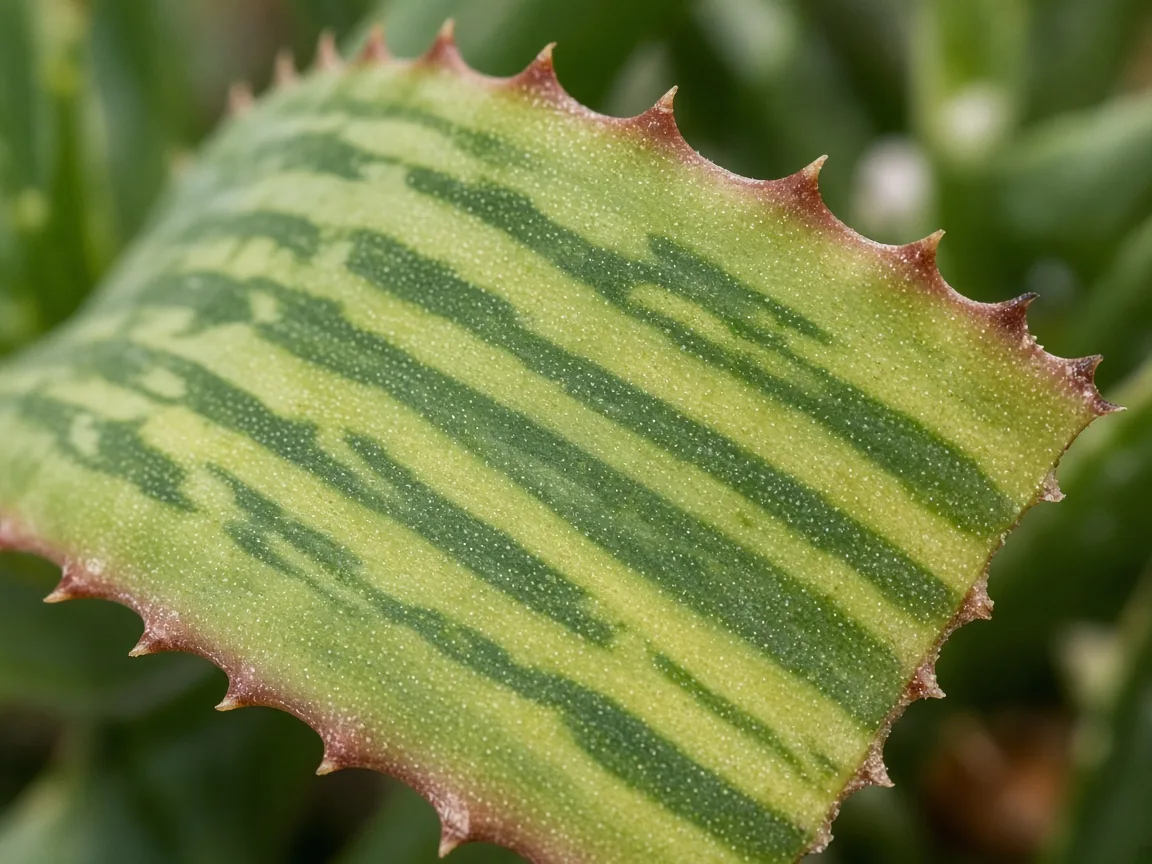
Interveinal yellowing on a mid-rosette Aloe vera blade—dark green veins with pale tissue between them along the serrated margin, while the newest central leaf stays evenly green.
Typical signs:
- Yellow or pale green between dark green veins on oldest outer and mid-rosette fleshy blades
- Veins remain relatively green on mature thick leaves—classic interveinal banding across the mid-blade
- New central leaf may look normal in early stages while outer and mid-rosette foliage shows chlorosis
- Firm rosette base at soil level unlike mushy overwatered aloe on soggy mix
- Symptoms climb inward over months as the plant relocates magnesium from old to new tissue
- Gel-filled blades stay firm—not thin and puckered like chronic underwatering
Not magnesium deficiency:
- Yellow new central leaves with dark green veins at the unfurling rosette—iron deficiency (iron affects youngest leaves first)
- Cupped or margin-burned newest central leaf—calcium deficiency
- Uniform pale older blades without a vein pattern—nitrogen deficiency
- Brown crispy edges without interveinal mid-blade banding—brown tips or potassium deficiency
- All leaves yellow at once on persistently wet soil—overwatering or root rot
- One bottom outer leaf yellow while a green leaf unfurls above—often normal senescence; see yellow leaves
RHS notes interveinal chlorosis from manganese, iron, or magnesium deficiency, with manganese and magnesium symptoms tending to start on older leaves. On an Aloe vera rosette, that older-leaf banding is easiest to read on thick serrated blades in the mid section before symptoms reach leaves closer to the center.
Why Aloe vera gets magnesium deficiency
Aloe vera is a slow-growing rosette succulent that stores water in thick leaves and spreads by offsets (pups) at the base, pushing new fleshy blades only occasionally in bright indoor light. Magnesium sits at the center of the chlorophyll molecule, and when soil reserves run low the plant strips it from older outer and mid-rosette blades to fund the next central unfurl.
Aloe vera-specific causes:
- Years without any complete fertilizer — Aloe tolerates neglect, but a rosette in the same depleted cactus mix for three or more years can exhaust available magnesium even when blades look plump. See the Aloe vera fertilizer guide for conservative feeding rhythm.
- Leached gritty cactus mix — Each thorough soak-and-dry watering through fast-draining mix flushes soluble magnesium through drainage holes without replacement.
- Distilled or reverse-osmosis water only — Irrigation removes incidental magnesium from tap water unless fertilizer replaces it. Owners chasing fluoride-sensitive brown tips sometimes create uptake gaps on a plant that pushes only one or two new leaves per season.
- Calcium and potassium competition — Conditions that lead to magnesium deficiency are often related to fertilizer programs that supply too little Mg, or when Ca and K compete with Mg for uptake.
- Nitrogen-heavy fertilizer without micronutrients — Nitrogen-only products expand blade area without magnesium for chlorophyll in those thick fleshy leaves.
- Blocked uptake from wet roots — NC State warns overwatering can lead to roots rotting on Aloe vera, and chronic overwatering limits magnesium absorption regardless of what is in the fertilizer bottle.
- Salt crust without magnesium replacement — White rim buildup from hard water or excess feed can injure roots and block micronutrient uptake before you stack drenches.
Do not diagnose magnesium deficiency on sour wet soil with soft rosette base tissue—that is root failure until you confirm mostly white firm roots.
Outer serrated blades vs center unfurl tips
Magnesium deficiency on Aloe vera shows on mature thick fleshy blades on the outer and mid sections of the rosette—a pattern that would be nonsense on a trailing pothos vine or a peace lily outer-ring clump. The gel-filled serrated blade still makes interveinal banding visible: dark green longitudinal veins with yellow tissue between them across the mid-blade, sometimes spreading toward the pointed tip.
That outer-blade locus distinguishes magnesium from iron, which appears on the fleshy leaf still unfurling at the rosette center. It also differs from calcium, which distorts the newest expanding central leaf while older thick blades below stay relatively normal. Magnesium deficiency initially develops on lower or older foliage, not on the tight roll at the growing tip.
When the lowest and mid-rosette serrated blades show interveinal yellowing but the newest central leaf stays evenly green, magnesium is the likely mobile-nutrient issue. When new central leaves emerge yellow with dark green veins while older thick blades stay normal, switch to the iron deficiency page.
Slow leaf flush and pup offset drain
Aloe vera pushes new fleshy blades slowly—often only one or two per growing season in average indoor light. That slow flush means magnesium depletion can build for years in the same terracotta pot before interveinal chlorosis becomes obvious on mid-rosette blades, even though the rosette still looks structurally healthy.
Offsets (pups) emerging beside the mother rosette draw mobile magnesium from the shared root zone. A crowded pot with multiple rosettes may show banding on the mother’s oldest outer blades while a pup’s first leaf still opens green—because the plant prioritizes new growth over old tissue. Before feeding, press the base of the rosette gently with a gloved hand (the sap is irritating). Firm upright rosette base with pale tan roots supports a measured magnesium correction. Soft, discolored base on wet mix means root rot or crown failure—not a nutrient label problem.
If only one pup shows pale banding while the mother rosette opens normal blades, inspect that offset’s root zone separately—it may sit in a wet pocket of an overcrowded pot.
Soak-and-dry rhythm and leached cactus mix
Aloe vera watering follows a long dry-down: Penn State Extension recommends reducing watering in fall through winter so soil stays barely moist, and UF/IFAS notes aloe should only be watered when the top inch of soil is dry. Each thorough drink when the pot is bone dry per the Aloe vera watering guide flushes soluble magnesium through the gritty cactus and perlite blend faster than owners replace it with complete feed.
Leaching in depleted mix: Months of soak-and-dry cycles without any balanced fertilizer—or with nitrogen-only products used sparingly—leaves interveinal chlorosis on mid-rosette blades while the rosette still pushes a new central leaf once or twice a year.
Cachepot dry-down illusion: Top mix may feel dry on schedule while a pot-bound root ball in three-year-old cactus mix starves below. Yellow bands between veins on mid-rosette blades with firm rosette base and normal upright posture often mean depleted magnesium, not thirst.
Salt crust blocking uptake: White rim buildup from hard water or excess feed can injure roots and block micronutrient absorption. Flush before stacking Epsom drenches and more fertilizer on the same week.
Lookalike symptoms
| Pattern | Check | Likely cause |
|---|---|---|
| Interveinal yellow on oldest outer and mid-rosette blades | Complete feed history, mix age | Magnesium deficiency (this page) |
| New yellow central leaves, green veins at crown | Wet mix, salt crust | Iron deficiency |
| Uniform pale older blades, small new blades | No balanced feed in years | Nitrogen deficiency |
| New central leaf cupped or margin-burned | New vs old tissue | Calcium deficiency |
| Edge scorch on old blades | Potassium-heavy feed? | Potassium deficiency |
| Soft base, wet soil, mushy roots | Base feel | Overwatering |
| One outer blade only | New central leaf green above | Normal aging—yellow leaves |
How to confirm
- Vein pattern on mid-rosette blades — interveinal chlorosis on the oldest mature serrated blades, not the newest central unfurl alone.
- Iron vs magnesium split — green veins on new central leaves point to iron; banding on mature mid-rosette blades points here.
- Fertilizer label — complete micronutrient mix including magnesium vs nitrogen-only products or years without any feed.
- Rosette base health — firm upright base and white roots support magnesium fixes; brown mush needs drainage first.
- Water source — distilled-only or reverse-osmosis water without magnesium listed on the fertilizer label.
- Moisture cross-check — wet core in a cachepot rules out simple starvation until roots recover.
- Successive mid-rosette blades — two or more blades banding between veins on stable care points to uptake failure, not one-time mechanical damage.
First fix for Aloe vera
One soil drench with Epsom salt at 1 tablespoon per gallon of water on already-moist mix—only after confirming firm rosette base and interveinal chlorosis on older outer and mid-rosette serrated blades.
Water normally first so roots are hydrated, then apply solution until a small amount drains from the bottom. Alternatively, one half-strength dose of complete liquid fertilizer that lists magnesium on the label follows the Aloe vera fertilizer guide during spring or summer active growth.
Do not drench a waterlogged rosette, a plant you repotted within the last month, or a specimen with active pest damage on new central blades. Fix the limiting stress first, then apply one measured magnesium correction.
Step-by-step recovery
- Apply one Epsom salt drench at 1 tablespoon per gallon on moist mix, or one half-strength complete feed with magnesium.
- Flush salts if white crust rings the pot rim—leach before stacking more fertilizer.
- Maintain consistent soak-and-dry per the watering guide—uptake fails when roots alternate between saturated and desiccated.
- Repeat measured correction once after four to six weeks if mid-rosette chlorosis spreads but the rosette base stays firm—do not drench weekly on this slow-growing succulent.
- Repot into fresh gritty cactus mix if roots fill the pot and banding persists after two measured treatments—see Aloe vera repotting.
- Trim fully yellow older blades only when they pull away easily; do not strip half the rosette at once.
- Monitor the next one or two central leaves for even green color without vein-retained banding on newly hardened mid-rosette blades.
Recovery timeline
Correct magnesium on healthy roots shows greener new central leaves and mid-rosette blades without interveinal banding within two to four months—slower than fast-growing pothos because Aloe vera pushes new tissue less often. Older chlorotic thick blades rarely return to full deep green; the plant slowly replaces them as the rosette grows.
Severe root damage from chronic overwatering may delay recovery a full growing season. Judge success by even green color on fresh central leaves and newly hardened mid-rosette blades, not by old yellow blades darkening again. If three successive new central blades stay banded or pale after two measured treatments with firm roots, reassess iron lockout, light, and overlapping pale leaves causes.
Mistakes to avoid
- Epsom salt before drainage — Drenching waterlogged roots worsens stress and will not fix chlorosis.
- Confusing iron and magnesium — New central leaf green veins mean iron page, not this one.
- Confusing calcium cupping with magnesium banding — Distorted new central leaves point to calcium deficiency, not interveinal yellow on old blades.
- Repot + Epsom + prune same week — Stack one change at a time on a stressed rosette.
- Nitrogen-only feeding after banding appears — More nitrogen without magnesium deepens interveinal chlorosis on mid-rosette blades.
- Expecting old thick blades to re-green — Judge recovery by fresh growth color, not by outer blades darkening again.
- Heavy-feeding waterlogged roots in a cachepot — Fix drainage before fertilizer on this salt-sensitive succulent.
Prevention
- Feed lightly with complete balanced fertilizer that includes magnesium during spring and summer active growth per the Aloe vera fertilizer guide.
- If using soft or distilled water, choose a feed that lists magnesium—do not rely on irrigation water alone.
- Maintain consistent soak-and-dry rhythm per the watering guide.
- Refresh depleted cactus mix every two to three years when roots crowd the pot.
- Flush salts mid-season if you use hard tap water or feed frequently in bright light.
- Track whether mid-rosette serrated blades band between veins before new central blades shrink; early interveinal chlorosis on old blades is easier to correct than a fully stunted rosette crown.
Related Aloe Vera guides
- Aloe vera overview
- Aloe vera fertilizer
- Aloe vera watering
- Aloe vera soil
- Iron deficiency
- Calcium deficiency
- Aloe vera problems hub
Conclusion
Yellow bands between green veins on older outer and mid-rosette Aloe vera serrated blades are a magnesium signal—confirm the pattern stays off the center unfurl tip, rule out wet roots, then apply one measured Epsom drench on moist soil.
Related tool
Use the Fertilizer Dilution Calculator to narrow causes for magnesium deficiency on this plant before changing multiple variables at once.