Potassium Deficiency on Aloe Vera: Causes, Checks & Fixes
Quick answer
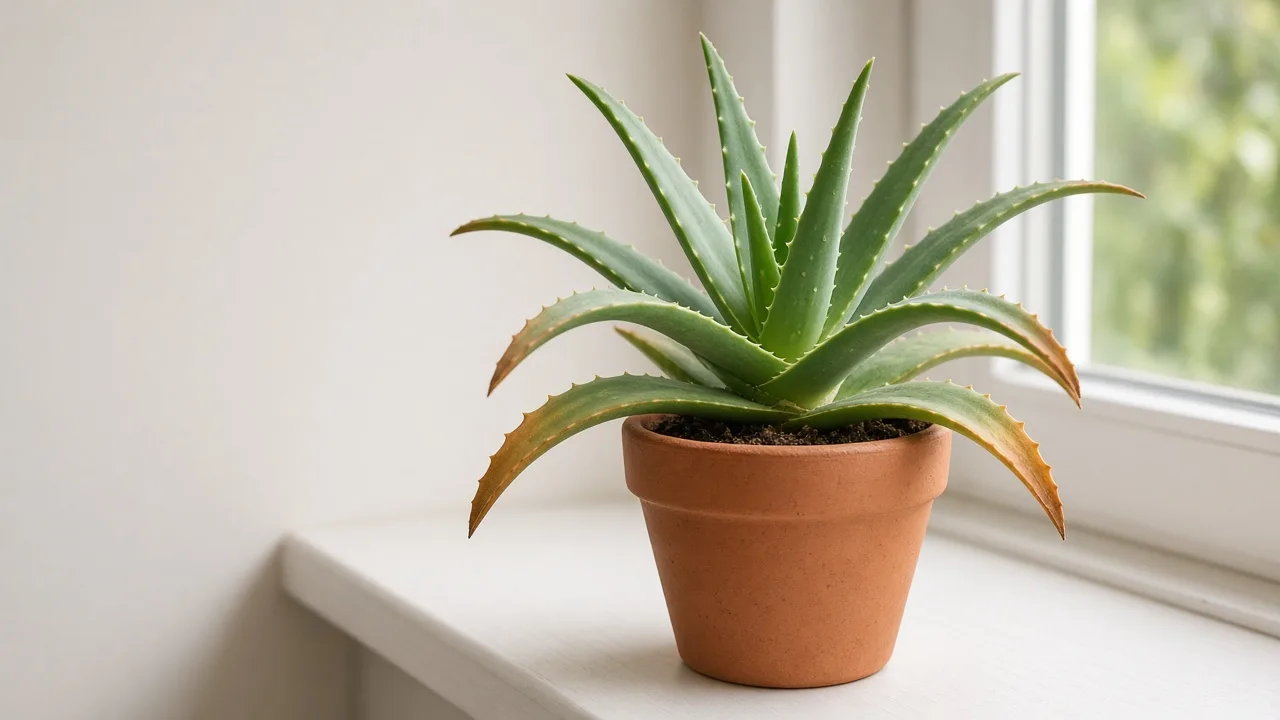
Potassium deficiency on Aloe vera shows as yellow or brown scorch along the serrated margins of older outer rosette leaves while newer central blades and upper leaves stay relatively green. First step: confirm marginal burn on multiple old leaves—not tip-only crisping from dry air—and review feeding history before adding fertilizer.
Potassium Deficiency on Aloe Vera: Causes, Checks & Fixes
This guide covers potassium deficiency on Aloe Vera. See also the general Potassium Deficiency guide, watering, and light pages for this plant.
Potassium Deficiency on Aloe Vera: Causes, Checks & Fixes
Quick answer
Potassium deficiency on Aloe vera (Aloe vera, medicinal aloe) shows as yellow or brown scorch along the serrated margins of older outer rosette leaves while newer central blades and upper rosette leaves stay relatively green. Potassium is mobile within plants—when soil reserves run low, the rosette pulls potassium from old tissue to support active growth at the center and on offset pups. Older leaves show chlorosis with browning of tips, scorching of margins, and brown spots near the margins in classic potassium shortage. For universal nutrient mechanics, see our potassium deficiency guide. On Aloe vera, inspect the serrated outer edges of the lowest, most horizontal rosette leaves first—marginal burn there differs from tip-only crisping on a single old blade.
First step: confirm marginal scorch on multiple older outer leaves, then check for salt crust and review feeding history before adding fertilizer.
When to use this page vs other Aloe Vera guides
| Pattern | Read next |
|---|---|
| Old outer leaf margins scorched, central blade green | Potassium deficiency (this page) |
| New central rosette leaf cupped or margin-burned | Calcium deficiency |
| Yellow between veins on older leaves | Magnesium deficiency |
| Uniform pale old leaves without edge scorch | Nitrogen deficiency |
| New leaves yellow with green veins | Iron deficiency |
| Dry tan tips only, interior leaf green | Brown tips from underwatering or fluoride |
| Scorched margins right after heavy feeding | Over-fertilization per brown tips |
| Soft mushy base, wet soil, leaves falling | Overwatering or root rot |
| Wrinkled leaves, bone-dry pot for weeks | Underwatering |
What potassium deficiency looks like on Aloe vera
Healthy Aloe vera holds thick fleshy leaves in a rosette with soft serrated teeth along each margin, storing water and gel inside each blade. Potassium stress breaks that pattern at the margins of older outer rosette leaves—the lowest, most horizontal blades hugging the pot rim—not at the unfurling central leaf first.
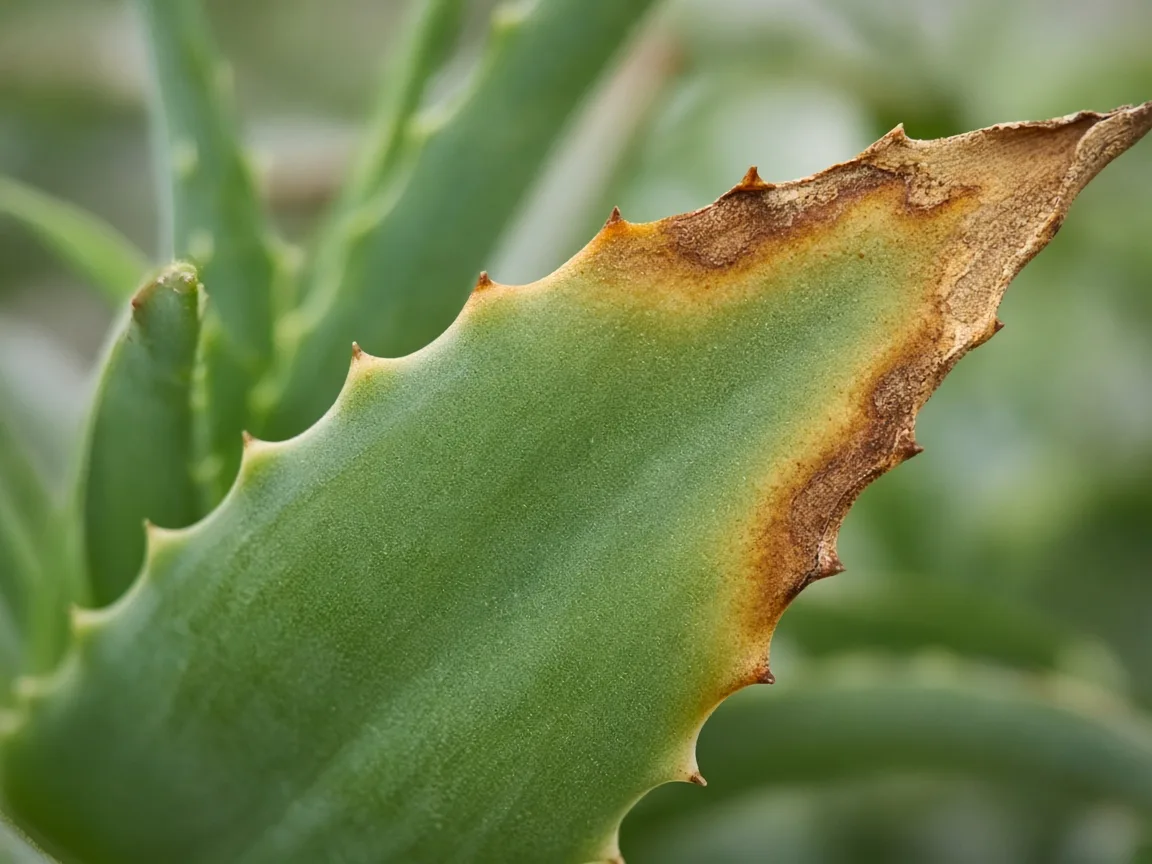
Yellow-tan scorch band along the serrated outer margin of an older Aloe vera rosette leaf while the blade interior stays greener—classic mobile potassium redistribution on slow-growing succulent rosettes.
Typical signs:
- Yellow or tan scorch along serrated outer margins of several older lower rosette leaves—the damage often starts at the toothed edge and creeps inward while the blade interior stays greener longer
- Crisp brown marginal tissue on firm thick fleshy leaves, not soft mushy blades
- New central leaf and upper rosette blades stay greener than the lowest outer leaves for weeks
- Slow spread around the rosette ring as deficiency advances—more old outer leaves gain similar edge burn
- Firm rosette base and normal dry-down unlike limp overwatered aloe on soggy mix
- Pups at the base may show margin scorch on their oldest small leaves while the mother rosette center stays green
Not potassium deficiency:
- Tip-only crisp brown on one exposed old leaf face—brown tips from underwatering, sun scorch, or fluoride in tap water
- Cupped or hood-like new central leaf unfurling from the rosette crown—calcium deficiency
- Yellow between veins with green midrib bands on older leaves—magnesium deficiency
- Uniform pale washout on whole old blades without edge scorch—nitrogen deficiency
- Marginal burn within days of a concentrated fertilizer dose—salt injury, not shortage
- All leaves yellow and soft on persistently wet soil—overwatering or root rot
- One bottom outer leaf yellowing while a green blade unfurls above—often normal senescence; see yellow leaves
Why Aloe vera gets potassium deficiency
Aloe vera is a slow-growing rosette succulent that stores water in thick leaves and spreads by offsets (pups) at the base. Potassium regulates stomatal function and stress tolerance—deficiency often appears as marginal scorch when roots cannot supply enough K to sustain lower outer blades while the rosette center and pups keep growing.
Aloe vera-specific causes:
- Years without complete feed in the same gritty pot — Aloe tolerates lean soil, but a specimen in depleted cactus mix for three or more years can exhaust available potassium even when outer leaves look plump. See the Aloe vera fertilizer guide for conservative feeding rhythm.
- Leaching through perlite-rich mix — Thorough soak-and-dry watering through fast-draining grit washes mobile potassium out if you never replace what leaches. UC IPM notes potassium deficiency in container plants often relates to leaching in sandy or rapidly drained media, not only bare soil shortage.
- Salt-blocked uptake — White crust from overfeeding or hard water limits potassium absorption even when fertilizer sits in the cabinet; overlap with brown tips guidance.
- Root stress limiting uptake — UC IPM notes container plants often show deficiency symptoms when root uptake is restricted, not only when soil lacks potassium. Chronic overwatering in an oversized pot mimics starvation.
- Crowded pup clusters — Multiple offsets sharing one pot drain potassium faster than a single rosette, especially when pups push new leaves in spring while mother outer blades scorch.
- Inconsistent soak-and-dry cycles — Calcium and potassium both move with water, but potassium deficiency shows on old tissue first. Alternating bone-dry winter dormancy with sudden heavy soaking in an oversized decorative pot starves outer leaves even when the central blade absorbed enough for mature tissue.
Do not diagnose potassium shortage on sour wet soil with soft stems at the base—that is root failure from overwatering until you confirm mostly firm white roots.
Outer rosette ring vs central crown scorch pattern
Aloe vera allocates mobile potassium to the rosette growing point at the center and to active offset pups before it sacrifices outer blades. When soil reserves run low, the lowest, most horizontal leaves—the ones resting against the pot rim or pointing outward from the rosette ring—show marginal scorch first while the newest central blade still unfurling and the leaves directly above it stay greener.
Potassium deficiency symptoms begin on older leaves because the plant pulls K from basal tissue to fund central growth—exactly the opposite pattern from calcium deficiency, which strikes immobile-nutrient problems on the newest central leaf first, and from iron deficiency, which hits young tips with yellow blades and green veins.
Walk around the pot and inspect all sides of the outer ring. A rosette turned toward a sunny window may scorch only the sun-exposed outer margin on one blade—that can look like potassium deficiency but is often sun scorch. Potassium marginal burn usually affects several old leaves on multiple sides of the rosette with a dry tan band along the serrated edge, not a single sun-bleached face.
Soak-and-dry leaching in gritty cactus mix
Aloe vera culture depends on allowing soil to completely dry between waterings in a terracotta or well-drained pot. That rhythm protects roots from rot but also leaches mobile nutrients through perlite and coarse grit every time you soak thoroughly and let the pot drain.
Owners who water correctly for years without ever feeding create the classic indoor pattern: plump outer leaves with progressive margin scorch on the oldest blades while the rosette center keeps pushing new tissue in spring. Penn State Extension notes aloes are extremely drought tolerant and susceptible to root rot if allowed to sit in water—the same drainage that prevents rot also removes potassium unless you replace it with measured complete feed during active growth.
Closing the gap does not mean heavy feeding. It means one or two half-strength complete doses during spring and summer per the fertilizer guide, not rescue feeding at full label rate on dry roots.
Pup offsets and potassium drain on crowded clusters
Aloe vera spreads by offsets or pups at the base that develop their own small rosettes. A crowded pot with four or five pups sharing one soil volume depletes potassium faster than a single specimen—each offset pushes new central leaves in spring while the mother plant’s oldest outer blades sacrifice marginal tissue.
Potassium deficiency can appear on a pup’s oldest small leaf while the mother’s central blade stays green, because each rosette competes for the same depleted root zone. Before feeding the whole cluster, check whether the affected rosette has firm white roots or brown mush from localized overwatering at the pot edge where drainage is poorest.
Separating a pup with scorched old margins into its own small terracotta pot sometimes improves dry-down rhythm and potassium delivery—see Aloe vera propagation for offset timing.
Serrated margin burn vs brown tip confusion
Aloe vera leaves carry soft teeth along the entire margin, not just a pointed tip. Potassium deficiency scorches the perimeter band around the serrated edge on multiple old blades. Brown tips from underwatering, fluoride, or harsh afternoon sun usually show as dry tan tissue at the leaf apex or along one exposed face—not a continuous scorch band tracing the toothed margin on several outer leaves.
Sun scorch on a windowsill aloe often bleaches one side of a single thick blade facing the glass. Potassium marginal burn keeps the blade mostly green with a dry crisp edge following the serrated teeth on three or more old leaves at similar rosette height.
If only the very tip is brown and the serrated margin is clean, check underwatering and water source before assuming a nutrient gap.
Lookalike symptoms
| Pattern | Check | Likely cause |
|---|---|---|
| Old outer margins scorched, central blade green | Leaf position | Potassium deficiency (this page) |
| New central leaf cupped or margin-burned | New vs old tissue | Calcium deficiency |
| Yellow between veins on old leaves | Mid-blade pattern | Magnesium deficiency |
| Uniform pale old blades | Whole-leaf color | Nitrogen deficiency |
| New leaves yellow, green veins | Vein pattern | Iron deficiency |
| Tip-only brown, margin clean | Tip vs edge | Brown tips or underwatering |
| Soft mushy base, wet soil | Base feel | Overwatering or root rot |
| White crust on soil, tip burn on many leaves | Salt rim | Over-fertilization per brown tips |
How to confirm
- Old vs new tissue — Scorched serrated margins confined to older outer rosette leaves while the central blade stays greener strongly suggests potassium.
- Multiple blades — Edge burn on three or more old leaves at similar height, not one sun-bleached face.
- Fertilizer history — Years without complete feed on a mature rosette in bright light vs scorch appearing days after a heavy dose (salt injury).
- Salt crust — White rim on soil surface blocking uptake despite fertilizer in the cabinet.
- Rosette base health — Firm upright base and pale tan roots vs brown mush from soggy soil.
- Watering rhythm — Consistent soak-and-dry through gritty mix that leaches mobile nutrients over seasons.
- Season — Marginal scorch spreading during warm active growth with continuous new central leaves fits deficiency better than winter leaf drop alone.
- Pup pattern — Several offsets in one pot with scorched old margins on multiple rosettes points to depleted shared soil volume.
First fix for Aloe vera
One half-strength dose of complete balanced fertilizer on already-moist gritty mix—only after confirming marginal scorch on multiple older outer rosette leaves, firm rosette base, warm active growth, and no thick white salt crust on the soil surface.
Do not repot, prune, and triple-feed a recently relocated Aloe vera the same week. Stabilize watering per the Aloe vera watering guide first—dry through the full pot depth before a thorough drink, empty cachepot standing water after each watering.
If white salt crust rings the pot, flush the mix with plain water and wait one to two weeks before any feed. UC IPM warns that adding sufficient complete fertilizer to provide one deficient element can result in excess of other nutrients and salinity problems—half strength on a lean succulent rosette is the safer correction.
Step-by-step recovery
- Rule out salt burn — If scorch followed a recent heavy feed, flush salts and pause fertilizer before diagnosing deficiency.
- Apply half-strength complete feed once on moist mix during active growth; repeat six to eight weeks later if the next central leaf responds per the fertilizer guide.
- Maintain consistent soak-and-dry—uptake fails when roots alternate between saturated and desiccated in heavy decorative pots.
- Repot into fresh gritty cactus mix if roots fill the pot and marginal scorch persists after two measured feeds on a firm base—see Aloe vera repotting.
- Move the plant gradually into stronger light if not enough light is slowing transpiration and potassium transport to the rosette crown.
- Monitor the next two central leaves and the outer ring—scorched old margins rarely re-green; recovery shows on subsequent new growth and on leaves that had not yet scorched.
- Separate crowded pups if one offset in a wet pocket shows scorch while siblings stay clean.
Recovery timeline
Scorched margins on old thick fleshy blades rarely re-green once the tan tissue hardens. The next one or two central leaves and any outer blades that had not yet scorched usually open with cleaner serrated edges within four to eight weeks after corrected complete feeding and stable watering on a firm rosette base—slower than fast-growing philodendron because Aloe vera pushes new tissue mainly during spring and summer active growth.
Severe base damage from chronic overwatering may delay recovery a full growing season. If successive new central leaves open with edge burn despite complete feed and stable spring care, inspect roots for rot before repeating fertilizer or repotting again.
Mistakes to avoid
- Do not confuse sun-bleached one-sided leaf damage with potassium marginal scorch—check multiple old blades on all sides of the rosette.
- Do not heavy-feed Aloe vera on wet soil or during cool winter dormancy—fix drainage and wait for active growth.
- Do not expect scorched old outer margins to re-green—judge the next central unfurl and un-scorched outer blades.
- Do not stack repotting, heavy pruning, and full-strength feed the same week on a stressed rosette.
- Do not skip feeding for years then dump full-strength high-nitrogen fertilizer on a pale plant—that path leads to soft weak growth and brown tips, not faster recovery.
- Do not remove scorched outer leaves until they are fully dry brown—UC IPM notes symptomatic foliage will not recover and premature removal can aggravate stress on palms and similar plants.
Prevention
- Feed lightly with complete balanced fertilizer at half strength during spring and summer per the Aloe vera fertilizer guide—most indoor pots need only once or twice per year.
- Refresh depleted gritty mix every two to three years when roots crowd the pot and pups outgrow the container.
- Maintain consistent soak-and-dry rhythm per the watering guide.
- Flush accumulated salts mid-season if white crust appears at the pot rim.
- Inspect the outer rosette ring monthly during spring and summer—early margin scorch on one old blade is easier to correct than a full ring of burned serrated edges.
- Pause all fertilizer in fall and winter when growth slows and soil stays barely moist.
Related Aloe Vera guides
- Aloe Vera overview
- Aloe Vera fertilizer
- Aloe Vera watering
- Aloe Vera soil
- Calcium deficiency
- Magnesium deficiency
- Aloe Vera problems hub
- All plant symptoms
Conclusion
Yellow or brown scorch along the serrated margins of older outer Aloe vera rosette leaves—while the central blade stays greener—points to mobile potassium redistribution on a slow-growing succulent rosette. Confirm the old-vs-new leaf pattern, rule out salt crust and recent overfeeding, stabilize soak-and-dry watering and rosette base health, apply one measured complete feed during spring active growth, and judge recovery by the next central leaf unfurl and any outer blades that had not yet scorched.
Related tool
Use the Fertilizer Dilution Calculator to narrow causes for potassium deficiency on this plant before changing multiple variables at once.