Thrips on Aluminum Plant (Pilea cadierei): Causes, Checks &
Quick answer
Thrips on Aluminum Plant rasp tender new leaves and shoot tips, leaving silvery scrape marks and black specks in the green tissue between fixed silver leaf bands. First step: isolate the pot and shake the newest stems over white paper to confirm tiny moving insects before spraying anything.
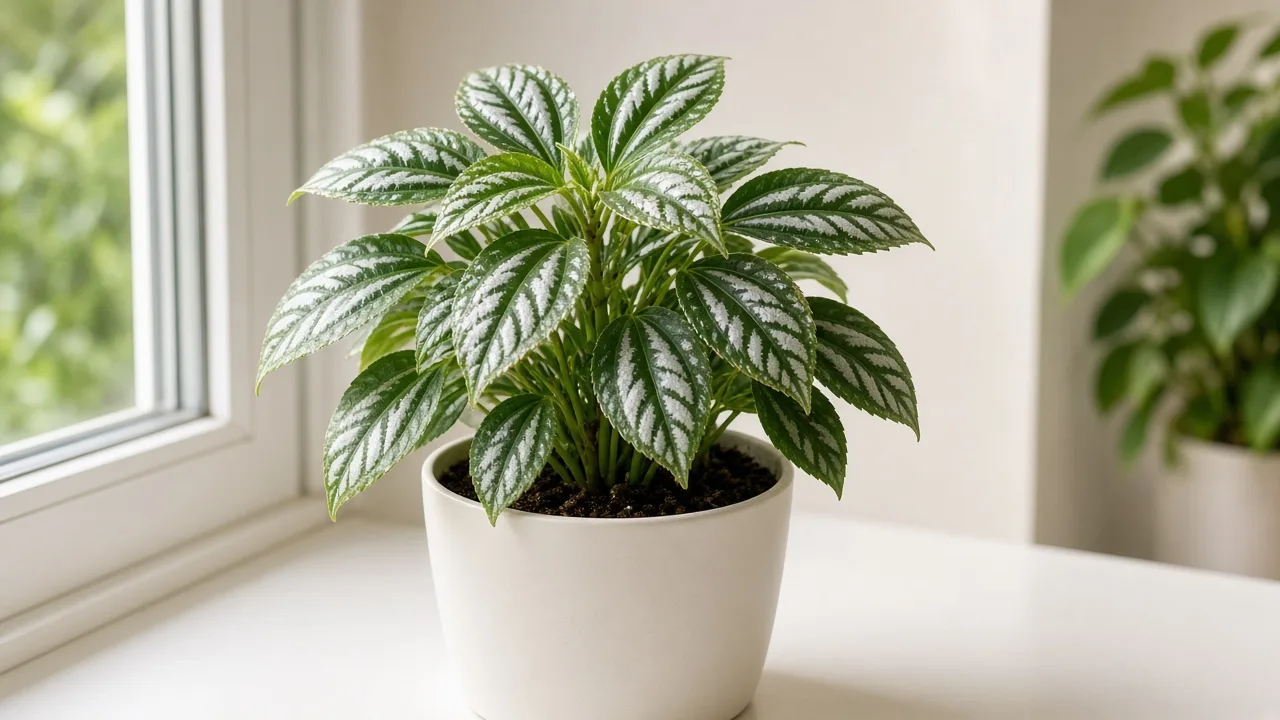
Thrips on Aluminum Plant (Pilea cadierei): Causes, Checks & Fixes
This guide covers thrips on Aluminum Plant. See also the general Thrips guide, watering, and light pages for this plant.
Thrips on Aluminum Plant (Pilea cadierei): Causes, Checks & Fixes
Quick answer
Thrips on Aluminum Plant (Pilea cadierei) show up as silvery scrape marks and black fecal specks in the green tissue between fixed silver leaf bands, often with crinkled or distorted new opposite leaf pairs at the bushy crown. For how thrips rasp plant cells in general, see our thrips guide. On Pilea cadierei, the diagnostic trick is separating fresh scrape streaks from the plant’s permanent metallic silver patches—and checking folded new leaves where thrips hide.
First step: move the pot away from other houseplants and shake the newest stems over a sheet of white paper. Slender, fast-moving specks that fall onto the paper confirm thrips. Do not spray, repot, or prune heavily until you have that confirmation.
When to use this page vs other Aluminum Plant guides
| Pattern | Read next |
|---|---|
| Silvery streaks on new leaves with black specks | This page — thrips |
| Fine yellow pinpricks in green tissue, webbing in crown | Spider mites |
| Silky stippling without scrape marks | Spider mites or aphids |
| Crisp brown leaf margins, no black specks | Low humidity or brown tips |
| Twisted leaves with no insects on paper shake | Distorted leaves |
| Wet heavy pot, yellow lower pairs | Overwatering |
This page is the pest entry when new growth looks scraped or silvery in a way that changes week to week. Use distorted leaves when leaves curl or crinkle without a positive thrips test.
What thrips look like on Aluminum Plant
Thrips are barely visible—often yellow, brown, or black—and feed by rasping the outer leaf layer and sucking cell contents, which leaves silvery stippling, scarring, and black varnish-like frass. On Pilea cadierei, the pattern is distinct from the plant’s normal look:
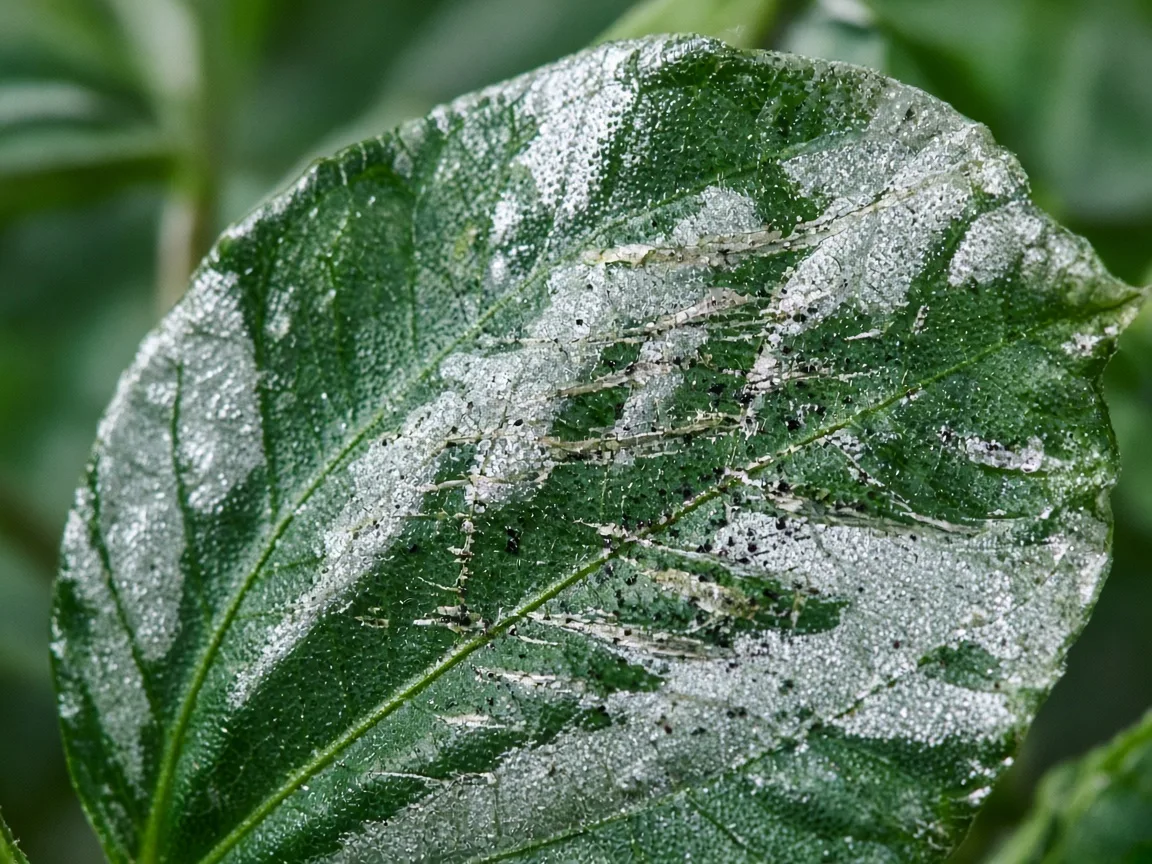
Silvery scrape marks and slight distortion on a young Pilea cadierei leaf—the green zone between fixed silver bands, not the metallic patches themselves.
- Silvery or bronze pencil-streaks in green tissue between the four rows of raised silver patches that define healthy foliage
- Black fecal specks scattered on scarred areas—not fuzzy mold or mineral dust
- Crinkled or twisted new opposite leaf pairs at the crown that should unfurl flat
- Stalled or distorted center growth while older outer leaves look almost normal
Healthy Pilea cadierei leaves carry fixed metallic silver patches from the moment they unfurl. Those patches are smooth, reflective, and structurally part of the blade—they do not increase or look scraped over days. Thrips damage adds changing silvery streaks in the green zones around them, which is why owners often notice the problem late—early rasping can hide against busy variegation until new leaves crinkle.
Because Aluminum Plant stays compact and bushy, thrips concentrate in folded new leaves and overlapping crown tissue the same way mealybugs hide in leaf axils on this species. Outer leaves may look fine while the center shows fresh scarring. Always part the foliage and inspect inward, not just the visible perimeter.
Reading silver patches vs thrips scrape marks
Aluminum plant is easier to misdiagnose for thrips than plain-green houseplants because both thrips and the species itself produce silvery-looking tissue. The difference is structural:
- Fixed silver bands are raised, metallic, and identical on every mature leaf from unfurling forward. They do not spread, darken with black specks, or distort the leaf shape.
- Thrips silver appears as fresh scrape streaks in the green tissue between those bands, often with black frass dots and crinkling at the leaf margin.
- Weekly change is the tell: normal variegation is static; thrips scarring advances on each new opposite pair as it opens.
This silver-vs-scrape read is specific to Pilea cadierei. A plain green pothos does not give you the same confusion—but you also lose this early visual anchor. When in doubt, run the white-paper shake test on the newest folded leaves.
Why Aluminum Plant gets thrips
Pilea cadierei prefers bright indirect light and steady humidity—conditions that do not prevent thrips the way they discourage spider mites in dry air. Thrips are sap-feeding insects that target the softest new tissue whenever the plant is actively growing.
Common triggers on Aluminum Plant:
New plants without quarantine. Thrips hitchhike on nursery stock, especially in buds and folded new leaves. Skipping a two-week isolation period is the fastest way to infect a grouped pilea display.
Active spring and summer flush. When warm weather returns, Pilea cadierei pushes tender opposite leaf pairs at the crown. That flush coincides with rising thrips populations on nearby ornamentals, open windows, and newly purchased plants.
Grouped pilea and peperomia shelves. Thrips adults fly short distances. One infested Aluminum Plant on a windowsill can spread to neighbors within days—inspect grouped pots together.
Indoor collections without predators. Enclosed rooms lack the predatory thrips and mites that keep populations in check outdoors. Damage that appears “overnight” on new tips often reflects days of hidden feeding inside folded leaves.
Overhead misting without inspection. Misting does not control thrips and can keep the bushy crown damp longer than this species prefers. Match moisture to the Aluminum Plant watering guide instead of assuming humidity fixes a rasping pest.
This is not a hygiene failure. Even well-kept Pilea cadierei collections see thrips when new growth is soft and neighboring plants carry hidden adults.
Lookalike symptoms on Pilea cadierei
| What you see | Likely cause | How to tell apart |
|---|---|---|
| Fixed silver patches, smooth and unchanged | Normal Pilea cadierei variegation | Present from unfurling; no black specks or crinkling |
| Silvery streaks with black dots on new leaves | Thrips | White-paper shake shows moving specks |
| Yellow pinpricks in green tissue, fine silk | Spider mites | Stippling dots, not scrape streaks; webbing at leaf bases |
| Soft green insects on new tips | Aphids | Visible colonies; sticky honeydew |
| White cottony clusters in axils | Mealybugs | Waxy tufts, not elongated moving specks |
| Crisp brown leaf margins, no black specks | Low humidity | Uniform edge burn; negative paper shake |
| Twisted leaves, no insects | Cultural stress | See distorted leaves |
If you see silvery scarring plus moving specks on a paper test, thrips are confirmed regardless of watering history.
How to confirm the cause
Work through these checks before spraying anything:
- Compare fixed silver vs. fresh scrape. Metallic patches are smooth and unchanging. New silvery streaks with black specks in green tissue that spread weekly point to thrips.
- White-paper shake test. Hold a suspect stem over white paper and tap or gently shake the newest leaves. Slender, fast-moving specks confirm live thrips; static black dots alone are frass—keep shaking fresh tissue.
- Crown inspection. Part overlapping leaves at the center. Look for adults and larvae in folded new leaves and at petiole bases with a hand lens—adults are less than 1/20 inch long.
- Sticky trap check. Hang a blue or yellow sticky trap just above the plant for a few days. Caught adults support the diagnosis and help you monitor whether numbers fall after treatment.
- Honeydew check. Aphids and mealybugs leave glossy sticky residue. Thrips typically do not—if leaves are sticky, look for co-conspirators.
- Neighbor scan. Inspect other pots on the same shelf—shared scrape patterns mean isolation is urgent.
Confirmed thrips show silvery scarring with moving specks on white paper or adults caught on sticky traps. Suspected thrips with only uniform brown tips and no insects likely indicate humidity stress—see brown tips on Aluminum Plant before treating for pests.
First fix for Aluminum Plant
Isolate and confirm with the white-paper shake test.
Move the pot away from other houseplants before you treat. Pilea cadierei tolerates brief isolation in bright indirect light per the light guide; the priority is stopping adult thrips from spreading while you verify the pest.
Shake the newest stems and folded leaves over white paper. Once you see moving specks—or catch adults on a sticky trap near the crown—you have confirmation. Only then move to rinsing and sprays.
Do not repot, fertilize, or heavily prune on the same day as your first pesticide application. Stacking interventions makes it hard to know what helped on a fast-rooting but crown-sensitive pilea.
Step-by-step recovery
Crown-heavy pilea callout: Thrips hide inside folded new opposite leaf pairs and soft shoot tips—not on the mature outer foliage you see first. Surface-spraying only the tops of older leaves leaves the actual feeding sites untouched. Treat every folded leaf, new tip, and crown crease; skip dry lower stems that have already hardened.
After isolation and confirmation, proceed in order:
Rinse smooth leaves thoroughly. In a sink or shower, spray tops and undersides with a firm lukewarm stream for several minutes. Tilt the pot so water sheets off leaf faces and runs out of the bushy crown rather than pooling overnight. Pilea cadierei leaves are smooth—not fuzzy—so rinsing is safe when foliage dries the same day in bright indirect light.
Add a blue sticky trap just above the canopy to catch flying adults and monitor population direction. Replace weekly and note whether counts fall.
Apply spinosad or insecticidal soap to growing tips and folded leaves, covering the tissue thrips actually feed on. Spinosad is generally more effective against thrips than soap alone on ornamentals; repeat every five to seven days for two to three cycles to catch newly hatched larvae. Insecticidal soap works on contact for soft-bodied stages but requires thorough coverage of folded leaves.
Spinosad and insecticidal soap on folded crown leaves
Follow label directions for ornamental use. UC IPM notes that contact sprays must thoroughly cover protected sites where thrips feed—on Pilea cadierei, that means misting into each folded new leaf pair and the crease where opposite leaves meet, without drenching the soil surface.
- Spinosad: more effective than soap alone; has short translaminar movement into sprayed tissue. Repeat at five- to seven-day intervals for two to three cycles.
- Insecticidal soap: kills on contact only; coat tops and undersides of young leaves until the solution barely drips. Repeat every four to seven days while active thrips and susceptible new growth are both present.
- Spray timing: early morning or evening when temperatures are moderate. Do not apply soap above 90°F or in peak midday sun on heat-stressed plants.
- Neem or horticultural oil: can provide temporary control per UC IPM, but plan repeat cycles—one application rarely clears a crown infestation.
Inspect neighboring Aluminum Plants and other houseplants weekly. Thrips often appear on one pot first; catching secondary infestations early prevents another full cycle.
Do not increase watering because tips look damaged. Thrips are not a drought signal. Stick to the top-half-inch dry-down rhythm in the watering guide and withhold feed until new growth looks normal.
Recovery timeline
| Phase | What to expect |
|---|---|
| Days 1–3 | Isolation and first treatment. Existing silver scars remain; no instant visual improvement. |
| Week 1–2 | Sticky trap counts should drop if coverage reached folded crown leaves. No new scarring on the very newest emerging pair is the first win. |
| Week 2–4 | Clean opposite leaf pairs with sharp fixed silver banding confirm control. Old scarred leaves stay blemished until you prune them off. |
| Next flush | Normal bushy growth if new pairs formed after treatment started clean. Heavily damaged leaves from before treatment stay cosmetic. |
Thrips rarely kill a healthy Aluminum Plant with sound roots. Failure looks like fresh silvery scarring on every new leaf pair after three weekly treatments, or spreading infestation to the whole collection—escalate with a different labeled product or consult extension resources.
Signs recovery is working:
- Paper-shake tests show fewer or no moving specks
- Sticky trap catches decline week over week
- Clean new shoots emerge with firm silver patterning and no fresh scrape streaks within two to four weeks
What not to do
Do not return the plant to a group display after one rinse. Isolation should last until paper-shake tests stay clear for at least two weeks.
Avoid treating only outer leaves. The bushy crown is where thrips feed; mature lower pairs are often just cosmetic casualties.
Do not soak the overlapping crown overnight after rinsing. Smooth pilea leaves tolerate washing; a waterlogged center in cool air is the main post-rinse risk on this species.
Skip one-and-done spraying. Thrips eggs hatch on staggered schedules. Plan three cycles minimum at five- to seven-day intervals.
Do not mist heavily to “raise humidity” as your thrips fix. Pebble trays and humidifiers target air; overhead misting without inspection keeps folded leaves damp without killing hidden thrips.
Do not assume silvery tissue equals normal variegation. Weekly spread in green zones with black specks is a pest signal, not Pilea cadierei character.
Aluminum Plant is non-toxic to cats and dogs per the ASPCA, but keep pets away from freshly treated foliage until sprays have dried and the area is ventilated.
How to prevent thrips next time
Match prevention to how Pilea cadierei actually grows in your home:
- Quarantine new plants two weeks before they join an Aluminum Plant shelf; shake and inspect folded new leaves on arrival.
- Weekly crown checks during active growth—thirty seconds parting the center catches most outbreaks before scarring spreads across every new pair.
- Sticky traps near grouped pilea displays during spring and summer flush windows.
- Inspect grouped pileas together—shared shelves mean shared pest risk.
- Avoid buying plants with crinkled new tips without checking for thrips first.
- Sterilize scissors between pots when pinching leggy stems per the pruning guide.
Strong culture helps: bright indirect light, correct watering rhythm, and steady humidity keep new silver-marked leaves vigorous—but active new growth still requires inspection, not assumption.
When to worry
Act the same day if:
- Silvery scarring spreads to every new opposite pair despite two treatment cycles
- Several plants on one shelf show the same scrape pattern
- Sticky traps catch adults daily after three weekly sprays
- The bushy crown is heavily scarred and new growth has stopped entirely
Lower urgency when streaks are on one outer branch, paper-shake shows few specks after isolation, and center growth is still opening clean new pairs. Monitor for a week while keeping the plant isolated.
Thrips rarely kill a healthy Aluminum Plant if caught before severe crown damage—but they can weaken the plant enough that recovery takes a full growing season. Discarding a heavily compromised specimen and restarting from a clean cutting is sometimes the practical choice when treatment cost exceeds replacing a fast-rooting Pilea cadierei.
Conclusion
Thrips on Aluminum Plant are a new-growth pest on a silver-variegated pilea—scrape marks in green tissue and black specks on folded crown leaves are the telltales, not the fixed metallic silver bands. Isolate, confirm with the white-paper shake test, rinse smooth leaves thoroughly, then repeat spinosad or insecticidal soap every five to seven days while targeting folded new leaves. Judge success by clean new opposite pairs with sharp silver banding, not repaired old ones, and inspect neighboring pileas before you declare victory.
Related Aluminum Plant guides
- Aluminum Plant overview — Species profile and care anchors.
- Aluminum Plant watering — Dry-down rhythm; thrips are not fixed by wetting soil.
- Aluminum Plant light — Bright indirect placement for recovery after treatment.
- Spider mites — Stippling and webbing, not silvery scrape streaks.
- Aphids — Soft-bodied colonies with honeydew on new tips.
- Mealybugs — Cottony axil clusters, not elongated thrips.
- Distorted leaves — Crinkling without confirmed insects.
- Aluminum Plant problems hub — Browse all common issues on this species.
Related tool
Use the Pest Identifier Tool to narrow causes for thrips on this plant before changing multiple variables at once.