Distorted Leaves on Aluminum Plant: Stem-Tip Pest Checks
Quick answer
Distorted leaves on aluminum plant (Pilea cadierei) are puckered, twisted, cupped, or undersized blades on new opposite leaf pairs at stem tips — usually aphids, spider mites, thrips, mealybugs in leaf axils, root stress on wet mix, or direct sun on expanding silver-variegated foliage. First step: magnify the softest new leaf pairs at each stem tip and rinse leaf axils between opposite blades before feeding or repotting.
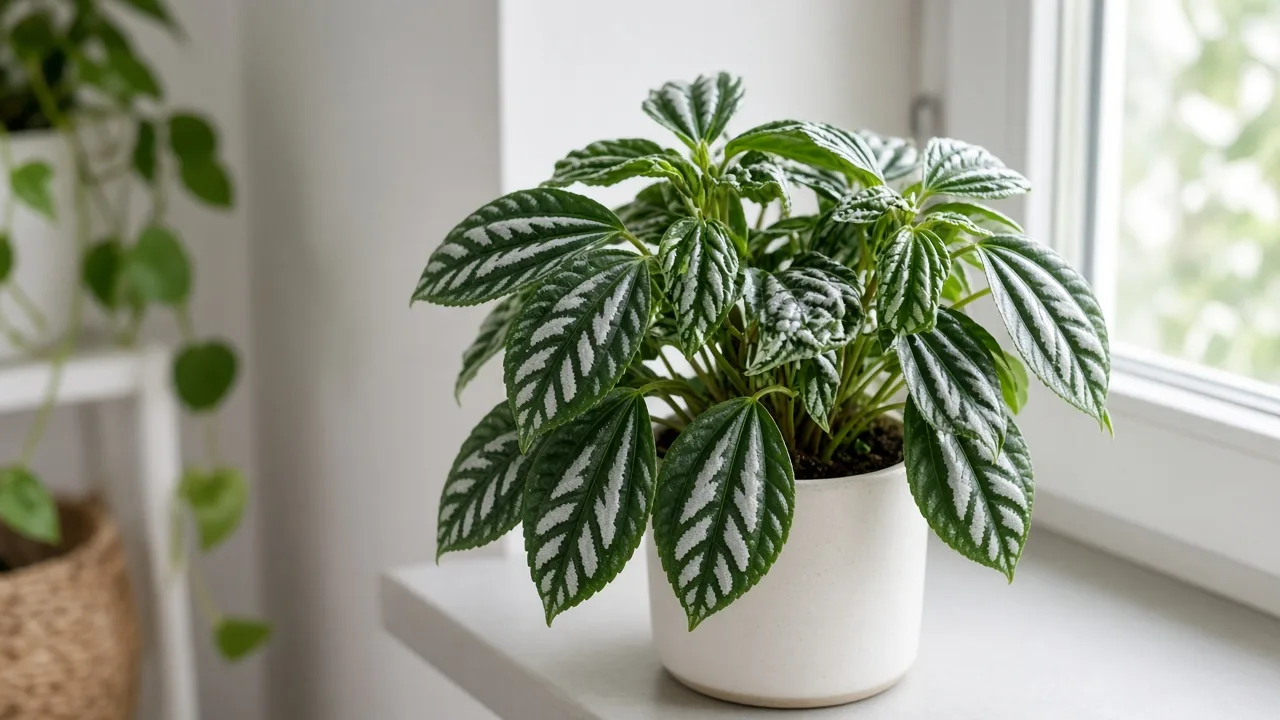
Distorted Leaves on Aluminum Plant: Causes, Checks & Fixes
This guide covers distorted leaves on Aluminum Plant. See also the general Distorted Leaves guide, watering, and light pages for this plant.
Distorted Leaves on Aluminum Plant: Causes, Checks & Fixes
Quick answer
Distorted leaves on aluminum plant — Pilea cadierei, also sold as watermelon pilea — are puckered, twisted, cupped, wrinkled, or undersized blades on new opposite leaf pairs at the tips of short upright stems. The symptom almost always starts on soft expanding tissue, not mature lower foliage with firm silver banding. Top causes are aphids, spider mites, thrips, and mealybugs in leaf axils, root stress on chronically wet mix, direct sun on expanding silver-variegated leaves, and etiolation on leggy stems.
For how leaf distortion forms during expansion in general, see our distorted leaves guide. On aluminum plant, the diagnostic zone is each stem tip where opposite pairs unfurl — mature lower pairs can look fine while the softest new blades warp.
First step: magnify the newest opposite leaf pairs at each stem tip and rinse leaf axils between blades with lukewarm water.
Route to curling leaves for inward cupping on open dry blades, and leggy growth when tiny distorted leaves ride on long bare stems.
When to use this page vs other Aluminum Plant guides
| Pattern | Start here | Or route to… |
|---|---|---|
| Twist, puckering, or wrinkling on new opposite pairs | This page | Aphids, Spider mites |
| Inward cup on dry, light pot | Curling leaves | Underwatering |
| Tiny leaves on stretched stems | Leggy growth | Not enough light |
| Sticky residue on soft new growth | Aphids | Mealybugs |
| Fine webbing and stippling | Spider mites | Low humidity |
| Silvery streaks and black specks on new tips | Thrips | Whiteflies |
| Yellow lower pairs on wet mix | Overwatering | Root rot |
What distorted leaves look like on aluminum plant
Pilea cadierei carries four rows of raised silver patches on elliptic, toothed, dark green blades arranged in opposite pairs on short upright stems. Healthy new pairs emerge with crisp silver banding and serrated margins. Distortion shows when that expansion goes wrong:
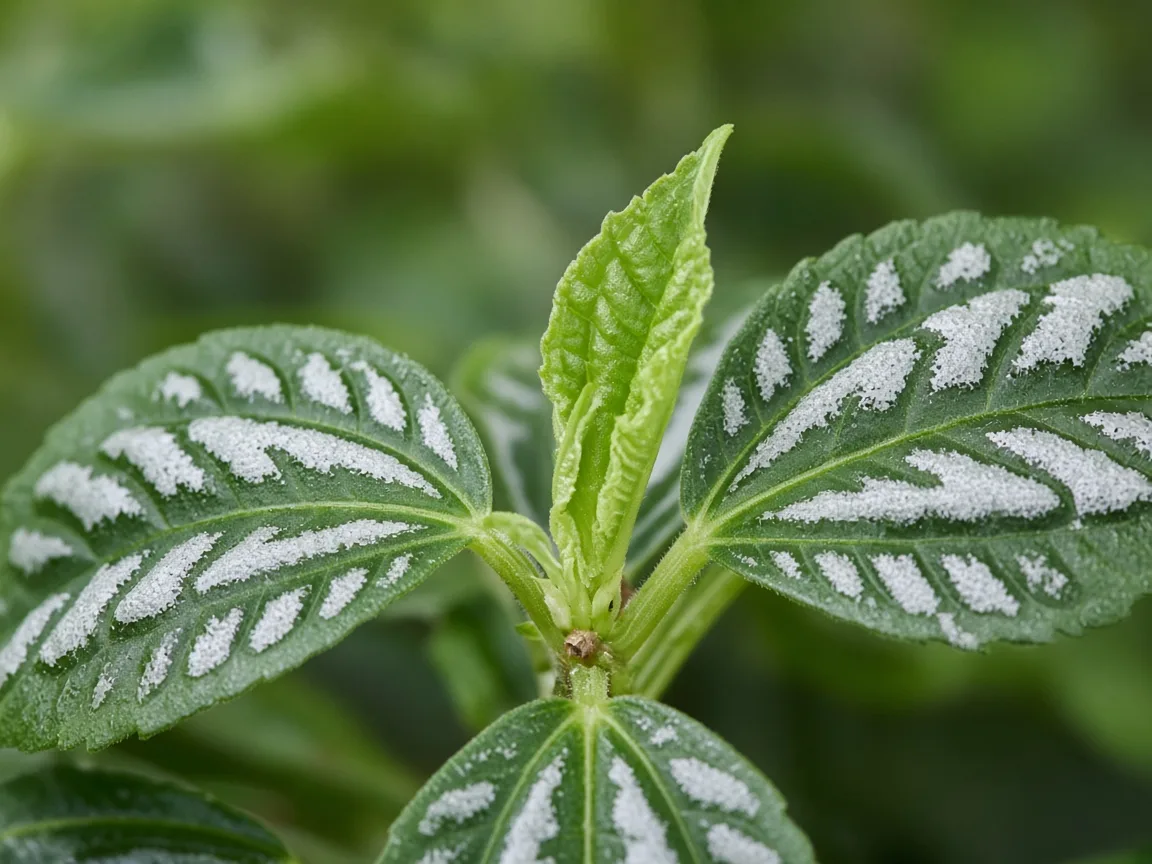
Puckered new opposite pair at a stem tip — magnify soft blades and leaf axils before repotting or feeding.
Aphid damage — Twisted, puckered soft new growth with sticky honeydew on tender shoots. NC State lists aphids among common aluminum plant pests, and Gardeners Path notes sap-sucking pests cause extensive foliar damage on houseplants kept too hot and dry.
Spider mite damage — Fine pale stippling, puckered new tips, and sometimes faint webbing between the blade and petiole. NC State and Missouri Botanical Garden both list spider mites on Pilea cadierei. Mites favor the softest stem-tip flush in dry heated air while older lower pairs still look acceptable.
Thrips on new growth — Silvery streaks, black specks, and scarred puckered blades on the newest pairs. Thrips feed on expanding tissue and leave permanent distortion once the leaf hardens — see thrips when damage tracks one side of new blades.
Mealybugs in leaf axils — White cottony clusters between opposite pairs at stem joints weaken expansion and leave wrinkled, undersized blades. Epic Gardening lists mealybug infestation as a common aluminum plant issue when conditions are too dry.
Root-stress distortion (overwatering) — Small wrinkled new leaves with dull flat silver patches on a heavy, wet pot. Roots fail to deliver water evenly during expansion even though mix is damp. Lower opposite pairs may yellow first — overlap with overwatering.
Sun scorch on expanding leaves — Warped, bleached silver patches and cupped blades on the window-facing side while shaded pairs stay flat. Aluminum plant wants bright indirect light, avoiding full sun per NC State Extension.
Etiolation stunting — Very small, sometimes twisted leaves spaced along elongated stems in dim corners. Missouri Botanical Garden notes best foliage is on new plants and that aluminum plant becomes less compact with age — see leggy growth and not enough light.
Check newest opposite pairs at each stem tip first. Distortion on fresh tips is urgent; one slightly puckered lower pair on an otherwise bushy plant may be old damage if the crown flush is clean.
Reading silver-band alignment on opposite pairs
Aluminum plant is easier to diagnose than plain green houseplants because each blade carries four raised silver rows that should mirror on the opposite pair at the same node. During healthy expansion, both leaves unfurl with aligned banding and matching serrated edges.
When something goes wrong during that window:
- Asymmetric silver rows on one blade of a pair — expansion stress from pests, drafts, or uneven watering during unfurling.
- Dull flat silver with puckered green tissue — root failure or drought stress blocking normal cell expansion.
- Bleached silver on one side of a pair only — direct sun hitting expanding tissue through glass.
This silver-band symmetry read is specific to Pilea cadierei’s variegation pattern. A plain green pothos does not give you the same early warning on opposite pairs.
The stem-tip opposite-pair flush (aluminum plant only)
Unlike basal-crown plants such as Chinese evergreens, aluminum plant concentrates active growth at stem tips where opposite leaf pairs emerge in quick succession on short upright shoots. Each new pair takes several days to expand from soft tissue.
Pests, root stress, sun, or extreme dim light during that narrow window permanently shape the mature blade. Owners who only scan open lower foliage miss aphids, mealybugs, and mites on the tightest unopened pairs and leaf axils between blades — the species-specific place to look is the soft silver-banded spear before both leaves fully flatten.
Why aluminum plant leaves distort
Pests target soft new tissue because cell walls are thin during expansion. Aluminum plant puts new growth at multiple stem tips on a bushy clump, so a small colony in one axil can distort every emerging pair on that shoot while other stems look fine.
Chronically wet mix blocks normal expansion. Overwatering or poor drainage commonly causes root rot on aluminum plant per NC State Extension. When roots lose function, new leaves emerge small and wrinkled with dull silver — not the broad paddle distortion you would see on a peace lily, but still a root-zone problem.
Direct sun warps expanding silver patches. Pilea cadierei evolved in shaded humid forest understory in Vietnam. Afternoon rays through glass hit expanding variegated tissue hardest and cup or bleach blades before they harden.
Dry winter air favors mites on thin leaves that hold little moisture. Winter heating commonly drops indoor relative humidity below 30%, and Gardeners Path warns hot dry rooms invite spider mites and aphids. Aluminum plant appreciates humidified rooms or placement on wet pebbles but still needs stem-tip inspection in heated winter air.
Leggy age and dim light produce undersized twisted pairs on stretched stems. Missouri Botanical Garden recommends pinching stem tips to keep plants compact and replacing with cuttings when foliage quality declines — distortion on bare lower stems is often a signal to refresh, not only to treat.
How to confirm the cause
Work through this inspection in order:
- Newest opposite pairs at each stem tip — Part foliage gently. Look for insects, silver stippling, sticky residue, thrips streaks, or mealybug fluff in leaf axils.
- Underside of the softest blade — Mites and aphids hide on tender tissue before the pair fully opens.
- Silver-band symmetry — Misaligned rows on one blade of a pair support expansion stress; bleaching on one side supports sun scorch.
- Moisture at the top inch — Cool and damp on a heavy pot with wrinkled new tips supports root stress. Dry light pot with cupped open blades supports thirst — see curling leaves.
- Placement — Direct sun on silver foliage, cold glass contact, radiator or AC draft on expanding tips?
- Pattern spread — Every new pair on one shoot distorted → pests or localized stress on that stem. Tiny twisted pairs on long bare stems → etiolation.
- Root spot-check (if wet soil + dull silver + yellow lowers) — Slide the plant partway out. Mushy roots confirm escalation to root rot.
First fix for aluminum plant
Rinse the undersides of the newest opposite leaf pairs and leaf axils between blades with lukewarm water; re-inspect in three days with a magnifier.
That single action clears surface aphids, dislodges early mites, exposes mealybugs in axils, and gives you a clean read before sprays. If you confirm active pests after the rinse, follow aphids, spider mites, thrips, or mealybugs protocols.
If the only issue is sun-warped tips on one window-facing shoot, move to bright indirect light only — no direct rays on silver foliage per NC State culture guidance.
If new tips stay wrinkled on a heavy wet pot with yellow lowers, pause watering until the top inch dries per our watering guide — do not fertilize to force leaf shape.
Do not stack repotting, heavy pruning, and pesticide on the same day unless roots are mushy or infestation is severe.
Step-by-step recovery by cause
| Confirmed cause | First fix | Follow-up |
|---|---|---|
| Spider mites | Stem-tip rinse; isolate from neighbors | Spider mites; raise humidity slightly if air is very dry |
| Aphids | Rinse soft new pairs; isolate | Aphids |
| Thrips | Rinse; inspect nearby plants | Thrips |
| Mealybugs | Alcohol swab on axil clusters | Mealybugs |
| Overwatering / root stress | Dry-down at top inch; improve light/airflow | Overwatering |
| Sun scorch | Move to indirect light only | Remove severely warped blades once stable |
| Etiolation | Gradual move to brighter filtered light | Pinch tips; propagate cuttings per leggy growth |
Pinch-and-refresh when lower pairs stay distorted
Missouri Botanical Garden notes best foliage is on new plants and that some gardeners replace plants each year from stem tip cuttings in early spring. When several lower opposite pairs stay permanently puckered but stem tips are firm with clean new growth, pinch above a healthy node once pests and watering are stable. Aluminum plant propagates easily from stem tip cuttings — refreshing a bushy cutting often beats nursing a bare-legged parent covered in hardened distorted blades.
Recovery timeline
Distorted leaf tissue does not flatten back to perfect symmetry once hardened. Recovery is measured by new opposite pairs with aligned silver banding and straight serrated margins:
- Pest distortion — Clean new pairs often appear within one to two weeks after clearance and stable care; full stem recovery may take two to three flush cycles.
- Root-stress wrinkling — New tips expand normally within two to four weeks after soil oxygen returns and watering rhythm stabilizes.
- Sun scorch — New growth in indirect light shows crisp silver rows within two to three weeks; warped blades stay cupped until removed.
- One-time expansion glitch — A single puckered pair after a draft or care swing may be followed by straight pairs if you hold conditions steady.
Signs of improvement: straight silver-banded new pairs, active stem-tip growth, and distortion that stops spreading to fresh flushes. Signs of worsening: every new pair puckered within days, sticky residue spreading, or soft stems at the soil line on wet mix.
Lookalike symptoms to rule out
| What you see | Likely cause | Route to |
|---|---|---|
| Inward cup on open blades, dry pot | Thirst | Curling leaves |
| Yellow lowers, wet soil, no stippling | Root stress | Overwatering |
| Long stems, tiny leaves | Low light | Leggy growth |
| Brown necrosis, not twist | Tissue death | Brown leaves |
| Pale dull silver, not puckered | Light or nutrients | Pale leaves |
What not to do
Do not fertilize a puckered, stressed plant to force leaf shape — salts on stressed roots worsen distortion on sensitive new tips.
Do not repot on day one unless roots are mushy, drainage has failed, or mealybugs infest the soil line.
Do not mist as the only mite response when stippling and webbing are present — rinse axils and follow confirmed pest protocols.
Do not confuse this page with curling leaves — inward cupping on mature open blades belongs on curling leaves, not twist on expanding opposite pairs.
How to prevent distorted leaves on aluminum plant
- Inspect stem tips weekly — Axils between opposite pairs are where mealybugs and aphids start.
- Bright indirect light only — No direct sun on silver-variegated expanding tissue.
- Water when the top inch dries — Avoid chronic wet mix that wrinkled new tips on a heavy pot.
- Target 50–60% humidity in heated winter rooms — See low humidity.
- Quarantine new plants for two weeks before placing near existing aluminum plants.
- Pinch and propagate before lower stems accumulate hardened distorted pairs — Keeps the bushy clump looking fresh.
When to worry
Treat distortion as urgent when:
- Every new opposite pair puckers within days on multiple stems despite stable care.
- Sticky residue, webbing, or thrips streaks spread to neighboring plants.
- New tips stay wrinkled while soil stays wet and lowers yellow — possible root failure.
- Stems soften at the soil line while mix remains damp.
One slightly twisted lower pair on an otherwise bushy aluminum plant with clean stem-tip flush is often old damage, not an emergency.
Related aluminum plant problems
- Curling leaves — inward cup on open blades, not expansion twist
- Aphids — sticky puckered new growth
- Spider mites — stippling and webbing on stem tips
- Thrips — silvery scars on newest pairs
- Mealybugs — cottony axil clusters
- Leggy growth — tiny distorted leaves on stretched stems
- Aluminum Plant overview — Pilea cadierei baseline care
Related Aluminum Plant guides
- Aluminum Plant overview
- Aluminum Plant watering
- Aluminum Plant light
- Aluminum Plant soil
- Overwatering on Aluminum Plant
- Aluminum Plant problems
Related tool
Use the Plant Problem Diagnosis Tool to narrow causes for distorted leaves on this plant before changing multiple variables at once.