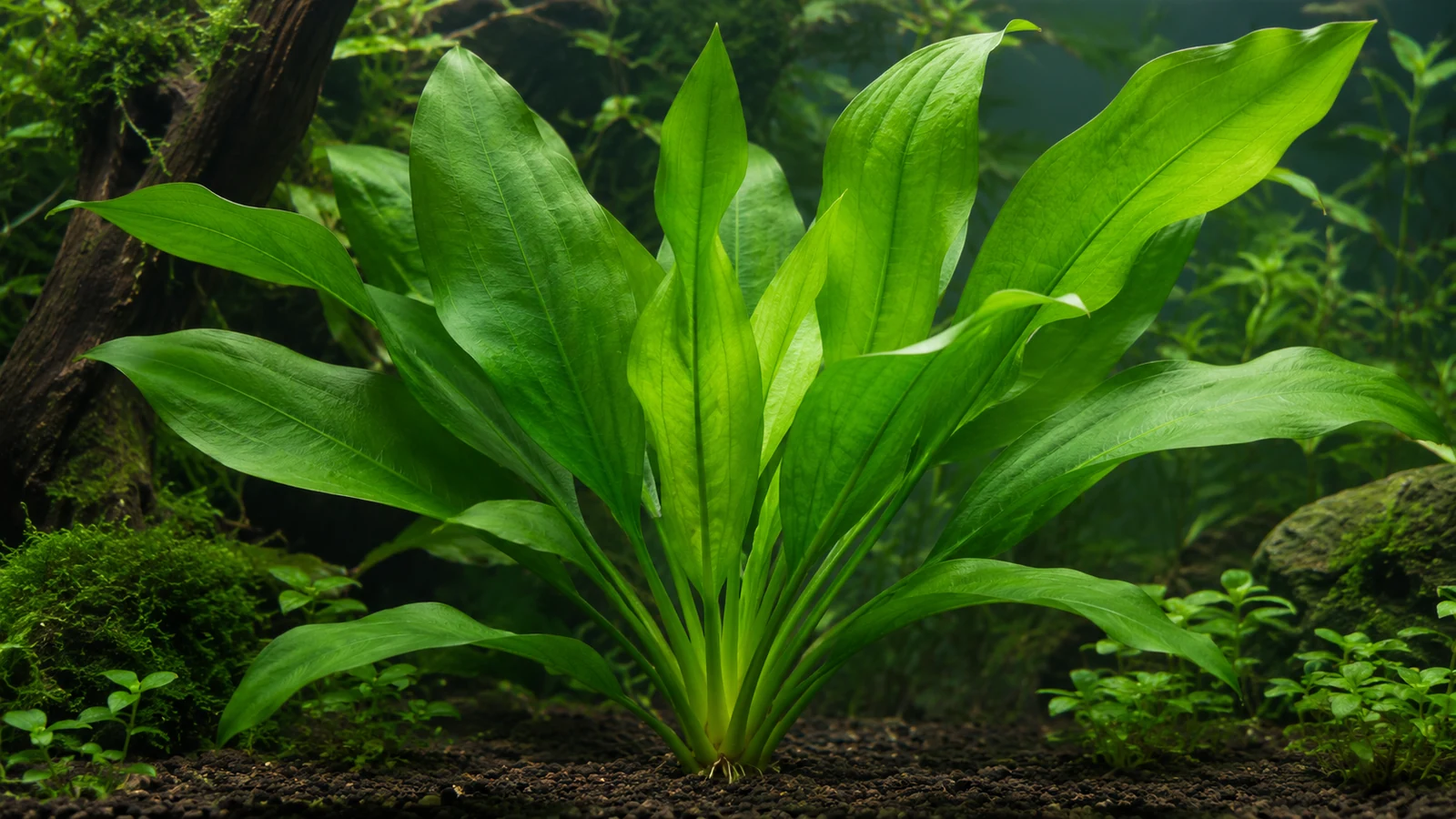
Browse general houseplant problems or use our diagnosis tool for Amazon Sword.
Amazon Sword problems
Use the guides below to diagnose and fix common issues on Amazon Sword. Each problem page explains why it happens on this species and what to do first.
No. The Amazon Sword sold for aquariums is a freshwater aquatic plant. Keep it submerged in a stable aquarium and do not treat it like a potted terrestrial plant.
What substrate does an Amazon Sword need?
Use nutrient-bearing aquarium substrate or inert gravel with aquarium-safe root tabs. Plant the roots but leave the central crown uncovered.
Why are my Amazon Sword's leaves melting after planting?
Nursery plants may have leaves grown above water that decline after being submerged. Remove clearly dying leaves, keep the crown exposed, and watch for healthy new submerged growth while maintaining stable tank conditions.
How much light does an Amazon Sword need?
The common ‘Bleherae’ form is rated as undemanding and low-light tolerant. Low-to-medium aquarium light is a reasonable starting point; avoid sudden increases that can trigger algae or outpace root-zone nutrients.
Does an Amazon Sword need CO2 injection?
Usually not in a typical low-tech aquarium. Root-zone nutrition, stable water conditions, and enough room for the rosette are more important for basic growth; supplemental CO2 can increase growth in some planted tanks.
How do I propagate Amazon Sword plantlets?
Wait until a flower-stalk plantlet has several leaves and visible roots, then separate it and plant the roots in aquarium substrate while leaving its crown exposed.
How often should I water Amazon Sword?
Amazon Sword is an aquatic aquarium plant, not a potted houseplant. Keep its roots submerged in freshwater and maintain a stable tank environment suited to the fish and invertebrates sharing the aquarium. It does not need separate top-watering; routine aquarium top-offs and water changes should follow the needs of the whole tank. In practice, water there is no plant-only watering schedule while it is fully submerged. Keep the water level stable, and perform water changes according to aquarium stocking, filtration, and water-test results rather than a fixed plant calendar. Check leaf condition, new growth, water quality, and the substrate around the crown. Yellowing older leaves or persistently small new leaves can have several causes, including nutrient limitations, so check root feeding and tank conditions before changing the light or fertilizer. Indoor aquariums do not follow outdoor seasons in the same way as garden beds. Growth may slow when tank temperature or lighting changes; keep water conditions steady and adjust care to the aquarium’s livestock and equipment.
Written by Sai AnanthLead content writer at LeafyPixels. B.Pharmacy graduate from Andhra University with a background in pharmacognosy, turned indoor gardening writer after a long-time plant hobby became a research-led resource for home growers.View Sai Ananth's profile · Reviewed by LeafyPixels Review Board
This Amazon Sword problems problem guide was researched and written by Sai AnanthLead content writer at LeafyPixels. B.Pharmacy graduate from Andhra University with a background in pharmacognosy, turned indoor gardening writer after a long-time plant hobby became a research-led resource for home growers.View Sai Ananth's profile. Problems symptoms on Amazon Sword, lookalike causes, and step-by-step fixes are cross-checked against extension pest, disease, and care references before publication.
We prioritize sources that hold up under scrutiny:
University cooperative extension bulletins and fact sheets (Penn State, Clemson, UMD, NC State, and similar programs)
Botanical garden and horticultural society publications
Peer-reviewed plant science and veterinary toxicology references where pet safety matters (including ASPCA Animal Poison Control)
Established reference works on indoor plant culture
The LeafyPixels editorial team then reviews the draft for clarity, step-by-step usefulness, and fit with real apartment and home conditions-not ideal greenhouse setups. When guidance changes materially, we update the page and note the revision date.