Caterpillars on Anacharis / Elodea: Causes, Checks & Fixes
Quick answer
Caterpillars on Anacharis usually mean aquatic moth larvae chewing submerged whorls in outdoor ponds—or terrestrial larvae on emersed stems above the waterline in propagation tubs. First step: hand-pick every visible larva and silk leaf case, bag the trimmings, and never pour terrestrial pesticides into aquarium water.
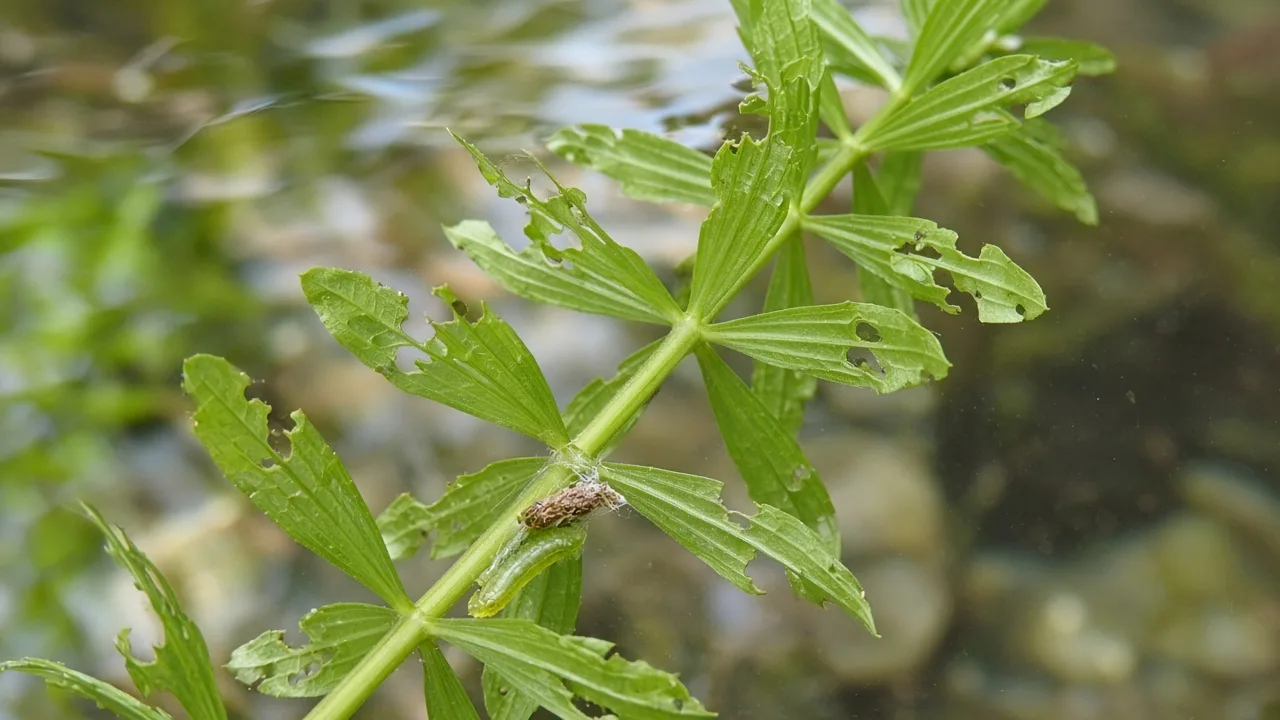
Caterpillars on Anacharis / Elodea: Causes, Checks & Fixes
This guide covers caterpillars on Anacharis / Elodea. See also the general Caterpillars guide, watering, and light pages for this plant.
Caterpillars on Anacharis / Elodea: Causes, Checks & Fixes
Quick answer
Segmented larvae chewing ragged holes in Anacharis whorls—or silk cases glued to submerged leaves? On Anacharis (Egeria densa), true caterpillars almost always come from outdoor pond culture or emersed propagation tubs, not from routine indoor aquarium water chemistry. The most common aquatic culprits are moth larvae such as the waterlily leafcutter (Elophila obliteralis)—fully aquatic caterpillars that feed on Elodea and dozens of other submerged plants. Terrestrial caterpillars from garden moths and butterflies colonize emersed stem tips above the waterline, similar to the aphid pattern.
First step: hand-pick every visible larva, peel off silk leaf cases, bag infested trimmings, and submerge only clean firm stems. Do not pour Bt, insecticidal soap, or garden pesticides into fish or turtle water.
For general caterpillar biology, frass signs, and when hand removal works first, see our caterpillars pest guide. On Anacharis, the practical split is aquatic moth larvae chewing submerged whorls in ponds vs. terrestrial larvae on emersed tips in propagation tubs—and goldfish or turtle grazing that mimics caterpillar holes in closed tanks.
This guide covers submerged aquarium, turtle tub, riparium, and outdoor pond culture—not houseplant pots. For soft-bodied insects with cornicles on emersed tips, see aphids on Anacharis. For goldfish and turtle bite patterns without insects, see holes in leaves. For white cottony wax at nodes, see mealybugs. For culture and quarantine tubs, see the Anacharis overview and propagation guide.
Caterpillars vs. grazing vs. aquatic insect cases on Anacharis
Use where the damage sits on the stem and what left it behind as your first split:
| Pattern | Location | Key sign | First action | Urgency |
|---|---|---|---|---|
| Aquatic moth larvae | Submerged whorls in outdoor ponds | Segmented green/cream larvae; irregular chew holes; silk leaf cases | Hand-pick larvae; remove cases; bag trimmings | Moderate — manual removal first |
| Terrestrial caterpillars | Emersed tips above waterline | Segmented larvae; dark frass pellets; no underwater gills | Pick larvae off emersed tissue; trim and bag | Moderate — isolate from garden bench |
| Goldfish / turtle grazing | Submerged whorls in fish tanks | No insects; damage tracks feeding time; fish at stems | Move stems to grazer-free tub | Moderate — livestock issue, not caterpillars |
| Aphids | Emersed tips only | Pear-shaped soft bodies; honeydew; cornicles | Trim emersed tips; submerge clean stems | Moderate — not caterpillars |
| Caddisfly larvae | Rocks, filter, substrate | Pebble/mud tube cases; beneficial; light grazing | Leave unless numbers explode | Low — usually harmless |
| Submerged melt | Underwater whorls | Translucent mush; foul odor | Fix water quality — not insect treatment | High if ammonia present |
If you find segmented larvae with head capsules and chewing mouthparts—not fish at the stems—you are dealing with caterpillars. If damage appears overnight with no insects visible and goldfish hanging at the bunch, start with the holes in leaves guide instead.
Why caterpillars appear on Anacharis — ponds, emersed tubs, and thin whorls
Anacharis is not a typical houseplant caterpillar host. Egeria densa grows as a fast submerged column feeder with whorls of four to six thin leaves only about two cell layers thick. That anatomy makes whorls easy to skeletonize—a small aquatic moth larva can remove a visible chunk in one feeding session.
Realistic entry paths for caterpillars on Anacharis:
- Outdoor pond or water garden — Aquatic moth species such as Elophila obliteralis (waterlily leafcutter) lay eggs on aquatic vegetation. Larvae remain fully submerged, breathing through specialized gills, and feed on Elodea among 60+ aquatic host plants. Activity peaks May through August in eastern North America.
- Emersed propagation tubs — Stems growing above the water surface for faster multiplication attract terrestrial moth and butterfly larvae from nearby garden plants, similar to the aphid emersed-tip pattern.
- Pond margins and riparium dry zones — Stems creeping above the waterline in summer tubs create caterpillar habitat on soft new growth.
- Greenhouse benches — Overhanging tomatoes, milkweed, peppers, and other caterpillar host plants can transfer larvae to emersed Anacharis tips on the same shelf.
- New pond plant shipments — Eggs or tiny larvae may ride in on mixed aquatic bundles from outdoor growers.
Why closed indoor aquariums rarely host caterpillars: Fully submerged stems in a filtered tank without emersed growth offer little access for terrestrial caterpillars. Aquatic moth larvae can appear if you recently added outdoor pond-collected plants without quarantine—but the far more common “caterpillar look” in fish tanks is herbivore grazing, not Lepidoptera.
Turtle-tub note: Egeria densa is commonly used as grazing for pond turtles. Turtles strip soft stems faster than most caterpillar species. Always rule out turtle and goldfish feeding before treating for insects.
What caterpillar damage looks like on Anacharis whorls
On submerged Egeria densa stems and emersed tips, expect different signatures depending on larva type:
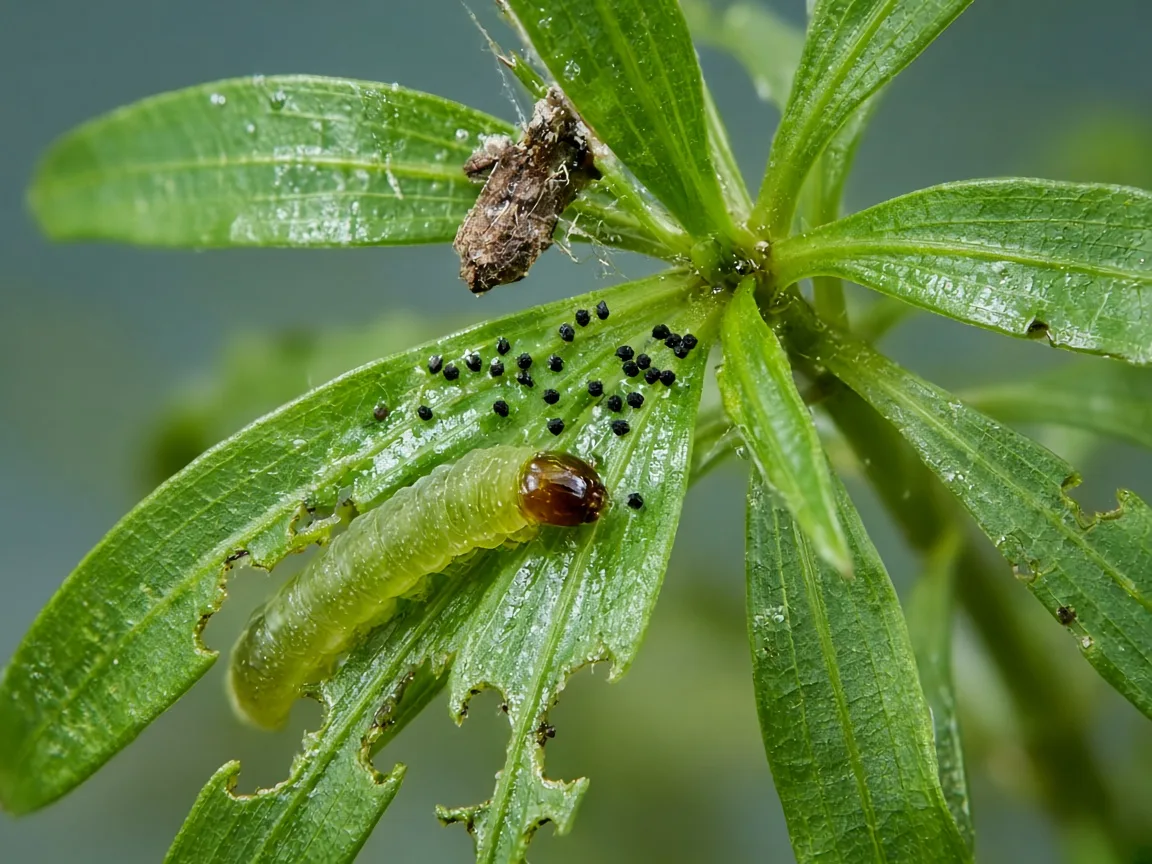
Caterpillar symptoms on Anacharis / Elodea - compare chew margins and frass with healthy tissue on the same stem.
Aquatic moth larvae (pond and outdoor tub)
- Translucent green, yellowish, or cream segmented larvae — often under 1 inch long, with visible head capsules and chewing mouthparts
- Irregular holes or skeletonized sections in submerged whorls — not clean crescent snail rasp marks
- Small silk-lined leaf cases glued to stems or floating fragments — portable shelters built from cut leaf pieces, characteristic of aquatic crambid moth larvae
- Dark frass pellets on leaves, pond edges, or tank rims below feeding sites — caterpillar waste confirms chewing insects, not fish bites
- Damage concentrated on outer whorl leaves while inner stem stays firm — unlike uniform translucent melt
Terrestrial caterpillars on emersed tissue
- Segmented larvae on stems and leaves above the waterline — hairy or smooth, various colors
- Ragged notches on emersed tips with frass pellets on the tank rim or bench surface
- Silk webbing on emersed nodes in heavier infestations — not fine stippling like spider mites
- Submerged whorls below the waterline stay clean while emersed tips show all the damage
Does not match caterpillars:
- Whole whorls stripped to bare nodes overnight with fish interest at stems — goldfish or turtle grazing, not insects
- Soft pear-shaped insects with cornicles — aphids on emersed tips
- White cottony wax clusters — mealybugs
- Translucent mushy submerged tissue with foul tank odor — melt or water stress, not chewing
- Pebble- or mud-constructed tubes on rocks and filter media — caddisfly larvae; usually beneficial and not a primary Anacharis pest
Confirm caterpillars vs. grazers, aphids, and melt
Work through this checklist in order:
- Setup type — Outdoor pond or emersed propagation tub? Caterpillars are plausible. Closed aquarium with only submerged stems? Suspect grazers first.
- Insect search — Pick through outer whorls at dusk with a flashlight. Aquatic moth larvae hide in silk cases or along stem nodes. Terrestrial caterpillars stay on emersed tissue.
- Frass test — Hold a damaged whorl over white paper and tap lightly. Dark pellets rolling off confirm caterpillars — not sticky honeydew from aphids.
- Fish timing — Damage appears at lights-on after a night feed with goldfish at the bunch? Grazing, not caterpillars.
- Case inspection — Peel small silk-glued leaf fragments from stems. Aquatic moth larvae often occupy or abandon these portable cases.
- Purchase timing — Holes appeared within one to two weeks of outdoor pond plants or emersed greenhouse stock? Strong hitchhiker signal.
- One change at a time — If you hand-pick larvae, do not also rehome fish and change fertilizer the same day — you need to see whether chewing stops.
If chewing continues in a larva-free quarantine tub, revisit water parameters and light levels — but that pattern is uncommon compared to missed larvae or hidden silk cases.
First fix: hand-pick larvae and remove silk cases
First action today: physically remove every caterpillar you can see, peel off attached silk leaf cases, and bag all infested trimmings. This is the safest first step for fish tanks, turtle tubs, and outdoor ponds — no pesticide enters the water.
Hand-picking protocol
- Move to a bright workspace — A white bucket or tub makes small green aquatic larvae easier to spot against submerged whorls.
- Inspect outer whorls and waterline stems — Aquatic moth larvae often sit on the underside of leaves or inside silk cases.
- Pick or net each larva — Drop into a sealed bag; do not flush or release near waterways.
- Remove silk cases — Peel glued leaf fragments from stem nodes; each case may hold a larva or pupa.
- Trim heavily chewed tips — Cut 2–3 inches below damage; bag trimmings so fragments cannot establish in wild waterways.
- Return only firm clean stems — Submerge in display tank or quarantine tub; watch for new chew marks for one week.
For emersed tissue only, you can follow the same pick-and-trim workflow used for aphids on emersed Anacharis tips — treat above-waterline stems, keep submerged nodes clean.
What not to do on day one
- Do not pour Bt, neem, permethrin, or insecticidal soap into aquarium or turtle water — these products harm fish, shrimp, turtles, and aquatic invertebrates.
- Do not dose copper-based algaecides to kill larvae — copper damages Egeria densa and does not replace hand removal.
- Do not assume every hole means caterpillars — check tank mates per the holes in leaves guide before spraying anything.
Escalation if larvae return
If hand-picking fails after one week, escalate in this order — still keeping fish water clean:
Outdoor pond biological control
In garden ponds, aquatic moth larvae are food for bluegill, bass, minnows, and dragonfly nymphs. Healthy fish populations often keep minor larval chewing in check without intervention. Avoid broad-spectrum pond insecticides that wipe out beneficial insects.
Off-tank treatment for emersed tissue only
When terrestrial caterpillars persist on emersed propagation stems:
- Move infested stems to a separate bucket away from the display tank.
- Apply labeled Bt (Bacillus thuringiensis) or insecticidal soap to emersed leaves only, per product directions.
- Rinse thoroughly in dechlorinated water until no residue remains.
- Return submerged portions only after a clean inspection.
Never treat submerged whorls in the display tank with terrestrial sprays. The aphids guide covers the same off-tank soap caution for aquarium culture.
When to discard the batch
Restart from a clean cutting when:
- Larvae reappear on new growth after three weekly pick-and-trim cycles
- Silk cases cover multiple stems and manual removal is impractical
- You cannot quarantine outdoor pond stock away from the main display
Egeria densa fragments root easily — a single clean node often costs less continued effort than fighting a chronic outdoor infestation.
Recovery timeline and what improvement looks like
Chewed whorls do not heal perfectly — notched leaves stay notched. Judge success by:
- No new chew holes on outer whorls for 7–10 days after removal
- Firm green nodes below damaged sections — not translucent mush
- New tips or side shoots within one to two weeks in cool water with adequate light
- Pearling or active growth on submerged stems in a pest-free quarantine tub
In outdoor ponds, minor moth larval grazing on fast-growing Anacharis often balances out — the plant outpaces light feeding when water quality stays stable. Indoor tanks recover faster once larvae and grazers are both ruled out.
Signs the problem is worsening:
- Skeletonized whorls climbing the stem toward the apex
- Frass accumulating daily on tank rims or pond edges
- Stems turning mushy with foul odor — switch to stem rot or transparent leaves diagnosis
How to prevent caterpillars on Anacharis next time
- Quarantine new pond plants 10–14 days in matched water before adding to display tanks — inspect whorls and peel silk cases at intake.
- Keep display stems fully submerged when possible — emersed tips invite terrestrial caterpillars and aphids alike.
- Separate propagation benches from garden beds — tomatoes, brassicas, milkweed, and peppers host caterpillars that wander to emersed Anacharis.
- Encourage predators in outdoor ponds — fish, dragonflies, and water beetles regulate aquatic moth larvae naturally.
- Trim emersed tips weekly on turtle tubs and ripariums that maintain a permanent dry zone above water.
- Never release trimmings into streams, lakes, or storm drains — Brazilian egeria spreads from vegetative fragments and is regulated in many states.
For routine culture that reduces pest entry, see Anacharis propagation and the pruning guide.
When to worry — population spread and pesticide risk
Lower urgency: A few chew holes on one outdoor pond stem; one larva found and removed; fish and turtles ruled out as grazers in aquarium setups.
Moderate urgency: New holes appear weekly after hand-picking; silk cases on multiple stems; emersed propagation tub connected to caterpillar-heavy garden plants.
Higher urgency: You planned to dose copper ich medication or algaecide — copper kills Anacharis. Larval chewing plus decaying plant mush clouding turtle or goldfish water needs cleanup before ammonia spikes.
Escalate or discard when three weekly pick-and-trim cycles fail, or when pesticide risk to tank livestock outweighs treating a cheap bundle.
For chronic outdoor pond infestations, contact your local cooperative extension office for integrated pest management options suited to your climate and pond type.
Related Anacharis problems
- Anacharis overview — species hub, culture, and quarantine basics
- Holes in leaves — goldfish, turtle, and snail bite patterns without insects
- Aphids — soft-bodied insects on emersed tips; honeydew and cornicles
- Mealybugs — white cottony wax on emersed nodes
- Spider mites — fine webbing and stippling on emersed leaves in dry greenhouse air
- Slugs and snails — aquarium hitchhiker snails, not terrestrial slugs
- Transparent leaves — mushy submerged melt vs. insect chew holes
- Propagation · Pruning — emersed-culture workflows and trim technique
When to use this page vs other Anacharis / Elodea guides
- Anacharis / Elodea watering guide — Use for routine water-quality checks before assuming caterpillars is the main issue.
- Anacharis / Elodea problems hub — Browse all common issues on this species.
- Holes in Leaves on Anacharis / Elodea — Different entry point when fish or turtles may be grazing instead of caterpillars chewing.
- Leaf miners on Anacharis / Elodea — Different entry point when tunnels inside leaves, not surface chew holes, are the main sign.
Related Anacharis / Elodea guides
- Anacharis / Elodea overview
- Anacharis / Elodea watering
- Anacharis / Elodea light
- Anacharis / Elodea soil
- Holes in Leaves on Anacharis / Elodea
- Aphids on Anacharis / Elodea
- Anacharis / Elodea problems
- Chemical damage on Anacharis / Elodea
Related tool
Use the Pest Identifier Tool to narrow causes for caterpillars on this plant before changing multiple variables at once.