Spider Mites on Anacharis / Elodea: Causes, Checks & Fixes
Quick answer
Spider mites on Anacharis almost always attack emersed stems above the waterline-not healthy submerged whorls. First step: Trim infested above-water tissue, treat cuttings off-tank with insecticidal soap or a 70% alcohol wipe, then plant only clean submerged stems.
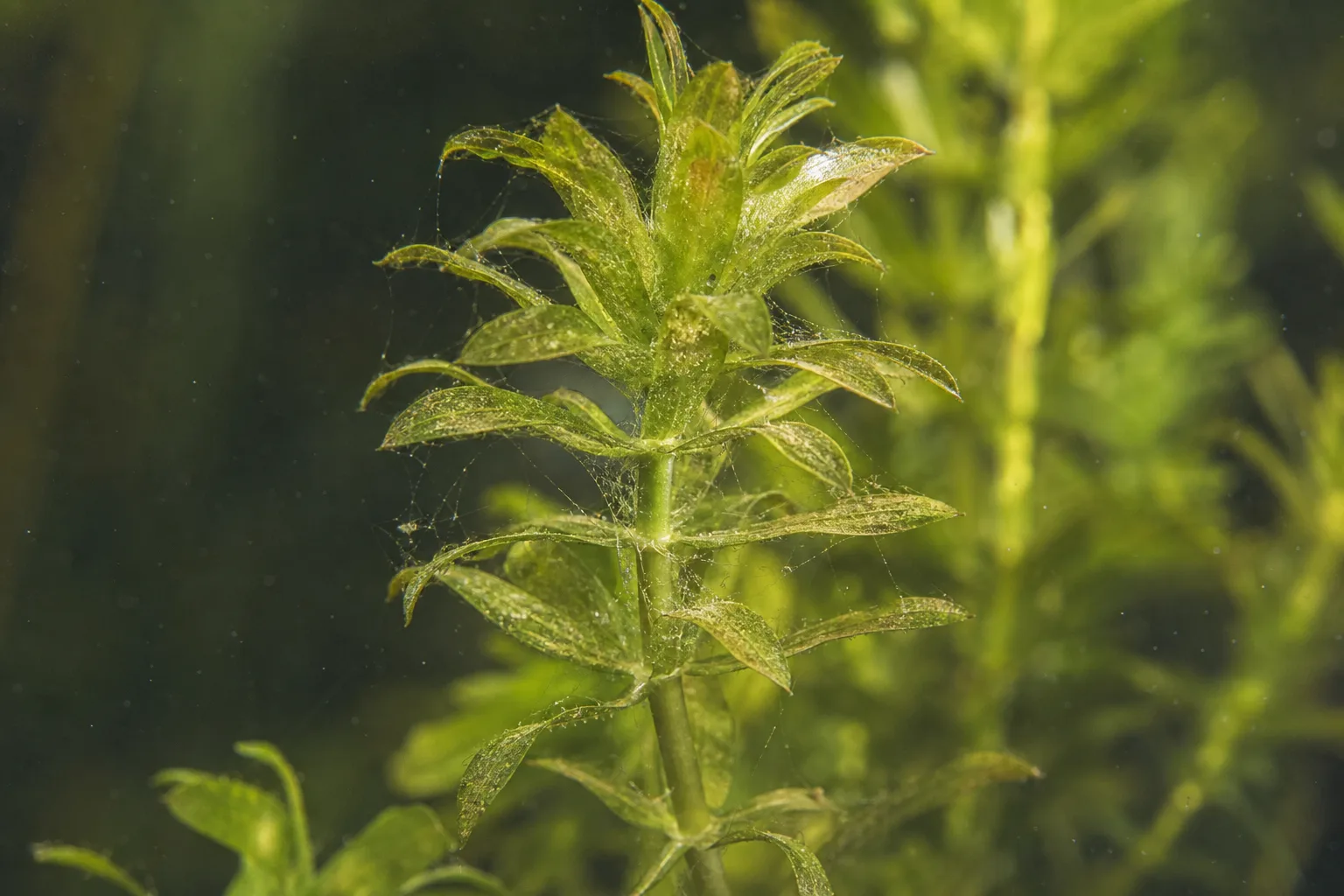
Spider Mites on Anacharis / Elodea: Causes, Checks & Fixes
This guide covers spider mites on Anacharis / Elodea. See also the general Spider Mites guide, watering, and light pages for this plant.
Spider Mites on Anacharis / Elodea: Causes, Checks & Fixes
Quick answer
Spider mites on Anacharis (Egeria densa) almost always mean emersed stems above the waterline-fine webbing and stippling on nursery tips, pond-edge growth, or stems left floating too high in a turtle tub. Healthy submerged whorls in a closed aquarium are not normal mite habitat; the twospotted spider mite prefers hot, dry conditions on leaf undersides, not tissue under continuous water.
First step: trim every infested emersed section, treat remaining cuttings off-tank with insecticidal soap or a 70% alcohol wipe, rinse in dechlorinated water, and plant only firm submerged nodes.
This guide covers submerged aquarium, riparium, and pond-edge culture-not terrestrial houseplant pots. For copper sensitivity during fish medications, see chemical damage on Anacharis. For white cottony clusters instead of webbing, see mealybugs on Anacharis. For mushy translucent melt-not stippling-see transparent leaves.
Why spider mites appear on emersed Anacharis
Anacharis is often grown emersed at wholesale nurseries-stems rooted in wet trays with leaves in open, warm greenhouse air. That setup matches exactly where twospotted spider mites, Tetranychus urticae, multiply fastest: hot, dry microclimates on leaf undersides. Greenhouse scouts focus on warm, dry locations near heating pipes, doorways, and hanging stock-same benches where emersed aquatic plants are held before shipping.
Why bagged nursery shipments are a mite trap: Plastic-wrap bunches keep stem bases wet but leave upper whorls in humid, still air at the bag opening. That pocket is warm, poorly ventilated, and dry on leaf surfaces-the same microclimate Ontario greenhouse IPM guides flag for early spider-mite colonies. Webbing that appears within one to two weeks of a new purchase is often a hitchhiker from that emersed tip, not a tank-water problem.
Common entry paths for aquarium hobbyists:
- Bagged bunches with emersed tips - plastic-wrap shipments keep stems wet at the base but leave upper leaves in humid, still air where mites establish.
- Ripariums and turtle basking setups - stems intentionally emergent above a shallow water column create a permanent dry zone at the waterline.
- Pond-edge plantings - Egeria densa allowed to break the surface in outdoor tubs.
- Cross-contamination from houseplants - mites walk from infested pothos, herbs, or greenhouse stock on the same shelf to emersed Anacharis tips. Mites are easily carried on workers and tools between benches.
Why submerged culture stays clean: Underwater whorls lack the dry leaf surface mites need for feeding and egg-laying. If damage is limited to tissue above the waterline while submerged nodes stay firm and green, you are dealing with a terrestrial-phase pest on emersed tissue-not a water-quality crash. Checking soil moisture or pot drainage will not help; this is an aquarium and greenhouse-air problem.
What spider mites look like on emersed Anacharis
On emersed Egeria densa tips and waterline stems, expect:
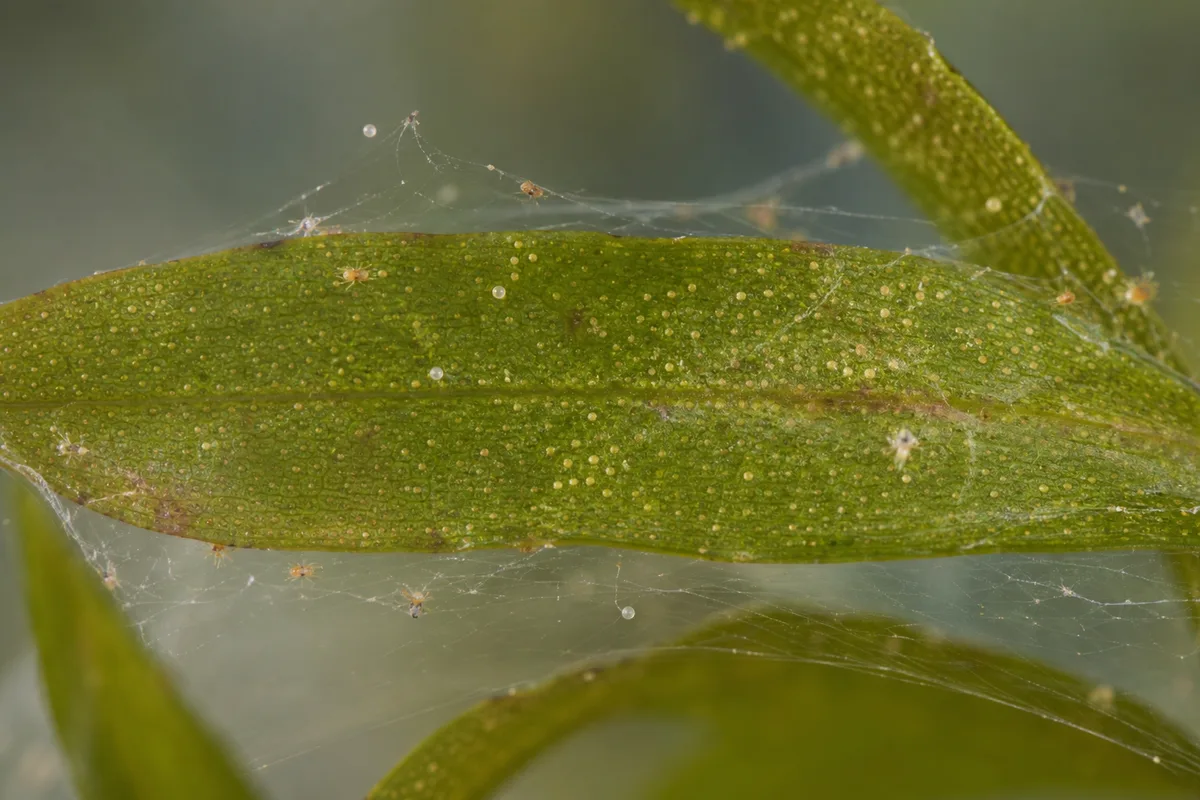
Spider Mites symptoms on Anacharis / Elodea - compare with healthy tissue on the same plant.
- Fine silk webbing between leaves and along stems-all spider mites spin webbing on the host plant, often visible without magnification on emersed whorls.
- Yellow or gray stippling - each feeding puncture collapses chlorophyll, producing a bleached or bronzed fleck pattern on emersed leaves.
- Dull, bronzed emersed tips while submerged whorls below the waterline stay bright green.
- Tiny moving dots on leaf undersides with a 10× to 15× hand lens-mites are about 1/50 inch long with eight legs, not six like insects.
- Cast skins and empty eggshells on undersides when populations are established.
Visual check at the waterline (no photo needed): Hold the stem at tank level and compare tissue above versus below the meniscus. Mite damage shows as matte, bronzed whorls with visible silk threads bridging leaf gaps on emersed tips; submerged whorls on the same stem should stay glossy green and web-free. Mealybugs look like discrete white cotton balls at nodes-not fine strands between leaves.
Does not match spider mites:
- Translucent, mushy submerged whorls with foul tank odor - melt or water stress, not mites.
- White cottony masses at nodes - mealybugs, not silk webbing.
- Soft green pear-shaped insects on emersed tips - aphids, visible without magnification.
- Uniform yellowing from the base up in otherwise firm submerged stems - nitrogen deficiency, not stippling with webbing.
Confirm mites vs. melt, mealybugs, and deficiency
Work through this checklist in order:
- Location test - Is webbing or stippling only on tissue above the waterline or on nursery emersed tips? Submerged-only damage points away from mites.
- Tap test - Hold white paper under suspect emersed leaves and strike sharply. Mites fall onto the paper and are easier to see than on green foliage. Moving specks confirm active infestation.
- Hand-lens check - Examine undersides for eight-legged mites, cast skins, and webbing. A 10× to 15× magnifier is essential for eggs and early stages.
- Webbing vs. cotton - Fine silk strands between leaves = mites. Waxy white clusters = mealybugs.
- Houseplant audit - Scan shelves within a few feet of emersed tubs or quarantine tanks for stippled pothos, herbs, or ivy.
- Purchase timing - Webbing appeared within one to two weeks of a new emersed bunch? Strong hitchhiker signal.
| Sign | Spider mites | Mealybugs | Melt / water stress | Nitrogen deficiency |
|---|---|---|---|---|
| Location | Emersed tips, waterline | Emersed nodes | Submerged whorls | Whole stem, base up |
| Webbing | Fine silk strands | None | None | None |
| Texture | Stippled, firm | Cottony masses | Translucent, mushy | Firm, pale green |
| Tap test | Moving specks | No specks | No specks | No specks |
| Submerged whorls | Usually clean | Usually clean | Affected | Affected |
Is stippling on submerged whorls ever spider mites? Almost never. Fully underwater tissue lacks the dry surface mites need. If you see uniform damage deep in the water column with no webbing at the surface, work through water stress and nitrogen deficiency before treating for mites.
First fix: remove, treat off-tank, submerge clean stems
First action: cut away every emersed section showing webbing or heavy stippling. Bag and trash trimmings-do not compost near ponds. Do not spray anything into aquarium water in the same hour.
Off-tank treatment (fish-safe workflow)
- Move firm cuttings to a separate bucket of matched-temperature dechlorinated water. Fish and turtles stay in the display tank.
- Treat emersed portions only (or fully removed stems before replanting):
- Insecticidal soap labeled for mites - soaps are effective against mites and among the least toxic options; coat leaf undersides thoroughly because soaps must contact the pest directly.
- 70% isopropyl alcohol on a cotton swab - wipe emersed nodes and leaf undersides; useful for light infestations on small tips.
- Rinse thoroughly in clean dechlorinated water until no soap or alcohol smell remains on stems.
- Plant only submerged nodes - bury or weight stems so no emersed leaves remain above the waterline.
- Repeat in five to seven days - most miticides do not kill eggs; two or more applications are required.
When submersion alone is enough
If you caught webbing early on a new nursery bunch and all infested emersed tips were removed, firm submerged nodes often need no chemical treatment-provided no dry leaves remain above water and no mite-heavy houseplants share the space. Watch for new webbing at the waterline for two weeks.
When to discard nursery stock vs. salvage nodes
Salvage when submerged nodes are firm, green, and web-free after trimming all emersed tissue-common on pet-store bunches where only the bagged tips were infested.
Discard when webbing covers most of the bunch, emersed nodes are limp or black at the base, or two properly timed off-tank soap cycles fail and mites reinfest from an untreated houseplant shelf. Starting fresh with a quarantined submerged cutting is faster than nursing a heavily stippled mat.
Quarantine for new purchases
Hold new bunches in a quarantine tub two to three weeks before the display tank. Trim emersed growth on day one, inspect daily with a hand lens, and treat off-tank at the first sign of stippling. See the Anacharis propagation guide for floating-acclimation steps after quarantine clears.
What never to dose into aquarium water
- Horticultural oil, neem oil, or terrestrial miticides - lethal to fish, shrimp, and turtles; Anacharis tissue absorbs tank chemicals fast.
- Copper-based ich or algae medications - Egeria densa is extremely sensitive to copper; unrelated to mites but a common hobbyist mistake when panicking about pests.
- Random dish soap in the tank - Laundry soaps and detergents are less consistent than labeled insecticidal soap and can harm livestock.
- Broad-spectrum insecticides - kill beneficial tank invertebrates and often flare mite outbreaks by removing predators.
Treat emersed tissue out of the tank, rinse, then return submerged stems only.
Recovery timeline for emersed damage
| Phase | Timing | Good signs | Bad signs |
|---|---|---|---|
| Trim + off-tank treat | Days 1–3 | No new webbing on cut stems | Webbing spreads to new emersed growth |
| Submerged regrowth | Days 7–14 | New whorls at submerged tips; pearling returns | Firm nodes turn translucent |
| Cosmetic recovery | Weeks 2–4 | Stippled emersed leaves replaced by new submerged whorls | Repeated stippling after two soap cycles |
Stippled emersed leaves do not green up again-judge recovery by clean new submerged growth at stem tips, not by waiting for bronzed emersed tissue to recover. Old emersed leaves may melt during transition to fully submerged culture on Egeria densa-that is acclimation, not a failed mite treatment, if submerged nodes stay firm.
How to prevent spider mites on Anacharis next time
- Submerge all stems - trim any growth that breaks the waterline in closed aquariums.
- Quarantine every purchase two to three weeks; trim emersed tips on arrival.
- Separate emersed tubs from houseplant shelves - mites hitchhike on air currents and hands.
- Improve airflow on greenhouse benches - dry, still air favors mite explosions; misting emersed holding trays raises humidity on leaf surfaces.
- Inspect weekly with a hand lens on any intentionally emersed culture (ripariums, turtle tubs).
- Never release trimmings outdoors - Egeria densa spreads vegetatively in waterways when aquarium waste is dumped.
Riparium and turtle-tub tradeoff: Fully submerged display tanks rarely need ongoing mite treatment once emersed tips are trimmed. Intentional emersed growth in ripariums or on turtle basking platforms cannot be protected by submersion alone-you are maintaining a permanent mite-suitable zone. Budget for weekly hand-lens checks and off-tank spot treatment, or accept that bench-level IPM (predatory mites, humidity management) becomes part of the setup.
For persistent greenhouse infestations on large emersed stock, commercial growers sometimes release predatory mites such as Phytoseiulus persimilis-practical mainly on nursery benches, not inside fish tanks.
When to worry
A few stippled emersed tips on one new bunch after off-tank soap and submersion is manageable-not a tank emergency. Escalate when:
- Webbing returns within five days after two properly timed soap treatments.
- Emersed growth is intentional (large riparium, turtle dock) and you cannot keep tissue submerged-persistent dry zones need bench-level IPM, not one rinse.
- Houseplant mites on the same shelf are untreated-Anacharis will be reinfested.
Riparium and turtle-tub escalation: When emersed Anacharis is part of the display design and cannot be trimmed below the meniscus, isolate the setup from houseplant shelves, run daily hand-lens checks on whorl forks at the waterline, and treat off-tank at the first new stippling. If webbing persists after two soap cycles and nearby pothos or herbs still show mites, the aquarium plant will be reinfested until the terrestrial source is treated or the emersed zone is reduced. Commercial bench options include predatory Phytoseiulus releases on emersed nursery stock-not inside stocked tanks.
If submerged whorls turn mushy with cloudy, foul water, pivot to water quality troubleshooting-that pattern is not spider mites.
Escalation summary - which path fits your setup
| Your situation | First action | Next step if mites persist | When to discard stock |
|---|---|---|---|
| New nursery bunch; firm submerged nodes | Trim emersed tips; submerge nodes | Off-tank soap if webbing returns | Webbing on most of bunch after two soap cycles |
| Closed aquarium; accidental emersed tip | Trim to waterline; tap test | Quarantine tub 2–3 weeks | Nodes turn translucent underwater |
| Riparium / turtle dock with intentional emersed growth | Daily hand-lens at waterline | Off-tank spot treat; treat houseplant shelf | Limbs black at emersed nodes |
| Houseplant mites on same stand | Isolate Anacharis tub | Treat terrestrial plants first | Reinfection every 5–7 days despite soap |
Submersion alone is enough when all emersed tissue is removed, submerged nodes stay firm, and no dry leaves or mite-heavy houseplants share the airspace.
Two off-tank soap cycles beat a single rinse when eggs hatch on remaining emersed tips-repeat on the five-to-seven-day interval UF/IFAS recommends for mite eggs.
Bench-level IPM beats home rinses when intentional emersed culture cannot be submerged and houseplant mites on the same shelf stay untreated.
Related Anacharis problems
Use these sibling pages when symptoms overlap-each URL scopes a different branch:
- Anacharis overview - species hub, submerged culture, and invasive-disposal rules
- Water stress - translucent submerged melt without webbing
- Transparent leaves - acclimation melt vs. pest stippling
- Chemical damage - copper and medication melt
- Mealybugs - cottony white clusters at nodes, not fine silk
- Aphids - soft green insects on emersed tips
- Nitrogen deficiency - uniform pale green without webbing
- Overwatering - water-quality crash misread as pests
- Light - regrowth after pest removal
- Watering - parameters for recovery
- Propagation - quarantine and floating acclimation
- Spider mites on hornwort - emersed-culture mite workflow on another common oxygenator
- Spider mites on cabomba - fine-leaf aquatic with similar emersed-tip risk
Conclusion
When only emersed tips show webbing and submerged nodes stay firm, trim above the waterline, run one off-tank soap cycle, and submerge clean nodes-recovery usually shows in new whorls within seven to fourteen days. When webbing returns after two properly timed soap treatments, treat untreated houseplant shelves or discard heavily infested nursery stock before replanting. When intentional emersed growth in a riparium or turtle tub cannot be submerged, escalate to daily hand-lens monitoring and bench-level IPM-submersion alone will not protect tissue above the meniscus. When submerged whorls turn mushy, pivot to water stress-that is not a mite pattern.
FAQs
Can spider mites live on fully submerged Anacharis?
No. Twospotted spider mites need dry leaf surfaces and thrive in warm, dry air-the opposite of underwater whorls. If you see stippling only on stems sticking out of the tank or on nursery emersed tips, submerging firm nodes after off-tank treatment usually ends the infestation. Fully submerged leaves in a closed aquarium are not mite habitat.
How do I treat emersed Anacharis stems without harming fish?
Never spray soap, oil, or miticide into tank water. Remove affected stems to a separate bucket, wipe or rinse emersed leaves with insecticidal soap or 70% isopropyl alcohol, rinse thoroughly in dechlorinated water, and return only submerged portions. Repeat every five to seven days because most products do not kill eggs.
How can I confirm spider mites on Anacharis / Elodea?
Look for fine silk webbing and yellow stippling on emersed leaves near the waterline-not mushy translucent submerged whorls. Tap suspect leaves over white paper; moving specks confirm mites. Use a 10× hand lens on leaf undersides for eight-legged dots and cast skins.
I bought Anacharis with emersed tips from a nursery-how do I quarantine for mites?
Hold new bunches in a quarantine tub two to three weeks. Trim all emersed growth above the waterline, inspect daily with a hand lens, and treat any webbing off-tank before planting in your display tank. Keep the tub away from houseplant shelves where mites hitchhike.
How do I prevent spider mites on Anacharis next time?
Plant only submerged stems, trim emergent growth at the waterline, and quarantine new purchases. Avoid dry greenhouse benches without airflow checks. Isolate emersed culture tubs from aphid- or mite-heavy houseplants. Never release trimmings outdoors-Egeria densa spreads vegetatively in waterways.
Can I keep emersed growth in a riparium without mites returning?
Only if you accept ongoing bench-level IPM. Intentional emersed leaves in ripariums and turtle basking setups create permanent dry zones where twospotted spider mites can reestablish from houseplants or greenhouse stock. Trim to the waterline when possible; when emersed growth is required, inspect whorl forks daily, treat off-tank at first stippling, and isolate the setup from mite-heavy shelves-submersion alone will not protect tissue that stays above the meniscus.
When to use this page vs other Anacharis / Elodea guides
- Anacharis / Elodea watering guide - Use for routine moisture checks before assuming spider mites is the main issue.
- Anacharis / Elodea problems hub - Browse all 34 common issues on this species.
- Low Humidity on Anacharis / Elodea - Different entry point when symptoms overlap with spider mites.
- Leaf Drop on Anacharis / Elodea - Different entry point when symptoms overlap with spider mites.
- Slow Growth on Anacharis / Elodea - Different entry point when symptoms overlap with spider mites.