Leaf Miners on Anacharis / Elodea: Causes, Checks & Fixes
Quick answer
Leaf miners on Anacharis tunnel inside emersed leaves above the waterline—not healthy submerged whorls. First step: trim every mined emersed section, bag the trimmings, and submerge only firm clean stems below the surface.
Leaf Miners on Anacharis / Elodea: Causes, Checks & Fixes
This guide covers leaf miners on Anacharis / Elodea. See also the general Leaf Miners guide, watering, and light pages for this plant.
Leaf Miners on Anacharis / Elodea: Causes, Checks & Fixes
Quick answer
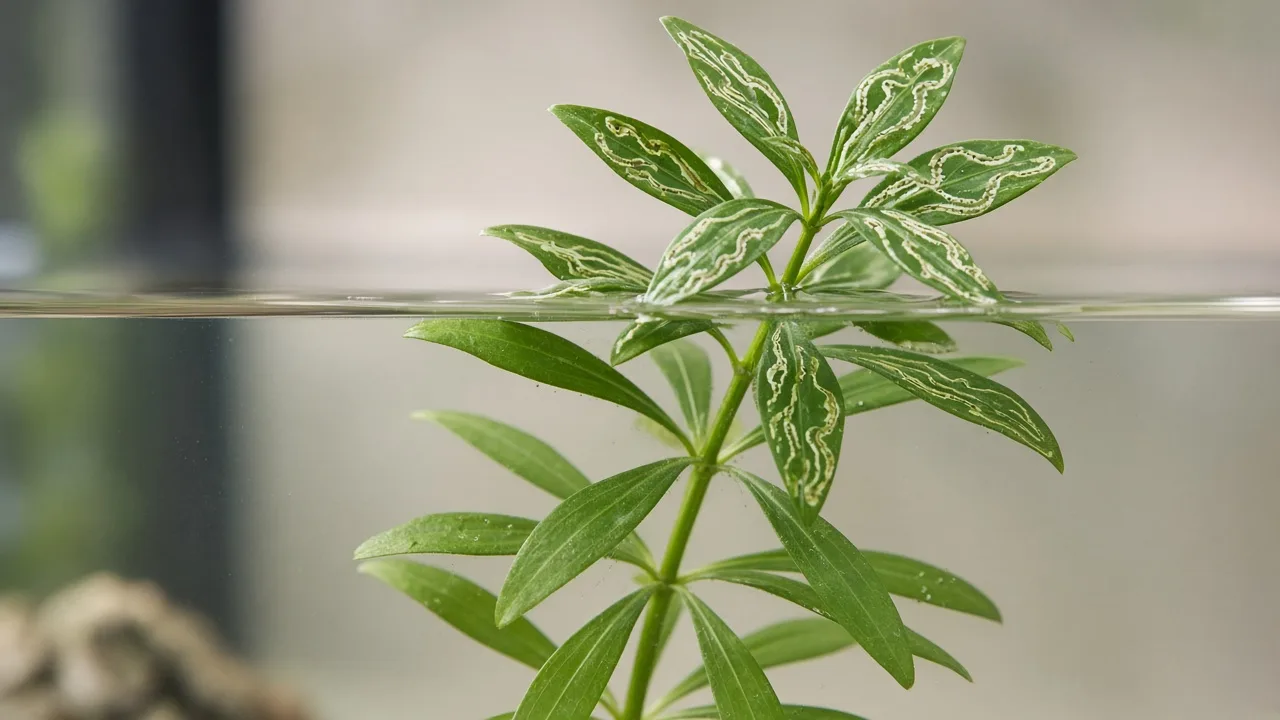
Pale winding trails inside leaves sticking out of the water? On Anacharis (Egeria densa), leaf miners almost always attack emersed whorl leaves above the waterline—propagation tubs, pond margins, riparium dry zones, or stems left floating during acclimation. Look for bordered pale serpentine tunnels visible when you backlight a thin emersed blade, often with a dark frass line down the center. Submerged whorls below the surface typically stay clean.
First step: trim every mined emersed section, bag the trimmings, and submerge only firm clean stems. Do not dose terrestrial pesticides into aquarium water.
For how leaf miner larvae tunnel inside foliage and why contact sprays underperform, see our leaf miners guide. On Anacharis, the practical pattern is emersed-tip mines above the waterline, clean submerged whorls below, and extra caution because insecticides must never enter aquarium water—treat emersed tissue off-tank only.
This guide covers submerged aquarium, turtle tub, riparium, and pond-edge culture—not houseplant pots. For soft-bodied clusters on emersed tips instead of internal tunnels, see aphids on Anacharis. For ragged chew holes with pellet frass, see caterpillars on Anacharis. For mushy translucent submerged melt—not insects—see transparent leaves. For culture and quarantine tubs, see the Anacharis overview and propagation guide.
Leaf miners vs. melt vs. snail grazing on Anacharis
Use location on the stem as your first split—this saves you from chasing ammonia or nitrate fixes when the problem is emersed tissue:
| Pattern | Location | Key sign | First action | Urgency |
|---|---|---|---|---|
| Leaf miners | Emersed whorl leaves above waterline | Bordered pale tunnel inside blade; dark frass line | Trim and bag mined emersed tissue; submerge clean stems | Moderate—trim first |
| Aphids | Emersed tips above waterline | Soft pear-shaped bodies, honeydew | Trim infested emersed tissue; submerge clean stems | Moderate—trim first |
| Caterpillars | Emersed or margin leaves | Ragged through-holes with pellet frass | Hand-pick larvae; trim damaged emersed sections | Moderate—inspect at night |
| Submerged melt | Underwater whorls | Translucent mush, foul odor | Fix water quality—not insect treatment | High if ammonia present |
| Slugs and snails | Any exposed tissue | Ragged marginal scrapes, slime trails | Remove grazers; trim damaged tips | Low to moderate |
If submerged whorls are firm and green while pale tunnels appear only inside emersed leaves above the waterline, you are dealing with a terrestrial-phase pest on emersed tissue—not an underwater plague or water-quality crash.
What leaf miners look like on emersed Anacharis stems
On emersed Egeria densa tips and waterline whorls, expect:
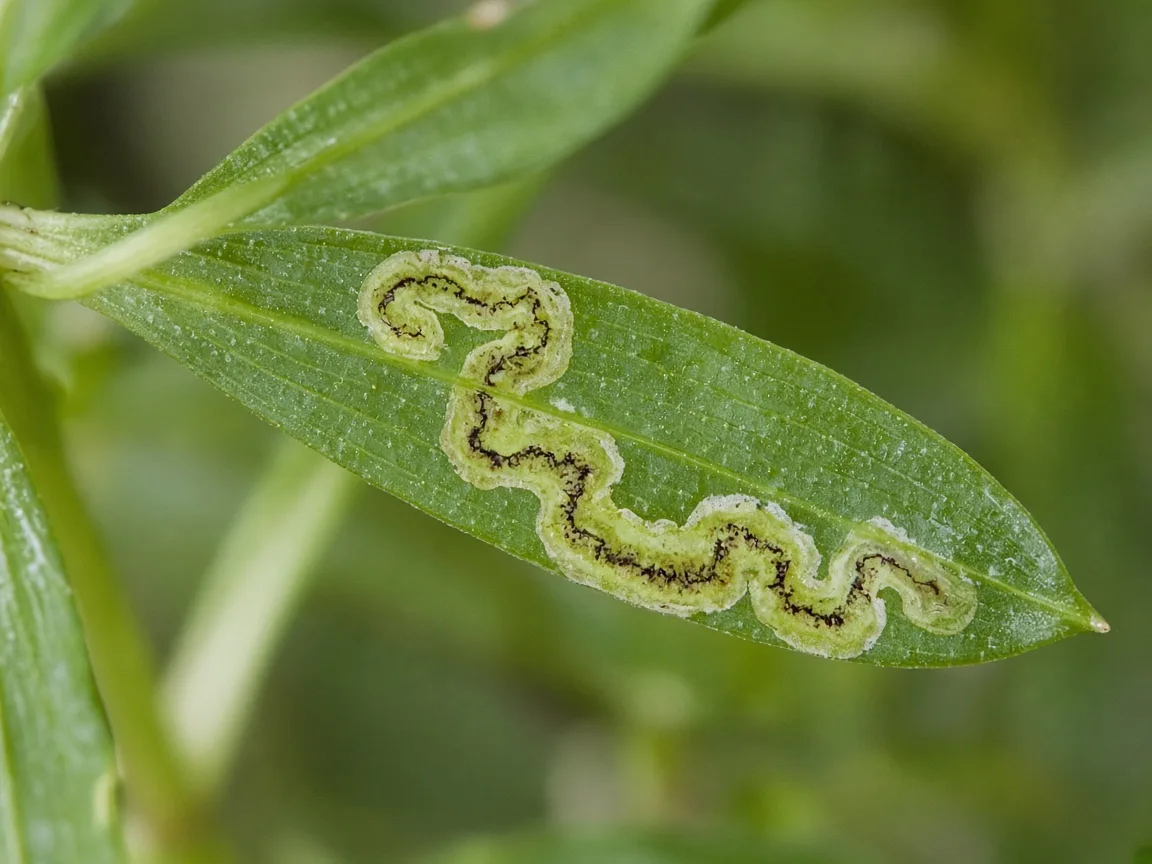
Pale bordered tunnel with a dark frass line inside a thin emersed whorl leaf—backlight the blade to confirm the mine stays enclosed between both surfaces.
- Serpentine pale tunnels winding inside emersed whorl leaves—not open ragged holes through both surfaces
- Dark frass line running through the pale trail as the larva feeds between leaf surfaces
- White stippling on nearby emersed leaves from adult females puncturing tissue to feed on sap before laying eggs
- Expanding mines that lengthen over several days on the softest new emersed growth at stem tips
- A minute yellow maggot visible inside an active mine if you gently tear the widest part of a thin emersed leaf
- Brown seedlike pupae on propagation tub rims, bench surfaces, or damp soil near open-top tubs after larvae exit mined leaves
Compare newest emersed tip growth to submerged whorls on the same stem: leaf miners stay above water; clean submerged sections confirm the plant can recover once infested emersed tissue is removed.
Does not match leaf miners:
- Soft pear-shaped insect clusters at emersed tips—aphids, not internal tunnels
- Ragged through-holes with pellet frass on emersed leaves—caterpillars, not enclosed trails
- Translucent, mushy submerged whorls with foul tank odor—melt or water stress, not insects
- Ragged marginal scrapes with slime trails—slugs and snails, not bordered internal mines
Backlight test on thin emersed whorl leaves (Anacharis only)
Anacharis whorl leaves above the waterline are thin enough to backlight with a phone flashlight held behind the blade. A true leaf miner trail shows as a bordered tunnel with intact green tissue on both sides of the pale path and often a dark frass line down the center. Caterpillar damage punches through both surfaces—you see open air through the hole, not an enclosed tunnel. Snail grazing removes tissue along leaf margins without an internal bordered mine. This backlight check takes ten seconds and prevents dosing aquarium water when the plant only has mechanical scrape damage or old brown empty mines.
Waterline split: emersed mines vs. submerged clean whorls (Anacharis only)
Egeria densa grows as a fast submerged column feeder with whorls of four to six leaves every few centimeters along the stem. Leaf miner flies lay eggs in emersed leaf tissue exposed to air—the same habitat where aphids colonize emersed tips. Fully submerged whorls in a closed aquarium do not offer the emersed blade surface where larvae mine between epidermal layers. When you diagnose, always compare emersed tips to underwater whorls on the same stem: mines above water plus firm green submerged nodes mean trim emersed tissue, not a water-change emergency.
Propagation tub and pond-margin emersed growth (Anacharis only)
Hobbyists often keep stems emersed in propagation tubs or allow pond-margin growth above the waterline for faster multiplication and easier trimming. That intentional emersed zone is where leaf miners establish—warm greenhouse benches, open-top turtle tubs with basking ledges, and summer pond edges all create the same microhabitat. Stems left floating with long emersed sections during shipping acclimation are another common entry point. A closed aquarium with stems fully submerged carries much lower leaf miner risk than an open-top tub where tips creep above water all season.
Why Anacharis gets leaf miners
Leaf miners are not caused by low nitrates, dim aquarium light, or underwater water-quality crashes. They arrive on emersed tissue exposed to open air:
- Greenhouse or pond-supplier bundles with stems protruding above rubber bands or wet newspaper
- Emersed propagation tubs where stems grow above the water surface for faster multiplication
- Pond-margin stems allowed to creep above the waterline in summer tubs
- Garden plants overhanging outdoor ponds—winged leaf miner flies move from vegetables, ornamentals, and weeds to emersed Anacharis tips
- Indoor propagation benches near leaf-miner-heavy houseplants on the same shelf
- Turtle basking setups and riparium dry zones that intentionally keep emersed growth
Because Egeria densa spreads vegetatively through stem fragments, hobbyists often keep tips emersed briefly during shipping acclimation—that window is when flies lay eggs in soft new whorl leaves. Rubber-band or tie points on supplier bundles compress stems and create sheltered crevices where pupae may hide at purchase.
Why submerged whorls rarely host leaf miners: Larvae feed beneath the leaf surface, creating twisting trails in tissue exposed to air. Fully submerged whorls in a closed aquarium lack the emersed blade structure where mines form.
Leaf miners rarely kill established plants—unusually heavy mining can slow growth and cause infested leaves to drop, but a stable Anacharis in clean water with adequate light usually outgrows cosmetic emersed damage if you remove mines early.
How to confirm the cause
Work through this checklist in order:
- Location test—Tunnels only inside emersed leaves above the waterline? Submerged whorls clean? Strong leaf miner signal.
- Backlight test—Bordered internal tunnel with frass line? Confirms miner—not ragged caterpillar hole or snail scrape.
- Expansion check—Mine lengthening over several days means an active larva; a brown empty trail may be old damage.
- Stippling audit—White feeding punctures on nearby emersed leaves support fly activity before tunnels appear.
- Purchase timing—Mines appeared within one to two weeks of a new emersed bunch? Strong hitchhiker signal from nursery or pond supplier.
- Bench survey—Neighboring propagation tubs or garden pots with similar internal trails explain sudden mines on otherwise healthy stems.
- Submerged cross-check—Translucent mush underwater with foul odor points to water stress or melt—not leaf miners.
If you see only soft-bodied clusters without internal tunnels, suspect aphids. Open ragged holes with frass pellets point to caterpillars, not miners.
First fix for Anacharis
Trim every mined emersed section, bag the trimmings, and submerge only firm clean stems below the waterline.
Clip off affected emersed tissue two to three nodes below the lowest visible mine so no active larva remains in the trimmed section. Bag removed foliage in the trash—never compost pond trimmings or release fragments into local waterways. Wipe scissors with alcohol between cuts if mines are widespread across multiple emersed tips.
Do not reach for insecticidal soap, neem, or horticultural oil as a first response on Anacharis with a few cosmetic emersed mines. Larvae inside leaves are shielded from contact products—insecticides are not very effective for leafminer control—and any product entering aquarium water risks fish, shrimp, and turtle health. Do not change water parameters or fertilize a mined bunch before you remove active larvae; soft new emersed growth is easier for flies to puncture.
| Confirmed pattern | First fix |
|---|---|
| Active serpentine mine inside emersed leaf | Trim mined emersed sections; bag foliage; submerge clean stems |
| Ragged through-hole with frass pellets | Hand-pick caterpillars; see caterpillars |
| Soft pear-shaped clusters on emersed tips | Trim and bag; see aphids |
| Translucent mush underwater | Fix water quality—see transparent leaves |
Step-by-step recovery
Once mined emersed tissue is removed:
- Scout every three to five days through warm months when fly generations turn over quickly. Inspect newest emersed tips and any regrowth above the waterline.
- Keep baseline care steady—moderate aquarium light, stable temperature, and regular partial water changes. Wild swings in water quality slow replacement growth after you prune mines.
- Submerge trimmed stems fully when your setup allows—reducing emersed surface area lowers reinfestation risk from bench flies.
- Hold extra fertilizer while mines are active on emersed regrowth. Resume light feeding only once new mines stop appearing for two weeks.
- Inspect neighboring tubs and bench plants and remove early mines on shared propagation stock before adults reinfest Anacharis.
- Escalate only if needed. If mines cover most emersed tips or keep spreading despite weekly trimming for three weeks, treat emersed portions in a separate bucket with labeled products per extension guidance—rinse thoroughly in dechlorinated water before returning submerged stems. Treat this as a last resort, not a first response.
For a cheap nursery bundle with mines on every emersed tip, restarting from a clean submerged cutting may be faster than fighting entrenched pests—see Anacharis propagation when salvage is the goal.
Recovery timeline
| Phase | Timing | Good sign | Bad sign |
|---|---|---|---|
| After first trim | Days 1–5 | No new expanding mines on emersed regrowth | Fresh trails on new emersed whorls |
| Submerged growth | Weeks 2–4 | Firm green whorls below waterline | Mushy submerged melt spreading |
| Cosmetic | Ongoing | Old brown mines stable on trimmed sections | Stippling returns on emersed tips |
Mined tissue never regains its original green color. Judge success by absence of new expanding mines on emersed regrowth and firm submerged whorls—not by old trails fading.
Cosmetic mines on a few emersed tips of a vigorous bunch: visible improvement within days once you remove affected tissue; clean submerged growth continues within one to two weeks if flies are not laying heavily.
Small propagation tub with mines on every emersed leaf: may recover slowly from submerged nodes, but heavy mining on stressed stems in poor light sometimes warrants discarding the batch and restarting from a clean cutting.
Lookalike symptoms
| What you see | Likely cause | How to tell apart |
|---|---|---|
| Winding pale tunnel inside emersed leaf | Leaf miner | Bordered trail with frass line; surface mostly intact |
| Ragged hole through emersed blade | Caterpillars | Tissue removed; frass pellets on surface |
| Soft insect clusters on emersed tips | Aphids | Bodies visible; sticky honeydew—not internal mine |
| Translucent mush underwater | Melt / water stress | No bordered tunnel; foul tank odor |
| Ragged marginal scrapes, slime trails | Slugs and snails | No internal bordered mine |
Route full-thickness holes without internal tunnels to holes in leaves on Anacharis.
Mistakes to avoid
- Treating submerged melt as leaf miners—mines stay inside emersed blades; mushy underwater whorls mean water quality, not flies.
- Pouring soap or pesticide into aquarium water—hazardous to fish, shrimp, and turtles; larvae on emersed tissue are not reached anyway.
- Composting or releasing mined trimmings—Egeria densa fragments establish in wild waterways; bag and trash all pond trimmings.
- Spraying emersed tissue without off-tank isolation—residue drifts into water and stresses aquatic livestock.
- Using broad-spectrum insecticides for aphids or spider mites on the bench, then wondering why leaf miners exploded two weeks later when natural enemies are killed.
- Inspecting only submerged whorls while active mines sit on emersed tips above the waterline.
Anacharis care cross-check
Leaf miners are a pest issue on emersed tissue, not a routine underwater chemistry problem—but stressed Anacharis recovers slower after you remove foliage.
- Water: Keep ammonia and nitrite at zero; see Anacharis watering. Foul water stresses stems during recovery; do not confuse melt with miners.
- Light: Moderate to bright aquarium or pond light supports replacement submerged growth—see Anacharis light.
- Substrate: Anchor or float per species habit—see Anacharis soil. Substrate choice does not cause leaf miners.
- Pruning: Regular pruning of emersed tips prevents long emersed zones that attract bench flies.
How to prevent it next time
- Quarantine new bundles 10–14 days in a separate tub before planting in display tanks.
- Inspect emersed tips at purchase—reject bunches with visible serpentine mines or heavy stippling.
- Keep stems fully submerged in closed aquariums when possible; trim emersed regrowth weekly on open-top tubs.
- Remove mines during weekly care before larvae exit to pupate on tub rims or bench surfaces.
- Isolate propagation benches from leaf-miner-heavy garden vegetables and ornamentals.
- Never release trimmings into ponds, streams, or storm drains—Egeria densa is invasive in many regions.
When to worry
Escalate beyond trim-and-submerge when:
- Most emersed tips on a propagation tub show active expanding mines.
- New mines appear every week on the same bunch despite consistent trimming for three weeks.
- Submerged whorls turn mushy after mining—check ammonia and see root rot or stem rot if tissue fails below water too.
- Mines spread to multiple tubs on one bench despite isolation.
For a display tank with scattered cosmetic mines on one emersed tip, worry less about plant death and more about appearance and spread—trim mined blades, keep water steady, and watch submerged whorls for firm green tissue.
Discard and restart from a clean submerged cutting only when every emersed tip is mined, repeated trimming failed, and no firm submerged nodes remain to salvage.
Conclusion
Leaf miners on Anacharis look alarming on emersed whorl foliage but rarely kill a well-cared-for submerged bunch. The larvae live inside emersed tissue where underwater contact sprays cannot reach, so your best tool is early trimming, bagging removed foliage, and steady aquatic care while submerged nodes push clean growth below the waterline. Save off-tank treatment for persistent outbreaks—and never dose pesticides into aquarium water.
Related Anacharis guides
- Anacharis overview — species hub, culture, and quarantine basics
- Anacharis watering — when water chemistry is not the issue
- Anacharis light — light for steady submerged replacement growth
- Anacharis propagation — clean cutting restart after heavy mining
- Anacharis pruning — emersed-tip management and trim technique
- Aphids on Anacharis — soft-bodied clusters on emersed tips
- Caterpillars on Anacharis — ragged holes with frass
- Transparent leaves on Anacharis — submerged melt vs. emersed pest damage
- Anacharis problems hub — all common issues on this species
When to use this page vs other Anacharis guides
- Anacharis watering guide — Use for routine water-quality checks before assuming leaf miners is the main issue.
- Anacharis problems hub — Browse all common issues on this species.
- Yellow leaves on Anacharis — Different entry point when yellowing overlaps with pest stress.
- Holes in leaves on Anacharis — Full-thickness damage vs. internal tunnels.
Related tool
Use the Plant Problem Diagnosis Tool to narrow causes for leaf miners on this plant before changing multiple variables at once.