Curling Leaves on Anthurium: Thirst, Humidity & Mite Checks
Quick answer
Curling leaves on Anthurium usually trace to dry top-inch soil, low humidity below the plant's 60–80% comfort band, root uptake failure in wet mix, or spider mites on glossy undersides. First step: probe whether the top inch of chunky aroid mix is dry or wet, then inspect the newest leaf undersides for stippling or webbing.
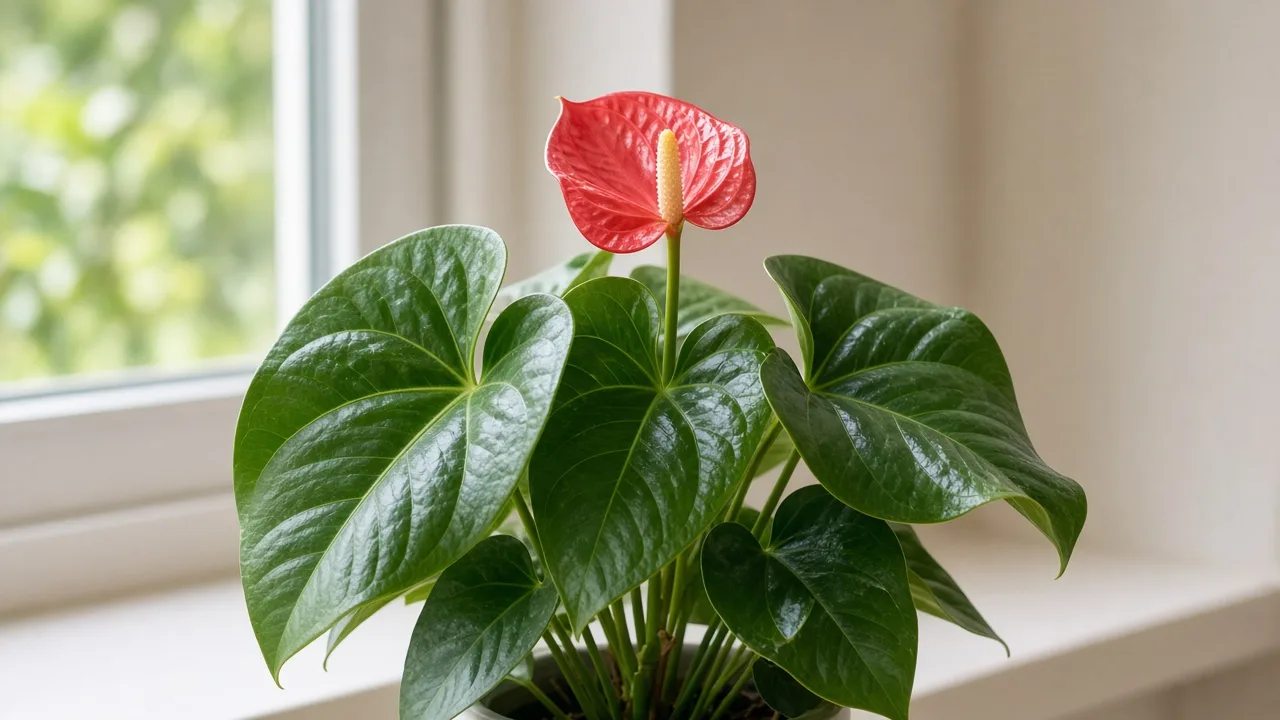
Curling Leaves on Anthurium: Causes, Checks & Fixes
This guide covers curling leaves on Anthurium. See also the general Curling Leaves guide, watering, and light pages for this plant.
Curling Leaves on Anthurium: Causes, Checks & Fixes
Quick answer
Curled leaves on Anthurium (Anthurium andraeanum, flamingo flower) mean the plant is losing turgor on glossy heart-shaped foliage—usually from dry top-inch soil, humidity below the 60–80% band this rainforest aroid expects, roots that cannot drink in wet mix, or spider mites on leaf undersides in heated winter air. For universal curl mechanics, see our curling leaves guide. On flamingo flower, top-inch soil moisture plus new-growth underside inspection narrow the cause fast.
First step: probe the top inch of chunky aroid mix and inspect the newest leaf undersides for stippling or fine webbing.
When to use this page vs other Anthurium guides
| Pattern | Read next |
|---|---|
| Dry top inch, light pot | Underwatering |
| Wet heavy pot, yellow lower leaves | Overwatering |
| Crisp edges only, normal soil moisture | Low humidity |
| Stippling + webbing on undersides | Spider mites |
| Silver streaks, black frass on new growth | Thrips |
| Twist on emerging spears only | Distorted leaves |
| Whole plant limp, not cupped | Wilting |
What curling leaves look like on Anthurium
Anthurium carries thick, glossy, heart-shaped leaves on long petioles from a short crown—curl shows differently than on thin prayer-plant foliage or succulent blades. Because it is an epiphytic tropical perennial with fleshy aerial roots, it often cups leaves before it fully wilts.
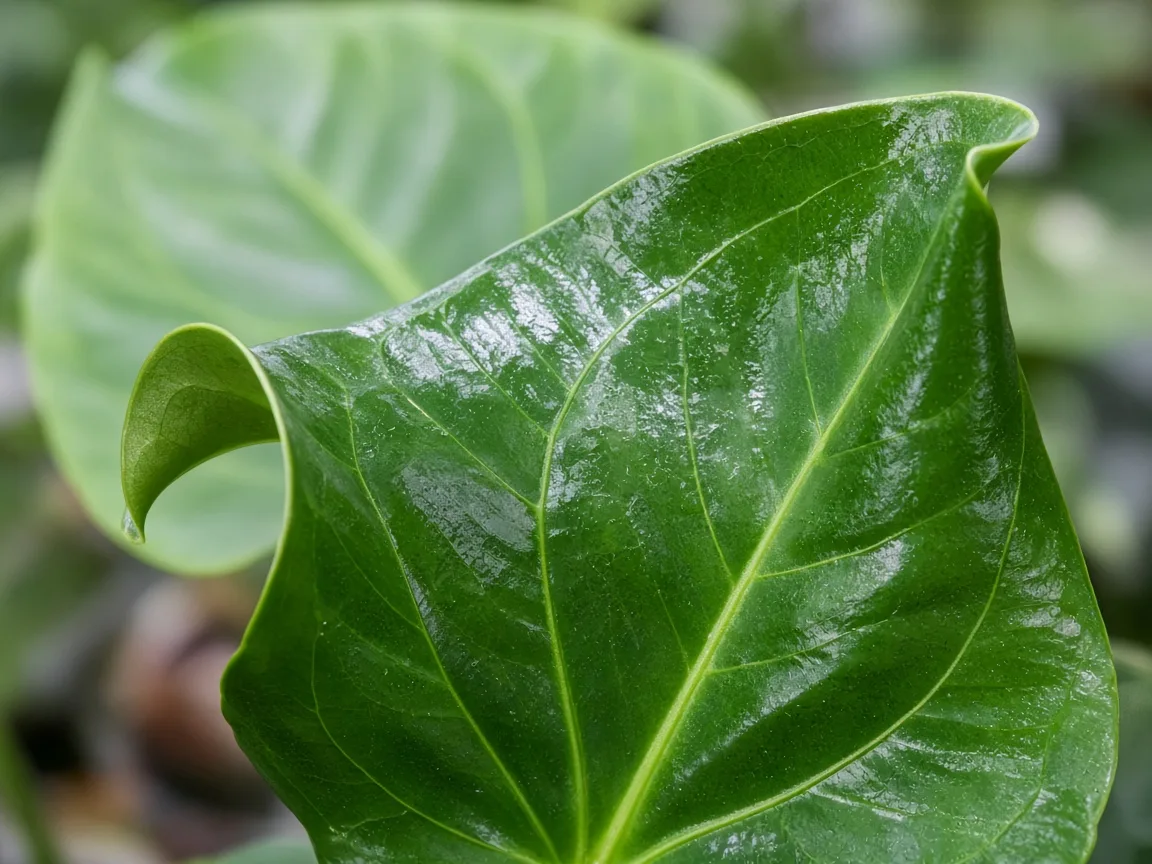
Cupped leaf tissue on flamingo flower—compare turgor with firm lower leaves on the same petiole.
Drought curl:
- Lengthwise inward roll when the top inch of soil feels dry and the pot lifts light
- Leaves feel thinner; margins may crisp before the whole blade droops
- Waxy spathes may dull or brown at edges while foliage still looks mostly green
Low-humidity curl:
- Cupped or rolled margins nearest a heat vent or hot afternoon window while soil moisture at depth reads adequate
- Symmetrical edge stress on exposed blades; shaded side stays flatter longer
- Often pairs with papery spathe margins—see low humidity when brown tips dominate
Root-stress curl (wet mix):
- Lower leaves curl while soil stays wet and the pot feels heavy for days
- Often follows calendar watering in dim light on dense peat-heavy mix
- Soft crown tissue or sour smell points to root rot, not thirst
Mite curl on glossy undersides:
- Cupped tips with fine yellow stippling on new growth in dry winter rooms
- Webbing tucked along the midrib or at spathe bases where humidity is lowest
- Twospotted spider mites reproduce fastest when indoor air drops below Anthurium’s comfort band
Normal new-spear curl:
- A tight emerging leaf may look twisted for a few days before opening flat in bright indirect light
- Persistent curl on fully expanded blades is never normal nyctinasty—Anthurium does not fold leaves daily like prayer plants
Spathe curl vs leaf curl on blooming Anthurium
Retail flamingo flowers often arrive with open spathes and a full leaf canopy. Curl on the waxy bloom bract is easy to miss because the spathe reflects light and hides early stress.
| Signal | Leaf curl pattern | Spathe signal | Likely driver |
|---|---|---|---|
| Drought | Inward roll, light pot | Dull color, crisp spathe margins | Dry root ball—see underwatering |
| Dry air | Margin cup, moist soil | Papery spathe edges, lost gloss | Humidity below 60%—low humidity |
| Mites | Stippling on upper leaf surface | Stippling on spathe, silk at peduncle base | Spider mites |
| Wet roots | Lower leaf cup, yellowing base | Spathes fade while mix stays wet | Overwatering |
Field note: A single aging spathe browning after months of display is normal senescence. Multiple spathes cupping or crisping early plus matching leaf curl fits active stress, not old bloom fade.
Why Anthurium gets curling leaves
Anthurium cups leaves before it collapses. This species evolved for brief wet-to-dry cycles in leaf litter with high relative humidity—not for bone-dry bark mix or saturated peat in a dim corner. UF/IFAS interior care directs allowing the medium to dry slightly between waterings, then watering thoroughly—the gap between “slightly dry” and “dust-dry throughout” is where curl appears.
Chunky aroid mix dries unevenly. Anthurium wants open, moisture-retentive but sharply draining compost with bark and perlite. In bright light above a radiator, the top inch can go dry in two to three days while owners still follow a weekly calendar. Surface crust can look briefly damp while the center is dry—curl follows.
Winter humidity paradox. The plant wants 60 to 80% RH yet furnace heat often drops room air to 30–45%. Leaves transpire faster than roots can supply water, so margins cup even when you watered recently. Mites exploit the same dry microclimate on glossy undersides.
Wet soil blocks uptake. In low light, Anthurium uses water slowly. Chronic sogginess damages fine roots; curled lower leaves on heavy wet mix mimic drought. Adding more water worsens the pattern—route to overwatering when the pot stays cool and heavy.
Cold drafts and temperature swings. NC State notes Anthurium does not tolerate cold drafts or sudden temperature changes. Winter window chill or AC blasts can curl exposed blades overnight while inner crown leaves stay flat.
Lookalike symptoms
| Pattern | Check | Likely cause |
|---|---|---|
| Cup + dry top inch | Light pot | Underwatering |
| Cup + stippling | Paper tap test | Spider mites |
| Cup + wet heavy pot | Sour smell? | Overwatering / root stress |
| Crisp edges only, moist soil | Hygrometer near foliage | Low humidity |
| Twist on new spear only | Fully open in 3–5 days? | Normal unfurl or distorted leaves |
| Bleached centers + curl | South window? | Not enough light / sun stress |
| Soft whole-plant flop | Stem feel | Wilting—wet vs dry fork |
How to confirm
- Probe top-inch moisture—do not trust surface crust. Insert a finger or skewer one-third into the pot. RHS recommends checking moisture about 5 cm below the surface before the next drink.
- Weigh the pot—light and dry confirms thirst; heavy and cool days after watering suggests wet-root curl.
- Paper tap test—hold a suspect leaf over white paper and tap; moving specks confirm mites before you change watering.
- Check microclimate—note heat vents, hot window glass, and winter chill within 60 cm of the crown.
- Inspect spathe bases—fine webbing at the peduncle often appears before lower leaves show heavy stippling.
- Read new growth—the next leaf should open flatter within two weeks after the correct fix; stagnant curl means the diagnosis is incomplete.
First fix for Anthurium
If the top inch of mix is dry and the pot is light, water thoroughly once and drain the saucer within 20 minutes. UF/IFAS directs thorough irrigation when the medium has dried slightly—not shallow splashes on crusted bark. If mites are confirmed with stippling or webbing, isolate and rinse every leaf underside with lukewarm water before any spray—see spider mites. If the pot is heavy and wet, pause water and review overwatering before adding more moisture for “curl.”
Move the pot off the heat vent if leaves cup despite moist soil—fix the microclimate with a humidifier or brighter bathroom placement per the light guide before you repot.
Mistakes to avoid
- Do not mist curled leaves as the primary humidity fix—wet foliage on Anthurium increases leaf-spot risk in stagnant air; raise RH with a humidifier or pebble tray instead.
- Do not fertilize a curled stressed plant without fixing moisture, humidity, or pests first—salt buildup burns margins on drought-stressed roots.
- Do not assume calendar watering—chunky mix in bright indirect light may need water every five to seven days in summer and longer intervals in winter per the watering guide.
- Do not repot on day one unless mix is failing or roots are clearly rotting—rehydration or humidity correction comes first.
- Do not confuse brief new-spear twist with chronic cup curl on open blades.
Recovery timeline
Correct moisture, humidity, or mite control shows cleaner new leaves in two to four weeks. Severely cupped blades may stay curled permanently. Anthurium grows moderately—judge success on the next crown flush and glossy spathes, not old damaged tissue.
Spathe recovery is partial. A dulled or crisped spathe will not re-wax; new inflorescences need stable moisture and humidity for weeks. If blooms stall after curl stress, cross-check no flowers only after the root ball stays evenly moist between drinks.
Mild drought curl often perks within 24–48 hours after one proper soak. Repeated dry cycles or mite damage may slow recovery to three to six weeks even after care improves.
Prevention
- Water when the top inch of chunky aroid mix dries—track pot weight, not the calendar.
- Hold humidity near 60–80% in heating season with a humidifier at plant height.
- Keep bright indirect light per the light guide—avoid hot afternoon sun that scorches and cups margins.
- Rinse leaf undersides monthly in winter when indoor heating dries leaf surfaces.
- Quarantine new blooming plants two weeks before placing them beside established Anthurium.
- Inspect new growth weekly October through March when mite pressure peaks.
Related Anthurium guides
Conclusion
Curled Anthurium leaves are a moisture, humidity, root, or mite signal—probe top-inch soil and inspect glossy undersides before misting, repotting, or fertilizing.