Distorted Leaves on Anthurium: Thrips & Unfurl Checks
Quick answer
Distorted leaves on Anthurium (Anthurium andraeanum, flamingo flower) mean crinkled, twisted, or puckered cordate foliage or waxy spathes—usually thrips scarring on soft new growth, aphids on buds, dry-air mite stipple, or low humidity during unfurling. First step: shake the newest leaf over white paper and inspect spathe bud undersides before changing water or repotting.
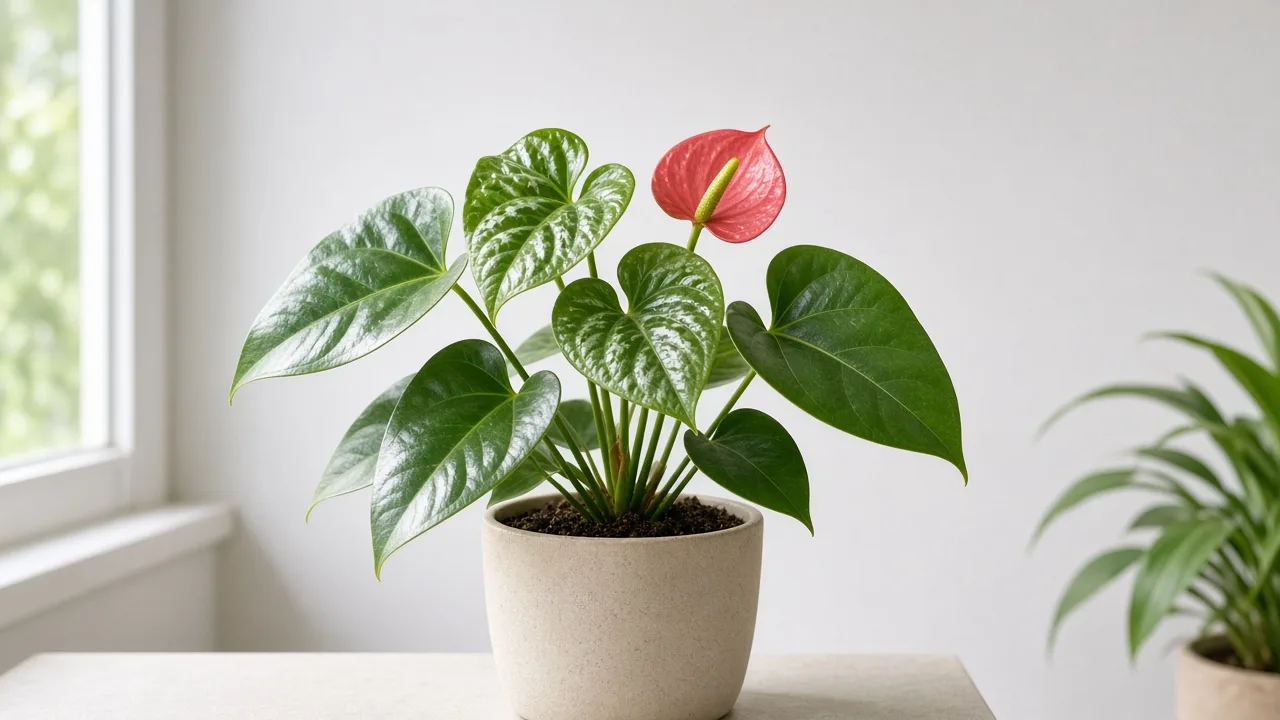
Distorted Leaves on Anthurium: Causes, Checks & Fixes
This guide covers distorted leaves on Anthurium. See also the general Distorted Leaves guide, watering, and light pages for this plant.
Distorted Leaves on Anthurium: Causes, Checks & Fixes
Quick answer
Distorted leaves on Anthurium (Anthurium andraeanum and hybrids, flamingo flower) mean crinkled, twisted, puckered, or stunted cordate foliage and sometimes waxy spathes that never opened to their normal glossy heart shape. For how leaf distortion forms during expansion in general, see our distorted leaves guide. On Anthurium, the diagnostic zone is the softest new growth at the crown and inside unopened spathe buds—not the oldest mature blades at the pot rim.
First step: shake the newest cordate leaf over white paper and inspect spathe bud undersides with a magnifier before repotting, fertilizing, or changing your whole watering schedule.
When to use this page vs other Anthurium guides
| Pattern you see | Read next |
|---|---|
| Silvery streaks, black frass specks | Thrips |
| Sticky honeydew on new tips | Aphids |
| Fine webbing, bronze stipple | Spider mites |
| Curl without pests; dry pot | Curling leaves or underwatering |
| Pale washed-out new blades | Pale leaves or iron deficiency |
| Small twisted leaves on heavy wet mix | Overwatering or root rot |
This page covers misshapen cordate leaves and spathes. Simple downward curl on an otherwise normal blade follows a different moisture path on curling leaves.
What distorted leaves look like on Anthurium
Healthy flamingo flower carries glossy cordate leaves about 8 to 12 inches long and waxy spathes when blooming. Distortion changes that silhouette while tissue is still expanding:
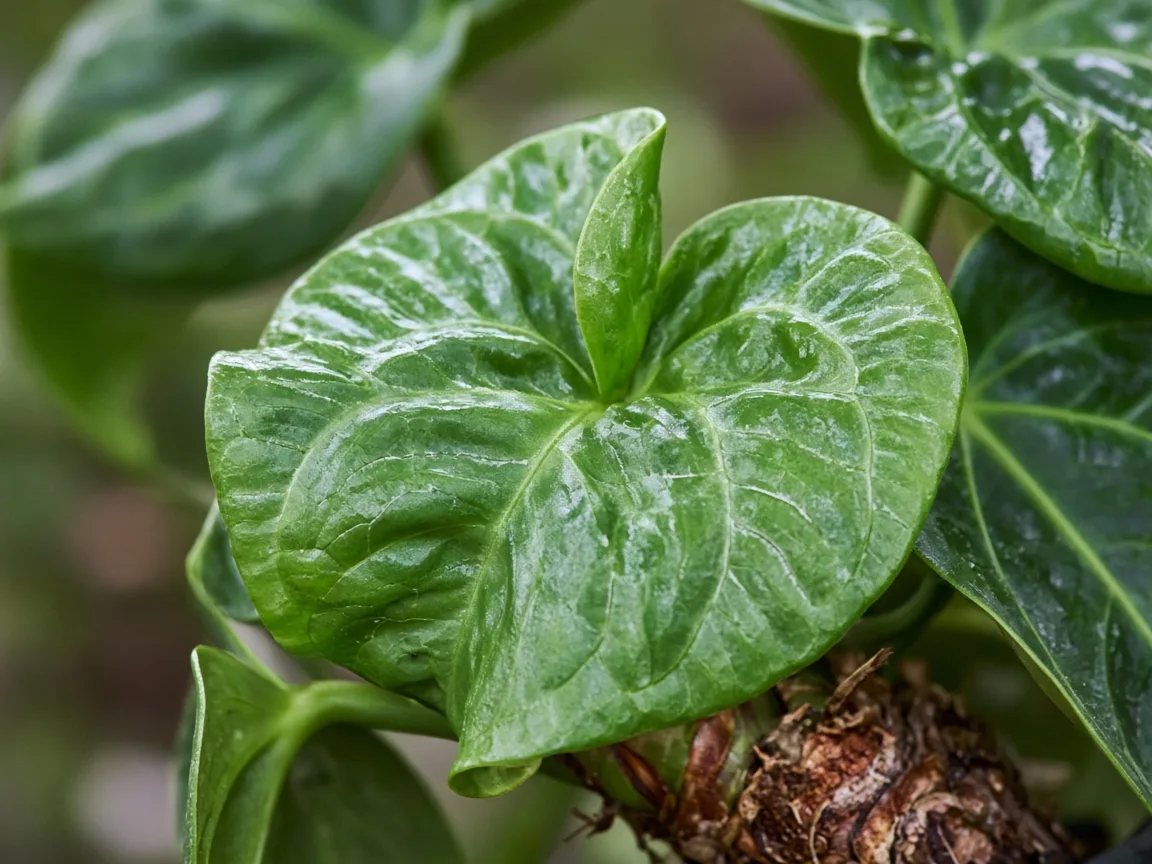
Crinkled new cordate growth at the Anthurium crown—check undersides for thrips frass before assuming a watering mistake.
Thrips scarring (most common indoors)
- New cordate blades emerge crinkled, rippled, or partially unfurled with silvery or bronze streaks
- Thrips scar tissue as leaves expand, leaving permanent warp once the blade hardens
- Tiny black varnishlike frass specks dot the upper surface near feeding lines
- Waxy spathes may show streaking or uneven color before they fully open
Aphids on crown and flower buds
- Soft new petioles and spathe bases look bunched, twisted, or smaller than siblings
- Sticky honeydew on emerging tissue; ants on the pot rim are a secondary clue
- Aphids concentrate on tender houseplant growth where cell walls are thin
Spider mite stipple on new flush
- Fine pale dots with slight cupping in dry heated rooms
- Damage often starts on the youngest cordate leaf while older blades still look glossy
- See spider mites when webbing appears at the crown
Low humidity or cold during unfurling
- New blades crinkle along one edge or fail to flatten when air is too dry for tropical understory plants
- Distortion faces a cold window, AC vent, or draft; no frass and no insects on inspection
- Spathe edges may look ruffled while the rest of the plant is otherwise healthy
Weak roots producing stunted new leaves
- Small, twisted leaves on a heavy wet pot with little new petiole length
- Pairs with yellowing lowers or limp petioles—cross-check overwatering before treating for pests
Distortion on only one mature outer leaf while the crown flush stays normal is often old mechanical damage—not an active emergency.
Why the crown and spathe bud matter on flamingo flower
Anthurium is a semi-epiphytic aroid from humid tropical understory. New cordate leaves and spathes push from a central crown, not from a climbing node or rosette like a Calathea. That means:
- Pests hide in the newest folded tissue and inside spathe buds before you see open damage.
- Humidity drops hit the expanding blade first—mature glossy leaves can look fine while the crown leaf crinkles.
- Spathe distortion is a separate clue from cordate leaf warp; thrips often scar both.
Run this crown-first check:
- Gently part the newest cordate leaf and look at the underside while it is still soft.
- Shake that leaf over white paper—slender thrips dislodged onto paper confirm feeding.
- Inspect unopened spathe buds for silvery lines and black specks.
- Compare distortion across the crown—one twisted outer leaf with a clean center flush suggests old scarring, not a spreading pest wave.
Why Anthurium gets distorted leaves
Thrips on soft expanding tissue. Thrips puncture the epidermis and suck cell contents, causing stippling, silvery scars, and distorted or curled shoot tips. On Anthurium, they feed in the crown and inside buds—damage locks in before the waxy surface hardens.
Aphids and mites on new growth. Warm indoor collections and dry winter air favor spider mites on glossy aroid foliage. Aphids cluster where petioles meet the crown and on spathe bases.
Humidity and draft stress during unfurling. Anthurium prefers 60 to 80% relative humidity. When RH crashes during a new flush—common near heating vents—blades can crinkle as they expand. RHS notes anthuriums like humid air and indirect light; dry edges during unfurling mimic pest scarring without frass.
Overwatering and weak roots. Semi-epiphytic roots in soggy mix produce small, twisted new leaves instead of full cordate blades. Distortion here pairs with a heavy pot and soft lower petioles—not silvery streaks.
Not usually a calendar watering fix alone. If frass and silvery lines are present, soaking or drying the pot will not flatten scarred tissue. Fix the pest or humidity trigger first.
How to confirm the cause
- Shake test on the newest leaf — Insects or black specks on white paper point to thrips; no specks with one-sided crinkle suggests draft or humidity.
- Magnifier on crown undersides — Aphids, thrips, mite webbing, or mealy wax confirm pest routes.
- Frass pattern — Black varnishlike flecks with silvery scars strongly implicate thrips.
- Pot weight and top inch — Heavy wet mix with stunted new blades suggests root stress; light dry pot with crinkle only on one window-facing side suggests environment.
- Neighbor plants — Distortion spreading to other anthuriums or nearby aroids suggests pests, not individual placement stress.
First fix for Anthurium
Isolate the plant, shake the newest cordate leaf over white paper, and rinse crown leaves and spathe buds under lukewarm running water—then re-inspect with a magnifier before any spray or repot.
If thrips or aphids are confirmed:
- Repeat gentle rinses every two to three days for two weeks.
- Apply insecticidal soap only after confirming active insects—see thrips or aphids for follow-up timing.
- Pesticides will not restore scarred tissue; success is clean next leaves.
If no pests are found and distortion faces a vent or cold glass:
- Move the pot off the draft and raise humidity with a pebble tray or grouping—see low humidity and the watering guide for stable moisture without soggy roots.
If the pot is heavy, wet, and new leaves stay tiny:
- Stop watering until the top inch of mix dries; read overwatering before repotting.
Step-by-step recovery
Week 1 — confirm and stabilize
- Quarantine; run shake tests and crown rinses.
- Remove only leaves that are mostly destroyed and harbor visible pests.
- Do not fertilize stressed plants; do not repot unless mix is failing.
Weeks 2–4 — treat the confirmed cause
- Continue rinses or labeled soap cycles for thrips and aphids per sibling guides.
- Raise humidity toward 60–80% RH during active crown growth.
- Align light with bright indirect exposure so the plant can push a clean flush.
After one clean flush
- Trim remaining cosmetic warp if it bothers you; keep any green tissue that still photosynthesizes.
- Resume normal water when the top inch dries rhythm only after new growth looks stable.
Recovery timeline
- Pest-scarred leaves: Warp remains permanent on affected blades; expect one to two new flushes (roughly four to eight weeks in warm active growth) before the crown looks normal again.
- Draft or humidity crinkle: Next leaf often opens flat within two to three weeks after placement and RH fix.
- Root-stress stunting: Recovery takes several weeks to months after dry-down and possible repot into chunky soil—watch petiole firmness, not old warp.
Judge success by clean new cordate leaves and evenly colored spathes, not by old crinkled blades re-flattening.
Lookalike symptoms
| What you see | Likely cause | Link |
|---|---|---|
| Silvery streaks + black specks | Thrips | Thrips |
| Sticky tips, clustered soft insects | Aphids | Aphids |
| Bronze stipple + webbing | Spider mites | Spider mites |
| Downward curl, firm petiole, dry pot | Thirst | Curling leaves |
| Tiny stunted leaves, wet heavy pot | Root stress | Overwatering |
| Washed-out new blades | Light or nutrients | Pale leaves |
Mistakes to avoid
- Repotting on day one when thrips frass is visible on the crown.
- Fertilizing to “fix” warp on a stressed or pest-hit plant.
- Misting heavily at night on already wet mix—raises humidity briefly but worsens root oxygen loss.
- Pruning the entire crown before confirming pests—remove only heavily infested blades.
- Assuming old outer warp is active when the center flush is clean.
How to prevent it next time
- Quarantine new flamingo flower purchases for two weeks; inspect crown and spathe buds weekly.
- Keep humidity toward 60–80% RH during active growth; avoid placing the crown in AC or radiator drafts.
- Water when the top inch of chunky mix dries—soggy roots weaken the next flush.
- Rinse early thrips before they scar multiple spathes and cordate leaves in one season.
- Use bright indirect light so growth stays steady without hot glass scorch on expanding tissue.
When to worry
Treat as urgent when:
- Distortion spreads to every new leaf within one flush while frass increases
- Stem base softens at the soil line on a heavy wet pot
- Multiple plants in the same room show silvery scarring within days
- Crown collapse or sour smell rises from the mix
A single old distorted outer leaf with firm new center growth and no frass is usually cosmetic—not urgent.
Related Anthurium guides
- Overview — placement, toxicity, and first-month rhythm
- Watering — top-inch dry-down without soggy semi-epiphytic roots
- Light — bright indirect exposure for steady crown flushes
- Thrips — full treatment ladder when frass confirms thrips
- Low humidity — RH targets for tropical understory plants
- Problems hub — all Anthurium symptom guides
Conclusion
Distorted Anthurium leaves are expansion injuries on cordate crown tissue and spathe buds, not a mystery fertilizer gap. The shake test, frass check, and crown magnifier route you to thrips, aphids, dry-air curl, or wet-root stunting faster than repotting on guesswork. Scarred blades will not re-flatten—watch for the next clean flush, keep humidity in range, and treat pests before they scar another spathe season.